
'%20id='ico-down'%20stroke='%23000000'%20stroke-width='1.5'%3e%3cg%20transform='translate(1092.250000,%20254.750000)'%3e%3cpolyline%20id='Path-2-Copy-4'%20transform='translate(5.500000,%202.750000)%20scale(1,%20-1)%20rotate(-180.000000)%20translate(-5.500000,%20-2.750000)%20'%20points='0%200%205.5%205.5%2011%200'%3e%3c/polyline%3e%3c/g%3e%3c/g%3e%3c/g%3e%3c/svg%3e)


Moving
Visas & Immigration
Permanent residence in Austria
We provide an overview of getting permanent residence in Austria, including application requirements, costs, processes, renewals, and more.


After putting down roots in a new country, it is only natural that you might want to consider making it more official and applying for permanent residence. And, if you happen to live in Austria, this may be very tempting. After all, between weekends spent exploring the Alps and nights spent indulging in the arts, life in the alpine country can feel ideal. Now, applying for permanent residence in Austria can feel a little daunting, but with the right preparation and resources, it is perfectly attainable.
So, if you want to make it your long-term home, this helpful guide provides everything you need to know on the topic, including the following:
Use Wise for moving money abroad
Wise offers expatriate-friendly financial services including international money transfers at mid-market exchange rates with transparent, low fees, helping you save money when sending funds to family or managing finances across borders. Their multi-currency account allows you to hold, convert, and spend money in multiple currencies.

Permanent residence in Austria
After you have legally been in Austria for five uninterrupted years, and have met a number of other requirements, you may apply for the Austrian residence permit, the Long-term resident – EC, which grants you permanent right of residence. In German, this is called Aufenthaltstitel “Daueraufenthalt EU”.
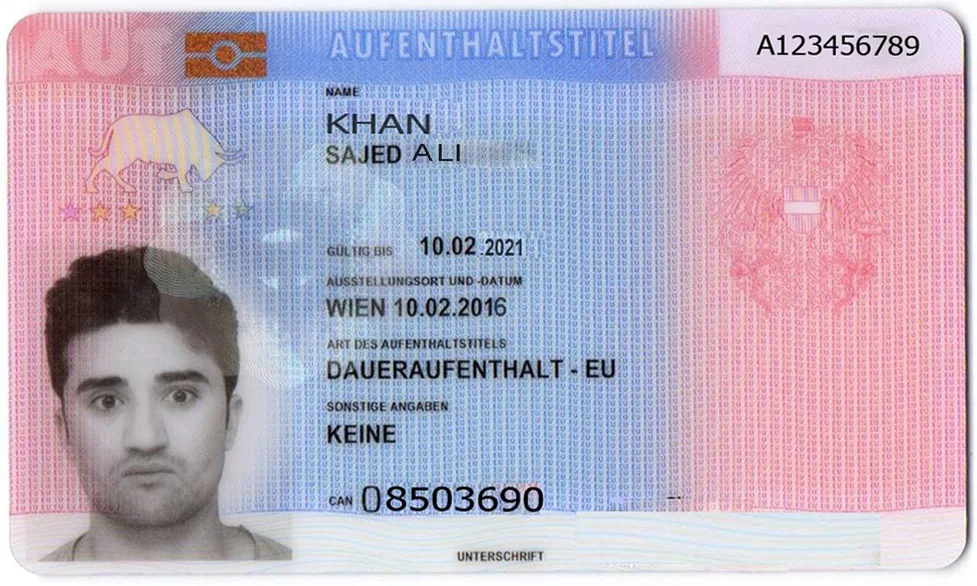
Overseen by provincial government authorities, this permit grants you the right to stay and work in Austria for five years. It is renewable and it also allows you to live and work in other EU countries, provided you qualify.
For more information, read our Guide to visas and immigration in Austria and EU workers rights: the laws that protect European citizens.
The difference between citizenship and permanent residence in Austria
As both a permanent resident and a citizen, you have the right to live and work freely in Austria, however, there are some differences. To become a citizen, for example, you must pass a written exam about Austria’s history and democratic system.

Another difference lies in voting rights. Only Austrian citizens, and some EU citizens in some elections, can stand in and vote in elections. Unfortunately, as a permanent resident hailing from a non-European country, your political impact in Austria will likely be limited.
Requirements for permanent residence in Austria
In order to apply for Austrian permanent residence, you must have met the following requirements:
- Had legal status in Austria for the past five years, uninterrupted
- Been financially self-sufficient, whether through independent means, a job, or self-employment
- Maintained health insurance for those five years
- Maintained adequate accommodation, and had your accommodation registered with the government, for those five years
- Been no threat to security or public order
- You also must have completed Module 2 of the Integration Agreement, which includes attaining a B1 level of German

Transfer Funds to Austria for Your Permanent Residence Application
As you prepare for permanent residence in Austria, you may need to transfer money from abroad to meet the financial self-sufficiency requirements or pay application fees. Wise offers a straightforward way to send funds to Austria using the mid-market exchange rate and transparent, low fees, helping you manage the financial aspects of your residency application more efficiently.
Learn more about Wise.
Requirements for asylum seekers
Austrian permanent residence is also available to asylum seekers and the requirements are very similar. In 2019, nearly 1,200 asylum-seekers received permanent residency in Austria. For more information about applying as an asylum seeker, you can visit the Asylum Information Database.
How to apply for permanent residence in Austria
To apply for Austrian permanent residence, you will need to apply in person at the provincial government authority in your city. Processing times vary, but once you are approved, you will receive your credit-card shaped residence permit which is valid for the next five years.

To apply, you will need to present the following documents:
- Application for a residence permit, Antrag auf Erteilung einer Aufenthaltsbewilligung (in German)
- Passport, or another valid travel document
- Passport photo that is compliant with EU regulations and no older than six months
- Birth certificate, or another equivalent document
- Proof of adequate accommodation, such as a rental agreement, lease, or proof of ownership
- Proof of financial self-sufficiency, such as employment contract or income statement
- Completion of Module of Integration Agreement proof
- Valid Austrian health insurance proof
- Credit history
- Any of the following applicable documents: marriage certificate, divorce certificate, civil partnership certificate, certificate of dissolution of a civil partnership, adoption certificate, and other documents proving family relationships
For more information, you can visit this government site.
Permanent residence costs in Austria
Applying for permanent residence in Austria costs €210 for adults, however, this does not include the costs of translation and certification of documents. Companies such as lingoking can provide a fast and flexible translation service to assist you with your application for permanent residence. You can pay for your Austrian residence permit by cash or credit card. Because applicants are required to be financially self-sufficient, they are expected to pay the non-refundable costs of the application.
Renewing your permanent residence in Austria
Austrian permanent residence lasts for five years and after this, you will need to renew it. You should renew it before it expires, however, keep in mind that the renewal window opens three months before your residency expires. You will need to contact your provincial government authority to begin the renewal process, and as long as everything is in order, your renewal should proceed smoothly.
Permanent residence in Austria for family members
Family members of those with permanent residency can also receive it, provided that they meet the requirements. In this case, ‘family’ is defined as a spouse or civil partner and children (including step and adopted children) under 18. Fortunately, because you need to have lived in Austria for five years before you can qualify for permanent residence, chances are that your family has already been by your side for that time, too.

You can find more in-depth information about this in our guide to applying for an Austrian spouse visa.
Losing your permanent residence rights in Austria
Unfortunately, it is possible to lose your Austrian permanent residence. Possible reasons include staying outside of the EU for more than 12 consecutive months or not living in Austria for six years. You could also lose residency if you become a public safety or criminal risk. Fortunately, though, losing residency is not very common.
What to do if your application for permanent residence is rejected
Although it is not very common, your application for Austrian permanent residence can be rejected. If this happens, the provincial authority will contact you with information about how to make an appeal. They will also provide details about your deadline for appealing and provide any relevant resources.


Did you find this guide helpful?