
'%20id='ico-down'%20stroke='%23000000'%20stroke-width='1.5'%3e%3cg%20transform='translate(1092.250000,%20254.750000)'%3e%3cpolyline%20id='Path-2-Copy-4'%20transform='translate(5.500000,%202.750000)%20scale(1,%20-1)%20rotate(-180.000000)%20translate(-5.500000,%20-2.750000)%20'%20points='0%200%205.5%205.5%2011%200'%3e%3c/polyline%3e%3c/g%3e%3c/g%3e%3c/g%3e%3c/svg%3e)


Moving
Visas & Immigration
How to immigrate to Austria: visas in 2026
Looking to move closer to the Alps? Find out about Austria’s visa options, who needs one, and the requirements.

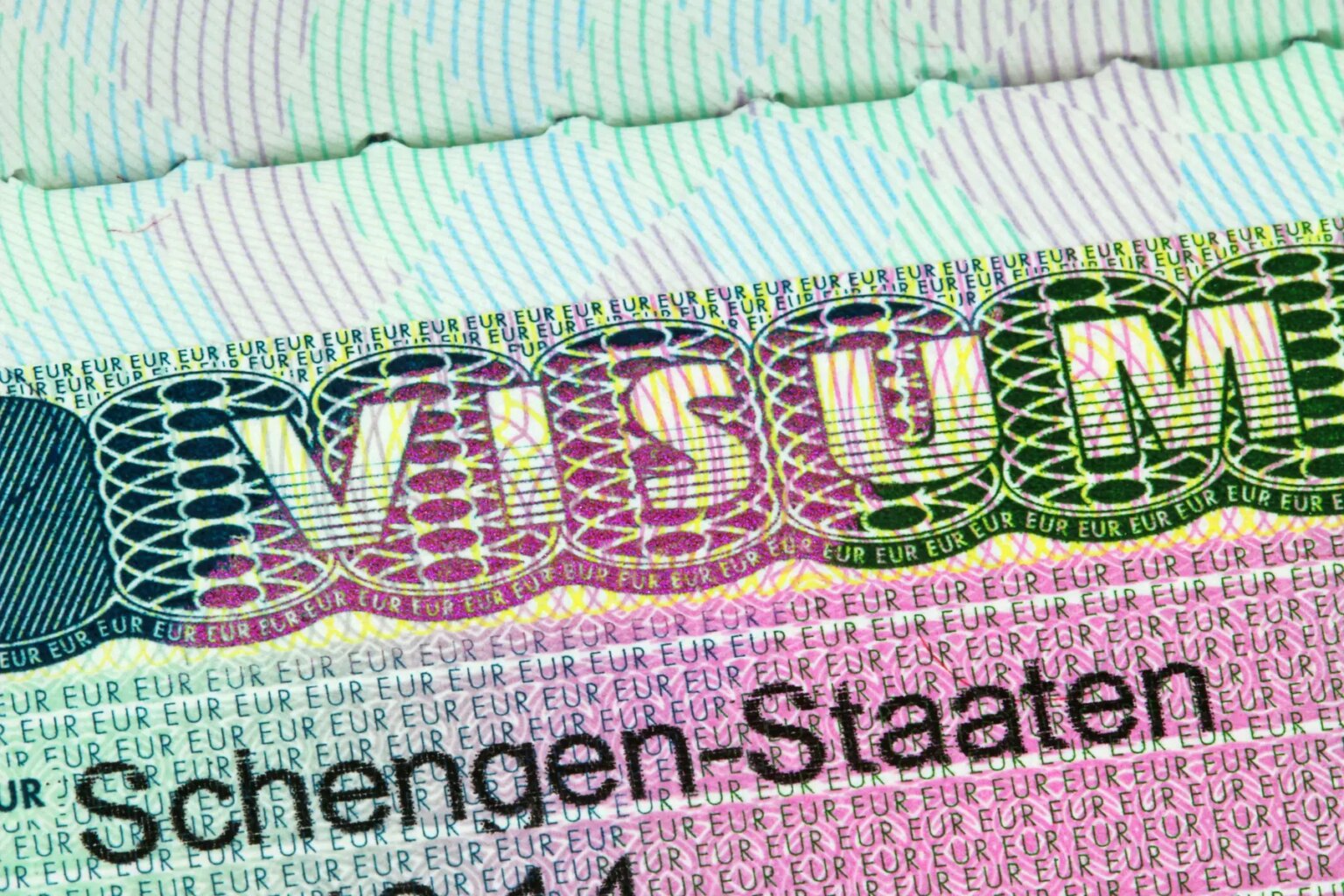
For those looking to visit or move to the beautiful alpine country of Austria, it’s important to find out if you need a visa, and how they work. After all, between short and long-term stays, there are a lot of options to consider. That said, Austrian visa opportunities vary depending on an applicant’s nationality, so it is important to do your homework.
Learn key information about Austrian visas, what to do when you arrive in the country, and how to make appeals and complaints.
ReloAdvisor
Thinking about relocating to Austria? Make sure you start your Austrian adventure on the right foot by checking out your options on ReloAdvisor. Compare quotes from some of the world's biggest relocation specialists and find the right option for you and your family. Start your new life right with ReloAdvisor.

Immigration in Austria
Thanks to its high standard of living and great work-life balance, Austria is a popular destination for expats looking to move abroad. In fact, in 2024, 19.6% of the population living in Austria was born in a foreign country. And this number was higher in big cities such as Vienna, where the foreign-born population was almost 43% at the beginning of 2023.
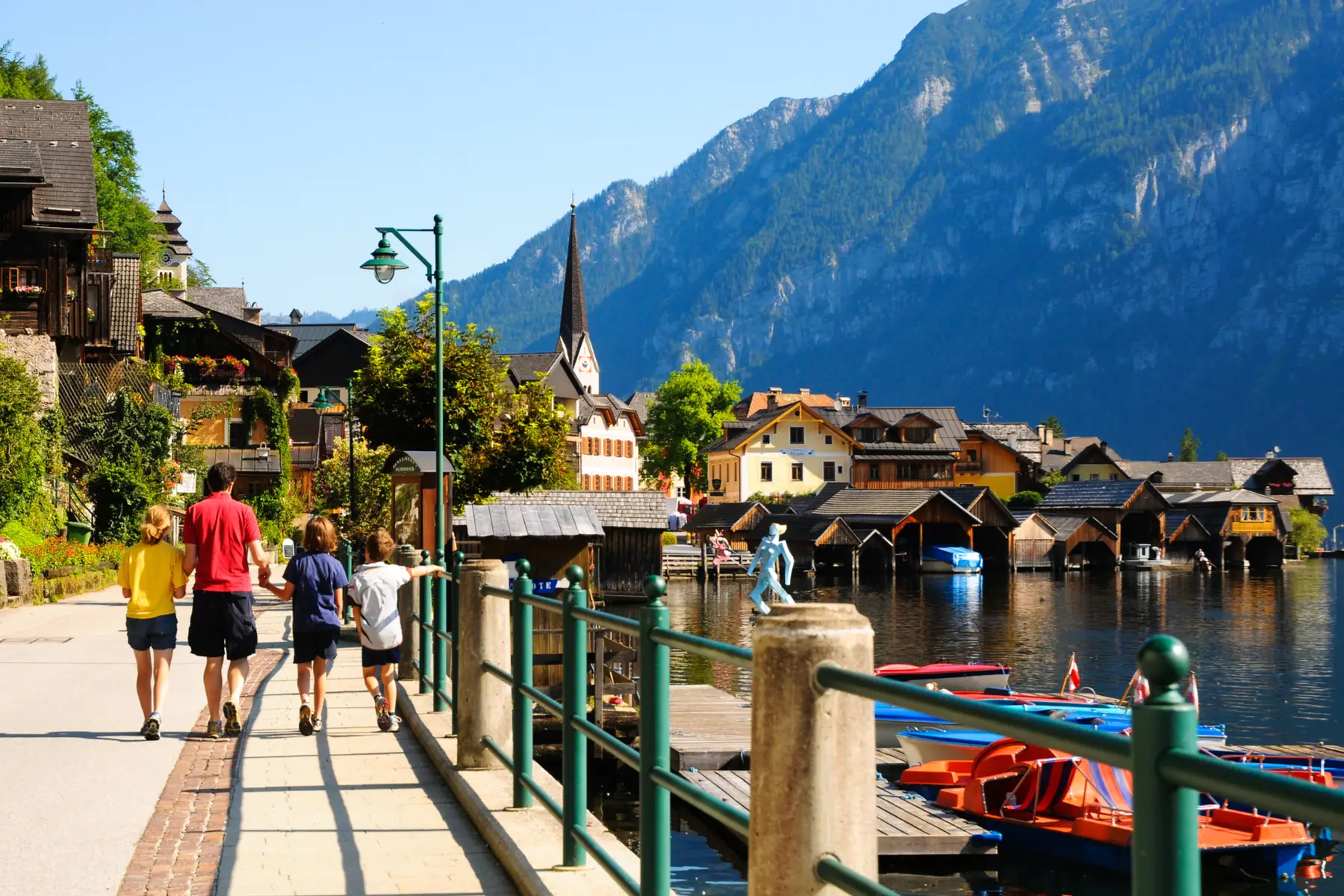
Because Austria is part of the Schengen Agreement, which allows other Europeans to enter and work in the country, most immigrants come from elsewhere in Europe, with Germans being the largest group in 2022. A significant number of expats come from Romania, Serbia, and Turkey.

For non-European expats, also called third-country nationals, immigrating will likely depend on finding an employer in Austria to serve as a sponsor. If you are planning to immigrate to Austria, you will have to begin the process at the Austrian consulate in your home country.
Do I need a visa for Austria?
Like in many countries, the type of visa you will need to live and work in Austria will depend on your country of origin, as outlined below.
EU/EFTA nationals
Citizens of the European Union (EU) do not need a visa to travel to or stay in Austria for up to three months. To stay longer, you will need to register with your municipality.
If you plan to stay longer, you need to show one of the following:
- proof of employment or self-employment
- evidence that you can support yourself financially and that you have adequate health insurance
- proof of attendance at an Austrian school and sufficient financial means and adequate health insurance
Non-EU/EFTA nationals
Visa options became much more complicated for non-EU citizens. Citizens of some countries, such as Canada or the USA, do not need an entry visa for stays up to three months. Citizens of other countries, however, do need an entry visa, so be sure to do your research to find out the application and entry requirements based on your nationality.
Types of Austrian visas
If you are planning to visit or live in Austria, you may need a visa. Your nationality and reason for your visit will determine whether or not you need one, as well as what kind.
Here are the general types of visas for Austria:
- Short-term visas – these documents allow you to stay in Austria for six months or less and do not automatically include work authorization.
- Temporary residence permits – these longer-term visas are designed for those planning to stay longer than six months or for a specific purpose, such as study or research.
- Permanent residence permits – these long-term documents are ideal for people who plan to stay in Austria for an indefinite period and for those who want to work. This includes people with employment contracts as well as those hoping to bring their family over through the family visa.

You will find more information and resources, such as eligibility, timelines, and how to apply for an Austrian visa, below.
Short-term Austrian visas
Short-term visas allow you to stay in Austria for a limited amount of time but do not automatically allow you to work legally.
A Visa
A Visas, or Air Transit Visas, allow travelers to pass through an Austrian airport, for example, as a stop-over on their journey. Austria only requires this visa from certain nationalities, so be sure to do your homework and find out if this applies to you.

To find out costs, timelines, and to apply, you will need to go through the Austrian consulate in your home country. Keep in mind that an A Visa cannot be issued upon arrival.
C Visa
The C Visa is Austria’s tourist visa and can be issued for up to 90 days within a 180-day period. This only applies to third-country nationals who do not already have visa-free entry to Austria. Holding a C Visa entitles you to travel freely within the Schengen area for the duration of your visa. To apply, contact the Austrian consulate in your home country.
D Visa
The D Visa allows you to stay in Austria for anywhere between 91 and 180 days. In some special circumstances, this can be extended to 12 months. This visa does not allow you to work, so it can be a useful option, for example, for students spending a semester abroad in Austria. For both the C and D Visa, you can apply up to six months before the date of travel. As always, be sure to apply at the Austrian consulate in your home country.
C Visa and D Visa for gainful employment
In rarer cases, you may be able to get a visa allowing you to stay in Austria for up to six months and work. In German, these are called Visum C-Erwerb and Visum D-Erwerb. These short-term work authorization visas are handy and can allow you to have an internship, which is considered gainful employment even if it’s unpaid.
These visas can also be used to invite scientists or lecturers to the country on a short-term basis. They are free of charge, and you can apply for one at your local Austrian consulate. That said, in some cases, for example, if you are being hired as a researcher by certain institutions, the research institution will handle much of the application process.
Temporary residence permits in Austria
If you are a third-country national and plan to stay in Austria for longer than six months, or if you plan to work, you will need a residence permit based on the reason for your stay. There are several different ways to get a residence permit, but below are a few of the most common.
Student visa
If you have been accepted as a student at an Austrian university, you will need to apply for a study permit at your local Austrian consulate. This permit will last as long as your studies and entitles you to live and study in Austria. However, it does not entitle you to work in Austria.

If you are a third-country national who needs an Austrian visa to enter the country, you will need to apply for a Visa D in order to initially enter Austria to get your study visa.
Researcher visa
If you plan to pursue scientific research and teach at a high academic level in Austria, you will need a relevant permit to do so. Researchers with a Ph.D. who have a Hosting Agreement with a certified research institution should apply for a Settlement Permit – Researcher.
This permit usually lasts for two years, or three months longer than the duration of your hosting agreement. Researchers planning to teach and conduct research in Austria who do not have a hosting agreement may apply for a Settlement Permit – Special Cases of Gainful Employment. This permit is valid for 12 months and is renewable.
Au pair visa
Those planning to live with an Austrian family and receive a small weekly allowance in exchange for taking care of their children might consider being an au pair. In fact, this is so common that there is even a special residence permit for it, called Special Cases of Paid Employment.

The au pair visa, called Sonderfälle der unselbstständigen Erwerbstätigkeit in German, must be applied for in your home country once you have found a host family. The permit can last up to 12 months.
Permanent residence permits in Austria
Third-party nationals who would like to stay and work in Austria indefinitely will need a permanent residence permit. Keep in mind, though, that in Austria, permanent doesn’t mean that you are entitled to stay forever – it allows you to live and work in the country without a specific limit to your stay.

Conveniently, for this category of visa, everything is funneled through one residence permit. You can read more about this in our article on permanent residence in Austria.
Red-White-Red Card
For third-party nationals, the Red-White-Red Card serves as both a residence permit and work authorization. Most people receive it on the basis of their employment. Its length is usually tied to the purpose of the visa, such as an employment contract. This period generally lasts 24 months and the card is renewable. With it, you can travel freely throughout the Schengen area.
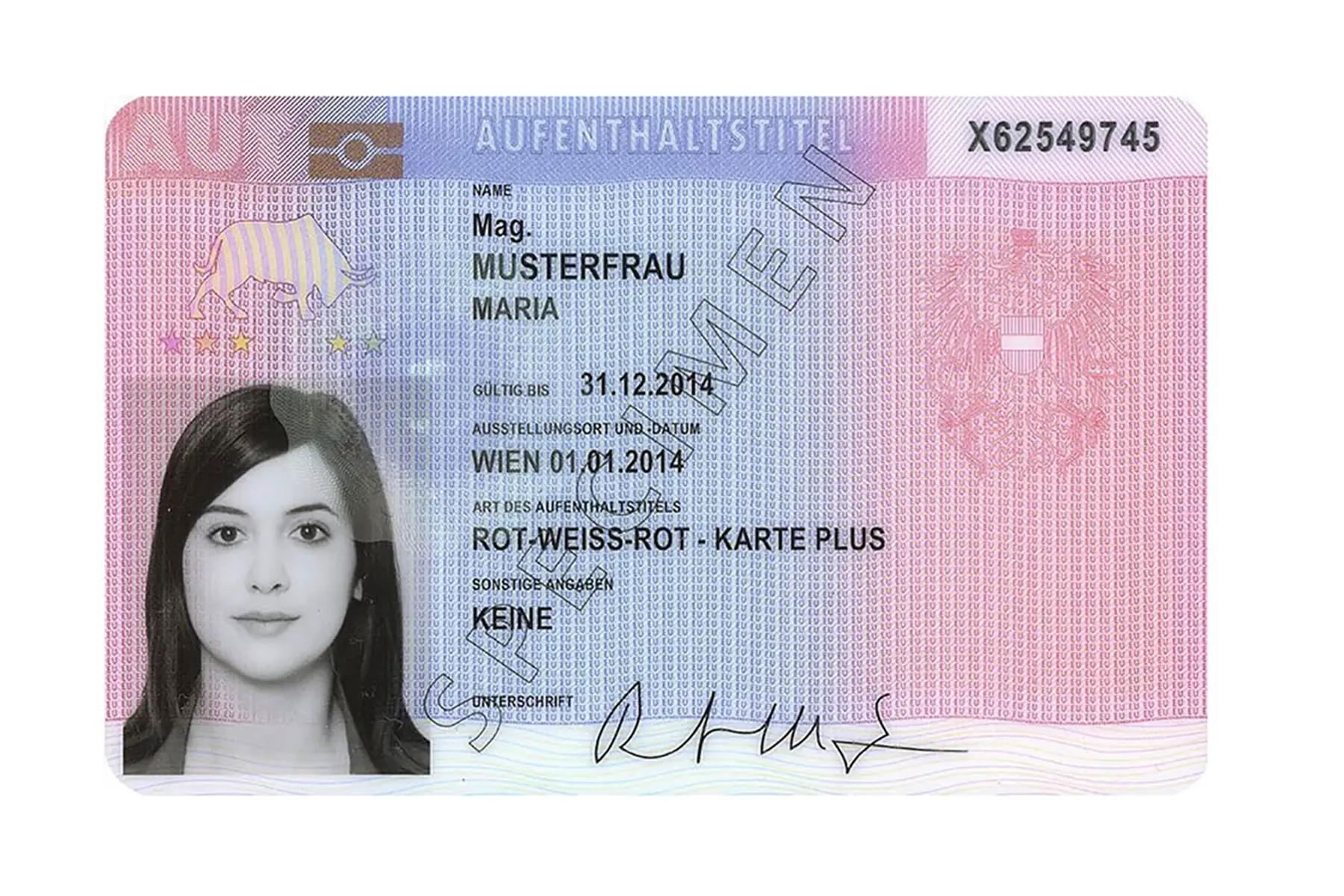
The following people can apply for this permit:
- Very highly skilled workers
- Self-employed key workers
- Start-up founders
- Skilled workers in occupations experiencing a shortage of staff
- Graduates of Austrian universities and higher education colleges
- Other key workers
Red-White-Red Plus Card
Third-party nationals who wish to bring their families to Austria will need to apply for a family visa, also called a Red-White-Red Plus Card. This permit allows certain family members to stay in Austria as long as their sponsor has their own residence permit.

The initial permit lasts for one year but can be renewed, and you can travel throughout the Schengen zone with it. For more information about the Red White Red Plus Card, read about applying for an Austrian spouse visa.
Asylum seekers and refugees in Austria
In order to apply for asylum in Austria, you have to be in Austria. Once there, you can submit your petition for asylum, and it will be reviewed by the Federal Office for Refugees.
While proceedings are underway, asylum-seekers are entitled to food, health insurance, accommodation, pocket money, and money for suitable clothing. In 2023, nearly 60,000 people applied for asylum in Austria.
Residence and citizenship in Austria
If you would like to be able to stay in Austria permanently, you must meet certain conditions, as follows.
Permanent residence in Austria
To become a permanent resident, for the past five years you must have:
- Lived in Austria for the past five years, uninterrupted
- Supported yourself financially, whether through a job, self-employment, or independent means
- Maintained health insurance
- Maintained adequate, registered accommodation
- Completed Module 2 of the Integration Agreement, including reaching a B1 level of German
- Not be a threat to public security or order
Citizenship in Austria
To become a citizen of Austria, you must meet the following criteria:
- You have lived in Austria for at least 10 years continuously, five of which you were a permanent resident
- Have supported yourself financially
- Have sufficient knowledge of German
- Hold no criminal record
- Have a positive attitude towards Austria
Arriving in Austria
The first thing you should do when you arrive in Austria is register with your local municipality. If you don’t do so within three days, you risk getting a hefty fine. Your employer will take care of enrolling you in health insurance and your monthly contribution will be deducted from your salary automatically.

The only time-consuming thing might be opening a bank account because you need proof of identity, proof of employment, and proof of residency. You might also need to wait until you receive your residence permit.
Appeals and complaints
If your application for a residence permit is denied, you will be able to appeal the decision. Within your denial letter, the provincial authority will provide information about further steps you can take to appeal, and the general timeline. In that case, it would be prudent to seek legal or immigration counsel.
Useful resources
- Austrian government – lists and details of short-term visas



Did you find this guide helpful?