
'%20id='ico-down'%20stroke='%23000000'%20stroke-width='1.5'%3e%3cg%20transform='translate(1092.250000,%20254.750000)'%3e%3cpolyline%20id='Path-2-Copy-4'%20transform='translate(5.500000,%202.750000)%20scale(1,%20-1)%20rotate(-180.000000)%20translate(-5.500000,%20-2.750000)%20'%20points='0%200%205.5%205.5%2011%200'%3e%3c/polyline%3e%3c/g%3e%3c/g%3e%3c/g%3e%3c/svg%3e)


Healthcare
Healthcare Basics
COVID-19 information and support in the UAE
Learn about the UAE’s coronavirus response, from regulations to vaccinations, and find out what help is available to you in the Emirates.

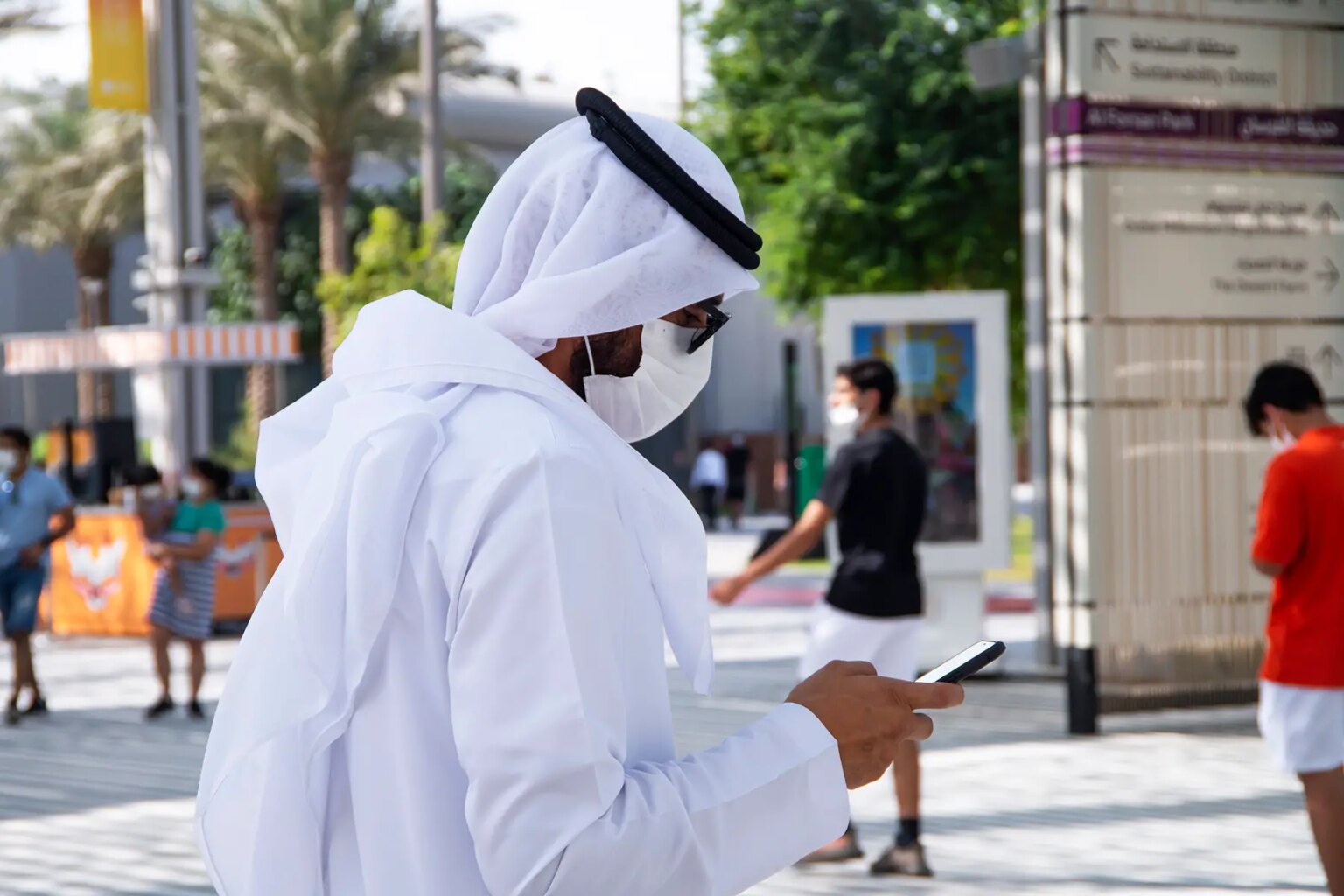
The UAE was quick to introduce health measures, such as face masks, to combat COVID-19. As a result, it has low infection rates and high vaccine distribution, making it an example in the region and the world. Find out where you can find the latest information on coronavirus measures and help if you’re moving to the UAE. From testing to long COVID support, help for business, and rules for international travel.
Topics covered below include:
APRIL International
Looking for expat-friendly health insurance in the UAE? APRIL International has a long history of providing health coverage tailored to the unique needs of the expat lifestyle, ensuring peace of mind for you and your family. Whether you’re relocating to the UAE or simply staying short-term, APRIL International has the right policy for you.

Coronavirus in the UAE
The UAE announced its first coronavirus case on 29 January 2020. Since then, the response has varied by emirate. For example, Abu Dhabi all but shut itself off, even requiring a permit to enter. Tourism-dependent Dubai, however, was much quicker to reopen. As the UAE is a federation of seven emirates, various bodies are responsible for managing the COVID-19 response in the country. At the federal level, the Ministry of Health and Prevention, and the National Emergency Crisis and Disasters Management Authority take charge. At local level, the individual emirates’ health authorities take over.
Given its federal nature and history, the UAE has a unique bureaucratic structure. For example, where bigger emirates like Abu Dhabi, Dubai, and Sharjah have their own health authorities that issue mandates, smaller emirates (like Fujeirah, Ajman, Ras al Khaimah (RAK), and Umm al Quwain) do not. This is where entities like the federal ministries step in.
How has the UAE fared?
The UAE government took major steps to curb the spread of COVID-19. Among the measures introduced in March 2020, the federal government implemented widespread testing. As a result, the UAE achieved one of the highest testing rates in the world. Scaling up rapidly to over 9,500 tests per 1,000 people by November 2021.
At its peak, in January of 2021, the UAE averaged over 25,000 cases per day. Since then, daily and weekly numbers have dropped significantly. Particularly, as the country rolled out vaccinations. In fact, the UAE boasts one of the highest vaccination rates in the world. As a result, the country now has lower levels of COVID-19 cases and deaths.
COVID-19 rules and measures in the UAE
In the first few months of the pandemic, the UAE’s response adhered to the urgings of the World Health Organization to be fast and aggressive. The UAE’s coronavirus response has been widely praised. Coronavirus containment efforts included:
- Providing free treatment for COVID-19.
- Setting up drive-through testing sites.
- Making face masks mandatory.
- The Emirates locked down in March of 2020 (closing schools, workplaces).
- Restricting travel and closing borders.
- Some cities required permits to leave the house.
- Suspending prayers at places of worship.
- Halting the distribution of print products, like newspapers.
However, due to the changing landscape, and the sheer duration of the COVID pandemic, some emirates enforced stricter rules. Keep this in mind, as UAE coronavirus measures will differ between cities.
Measures in Abu Dhabi
In general, Abu Dhabi had the most aggressive measures. During the second wave, anyone entering Abu Dhabi from another emirate had to do so within 24-hours of taking a DPI (diffractive phase interferometry) test. Those who stayed in Abu Dhabi for longer than 48 hours then had to take a PCR (polymerase chain reaction) test on the third and the seventh day of stay. With vaccines now plentiful, unvaccinated staff in Abu Dhabi are required to submit to weekly testing.
Measures in Dubai
Dubai, meanwhile, had less stringent restrictions. In the second wave, the emirate shut down pubs and bars but kept open restaurants and cafes until 1 am curfew. Likewise, theaters, hotels, malls, sports venues, and the like operated at reduced capacity. The government encouraged people to report capacity violations to the Dubai police.
Latest guidelines and restrictions
In recent months, restrictions have loosened across the Emirates. With the use of the Al Hosn app and required PCR tests, Abu Dhabi indoor and outdoor events have resumed at reduced capacity and major events like the Dubai Expo 2020 proceeded in person in 2021.

For the most up-to-date information on mask and social distance requirements, as well as quarantine and isolation, check out this website. For additional travel information, check out this site.
Private and public healthcare options
Given the heightened need for medical care in these COVID times, it is worth noting that private health insurance is compulsory for expats in Abu Dhabi and Dubai. The healthcare system in the UAE is a mix of private and public sectors, but expats will be using the private system.
Some of the expat-friendly international health insurance companies operating in the UAE include:
COVID-19 apps in the UAE
The UAE coronavirus response includes apps to help manage testing, vaccination, and tracing efforts. These include:
- Al Hosn App – helps facilitate contact tracing and allows you to access your vaccination and testing status. This app also hosts the UAE’s Green Pass System, which some emirates use to limit access to public spaces and to prove a clean bill of health.
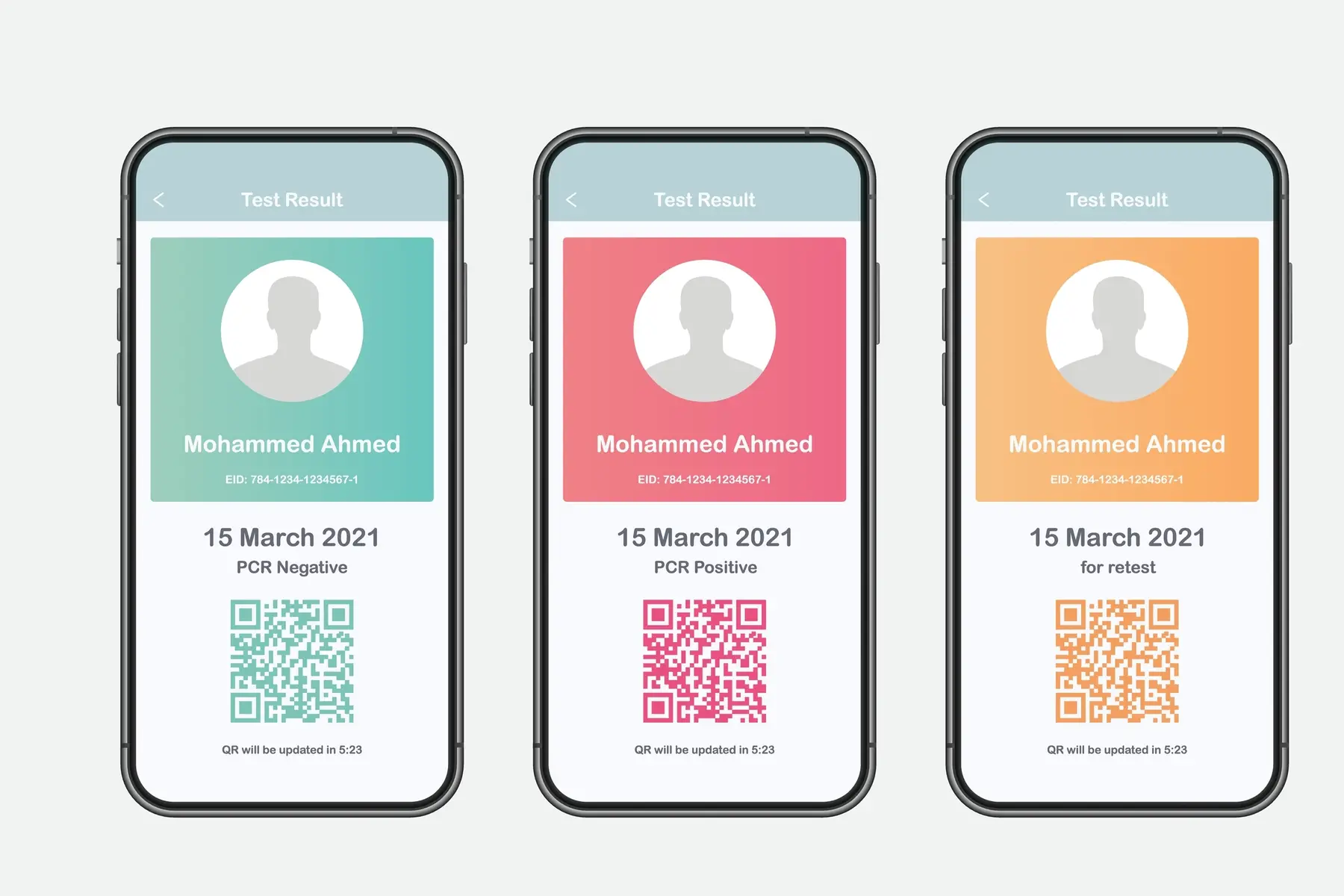
- DXB Smart App – disseminates accurate information about the coronavirus in the UAE, its symptoms, and how to reduce risk.
- COVID-19 EHS App – gives up-to-date information on the coronavirus pandemic, and allows you to schedule testing and vaccine appointments.
Coronavirus testing in the UAE
You will not struggle to find a coronavirus test in the UAE, although the type of tests available may vary by region. You can find testing sites through the relevant health authorities, such as the Dubai Health Authority, Sharjah Health Authority, or the Department of Health-Abu Dhabi. Alternatively, you can also find testing sites through the Ministry of Health and Prevention. Of course, keep in mind that costs will vary by clinic and emirate. Here are some of the testing options throughout the UAE.
- RT-PCR: The PCR test is the most widespread throughout the UAE and requires a nasal swab. Recently, the UAE government mandated a standard rate of AED 50 for PCR tests throughout the country.
- Laser-based DPI Technology: This blood sample test is a precursor to a PCR test in cases of suspected COVID-19. Results of the DPI test are ready within minutes and, if positive, the client is recommended to take a PCR test as confirmation.
- RT-LAMP: This test, conducted by nasal swab, usually provides quicker results than a PCR test – you often see results within the hour.
- Saliva test: This test is for children between ages 3 and 16 where a nasal swab isn’t possible.
If you test positive for COVID-19 in the UAE
If you test positive for coronavirus in the UAE, you will have to isolate for 10 days. Most importantly, you must report it to the relevant health authority.
- If you live in Abu Dhabi, you can call the Abu Dhabi Department of Health at 800 1717.
- Dubai residents can call the Dubai Health Authority at 800 342.
- If you live in a different emirate, call the Ministry of Health & Prevention at 800 11111.
If you don’t report it, you could receive a hefty fine or even a jail sentence. Isolation protocols for those who test positive vary by emirate.
Abu Dhabi residents
If you live in Abu Dhabi and you receive a positive PCR test, you will be directed to visit a designated medical facility for a confirmation PCR test and medical evaluation. During this medical evaluation, you will be instructed to self-isolate at home or a facility, depending on your symptoms. You’ll also be provided a tracker watch. Further tests and a de-isolation assessment will be conducted before you are cleared to return to public life.
Dubai residents
If you live in Dubai and you receive a positive PCR test, you must download the COVID-19 DXB App to receive all necessary updates. If you have mild or no symptoms, you will be able to isolate at home, provided your home situation meets the requirements. You’ll need to isolate for 10 days and will be automatically cleared provided that any symptoms have improved and that you’ve had no fever for three consecutive days. Those in vulnerable groups or experiencing severe symptoms will be directed to a medical facility.
Other residents
If you live in a different emirate, you should follow the guidelines of the National Emergency Crisis and Management Authority. These state that those with mild symptoms can self-isolate at home. You can end your isolation 10 days after the first onset of symptoms, as long as it’s been between 24-48 hours since your fever subsided, and as long as your symptoms have improved.

If you experience more severe symptoms, or if you need general guidance, call your local health authority.
If you want to access the COVID-19 mental health hotline, call 04-5192519. Find the most up-to-date information on u.ae, the government’s official website.
COVID-19 antibody tests in the UAE
Antibody tests scan for antibodies to see if a person has previously had COVID-19. These tests are available throughout the UAE at various hospitals and labs, though costs and availability vary. Ask within your expat circles for recommendations. Here are a few options in Abu Dhabi, Dubai, and Ajman.
COVID-19 vaccinations in the UAE
Vaccines are now widely available in the UAE and are free for residents and citizens. Five vaccine brands are available: Sinopharm, Sputnik, Pfizer BioNTech, Oxford-AstraZeneca, and Moderna.
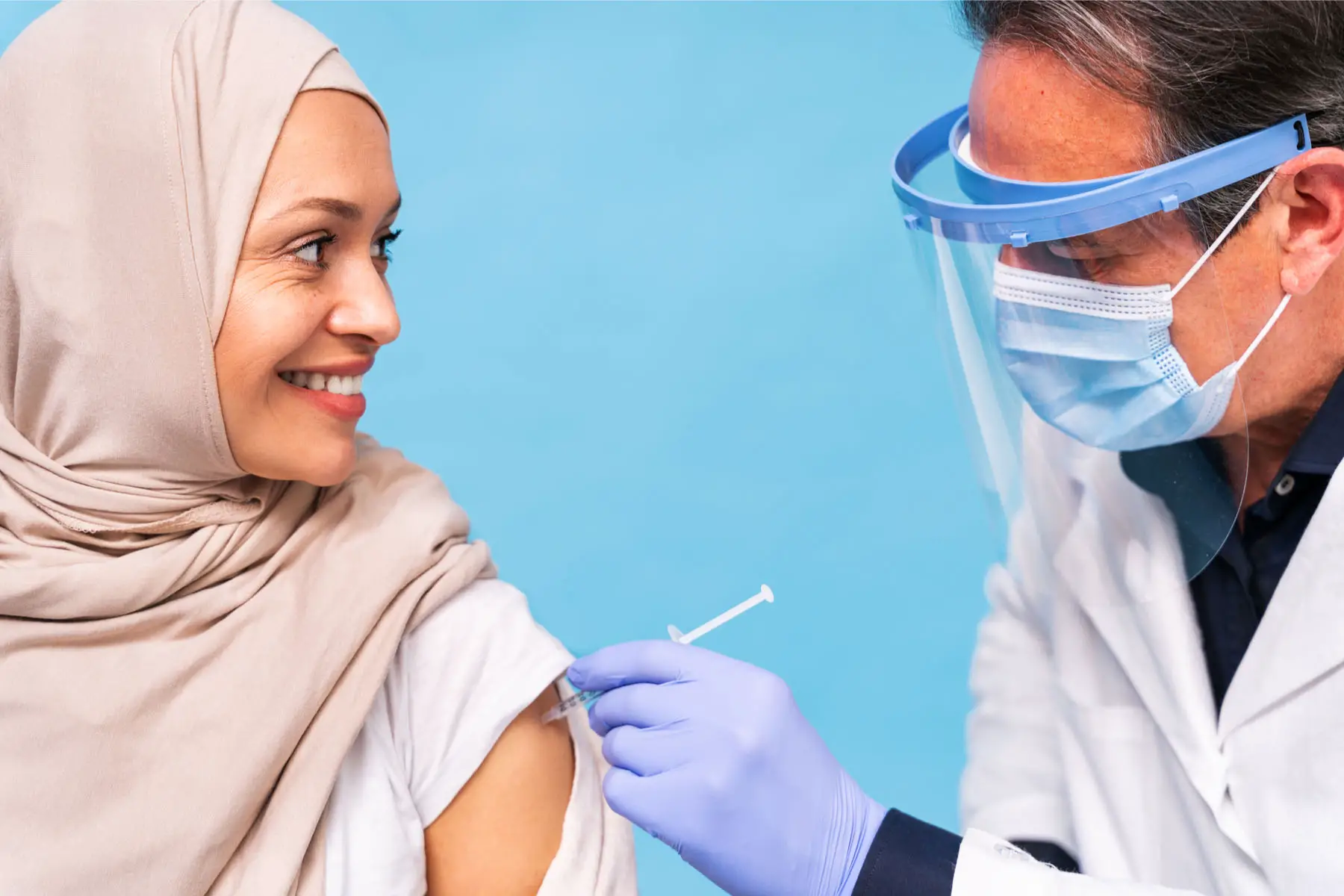
Fortunately, when vaccines became available, the UAE launched a highly effective vaccine campaign. In fact, by November 2021, more than 90% of the population was fully vaccinated. To learn about how to get your COVID vaccine, check out this site.
International travel during COVID-19 in the UAE
Rules for international travel to and from the UAE will depend on where you’re coming from, and where you are going. This, combined with your vaccination status, will determine whether you need to quarantine. Vaccinated travelers generally do not need to quarantine. All travelers must provide a negative PCR test from 48-96 hours before arrival, depending on the emirate of arrival. All travelers staying in the Emirates must also provide at least one additional PCR test a few days into their stay.
Which day you must get this test will depend on your country of origin and vaccination status.

- Vaccinated travelers coming from green countries must take a PCR test on arrival and another one on day six.
- Vaccinated travelers coming from non-green countries must take a PCR test on arrival as well as additional PCR tests on days four and eight after arrival
- Unvaccinated travelers from green countries must take a PCR test on arrival and additional PCR tests on days six and 12 after arrival
- Unvaccinated travelers from non-green countries must take a PCR test on arrival, quarantine for 10 days, and take a PCR test on day 9 after arrival.
- For the most up-to-date information, use this government site.
The European Union added the UAE to its EU COVID Digital Certificate system in December 2021. This makes travel much easier for vaccinated residents of the Emirates.
Long COVID support in the UAE
Long COVID is the post-infection condition that sees people suffer lingering symptoms for weeks or months. Though there are no firm numbers on the cases of long COVID in the UAE, the Emirati government is taking it seriously. In fact, you’ll find that centers like the Mayo Clinic offer rehabilitation programs targeted at people with long COVID. Meanwhile, King’s College Hospital in Dubai offers comprehensive post-COVID screening.
In addition, RAK hospital and Amana Healthcare have both launched long COVID rehabilitation programs. The Dubai Health Authority has also opened two post-COVID clinics specifically for people with long COVID. And, if you’re looking for online support, check out the online COVID-19 Rehabilitation Program, through RAK hospital.
Support for businesses during COVID-19 in the UAE
The Emirati government took several steps to support businesses throughout the pandemic. Fees for work permit applications were suspended, something which especially helps small businesses affected by COVID- 19. The UAE government also provided AED 50 billion in collateralized loans to the private sector and retail companies to weather the pandemic.
Help in Dubai
In Dubai, the government offered a range of measures to support businesses. Water and electricity bills in residential and commercial properties were reduced by 10%, while municipality fees for hotels were slashed in half. Market fees for facilities were suspended, and customs fees on imported goods sold in Dubai were cut by 20%.
Help in Abu Dhabi
In Abu Dhabi, individuals and business owners could defer their loans and waive interest for up to six months. Meanwhile, real estate registration fees were suspended, and commercial vehicle registration fees were waived. In addition, businesses in the tourism, entertainment, and restaurant sectors were offered a rent rebate of up to 20%.
To learn more about some of the measures taken, check out these resources:
Coronavirus and education in the UAE
As with other parts of the world, the UAE coronavirus response included closing schools. On 22 March 2020, all schools, universities, and colleges switched to distance learning. Because both private and public sector education in the UAE is robust, this was a massive undertaking. The UAE government provided varied support to both private and public schools. Support ranged from remote professional development to setting up a technical helpline for parents and students. The government also offered free internet to families that did not have internet access.
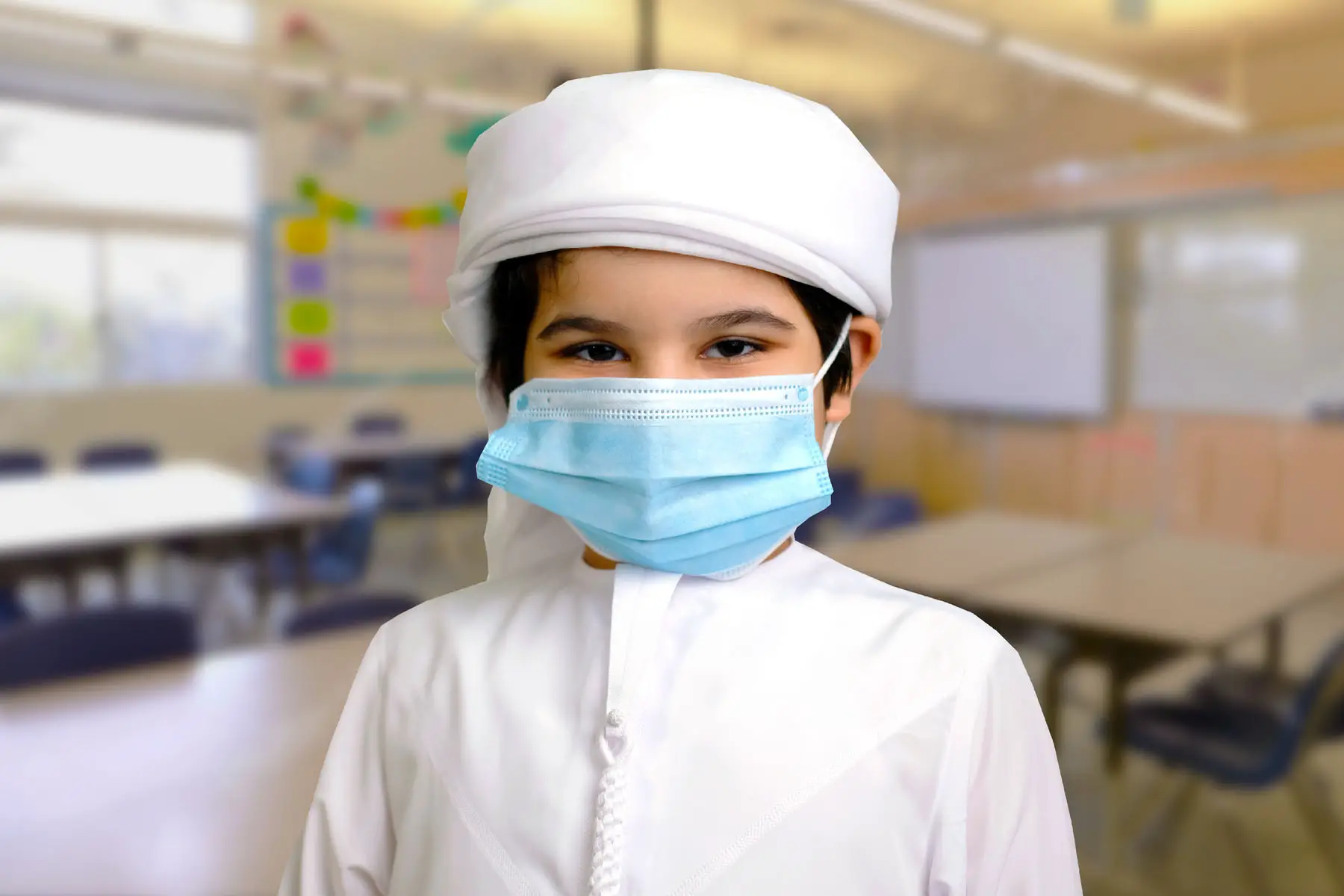
In June of 2021, the Emirate government announced that schools would facilitate in-person learning starting in August of 2021. After this announcement, health authorities detailed guidelines for reopening in the fall. Masks are required. All students, despite vaccination status, must take a PCR test monthly. Unvaccinated students aged 12 and older must test weekly. Schools must maintain social distancing and mask use and must have a quarantine room for students experiencing symptoms. Students aged 16 and older must prove vaccination if medically able.

You can find more information about that reopening briefing on the Emirates News Agency’s website. Parents looking for more information on reopening can find it here. While parents of private school students should read this document from the Department of Education.
COVID-19 support for vulnerable people in the UAE
Vulnerable people, called People of Determination in the UAE, are supported in various ways throughout the COVID-19 pandemic. Those with mobility challenges or who are immunocompromised have the option to be tested for COVID at home. To book an appointment for a PCR test, call 8001717. To learn more about initiatives to support vulnerable people in the UAE, check out the official government site.



Did you find this guide helpful?