
'%20id='ico-down'%20stroke='%23000000'%20stroke-width='1.5'%3e%3cg%20transform='translate(1092.250000,%20254.750000)'%3e%3cpolyline%20id='Path-2-Copy-4'%20transform='translate(5.500000,%202.750000)%20scale(1,%20-1)%20rotate(-180.000000)%20translate(-5.500000,%20-2.750000)%20'%20points='0%200%205.5%205.5%2011%200'%3e%3c/polyline%3e%3c/g%3e%3c/g%3e%3c/g%3e%3c/svg%3e)


Finance
Taxes
Corporate tax in South Africa in 2026
For self-employed workers and business owners, this guide explains corporate tax in South Africa, including corporate tax rates and dividend taxes.


If you are self-employed or a business owner, you are liable to pay South African corporate tax. However, the amount of business tax you pay and which deductions you can claim depend on the size and type of your business in South Africa.
This guide explains the essentials of corporate tax in South Africa, including the following topics:
The corporate tax system in South Africa
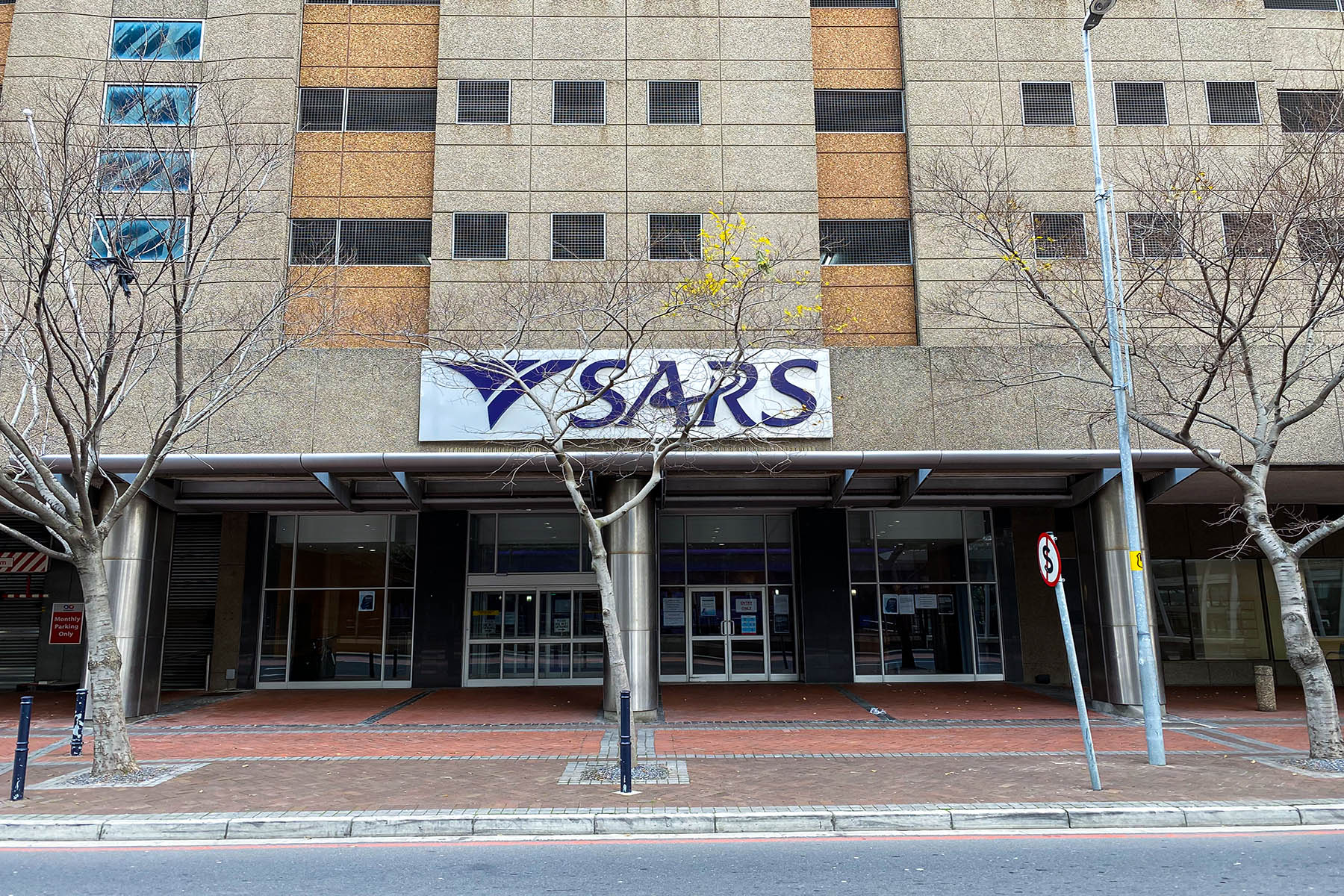
The standard tax on income for registered companies in South Africa is currently a flat rate of 27% and is collected by the South African Revenue Service (SARS), though there are different tax rates for smaller or different kinds of companies.
The South African government collects most of its corporate income tax from foreign companies with a branch in South Africa and from personal service provider companies.
You can register for and pay your business taxes online or at a local SARS branch.
Who pays corporate tax in South Africa?
Corporate, business, or company tax in South Africa is payable by all registered businesses in the country to the South African Revenue Service (SARS for short). Generally, South African-based businesses are liable to pay South African corporate tax on their worldwide income.
Companies based outside South Africa but operating in the country or with a branch there pay tax on income derived from within South Africa only.
The types of companies that have to pay corporate tax in South Africa include companies such as:
- Listed and unlisted public companies
- Private companies
- Close corporations
- Co-operatives
- Collective investment schemes
- Small business corporations
- Share block companies
- Corporate bodies
- Public benefit companies
- Dormant companies
Corporate tax for sole traders and partnerships
If you qualify as a self-employed or freelance worker in South Africa or if your business trades as a sole proprietorship or a partnership (or unincorporated joint venture), then you will be taxed as an individual. As a result, you must submit a personal income tax (ITR12) rather than a business tax return in South Africa.
Partnerships can be between two or more people. In such a case, each partner is taxed as an individual on their share of the partnership profits.
Corporate tax rates in South Africa
The corporate tax rate in South Africa is a flat rate of 27% for all companies. However, trusts (excluding special trusts) in South Africa pay tax at a separate rate of 45%.
Additionally, companies are subject to a capital gains tax (CGT) of 21.6%. Trusts pay a capital gains tax of 36%, while special trusts and individuals are liable for a rate of 18%.
Small business tax in South Africa
If you run a small business in South Africa, you have a number of options on how to register your business. Consequently, your decision will affect how you pay business tax in South Africa.
If you run the business yourself, you may wish to operate as a self-employed sole trader. However, if you wish to register the company as a separate legal taxpaying entity, you have the following options.
Register as a standard private company
This means that the company will be responsible for paying corporate tax in South Africa at the standard rate. You can also register as a Close Corporation (CC) or a Cooperative but will still pay corporate tax in South Africa at the standard rate.
Register as a micro-business for turnover tax
A self-employed person (sole proprietors and those in a partnership) or a company (including a close corporation and a co-operative) may qualify as a micro-business. To do so, the annual qualifying turnover must not exceed R1 million. This is an alternative to paying company tax in South Africa that can also simplify the tax process for your business. For example, micro-businesses have the option of paying their turnover tax, VAT, and employees’ tax bi-annually. However, some entrepreneurs are excluded from this option.
The current progressive tax rates for micro-businesses are:
| Taxable turnover | Rate of tax |
| R1–600,000 | 0% of taxable turnover |
| R600,001–950,000 | 1% of taxable turnover above R600,000 |
| R950,001–1,400,000 | R3,500 + 2% of taxable turnover above R950,000 |
| R1,400,001 and above | R12,500 + 3% of taxable turnover above R1,400,000 |
Register as a Small Business Corporation (SBC)
If you want to pay tax on small businesses in South Africa, you can register as an SBC if your annual turnover does not exceed R20 million, and you meet other criteria. Generally, SBCs are taxed at a lower rate of corporate tax than other companies.
SBC tax rates for 1 April 2026 through 31 March 2027 are:
| Taxable Income | Rate of Tax |
| R1–99,000 | 0% of taxable income |
| R99,000–365,000 | 7% of taxable income above R99,000 |
| R365,001–550,000 | R18,620 + 21% of taxable income above R365,000 |
| R550,001 and above | R57,470 + 27% of the amount above R550,000 |
These tax rates have adjusted from the 2025/26 rates to account for inflation.
Special rates apply in certain industries, such as mining and long-term insurance.
More updated information on how to register your business is available from the South African Revenue Service.
Corporate tax exemptions and credits in South Africa
Corporate tax exemptions in South Africa
Organizations operating as a not-for-profit or as a public benefit organization are exempt from paying corporate tax in South Africa. For other businesses, the following charges can be deducted from taxable income as allowable business expenses:
- Business expenses: All outgoings incurred as part of running the business. This includes material and equipment costs, employee costs, administration costs, business rental costs, office supplies, travel, uniforms, wholesale purchase costs for goods resold, financial charges, utilities, legal fees, marketing, and promotion.
- Capital expenses: Such as capital equipment, machinery, and renovation costs.
- Start-up expenses: Expenditure incurred for business purposes in the period before the commencement of the first year of trade, provided these are expenses that would have qualified as deductible business expenses within the general operation of the business.
- Net operating losses: Any losses carried forward from previous years.
Corporate tax credits in South Africa
In addition to these, the following credits and incentives are available for companies paying corporate tax in South Africa:
- Foreign tax credit: South African residents can receive a rebate on corporate income tax (CIT) for foreign taxes paid on foreign income if the income is included in their taxable income and is subject to non-recoverable foreign tax. The rebate is capped at the total normal tax payable in South Africa, determined by the ratio of foreign-taxed income to total taxable income. Furthermore, some countries have a tax treaty with South Africa to prevent double taxation.
- Research and development (R&D): Certain R&D expenses in South Africa are 150% deductible with government pre-approval. This covers depreciation for machinery and capital assets, while R&D buildings can be written off over 20 years. The incentive lasts for ten years, starting 1 January 2024.
- Headquarter company regime: South Africa provides HQ benefits, like tax exemptions, for resident companies meeting specific ownership and asset criteria.
- Industrial policy projects: Tax allowances for industrial manufacturing projects offer additional investment incentives. Approved projects may receive allowances up to 55% for manufacturing assets, with conditions and limits applied.
- Special Economic Zones (SEZ): Companies in SEZs receive a 15% lowered corporate tax rate, a 10% allowance for new/unused building costs, and reduced employee taxes. VAT and customs relief within Customs Controlled Areas are available until 1 January 2031.
- Energy efficiency savings: Taxpayers can deduct R0.95 for every kilowatt-hour saved until 31 December 2030, compared to a baseline set at the start of the year.
- Venture capital companies: Investors in small and medium-sized businesses can claim a tax incentive through venture capital.
Value-Added Tax (VAT) in South Africa
VAT is an indirect tax payable by some companies in South Africa. The VAT rate in South Africa is currently 15% on the supply of most goods and services (with some exemptions) and on imported goods.
Businesses must register for VAT if their annual turnover exceeds R2,300,000 (increased from R1,000,000 as of 1 April 2026). However, they can also register voluntarily if their yearly turnover is above R120,000 (increased from R50,000 as of 1 April 2026), which will allow them to claim input tax.
Manage your international business finances with Wise
Wise Business allows you to hold and manage money in 40+ currencies, send international payments at the mid-market exchange rate with low fees, and receive payments with account details. You can pay international suppliers, receive payments from clients abroad or manage expenses across different currencies.


Corporate tax year in South Africa
The tax year in South Africa runs from 1 March to the end of February of the following year. However, businesses can choose their own 12-month financial year period (e.g., 1 June to the end of May).
Companies must submit an annual corporate income tax return (ITR14) within 12 months after their financial year-end. Companies are also required to submit two provisional tax returns during the financial year — one six months into the year and one at the end — based on estimates of taxable income.

All companies have to pay their taxes using the provisional tax system. Two provisional tax returns must be submitted during the financial year — one six months into the year and the second at year-end — based on estimated taxable income. A third top-up payment may be made within six months after year-end to avoid interest if the estimates were too low. The final annual corporate income tax return is submitted after year-end, and any balance owing is then paid.
Company tax in South Africa can be paid in the following ways:
- Online banking
- Electronic funds transfer
- Bank payments
- eFiling
- SWIFT payment (available only for foreign payments)
How to file your corporate tax return in South Africa
Firstly, in order to pay business tax in South Africa, you must register your business or yourself as a taxpayer. Then, SARS assesses your business tax return in a similar fashion to personal income tax.
The business tax return form in South Africa is the ITR14. You can file your company income tax return via eFiling or at a local SARS branch.
When filing the business tax return form, you will need your Standard Industrial Classification (SIC) code.
Other types of business tax in South Africa
Pay-as-you-earn (PAYE) for employees
This is an individual income tax on the salary of employees in South Africa, taxed at a progressive rate dependent on the employee salary, but has to be withheld by the employer. If you have employees, then you must arrange their PAYE contributions and make regular payments to SARS. You can get more information about registering for PAYE from the South African Revenue Service.
Unemployment Insurance Fund (UIF)
The UIF is an unemployment benefit fund payable to those who have been in employment for at least 24 hours per month if they become unemployed, sick, or take maternity leave. It is a short-term benefit that is funded through contributions of 2% of the employee’s salary (1% from the employer and 1% from the employee).
Skills Development Levy (SDL)
SDL is a tax in South Africa payable by employers to promote the learning and development of employees. Employers become liable for SDL if their total annual salary bill is more than R500,000. It is charged to employers at a rate of 1% of the total salary bill.
Dividends tax in South Africa
Dividends tax in South Africa applies to dividend payments for shareholders at 20%. It is a tax levied on the payee but withheld by the company making the payment. If your company has shareholders who receive dividend payments, you are responsible for deducting tax from the payment and submitting it to SARS.
Foreign business owners
If you are a foreign resident with a business based in South Africa, you will be liable to pay corporate tax in South Africa on your worldwide income. However, if you have a non-resident company – a company that has a branch or establishment in South Africa but is based elsewhere for tax purposes – then you only pay company tax in South Africa on income earned inside the country. This tax applies at the standard rate of 27%) unless you register as an SBC or for turnover tax.
Furthermore, if you are an expat who qualifies as a tax resident in South Africa, your home country may have a tax treaty with South Africa. If not, then you may be able to claim foreign tax credits on taxes paid on foreign income. Read more about the South African tax system.
Corporate tax advice in South Africa
Corporate terminology and business taxes can quickly become complicated, even when you’re operating a business on native soil. The stakes become much higher when you’re operating a business in a foreign country.
Get professional help to avoid becoming overwhelmed. Also, remember that the time and money you save by sidestepping costly mistakes are impossible to quantify.
Consult the South African Institute of Taxation to find a tax professional or to access a tax helpline.
Useful resources
- South African Revenue Service (SARS) – the national tax authority
- South African Institute of Taxation – the professional body for tax advisors
- SARS eFiling – online SARS portal for filing tax returns
- SARS Corporate Income Tax (CIT) – all the latest news and developments on South African CIT


Did you find this guide helpful?