
'%20id='ico-down'%20stroke='%23000000'%20stroke-width='1.5'%3e%3cg%20transform='translate(1092.250000,%20254.750000)'%3e%3cpolyline%20id='Path-2-Copy-4'%20transform='translate(5.500000,%202.750000)%20scale(1,%20-1)%20rotate(-180.000000)%20translate(-5.500000,%20-2.750000)%20'%20points='0%200%205.5%205.5%2011%200'%3e%3c/polyline%3e%3c/g%3e%3c/g%3e%3c/g%3e%3c/svg%3e)


Move
Visas + Immigration
Permanent residence in Singapore
Find out how to get permanent residence in Singapore, including the requirements, application process, and how to renew it.

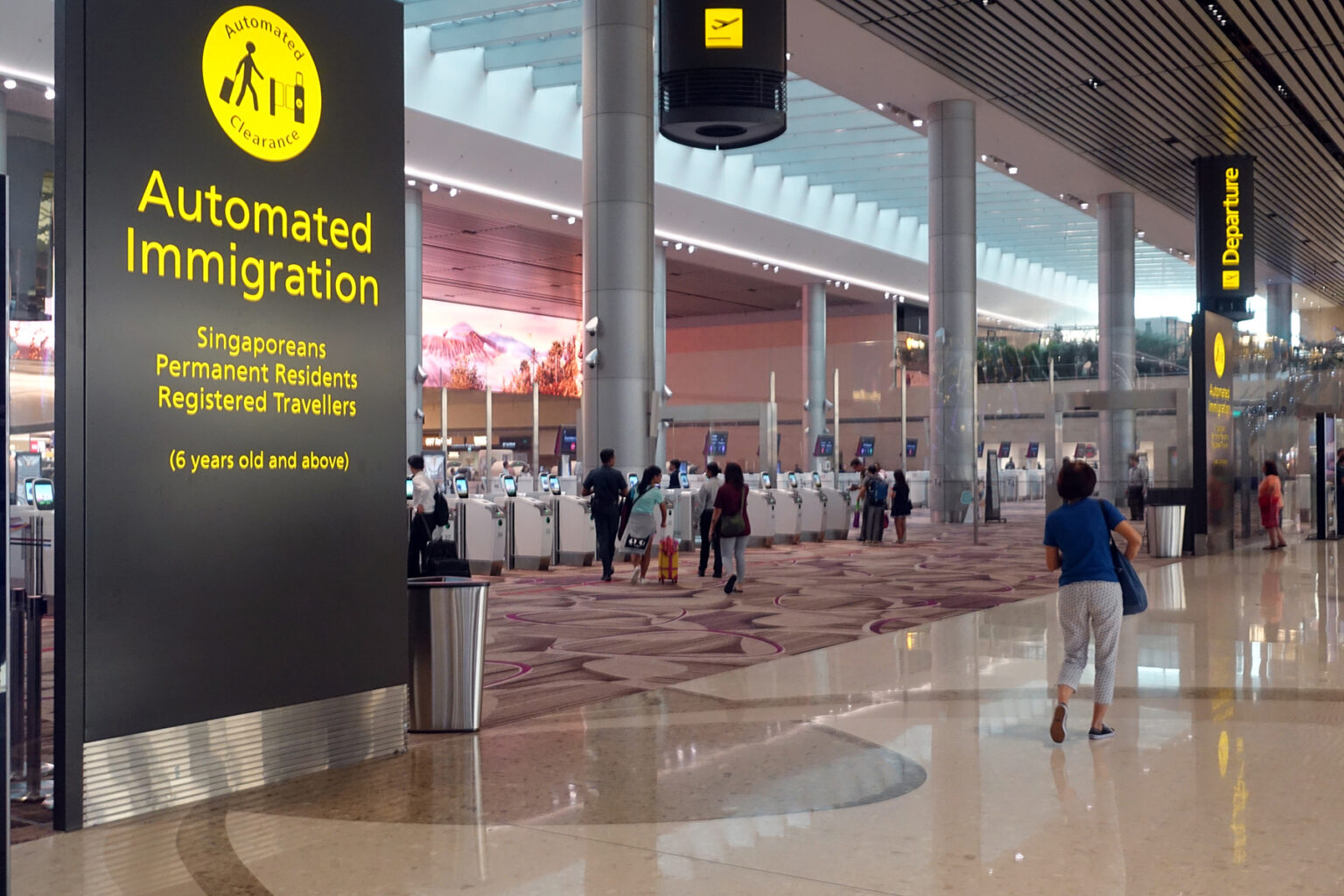
If you live and work in Singapore, perhaps you’re considering staying permanently. Fortunately, you can apply for permanent residence under several schemes. Getting permanent residence status means you can enjoy long-term stability without needing to renew visas and permits periodically.
Read on to learn more about gaining permanent residence in Singapore, including the following:
Use Wise for moving money abroad
Wise offers expatriate-friendly financial services including international money transfers at mid-market exchange rates with transparent, low fees, helping you save money when sending funds to family or managing finances across borders. Their multi-currency account allows you to hold, convert, and spend money in multiple currencies.

Permanent residence in Singapore
The Singapore Immigration & Checkpoints Authority (ICA) oversees immigration policies, including the majority of permanent residence applications. As of June 2023, there were around 540,000 permanent residents (PR) among Singapore’s total population of 5.92 million. This compares to 3.61 million Singaporean citizens.
Foreigners can take a few pathways to attain permanent residence in Singapore. The main schemes are:
- Professionals/technical personnel and skilled workers and their families
- The Global Investor Program, managed by the Singapore Economic Development Board (EBD)
- The Foreign Artistic Talent Scheme, jointly managed by the ICA and the National Arts Council (NAC), though the ICA has the final say
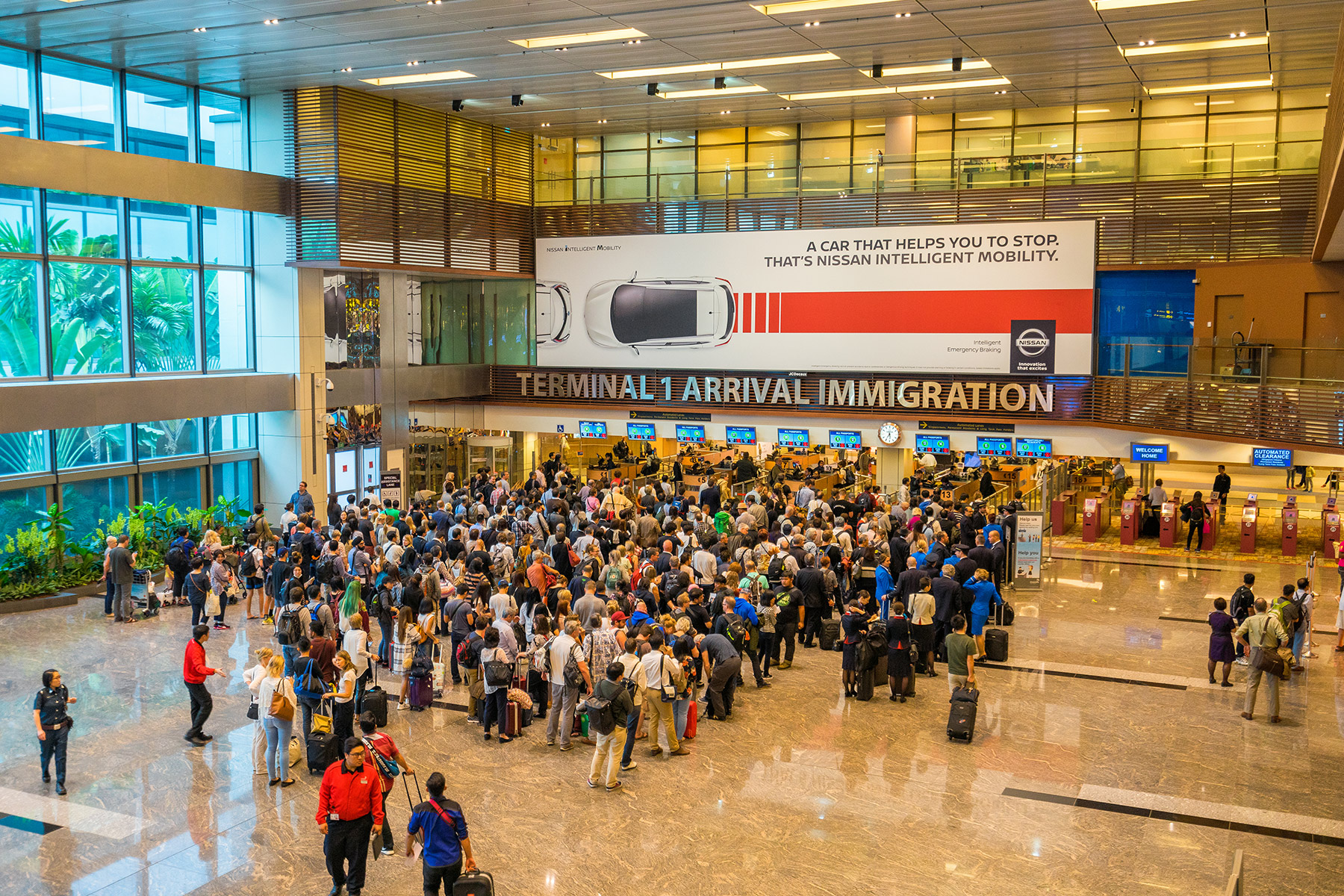
Eligibility is assessed based on factors like family ties, economic contributions, qualifications, integration potential, and commitment to Singapore.
Permanent residents enjoy certain benefits relating to housing, education, healthcare, and more. After two to six years, they may apply for full citizenship.
Citizenship vs permanent residence in Singapore
Both Singaporean citizenship and permanent residence come with many similar rights and privileges. These include the ability to live, work, access healthcare and education, and purchase property in Singapore.
However, citizens also enjoy additional benefits not extended to permanent residents. For instance, citizens can vote in elections, access more housing grants and subsidies, hold most public sector jobs, and obtain a Singapore passport for visa-free travel to many countries.
Male PRs are still required to serve in the National Service upon turning 18, similar to citizens. However, exemptions exist for those who obtain permanent residence through investment or professional worker schemes.
Some key differences include:
- Citizens cannot hold dual nationality, while permanent residents can maintain their existing citizenship.
- PRs must renew their re-entry permits periodically when traveling overseas.
- PRs can have their status revoked if convicted of a crime, but citizens cannot be deported.
- Citizens enjoy priority for purchasing subsidized public housing from the Housing and Development Board.
There are pros and cons for both citizenship and PR status in Singapore. The optimal path depends on circumstances like your family situation, career plans, housing needs, and travel preferences.
Requirements for permanent residence in Singapore
Applicants for permanent residence must be working in Singapore on a valid work pass, such as an Employment Pass or S Pass. There is no minimum residence duration, but applicants are typically expected to have lived and worked in Singapore for several years before the application.
Other key requirements include:
- Proof of stable employment with sufficient income. You should provide recent pay slips, tax documents, employment letters, and other financial records.
- Meeting minimum qualifications and skills criteria for the work pass held. When applying, submit educational certificates, professional licenses, transcripts, and other credentials.
- The applicant must demonstrate good character without any criminal offenses or convictions.
After working on an Employment Pass or S Pass for several years, some applicants become eligible to submit a direct Singapore citizenship application.
Required documents for all applicants
You will need to submit various documents to support your permanent resident application, including:
- Completed Electronic Permanent Residence (e-PR) system declaration form
- A 35mm wide by 45mm high digital color photograph of each applicant
- Valid Employment Pass or S Pass
- Identity card (if applicable)
- Birth certificate or other official document showing both your parents’ names
- Deed poll or change of name certificate (if applicable)
- Passport valid for a minimum of six months showing immigration history
- All educational and professional qualifications, including tertiary qualifications, transcripts, professional licenses, membership, and vocational trade certificates
- Letter from your current employer that includes the date of employment, your position, and your salary for the past six months
- Pay slips from the last six months
- Testimonials from previous employers giving details of your role, how long it lasted, and the last basic salary you received (if any)
- A consent form for ICA to obtain and check the financial information you provided in your application
Additional documents for specific cases
Self-employed applicants:
- A valid Business Registration Certificate that includes the names of your partners
- If you are self-employed, an occupational license that is connected to your employment, such as a property agent license or a stall license
Married applicants:
- Official marriage certificate
- Death or divorce certificate if you’ve been married before
- Custody documents for children from previous marriages, if any
- Your spouse’s educational and professional qualifications
If you wish to include your spouse in your application, you will also have to provide:
- Your spouse’s valid passport with a valid Immigration Pass
- Spouse’s birth certificate with both parents’ names
- Spouse’s deed poll or change of name certificate (if applicable)
- Spouse’s identity card (if they have one)
- Death or divorce certificates and children’s custody papers from your spouse’s prior marriages, if applicable
For those including children in their application, you must submit the following:
- Your child’s valid passport and Immigration Pass
- Their birth certificate showing their name and those of their parents
- Adoption papers (if applicable)
- Deed poll or change of name certificate (if applicable)
All foreign language documents need to have a certified English translation submitted together.
Send Money to Singapore for PR Applications
When applying for permanent residence in Singapore, you’ll need to transfer funds from abroad to cover application fees, investment requirements, and living expenses. Wise offers international transfers using the mid-market exchange rate with transparent, low fees. This can help you manage the financial requirements more efficiently, whether you’re paying the S$100 application fee or meeting the substantial investment thresholds for programs like the Global Investor Program.
Requirements for spouses of PRs or citizens
To acquire permanent residence through your spouse, you must be legally married to a Singaporean citizen or PR. There is no minimum residence duration in Singapore required before applying.
Unmarried children under 21 years old can also be included in the application. This covers biological and legally adopted children born within the context of a legal marriage.
Other essential requirements include:
- Proof that the Singapore citizen or PR spouse can financially support the family. Recent salary pay slips, income tax documents, and other financial information should be provided.
- The applicant must demonstrate good character without any criminal offenses or convictions.
- Male applicants must be aware of potential National Service obligations when their sons turn 18. This applies to both citizens and PRs of Singapore.

If the applicant has been married to the sponsoring Singapore citizen for at least three years, they can directly apply for Singapore citizenship without needing to hold permanent resident status first. This shortens the path to citizenship.
Required documents
You must submit various documents to support your PR application, including the following:
For applicant(s):
- Valid travel document with validity of at least six months, valid immigration pass, and passport pages showing personal details
- Identity card (if applicable)
- Birth certificate, official household census list, or family register showing both parents’ names
- Deed poll or change of name certificate (if applicable)
- Birth certificates of your children from the current marriage (if any)
- Death certificate, divorce certificate, and custody papers from previous marriages (if any)
- All educational certificates, including tertiary qualifications
- Work pass (if employed)
- Employer’s letter showing employment details and salary breakdown for the last six months
- Last six months of pay slips
- Valid business registration certificate with partners (if self-employed)
- Relevant occupational license (if self-employed)
For sponsor:
- Identity card
- Official marriage certificate
- Death/divorce certificates and custody papers from previous marriages (if any)
- All educational certificates, including tertiary qualifications
- Employer’s letter with the details of your employment, including a salary breakdown for the previous six months
- Last six months of pay slips
- Consent form for ICA to verify financial information
- Valid business registration certificate and/or vocational license (if self-employed)
- Relevant occupational license (if self-employed)
Permanent residence for international students in Singapore
If you decide to stay permanently in Singapore after studying, permanent residence may be an option. To get this status, you must have resided in the country for more than two years before applying. You must also have passed at least one national exam (e.g., PSLE, GCE ‘O’/’A’ Levels) or be enrolled in the Integrated Program (IP).

Other key considerations include:
- You must be a full-time student at an approved Singapore education institution. Make sure you can show evidence, such as admission letters and student passes.
- You might need to submit bank statements to demonstrate that you can support your tuition and living costs.
- You must not have any criminal offenses or convictions.
Some assistance schemes exist for eligible outstanding foreign students from approved institutions.
Required documents
You will need to submit documents to support your permanent resident application, including:
- A completed e-PR system declaration form
- A passport that is valid for a minimum of six months with a valid Immigration Pass
- Your ID card (if applicable)
- Your Birth certificate or other official document showing both parents’ names
- If applicable, a deed poll or certificate showing a name change
- Educational certificates, transcripts, and other professional or vocational trade certificates, along with current result slips
- Your parents’ valid passports
The Foreign Artistic Talent (ForArts) Scheme
The ForArts Scheme enables outstanding international arts professionals to become Singapore Permanent residents in recognition of their cultural significance and contribution.
To be eligible, applicants must meet all of the following criteria:
- Relevant training/education in their artistic field
- Outstanding professional achievements and experience in performing arts, visual arts, literary arts, design and/or media
- Significant past contributions to Singapore’s arts and cultural scene, including leadership-level local engagements
- Concrete plans to remain involved in Singapore’s arts and culture

Applicants must also demonstrate good character and the ability to be a role model in their field.
The scheme is jointly administered by the Singapore Immigration & Checkpoints Authority (ICA) and the National Arts Council (NAC).
Required documents
The first stage of the application process will require you to submit the following documents:
- Completed ForArts application form (available on the NAC ForArts information page)
- Your resume
- Additional documents requested by the NAC for assessment
Requirements for the Global Investor Program
The Global Investor Program (GIP) allows qualified business owners and family office principals to attain permanent residence status by investing and operating a business in Singapore.
The main applicant must have an ownership stake and active management role in an existing business and meet one of the following profiles:
- Established business owners:
- At least three years of entrepreneurial and business track record
- S$200 million annual turnover
- 30% shareholding in a privately held company
- Next-generation business owners:
- Immediate family has at least 30% shareholding or is the largest shareholder in business with a S$500 million annual turnover
- Applicant is on the management team
- Founders of high-growth companies:
- One of the largest shareholders in the company with a S$500 million valuation
- The company must have reputable Venture Capital or Private Equity firms as investors
- Family office principals:
- Five-year track record of entrepreneurship, investment, or management
- S$200 million in net investible assets
The company must also be in one of the specific industries listed by the Economic Development Board (EDB). These include aerospace, alternative energy, media and entertainment, and more – check the supporting documents for the full list.
The main applicant must commit to one of three investment options in Singapore:
- Invest at least S$10 million in a new or expanded local business. The applicant should have a 30% shareholding.
- Invest S$25 million in a GIP-approved fund that invests in Singapore companies.
- Establish a family office with S$200 million assets under management. At least S$50 million must be deployed in approved investments.
Dependent spouses and unmarried children under 21 can be included in the application. You’ll also need to submit birth certificates, marriage certificates, custodial papers, and educational/professional qualifications.
The application process takes around 12 months and includes interviews and due diligence. After receiving initial approval, the applicant must invest within six months and submit documentation.
Required documents
- Completed online application forms (Form A, B, C)
- Printout of submitted online application
- A hard copy of the S$10,000 application fee transaction slip
- Application for Entry Permit to Enter Singapore (Form 4)
- Passport photos
- Applicant’s passport pages
- Applicant’s birth certificate
- Household census/family registry (if applicable)
- Details of family members’ backgrounds
- Marriage certificate (if applicable)
- Divorce/custody papers from previous marriages (if applicable)
- Deed poll/change of name certificate (if applicable)
- Financial statements of business(es) used to qualify
- Documents showing the applicant’s share ownership
- Shareholding structure diagram
- Business registration certificates
- Organization chart
- Detailed five-year business plan
- ACRA registration of Singapore investment (if applicable)
- Additional supporting documents (if any)
- Educational certificates
- Professional licenses
- Transcripts
- Employment letters
- Recent pay slips
- Tax documents
- Employer consent form
- Spouse’s documents (if applicable) – passport, birth certificate, qualifications, marriage certificate, divorce papers, custody papers, deed poll
- Children’s documents (if applicable) – passport, birth certificate, adoption papers, deed poll
How to apply for permanent residence in Singapore
The application process differs depending on the scheme you are applying to. You can find a step-by-step guide to each program below.
For professionals, technical personnel, and skilled workers
If you are applying for permanent residence as a professional, technical personnel, or a skilled worker, you should complete the following processes:
- Gather all required documents, certificates, forms, photos, and translations in advance for you and your family members. Make sure they meet the ICA specifications.
- Fill in the application form on the e-PR system on the ICA website. Upload scanned copies of supporting documents for all applicants.
- Pay the non-refundable fee of S$100 per applicant.
- Print, sign, and mail the completed physical declaration form to the ICA for each applicant. This must match your online application.

The ICA typically takes six months to review applications and documents, but this can vary. They may ask you to submit additional documents or provide more information during the process. In that case, make sure you respond within the given deadlines. They will then send you an approval or rejection letter explaining the reasons for the decision.
Once you have approval, you must:
- Schedule a medical examination at an approved clinic
- After medical clearance, collect your new pink identity card from the ICA within three weeks
- Apply for a Re-Entry Permit if you need to travel overseas for more than six months, renewing it as required.
Foreign Artistic Talent Scheme
If you are applying under the ForArts scheme, you should email your application documents to [email protected] or mail them to the address below:
Foreign Artistic Talent Scheme
C/O Capability Development Department
National Arts Council
90 Goodman Road
Goodman Arts Centre, Blk A, #01-01
Singapore 439053
The NAC will notify you of the outcome within three months of receiving all necessary documents. If successful, you must complete the ICA’s online PR application form as they give final approval.
Foreign artists who do not meet the ForArts criteria but have worked in Singapore on an Employment Pass or Specialist Pass for two to three years can apply directly to the ICA for permanent residence.
Global Investor Program
The application process for the Global Investor Program (GIP) permanent residence visa typically takes 12 months to complete. The steps are as follows:
- Pay the non-refundable S$10,000 application fee via telegraphic transfer from overseas or local interbank transfer in a single transaction.
- Download the application forms (Forms A, B, and C) from the EDB website. Fill them out and upload them to the application page.
- Submit hard copies of supporting documents to EDB within one month of paying the fee.
- Attend an in-person interview with EDB officers. Be prepared to elaborate on your business activities and plans in Singapore.
If you are successful, you will receive an Approval-in-Principle (AIP) valid for six months. You should make your qualifying investment in Singapore within this timeframe. You’ll also need to show proof of your investment, such as share certificates, bank statements, and legal agreements.
Once your investment has been verified, the ICA will issue a Final Approval – you must formalize your permanent residence status within 12 months by providing fingerprints and registering for an identity card.
Permanent residence costs in Singapore
To apply for permanent residence in Singapore, you must pay a S$100 non-refundable processing fee for each applicant when submitting the application. This fee can be paid online with Visa, MasterCard, or American Express credit/debit cards or through Internet banking accounts with DBS/POSB, OCBC, UOB, or Standard Chartered Bank. You can also pay via PayNow.
If approved, you must complete formalities in person at the ICA office and pay the following fees per applicant:
- S$20 for an Entry Permit
- S$50 for a five-year Re-Entry Permit
- S$50 for an Identity Card
- S$30 per Entry Visa (for foreigners requiring a visa)
You can pay these fees via NETS, credit card (Visa/Mastercard), or mobile payment.
For the Global Investor Program, an additional non-refundable application fee of S$10,000 is payable upfront before submitting the application forms. You should pay this fee via telegraphic transfer from overseas or local interbank transfer to the Economic Development Board bank account. The application will not be processed without the full S$10,000. Payments over S$10,000 are also not refundable.
Applicants should note that the sender is responsible for any transaction or intermediary costs, which should not be deducted from the application fee. You should also submit a payment transaction slip with the application documents.
Permanent residence in Singapore for family members
Spouses and unmarried children under 21 of a citizen or PR of Singapore may also apply for permanent residence. They can either be included in a joint application or request PR later.
Other family members like siblings or parents may be eligible to apply for PR but must meet additional criteria related to qualifications, income, or business investment.
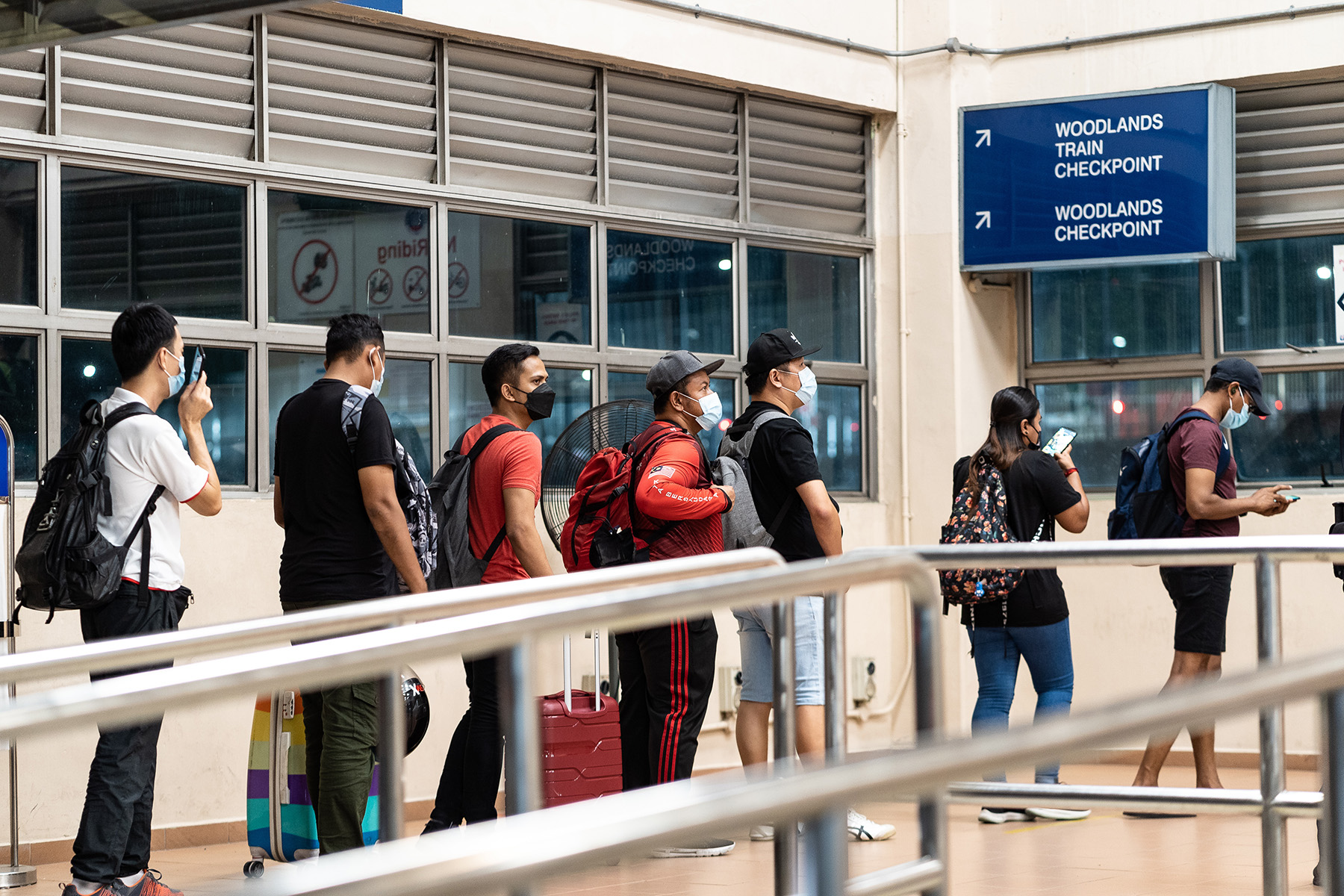
Male family member applicants granted PR under sponsorship are generally liable for National Service from age 18, with some exemptions. They must fulfill National Service duties before applying for citizenship.
Renouncing permanent residence status without completing National Service may negatively impact the applicant’s and their dependents’ future applications. So, male applicants should review these requirements before applying.
Losing your permanent residence rights in Singapore
Even if you become a permanent resident in Singapore, you can lose your status in certain circumstances. These may include:
- If your Re-Entry Permit (REP) expires or is invalid when you re-enter Singapore
- Committing serious crimes in Singapore or violating laws related to matters like CPF contributions or income tax
- Remaining outside Singapore for extended periods without a valid REP can be seen as lacking commitment to your status as a permanent resident
- Providing false information or documents during your permanent resident application
- Holding an expired or invalid travel document when attempting to enter Singapore
- Prolonged unemployment, especially if permanent residence was initially granted based on your employment status
- Failure to register for or complete National Service (if applicable – this may also lead to the revocation of permanent resident status for parents or siblings)
If your permanent resident status is revoked, you can submit a new application, but you must meet all prevailing eligibility criteria. Any previous immigration offenses or failure to comply with permanent resident obligations will likely impact the outcome.
What to do if your PR application is rejected
There are several potential reasons why your application for permanent residence (PR) in Singapore may be rejected, including:
- Inaccuracies or insufficient details in the application form and documents
- Not meeting the eligibility criteria for the chosen PR scheme
- Lacking credentials in areas like qualifications, income, professional experience
If your PR application is unsuccessful, you can submit an appeal online or in person to the ICA within six months of receiving your rejection letter, providing additional documents or arguments.
Alternatively, you can reapply for permanent residence in Singapore six months after your rejection date. Before reapplying, ensure you know the reasons for your initial rejection and work on strengthening your application.
Useful resources
- Immigration and Checkpoints Authority (ICA) – official government agency handling immigration and registration matters in Singapore, including permanent residence applications
- Economic Development Board – manages the Global Investor Program
- National Arts Council – manages the Foreign Artistic Talent Scheme with the ICA
Related Articles


Editor's picks

Did you find this guide helpful?