
'%20id='ico-down'%20stroke='%23000000'%20stroke-width='1.5'%3e%3cg%20transform='translate(1092.250000,%20254.750000)'%3e%3cpolyline%20id='Path-2-Copy-4'%20transform='translate(5.500000,%202.750000)%20scale(1,%20-1)%20rotate(-180.000000)%20translate(-5.500000,%20-2.750000)%20'%20points='0%200%205.5%205.5%2011%200'%3e%3c/polyline%3e%3c/g%3e%3c/g%3e%3c/g%3e%3c/svg%3e)


Lifestyle
Food & Drink
Top 10 Dutch foods – with recipes
Do you know your stamppot from your tompouce? Treat your tastebuds to some delicious Dutch recipes with these top 10 foods to try in the Netherlands.


Dutch cuisine might not be as well known as its European counterparts, but you’d be surprised just how scrumptious the food can be in the Netherlands. From the sweet and savory to the darn right crazy, there’s plenty to sink your teeth into (literally).
Just take a look at these lekkere Dutch foods, with recipes to try at home:
Flink
Empty cupboards but no time to go shopping? Flink offers all your favorite supermarket products at supermarket prices, delivered directly to your door. Whatever you need – food items, toiletries, or stationery, get it delivered in minutes with Flink.

1. Stamppot
This might not be the most sophisticated dish you will come across in the Netherlands, but you will certainly be grateful for it during those cold winter evenings. Literally translating as ‘mash pot’, stamppot is the ultimate comfort food and involves mashing together potatoes with other vegetables, and serving it with meat and gravy.
As stampot is basically the category name, there are many varieties you can try, including boerenkool (kale), zuurkool (sauerkraut), hutspot (onions and carrots), rauwe andijvie (endive), stamppot hete bliksem (onions, and sweet and sour apples). Nutritious, delicious, and easy to make, stamppot is undoubtedly one of the most popular Dutch foods you will find.
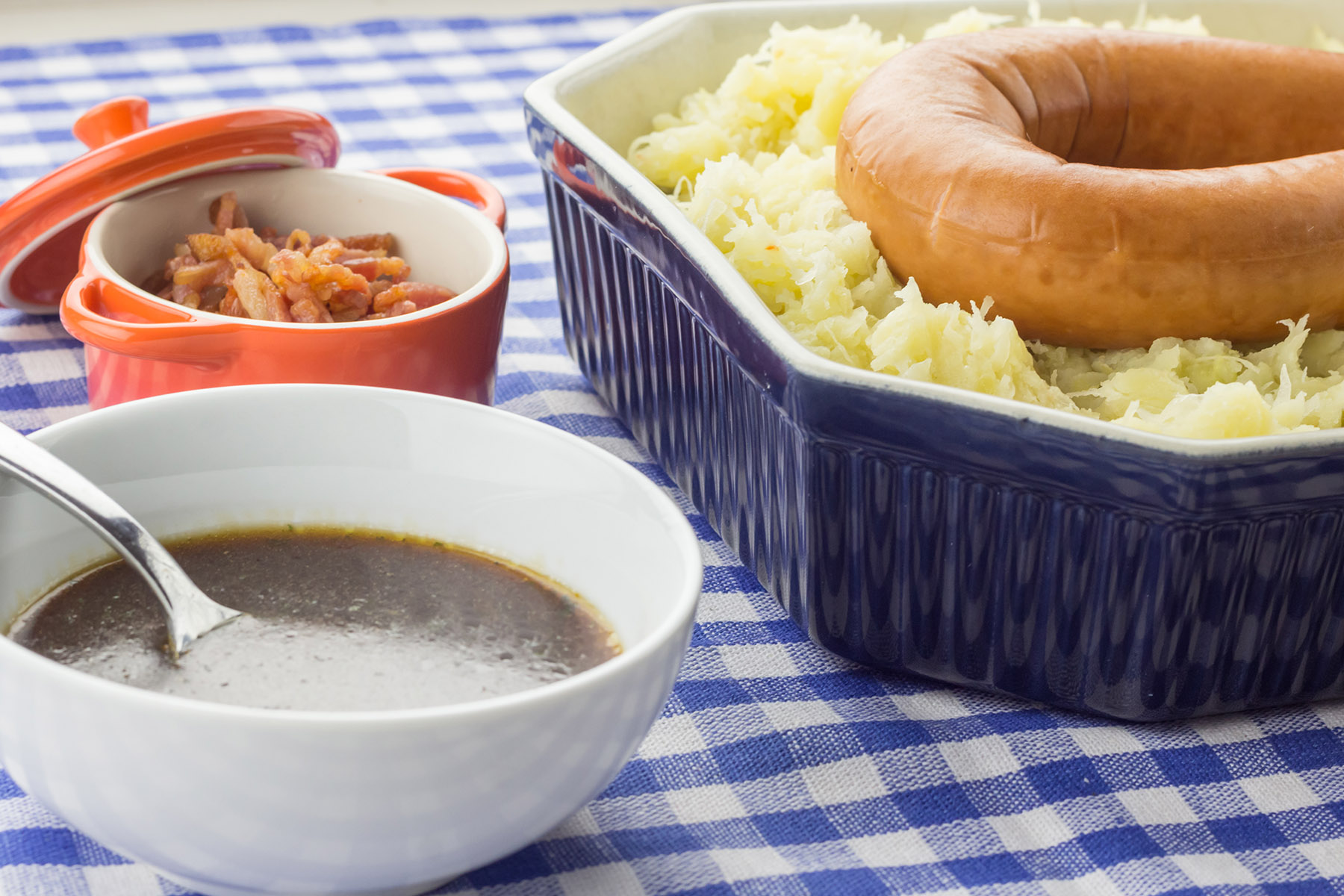
Make your own stamppot
- Try out some varieties with these 10 recipes
- Keep it classic with this Boerenkool stamppot recipe
- Why not throw in some onions, carrots, and potatoes instead to try hutspot
- Craving something else? Follow this hearty endive stamppot recipe
- Got a taste for something sour? Give this zuurkoolstampot recipe a go
2. Erwtensoep
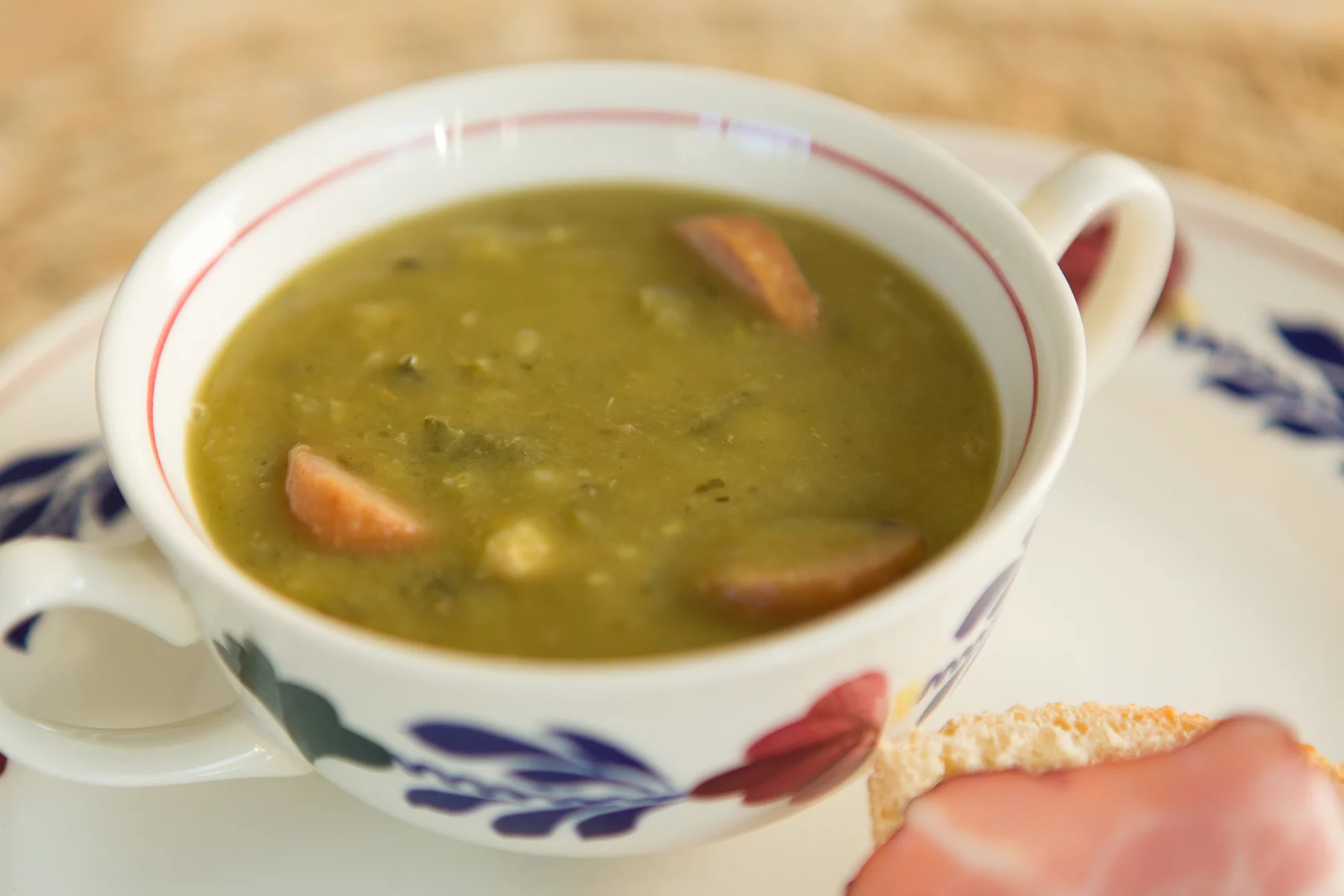
Essentially a meal in itself, erwtensoep is a thick pea soup – so thick, in fact, that some say you should be able to leave a spoon standing up in it!
Made with dried split green peas, leek, celeriac, carrots, smoked sausage, and bacon, the dish is traditionally served with a piece of rye bread (roggebrood), topped with butter and smoked bacon (katenspek).
Erwtensoep is usually a popular choice during the cold winter months. In fact, you will often see ice skaters along the frozen canals warming themselves up with a steaming hot mug of snert – another name for this tasty soup.
Make your own erwtensoep
- Follow this simple old family recipe
- Find out more about erwtensoep and try this tasty recipe
- Vegetarian? No problem, here’s a vegetarian recipe
3. Hachee
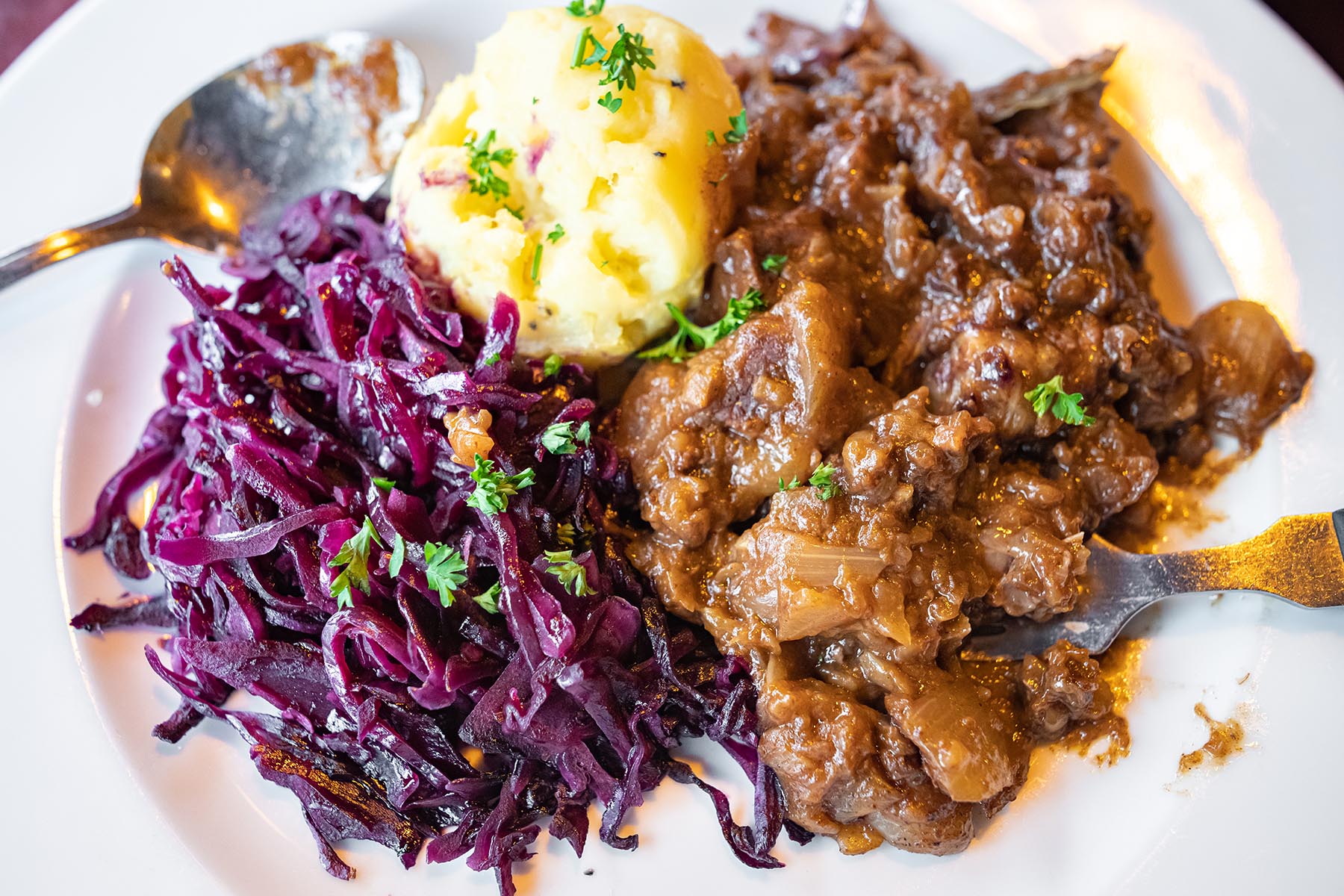
Hailing from the French word for chopping (hacher), hachee is a hearty Dutch stew consisting of beef and caramelized onions, cooked slowly for tenderness.
The dish is thought to date back to medieval times when meat was reused and cooked in a Dutch oven, along with whatever vegetables were available. Wine or vinegar is added to create a thick gravy, as well as cloves and bay leaves for the taste.
Hachee remains a much-loved dish in the Netherlands and a firm family favorite during the colder winter months. It’s served with white rice or mashed potatoes, sometimes with a side of boiled red cabbage (rodekool).
Make your own hachee
- Check out this traditional recipe for hachee
- Practice your Dutch and give this recipe a go
- Print this delicious recipe for your kitchen
4. Kapucijners met spek
A delicious old-fashioned regional dish, kapucijners met spek (capuchins with bacon) is undoubtedly the epitome of Dutch comfort food. This beloved dish combines tender capuchin beans with bacon and pickles, resulting in a delicious blend of earthy and smoky flavors. And for the ultimate umami flavor, you top it off with a spoonful of stroop (syrup).
Depending on the region, you’ll find numerous variants of this dish. For example, in Amsterdam, they’ll serve it with extra onions (Amsterdamse uitjes) and piccalilly, and in Drenthe, they switch out the capuchins for brown beans (bruine bonen).
Make your own kapucijners met spek
- Try out this traditional recipe
- Find some Dutch comfort in this food recipe
- Put a different spin on your dish with this recipe
5. Pannenkoeken
Pannenkoeken have remained a staple of local cuisine in the Netherlands for centuries, and it’s not hard to see why. These hearty Dutch pancakes can be topped with sweet or savory ingredients; such as bacon, salmon, apple, cheese, chocolate, powdered sugar, and syrup.
Don’t mistake them for the American or Scotch variety; Dutch pancakes are similar to the French ones, in that they’re thin and huge! As a result, they can be enjoyed as a main course for lunch or dinner.
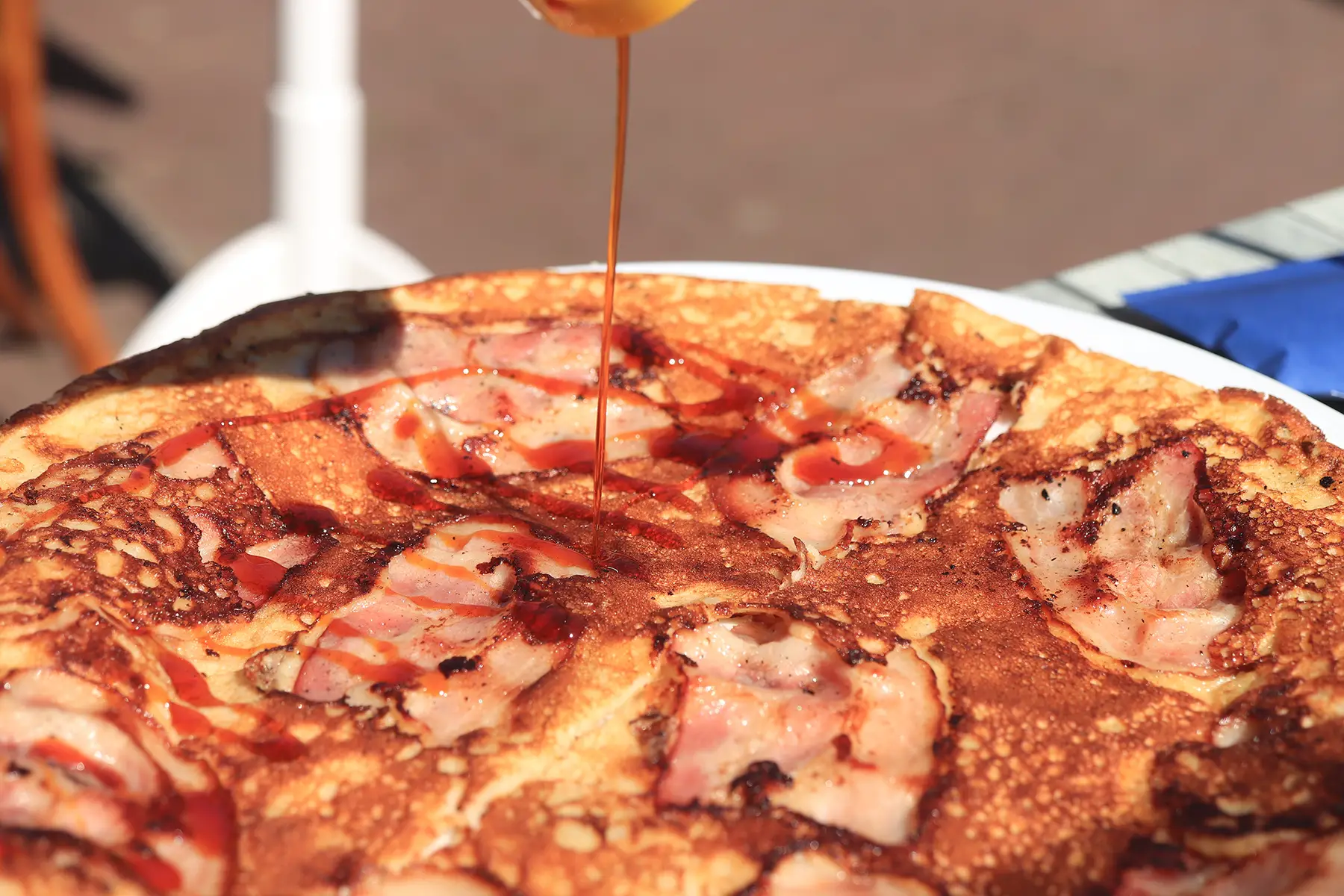
Pannenkoeken are made from a simple batter of eggs, milk, flour (traditionally buckwheat flour), and a pinch of salt. They are then cooked quickly over a pan on high heat and flipped until golden. Fortunately, there are countless pancake houses and ships dotted all over the Netherlands, meaning you are never far away from your next big feast.
Make your own pannenkoeken
- Follow this simple and traditional recipe
- Get inspired by these 15 Dutch pancake variations – both savory and sweet
- Make a delicious Dutch apple pancake in just half an hour
6. Broodje gehakt
Dive into Dutch street food culture with the irresistible broodje gehakt (meatball sandwich). This savory delight features a regular meatball grilled to perfection, nestled in a soft bun, and topped with lots of mayo or mustard. Whether enjoyed in your car on the go or at a bustling market, it’s an indulgence that captures the heart and soul of Dutch comfort food.
Make your own broodje gehakt
- Cook your own meatballs and add the bun later
- Follow this recipe for traditional Dutch meatballs
- Add these mouthwatering recipes to your diet
7. Poffertjes
If you can’t quite manage a pannenkoeken, then why not have the next best thing: poffertjes.
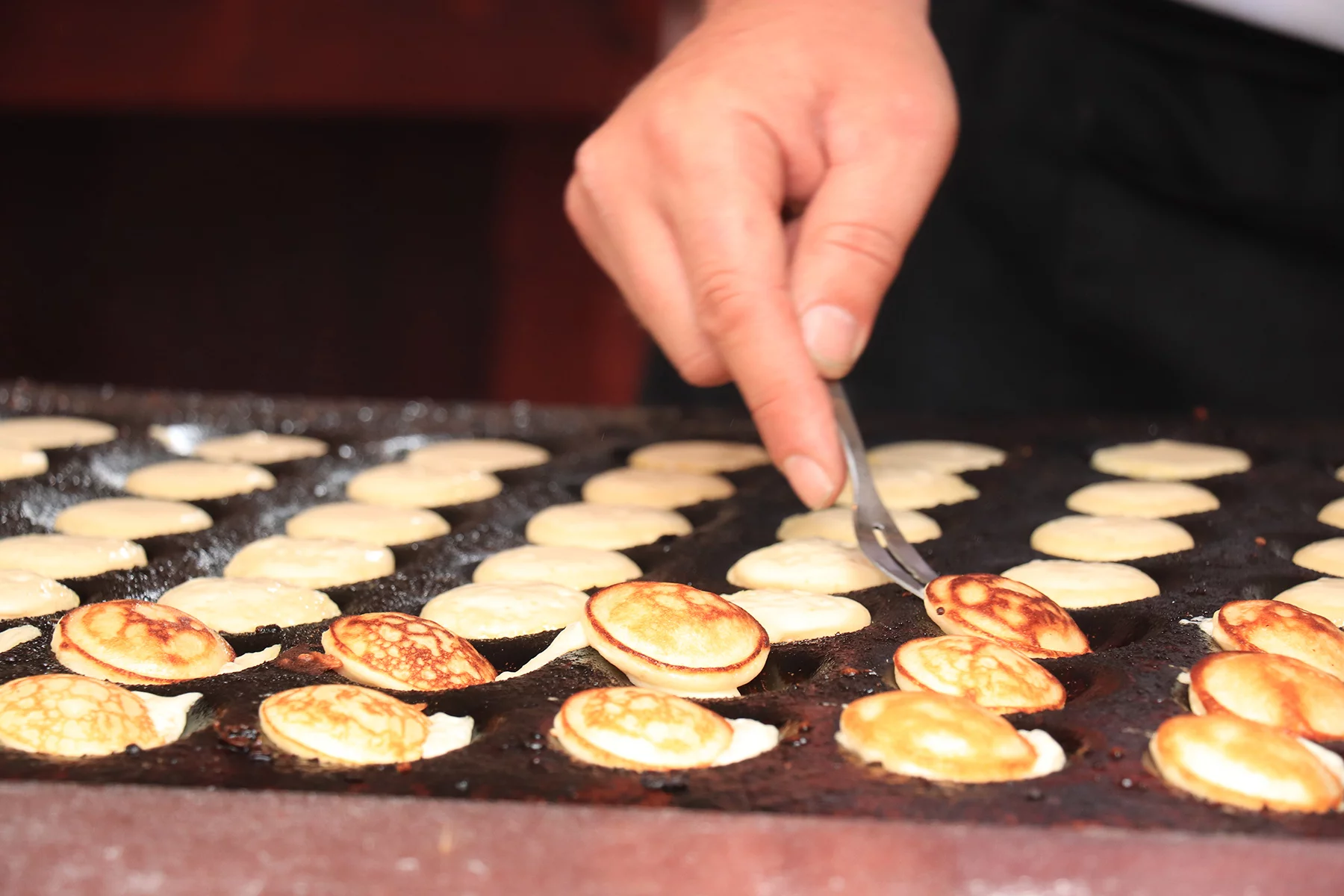
Made with yeast and buckwheat flour, these small, fluffy pancakes have a light and spongy texture and are a popular food at Dutch festivals and events. Food stalls usually serve them warm on a piece of cardboard paper with powdered sugar, butter, or syrup (stroop).
They are cooked in special poffertjes pans, which have lots of shallow indentations in them. But if you’re making them at home, you can simply drop small spoonfuls of the batter onto a frying pan or skillet and carefully turn them over to cook the other side.
Make your own poffertjes
- Try this classic poffertjes recipe
- Follow this recipe that uses buckwheat
- Give this dairy-free, gluten-free recipe a spin
8. Boterkoek
Easy to make and delicious to eat, Dutch boterkoek (butter cake) is one of the sweetest delicacies you will find in the Netherlands. Made with butter, sugar, and flour, this dairy delight is sometimes filled with almond paste to give it more flavor. It can also include vanilla, salt, or lemon zest, depending on preference.
Due to its dense consistency and rich taste, it usually comes in small pieces and is best with a steaming cup of coffee (koffie). Lekker!
Make your own boterkoek
- Try this easy-to-follow recipe
- Practice your Dutch with this tasty recipe
- Make boterkoek with a modern twist
9. Appeltaart
The Dutch have been enjoying appeltaart (or apple pie) for centuries. In fact, the first printed cookbook dating back to 1514 contains a recipe for one.
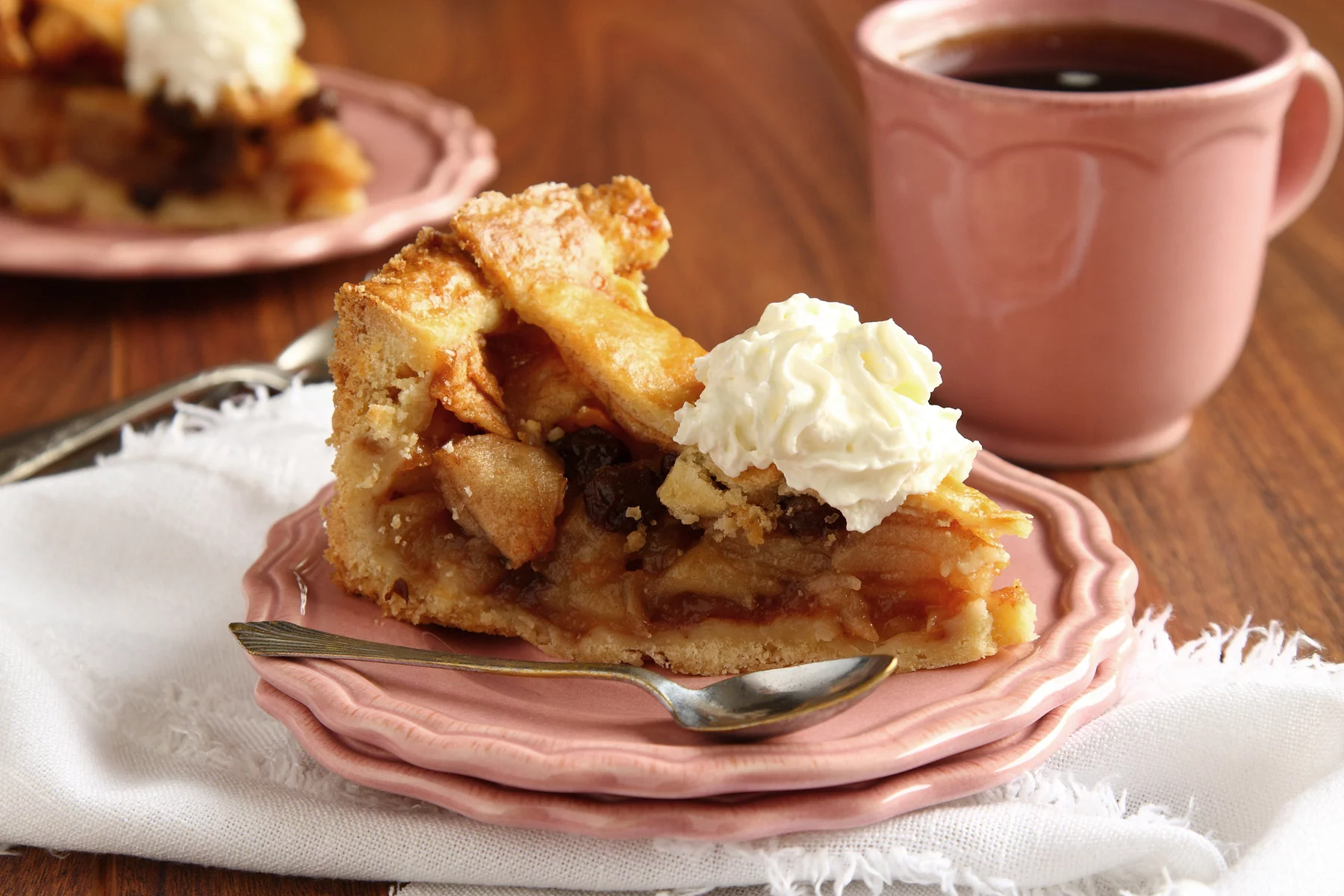
An appeltaart is a deep pie, filled with slices of apple mixed with sugar, cinnamon, lemon juice, and sometimes raisins or currants. Traditionally, the top of the pie is an attractive lattice of pastry strips; which allows you to see the delicious filling below. This heavenly dessert is even better with a generous serving of whipped cream (slagroom) and a cup of coffee.
Make your own appeltaart
- Try this simple appeltaart recipe
- Embrace apple season and bake up this classic recipe
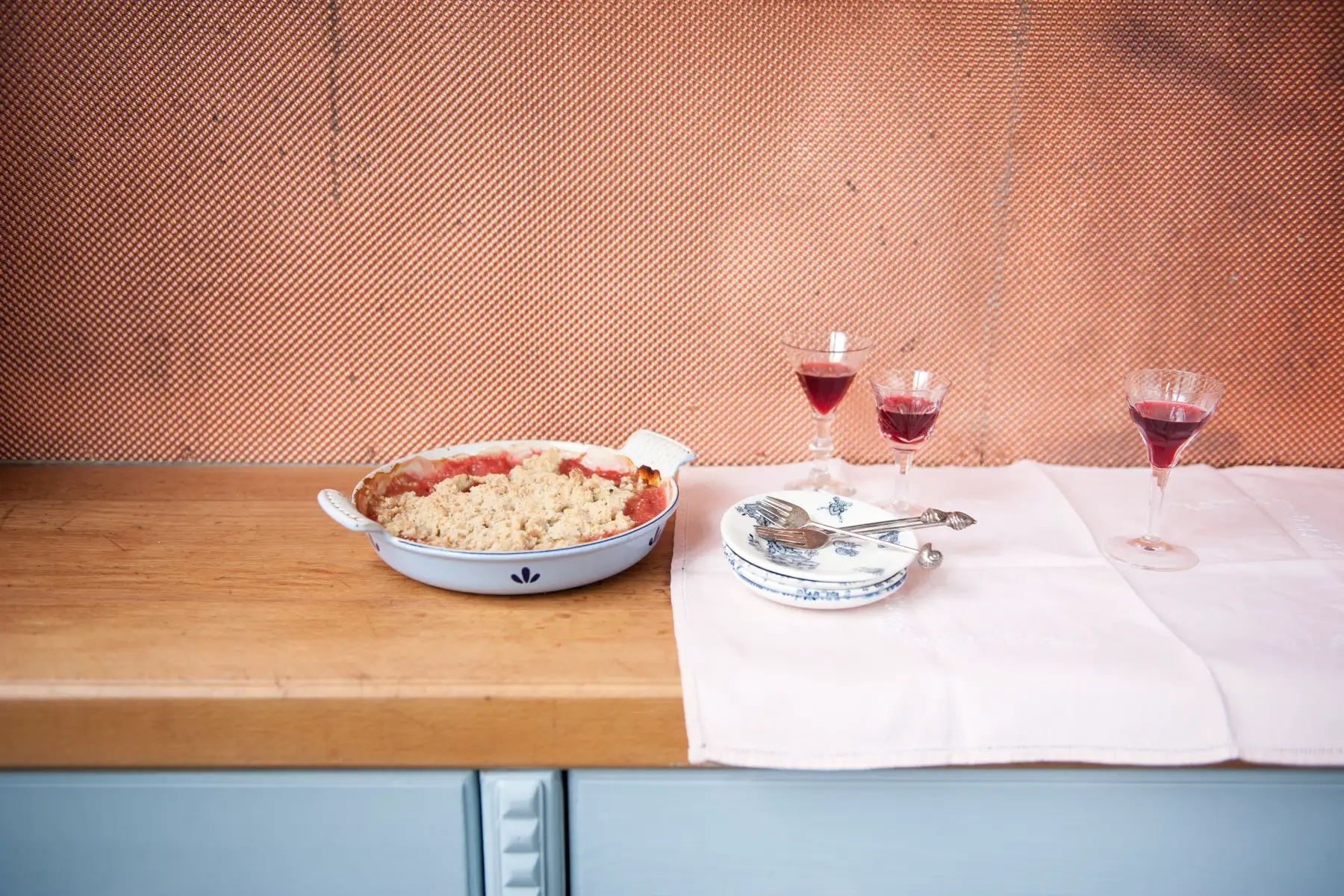
- Put a fun spin on the classic appeltaart and make it a crumble
10. Tompouce
Indulge in the Dutch pastry classic, the tompouce. This elegant and much-beloved treat is a true delight for the senses, featuring layers of flaky puff pastry, generously filled with creamy custard, and topped with vibrant pink icing.
Loved by locals and visitors alike, the tompouce is a versatile treat, enjoyed during festive celebrations (e.g., King’s Day) or as a sweet indulgence any time of day. Its timeless appeal lies in its simplicity and irresistible flavor combination, making it a beloved symbol of Dutch culinary tradition (and not at all similar to the French mille feuille).

Make your own tompouce
- Embrace your inner baking chef with this traditional recipe
- Give it a modern spin with this vegan tompouce recipe
- Keep it classic with this recipe
Honorable mention
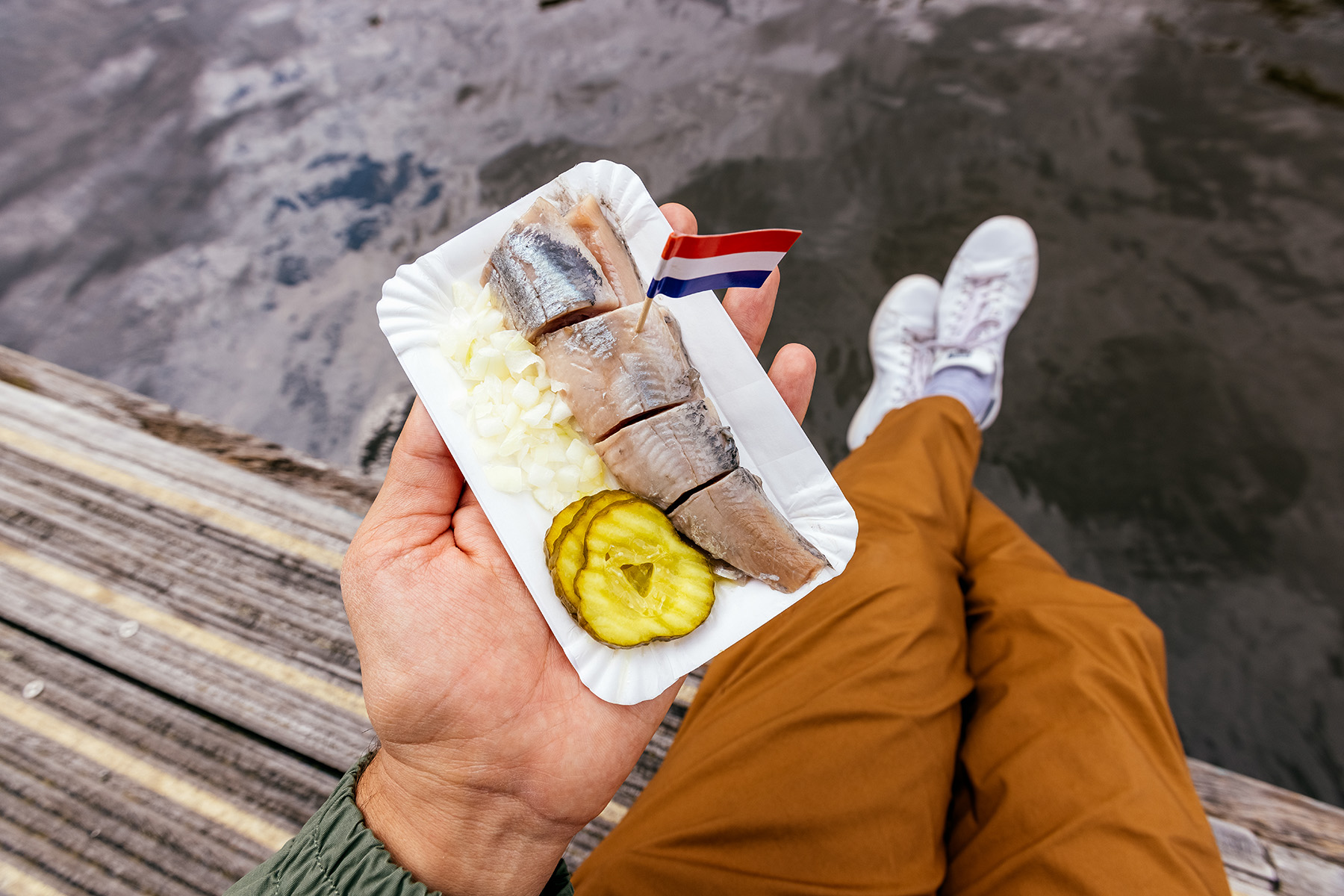
Try the Dutch street favorite rauwe haring met ui – herring with chopped onions. This classic dish is deeply ingrained in Dutch culture, starring fresh herring fillets and a generous portion of finely chopped onions.
Widely enjoyed as a casual snack or quick bite on bustling streets, haring met ui offers a delightful taste of tradition with its simple yet satisfying combination of flavors. Cherished for its delicious simplicity, this typical Dutch food offers a taste of tradition with every bite.
Related Articles


Editor's picks
 Where to live in the Netherlands: the best cities for expatsAlthough Amsterdam is typically the number one hub for expats, there are plenty of other cities in the Netherlands worth your while.
 Primary schools in the NetherlandsConfused by the primary school system in the Netherlands? We explain how it works, from educational approaches to international options.
 Child benefits in the NetherlandsYou can claim different types of child benefits in the Netherlands, to help with the costs of child-rearing, schooling, and childcare.
Did you find this guide helpful?