'%20id='ico-down'%20stroke='%23000000'%20stroke-width='1.5'%3e%3cg%20transform='translate(1092.250000,%20254.750000)'%3e%3cpolyline%20id='Path-2-Copy-4'%20transform='translate(5.500000,%202.750000)%20scale(1,%20-1)%20rotate(-180.000000)%20translate(-5.500000,%20-2.750000)%20'%20points='0%200%205.5%205.5%2011%200'%3e%3c/polyline%3e%3c/g%3e%3c/g%3e%3c/g%3e%3c/svg%3e)




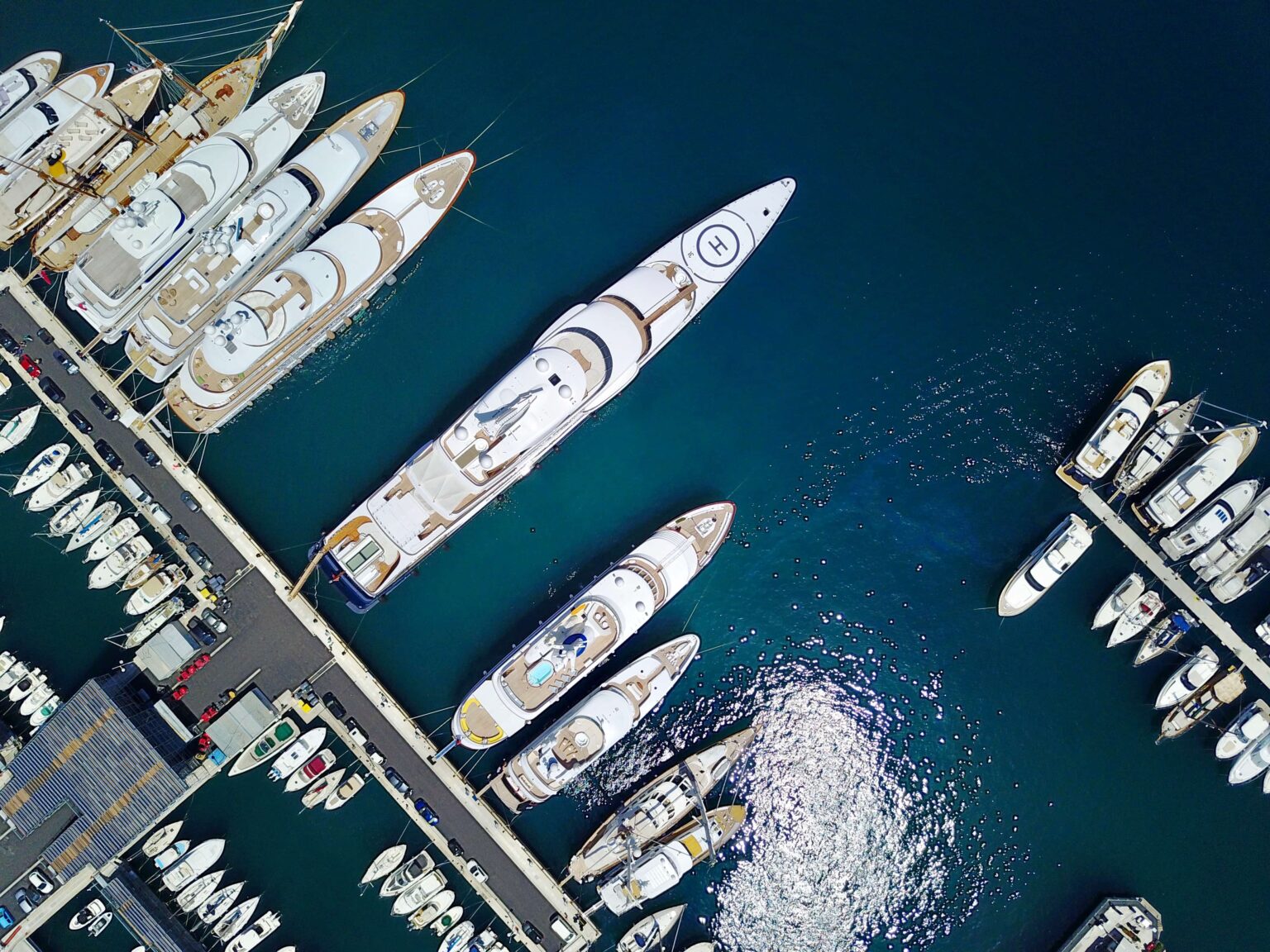
Monaco is one of the world’s best-known yacht markets, but buying there does not automatically solve registration, tax, customs, or berthing questions. If you want to buy a luxury yacht in Monaco, treat the glamour and the ownership mechanics as two separate parts of the process.
Many buyers can picture the yacht but still feel uncertain about who should own it, which flag makes sense, how its VAT or customs position affects cruising, and where it will berth. This guide walks through the purchase path so you can take clearer questions to brokers, lawyers, surveyors, and tax advisers before making an offer.
This guide is for general information only and is not legal, tax, investment, customs, maritime safety, or financing advice.
Key takeaways
- Decide how you will use the yacht before comparing listings in Monaco.
- A Monaco broker can arrange access and support negotiations, but you still need independent legal and technical due diligence.
- Use viewings to shortlist only; the survey and sea trial are where the biggest risks are usually uncovered.
- Treat ownership structure, flag/registration, VAT or customs status, and berthing as separate decisions.
- Buying or registering in Monaco does not automatically secure a berth, provide residency rights, or create a tax advantage.
- Prepare for the first 90 days before completion, including insurance, berthing arrangements, crew setup, and cross-border administration.
Wise for cross-border yacht payments and running costs
- Hold and convert supported currencies for ongoing yacht expenses
- Send international transfers with transparent fees where available
- Use escrow and completion instructions from your broker or lawyer for large payments

No commitment required
Define your yacht brief before you shop
The fastest way to lose time in Monaco is to shop by brand, finish, or show buzz before you define the job the yacht needs to do. A yacht that feels perfect for a September viewing can be awkward for family cruising, crew privacy, or longer passages once you own it.
Write a one-page brief before the first viewing. That brief should cover how you plan to use the yacht, where you want to cruise, how many people you host, whether you may charter, and how much ongoing administration you are comfortable managing.
- Main use: day hosting, family trips, long weekends, or seasonal cruising
- Cruising region: Riviera base, wider Mediterranean use, or longer-range plans
- Guest pattern: sleeping capacity, privacy, and child-friendly flow
- Charter question: strictly private use or mixed private and charter use
- Crew model: light owner use or a more fully managed setup
Decide how you will use the yacht
Purpose should lead the spec. A yacht built for Mediterranean social use may prioritise deck flow and easy tender boarding, while one intended for longer passages may need more storage, range, systems redundancy, and crew support.
- Day hosting favours social space and simple boarding.
- Family cruising raises safety, cabin separation, and storage issues.
- Longer passages make range and technical backup more important.
- Charter plans can change crew, compliance, and tax treatment.
Set the full budget, not just the purchase price
Do not build your budget around the asking price alone. First-year spending usually also includes survey work, legal costs, insurance, berth arrangements, travel, and the remedial items that appear after survey.
There is no safe universal rule for yacht purchase costs in Monaco. Costs vary with size, age, condition, technical complexity, crew plan, and whether the yacht stays private or enters charter.
- Acquisition costs: purchase price, deposit, and closing fees
- Checks and paperwork: survey, sea trial, legal work, and registration steps
- Operations: insurance, berth, management, crew, and travel
- Technical risk: maintenance backlog, refit items, and early repairs
Understand the Monaco market and where brokers fit in
Monaco matters because it concentrates brokers, managers, lawyers, survey contacts, and show access in one place. That can make it easier to buy a superyacht in Monaco, but it can also create noise, because seeing more yachts does not automatically mean seeing the right yachts.
For many buyers, one strong buyer-side broker is more useful than speaking to many contacts at once. You want one person to filter yachts against your brief, coordinate viewings, challenge weak matches, and manage negotiation flow. The Monaco Yacht Show is useful for back-to-back comparison, but it is still a screening tool.
| Route | What you get | Strength | Watch-out |
|---|---|---|---|
| Public listings | Broad view of asking prices and layouts | Good for early benchmarking | Listings can be stale or widely shared |
| Buyer-side broker search | Curated shortlist and negotiation help | Better filtering and market context | Quality depends on the relationship |
| Monaco Yacht Show viewings | Fast side-by-side comparisons | Efficient for serious shortlists | Viewing is not due diligence |
Choose the right broker and shortlist process
A good Monaco yacht broker does more than arrange access. They should refine your criteria, source realistic options, arrange viewings efficiently, and explain where an asking price sits against comparable yachts.
Even an excellent broker does not replace independent advice. You still need your own lawyer and surveyor, because title, paperwork, and technical condition should not depend on sales incentives.
Compare on-market and off-market opportunities
Online inventory is useful, but it is not the whole market. Some yachts are marketed quietly, some are shared broker to broker, and some only become realistic options once your brief is specific and credible.
| Channel | Transparency | Speed | Access |
|---|---|---|---|
| Public listing | Higher visibility on asking price and photos | Fast to screen | Open to most buyers |
| Broker-sourced opportunity | Mixed, depends on what is shared | Fast once trust is built | Better for tailored matches |
| Show-based viewing | Strong physical access, limited documentary depth | Fast for comparison | Best used with appointments |
Before you commit time, confirm the yacht is still available, whether the price has moved, whether service history is complete, and whether the listing is central or just being circulated widely.
Inspect the yacht and do real due diligence
A viewing only tells you whether a yacht deserves deeper work. Systems, maintenance history, title, and compliance position are what protect you after delivery.
A yacht can look immaculate alongside the quay and still carry deferred maintenance, thin records, or expensive technical weaknesses. The goal is to move from impression to evidence before the deal feels emotionally committed.
View the yacht in person and test the brief against the real layout, guest flow, crew areas, noise, and storage.
Review the paper trail, including service history, class or conformity paperwork, and evidence of major works.
Compare the yacht against real alternatives so you do not negotiate in a vacuum.
Put the accepted offer through survey and sea trial conditions before you treat the deal as done.
Match findings to costed next steps, not just a list of defects.
What to check before you make an offer
Before you make an offer, test the yacht against the life you actually want on board. Walk it as an owner, looking at guest flow, crew movement, storage, noise, and tender access.
Then review the quick filters that stop weak yachts from taking over the process.
- Fit for your cruising plan and guest pattern
- Visible condition of guest areas, machinery spaces, and exterior
- Recent refit works and whether they are documented properly
- Crew setup, storage, and tender practicality
- Service history, papers, and comparable market pricing
- Red flag: incomplete records or vague explanations of major recent works
Survey, sea trial, and refit risk
After an offer is accepted, the serious checking starts. The technical survey examines structure, machinery, systems, and condition. The sea trial shows how the yacht behaves underway, not just how it looks at berth.
Survey findings can support repairs, a price change, a retention, or a walk-away decision. Older yachts, recent refits, and yachts that have been inactive for long periods deserve extra scrutiny because the presentation can look stronger than the underlying systems.
- Use an independent surveyor with experience relevant to the yacht’s size and build type.
- For older yachts, ask what is original, what has been replaced, and what is near end of life.
- For refitted yachts, check the scope of works, invoices, and who signed them off.
- For inactive yachts, expect proper live testing before you rely on the systems.
Handle the legal, tax, and ownership structure carefully
Many buyers still describe this as one Monaco decision. It is usually several: who owns the yacht, where it is registered, how it can be kept or moved in planned waters, and whether it will stay private or support charter.
Those decisions should follow your tax residence, cruising plan, privacy needs, and admin appetite. It is common to buy in Monaco, use a non-Monaco flag, hold the yacht through a company, and base it outside the Principality. Expatica’s guide to financial planning for expats provides broader context for managing finances across borders, but specialist legal and tax advice remains essential for yacht ownership.
- Decide who will own the yacht, personally or through an ownership structure.
- Choose the flag state separately from the place of purchase.
- Confirm the yacht’s VAT or customs position before assuming where it can stay or cruise.
- Separate private use from charter use, because paperwork and obligations often change quickly.
Understand flag, VAT, and customs status
Buyers often bundle four different issues into one phrase. Keep them apart from the start.
Monaco’s official maritime guidance says Monegasque nationals and residents can apply to register a boat under the Monegasque flag, subject to conditions and documentary requirements. That matters because an international buyer may be able to purchase in Monaco without being eligible for Monaco yacht registration.
| Decision track | What it answers | Why it matters | Who usually checks it |
|---|---|---|---|
| Purchase in Monaco | Where the sale happens | Access to market and services | Broker and lawyer |
| Chosen flag state | Which registry the yacht uses | Registration rules and operating framework | Lawyer and registry specialists |
| VAT or customs status | How the yacht can be kept or moved in planned waters | Import, circulation, and cruising implications | Customs and tax advisers |
| Ownership entity | Who legally owns the yacht | Reporting, privacy, liability, and administration | Lawyer and tax adviser |
Review contracts, beneficial ownership, and compliance
The main sale contract is usually the Memorandum of Agreement, or MOA. It sets the price, deposit, conditions, timings, and what must happen before completion, so it is not a formality.
You should also expect identity and beneficial ownership checks. The parties handling the sale, funds, and registration steps may all need documentation showing who ultimately controls the buyer and where the money is coming from.
- Confirm who is holding the deposit and on what terms it is returned.
- Check which survey, sea trial, and document conditions must be met before closing.
- Verify title, liens, encumbrances, and ownership papers.
- Review addenda carefully if the survey changes the commercial deal.
- Use specialist legal counsel when structure, flag, or customs issues cross borders.
What to verify with a professional:
- Whether private use or charter changes the compliance position
- Whether the planned owner should be an individual, trust, or company
- Whether the cruising plan matches the yacht’s customs and VAT position
- Whether the chosen flag works with the management and crew plan
What Monaco gives you and what it does not
Monaco gives buyers market access, specialist services, and a strong Mediterranean starting point. The official Port Hercule page lists 760 berths and links separate short-term and wintering tariffs, which shows scale rather than guaranteed availability.
What Monaco does not do is turn registration, berthing, tax exposure, and residency into one simple outcome. A purchase in Monaco does not by itself give you a Monaco flag, a Monaco berth, a tax benefit, or residency rights.
| Myth | Reality |
|---|---|
| Buying in Monaco secures a Monaco berth | Berthing is separate and depends on port arrangements and availability |
| A Monaco flag solves VAT or tax questions | Flag choice, customs position, and tax exposure are different issues |
| Show viewings are enough to judge a yacht | They help you compare, but do not replace survey, sea trial, and paperwork checks |
| Closing means the hard work is over | The first 90 days often expose the real operating workload |
Berth availability is separate from registration
Monaco registration does not automatically include a berth. Monaco’s Department of Maritime Affairs states this directly, and the Ports of Monaco treat mooring allocation as a separate issue.
- Port Hercule is central to Monaco’s yachting image, but access is a separate conversation.
- Existing moorings are not automatically transferable with a sale or a new yacht setup.
- Berth strategy should be discussed early, alongside your intended home port.
- A buyer may purchase in Monaco and still base the yacht elsewhere for practical reasons.
Plan crew, management, and ongoing running costs
After completion, the yacht becomes an operating asset. Crew employment, insurance renewals, planned maintenance, spares, and management reporting all shape what ownership feels like in practice.
Private use and charter use can diverge quickly here. A lightly used family yacht may need one operating model, while a charter-ready yacht usually needs tighter procedures, more reporting, and more crew structure.
Close the sale and prepare the first 90 days
Closing works best when insurance, berth logistics, crew arrival, and survey follow-up already have named owners. If those jobs wait until delivery day, the first trip often starts with avoidable delays.
Release funds and title documents in the agreed order.
Put insurance in force from the exact handover time.
Confirm the berth or temporary mooring before arrival.
Assign each survey point to a responsible person.
Check manuals, certificates, spare parts, and onboard inventory.
Do a first-season readiness review before the first cruise. Fuel, provisioning, safety equipment, crew travel, and document storage all matter more once the yacht is moving. Expatica’s checklist for moving your finances abroad also provides a useful general framework for organising cross-border financial administration.

Your completion checklist
- Title transfer complete, with signed sale documents and evidence of payment
- Document pack received, including certificates, manuals, service history, and registration papers
- Inventory confirmed, from tenders and toys to loose equipment and spare parts
- Insurance active, with the correct navigation area and intended use
- Berth plan agreed, whether seasonal, interim, or long-term
- Fuel, provisioning, and crew arrival basics lined up
- Technical follow-up assigned to named people with deadlines
Set up cross-border payments and admin carefully
International ownership creates a steady stream of smaller cross-border tasks after the purchase itself is done. The friction usually comes from currencies, supplier approvals, travel spending, and document control across several jurisdictions.
- Track invoices by due date, currency, and approving party.
- Check whether each payment route suits the supplier and jurisdiction.
- Keep crew travel spending and reimbursement records organised.
- Store contracts, certificates, and compliance documents in one controlled system.
For supported day-to-day costs, some owners compare specialist money transfer providers or tools such as the Wise account with major local banks for multi-currency admin. Expatica’s guide to international money transfers explains some of the general factors involved when moving money across borders. Do not treat any payment provider as escrow, yacht finance, registry support, or title-transfer support, and verify availability, limits, compliance, and suitability for the exact payment type before using it.
Finalise the adviser and admin setup before the first season starts, not after the first invoice dispute.
Conclusion
Buying a luxury yacht in Monaco is easiest to manage when the purchase itself is treated separately from registration, tax and customs status, ownership structure, and berthing. A broker can help you navigate the market, but technical survey work and independent legal checks remain separate parts of due diligence. Planning the operating setup before closing also reduces the number of practical issues left for delivery day. Keep each decision track clear and use the appropriate specialist where legal, tax, customs, registration, or technical questions arise.
FAQ
Frequently Asked Questions about buying a luxury yacht in Monaco
Can foreigners buy a luxury yacht in Monaco? 
Yes, foreigners can buy a luxury yacht in Monaco. The purchase itself may be straightforward, but the ownership structure, chosen flag state, tax residence, and cruising plan still need separate legal and tax review.
Does Monaco registration include a berth?
No, not automatically. Monaco separates flag permission from mooring allocation, which is why berth planning should be treated as its own workstream before you close.
How much does it cost to own a luxury yacht in Monaco?
There is no universal figure that safely fits every buyer. The biggest cost buckets are usually purchase price, berth, crew, insurance, maintenance, management, and post-survey work, all of which vary by size, age, condition, and use.
Do I need a broker and a sea trial before buying?
You do not always need a broker in a formal sense, but many buyers use one for market access, shortlisting, and negotiation structure. A sea trial and independent survey are core protection steps, even when a broker is involved, because they show how the yacht performs and what technical risk you may be taking on.
Sources
Expatica’s experts are all about providing the most up to date and accurate information. All guides are fact checked, and whenever we use external sources (like government websites or research papers) we’ll make a note of them here so you can check them out too.
- Monegasque flag eligibility, registration requirements, and the separation between registration and mooring allocation, Monaco Department of Maritime Affairs registration guidance
- Port Hercule facilities, berthing context, and tariff information, Société d’Exploitation des Ports de Monaco, Port Hercule
- Monaco yacht-market and event context for comparing superyachts, Monaco Yacht Show
- Practical maritime and port formalities for Monaco waters, Yacht Club de Monaco marina formalities
- High-level EU customs and VAT terminology for pleasure craft, European Commission guidance note for pleasure craft