'%20id='ico-down'%20stroke='%23000000'%20stroke-width='1.5'%3e%3cg%20transform='translate(1092.250000,%20254.750000)'%3e%3cpolyline%20id='Path-2-Copy-4'%20transform='translate(5.500000,%202.750000)%20scale(1,%20-1)%20rotate(-180.000000)%20translate(-5.500000,%20-2.750000)%20'%20points='0%200%205.5%205.5%2011%200'%3e%3c/polyline%3e%3c/g%3e%3c/g%3e%3c/g%3e%3c/svg%3e)



Looking for disability insurance in France can be confusing because the French system does not use one single product or benefit for every situation. Depending on why you cannot work, support might come from a state invalidity pension, a disability allowance, sickness benefits, work-accident compensation, or private insurance. In France, “disability insurance” therefore overlaps with pension d’invalidité, Allocation aux Adultes Handicapés (AAH), long-term sick leave, work-related compensation, and private prévoyance. The correct route depends on whether your condition is temporary or long-term, work-related or not, and whether the benefit is contribution-based or means-tested. This guide explains the main routes, who handles them, how payments work, and what you may need to prepare.
Key takeaways
- Pension d’invalidité: for employees under the general scheme, this contribution-based pension can provide income support when work or earning capacity falls by at least two-thirds after a non-work-related illness or accident. Rules for self-employed people can differ by status and scheme.
- AAH, or Allocation aux Adultes Handicapés, is a means-tested disability allowance decided through the MDPH and CDAPH route and then paid by Caf or MSA.
- Temporary work stoppage and work-accident cover use different rules, so “disability insurance in France” is not one single claim path.
- Private prévoyance can help fill an income gap, especially for freelancers and higher earners, but it does not replace French statutory benefits.
- A common early mistake is contacting the wrong institution. CPAM or MSA usually handle invalidity pension questions, while MDPH handles disability-rights decisions such as AAH.
Wise for covering euro costs while you set up in France
- Hold EUR and pay early bills while your French bank account is being set up.
- Convert from your home currency to EUR with transparent fees shown upfront.
- Send money to France for rent and admin costs, and track payments in-app.

No commitment required
What disability insurance means in France
Many expats search for disability insurance in France as a catch-all term. In practice, France splits this area into temporary sick-pay support, contribution-based invalidity benefits, means-tested disability allowances, work-accident compensation, and optional private cover.
The first practical question is not whether you are “disabled” in a broad sense. It is whether the problem is short-term or long-term, work-related or not, and linked to a benefit based on contributions, resources, or a private contract.
| Route | Main purpose | Main body | Typical use |
|---|---|---|---|
| Daily sickness allowances | Partial income replacement during a work stoppage | CPAM or MSA | Short-term illness or recovery period |
| Pension d’invalidité | Longer-term income support | CPAM or MSA | For employees under the general scheme, a non-work-related illness or accident causing at least a two-thirds loss of work or earning capacity; rules differ for self-employed people |
| AAH | Minimum-income support linked to disability and resources | MDPH and CDAPH, then Caf or MSA | Disability support when the AAH criteria are met |
| Work-accident or occupational-disease compensation | Compensation under work-related rules | CPAM or MSA, with employer reporting duties | Illness or injury of professional origin |
| Private prévoyance | Supplementary income protection | Private insurer or employer scheme | Top-up cover when public support leaves a gap |
For employees under the general scheme, income replacement for a non-work-related condition usually starts with sick leave and daily allowances, and may later move into pension d’invalidité if earning capacity stays heavily reduced. AAH follows a different route through the département-level disability system. Work-related claims for employees generally follow a separate compensation route, while rules for self-employed people can differ.
If you need wider background, Expatica’s guide to the French social security system helps place these routes in context.
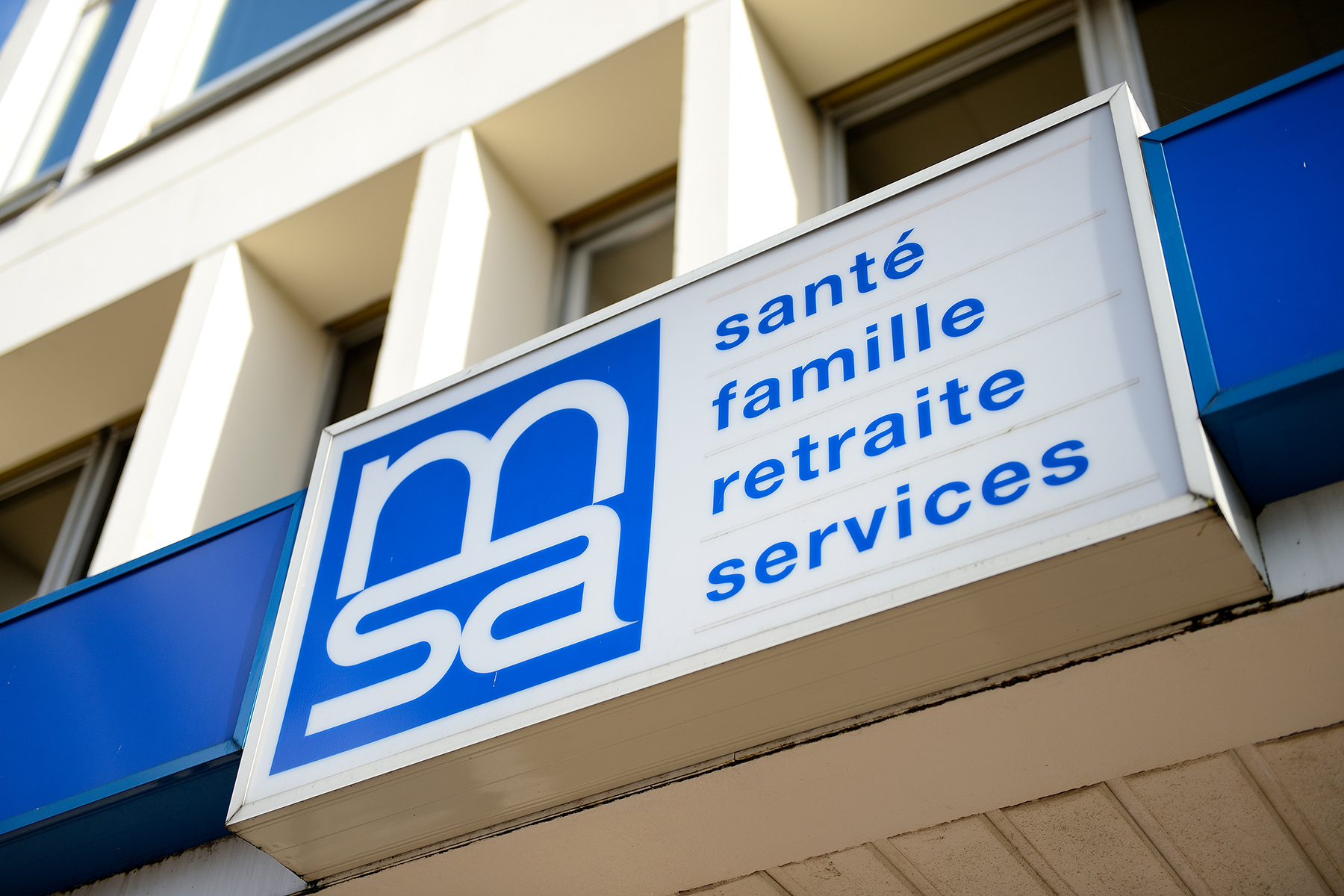
Pension d’invalidité, AAH, and private prévoyance
These are the three terms most readers need to separate first.
| Route | What it is | Main test | Who decides or pays |
|---|---|---|---|
| Pension d’invalidité | Social security invalidity pension | Contribution history and at least a two-thirds loss of work or earning capacity | CPAM or MSA |
| AAH | Disabled adults’ allowance | Disability assessment plus resource test | CDAPH decides, Caf or MSA pays |
| Private prévoyance | Supplementary private income protection | Policy wording, underwriting, and claims rules | Insurer or employer scheme |
International health insurance is different again. It usually relates to healthcare access and reimbursement, not statutory income replacement during disability.
Who can get state disability support in France?
There is no single expat rule. Eligibility depends on the route, your residence status, your contribution history, the medical assessment, and whether the condition comes from private life or work.
Residency alone is usually not enough. Pension d’invalidité is contribution-based, while AAH is disability-assessed and means-tested, and work-related claims follow another legal path.
Who can qualify for a pension d’invalidité?
For employees under the general social security scheme, you must usually have been affiliated with French social security for at least 12 months, have a non-work-related illness or accident, and have lost at least two-thirds of your work or earning capacity.
Employees must also meet a recent work or contribution test. Service-Public says this usually means at least 600 hours worked in the previous 12 months or contributions based on pay equal to 2,030 times the hourly SMIC over the same period. Different contribution tests and invalidity arrangements can apply to self-employed people, depending on their status and scheme.
- You have a non-work-related illness or accident
- Your work or earning capacity has fallen by at least 66%
- You have at least 12 months of social security affiliation
- You meet the recent work-hours or contribution threshold
- You can document ID, tax information, and any other pension notices the form asks for
Example: an employed expat who has moved from long sick leave into a stable long-term reduction in earning capacity may be reviewed for pension d’invalidité by CPAM.
How rules differ for employees, self-employed people, and recent arrivals
| Group | Usual position | Main risk | What to verify next |
|---|---|---|---|
| Employees | Payroll contributions often mean they are already inside the system | Public benefits may still replace only part of former income | Check your CPAM record and any employer prévoyance |
| Self-employed people | There may be entitlement routes, but the exact scheme and benefit logic depend on status | Income protection can be thinner or less predictable | Check your fund, contribution record, and whether top-up cover is needed |
| Agricultural workers | They often deal with MSA rather than CPAM | Filing with the wrong body slows everything down | Confirm your MSA route and forms |
| Recent arrivals | They may not yet have enough contribution history or complete paperwork | Gaps in affiliation or residence proof can block the expected route | Check social security status, residence documents, and whether AAH or private cover is the more realistic first step |
A self-employed expat may still have public entitlement, but the income gap can be larger. That is why freelancers often need to review both their statutory route and any private prévoyance more carefully.
Who can qualify for AAH?
AAH follows a different logic from pension d’invalidité. It runs through the disability framework used by the MDPH and the CDAPH, with payment then handled by Caf or MSA.
In the general France-wide rules, you normally need a disability rate of at least 80%, or 50% to 79% plus a substantial and lasting restriction on access to employment. You also need to meet age, residence, and resource conditions. If you are not French, valid residence paperwork matters in practice, and département processes can vary.
How much can you receive and for how long?
Figures below reflect official pages checked in October 2026, and they can change. Confirm current amounts before relying on them for a claim or budget.
| Support | How the amount works | Current official figure | Duration or review logic |
|---|---|---|---|
| Pension d’invalidité | Based on category and average annual salary from your 10 best years, within the social security ceiling | Category-based minimums and maximums apply | Temporary benefit, reviewed if health or resources change |
| AAH | Resource-based top-up or minimum income | Maximum monthly amount of €1,041.59 with no resources | Granted for a fixed period, then reviewed or renewed |
For invalidity pension, the category assigned by the medical service matters because it changes the salary percentage used in the calculation. AAH works differently and can top up low income when the disability and residence rules are met.
How invalidity pension categories affect payments
| Category | What it usually means | Main formula | Monthly range checked in 2026 |
|---|---|---|---|
| 1 | You can still do some paid work | 30% of average annual salary | €338.31 to €1,201.50 |
| 2 | You are considered unable to carry on a profession | 50% of average annual salary | €338.31 to €2,002.50 |
| 3 | You cannot work and need help from another person for ordinary daily acts | 50% of average annual salary plus a third-person supplement | €1,636.76 to €3,300.95 |
The category affects both payment level and work expectations. Category 2 or 3 does not automatically settle your employment status on its own, because fitness for work in a job setting can still involve an occupational health decision.
How AAH and means-testing work
AAH is resource-based. If you have no resources, the official maximum monthly amount is €1,041.59 on the page checked in October 2026. Since October 2023, the calculation usually looks at personal resources rather than a partner’s income, although Service-Public says older couple-based treatment can still be kept where it is more favourable.
For a 2026 application with no dependent children, the personal annual resource ceiling shown by Service-Public is €12,499. If you already receive another pension, AAH can work as a top-up instead of a full extra payment. Check the latest rates and your own scenario with Service-Public, Caf, and your local MDPH before applying.
- Confirm the disability-rate route that applies to you
- Check your latest tax notice and declared resources
- Confirm whether another pension already changes the amount
- Ask Caf or MSA how any household or work change must be reported
How to apply step by step
Work out which route matches your situation. Non-work-related long-term loss of earning capacity points toward pension d’invalidité. A disability assessment with low resources may point toward AAH. Work accidents and occupational disease do not use the same route.
Get medical evidence together early. Your médecin traitant, or usual doctor, is often the practical starting point for records, certificates, and treatment history.
Gather the admin file before you submit. Expats often lose time by sending part of the dossier first and chasing the rest later.
File with the right body. Invalidity pension applications usually go to CPAM or MSA. AAH applications go through the MDPH, with the CDAPH deciding and Caf or MSA paying later.
Track the waiting period. For a self-started invalidity pension request, CPAM or MSA usually has two months to reply. For MDPH disability-benefit applications, the official response window is normally four months.
Plan for the gap while the file is moving. If you are still on sick leave, daily allowances or employer cover may matter before any longer-term decision lands.
Common mistakes include mixing up CPAM and MDPH, missing a time limit, or assuming a private health policy covers income loss when it only covers treatment.

Documents, deadlines, and where to file
- ID and status documents: passport or ID, plus a residence permit or renewal receipt if relevant
- Tax papers: your latest tax notice is commonly requested
- Medical evidence: medical certificate, reports, and any specialist evidence that shows the effect on work capacity
- Work or contribution record: anything that helps prove recent activity, earnings, or affiliation
- Other pension notices: official pension decisions must be attached where the form asks for them
- For AAH through MDPH: Service-Public says the dossier usually includes proof of identity, proof of address, and a medical certificate less than one year old
- For a self-started invalidity pension request: confirm the 12-month filing window from the relevant event, such as medical determination, stabilisation, end of daily allowances, or the date CPAM or MSA stopped paying them
What to do if your claim is refused or delayed
- Formal refusal: read the decision notice carefully, because the appeal route depends on the body and the reason for refusal.
- No reply: for invalidity pension, no reply after the official two-month window usually counts as refusal. For MDPH disability-benefit applications, no reply after four months usually does the same.
- AAH appeal route: Service-Public says an AAH refusal usually goes first through a mandatory prior administrative appeal, called a RAPO, within two months.
- Get specialist help when needed: if the dispute turns on medical evidence, work status, or cross-border paperwork, bring in advice early rather than waiting for a second refusal.
When private cover may matter for expats
Public support in France can be important, but it may still leave an income gap. That is where private prévoyance can matter, especially for higher earners, freelancers, company directors, or families who depend heavily on one income.
This is different from the wider world of insurance in France and from standard health insurance in France. One pays toward treatment costs, while the other may help with income protection. If you already have employer cover, check that first before buying anything extra.

| Situation | Public-system concern | Why private cover may matter |
|---|---|---|
| Higher-earning employee | Statutory benefits may not match full income | A policy may help close the income gap |
| Freelancer or business owner | Public protection may be thinner or depend more sharply on status | A contract can add more predictable income support |
| Recent arrival | Contribution history may be incomplete | A private policy may be part of short-term planning, subject to underwriting |
| Internationally mobile expat | Work and residence may change across countries | Portability terms become more important |
Compare definitions, waiting periods, exclusions, and portability rather than buying on headline language alone.
What to check in a private prévoyance policy
- Definition of disability: does the policy look at your own occupation or any occupation?
- Waiting period: how long do you need to be off work before payments start?
- Benefit period: how long can the policy pay, and under what review conditions?
- Exclusions and pre-existing conditions: what is not covered, and what must you declare?
- Employment linkage and portability: does the cover end if your job, visa, or residence changes?
Read the insurer’s product documents and the full policy wording carefully. If you want to confirm that a provider is authorised in France, you can also check the ACPR register.
Where Cigna International Healthcare fits and where it does not
If you need broader private medical access or continuity of healthcare while moving between countries, Cigna Global is one international health insurance provider you can compare. That can be relevant if you are not yet fully settled into French healthcare arrangements or want extra private medical access alongside them.
- It may help with treatment access, private medical care, or cross-border continuity, depending on the policy.
- It is not the same as pension d’invalidité or AAH.
- It should not be treated as disability income protection unless the policy documents clearly include that benefit.
Practical next steps for expats in France
Ask your doctor for current medical evidence, then confirm whether CPAM, MSA, or MDPH is your first stop. That order matters more than most newcomers expect.
If you are still setting up life locally, it also helps to understand how registration and reimbursements fit into the French healthcare system. Keep French-language paperwork, translations, and older payslips or tax documents together from the start.
- Check your contribution history or current scheme affiliation
- Ask your doctor which medical records best show the impact on work capacity
- Confirm whether your claim belongs with CPAM, MSA, or MDPH
- Gather French or translated documents before filing
- Recheck the latest rules and amounts on official websites before sending anything
Using a Wise account to manage euro payments during setup
Some newcomers use a Wise account to hold EUR, move money to France, or cover early recurring costs while local banking is still being set up. That can help if benefits-related admin, rent, or daily expenses start before your local account with BNP Paribas, Société Générale, or Crédit Agricole is fully ready.
Conclusion
Disability support in France is divided between several systems rather than one universal insurance route. The most important first step is identifying whether your situation belongs with CPAM or MSA, MDPH, a work-related compensation route, or a private insurer. Your contribution record, medical assessment, resources, and the origin of the condition can all affect which route applies. Preparing the correct medical and administrative documents early can also reduce avoidable delays. Before submitting a claim or making financial plans, check the latest rules and amounts with the relevant official body.
FAQ
Frequently Asked Questions about disability insurance in France
Can expats get disability benefits in France? 
Yes, if they meet the conditions for the route they are using. Disability benefits in France depend on residency, contribution history, disability assessment, and paperwork, so there is no automatic expat entitlement.
What is the difference between AAH and a pension d’invalidité?
AAH is a means-tested disability allowance assessed through the MDPH and CDAPH route. Pension d’invalidité is contribution-based social security income support linked to loss of work or earning capacity.
Does French disability cover apply to self-employed people?
It can, but the route is not identical for every status. Self-employed people should verify which fund covers them, what their contribution record shows, and whether private prévoyance is needed to cover any remaining income gap.
Does private health insurance replace disability insurance in France?
No. Health insurance helps with treatment costs and access to care, while disability income support follows separate statutory or contractual rules. International health insurance may help with continuity of care, but it does not replace the need to understand pension d’invalidité, AAH, or any private income-protection wording.
Sources
Expatica’s experts are all about providing the most up to date and accurate information. All guides are fact checked, and whenever we use external sources (like government websites or research papers) we’ll make a note of them here so you can check them out too.
- Eligibility, categories, filing deadlines, and decision rules for pension d’invalidité, Service-Public — Social Security invalidity pension
- Disability thresholds, residence conditions, resources, and appeal rules for AAH, Service-Public — Disabled adults’ allowance (AAH)
- Official information on invalidity pension calculations and payments, Ameli — Invalidity pension
- Addresses and contact information for local CPAM services, Ameli — CPAM addresses and contacts
- Information and services relating to family and social-benefit payments, CAF
- Directory for locating departmental disability offices, Service-Public — MDPH directory
- Information and guidance relating to disability rights and procedures, Mon Parcours Handicap
- French prudential authority information for checking regulated insurance providers, REGAFI — public register of authorised banking and insurance providers
- Employment services and information for jobseekers in France, France Travail
- MDPH application route, supporting documents, and decision process, Service-Public — Application or renewal of disability benefits
- Rules on how changes in resources can affect an invalidity pension, Service-Public — Disability pension and increases in resources
- Information on sickness-benefit compensation during work stoppage, Service-Public — Compensation for sick leave
- Overview of sickness, workplace accident, and occupational-disease routes, Service-Public — Accident at work, sickness or private sector