'%20id='ico-down'%20stroke='%23000000'%20stroke-width='1.5'%3e%3cg%20transform='translate(1092.250000,%20254.750000)'%3e%3cpolyline%20id='Path-2-Copy-4'%20transform='translate(5.500000,%202.750000)%20scale(1,%20-1)%20rotate(-180.000000)%20translate(-5.500000,%20-2.750000)%20'%20points='0%200%205.5%205.5%2011%200'%3e%3c/polyline%3e%3c/g%3e%3c/g%3e%3c/g%3e%3c/svg%3e)



'%20fill='%23000000'%3e%3cg%20id='icons'%20transform='translate(56.000000,%20160.000000)'%3e%3cpath%20d='M144,7339%20L140,7339%20L140,7332.001%20C140,7330.081%20139.153,7329.01%20137.634,7329.01%20C135.981,7329.01%20135,7330.126%20135,7332.001%20L135,7339%20L131,7339%20L131,7326%20L135,7326%20L135,7327.462%20C135,7327.462%20136.255,7325.26%20139.083,7325.26%20C141.912,7325.26%20144,7326.986%20144,7330.558%20L144,7339%20L144,7339%20Z%20M126.442,7323.921%20C125.093,7323.921%20124,7322.819%20124,7321.46%20C124,7320.102%20125.093,7319%20126.442,7319%20C127.79,7319%20128.883,7320.102%20128.883,7321.46%20C128.884,7322.819%20127.79,7323.921%20126.442,7323.921%20L126.442,7323.921%20Z%20M124,7339%20L129,7339%20L129,7326%20L124,7326%20L124,7339%20Z'%20id='linkedin-[%23161]'%3e%3c/path%3e%3c/g%3e%3c/g%3e%3c/g%3e%3c/svg%3e)
'%20fill='%23000000'%3e%3cg%20id='icons'%20transform='translate(56.000000,%20160.000000)'%3e%3cpath%20d='M335.821282,7259%20L335.821282,7250%20L338.553693,7250%20L339,7246%20L335.821282,7246%20L335.821282,7244.052%20C335.821282,7243.022%20335.847593,7242%20337.286884,7242%20L338.744689,7242%20L338.744689,7239.14%20C338.744689,7239.097%20337.492497,7239%20336.225687,7239%20C333.580004,7239%20331.923407,7240.657%20331.923407,7243.7%20L331.923407,7246%20L329,7246%20L329,7250%20L331.923407,7250%20L331.923407,7259%20L335.821282,7259%20Z'%20id='facebook-[%23176]'%3e%3c/path%3e%3c/g%3e%3c/g%3e%3c/g%3e%3c/svg%3e)

Table of contents
- Key takeaways
- How to start your search for an English-speaking doctor in Paris
- Which option should you use in Paris?
- Where expats usually look first in Paris
- What to expect on costs, insurance, and reimbursement
- How to prepare for a doctor’s appointment in France
- Managing upfront healthcare costs as a new expat
- How to verify a provider before you go
Key takeaways
If you are stressed or short on time, start here.
| What you need | Best option | When to use it | Typical fee type | What to bring |
| Routine illness, prescription, ongoing problem | Booked GP or private clinic | Daytime, non-emergency care | Secteur 1 or secteur 2, fees vary | ID, insurance details, medication list |
| Quick advice for a suitable non-emergency issue | Teleconsultation | If a video visit may be enough | Provider fee varies | Phone, ID, payment card |
| Urgent but not life-threatening doctor support | SOS Médecins | Evenings, weekends, urgent home or centre visit | Urgent or out-of-hours fee, varies | Exact address, phone, ID |
| Pharmacy help or prescription filling | Pharmacie de garde | Minor issues or after-hours medicines | Medicine cost only, plus any dispensing cost | Prescription, ID, payment method |
| Severe or worsening emergency | Hospital urgences | Chest pain, stroke signs, heavy bleeding, collapse | Emergency and hospital charges vary | ID, insurance details if available |
How to start your search for an English-speaking doctor in Paris
Random search results can waste time when you are already unwell. Start with verified booking and directory tools, then confirm the details directly before you pay.

Use trusted directories and booking platforms first
Many expats start with Doctolib because it is widely used for booking in-person and video consultations in France. It is often the quickest route for an english speaking GP Paris search, especially if you search by arrondissement, specialty, and consultation type.
For broader context on doctors and GPs in France, Expatica explains how primary care works and what different doctor types do. To verify a doctor or clinic, use the official Annuaire Santé directory as well, then check whether the address is actually in Paris or in nearby Neuilly-sur-Seine or Levallois, where some expat-used facilities are based.
Quick checklist:
- language shown on the profile
- GP, clinic, or specialist type
- Paris arrondissement or inner suburb location
- in-person or teleconsultation
- whether new patients are accepted

Verify language, location, and availability before you pay
A common question is whether “English-speaking” on a listing means the whole visit will be easy in English. It may not. Reception staff, follow-up messages, and paperwork can still default to French, so check before booking.
Ask whether the consultation can be fully conducted in English, whether the doctor is in Paris proper or greater Paris, whether the appointment is online or in person, what the expected fee is, and how payment works. If secteur 1 or secteur 2 appears, it refers to the fee framework, with secteur 2 doctors more likely to charge above the standard reimbursable base.
Sample message: “Bonjour, can the consultation be fully done in English? Is this appointment in person or online, what is the fee, and do you accept card payment?“
Which option should you use in Paris?
The right route depends on what is wrong, how quickly you need help, and whether you need an examination, a prescription, or emergency care.
Choose between a GP, private clinic, specialist, or teleconsultation
A médecin généraliste is usually the best first stop for infections, stomach bugs, fever, prescription renewals, and general health questions. A private clinic can be useful if you want more appointment choice, easier English availability, or a same-day doctor Paris option, but fees depend on provider and sector.
A direct specialist booking can make sense if you already know the issue, for example dermatology, gynaecology, or paediatrics. Teleconsultation can help with some non-emergency problems, but it is different from an in-person visit because the doctor may not be able to examine you physically.
| Option | Best for | Main advantage | Main caution |
| GP | Most first-contact health issues | Broad, practical starting point | Wait times vary |
| Private clinic | Faster access, expat-friendly settings | English may be easier to find | Costs can be higher |
| Specialist | A clearly defined issue | More targeted care | Availability may be slower |
| Teleconsultation | Suitable non-emergency advice | Convenient from home | Not every issue can be handled remotely |
This comparison is intended as general guidance only. The best option depends on your symptoms, urgency, provider availability, and whether an in-person examination is needed.
One thing worth knowing is that if you do not yet have a médecin traitant (registered regular doctor), you can still see a doctor in Paris. It mainly affects care coordination and possible reimbursement later, not whether you can book help today.
Know when to use SOS Médecins, a pharmacie de garde, or hospital urgences
If you need urgent care Paris English support, triage matters more than speed claims.
1. Use SOS Médecins for urgent but non-life-threatening problems, especially outside normal hours. SOS Médecins Grand Paris offers home visits, consultations, and teleconsultation across Paris and nearby departments, but availability varies.
2. Use a pharmacie de garde for after-hours pharmacy needs, minor advice, or filling a prescription. You can check 3237.fr for an out-of-hours pharmacy.
3. Use hospital urgences or call emergency services for severe breathing problems, heavy bleeding, stroke signs, chest pain, collapse, or fast deterioration. See Expatica’s guide to emergency numbers in France and hospitals in France.
If you are unsure, the City of Paris advises calling 15, which can direct you to the right care route rather than sending everyone straight to the emergency room.
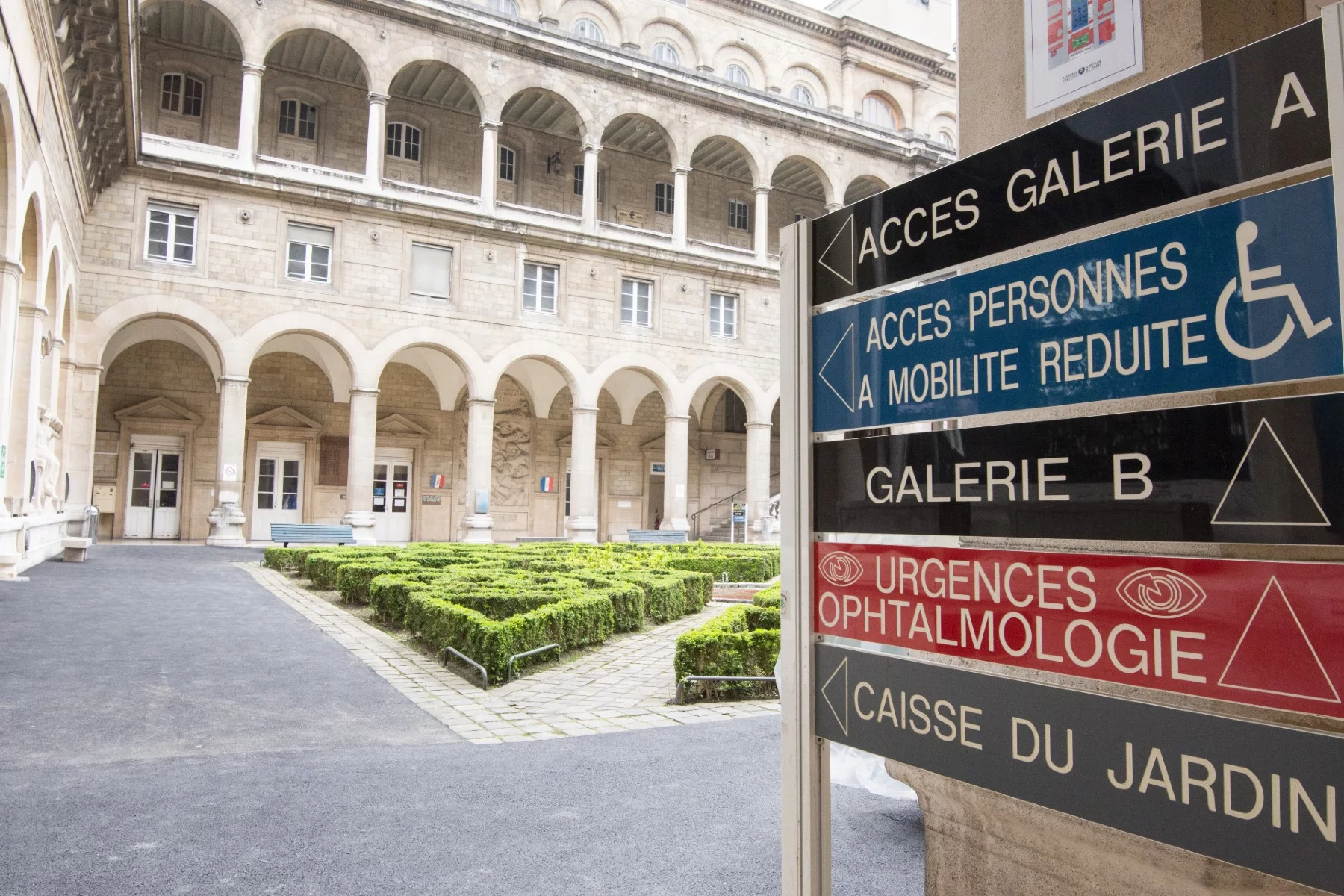
Where expats usually look first in Paris
In practice, expats often combine French mainstream tools with a smaller set of English-friendly fallback sources.
Start with Doctolib, Ameli, and the Ordre des Médecins
Start with mainstream French infrastructure first, because it gives you the broadest view of real local availability. Doctolib helps you search and book, while Annuaire Santé helps you verify professional details and fee information.
If you want an extra legitimacy check, search the provider in the Ordre des Médecins physician register before committing. On any listing, review the address, consultation type, language mention, fee notes, and recent practical comments from patients if available. Language tags help, but direct confirmation is still the safer step.
Use embassy lists and known hospital networks as a second route
If you feel overwhelmed, use a trusted fallback list. The U.S. Embassy’s Paris medical professionals and hospitals list is useful because it names English-speaking doctors and hospitals and clearly says it is not an endorsement.
Examples often used by expats include the American Hospital of Paris in Neuilly-sur-Seine and the Institut Hospitalier Franco-Britannique in Levallois-Perret.
What to expect on costs, insurance, and reimbursement
Prices and reimbursement depend on provider type, fee sector, urgency, and whether you have French public cover, top-up insurance, or international insurance.
If you have a Carte Vitale or mutuelle
A Carte Vitale is the green French health insurance card used for processing reimbursements. A mutuelle is private top-up cover that may pay some or all of the amount left after the public system.

In simple terms, secteur 1 doctors usually follow the standard tariff more closely, while secteur 2 doctors can charge more. Check the fee basis before booking, and remember that some practices still expect upfront payment even when you have French cover. Card acceptance also varies, so ask first.
If you want the wider rules explained clearly, see Expatica’s Guide to getting health insurance in France.
If you do not yet have French health insurance
If you are a tourist, new arrival, or in transition, you can still see a doctor in Paris. For a doctor in Paris for tourists or doctor Paris without insurance search, private clinics, teleconsultations, and some GP practices may still be available, but payment is often upfront.
Keep every receipt, invoice, and prescription, because you may need them for later reimbursement from international cover. If you are between systems and want to compare international options, Allianz Care is one expat-focused provider to consider as part of your research, especially for a temporary coverage bridge or private cover while settling in France. Check policy terms, exclusions, waiting periods, territorial limits, and claims rules before relying on any plan. You can also compare options through Expatica’s Best expat health insurance quotes in France.

How to prepare for a doctor’s appointment in France
A little preparation can make the visit smoother, clearer, and easier to pay for or claim back later.
Bring the right documents and ask the right questions
Bring:
- passport or ID
- Carte Vitale, if you have one
- insurance card or policy details
- medication list and allergies
- recent prescriptions, reports, or test results
Before the appointment, ask whether English is available throughout, whether the doctor can issue prescriptions or certificates if needed, how payment works, and whether the visit is definitely in person or online. This matters most when you are booking quickly and trying to avoid surprises.
Learn a few French medical words and next-step phrases
A few practical terms can reduce stress. Ordonnance means prescription, rendez-vous means appointment, pharmacie means pharmacy, urgence or urgences means emergency care, and médecin généraliste means GP.
Managing upfront healthcare costs as a new expat
One thing worth knowing is that even when reimbursement is possible later, you may still need to pay first. That is why it helps to confirm card acceptance, ask for an itemised invoice, and keep every receipt and prescription slip.
If you are still setting up life in France and do not yet have a local bank account, the Wise account can be a practical way to hold euros, pay upfront medical costs, or receive funds from abroad while you get established. It does not change clinic pricing, and not every practice accepts cards, but it can help you manage money in euros more transparently when you need to pay quickly.
Managing healthcare costs in France – Wise account
New to France and paying for appointments before your reimbursements are sorted? With Wise, you can hold euros, receive money from abroad, and manage everyday healthcare spending more easily while you set up local banking and insurance. It won’t change clinic fees or insurance rules, but it can help you stay organised when paying upfront.

How to verify a provider before you go
Treat online listings as a starting point, not a guarantee. Availability changes quickly, and the safest approach is to verify the booking details just before you leave.
Use this checklist:
- confirm the doctor’s specialty and exact address
- confirm spoken English, not just a profile label
- confirm whether the visit is in person, by video, or at home
- confirm the fee, payment method, and whether receipts will be provided
- line up a second option in case the first appointment falls through
This is especially useful if you are searching for SOS Médecins Paris, a private clinic, or a specialist with limited slots.
Conclusion
Finding an English-speaking doctor in Paris is easier when you start with trusted booking platforms, official directories, and a clear idea of how urgent your situation is. Before you book, confirm the doctor’s language, location, consultation type, fees, and payment options. If symptoms are severe or rapidly worsening, do not wait for an appointment: call 15 or 112, or go to urgences immediately.
Frequently asked questions about English-speaking doctors in Paris
Can I get a prescription from an English-speaking doctor in Paris? 
Yes, if you are seen by a licensed doctor who decides a prescription is appropriate. The prescription is then filled at a pharmacy, but what can be prescribed, and whether teleconsultation is suitable, depends on the case.
Are there English-speaking pediatricians and specialists in Paris?
Yes, but supply varies by specialty and area, and some popular options are in nearby suburbs rather than central Paris. If you need family care, Expatica’s guide to Children’s healthcare in France is a useful next step.
This guide is for general information only and is not medical advice. Search routes, provider details, and fees were last checked in July 2026, but availability varies, so check before booking. For life-threatening or rapidly worsening symptoms, call 15 or 112 or go to urgences immediately.
Sources
- Doctolib : Prenez rendez-vous en ligne chez un soignant: Doctolib is a live primary booking platform for in-person and video consultations, checked on 2026-07-03.
- Annuaire santé, un service de l’Assurance Maladie: Official provider directory reference for checking healthcare professionals and fee details, checked on 2026-07-03.
- English pages | ameli.fr | Assuré: English-language guidance on French health insurance access, temporary stays, reimbursement basics, and contact details, checked on 2026-07-03.
- SOS Médecins Grand Paris, Official Site: Greater Paris service coverage, care formats, and availability context for urgent non-life-threatening care, checked on 2026-07-03.
- Medical Professionals and Hospitals In Paris, U.S. Embassy & Consulates in France: Expat-oriented reference list for English-speaking doctors and hospitals, including nearby Neuilly-sur-Seine and Levallois-Perret examples, checked on 2026-07-03.
- Quickly consulting a doctor in Paris: steps and tips, Ville de Paris: Paris-specific urgent care pathways and guidance to call 15 for direction to the right service, checked on 2026-07-03.
- Accueil | Conseil national de l’Ordre des médecins: Verify the existence of the national physician register and provider legitimacy checks, checked on 2026-07-03.
- PHARMACIE DE GARDE LA PLUS PROCHE DE CHEZ VOUS: Official out-of-hours pharmacy finder reference, checked on 2026-07-03.