'%20id='ico-down'%20stroke='%23000000'%20stroke-width='1.5'%3e%3cg%20transform='translate(1092.250000,%20254.750000)'%3e%3cpolyline%20id='Path-2-Copy-4'%20transform='translate(5.500000,%202.750000)%20scale(1,%20-1)%20rotate(-180.000000)%20translate(-5.500000,%20-2.750000)%20'%20points='0%200%205.5%205.5%2011%200'%3e%3c/polyline%3e%3c/g%3e%3c/g%3e%3c/g%3e%3c/svg%3e)



'%20fill='%23000000'%3e%3cg%20id='icons'%20transform='translate(56.000000,%20160.000000)'%3e%3cpath%20d='M144,7339%20L140,7339%20L140,7332.001%20C140,7330.081%20139.153,7329.01%20137.634,7329.01%20C135.981,7329.01%20135,7330.126%20135,7332.001%20L135,7339%20L131,7339%20L131,7326%20L135,7326%20L135,7327.462%20C135,7327.462%20136.255,7325.26%20139.083,7325.26%20C141.912,7325.26%20144,7326.986%20144,7330.558%20L144,7339%20L144,7339%20Z%20M126.442,7323.921%20C125.093,7323.921%20124,7322.819%20124,7321.46%20C124,7320.102%20125.093,7319%20126.442,7319%20C127.79,7319%20128.883,7320.102%20128.883,7321.46%20C128.884,7322.819%20127.79,7323.921%20126.442,7323.921%20L126.442,7323.921%20Z%20M124,7339%20L129,7339%20L129,7326%20L124,7326%20L124,7339%20Z'%20id='linkedin-[%23161]'%3e%3c/path%3e%3c/g%3e%3c/g%3e%3c/g%3e%3c/svg%3e)
'%20fill='%23000000'%3e%3cg%20id='icons'%20transform='translate(56.000000,%20160.000000)'%3e%3cpath%20d='M335.821282,7259%20L335.821282,7250%20L338.553693,7250%20L339,7246%20L335.821282,7246%20L335.821282,7244.052%20C335.821282,7243.022%20335.847593,7242%20337.286884,7242%20L338.744689,7242%20L338.744689,7239.14%20C338.744689,7239.097%20337.492497,7239%20336.225687,7239%20C333.580004,7239%20331.923407,7240.657%20331.923407,7243.7%20L331.923407,7246%20L329,7246%20L329,7250%20L331.923407,7250%20L331.923407,7259%20L335.821282,7259%20Z'%20id='facebook-[%23176]'%3e%3c/path%3e%3c/g%3e%3c/g%3e%3c/g%3e%3c/svg%3e)

Table of contents
- Key takeaways
- Can you buy antibiotics over the counter in France?
- How French pharmacies work for prescription medicines
- When can a pharmacist give antibiotics without a prior prescription?
- What should you do if you think you need antibiotics in France?
- When should you skip the pharmacy and get urgent medical help?
- What do consultations, medicines, and reimbursement look like in France?
- Useful French pharmacy terms and what to bring
Key takeaways
| Question | Short answer | Where to go | What to bring |
| Can you buy antibiotics in France like pain relief? | Usually no, antibiotics are generally prescription-only | Start at a local pharmacie for advice | ID, symptom timeline, current medicines |
| Could a pharmacist still help today? | Yes, some trained pharmacists can assess limited cases | Ask a pharmacie if it offers the test you need | ID, allergies, relevant medical history |
| Sore throat and worried about strep? | You may be offered a rapid test under a formal pathway | A trained pharmacy or a GP | ID and symptom details |
| Think it may be simple cystitis? | Some women may be screened in a pharmacy under strict criteria | A trained pharmacy or GP | ID, symptom timing, pregnancy status, medical details |
| Need help at night or on a holiday? | Out-of-hours pharmacies exist, but not every issue should wait | Pharmacie de garde, SOS Médecins, or urgent care | ID, prescription if you have one, medicine packaging |
| Severe or worsening symptoms? | Skip the pharmacy route and get urgent medical help | 15, 112, or urgences | Your ID if possible, but do not delay care |
Can you buy antibiotics over the counter in France?
No, not in the usual over-the-counter sense. In France, antibiotics are generally classed as prescription medicines, so you should not expect to pick them up off the shelf in the way you might buy paracetamol, throat lozenges, or cold remedies.
The important nuance is that France introduced a limited pharmacy-led pathway in June 2024. Under this rule, some trained pharmacists can dispense certain antibiotics without a prior doctor’s prescription, but only after screening, testing, and eligibility checks for specific conditions. That means “without a prescription” does not mean open self-service access. It is still a controlled clinical process, and implementation can vary between pharmacies.
Checklist for expats and visitors:
- Do not assume antibiotics are sold freely in French pharmacies.
- Start with a pharmacie if you need fast guidance on what to do next.
- Ask whether the pharmacy offers the relevant test or protocol.
- Do not reuse leftover antibiotics or try to match old symptoms to an old treatment.
- Verify current local practice with a pharmacist or doctor, because not every pharmacy offers the same service.
How French pharmacies work for prescription medicines
A French pharmacie is often your first practical stop when you feel unwell. Pharmacists can give advice, recommend non-prescription treatment, explain how the local system works, and tell you if you should see a doctor. For a broader overview of how care is organised, see Expatica’s guide to the French healthcare system.

One thing worth knowing is that a French pharmacy is not the same as a supermarket medicine aisle. Many medicines sit behind the counter, and prescription medicines are dispensed only after the pharmacist checks the document, the dosage, and whether anything looks unsafe or incomplete.
| Term | Meaning in practice |
| Pharmacie | A community pharmacy with a pharmacist on site |
| Ordonnance | A medical prescription |
| TROD | A rapid diagnostic orientation test used in some pharmacy care pathways |
What can a pharmacie help with without a prescription?
French pharmacy rules allow pharmacists to do more than simply hand over products. They can assess symptoms, suggest some non-prescription medicines, explain how to take them, and help you decide whether you need a GP, an out-of-hours doctor, or urgent care.
This is different from broad antibiotic access. A pharmacist’s advice is valuable, but it does not automatically mean antibiotics are available without further checks.
A pharmacist can often help first if you have:
- a mild sore throat
- a cough or blocked nose
- minor pain or fever
- questions about side effects or interactions
- uncertainty about where to get medical help nearby
What does an ordonnance mean in France?
An ordonnance is a prescription. In France, it can generally be issued by a doctor and, in some cases, other authorised health professionals, depending on the medicine and the situation. For a standard medicine prescription, the first dispensing is usually possible for up to three months after the prescription date.
The pharmacist may check the date, your name, the prescriber’s details, the dose, and whether substitution or renewal rules apply. Bring the original prescription if you have one, plus your passport or other ID, any current medicine packaging, and your health card or insurance details.
| What appears on the ordonnance | Why it matters at the pharmacy |
| Prescriber details | The pharmacist may need to confirm the treatment |
| Date of issue | First dispensing is usually time-limited |
| Patient name | The prescription is personal |
| Dose and duration | The pharmacist uses this to dispense correctly |
Prescription details are summarised from French health insurance guidance and should be checked with a pharmacist if anything on your ordonnance is unclear.
If you do not understand a term on the prescription, ask the pharmacist to explain it in plain language before you leave. That is easier than trying to decode it later when the pharmacy is closed.
When can a pharmacist give antibiotics without a prior prescription?
This is the narrow exception that causes most of the confusion. Since June 2024, trained pharmacists in France may dispense certain antibiotics without a prior doctor’s prescription in limited cases, after a test and a formal screening process. The main pathways are sore throat linked to confirmed bacterial infection and some cases of simple cystitis.
A common question is whether all pharmacies can now “prescribe antibiotics.” The answer is no. Not every pharmacy offers the service, and not every patient qualifies. Training, testing capability, and local workflow all matter.
The pharmacy-led pathway usually works like this:
- You describe your symptoms and the pharmacist checks for warning signs.
- The pharmacist decides whether you fit a recognised protocol or need medical review instead.
- If the pharmacy offers the service, you may be given a rapid test such as a throat swab or urine strip.
- Antibiotics can only be dispensed if the result and your clinical profile fit the official pathway.
- If you do not qualify, the pharmacist should direct you to the next step, usually a GP, clinic, or urgent care service.
If one pharmacy cannot perform the test, ask whether another nearby officine can. In larger towns, another pharmacy may be equipped even if yours is not.
Sore throat and strep testing at the pharmacy
If you have a sore throat, the pharmacist first checks whether your symptoms sound suitable for the pharmacy pathway.
- If appropriate, you may be offered a rapid strep test, known locally as a TROD, to look for a bacterial cause.
- If the test is negative, antibiotics should not be dispensed through this pathway.
- If the test is positive and you meet the protocol, the pharmacist may be able to dispense the relevant antibiotic.
- Ask directly whether the pharmacy offers throat testing, because many sore throats are viral and not every pharmacy runs the service.
Simple cystitis testing in women
- Some women with recent symptoms of simple cystitis may be screened in a pharmacy under a formal pathway.
- In practice, this is aimed at limited cases, not all urinary symptoms, and eligibility checks matter.
- A urine strip test may be used if the pharmacist decides the case fits the protocol.
- If you are eligible and the test supports the diagnosis, the pharmacist may dispense an antibiotic without you seeing a doctor first.
- If you have fever, severe pain, pregnancy, chronic illness, blood in the urine, or worsening symptoms, you should be sent for medical review instead of staying on the pharmacy route.

What should you do if you think you need antibiotics in France?
If you are not sure whether your problem can wait, the safest first step is usually a local pharmacy. The pharmacist can tell you whether home care is reasonable, whether a pharmacy test may help, or whether you should book a doctor straight away. If you need a clinician, Expatica’s guide to doctors and GPs in France explains how the system works, and many people use Doctolib to find appointments.
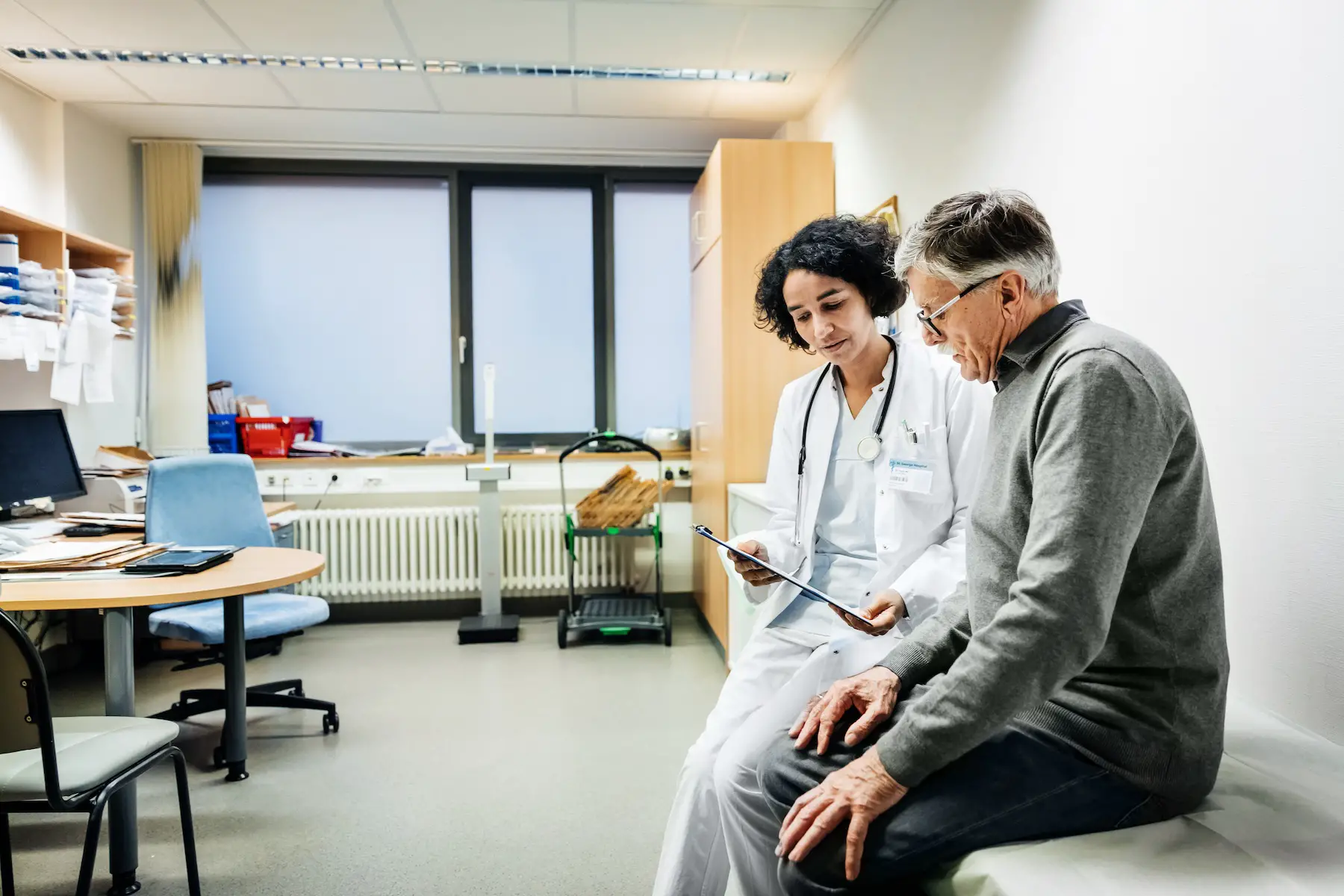
The risk here is waiting too long, or self-medicating with old antibiotics from home. If symptoms are getting worse, if pain is strong, or if you feel generally very unwell, move quickly to the next care level instead of trying to manage it alone.
Practical same-day checklist:
- Ask a pharmacist first if you want fast route-finding.
- Ask whether a pharmacy test is available for your symptoms.
- Book a GP, clinic, or teleconsultation if you likely need a prescription.
- Keep your symptom timeline clear, including fever, pain, and when symptoms started.
- Bring ID, current medicines, allergy information, and any prescription or packaging you already have.
- Do not share antibiotics or use leftovers “just in case.”
If you already have a foreign prescription
A foreign prescription in France may be accepted in some cases, but acceptance is not automatic. In practice, the medicine involved, where the prescription was issued, and the pharmacist’s ability to validate it can all affect the answer.
Do not rely on a blanket yes. Bring the original prescription, the medicine packaging, and identification, then ask the pharmacist whether it can be used locally or whether a French doctor needs to reissue it. This is especially important for prescriptions from outside the EU or for more tightly controlled medicines.
If you need help outside normal opening hours
A pharmacie de garde is an on-call pharmacy for evenings, Sundays, and public holidays. Closed pharmacies usually post the current on-call address in the window, and many people also use 3237 to find the nearest option.
Out-of-hours care is not one single route, so match the service to the problem. For a pharmacy-only need, the on-call pharmacy may be enough. For symptoms that need a doctor, SOS Médecins or another urgent medical route may be more appropriate. For severe symptoms, go straight to emergency care. Expatica’s guides to hospitals in France and French emergency numbers can help you navigate the urgent-care system.
If you need help outside hours, try this:
- Check the notice in the pharmacy window near you.
- Search the on-call service via 3237.
- Use SOS Médecins if you need a doctor rather than just a pharmacy.
- Call 15 or 112 if the problem sounds urgent or is getting worse quickly.
When should you skip the pharmacy and get urgent medical help?
This section is general safety guidance, not a diagnosis tool.
| 🚨 Trouble breathing, chest pain, or confusion: call 15 or 112 now. |
| 🚨 Severe dehydration, repeated vomiting, or extreme weakness: do not wait for a pharmacy visit. |
| 🚨 High fever with worsening symptoms, shaking, or severe pain: get medical help quickly. |
| 🚨 Suspected kidney infection, severe flank pain, or urinary symptoms with fever: skip self-navigation and seek urgent care. |
| 🚨 A very young child, an older person, or someone medically vulnerable who is getting worse: use urgent medical care rather than a pharmacy-first approach. |
| 🚨 If you are in doubt and symptoms feel serious: go to urgences or call emergency services for guidance. |

What do consultations, medicines, and reimbursement look like in France?
In France, you may need to pay upfront for a consultation or medicine, then get reimbursed later. That experience depends a lot on whether you already have a Carte Vitale, the French health insurance card, and whether you are connected to Assurance Maladie, the public health insurance system. If you are new to France, Expatica’s guide to health insurance in France explains the basics.
A mutuelle is a top-up policy that can help with the part not covered by the public system. If you are newly arrived, studying, on a visa, or between systems, you may need to keep receipts and claim later through travel, international, or private insurance instead.
| Situation | What happens at the pharmacy | What you pay now | What to keep |
| You have a working Carte Vitale | Reimbursement support may apply automatically | Often less upfront, depending on cover | Receipt if you need a record |
| You are in the public system but no card yet | You may pay first and claim later | Often the full amount upfront | Detailed receipt and prescription |
| You use travel or private insurance | The pharmacy usually does not bill your insurer directly | Usually full payment first | Itemised receipt, prescription, proof of payment |
| The medicine is not reimbursable | Public reimbursement may not apply | Full amount or a higher share | Receipt for insurer or records |
Reimbursement situations are general examples. What you pay upfront can vary depending on your medicine, prescription, insurance status, and whether direct settlement applies.
If you do not yet have a Carte Vitale, ask for detailed paperwork at the pharmacy and clinic. You may need it later for reimbursement.
What does the Carte Vitale cover at the pharmacy?
The Carte Vitale helps connect you to reimbursement and can reduce upfront payment when tiers payant, direct settlement, applies. But cover depends on the medicine, the prescription, and your insurance status. Some medicines are not reimbursable at all.
In general, reimbursable medicines fall into standard bands such as 100%, 65%, 30%, or 15%. Ask whether the medicine is reimbursable, whether a generic version affects what you pay, and whether refusing generic substitution changes your out-of-pocket cost.
When private or international health insurance helps
Private or international cover is most useful when you are waiting for public registration, when your visa or relocation plan requires proof of cover, or when you want help with reimbursement gaps, follow-up care, or private treatment routes.
If cost is a concern, Expatica’s guide to expat health insurance in France can help you compare options, including Allianz health care, before or alongside public cover. If you need to pay medical costs in euros before reimbursement, some newcomers also use a Wise account to manage EUR spending or receive money from home.
Wise account for healthcare payments in France
Paying for a consultation, pharmacy visit, or health-related costs in euros? With a Wise account, you can hold EUR, convert money, and manage everyday payments while you navigate healthcare in France.

Private or international cover can be especially useful for:
- newcomers waiting for public cover to start
- visa holders or relocating families who need continuous protection
- people who want help with consultations, follow-up costs, or reimbursement admin
Useful French pharmacy terms and what to bring
| French term | What it means |
| Pharmacie | Pharmacy |
| Ordonnance | Prescription |
| Médecin traitant | Your regular doctor or registered main doctor |
| Pharmacie de garde | On-call pharmacy outside normal hours |
| Carte Vitale | French health insurance card |
| Assurance Maladie | French public health insurance system |
| Mutuelle | Top-up health insurance |
| Urgences | Hospital emergency department |
Bring these with you if you can:
- passport or other ID
- current medicine packaging
- prescription, if you already have one
- insurance details or Carte Vitale
- a short timeline of your symptoms
Conclusion
In France, antibiotics are not a self-service pharmacy product, so it is better to follow the controlled care route rather than self-medicate. A pharmacist can still be a useful first stop, especially if you need advice, a rapid test, or help deciding whether to see a doctor. If symptoms are severe, worsening, or involve warning signs, skip the pharmacy route and seek urgent medical care. Keep your prescription, ID, medicine packaging, and receipts together, especially if you need reimbursement or have foreign, travel, or private insurance.
FAQ
Frequently asked questions about antibiotics in France
Can tourists get antibiotics in France? 
Tourists generally cannot buy antibiotics off the shelf in France. In most cases, they need a local medical assessment, unless they qualify for one of the limited pharmacy-led pathways. A pharmacist can still advise on the safest next step.
Can a pharmacist prescribe antibiotics in France?
Only in narrow, regulated situations. Some trained pharmacists can dispense certain antibiotics after screening and testing, but antibiotics are not freely available like normal OTC medicines.
Can you use a foreign prescription in a French pharmacy?
Sometimes, but acceptance is not automatic. Bring the original prescription, medicine packaging, and ID, then ask the pharmacist whether it can be accepted or whether a French doctor needs to reissue it.
How do you find a pharmacie de garde in France?
Check the notice posted on the window of your local pharmacy, use 3237, or ask locally. If symptoms are severe, do not wait for an on-call pharmacy: seek urgent medical care instead.
Sources
- Service Public: June 2024 rule change allowing trained pharmacists to dispense certain antibiotics for sore throat and simple cystitis under strict conditions, checked on 10 July 2026.
- ameli.fr: pharmacy screening and treatment rules for simple cystitis, including eligibility limits and warning signs, checked on 10 July 2026.
- ameli.fr: guidance on reading and using a medicine prescription, including standard validity rules for first dispensing and renewals, checked on 10 July 2026.
- ameli.fr: medicine reimbursement, tiers payant, reimbursement bands, and generic substitution, checked on 10 July 2026.
- 3237.fr: service for finding the nearest pharmacie de garde by location, checked on 10 July 2026.
- ANSM: recommendations on appropriate antibiotic use and amoxicillin availability, checked on 3 July 2026.