
'%20id='ico-down'%20stroke='%23000000'%20stroke-width='1.5'%3e%3cg%20transform='translate(1092.250000,%20254.750000)'%3e%3cpolyline%20id='Path-2-Copy-4'%20transform='translate(5.500000,%202.750000)%20scale(1,%20-1)%20rotate(-180.000000)%20translate(-5.500000,%20-2.750000)%20'%20points='0%200%205.5%205.5%2011%200'%3e%3c/polyline%3e%3c/g%3e%3c/g%3e%3c/g%3e%3c/svg%3e)


Finance
Money Management
How to invest in bonds in France
Bonds are loans to governments or companies. For expats in France, the key is balancing income, diversification, liquidity, tax, and currency risk. This article covers how bonds fit in your portfolio, which types to choose (government vs corporate; individual vs funds), French account and tax points.


This guide is for general information only, not financial, tax, or legal advice; capital is at risk, issuers can default, and returns are not guaranteed.
Key takeaways
- Individual government bonds: May suit readers who want known maturity dates and direct issuer exposure. They offer a clear coupon and maturity structure, but the price can fall if you sell early. In France, government bonds are commonly called OATs.
- Individual corporate bonds: May suit readers who want income and are comfortable researching issuers. They can offer higher yields than government bonds, but also carry higher default risk and weaker liquidity. Credit quality matters more than headline yield.
- Bond ETFs: May suit beginners looking for simple diversification, with easy access to a broad spread of holdings. However, the fund price moves daily and most broad bond ETFs do not have a single maturity date. In France, they are often available through a compte-titres ordinaire, or CTO.
- Bond mutual funds: May suit readers using bank or insurer platforms. They offer professional management and easy buying, but ongoing charges and the manager’s investment style can affect returns. In France, they are often found within assurance vie contracts.
- Inflation-linked bonds: May suit readers concerned about inflation eroding fixed income. They can offer some protection if inflation rises, but prices may still fall when real yields increase. France offers inflation-linked OATs as well as fund options.
Funding your bond investment account from abroad
If you’re building a bond allocation in France but earn in another currency, keep funding costs low. A Wise account lets you hold multiple currencies, convert to euros at transparent rates, and send EUR to a French bank or broker when you’re ready to buy bonds or bond funds.

No commitment required
Step 1: decide what role bonds should play in your portfolio
Bonds can provide income, diversification, and potentially lower volatility than shares, and may support capital-preservation goals when the money has a clear future use.
A common mistake is treating bonds as “safer cash.” Cash balances do not fluctuate in market price like traded bonds do, so bond investing for beginners starts with understanding what problem the bond allocation is meant to solve.
Use this checklist before you buy:
- Time horizon: Will you need the money in under three years, in five years, or much later?
- Income need: Do you want regular payments now, or are you focused on total return?
- Risk tolerance: Could you stay invested if bond prices fell after rates moved up?
- Access to cash: Might you need to sell quickly for a move, school fees, or a property deposit?
For example, an expat in Lyon who earns partly in US dollars but saves for euro spending in three to five years may use bonds to reduce the risk of holding everything in shares, while also avoiding leaving too much money in low-yield cash.
Step 2: pick the bond type and risk level that match your goal
The first practical choice is usually government bonds versus corporate bonds, and then whether you want inflation protection as well. Government bonds are loans to states, corporate bonds are loans to companies, and inflation-linked bonds are built so payments or principal adjust with inflation measures.
Higher yield often means higher risk. That risk may come from weaker issuer finances, longer duration, lower liquidity, or all three. A bond can look safe on the issuer side but still be a poor fit if you may need to sell at the wrong time.
| Goal | Usually compare | What may fit | Main watchpoint |
|---|---|---|---|
| Stability and issuer strength | Government bonds | High-quality sovereign debt | Rate moves still affect price |
| Higher income | Corporate bonds | Investment-grade or mixed corporate exposure | Credit risk can rise fast in weak markets |
| Inflation concern | Inflation-linked bonds | OATi or bond funds with inflation-linked exposure | Protection is not the same as no volatility |
Government bonds, corporate bonds, and inflation-linked bonds
French government bonds are called OATs, short for Obligations Assimilables du Trésor. Agence France Trésor says retail investors can buy fixed-rate and index-linked OATs on the secondary market, checked on 20 July 2026 at Agence France Trésor.
| Bond type | What it is | Main use | Main risk |
|---|---|---|---|
| Government bonds | Loans to a state, such as French OATs | Core stability and income | Prices can fall when rates rise |
| Corporate bonds | Loans to businesses | Higher income potential | Issuer default or downgrade |
| Inflation-linked bonds | Bonds linked to inflation measures | Help protect purchasing power | Can still lose value before maturity |
Before buying, verify the issuer, ISIN, maturity date, coupon, currency, and product factsheet on your broker platform or the official issuer page.
Short-, medium-, and long-term bonds
Longer-term bonds usually react more strongly to interest-rate changes, while shorter-term bonds are generally less sensitive to those moves. Yields can vary across maturities depending on market conditions.
That bond yield versus price relationship matters most if you may sell before maturity or if you buy a bond fund. For beginners, comparing shorter or intermediate durations with long-dated bonds can make the interest-rate trade-off easier to understand before choosing a route.
Step 3: choose how you want to buy bonds in France
If you are researching how to buy bonds in France, the real decision is not just what to buy, but how you want to access it. The route changes your diversification, minimum investment size, admin burden, and the type of tax wrapper you can use.
In France, many readers compare individual bonds, bond ETFs, bond funds, and wrapper routes such as a CTO or assurance vie. If you are still mapping the wider picture, Investing in France is a useful starting point before narrowing your shortlist.

| Route | Ease of use | Diversification | What to check in France |
|---|---|---|---|
| Individual bonds | Medium | Low unless you buy many issues | Access, minimum size, liquidity, tax reporting |
| Bond ETFs | High | Usually broad | UCITS structure, duration, fees, currency exposure |
| Bond mutual funds | High | Usually broad | Ongoing charges, manager style, platform menu |
| Assurance vie fund menu | Medium | Depends on contract | Available bond funds, wrapper fees, withdrawal rules |
Individual bonds vs bond ETFs and funds
The bond ETFs versus individual bonds decision comes down to control versus simplicity. Individual bonds can give you known maturity dates and clearer cash-flow planning, while bond ETFs and funds usually make diversification easier and lower the starting barrier.
This is different from assuming a fund is automatically safer. A bond fund still moves in price every day and, unlike an individual bond, typically does not have one fixed maturity date. Rather than searching only for the best bond funds for beginners, compare broad funds on duration, credit quality, currency exposure, and ongoing charges.
Broker, major local bank, or French wrapper
A self-directed broker may give you wider market access and lower dealing costs, while a major local bank such as BNP Paribas, Crédit Agricole, or Société Générale may feel simpler if you want your banking and investing in one place. A CTO, or compte-titres ordinaire, is the standard taxable securities account and is often the most flexible route for broad bond investing.
An assurance vie is a French tax wrapper that can give access to different investment supports, including units of account invested in bonds or investment funds, depending on the contract. Fees, available investments, and withdrawal conditions can vary significantly between providers. If you still need local banking infrastructure first, see opening a bank account in France.
Check these points before opening anything:
- What bond products can the platform actually access?
- Are bond ETFs and funds easier to buy than individual bonds on that route?
- What dealing, custody, or wrapper fees apply?
- How clear are the annual tax statements for a France-based resident?
Where Interactive Brokers can fit
Interactive Brokers is one self-directed platform example to compare, not a personal recommendation. It may suit readers who want broad market access, but the key question is whether its bond range, bond ETF availability, pricing, and reporting fit your France-based setup.
- Compare market access for UCITS bond ETFs and individual bonds.
- Compare dealing, custody, and foreign exchange costs.
- Check whether the reporting and tax paperwork will be easy for you to use in France.

Step 4: check taxes, fees, and key risks before you invest
Effective bond investing is about the result after friction, not the headline yield before it. Interest-rate risk, credit risk, liquidity risk, platform fees, fund charges, and foreign exchange costs can all reduce what you actually keep.
A common mistake is to look only at the coupon or quoted yield. If the bond is in another currency, if the fund is expensive, or if you later sell into a weak market, the after-tax and after-fee outcome may look very different from the first number you saw.
Use this pre-buy checklist:
- Compare issuer quality, not just yield.
- Check duration, especially in bond funds.
- Review dealing fees, custody fees, and fund ongoing charges.
- Check the bond currency against your spending currency.
- Ask what happens if you need to sell before maturity.
How bond interest and gains may be taxed in France
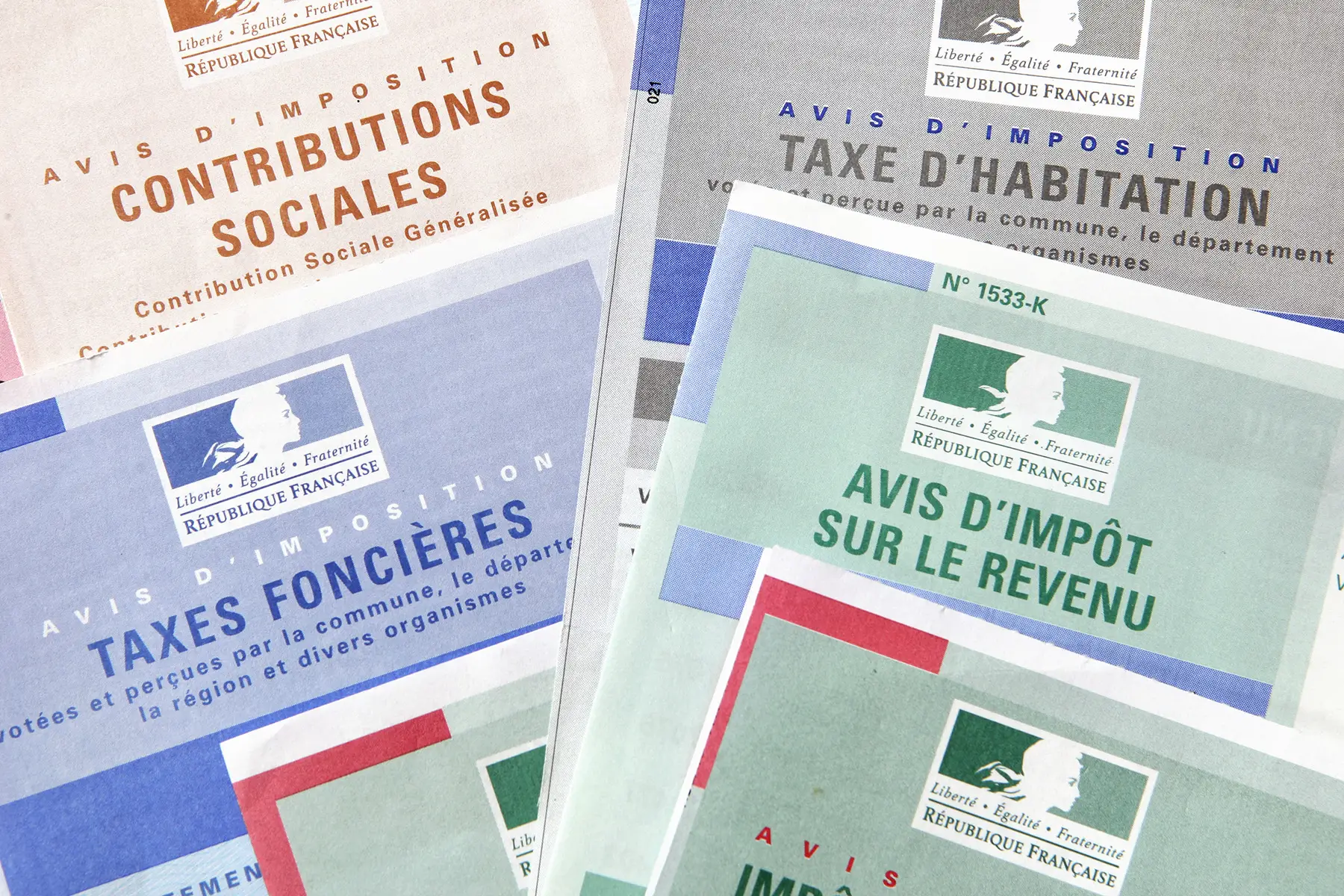
For French tax on bond interest, the first question is whether you are a French tax resident and what account wrapper you are using. As checked on July 2026, Service-Public says fixed-income investments such as bonds are taxable in France, and French residents often need to compare the PFU, also called the flat tax, with the progressive income tax option.
At a high level:
- Bond interest: Often falls under the PFU framework unless you elect the progressive scale.
- Social charges: Can also apply, and the exact treatment depends on product and status.
- Account type: A CTO and an assurance vie do not usually lead to the same tax outcome.
- Verification: Check impots.gouv.fr and Service-Public for current tax rules, and Agence France Trésor for OAT-specific information before acting.
French tax treatment depends on tax residency, account type, and sometimes a treaty, so avoid treating any generic example as a personal tax answer. For wider context, see Expatica’s taxes in France.
What expats should verify if they have assets or income abroad
Cross-border facts can change the result more than many beginners expect. If you hold assets or receive income outside France, verify these points before you buy:
- Tax residency: Which country currently taxes your worldwide investment income?
- Treaty position: Does a double-tax treaty affect how bond income is taxed?
- Withholding tax: Is tax being deducted abroad before money reaches you?
- Reporting: Do you need to declare foreign accounts, relevant contracts, or foreign-source investment income in France?
If your case spans more than one country, the after-tax result can change sharply, so professional advice may be worth it. Expatica’s France financial advisors directory can help you find local support.
Step 5: fund the account and start with a simple plan
Once you know the route, keep the first plan simple. You do not need to build a perfect bond ladder strategy on day one.
Choose the route: Decide whether you want individual bonds, a bond ETF, or a bond fund first.
Confirm the wrapper and fees: Check whether you are using a CTO, assurance vie, bank platform, or self-directed broker.
Verify the tax position: Make sure the likely French treatment makes sense for your case.
Fund in euros where practical: If you earn or hold money abroad, compare conversion costs before sending it.
Start diversified: Compare broad bond ETFs or funds with concentrated individual-bond holdings before deciding how much diversification you want.
Review on a schedule: Recheck allocation, duration, and fees every few months rather than reacting to every rates headline.
For example, a new resident in Toulouse with money to invest might compare diversified bond funds with individual bonds and other fixed-income routes before deciding which structure fits their circumstances.
How a Wise account can help when funding from abroad
A Wise account can help with the money-movement side rather than the investment side. If you are sending funds in from abroad, compare bringing money to France from abroad, review best multi-currency accounts in France, and then compare how a Wise account works for holding and converting money into euros before you send it to a broker or French bank. Wise is not a bond provider and does not provide investment advice.
- Hold and organise money in more than one currency before funding.
- Review conversion costs before sending euros to a broker or French bank.
- Separate money-management tasks from investment decisions.
If you want a France-specific explainer before using it, see Wise review France. The key point is to compare funding costs and convenience first, then make the investment decision separately.

Conclusion
Bond investing in France starts with matching the route to your time horizon, income needs, risk tolerance, and need for liquidity. Compare issuer quality, duration, diversification, fees, currency exposure, and the account wrapper rather than focusing only on yield. For expats, French tax residency and cross-border reporting can materially affect the outcome, so verify the rules that apply to your situation. If you are funding from abroad, keep currency conversion and money movement separate from the investment decision. Before buying, confirm product details and current tax information on official sources.
FAQ
Investing in bonds in France
What is a bond ladder strategy? 
A bond ladder spreads purchases across different maturity dates so that not all of your money comes due at once. It can help with cash-flow planning, but it is not necessary for beginners and may be harder to set up than a simple bond ETF or fund.
Can I buy foreign-currency bonds from France?
Some brokers may offer foreign-currency bonds, but that adds currency risk on top of bond risk. If your spending is in euros, check whether the extra FX exposure is worth it.
How do I check a bond before buying it?
Look at the issuer, ISIN, maturity date, coupon, currency, yield, and any product factsheet. If any of those are unclear, do not buy until you can verify them on the broker or issuer page.
Are bond funds better than cash for short-term money?
Not always. Bond funds can still fall in value, so very short-term money may be better kept in cash or cash-like products rather than in a bond fund, depending on your circumstances.
Sources
- Agence France Trésor: overview of the OAT market for retail investors, including fixed-rate and index-linked OATs, checked on 20 July 2026.
- Service-Public: French taxation of savings and investment income, including fixed-income investments and PFU framing, checked on 20 July 2026.
- Service-Public: social security contributions on wealth and investment income, checked on 20 July 2026.
- Service-Public: life insurance contract tax treatment, checked on 20 July 2026.
- impots.gouv.fr: official information for individuals moving to or from France and handling cross-border tax matters, checked on 20 July 2026.
- AMF: French financial market regulator information on investor protection and authorised professionals, checked on 20 July 2026.
- Wise: official Wise account information, checked on 20 July 2026.


Did you find this guide helpful?