
'%20id='ico-down'%20stroke='%23000000'%20stroke-width='1.5'%3e%3cg%20transform='translate(1092.250000,%20254.750000)'%3e%3cpolyline%20id='Path-2-Copy-4'%20transform='translate(5.500000,%202.750000)%20scale(1,%20-1)%20rotate(-180.000000)%20translate(-5.500000,%20-2.750000)%20'%20points='0%200%205.5%205.5%2011%200'%3e%3c/polyline%3e%3c/g%3e%3c/g%3e%3c/g%3e%3c/svg%3e)


Moving
Visas & Immigration
Citizenship in Switzerland: how to become a Swiss citizen
Thinking of applying for Swiss citizenship? Find out all about the process with our informative guide to becoming a citizen of Switzerland.

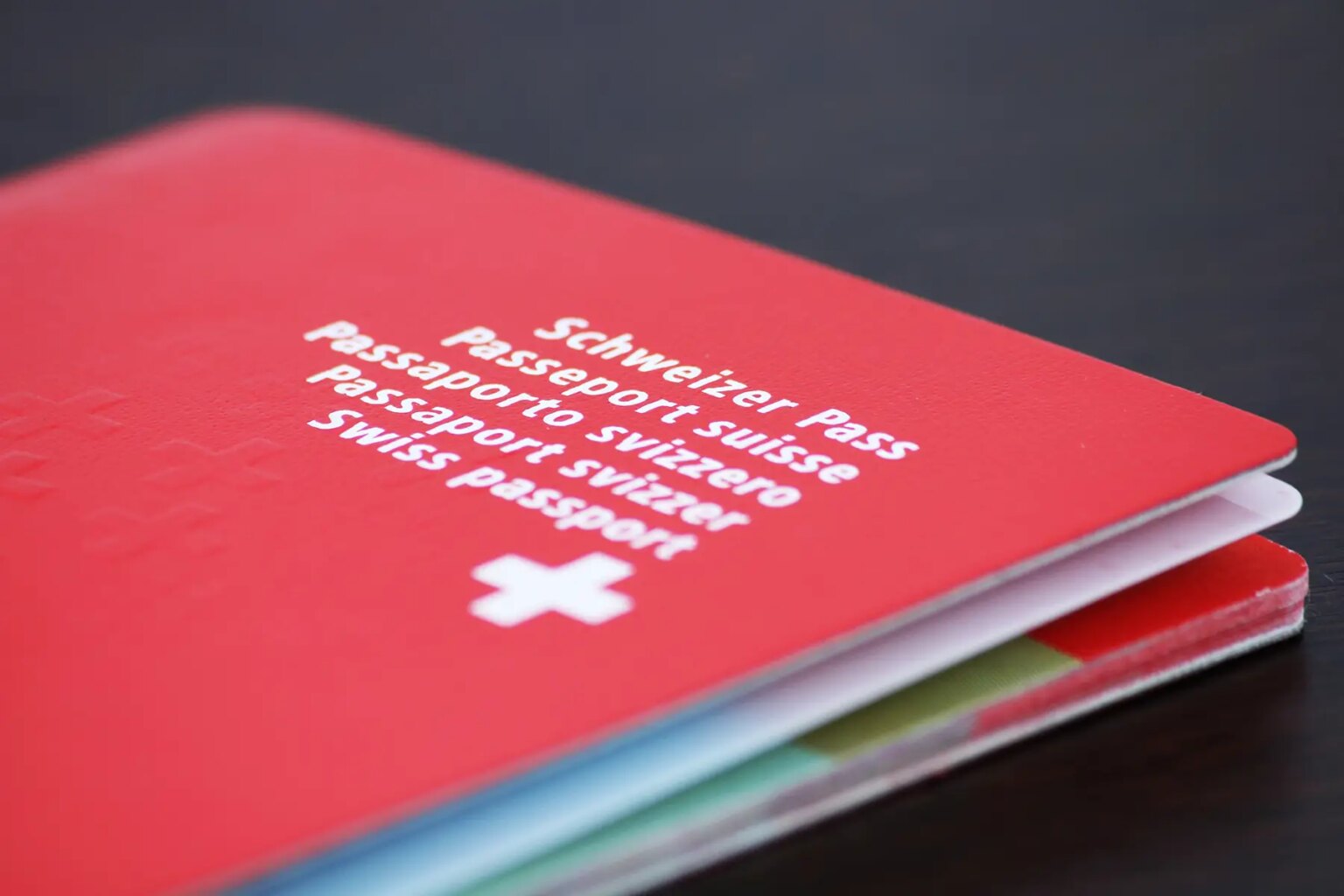
Many expats find benefits in acquiring Swiss citizenship, especially if they are living and working in Switzerland long-term. This guide explains everything you need to know about the citizenship process in Switzerland, with sections including:
Wisler Legal
Wisler Legal is a Swiss law firm providing German and English services. Based in Zurich, they provide expat-friendly advice on a range of immigration matters, including work permit applications, naturalization, and tax advice. So, whatever your immigration needs in Switzerland, Wisler Legal can offer guidance and support.

An overview of Swiss citizenship
Citizenship in Switzerland is open to various groups of people, including foreign residents who have lived in the country for the required length of time. However, it’s not a requirement for long-term residents and many expats prefer instead to opt for permanent residency.
Around 41,300 people received Swiss citizenship in 2024. However, this represents a small percentage of those who are eligible for naturalization. According to the United Nations Economic Commission for Europe, only 12% of those with a B or C permit applied for citizenship in 2021.
The State Secretariat for Migration (SEM) is the central Swiss authority responsible for immigration and citizenship. However, citizenship is largely administered at cantonal level.
What are the requirements for Swiss citizenship?
Requirements for Swiss citizenship depend on your nationality and personal circumstances.
The paths to citizenship in Switzerland are generally through one of the following:
- being a child – by birth or adoption – of a Swiss citizen
- marriage to a Swiss citizen
- naturalization after living in the country for 10 years (years between the ages of 8 and 18 count as double)
The additional requirements for citizenship through regular naturalization in Switzerland at federal level are:
- holding a permanent residence permit (C permit)
- knowledge of a Swiss national language spoken to B1 level and written to A2 level
- integration into Swiss life and familiarity with Swiss customs
- compliance with Swiss rule of law
- posing no danger to Switzerland’s internal or external security
- no period spent on social welfare benefits within the past three years, unless you give back the amount received
Certain cantons may have their own specific requirements for integration into Swiss society. Enquire with your local cantonal authority for full criteria.
Why become a Swiss citizen?
There are some benefits to becoming a Swiss citizen, including:
- the right to reside in Switzerland even if you spend a period of time living elsewhere
- right to vote in Swiss elections and stand for public office
- the right to a Swiss passport, which is ranked third on the passport power index with visa-free access to over 150 countries.
However, there are also obligations with Swiss citizenship. One of these is mandatory military service if you’re an able-bodied male adult.
Citizenship by birth or descent in Switzerland
Unlike many countries, a baby born on Swiss soil does not automatically have the right to Swiss citizenship. The child will be Swiss is he/she is:
- the offspring of married parents, one of whom is Swiss
- born to an unmarried Swiss mother
- born to an unmarried Swiss father, if the paternity is acknowledged before the age of 22
- a foreign child under 22 years old who was not included in the naturalization of a parent and has lived in Switzerland for five years, including one year immediately prior to the application
- a child of a parent who lost their Swiss citizenship but can show close ties to Switzerland. Read more on renaturalization.
A child born abroad who has another citizenship and at least one Swiss parent loses their Swiss citizenship upon reaching the age of 25 unless they notify a Swiss authority – either at home or abroad – that they wish to retain their Swiss citizenship.
How to apply for citizenship through birth or descent
If you meet the criteria to apply for citizenship in Switzerland through birth or descent, you will qualify for the simplified naturalization process. The exact process for this will depend on your canton.
The application can take up to 12 months to process and can be done either through the SEM or your local canton. In addition to meeting the birth/descent criteria, you will need to show proof of:
- having close ties with Switzerland (spending time in the country, speaking the local language, basic knowledge of Swiss society)
- showing respect for public security, public order, and Swiss values.
You will need to submit an application form along with various declarations and questionnaires to demonstrate your eligibility. The application fee is currently CHF 600 for adults. Children under 18 can apply for free, unless they are making the application on the grounds of the applicant having a Swiss father not married to the mother. In this case, the fee is CHF 350.
Getting citizenship by naturalization in Switzerland
After 10 continuous years as a resident in Switzerland, those not eligible for simplified naturalization can apply for Swiss citizenship through ordinary naturalization. This is open to anyone who meets the residency requirements and has a C residence permit.
Years spent living in Switzerland between the ages of eight and 18 count as double, meaning that under-18s can apply to be a Swiss citizen after five years if they meet other requirements.
If you are applying for citizenship as a couple, you must both meet the 10-year requirement. However, if one of the couple becomes a citizen before the marriage takes place, the partner is then eligible for citizenship after five years of Swiss residence and three years as a spouse. See the below section on citizenship through marriage for more information.
You need to make an application for citizenship through regular naturalization at three levels – confederation, canton, and commune. While requirements at federal level are the same for all applicants, they vary considerably between individual cantons and communes.
For example, some cantons or communes may permit short periods of time spent living outside Switzerland within the residency requirement period while others may not. Some may also apply different conditions for EU and European Free Trade Association (EFTA) citizens.
How to apply for citizenship through naturalization
The application process, fees, and processing time varies across the Swiss cantons and communes. Typically, it takes over a year.
You need to make your application through your canton or commune. The exact process depends on the local laws. Contact your cantonal naturalization authority for information.
You will need to submit:
- application form (available through your cantonal naturalization authority)
- proof of C residence permit
- proof of language proficiency acquired from a registered language school in Switzerland
Additional documents will depend on your Swiss canton or commune.
Applications are first assessed at federal level by the SEM. If you meet the federal requirements, the SEM then passes the application to the relevant local canton or commune for further assessment.
You will then have to attend a personal interview at the relevant office of your local canton or commune where you will be informed of the subsequent steps.
Procedures can vary considerably. For example, some communes require applicants to take a verbal or written naturalization test while others leave the application decision up to the communal assembly.
Getting Swiss citizenship is reportedly more generous in western Switzerland than elsewhere. If you move to another part of Switzerland during your application, the cantonal or communal authority where you made your application remains responsible for the decision.
Rejected citizenship applicants typically have no right to appeal.
Costs of naturalization application
Citizenship application costs are:
- Confederation level: CHF 100 for an individual, CHF 150 for a married couple, CHF 50 for a child
- Canton level: up to CHF 2,000 per person
- Commune level: CHF 500–1,000 per person
In addition to this, there may be administration costs (e.g., to obtain criminal record certificates) and costs to take the necessary language tests (around CHF 250).
Getting citizenship by marriage in Switzerland
You can apply for fast-track (known as simplified or facilitated) naturalization if you are married to a Swiss citizen. You need to meet the following conditions:
- living in Switzerland for a total of 5 years, including the 12 months immediately prior to your application
- married for at least 3 years
- knowledge of a Swiss national language spoken to B1 level and written to A2 level
- integration into Swiss life and familiarity with Swiss customs
- compliance with Swiss rule of law
- being assessed as no danger to Switzerland’s internal or external security
- no period spent on social welfare benefits within the past three years, unless you give back the amount received
However, you cannot apply for simplified naturalization if you are a registered partner rather than a spouse of a Swiss citizen. You must be married. Those in a registered partnership must apply for citizenship through regular naturalization after 10 years.
It is not possible to apply for simplified naturalization as a spouse if your partner has passed away.
Requirements and procedures for simplified naturalization in Switzerland may vary between cantons and communes, although not as significantly as for regular naturalization as things are mainly handled at the federal level.
How to apply for citizenship through marriage
Because decisions about fast-track citizenship through marriage are made at the federal level, you need to make this application to the SEM. You can get an application form from the SEM office or from your local cantonal naturalization authority.
Along with the application form, you will need to submit proof that you meet the language requirements. Applications normally take 12–18 months. You can move within Switzerland during the application process and even move abroad as long as your Swiss spouse is able to report to the Swiss embassy or consulate in your new place of residence.
The cost of an application for citizenship through marriage is CHF 900. You need to pay this non-refundable fee in advance. However, applicants have the right to appeal rejected applications.
Citizenship by adoption in Switzerland
Under Swiss law, a child legally adopted automatically gains the nationality and citizenship of its parents. Therefore, if a Swiss couple adopt a child, it will become a Swiss citizen.
If a couple living in Switzerland who are not Swiss citizens adopt a child, then the authorities treat the child’s nationality the same as if it was a biological offspring.
Getting citizenship as a refugee in Switzerland
It is possible for both recognized refugees and temporarily admitted persons holding the F permit to apply for citizenship in Switzerland.
Both groups apply under the regular naturalization route. However, any years spent as a temporary resident with an F permit only count as half-years towards the 10-year residency criteria. This means that someone living long-term in Switzerland on an F permit has to wait 20 years before being eligible for citizenship, unless they become eligible for simplified naturalization through marriage or descent.
Temporary admitted persons will need to show evidence of an F permit rather than a C permit when making an application. Other than that, requirements and procedures are the same for refugee groups as they are for others applying for citizenship through naturalization.
Exceptions and special cases for citizenship in Switzerland
Third-generation foreigners under 25 with at least one Swiss grandparent can also apply for citizenship. This is the case if you meet all of the following conditions:
- At least one grandparent was born in Switzerland or acquired right of residence.
- At least one parent has a permanent residence permit, has lived in Switzerland for at least 10 years, and has attended mandatory schooling in Switzerland for at least five years.
- You were born in Switzerland and have a permanent residence permit.
- You have attended mandatory education in Switzerland for at least five years.
- You are successfully integrated into Swiss society and do not pose a threat to security.
Costs for this are CHF 500 for adults and CHF 250 for children. You need to make the application through the SEM.
Find more information on the SEM website.
Citizenship test in Switzerland
Citizenship processes vary across the Swiss cantons and communes. Not all of the localities include a citizenship test as part of the application procedure, but many do.
However, the Swiss citizenship test differs across the cantons. Costs and application procedures also vary according to where you’re taking the test.
Some regions, such as the French-speaking canton of Vaud, have published their version of the questionnaire online. You can also use the Naturalisation Switzerland website which has information and sample questions used in the different cantons.
For more information, contact your cantonal naturalization authority.
Passports in Switzerland
If you become a Swiss citizen, you will be eligible for a Swiss passport. This will allow you to travel freely in and out of Switzerland, enjoying the benefits of being a Swiss citizen while overseas.
You need to apply for a passport either in person at your communal residents’ registration office, or in person, by phone or online at your canton’s passport office (depending on which canton you live in). Contact your cantonal naturalization authority for more information.
All Swiss passports are biometric. Current costs are around CHF 150 for an adult passport and CHF 70 for a children’s passport.

Dual nationality in Switzerland
If you take on Swiss nationality you can keep your nationality of birth (and so have dual nationality) as long as your country of origin also accepts it.
As a dual national, you may still be required to complete military service in Switzerland unless you have already taken part in another country.
Losing or renouncing citizenship in Switzerland
You can lose your Swiss citizenship if you:
- were born abroad to a Swiss parent but have not been registered as a Swiss citizen and don’t notify the Swiss authorities that you want to remain a Swiss citizen by the age of 25
- have dual nationality and engage in conduct that compromises Switzerland’s security or international reputation, such as committing acts of terrorism
- are found to have given false information or concealed important facts in your citizenship application
It is also possible to voluntarily renounce your Swiss citizenship, which you may need to do if you move abroad and want to become a citizen of another country that doesn’t permit dual citizenship.
If you have lost your Swiss citizenship, you can apply to have it reinstated with 10 years if you meet all of the citizenship criteria. However, if you apply after the 10-year period has expired, you will need to have been living in Switzerland for three years.
Citizenship appeals and complaints in Switzerland
Because you apply for Swiss citizenship at various different levels, making an appeal against a rejected application can be complicated. If the SEM rejects the application at the first stage, it can be difficult to get this overturned. You can make an appeal to the Federal Administrative Court, although this can take several months or longer.
If your application has been rejected at cantonal or communal level, you will need to check the appeals process of the individual canton. In certain instances, you may be able to take the case to the Federal courts if your constitutional rights have been violated.
Useful resources
- State Secretariat for Migration (SEM) – office that deals with citizenship and immigration at federal level
- Swiss Authorities Online – website of the Swiss federal government with information on a range of topics including citizenship
- List of cantonal naturalization authorities
- Naturalisation Switzerland – information on the Swiss citizenship exams

Did you find this guide helpful?