'%20id='ico-down'%20stroke='%23000000'%20stroke-width='1.5'%3e%3cg%20transform='translate(1092.250000,%20254.750000)'%3e%3cpolyline%20id='Path-2-Copy-4'%20transform='translate(5.500000,%202.750000)%20scale(1,%20-1)%20rotate(-180.000000)%20translate(-5.500000,%20-2.750000)%20'%20points='0%200%205.5%205.5%2011%200'%3e%3c/polyline%3e%3c/g%3e%3c/g%3e%3c/g%3e%3c/svg%3e)



'%20fill='%23000000'%3e%3cg%20id='icons'%20transform='translate(56.000000,%20160.000000)'%3e%3cpath%20d='M144,7339%20L140,7339%20L140,7332.001%20C140,7330.081%20139.153,7329.01%20137.634,7329.01%20C135.981,7329.01%20135,7330.126%20135,7332.001%20L135,7339%20L131,7339%20L131,7326%20L135,7326%20L135,7327.462%20C135,7327.462%20136.255,7325.26%20139.083,7325.26%20C141.912,7325.26%20144,7326.986%20144,7330.558%20L144,7339%20L144,7339%20Z%20M126.442,7323.921%20C125.093,7323.921%20124,7322.819%20124,7321.46%20C124,7320.102%20125.093,7319%20126.442,7319%20C127.79,7319%20128.883,7320.102%20128.883,7321.46%20C128.884,7322.819%20127.79,7323.921%20126.442,7323.921%20L126.442,7323.921%20Z%20M124,7339%20L129,7339%20L129,7326%20L124,7326%20L124,7339%20Z'%20id='linkedin-[%23161]'%3e%3c/path%3e%3c/g%3e%3c/g%3e%3c/g%3e%3c/svg%3e)
'%20fill='%23000000'%3e%3cg%20id='icons'%20transform='translate(56.000000,%20160.000000)'%3e%3cpath%20d='M335.821282,7259%20L335.821282,7250%20L338.553693,7250%20L339,7246%20L335.821282,7246%20L335.821282,7244.052%20C335.821282,7243.022%20335.847593,7242%20337.286884,7242%20L338.744689,7242%20L338.744689,7239.14%20C338.744689,7239.097%20337.492497,7239%20336.225687,7239%20C333.580004,7239%20331.923407,7240.657%20331.923407,7243.7%20L331.923407,7246%20L329,7246%20L329,7250%20L331.923407,7250%20L331.923407,7259%20L335.821282,7259%20Z'%20id='facebook-[%23176]'%3e%3c/path%3e%3c/g%3e%3c/g%3e%3c/g%3e%3c/svg%3e)

Switzerland is a global leader in innovation and home to some of the largest multinational companies in the world. It’s also ranked one of the best places to live. No wonder you might want to find a job or start a business in Switzerland. Once you’ve secured your position, you’ll also need to set up your financial life – from receiving your Swiss salary to managing money across borders. Many international professionals use services like Wise to handle CHF payments and send money internationally, avoiding the high fees typically charge for currency exchange.
Once you do that, you’ll need to find your way around Swiss business culture. Use this guide, with topics including:
- Business in Switzerland
- Business culture in Switzerland
- Business structure and hierarchy in Switzerland
- Diversity in the workplace in Switzerland
- Conducting business in Switzerland
- Business etiquette in Switzerland
- Social provision through businesses in Switzerland
- Businesses in the community in Switzerland
- Business corruption and fraud in Switzerland
- Frequently Asked Questions
- Useful resources
Rent a PR
Want to kick-start your business in Switzerland? If you're looking for professional, dedicated PR specialists to help boost your business, speak to the communication experts at Rent a PR. From press releases, to strategic, integrated communications and PR advisory, Rent a PR can help your company make a splash in the Swiss and international markets.

Business in Switzerland
Switzerland is one of the wealthiest countries in the world with an economy led by financial services and pharmaceuticals. Although the Swiss GDP took a hit from the COVID-19 pandemic, the government is forecasting a strong economic recovery in 2021 and 2022.
The service sector generates approximately 74% of Swiss GDP and 25% comes from industry. The European Union (EU) is Switzerland’s main trading partner. According to the Federal Statistics Office, as of 2019, Swiss exports were primarily chemicals and pharmaceuticals (44.8%). Secondary were machinery and electronics (14.4%). Lastly, watches account for 9.1% of exports from Switzerland.
Most Swiss firms (more than 99%) are small- and medium-sized enterprises (SMEs) with fewer than 250 employees. Switzerland also has one of the highest concentrations of Fortune 500 companies in the world. Both of these factors have a big impact on the business culture in Switzerland. Meanwhile, Swiss multinational and foreign-owned companies comprise approximately 5% of the more than 580,000 registered companies in the country. There is no nationwide minimum wage in Switzerland; several cantons set their own minimums (e.g., Geneva CHF 24.48; Basel‑Stadt CHF 22.00 in some sectors; Jura CHF 21.40; Neuchâtel CHF 21.09; Ticino CHF 20.00), the average salary in Switzerland is among the highest in the world. Consequently, the cost of living in Switzerland is also very high.

For entrepreneurs, Switzerland is an emerging startup scene and a world leader in innovation. The country is home to some of the most prestigious universities in the world, so recruiting top talent is easy – especially in fields related to science, technology, and medicine. However, to start a business in Switzerland as a foreigner, there is no blanket citizenship requirement: EU/EFTA nationals can register to be self‑employed; non‑EU/EFTA nationals generally need a C permit or special authorization; and incorporated forms (AG/GmbH) must appoint at least one Swiss‑resident director/authorized signatory; sole proprietorships require the owner to be resident.
For international professionals relocating to Switzerland, the high average salary comes with equally high living costs. Managing finances across borders becomes essential – whether you’re sending money to family abroad, paying off loans in your home country, or maintaining financial commitments elsewhere. While banks in Switzerland offer international transfer services, they often use marked-up exchange rates. Services like Wise allow you to send and receive CHF using the mid-market exchange rate, which can save significant amounts on regular international transactions.
Business culture in Switzerland
There are four official languages in Switzerland: German (63.7%), French (20.4%), Italian (6.5%), and Romansh (1%). This certainly adds some complexity to navigating business culture in Switzerland. In fact, business culture does vary depending on whether the company is located in the German, French, or Italian areas of Switzerland.
However, you will notice some undeniably Swiss aspects that are prevalent throughout the country. For instance, the business culture in Switzerland is very formal and conservative. Their communication style tends to be direct and polite. Swiss companies generally have a very hierarchical structure. Therefore, decision-making is top-down with little input from employees. Above all the Swiss appreciate punctuality, frugality, responsibility, and tolerance. These cultural values are evident in the way Swiss people approach business.
Time and space in Swiss business
The Swiss value work/life balance in their business culture and generally frown upon contacting an employee or employer outside of working hours. They also take punctuality for business and social meetings very seriously and expect you to do likewise. It is best to be at least five to ten minutes early for an appointment. Above all, you should call if you are going to be late for an appointment and try to avoid rescheduling.
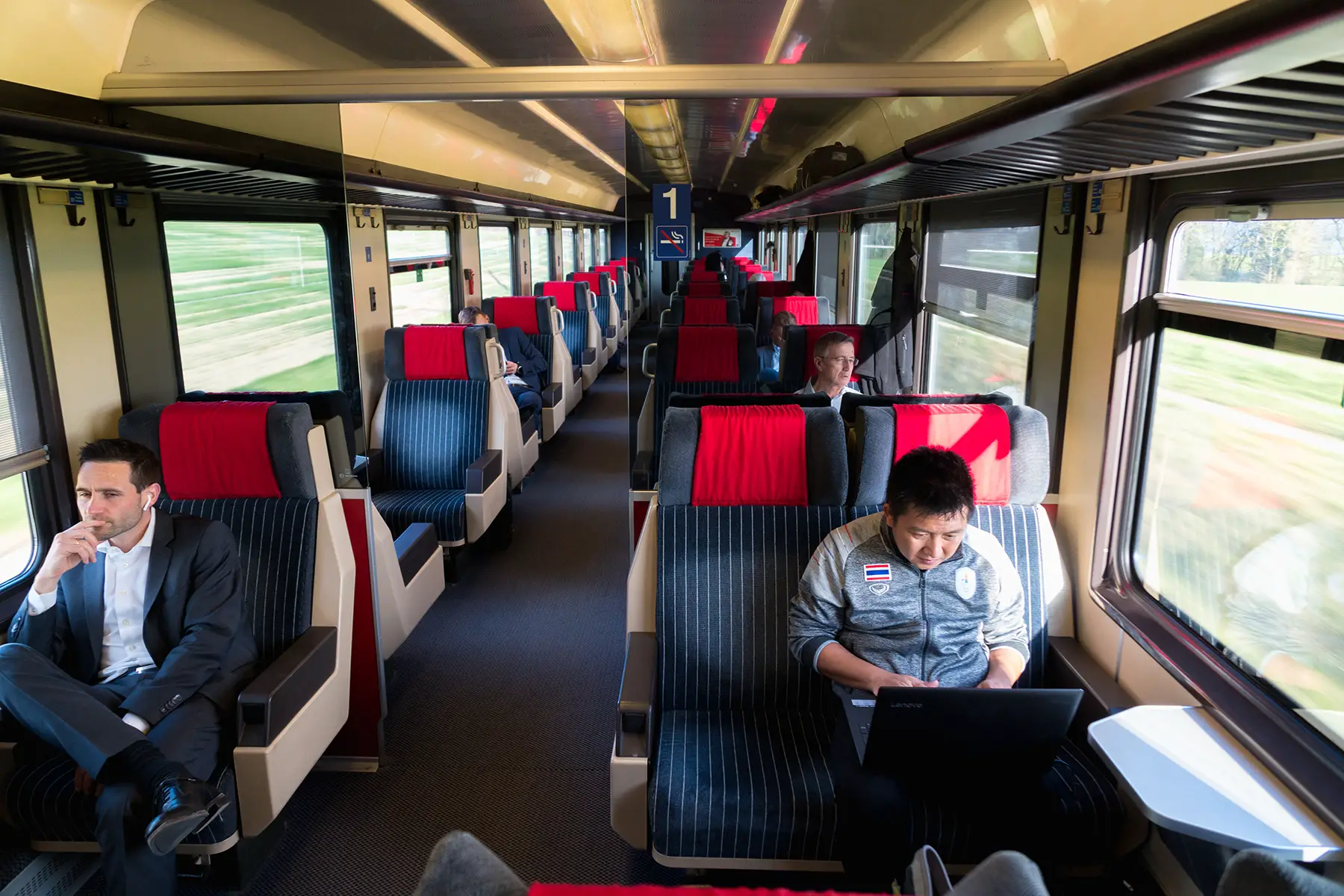
Typical office hours are Monday to Friday, from 08:00 to 17:30. Swiss workers tend to work more hours per week than workers in other European countries. A 50-hour workweek is not uncommon in Swiss business culture. However, the national average is 41.5 hours per week. Flexible working hours are on the rise in Switzerland. In 2019, 46.2% of employees could decide for themselves when they started and ended working. That’s up from 40.9% in 2010.
All employees in Switzerland receive at least four weeks of holiday per year. There are other cases when workers are entitled to personal time off, but the amount of time isn’t specified in Swiss law and is left to the employer’s discretion.

Even before the COVID-19 pandemic, 33.7% of employed people in Switzerland worked remotely. Interestingly, in 2019, a Swiss court ruled that the employer must contribute to the employee’s rent (an estimated CHF 150 per month) if the employee has no choice but to work from home.
Business structure and hierarchy in Switzerland
Swiss companies typically have a rigid hierarchy. As a result, only the highest individuals in authority make the final decisions. Furthermore, although everyone involved must be in agreement, the final decision will pass unquestioned once it is reached.
Switzerland tends to be very reserved and formal. You should expect to wear business attire in the office and stick to conversations that don’t involve sharing too many personal details. The Italian-speaking Swiss are more open than other Swiss. However, you’ll find that they are more reserved than Italians.
Diversity in the workplace in Switzerland
Switzerland is a diverse country with four cultural regions. Yet, until recently, Swiss companies relied on a homogeneous workforce. They were convinced that this would increase employee performance and efficiency.
These attitudes are slowly changing in Swiss business culture. Studies by the National Center of Competence in Research found that citizens with foreign backgrounds must submit 30% more applications than native Swiss candidates in order to be invited to a job interview — even if their qualifications are the same.
Furthermore, the study found that Swiss nationals with a parent from an EU country also faced hiring discrimination. For example, the study revealed that German-origin candidates experience the highest discrimination rate in one specific occupation. The researchers concluded that Switzerland is lagging behind many EU countries in acknowledging the prevalence of immigrant discrimination.
Women in business in Switzerland
The Schilling Report has been tracking the composition of management boards in Switzerland for 15 years. In 2021, the proportion of women on the boards of the 100 largest employers was 24%, up from 23% in 2020 and 21% in 2019. If this trend continues, the proportion of women will crack the 30% mark required by law in four years. Additionally, the proportion of women on the executive boards of the 100 largest Swiss employers is 13%. This reflects a 30% increase in just one year. The public sector is leading the way with 21% female top executives. Ninety percent of Swiss companies now have at least one woman in management.
These recent increases demonstrate a growing awareness of the importance of gender diversity at the management level. However, the lack of childcare provision by Swiss companies is attributed as a reason that more women work part-time in Switzerland. In 2017, almost 45% of all women worked 30 hours or less per week, compared with only 11.2% of men. The gender pay gap is a persistent problem in Switzerland with women on average earning 20% less than men.

In summary, sexism still lingers in everyday life and business culture in Switzerland is no exception. Overall, women in Switzerland must work much harder than men to achieve a comparable level of success.
Conducting business in Switzerland
As one of the most insured populations in the world, it follows that businesses in Switzerland are also very risk-averse. Organization, procedure, and planning are key to success in Swiss business culture.
Business strategy, planning, and decision-making in Switzerland
Generally, the management of an organization is largely responsible for business planning. Most Swiss-German companies use long-term, detailed planning with a tight schedule. Meanwhile, organizations in the French- and Italian-speaking areas may have a more laid-back approach.
Due to the deeply entrenched hierarchy of business culture in Switzerland, only the highest individuals in authority typically make the final decision. Upper management will give employees a chance to be heard, but when a decision is reached it is received without question. Organizations with strong international orientation allow their employees a lot more responsibilities and distribute the level of decision-making lower in the organization.
Above all, you should be aware that the 26 autonomous Swiss cantons make decision-taking for the entire country a cumbersome process due to rivalry between the cantons.
Business meetings and negotiations in Switzerland
When it comes to setting up meetings, don’t expect spontaneity in Swiss business culture. Make appointments well in advance. Swiss business meetings are efficient and focused with a strict agenda. Everyone in the meeting is expected to contribute and quickly reach a consensus. Humor and socializing aren’t typical elements of business culture in Switzerland. French and Italian-speaking Swiss, however, may leave some room for small talk.
Swiss people tend to be cautious and precise. They are also hard, but fair bargainers. Therefore, business negotiations require patience. Be prepared to show documentation and give a persuasive argument, outlining even very small details. Presentations of any kind should be clear and concise. Try not to use jargon. Summarize the presentation first before launching into your pitch. Additionally, it might be advisable to provide a summary of your information in the local language. Above all, don’t be late.
Business networking in Switzerland
Personal relationships don’t play a key role in securing business in Switzerland. However, networking can be an important way to make business contacts. Swiss cities with large expat populations have networking groups targeting specific countries, such as the UK, and even the more generally oriented European Business Club. Other groups cater to women, entrepreneurs, and business leaders.
Business socializing in Switzerland
You’ll almost always be invited to a restaurant for a business social event. Spouses are also typically invited. Lunch and dinner are the most common meals for business meetings. Swiss people value politeness and manners.

Practice good posture and don’t put your elbows on the table. Use utensils at all times, even when eating fruit. Do not use your hands except for breaking bread. Cut potatoes, soft foods, and salads with a fork and not a knife. In the German parts of Switzerland, beckon a waiter by saying Herr Ober, and a waitress by saying Fräulein. It is considered rude to wave your hand.
Business etiquette in Switzerland
First impressions are very important in business culture in Switzerland. Therefore, it is crucial to practice good business etiquette.
Communication
The usual form of greeting in Swiss business culture is a firm handshake with eye contact. Be sure to shake hands with everyone present when meeting people for the first time. Use last names and the formal Sie/Vous/Lei until specifically invited by your colleagues or business partners to use their first names; especially when there is a difference in rank or age. First names are typically used with close friends and family. You should be aware that Frau, Madame, and Signora are increasingly used as a mark of respect for a woman’s professional and social standing, not as a statement of their marital status.
Generally speaking, Swiss people are very polite and direct in their communication. Do not interrupt your Swiss colleagues. Wait until they have exhausted their point of view and then offer yours. Furthermore, the Swiss tend to be private people, so asking personal questions is not very common. As such, you should not ask a person’s age, marital status, or religion. You should also avoid conversations about Swiss neutrality, Switzerland’s role in both world wars, and the Swiss military. It’s not a good idea to make jokes until you know people well. Try to avoid making excessive hand gestures. Do not point your index finger at your head. This is an insult. Use good posture and don’t slouch or yawn.
Dress code
Business attire tends to be formal in Switzerland. Although, this has relaxed somewhat in recent years with more companies implementing casual office attire on Fridays. You should dress well, but modestly for a Swiss business environment.
The Swiss dislike extravagant displays of wealth. They appreciate clothing that is simple, clean, well-pressed, and in good condition. Wear understated jewelry. Do not dress in jeans or casual attire for a first-time business meeting unless it is standard in the industry.
Gifts
You are not expected to give a gift during an initial business encounter. Gifts are usually reserved for the conclusion of negotiations. A bottle of wine or a product from your home country are acceptable gifts. Never give an expensive item, this can be seen as a bribe or flattery.
Avoid giving sharp items such as cutlery, knives, or scissors, since this indicates the severing of a relationship. If invited to someone’s home, bring flowers or candy to the host.
Business cards
Business cards are popular in Swiss business culture. Ensure that you bring a plentiful supply since the Swiss are usually keen to exchange them. When arriving for an appointment, you should give your card to the receptionist to keep on file and, then, to everyone you meet, not just your counterpart or client.
It is no longer necessary, or even desirable, to include any academic qualifications on your business card in Switzerland. Your professional rank is much more important. Therefore, when designing your card, you might consider having your professional title printed in a different font.
Social provision through businesses in Switzerland
To access social security in Switzerland, you must contribute to several forms of insurance. If you’re in paid employment, you and your employer will split the costs of these insurances equally. An exception to this is health insurance in Switzerland, which is compulsory and you must pay the contributions yourself. On the other hand, the employer pays entirely for your accident insurance if you work more than eight hours per week. This covers work-related accidents and illnesses. If you freelance, you must take out your own social insurance.
Everyone who works in Switzerland must have unemployment insurance that covers issues such as unemployment and shortened working hours. The employee and employer each pay half of the contributions, about 2% of the employee’s salary. The employer deducts the employee’s share from the gross salary and pays it into the fund. Self-employed people must make their own arrangements.
Women in Switzerland are eligible for maternity leave, provided they have met certain working requirements. Maternity leave in Switzerland is 98 days. Mothers receive 80% of their salary as a daily allowance up to a maximum of CHF 196 a day.
All employees, self-employed, and anyone unemployed over the age of 20 must participate in the old-age, survivors’, and disability insurance (OASI/DI) scheme up until retirement age. The employer and employee also split this cost equally and the employer deducts it from the gross salary.
Businesses in the community in Switzerland
Switzerland is home to some of the largest multinational companies in the world. The Center for Corporate Responsibility (CCR) has found that major CSR issues for Swiss companies include energy efficiency and the reduction of CO2 emissions (environmental), employee health, gender equality, and human rights in the supply chain (social) as well as tax evasion and excessive executives’ salaries (governance).
In 2015, a coalition of Swiss civil society organizations came together to file a public initiative to hold Swiss companies to account for human rights and environmental abuses committed abroad. The initiative triggered a binding vote on a constitutional amendment to introduce mandatory human rights requirements for Swiss companies. In November 2020, Swiss voters rejected the Responsible Business Initiative (RBI). However, the initiative did win the popular vote. The Swiss government has subsequently implemented an alternative corporate social responsibility (CSR) measure compelling companies to increase reporting on environmental and social issues, with a particular focus on child labor and conflict minerals.
Although the RBI referendum was very divisive, people in Switzerland are ethically-minded when making purchases. In 2018, the Swiss spent nearly CHF 865 million on fair trade products – equal to CHF 101 per person.
Business corruption and fraud in Switzerland
Transparency International ranked Switzerland as the third-least corrupt country in the world in 2020. You’re unlikely to encounter corruption and fraud while conducting business in Switzerland.
However, the Tax Justice Network rated the banking sector as one of the most corrupt in the world due to strong secrecy laws and a large offshore banking industry that allows money laundering and hiding corruptly obtained money. Furthermore, the Swiss system has also enabled some types of organizations to operate with little or no transparency or oversight, such as those linked to commodities trade.
In 2016, Swiss financial markets supervisor FINMA found that Swiss bank BSI, a 143-year-old company, breached money-laundering rules in the Malaysian state-run development fund 1MDB. The case, called the world’s biggest financial scandal, resulted in the closure of BSI.
Frequently Asked Questions
What should I know about Swiss business culture before starting a job in Switzerland?
Swiss business culture prioritizes punctuality, formality, and efficiency above almost everything else. Arriving even five minutes late to a meeting is considered disrespectful, so aim to be 5-10 minutes early. The Swiss value precision and direct communication – they will tell you exactly what they think in a polite but straightforward manner, and they expect the same in return.
Hierarchy plays a significant role in Swiss companies. Decision-making typically happens at the top levels of management, and once a decision is made, it’s expected to be followed without question. You should address colleagues using their last names and formal titles (Herr/Frau, Monsieur/Madame) until invited to use first names, especially when there’s a difference in rank or age. Business attire is conservative and professional – dress well but modestly, avoiding extravagant displays of wealth.
Understanding these cultural norms before you start work will help you integrate more smoothly into your new professional environment and build stronger relationships with Swiss colleagues and business partners.
How does the Swiss social security system work for foreign employees?
Foreign employees working in Switzerland must contribute to the Swiss social security system just like Swiss nationals. The system is funded through mandatory contributions that are split equally between you and your employer. These contributions are automatically deducted from your gross salary and cover several types of insurance: old-age and survivors’ insurance (OASI), disability insurance (DI), and unemployment insurance.
One important exception is health insurance, which is compulsory in Switzerland but must be purchased and paid for entirely by you as an individual – it’s not provided through your employer. You have three months after arriving in Switzerland to choose a health insurance provider. If you work more than eight hours per week, your employer will pay for accident insurance that covers work-related injuries and illnesses.
For 2025, combined AHV/IV/ALV contributions are 12.45% of salary up to CHF 148,200, shared between employer and employee. Self-employed individuals must arrange and pay for all their own social insurance. For more detailed information about the Swiss social security system, see our comprehensive guide on social security in Switzerland.
How can I manage my salary and international payments when working in Switzerland?
Swiss salaries are paid in Swiss Francs (CHF), but many expatriates and international professionals need to send money abroad regularly – whether to support family members, pay mortgages or loans in their home country, maintain investments, or simply save in their preferred currency. Managing these cross-border finances efficiently becomes an important part of your financial planning when working in Switzerland.
Managing cross-border finances efficiently is important given Switzerland’s high cost of living. While banks in Switzerland offer international transfers, they typically add a markup to the exchange rate. International professionals often use Wise to send money abroad because it uses the mid-market exchange rate – the same rate you see on Google – with transparent, low fees. You can also hold multiple currencies in a Wise Account, which is useful if you’re paid in CHF but have expenses in other currencies.
It’s worth setting up your international banking and transfer options early when you relocate, so you can easily move money when needed without paying excessive fees. Many expats also maintain bank accounts in both their home country and Switzerland to manage different currency needs. Compare the costs of different transfer methods for your specific currency routes, as fees and exchange rates can vary significantly depending on where you’re sending money.
Useful resources
Services offered on this publication are provided by Wise Payments Limited, an institution licensed in the United Kingdom by the FCA.