
'%20id='ico-down'%20stroke='%23000000'%20stroke-width='1.5'%3e%3cg%20transform='translate(1092.250000,%20254.750000)'%3e%3cpolyline%20id='Path-2-Copy-4'%20transform='translate(5.500000,%202.750000)%20scale(1,%20-1)%20rotate(-180.000000)%20translate(-5.500000,%20-2.750000)%20'%20points='0%200%205.5%205.5%2011%200'%3e%3c/polyline%3e%3c/g%3e%3c/g%3e%3c/g%3e%3c/svg%3e)


Working
Labor Law
The minimum wage and average salary in South Africa in 2026
Learn about the national minimum wage and average salary in South Africa so you know what to expect when working in the country.


When you’re trying to find a job or secure a work visa in South Africa, you probably want to know how much you can expect to earn. After all, this country is famous for its competitive labor market and high cost of living.
Here’s what you need to know about the minimum wage and average salary in South Africa:
Sirelo
It's no secret that moving abroad can be stressful. Sirelo's team of removal advisers is here to help. They provide five free quotes from international shipping companies so you can find the best options at the best prices. Take the stress out of your relocation to South Africa with Sirelo.

What is the minimum wage in South Africa in 2026?
South Africa passed the National Minimum Wage Act (NMW) in 2018, setting a minimum wage for only a select group of workers. A correction was made in 2022, and now all employees must receive the same base wage, including domestic and farm workers.
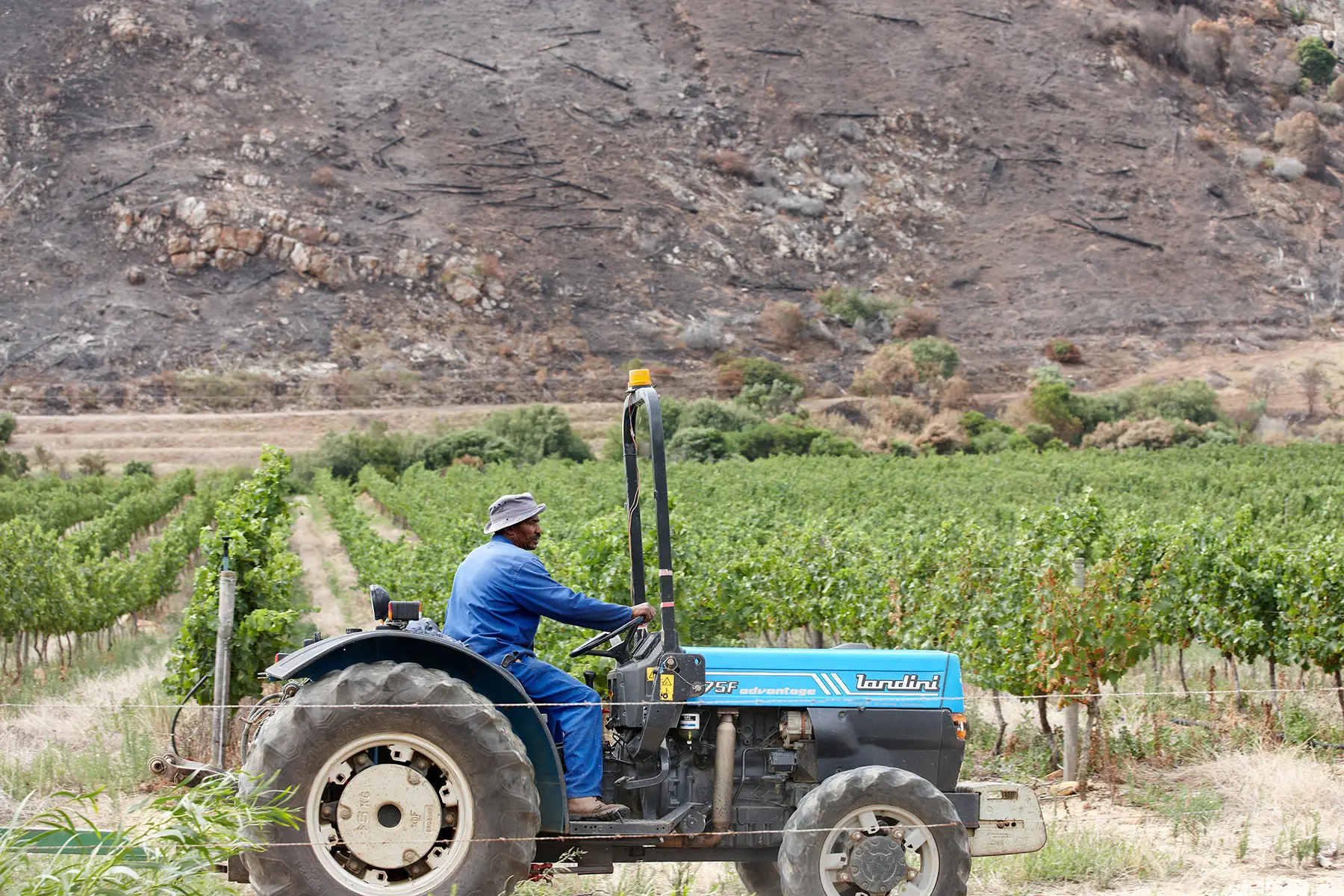
As of 1 March 2026, the minimum wage in South Africa is set at R30.23/hour, a 5% increase from the previous rate. In addition, employers cannot count allowances such as transport, food, uniforms, accommodation, or other employment benefits. The wage rate is subject to annual review and increases annually from 1 March.
While the gesture is surely appreciated, South Africa’s minimum wage is one of the lowest in the world. Critics have pointed out that the country also has one of the fastest-growing consumer price indexes, and the wage rate is massively out of tune with its high cost of living.

Exceptions to the minimum wage in South Africa
Interns and apprentices
The legal position regarding minimum wage for interns in South Africa depends on whether the intern qualifies as an “employee” under labour law. If an intern performs work and meets the legal definition of an employee under the Labour Relations Act (1995), the National Minimum Wage Act generally applies.
However, registered learnerships and apprenticeships under the Skills Development Act may be subject to different prescribed stipend rates rather than the standard minimum wage. Interns who are effectively employees can challenge non-payment or unfair wages through the CCMA or Labour Court.
Expanded Public Works Programme (EPWP) employees
EPWP employees are entitled to a minimum wage of R16.62/hour.
What is the average salary in South Africa?
Despite the minimum wage, employees generally earn a higher monthly salary. In the third quarter of 2025, the average salary in South Africa was around R29,490/month. Meanwhile, Salary Expert suggests the baseline hourly rate is R182.15/hour.

Of course, salaries can differ greatly depending on the job, but also experience, location, and education level. Sometimes wages also include benefits, like housing and transport.
Average salary by sector in South Africa
As is usual, salaries vary greatly by sector. This is because certain industries require more skills, experience, and education and therefore offer better pay. According to Talent (2026), the median salary across some of the main job sectors in South Africa are:
| Job sector | Average monthly salary |
| Banking, finance, and insurance | R87,354 |
| Childcare and education | R165,712 |
| Construction | R25,701 |
| Engineering | R77,637 |
| Healthcare and social services | R34,672 |
| Hospitality and travel | R21,921 |
| IT | R37,783 |
| Journalism and translation services | R50,463 |
| Retail | R23,232 |
| Shipping, manufacturing, and transportation | R20,952 |
Manage your money with Wise
Wise allows you to send money abroad at the mid-market exchange rate – with transparent, upfront fees. This means more of your hard-earned salary reaches its destination, whether you’re supporting family, paying off loans, or maintaining financial commitments. You can open a multi-currency account that supports 40+ currencies, including ZAR. All the while managing your finances conveniently from the Wise app.
Average salary by South African region
Of course, incomes can vary across different parts of South Africa. The average monthly salaries across the provinces (2025) are:
| Province | Median monthly income |
| Northern Cape | R29,288 |
| Eastern Cape | R24,418 |
| Limpopo | R31,726 |
| Mpumalanga | R28,283 |
| KwaZulu-Natal | R27,060 |
| North West | R26,657 |
| Gauteng | R33,112 |
| Free State | R25,596 |
| Western Cape | R31,863 |
| National average | R29,089 |

Large cities typically pay higher salaries. Averages for 2025 include:
- Johannesburg: R37,321
- Cape Town: R36,488
- Durban: R29,636

What are the highest-paying jobs in South Africa?
Unfortunately, there’s no real fast way to earn lots of money. Some of South Africa’s most lucrative job opportunities require specialized qualifications, skills, and experience.
Top-paying fields include healthcare (e.g., dentists), engineering (e.g., mining engineers), and finance (e.g., financial managers), with salaries ranging from R50,000 to R100,000+ per month. Meanwhile, the highest-paying jobs in South Africa include (2025):
| Job | Average annual salary range |
| Medical specialist | R222,000–2,178,000 |
| IT/software development manager | R289,000–8,043,000 |
| Chartered accountant | R49,000–962,000 |
| Actuary | R800,000–10,800,000 |
| Engineer (mining, petroleum, civil engineer) | R305,078–7,200,000 |
| Legal professional | R160,500–1,913,936 |

Salary checker in South Africa
There are many websites where you can explore South African salaries across industries, roles, and regions. Here are a few of the most popular:
You can also use this handy wage calculator – Mywage – to determine how much you should be paid based on your qualifications, experience, and region.
The gender pay gap in South Africa
Despite progress in women’s economic and political participation, formal employment, and education attainment, the gender wage gap remains significant in South Africa.
Recent research suggests that the gender pay gap in South Africa is between 23–35% (2025). A 2023 UN women report found that the overall gender pay gap in South Africa was 32.5% when measured at the monthly level and 20.1% at the hourly level. The gap decreased with educational level; it was the widest among those with only primary education (26.2%), and lowest among those with a tertiary education (5.9%). Interestingly, marital status also influenced the gender pay gap, being smaller for married women (15.1%) than for single women (21.1%).
While female workers typically earn less than their male counterparts, some sectors pay women more. For example, women earn 28.2% more than men in agriculture, 8.9% more in mining and quarrying, and 6.7% more in manufacturing.
Salaries and wages for expats in South Africa
If you are originally from the Global North, your local salary will likely be lower than you receive at home. This is especially true if you earn in the South African Rand rather than a stronger currency. Still, internationals will find the highest-paying jobs in the country’s biggest economic centers, like Johannesburg, Cape Town, and Durban.
South Africa’s most robust industries include the automotive, IT, mining, and banking sectors. These offer the best employment opportunities for internationals, especially with experience, knowledge, and the right skills.

As a side note, it is a good idea to keep your skills relevant by continually learning, which you can easily do with online courses through Coursera and Skillshare.
What to do if you earn below the minimum wage?
Workers have two options if they feel their income does not match their responsibilities or meet the minimum wage in South Africa:
- File a dispute with the Commission for Conciliation, Mediation, and Arbitration (CCMA). The commission will try to resolve the issue, but if this is impossible, refer it to arbitration.
- Complain to the Department of Employment and Labour (DOL). The employer must provide written confirmation that they will pay the minimum wage, or the Department may issue a compliance order. If these do not have the desired effect, the claim will go to the CCMA for arbitration.
Although both institutions deal with minimum wage disputes in South Africa, employees can only file a claim with one body at a time.
Useful resources
- Department of Employment and Labour (DOL) – official government website of the ministry department responsible for the minimum wage and labor market in South Africa
- Mywage – wage calculator in South Africa



Did you find this guide helpful?