
'%20id='ico-down'%20stroke='%23000000'%20stroke-width='1.5'%3e%3cg%20transform='translate(1092.250000,%20254.750000)'%3e%3cpolyline%20id='Path-2-Copy-4'%20transform='translate(5.500000,%202.750000)%20scale(1,%20-1)%20rotate(-180.000000)%20translate(-5.500000,%20-2.750000)%20'%20points='0%200%205.5%205.5%2011%200'%3e%3c/polyline%3e%3c/g%3e%3c/g%3e%3c/g%3e%3c/svg%3e)


Civil Affairs
Government
Crime and the justice system in Thailand
Learn more about Thailand’s crime and legal system, how to protect yourself, and what rights you have if you are arrested.

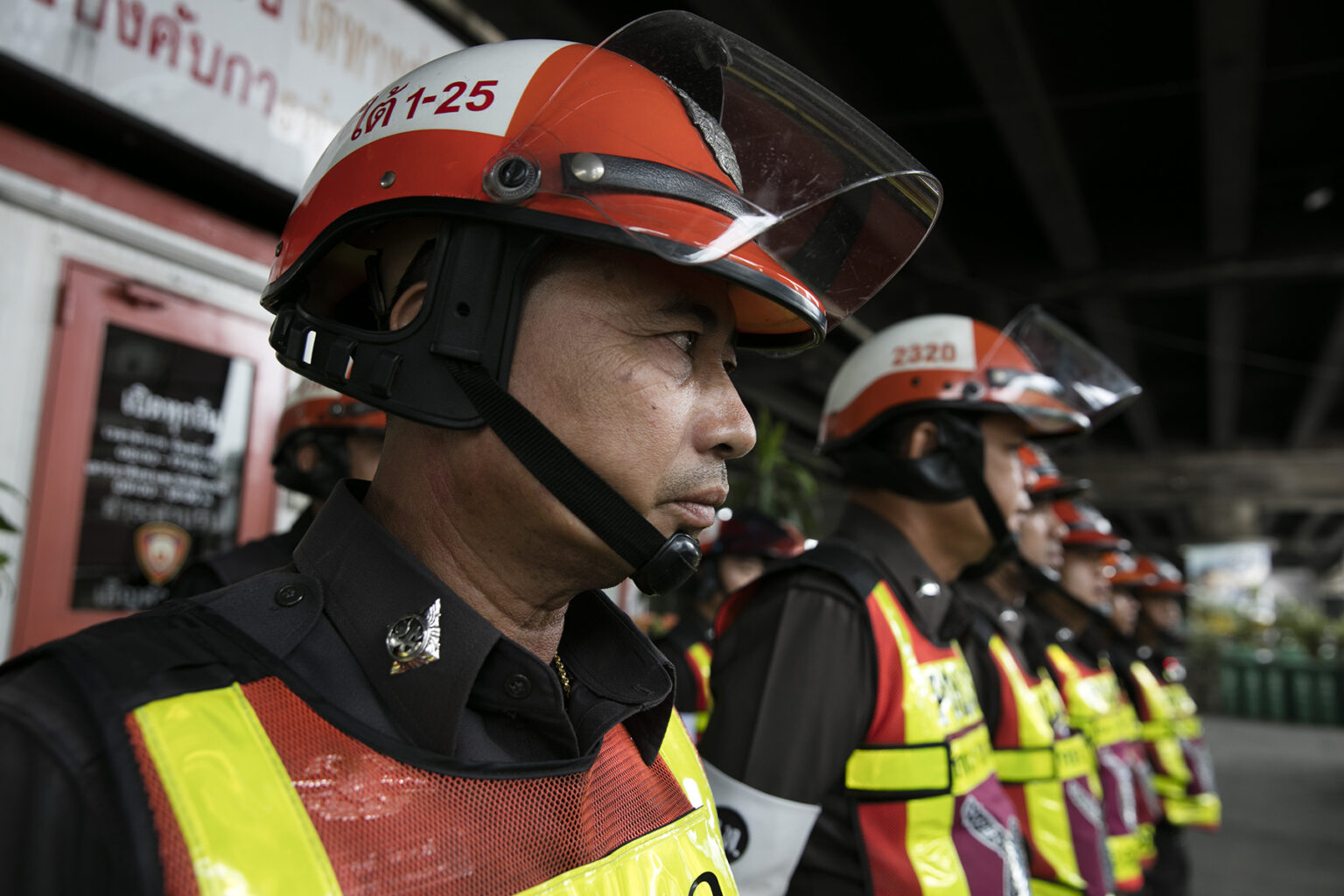
With its warm climate, stunning natural beauty, and delicious food, Thailand offers immigrants a great quality of life. When navigating any new country, though, having some knowledge of the criminal justice system could stand you in good stead. Knowing the facts can make all the difference, whether you’re a victim of a petty crime or something more serious.
From crime reports and regular offenses to court proceedings and common sentences, here are the ins and outs of the criminal justice system in Thailand.
Discover everything you need to know about the subject by exploring these topics:
Ground News
Get every side of the story with Ground News, the biggest source for breaking news around the world. This news aggregator lets you compare reporting on the same stories. Use data-driven media bias ratings to uncover political leanings and get the full picture. Stay informed on stories that matter with Ground News.

Introduction to the legal system in Thailand
Thailand’s legal framework operates on a civil law foundation, with its criminal justice system relying on the Thai Penal and Criminal Procedure Codes. Notably, the country may enforce the death penalty for specific serious offenses, including some related to drug trafficking.
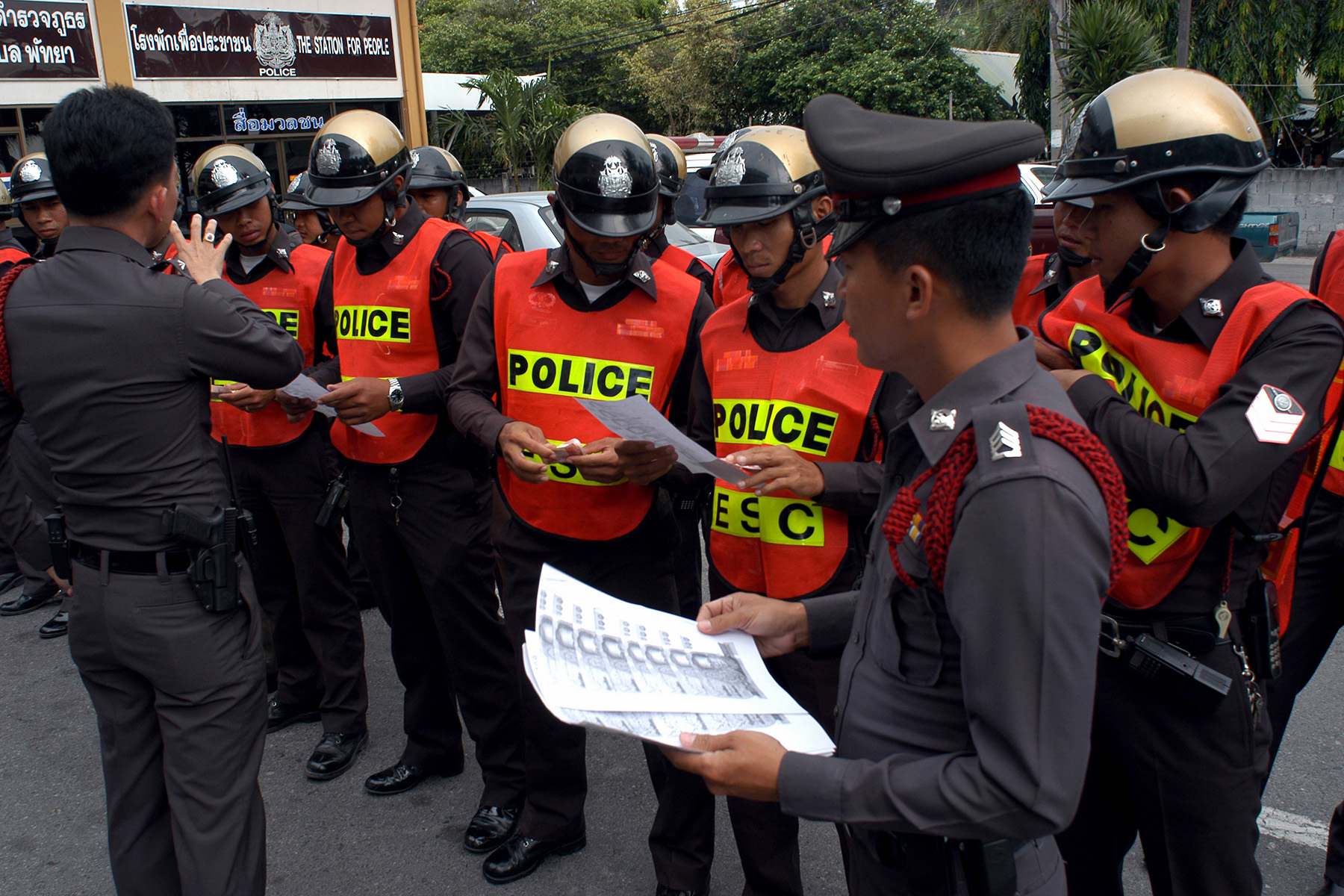
There are four codes in Thai law:
- Civil and Commercial Code (ประมวลกฎหมายแพ่งและพาณิชย์)
- Penal Code (ประมวลกฎหมายอาญา)
- Civil Procedure Code (ประมวลกฎหมายวิธีพิจารณาความแพ่ง)
- Criminal Procedure Code (ประมวลกฎหมายวิธีพิจารณาความอาญา)
The Penal Code primarily governs Thailand’s criminal law.
The police possess the authority to detain suspects for up to 48 hours without filing charges, and bail is less commonly granted compared to many other jurisdictions.
Still, as the legal system upholds the principle of presumed innocence until proven guilty, it is the public prosecutor’s responsibility to establish guilt. Unlike some legal systems, Thailand does not use a jury, meaning the judge determines the trial outcome based on all the evidence presented in court.
Thai courts (ศาลไทย) do not acknowledge foreign civil judgments.
As Thailand’s legal system and procedures may differ significantly from your home country’s, it is essential to seek Thai legal counsel if you are arrested.
Areas of law
The Thai legal system (ระบบกฎหมายไทย) covers several areas of law, including different aspects of governance, civil rights, and societal conduct, such as:
- Criminal Law
- Civil Law
- Administrative Law
- Constitutional Law
- Family Law
- Labor and Employment Law
- Commercial Law
- Intellectual Property Law
- Environmental Law
- Immigration Law
- Banking and Finance Law
How fair is the legal system?
Everyone in Thailand has the right to legal assistance and a fair trial. They also have the right to have private meetings with their attorney and examine any trial evidence. In the case of detention, an accused may request bail so that they can travel within the country while their case is pending.
However, Thailand only ranks 82 out of 142 countries in the latest World Justice Project’s Rule of Law Index. Additionally, it places at 10 out of 15 countries in the region (East Asia and Pacific). The index measures global access to justice and includes constraints on government powers, access to fundamental rights, and justice in civil and criminal matters.
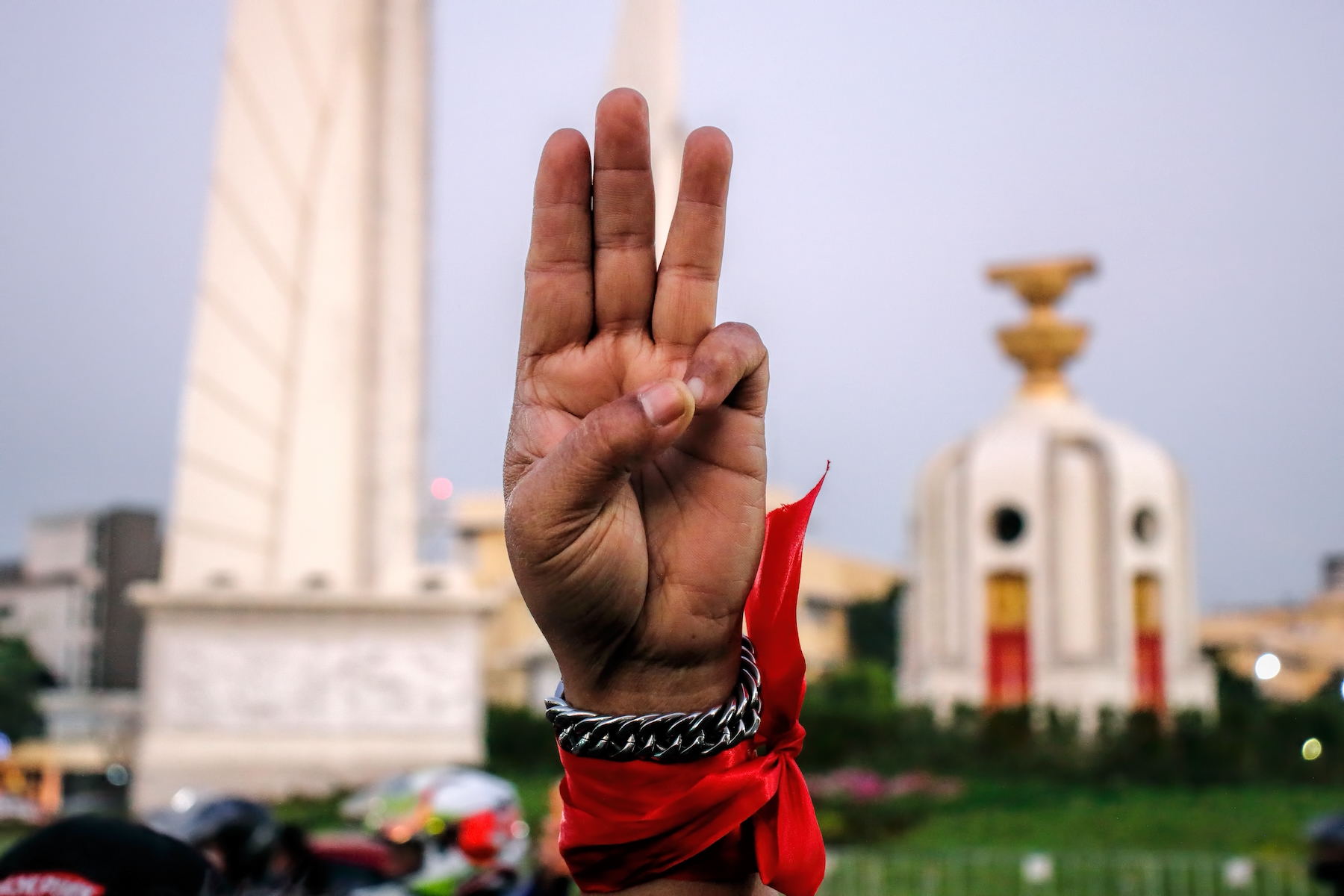
While the country consistently ranks below average on almost every index factor, its civil justice scores started to increase (i.e., an improvement) in 2023.
Furthermore, Freedom House (2022) gives it a low overall score of 29 points out of 100 based on its evaluation of the country’s political rights and civil liberties. It scored particularly low in the Rule of Law category for these reasons:
| Factor | Score | Reason |
| Independent judiciary | 1/4 | Courts – politicized & corrupt Constitutional court has sweeping powers to dissolve political parties, overthrow elected officials, veto laws |
| Due process: civil & criminal matters | 1/4 | Antigovernment protesters’ prolonged detention, denial of bail, and potential criminal prosecutions – may also face charges of sedition and lèse-majesté |
| Protection from the illegitimate use of physical force | 1/4 | Regular incidences of police and military using considerable force due to lack of legal consequence for their actions, including when dispersing political activists Limited investigations into attacks on activists |
| Equal treatment for all by law/policies/practices | 2/4 | Communities (e.g., hill tribes) without formal citizenship have less legal protection More discrimination against LGBT+ and women Refugees risk detention; Thailand has not signed the UN convention on refugees and asylum seekers |
Crime rates in Thailand
According to NationMaster (a statistics database), Thailand’s violent crime rates (i.e., murder and rape) are relatively high. However, the overall crime rate has been decreasing since 2017. Also, the latest 2023 Global Peace Index (GPI) describes Thailand as a relatively safe country with lower crime rates than many other international destinations.

Violent crimes against foreigners are rare. However, crimes of opportunity, such as pickpocketing, bag-snatching, and burglary, can occur, especially in crowded and tourist areas, including:
- Bangkok
- Pattaya
- Chiang Mai
- Phuket
- Koh Samui
- Koh Phangan
- Krabi
Drug-related offenses and corruption are among the primary concerns. The country has been working to combat transnational organized crime and drug trafficking. However, corruption and lack of capacity in law enforcement agencies hamper these efforts.
Crime prevention tips in Thailand
By staying informed and taking necessary precautions, expats can help ensure their safety in Thailand. Having insurance to replace stolen property or valuables is also a good idea.

Here are some local crime prevention tips:
- Be cautious of your surroundings: Remain vigilant, especially at night and in tourist areas. Avoid risky situations, particularly when alone or after drinking.
- Beware of pickpocketing and theft: Crimes of opportunity can occur in crowded areas and tourist sites. Be aware of your surroundings, keep a close eye on your belongings, and do not carry your phone or wallet in an easily accessible place.
- Stay informed about local safety concerns: Different areas in Thailand have varying safety risks. Consequently, be sure to know as much as you can about the specific areas you plan to visit or live in.
- Report any incidents: Inform the local authorities as soon as possible for your safety and to help prevent further incidents.
- Road accidents: Be cautious when traveling on the roads, and adhere to the local traffic laws and customs. Be aware that road rage is a significant issue. Therefore, do not engage with aggressive drivers, and avoid displaying aggression or retaliation on the road. For example, ‘flipping the bird’ is taken as an invitation to violence.
- Be cautious around confrontations: While it may be perfectly acceptable to approach people with grievances in your home country, situations tend to escalate quickly in Thailand. For instance, local advice is to avoid confronting those playing loud music or disturbing you directly. It is always best to have a third party assist in any disputes.
- Be aware of local laws: Behavior that may be acceptable in your home country, such as nudity, drinking alcohol in public areas, posting photos of alcohol or vaping brands on social media, may be illegal in Thailand. Check up on Thai laws to stay savvy and respectful of the local culture.
- Defamation: Thailand has stringent defamation laws. Therefore, giving information to a third party that may impair a person’s reputation or incite hatred or scorn is punishable under Section 326 of the Thai Criminal Code. For example, think carefully before posting bad reviews or criticisms online.

Local expert
Jane Evans
Remember that lèse-majesté is a crime according to Section 112 of the Thai Criminal Code: it is illegal to defame, insult, or threaten the monarch of Thailand (king, queen, heir-apparent, heir-presumptive, or regent). Avoid discussing such matters when in Thailand, and never post or share royal images online.
How do you report a crime in Thailand?
If you are a victim of a crime
If you are a victim of a crime, it’s important to take the following steps to ensure your safety.
- Call the emergency services: If your life is in danger, seek help immediately from the police or call an ambulance if you are hurt. Call the national emergency number at 191, or if you can’t speak Thai and need an English operator, dial 1155 for the tourist police.
- Report the incident to the local authorities: This is important to keep yourself and others safe, but it is also necessary for the police investigation
- Seek legal representation: In most cases, you will need legal counsel to protect your interests effectively. The Royal Thai government’s Ministry of Social Development and Human Security maintains an English-language website. Reach out to them for assistance if you do not speak Thai.
- Be careful of domestic issues: Local police in Thailand usually prefer not to get involved in domestic issues. Typically, they expect the involved parties to resolve the matter on their own. If you feel unsafe in your home, call the Social Help Center Hotline (ศูนย์ช่วยเหลือสังคม สายด่วน) at 1300. They can assist with legal advice and support to ensure your safety and well-being.
- Contact your embassy or consulate: If you are a foreign national, reach out to your embassy or consulate for help and support
- Be aware of local safety concerns: Different areas in Thailand may have varying safety risks. Stay informed about the safety of the specific areas you plan to visit or live in.
Witnessing a crime
While private individuals don’t have a strict legal obligation to report crimes in Thailand, many see it as their civic duty. However, certain professions, such as doctors, teachers, and social workers, must report cases of child abuse or face legal consequences.

When you witness a crime, follow these steps:
- Call the national emergency number (191) first if someone is hurt or in danger
- Report the crime to the police:
- At the local police station (open 24 hours) or online, some have digital reporting systems
- Contact the Tourist Police (1155), especially if you are only visiting and can’t speak Thai
- Seek advice, support, and legal counsel with your home country’s embassy or consulate if you are not a Thai permanent resident or citizen
You can request an interpreter if there is a language barrier between you and the police officer.
Provide as much detailed information as possible, including the incident date, time, location, and description. The officer will ask for your identification and contact information. Most likely, they will give you the investigator’s contact details and a case number so you can add information to your witness statement if you remember something else or want to check on the progress.
Police in Thailand
The Royal Thai Police (RTP – สำนักงานตำรวจแห่งชาติ) is Thailand’s national police force, employing over 200,000 officers. As the fourth armed force of Thailand, its primary duty is to prevent crime and serve the public nationwide.
Even though the policing system is centralized, provinces and districts also have a local police force handling day-to-day law enforcement under the RTP umbrella.
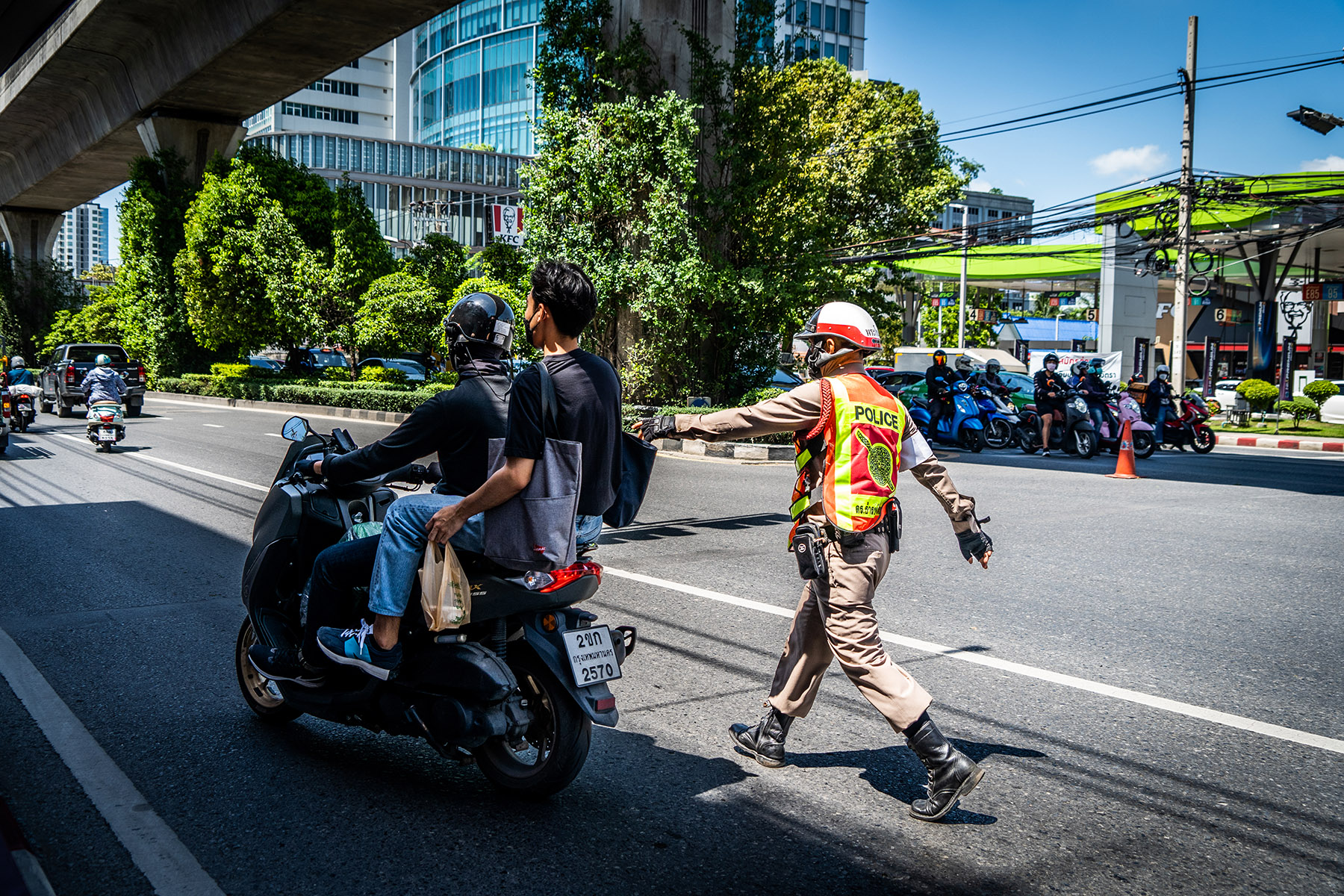
The RTP also includes specialized units, each with a specific jurisdiction, such as:
- Tourist Police (specifically trained to work with tourists and foreigners, speaks English)
- Traffic Police
- Narcotics Suppression Bureau
- Crime Suppression Division
Most RTP’s officer cadets graduate from the Armed Forces Academies Preparatory School before joining the police. This highlights a close relationship between the police and the military in Thailand. However, the RTP and the Royal Thai Armed Forces are separate entities.
Identify and find a police officer
Thai police officers typically wear dark blue or khaki uniforms. You can identify an officer’s rank by the insignia on their shoulder straps, with higher-ranking officers having more stars or stripes. They will also wear name tags with their badge numbers for identification.
Conversely, Tourist Police officers wear light-colored uniforms with distinct patches or badges to make them easily recognizable. They specialize in arbitrating arguments between tourists and Thai people, which can be related to theft, scams, or accidents.
Police vehicles may differ slightly depending on their division, but typically, these are silver or white sedans with dark red (or yellow/blue checkered) lines on the sides. The word ‘Police’ is written in English and Thai script on the body, and it may also have additional decals identifying the unit or the RTP emblem (i.e., the mystical Garuda bird on a shield). Of course, all vehicles have sirens and lights.
If you need to find one, RTP officers regularly patrol neighborhoods, commercial areas, and tourist areas on foot and in vehicles. However, if it is urgent, it may be better to call the national emergency number (191) or visit the nearest police station or Tourist Police booth.
Unfortunately, the police force has a tradition of fierce internal politicking and a reputation for corruption at all levels, which could affect effective law enforcement.
The criminal justice system in Thailand
An overview
The criminal justice system is based on civil law, and you can find the basic provisions governing criminal offenses in Thailand’s Penal Code and Criminal Procedure Code. A criminal prosecution begins once someone submits a complaint to either the police or the court.
The alleged offender is free to go if the public prosecutor decides not to lodge the criminal complaint.
The Thai criminal justice system has a reputation for being complex and difficult to navigate, particularly for foreign defendants. Also, all court proceedings take place in Thai. There is no jury system, so it is up to the judge to determine the guilt or innocence of a defendant.
When criminal proceedings end in a guilty verdict, a foreign defendant may lose their right to stay in Thailand. They may be placed in custody and detained at the Immigration Detention Center to await deportation.
Thailand has been a member of INTERPOL since 1951 and hosts an INTERPOL National Central Bureau (NCB) in Bangkok. This connects national law enforcement with other countries and with the INTERPOL General Secretariat via a secure global police communications network called I-24/7. This membership allows Thailand to work with INTERPOL and other member countries to share criminal data and collaborate in investigations to combat cross-border crimes.
Several government departments and organizations in Thailand collaborate to maintain law and order, investigate crimes, provide legal services, and ensure justice. These include:
Departments and organizations
- Ministry of Justice (MOJ – กระทรวงยุติธรรม): Oversees legal system, including administration of justice, legal services, coordinating law enforcement
- Royal Thai Police (RTP– สำนักงานตำรวจแห่งชาติ): Maintain law and order, prevent and investigate crimes, and ensure public safety
- Office of the Attorney General (OAG – สำนักงานอัยการสูงสุด): Public prosecution and legal advisory services to government agencies
- Office of Narcotics Control Board (ONCB – สำนักงานป.ป.ส): Coordinate and implement policies related to drug control and prevention
- Department of Special Investigation (DSI – กรมสอบสวนคดีพิเศษ): Handles complex and high-profile cases
- Department of Corrections (DOC – กรมราชทัณฑ์): Regulates correctional facilities and oversees the rehabilitation of offenders
- Juvenile Observation and Protection Department (DJOP – กรมพินิจและคุ้มครองเด็กและเยาวชน): Works with juvenile offenders toward rehabilitation
Types of crime
The Thai legal system categorizes crimes based on their severity and the possible punishment, for example:
| Classification | Examples of crime | Punishment |
| Offenses | Minor infractions and regulatory violations (traffic violations, public nuisance, petty theft, trespassing, public health violations, minor property damage, minor fraud, disobeying public orders) | Warnings, Fines |
| Misdemeanors | Theft, simple assault, non-violent offenses | Fines, probation, community service, short imprisonment |
| Felonies | Murder, rape, kidnapping, major criminal acts | Long-to-life imprisonments, death penalty |
| Special Law and Penalties | Drug-related offences | Significant fines and prison terms |
| Juvenile Offences | 18 and younger | Focus on rehabilitation rather than punishment |
| White-Collar Crimes | Fraud, embezzlement, corruption | Fines, imprisonment |
Thai courts
The Thai court system consists of general and specialized courts. General courts comprise the following categories:
- Civil
- Criminal
- Municipal
- Provincial
On the other hand, the specialized courts in Thailand include:
- Intellectual Property and International Trade Court
- Labor Court
- Bankruptcy Court
- Tax Court
The court system is also hierarchical and divided into several distinct systems, each serving specific functions and jurisdictions. It can be illustrated as follows:
| Type of court | Function |
| Constitutional Court (ศาลรัฐธรรมนูญ) | Ensures legislation complies with the constitution – interprets and mediates in cases related to the constitutionality of laws and actions of state authorities |
| Court of Justice (ศาลยุติธรรม) | Three levels, the Court of Appeal, Court of First Instance (CFIs), and Supreme Court – handles most legal matters (i.e., civil and criminal) |
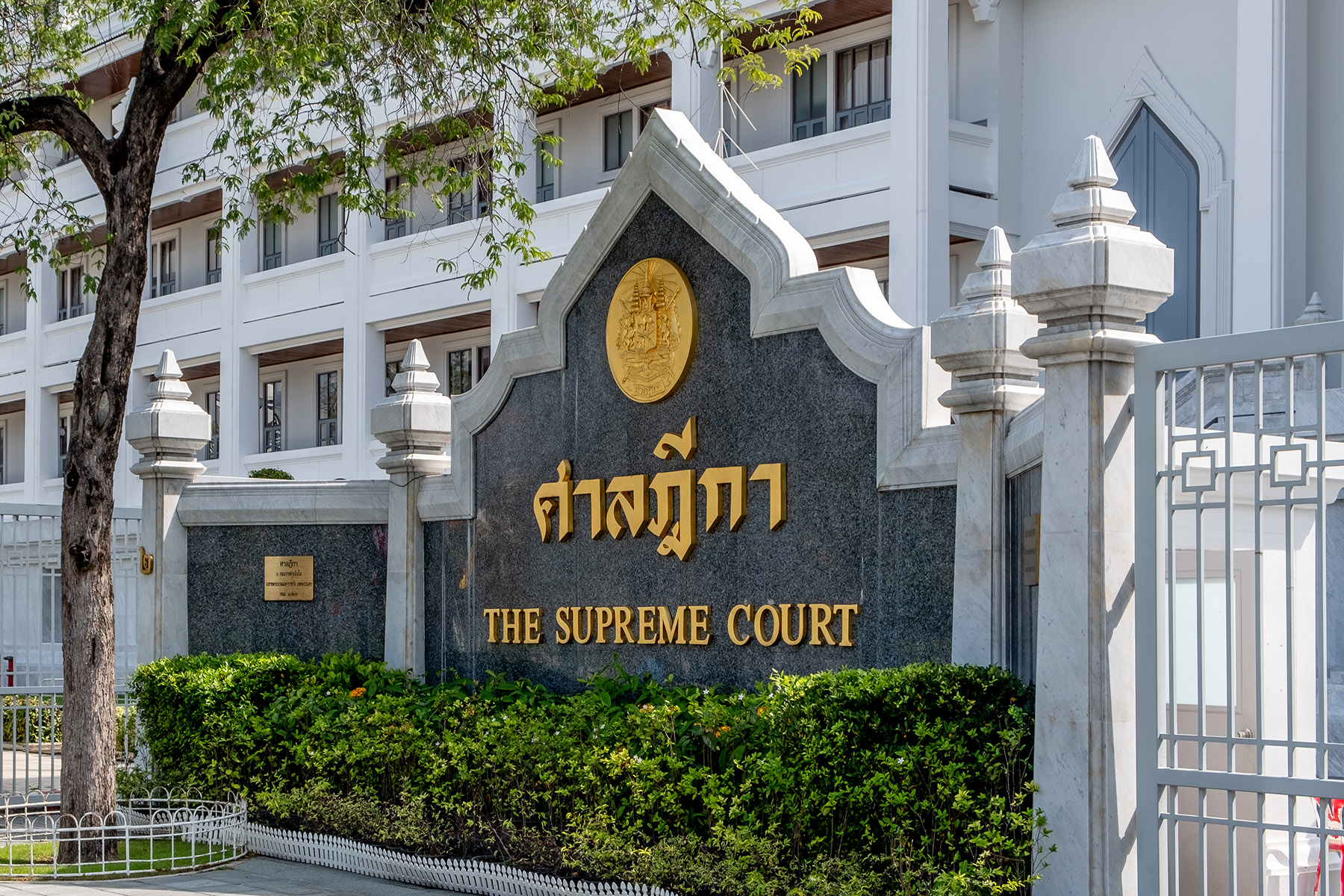
| Supreme (Dika) Court (ศาลฎีกา (ดิกา)) | The highest Court of Justice, with administrative and criminal departments – oversees lower court appeals and determines final judgments on legal matters |
| Administrative Court (ศาลปกครอง) | Administrative and public law cases – handles disputes involving government agencies, regulatory decisions, and administrative actions |
| Military Court (ศาลทหาร) | Jurisdiction only in cases involving military personnel and offenses related to national security |
| Juvenile and Family Court (ศาลเยาวชนและครอบครัว) | Determines legal outcomes related to family matters (e.g., divorce, custody, adoption), child protection, and juvenile offenses |
| Labor Court (ศาลแรงงาน) | Arbitrates employment disputes and labor law issues around wrongful termination, unfair labor practices, and employment contract disputes |
| Intellectual Property and International Trade Court (ศาลทรัพย์สินทางปัญญาและการค้าระหว่างประเทศ) | Intellectual property rights, international trade, and commerce (e.g., patents, trademarks, copyrights, and international trade agreements) |
| Bankruptcy Court (ศาลล้มละลาย) | Bankruptcy and insolvency proceedings, debt restructuring and rehabilitation of financially distressed companies, adjudication of claims, and distribution of assets among creditors |
| Tax Court (ศาลภาษีอากร) | Appeals against tax assessments, disputes related to taxation, tax evasion, or fraud allegations |
The trial process in Thailand
The Thai judiciary employs the continuous trial system; all hearings occur uninterrupted until the trial is over unless there are unforeseen circumstances. However, they can run between two to five years. Courtroom proceedings use an adversarial system whereby the opposing advocates represent their clients’ cases. All court cases – and related documents – will be in Thai.
As mentioned before, Thailand does not have a jury system. Therefore, judges alone decide cases based on the evidence presented by the parties. There is a tier system whereby a higher court hears the appeals from a lower court:
- Tier 1: Court of First Instance (ศาลชั้นต้น)
- Tier 2: Court of Appeals (ศาลอุทธรณ์)
- Tier 3: Supreme Court (ศาลสูง) – Thailand’s highest court
Steps in the trial process
The legal process in Thailand will follow these steps after someone files a report or police suspect a crime or offense was committed:
- Investigation: Police gather evidence, interview witnesses, and collect information to build a case
- Arrest or detention: Police make an arrest (usually with a warrant) and may hold the accused in custody for questioning
- Interrogation and investigation: The accused can ask for legal representation, but any comments they make can be used as evidence in court
- Prosecution decision: The public prosecutor files formal charges depending on the evidence, and the case proceeds to a trial
- Pretrial proceedings: The police/public prosecutor formally informs the accused of the charges. The legal teams bring motions, address legal issues, and request bail. The judge sets a trial date.
- Trial: The prosecution and defense lawyers present the evidence and cross-examine witnesses in front of a judge
- Verdict: The judge determines a guilty or innocent verdict based on the evidence
- Sentencing: The court imposes a sentence, including fines, imprisonment, probation, deportation, or other penalties
- Appeals: Both sides can appeal the decision to review any legal errors or new evidence
- Execution of the sentence: If imprisoned, the accused serves time in a correctional facility
Types of punishments in Thailand
Thailand’s criminal justice system imposes a range of punishments and sentences. These include capital punishment, imprisonment, confinement, fines, and other penalties, depending on the nature and severity of the offense.
Punishments and sentences
The Thai Criminal Code lists imprisonment as a possible punishment for criminal offenses. Life imprisonment in Thailand means imprisonment for the rest of the convict’s natural lifetime. The court may also impose imprisonment for a specified period based on the severity of the offense.
The Thai Criminal Code regulates the punishment of confinement, determining its whereabouts. This can be anywhere but a prison.
If a person receives a fine, they must pay the determined amount to the court.

In addition to the above, the Thai criminal justice system may impose other penalties, including community service, probation, suspended sentences, and confiscation of property.
Thailand has specific laws and penalties, such as the offense of lèse-majesté (i.e., an offense or defamation against the dignity of a ruling head of state or monarch), which is punishable by a prison sentence of three to 15 years.
Convicted offenders may be eligible for parole before the end of their imposed sentence, depending on:
- The seriousness of the crime
- Whether they pose a threat to the public or an individual
- Their behavior while imprisoned
- Whether they show signs of remorse and rehabilitation
Typically, if you have been found guilty and sentenced, you will have a criminal record, especially as an adult. However, how long the authorities retain this criminal record will depend on the severity of the offense and your age. In some cases, juvenile records may be expunged or sealed once the individual reaches a certain age or completes rehabilitation programs successfully.
Capital punishment
Thailand still employs the death penalty. However, accurate statistics are lacking, and the state claims not to enforce it often.
The government permits the imposition of capital punishment for 35 serious crimes, mostly related to treason, murder, and drug trafficking. It uses lethal injection or a firing squad (only in exceptional cases) as the method of execution.
Public opinion on the death penalty is mixed and often influenced by cultural, religious, and political beliefs. However, this method of punishment has been criticized by many international human rights organizations, calling for its abolishment.
Most serious crimes
In Thailand, violent crimes include murders, rapes, assaults, drug trafficking, and robbery. The punishment for these offenses varies depending on the specific circumstances. For example, robbery in Thailand is punished by imprisonment and a fine, with the severity of the penalty determined by the circumstances of each case. If the robbery resulted in the victim’s death, the offender may be sentenced to death or life imprisonment.
Additionally, sexual attacks on children younger than 13 can carry a sentence of life in prison. Penalties for other sexual crimes have been toughened as well.
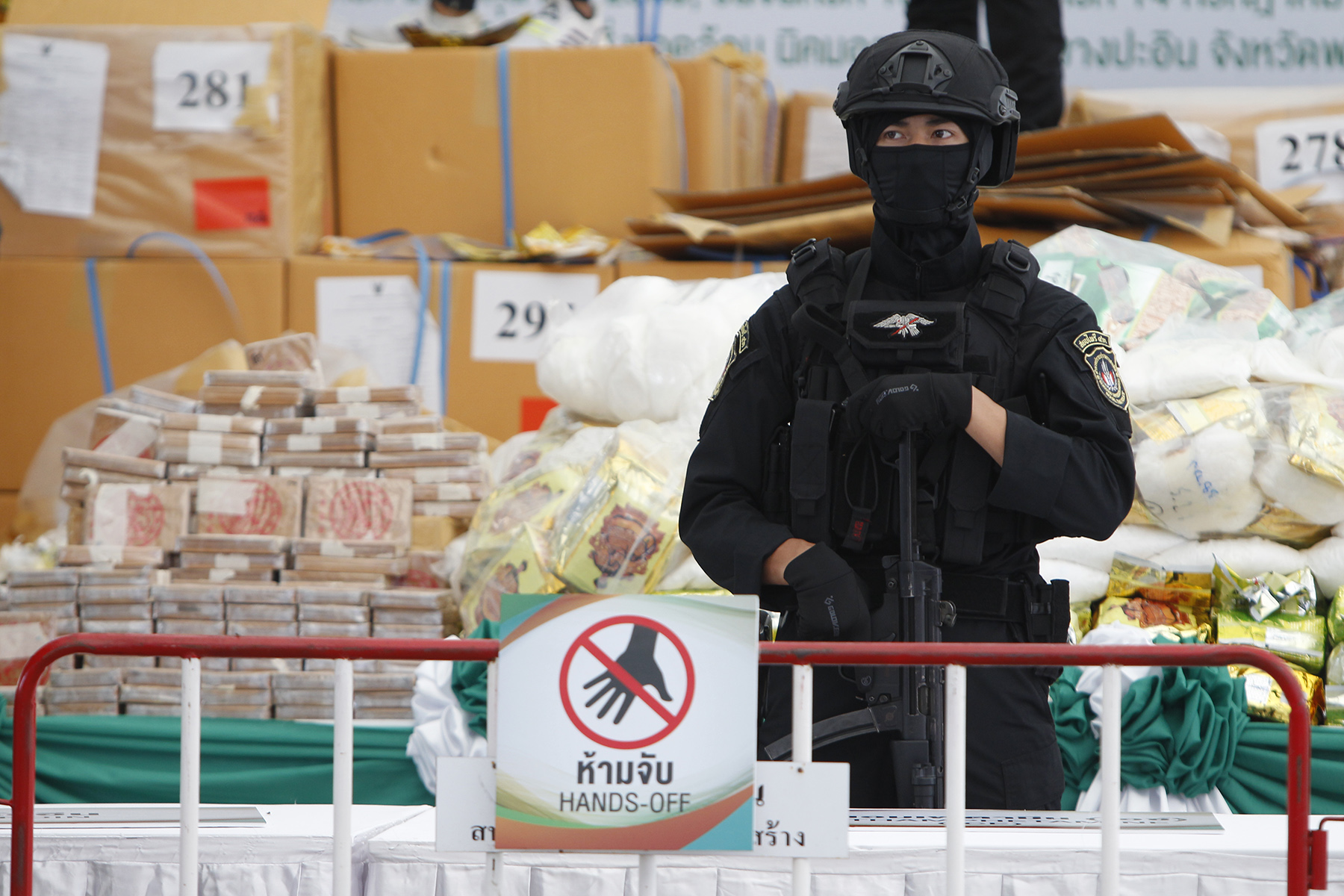
Drug-related punishments in Thailand are severe, and convicted offenders can expect long jail sentences under harsh conditions and heavy fines. For serious drug offenses, the court may even impose the death penalty.
You can find the specific details of the punishment for violent crimes in the Thai Criminal Code. It’s important to note that violent crimes against foreigners are relatively rare in Thailand, but they do occur, particularly at night, in certain tourist areas, and against solo female tourists.
Theft or burglary
Sections 334–336/2 of the Criminal Code define theft in Thailand as “dishonestly take away any property of another person.” The punishment varies depending on the circumstances. For example, theft by snatching something in the victim’s presence can result in imprisonment not exceeding five years and a fine of up to ฿10,000.
Additionally, if the offender steals something at night or carries a firearm, they may receive a sentence of one to five years and a maximum fine of ฿10,000.
If the offender steals government property, the punishment is usually harsher.
Receiving stolen property is also a criminal offense in Thailand. Punishment depends on the specific circumstances and ranges between:
- Imprisonment not exceeding five years
- A fine not exceeding ฿10,000
- Imprisonment, five to 15 years
- A fine of up to ฿30,000
Terrorism offenses
Section 135/1 of the Criminal Code defines the offense of terrorism as committing an act of violence that endangers a foreign state or intimidates the public.
The punishment for terrorism offenses in Thailand can include severe penalties such as long imprisonment. The country has strict laws and continues strengthening its domestic counterterrorism apparatus to prevent and contain terrorist threats.
Fraud
In Thailand, cheating and fraud are punishable with imprisonment of not more than three years or a fine of not more than ฿6,000, or both.
The penalty may be stiffer under certain circumstances. For example, in cases where there is fraud against 10 or more people or the offender pretends to be another person.
Additionally, fraudulent acts related to insurance scams may lead to imprisonment for a period not exceeding five years or a fine of not more than ฿2,000, or both. The severity of the penalty depends on the circumstances of the case.
Traffic offenses
Depending on the violation, driving and traffic offenses (e.g., speeding or ignoring traffic signs and lights) can result in fines, license suspension, or attendance at a traffic school.
Local expert
Jane Evans
Observers of traffic offenses can send photos or videos of the vehicle committing the offense (showing the license plate) to the Thai licensing authority to report the violation.
Hate crimes
Hate crimes are discriminatory actions based on identity, such as race, nationality, ethnicity, gender, sexual orientation, and religious beliefs. While Thailand does not have specific laws governing hateful expressions, acts of discrimination or creating hatred based on these factors are prohibited.
Immigration-related crimes
Overstaying a visa is the most common crime committed by foreigners in Thailand. The offense ends with a fine and deportation. Overstayers (ผู้อยู่เกินกำหนด) must cover their own costs, such as the airline ticket back home.

Minor crimes
In Thailand, minor crimes are generally categorized into offenses under the Penal Code and offenses under special laws. Here are examples of some minor crimes and their potential punishments:
| Offense | Section | Punishment |
| Petty Theft | Section 359 of the Penal Code | Imprisonment for a term not exceeding one year, or a fine not exceeding ฿2,000 or both |
| Simple Assault | Section 351 of the Penal Code | Imprisonment for a term not exceeding one month or a fine not exceeding ฿1,000 or both |
| Public Nuisance | Section 348 of the Penal Code | Imprisonment for a term not exceeding one month or a fine not exceeding ฿1,000 or both |
| Possession of Small Amounts of Drugs for Personal Use | Narcotics Act | Penalties for drug offenses can vary, but for small amounts for personal use, it might result in a fine or rehabilitation rather than imprisonment |
Prisons in Thailand
The prison system in Thailand, overseen by the Department of Corrections (DOC) under the Thai Ministry of Justice (MOJ), comprises a network of around 143 correctional facilities, including central, provincial, and district prisons throughout the country, managing around 370,000 inmates (2019). Almost 4% of incarcerated persons are foreigners.
Women make up approximately 12% of the prison population. Only a few facilities are female-only; the others have a mixed but segregated population.
LGBTQIA+ prisoners tend to be more vulnerable to sexual abuse. Therefore, some facilities have separated LGBT+ prisoners from the general population for their safety. Typically, transgender inmates will be placed in male or female populations according to their assigned gender on their ID cards. In 2016, The Department of Corrections established a pilot scheme by dedicating the Min Buri Prison to LGBTQIA+ inmates. Still, it is unclear whether this was successful and if it expanded to more facilities.
Thailand recognizes the age of criminal responsibility as seven but places more emphasis on rehabilitation than punishment and detains juveniles in separate centers governed by the Department of Juvenile Observation and Protection. However, these facilities deal with similar issues to adult prisons.
The prison system in Thailand faces significant difficulties, with overcrowding being a primary issue. The country has the largest prison population and the highest incarceration rate among ASEAN member states. High occupancy levels in Thai prisons pose challenges in providing adequate facilities, healthcare services, food, and resources for the growing number of inmates.
Still, the Department of Corrections works towards maintaining order within correctional facilities, improving services, and implementing rehabilitative programs to reintegrate offenders into society.
Drug-related offenses and sentences
The surge in drug-related offenses has fueled the issue of overcrowding in Thai prisons. Stringent drug laws in the country result in extended prison sentences, and serious crimes may even incur the death penalty. Conditions within Thai prisons have drawn attention due to reports of substandard facilities, including overcrowding, which hampers the effective separation of inmates to address their individual needs.
The Department of Corrections is actively implementing various measures to reduce the prison population and enhance inmate rehabilitation, including:
- Non-custodial sentences like community service and probation
- Diversion programs (e.g., counseling, rehabilitation, educational interventions)
- Addiction treatment and rehabilitation
- Electronic monitoring
- Restorative justice programs (e.g., foster accountability through dialogue and reconciliation between victims and offenders)
- Streamline bail processes to lessen pre-trial detention
- Deport/repatriate foreign inmates
What are your rights if you are arrested in Thailand?
If you’re arrested in Thailand, you have certain rights and entitlements. Here are some key points:
Notification of rights
At the time of the arrest, the accused has the right to be notified of their rights, including:
- The right to an expeditious, continuous, and fair trial
- The right to hire an attorney
- The right to have private meetings with their attorney
- The right to examine any evidence that the prosecutor will use at trial
Communication
The arrested individual has the right to notify their relatives, the embassy, or a person they trust about the arrest and where they are detained. They also have the right to meet with their attorney to seek advice privately and have their lawyer or a confidant be present during the police interrogation.
Interpretation
Foreigners arrested in Thailand should be provided with an interpreter, as arrest warrants and other verbal warnings are typically in Thai.
Legal counsel
Suspects have the legal right not to disclose any information without a lawyer present. The police must first inform them that anything they say can be used as evidence against them.

If the arresting officer fails to notify them of their legal rights upon the arrest, any confessions made beforehand cannot be used as evidence.
Bail and temporary release
If the accused has been detained, they have the right to request bail so they can travel around Thailand while the case is pending. The process for bail involves submitting a request to the investigating or police officer.
Medical treatment
The accused has the right to medical treatment if they are ill or injured.
Legal rights for foreigners in Thailand
Refugees and asylum seekers
The legal rights of refugees and asylum seekers in Thailand are limited. The country has not signed the 1951 Refugee Convention and has yet to formulate a clear asylum system to protect refugees. As such, asylum seekers are at risk of detention and deportation if found outside established refugee camps.
However, the UNHCR works with the Thai government to establish a national screening mechanism to process and support refugees seeking asylum in Thailand.
Therefore, if you or your family are seeking refuge in Thailand, it is best to contact the UNHCR directly.
Extradition treaties
The extradition process in Thailand is governed by the Extradition Act of 2551 (2008) and international treaties. For extradition (การส่งผู้ร้ายข้ามแดน) to occur, the offense must be punishable by death or imprisonment exceeding one year in both the requesting country and Thailand.
Thailand has extradition treaties with the following nations:
- Australia
- Bangladesh
- Belgium
- Canada
- Cambodia
- China
- Fiji
- Hungary
- Indonesia
- Laos
- Malaysia
- Philippines
- South Korea
- United States of America (US)
- United Kingdom (UK)
The requesting state must commit to reciprocity if the countries have not signed a treaty.
Steps during an extradition process
When a country issues a warrant of arrest and requests an extradition, the Thai authorities will follow these steps:
- Arrest and detain the accused
- The requesting government supplies
- A statement of facts
- The legal basis for criminal proceedings
- Evidence proving the identity of the accused
- The Thai court
- Reviews the evidence and adjudicates the issues
- Determines how to proceed
If the court finds the evidence insufficient, they will release the accused within 72 hours. Conversely, if the judge orders the extradition to proceed, the accused can appeal to the Appeal Court within 30 days. During this time, the accused will remain in detention. The Appeal Court’s decision is final. If the judge orders the extradition, Thailand will surrender the accused to the requesting state within 90 days.
Thailand can refuse the extradition in the following circumstances:
- If it contradicts Thai law
- If the offense is political or military
- If the person has been found innocent or already been punished or granted amnesty
- If less than six months remain on their penalty
Useful resources
- Thailand Law Online – online legal information for expats in Thailand
- Ministry of Justice (MOJ) – official judicial government department
- Siam Legal International – provides information on criminal and civil law in Thailand, including the accused’s rights, divorce, extradition, and other legal matters
- The Organized Crime Index (2021) – statistics on organized crime in Thailand
- Kohchang Tourist Police – a handy list of national police phone numbers
- UNHCR – information on the 1951 Refugee Convention
- The Office of the Counsel of State (OCS) – researches and releases legal information relating to society in Thailand.



Did you find this guide helpful?