
'%20id='ico-down'%20stroke='%23000000'%20stroke-width='1.5'%3e%3cg%20transform='translate(1092.250000,%20254.750000)'%3e%3cpolyline%20id='Path-2-Copy-4'%20transform='translate(5.500000,%202.750000)%20scale(1,%20-1)%20rotate(-180.000000)%20translate(-5.500000,%20-2.750000)%20'%20points='0%200%205.5%205.5%2011%200'%3e%3c/polyline%3e%3c/g%3e%3c/g%3e%3c/g%3e%3c/svg%3e)


Education
Language Learning
Learning Russian
Learning Russian may seem daunting, but this guide will help you on your way with information on language schools, online courses, and apps.



Important notice from the Editor in Chief
Maintaining our Russian site is a delicate matter during the war. We have chosen to keep its content online to help our readers, but we cannot ensure that it is accurate and up to date. Our team endeavors to strike the right balance between giving information to those who need it, and respecting the gravity of the situation.
If you’re moving to Russia, you’re going to need to learn Russian. Whether you flourish in a classroom setting or prefer to learn independently at your own pace, our guide will ensure that you have all the information you need to begin your Russian language journey.
It includes the following information:
Babbel
Babbel is a language learning app. They have a number of professionally-made courses covering language basics including vocabulary, pronunciation and more. With courses in 14 languages and counting, Babbel helps you improve your language skills when it suits your lifestyle.

Why learn the Russian language?
Around 265 million people speak Russian worldwide. Over 150 million native speakers live in Russia and the former Soviet Union. In addition, almost every major city in Europe and North America has a Russian-speaking community.

Russian is considered a difficult language to master: a native English speaker should be able to get to a professional level of proficiency in about 1,200 hours of studying and practicing Russian. However, there are many benefits to learning the language of Tolstoy, Pushkin, and Dostoyevsky.
Smoother integration
Firstly, if you are planning to move to Russia, you need to learn Russian. Many locals don’t speak English at all or remember very little of what they learned at school. As a result, Russia ranks 41st out of the 100 countries surveyed in the 2020 English Proficiency Index. And in Europe, the country ranks 28th among 34 nations. Additionally, other European languages are even less understood by locals. In other words, knowing Russian will open up lots of opportunities to interact with the people around you.
Better job prospects
If you want to boost your employment prospects then knowing a language considered difficult, like Russian, will certainly make you a more attractive candidate for a job in your home country. It will also make finding a job in Russia easier. And once you have the job, it will help you to communicate well with your colleagues, which will make your job easier.

A path to citizenship
If you are interested in getting Russian citizenship, without having ancestry or family of any kind in the country, keep in mind that learning Russian is a must. Russia requires that you pass a language test if you wish to obtain a Russian passport. However, exceptions to the language test are made for holders of other qualifications that certify their knowledge of Russian.
Learning Russian before moving to Russia
Learning some Russian before making your move will pay immediate dividends when you arrive. Even basic Russian will make it easier for you to get a home and a job, as well as make friends with your new neighbors.
International language schools
There are several schools that teach Russian around the world, these include:
- Russian Language Centre: based at Pushkin House in London, the RLC offers individual and group Russian classes, as well as two-week intensive courses.
- Language Study Internationa (LSI): a language school that offers individual and group classes. You can learn Russian at LSI schools in London, New York, Paris, and Zurich.
- Berlitz: offers in-person and online Russian classes at many of its locations in 70 countries.
Learn Russian in Russia
Although there are options for studying Russian outside the country, you will find far more opportunities to do so in Russia. Through a combination of classes and practice with neighbors and colleagues, you could be speaking Russian before you know it.

If you have moved to Russia to study, your university may offer Russian summer classes before your course begins. Be sure to ask for details.
Language schools in Russia
Of course, there are many schools that can teach you the language in Russia. These include:
- Ruslanguage: located in central Moscow, this school offers evening and weekend classes, individual lessons, and an intensive course to help get you off to a good start.
- Alibra: a network of language schools with locations in six Russian cities that offers individual and group classes, business courses, and programs for children of any age.
- CREF Language Center: a school in Moscow that offers individual and group classes, both in-person and online. In addition, the school can organize visa support and book tickets to ensure your move to Russia goes smoothly.

Learning Russian for free in Russia
Language exchange sites, like Tandem, will help you pair up with a native speaker who will help you practice your Russian – in exchange for helping them practice speaking your native language.
Meetup groups also offer you the chance to meet with native Russian speakers to practice your Russian. You can find them on meetup.com or via social media, including Facebook and its Russian equivalent, Vkontakte (VK).
There are also organizations like Migrant Children (Перелетные Дети, Perelyotnye Deti), a Moscow-based charity that offers free Russian language tuition to adults and children who have migrated to Russia.
Learn Russian online
The internet offers a host of options for learning Russian, often free of charge. Some online resources include:
- RussianPod101 is a subscription-based service offering audio and video lessons, flashcards, word lists, and personal guidance from a qualified Russian teacher.
- Moscow State University offers an online language course. Lessons take place via Zoom or Skype, and you can decide how intensive you want your course to be. Upon completion, you will receive a certificate.
- RussianLessons.net offers free Russian language-learning resources, including dozens of video lessons, worksheets, word lists, and grammar tables.
Other handy online learning resources
There are lots of good podcasts that aim to help you learn Russian. For instance, if you are a beginner, you may want to try out Russian For Cats. This podcast teaches key vocabulary by telling stories about cats. More advanced learners may enjoy Slow Russian, whose host reads a brief article in Russian before explaining the vocabulary, grammar, and idiomatic language used in the article.

Then there is Multitran, which is an online Russian dictionary and translator, offering both general and technical vocabulary, as well as idiomatic terms. In the same vein, designed for the military, HeadStart2 Russian and Language Survival Kits offer crash courses to get the quick basics down before a last-minute trip.
For hardcore enthusiasts, GLOSS is a giant database (with 649 Russian lessons) of courses and quizzes.
On the other end of the spectrum, FluentU simply dishes out thousands of videos – from music videos to full-length features or political documentaries, while Interlinear Books is the perfect Russian language learning tool for bookworms.
Learning Russian with a computer or smartphone app
In today’s tech-savvy modern world, apps play a big role in making our everyday lives easier. And busy expats on the move might be tempted to download a language learning app to help them master the Russian language while living in the country.
Some of the popular language-learning apps that cover Russian include:
- AnkiApp: A cross-platform app based on flashcards to help you practice sounds, texts, and images.
- Babbel: Offers a mix of immersive activities with short, interactive lessons, podcasts, short stories, and games.
- Busuu: Based on classroom learning, this app focuses on real-life communication needs and useful sentences.
- Duolingo: Focuses on themed language lessons designed to help users quickly learn vocabulary, sentence structure, and pronunciation.
- Memrise: Provides thousands of videos of native speakers to help create a real-life feel.

You may also want to try one of the many computer programs that use various methods to help you learn Russian. The most popular include:
- Rosetta Stone: The extensive course is designed to fit your goals and offers pronunciation feedback, bite-size lessons, real-life scenarios, and cultural background.
- Michel Thomas: No writing, no books, no memorizing! Michel Thomas takes classroom anxiety out of learning to focus on the building blocks of a language.
- Pimsleur Comprehensive: A 360-degree experience that includes phrases, vocabulary, and grammar along with speech, reading, and comprehension exercices.
- Transparent Language: Focused on empowering learners with skills-based practice, this course covers everything from the alphabet for beginners to business jargon.
Learn Russian outside the classroom
The classroom isn’t for everyone and perhaps you prefer to learn on the go. In this case, you may try joining a local club or society and practicing your Russian with fellow members. You could find people to practice with through Russian social network groups like Learning Russian with Russians on the VK social network. There are several similar groups on Facebook that will also keep you abreast of local events you can attend. You could also follow TikTok accounts for learning Russian.

Of course, supermarkets are a treasure trove of important words. People may give you the occasional look as you stand in the aisle reading labels out loud to yourself, but don’t worry. Most people will pay you no heed.
Learning Russian through play
Try watching Russian television. If you are a beginner, children’s cartoons will be useful. Their characters tend to speak clearly and use simpler vocabulary. Alternatively, visit a cinema that screens movies in English with Russian subtitles. This will allow you to enjoy the movie and you will learn a few new words.
If you have children, don’t be afraid to host playdates. You will pick up basic vocabulary from your child’s new friends, and they are unlikely to criticize your pronunciation – or at least they’ll be funny about it.
Learning the language for children in Russia
Young children pick up languages far more easily than adults, so your move to Russia is a fantastic opportunity for your kids. They can gain a skill that will prove invaluable to them later in life.

If you have opted to send your child to a Russian public school, you will also need to make sure they have a basic knowledge of Russian beforehand. This is because the national curriculum does not make any provisions for non-Russian-speaking pupils. In fact, learning some Russian can be useful even if they attend an international school in Russia, as they’ll integrate into their new Russian daily life more easily.
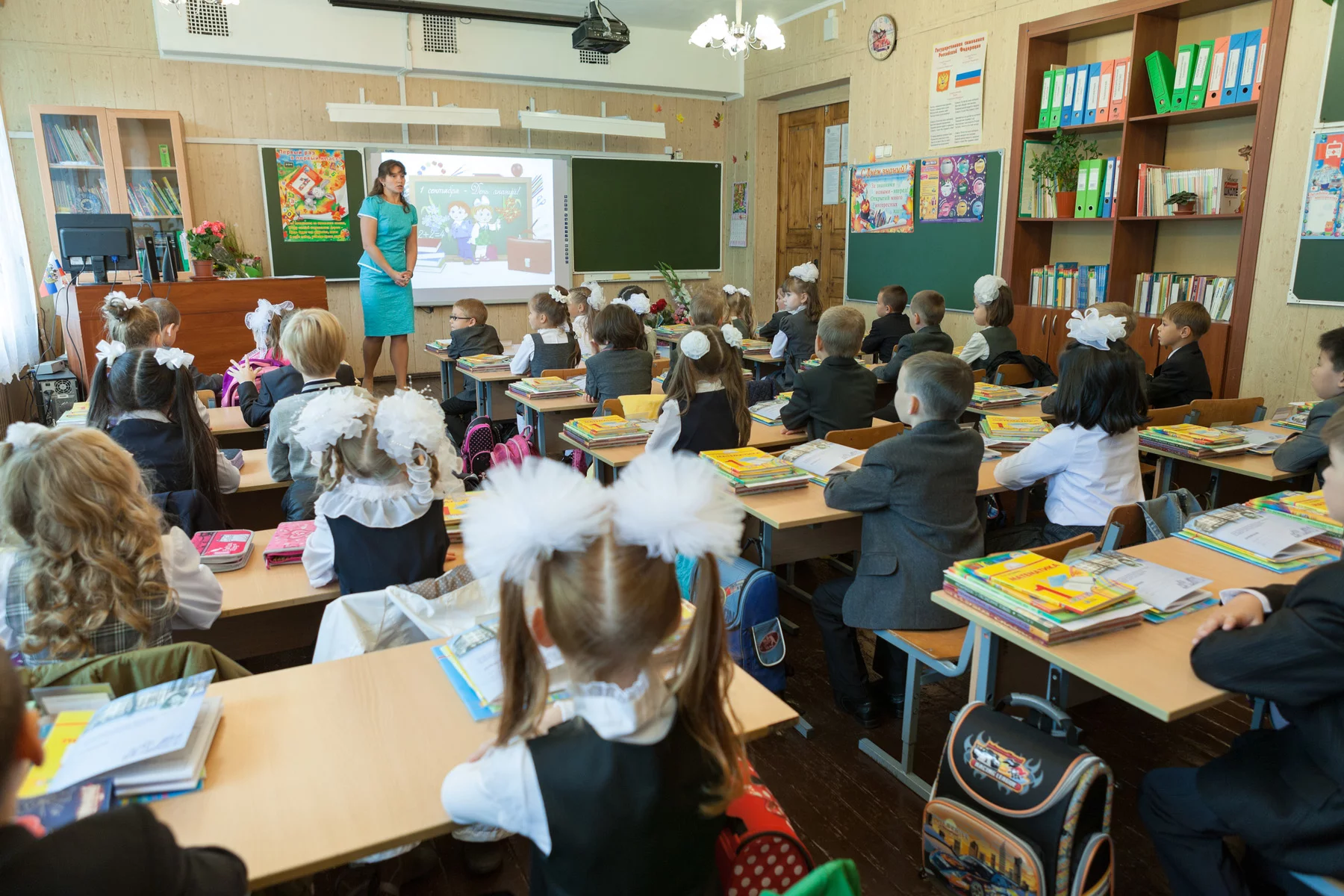
Fortunately, you have several options to prepare your children for school:
- Native-speaking private tutors are plentiful in Russian cities, and you can find them via online portals such as Vash Repetitor (Ваш репетитор). You should expect to pay between ₽1,000 and ₽2,500 per 45-minute lesson, depending on your location and the tutor’s level of experience.
- Encourage your children to watch Russian cartoons on television. Young children will enjoy shows like Masha and the Bear (Маша и Медведь, Masha i Medved) and they will also learn Russian words and basic grammar from the characters.
- Language schools often offer special courses for children, and there are even schools that cater only to children. KidsKey and Russificate Kids are two examples of online language schools for children.
Learning the language for business and professionals in Russia
If you have moved to Russia for work, then you may consider taking a Russian language course for professionals. There are many such courses available, and language schools often dispatch teachers to company offices to tutor employees.

This is often provided at the company’s expense, so ask your employer if they are prepared to pay for your lessons.
Official language examinations and qualifications in Russia
If you want to study at a Russian university or get a job in the country, taking the Test of Russian as a Foreign Language (TORFL) will be very useful. This Russian state-sponsored exam allows foreign citizens to obtain official certification of their Russian language abilities. In addition, this exam will help you pursue Russian citizenship through naturalization.
The results of the TORFL conform to the Common European Framework of Reference for Languages (CEFR). This means that the certification you receive will indicate your level of Russian on a scale from A1 (beginner) to C2 (proficient).
There are accredited TORFL testing centers in cities all over Russia, as well as 59 centers located in 25 countries around the world.
Useful resources
- Study In Russia – official website about education in Russia for foreign students. Guides on the TORFL examination and Russian language programs.
- Vash Repetitor – online database of private tutors based in Russia.
- Moscow State University Institute of Russian Language and Culture – a department of Russia’s top-ranking university dedicated to teaching Russian to foreign students.



Did you find this guide helpful?