
'%20id='ico-down'%20stroke='%23000000'%20stroke-width='1.5'%3e%3cg%20transform='translate(1092.250000,%20254.750000)'%3e%3cpolyline%20id='Path-2-Copy-4'%20transform='translate(5.500000,%202.750000)%20scale(1,%20-1)%20rotate(-180.000000)%20translate(-5.500000,%20-2.750000)%20'%20points='0%200%205.5%205.5%2011%200'%3e%3c/polyline%3e%3c/g%3e%3c/g%3e%3c/g%3e%3c/svg%3e)


Housing
Housing Basics
Moving within the Netherlands
Ready for a change? Discover everything about moving within the Netherlands, including costs, relocation companies, and how you can do it all yourself.

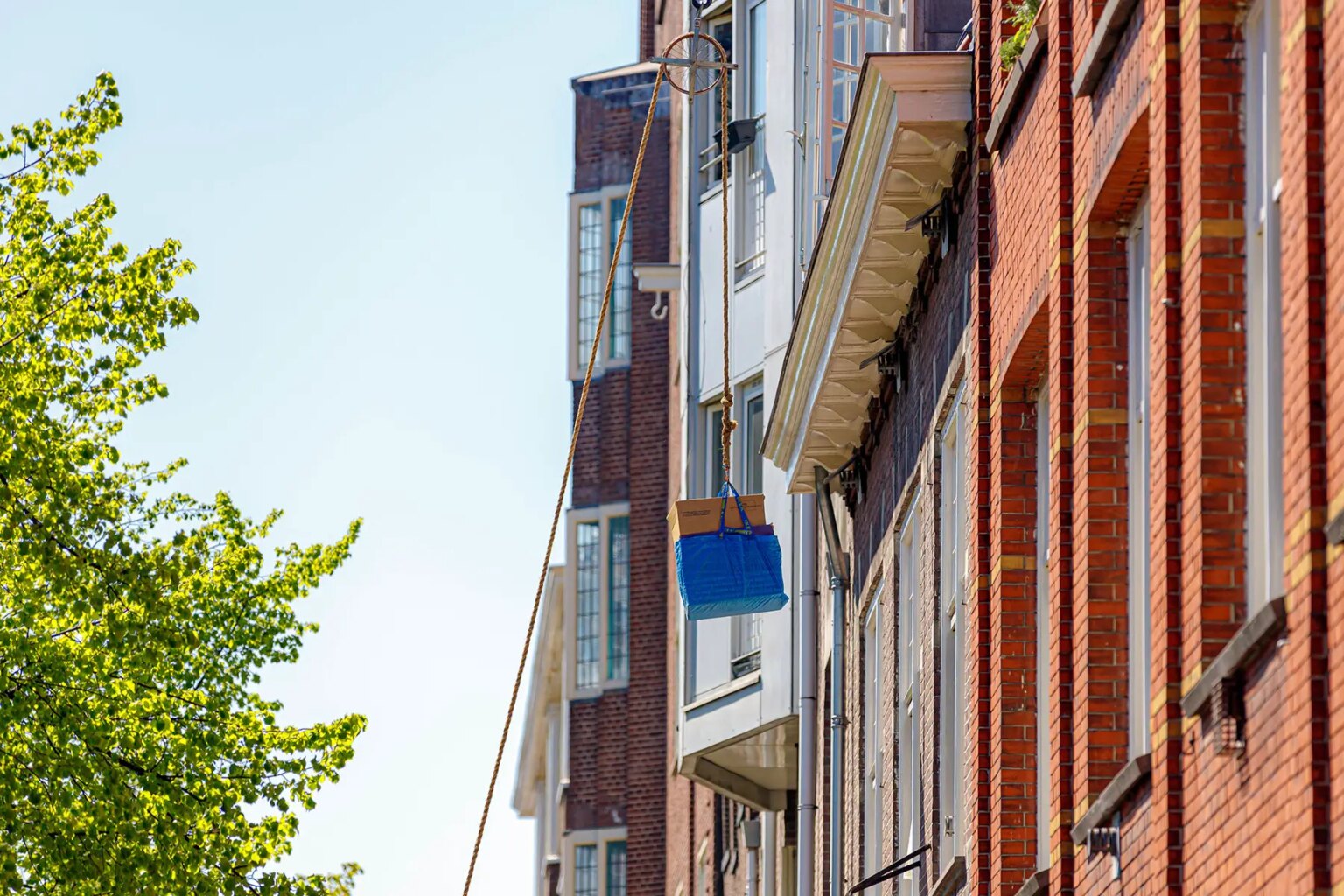
Several factors can influence whether moving within the Netherlands is a seamless experience or a challenging ordeal. And with the country’s characteristic narrow streets and steep stairwells, it’s easy to feel intimidated.
With a little careful planning, however, you can stay on top of it all. What’s more, people move house all the time, so there are plenty of moving services in the country to help you settle into your new home.
To prepare for your move within the Netherlands, read on for the following topics:
Use Wise for moving money abroad
Wise offers expatriate-friendly financial services including international money transfers at mid-market exchange rates with transparent, low fees, helping you save money when sending funds to family or managing finances across borders. Their multi-currency account allows you to hold, convert, and spend money in multiple currencies.

Should you hire a moving service or move your belongings yourself?
Before you move your things, you have to decide: will you move your belongings or will you trust a moving company to do it for you?
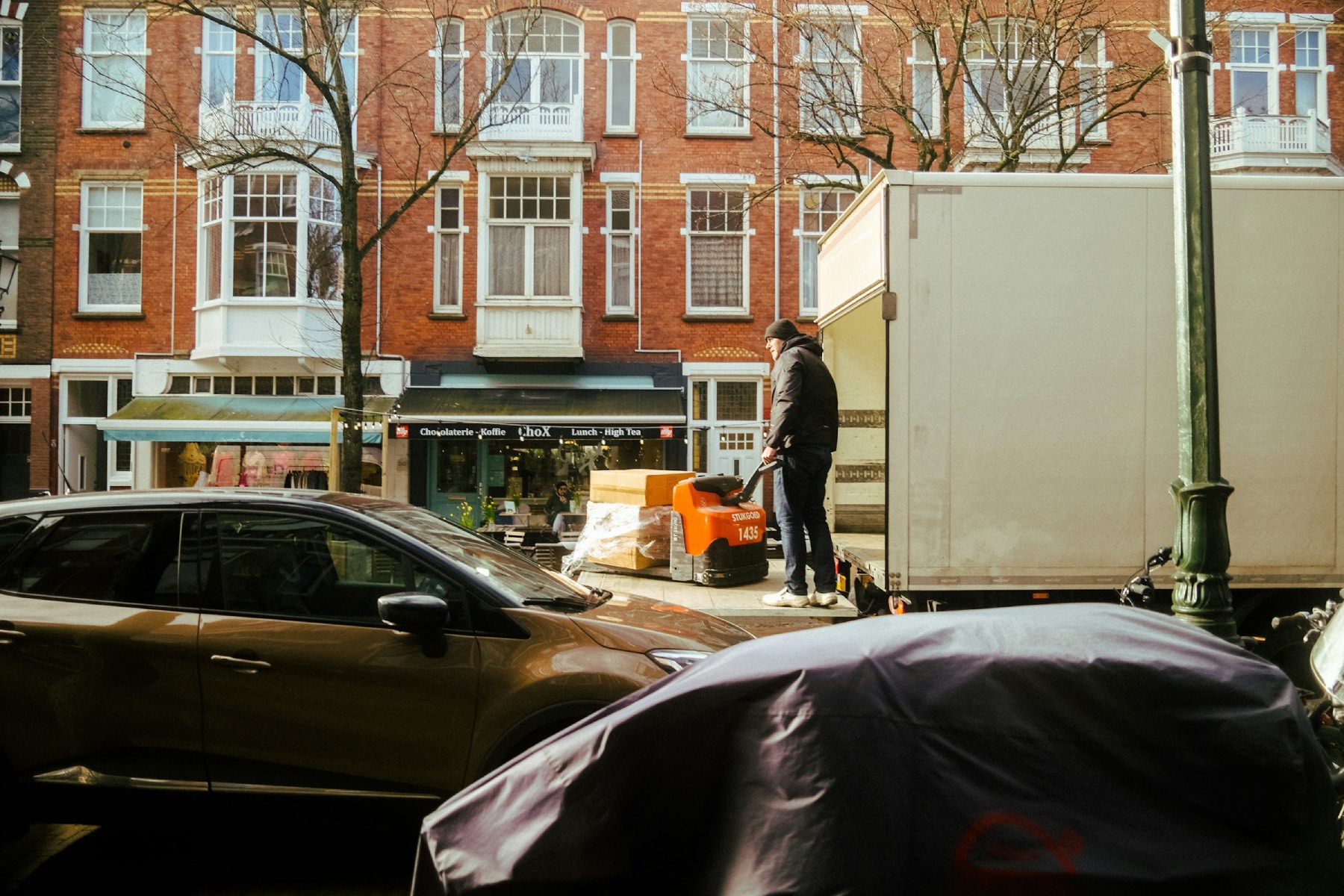
There are advantages and disadvantages to both decisions, so it’s best to assess which is best for your situation. Some factors to keep in mind are:
- How much you are willing to spend
- What sort of accommodation you will be moving into
- How much time you have till you need to move in
- What belongings you are moving
Here’s an in-depth look into both options to determine which will suit you best.
Hiring a professional moving company
Thinking of turning to a moving company? Here are some pros and cons to consider first:
| Pros | Cons |
| Less work for you: A company will pack, load, transport, and unload your belongings for you | More expensive: Hiring a moving company will likely cost more money than taking care of the move yourself |
| Your belongings will be insured: All of your goods have insurance against damage and/or loss. The standard insurance is usually up to €100,000, and there is no risk for the client. | Lack of control: The company will move your belongings, which means you have less control over how they are handled |
| Expertise: The movers are trained and have the experience to move your belongings, so you should be in good hands | Making yourself available: If you have a busy schedule, you’ll need to make time for the movers to come to your place and unload your belongings in your new home. |
How much does it cost to move within the Netherlands?
If you ask for a price quote, the first thing a moving company does is determine the volume of goods. The mover usually sends a surveyor to your home to assess the amount of goods, how long it will take, and what packing materials are necessary.
To make an accurate quote, the following points are also taken into consideration:
- Accessibility to the residence
- Fragile or special items requiring specific handling and/or packing
- Necessity of a lift or other equipment
- The type of residence at the loading and unloading addresses
- Which pieces of furniture can be disassembled for transport
There are plenty of logistics companies operating in the Netherlands, such as:
Alternatively, check the Expatica Business Directory for international-friendly moving services.
Transfer Moving Funds to the Netherlands with Wise
If you need to send money from abroad to cover your moving expenses or security deposits in the Netherlands, Wise offers a straightforward solution using the mid-market exchange rate and transparent fees. This can help you manage your relocation budget more effectively while avoiding hidden charges from traditional banks.
Learn more about Wise.
Moving your belongings within the Netherlands
If you’re thinking of taking your move into your own hands, consider the following points:
| Pros | Cons |
| Less pricey: Transporting your belongings with your own vehicle will save on costs in comparison to getting a moving company involved | More time-consuming: If you don’t have movers or a professional moving vehicle, you may be going to and fro your accommodations frequently to transport your belongings. |
| Your schedule: You have the flexibility to move the things when you want them, on your terms | Physical effort: Without experienced movers, you’ll be faced with carrying more things yourself |
| Control over the move: You can keep track of how your belongings are packed, transported, and unpacked | Stressful: A move is always stressful, but if you’re doing it alone, it can put more of a mental strain on you than if you turned to a moving company |
Should you go for this option, you’ll likely need to rent a truck and pay for the gasoline, insurance, and kilometers driven.
Preparing for your move within the Netherlands
Have you decided to move your things yourself? Here are some tips to keep in mind to smoothen the process.
Determine the logistics
Are you moving into a house? Or to apartment? If so, what floor is it on? Do you live on a narrow street? How much stuff do you have – enough to fit a minivan, or do you need a big truck? How will your pet fit into the moving process?

Ask yourself these questions to figure out the special needs of your move. Then you can make plans to accommodate the logistics involved and put together an extensive to-do list.
Pack like a pro
Packing is one of those activities that always seems like it’s almost done, only to have you scrambling with inconveniences at the last minute. It’s best to be over-prepared rather than under-prepared.

Local expert
Bettina Borg
Insider tip
To take a load off your shoulders (literally), consider selling some belongings beforehand. You can list them on popular online marketplaces, like Marktplaats, MijnKoopwaar, Vinted, or expat-friendly groups on social media. Alternatively, you can donate your furniture to you local thrift store (kringloopwinkel).
You can get packing boxes from your local DIY store or larger homeware stores such as Action, Gamma, and IKEA.
Here are some tips to maximize your packing:
- Pack according to room: Don’t pack things randomly according to how they fit together in a box, Tetris-style. If you sort out by room, it will be easy to find and sort things out when you’re unpacking.
- Label boxes: Use stickers or even just write on the boxes to mark what each box contains and where it goes. You can number them, too, so you have an inventory. It will also be handy for making sure all your things have arrived.
- Separate your valuables: Pack anything critical, like important documents, keys, or your passport, separately. Also, set aside anything that you need quick access to.
- Keep your boxes light: If you’re moving your boxes, make sure you can pick and carry each of them comfortably. Keep in mind that you’ll be doing it again and again and will likely get fatigued.
Get the street permits
Once you’re all packed and have loaded your boxes in a moving van, it’s time to make the move happen.
If your van needs to block the road while you load and unload, you need a permit from the municipality (ontheffing voorwerp in de openbare ruimte plaatsen). You’ll also need to include a drawing or diagram of the situation on the street. This is one of the major advantages of hiring a moving company: they take care of this for you.
Check the website of your local council (gementee) to apply for the permit and learn more about the rules for your area. Do note that you’ll need to pay for the application (rates differ depending on the municipality).
Moving within a big city in the Netherlands
Moving within big cities like Amsterdam and Utrecht has special needs, like the permit you need to block the road. Another matter to take into account? The hoisting hooks (gevelstenen) at the top of gabled houses.
Getting big furniture up and down the narrow and steep stairs just isn’t an option sometimes, so the iron hook hanging from the roof beams is your best bet. You can do this with a pulley system (blok en touw), which you can rent from DIY stores.
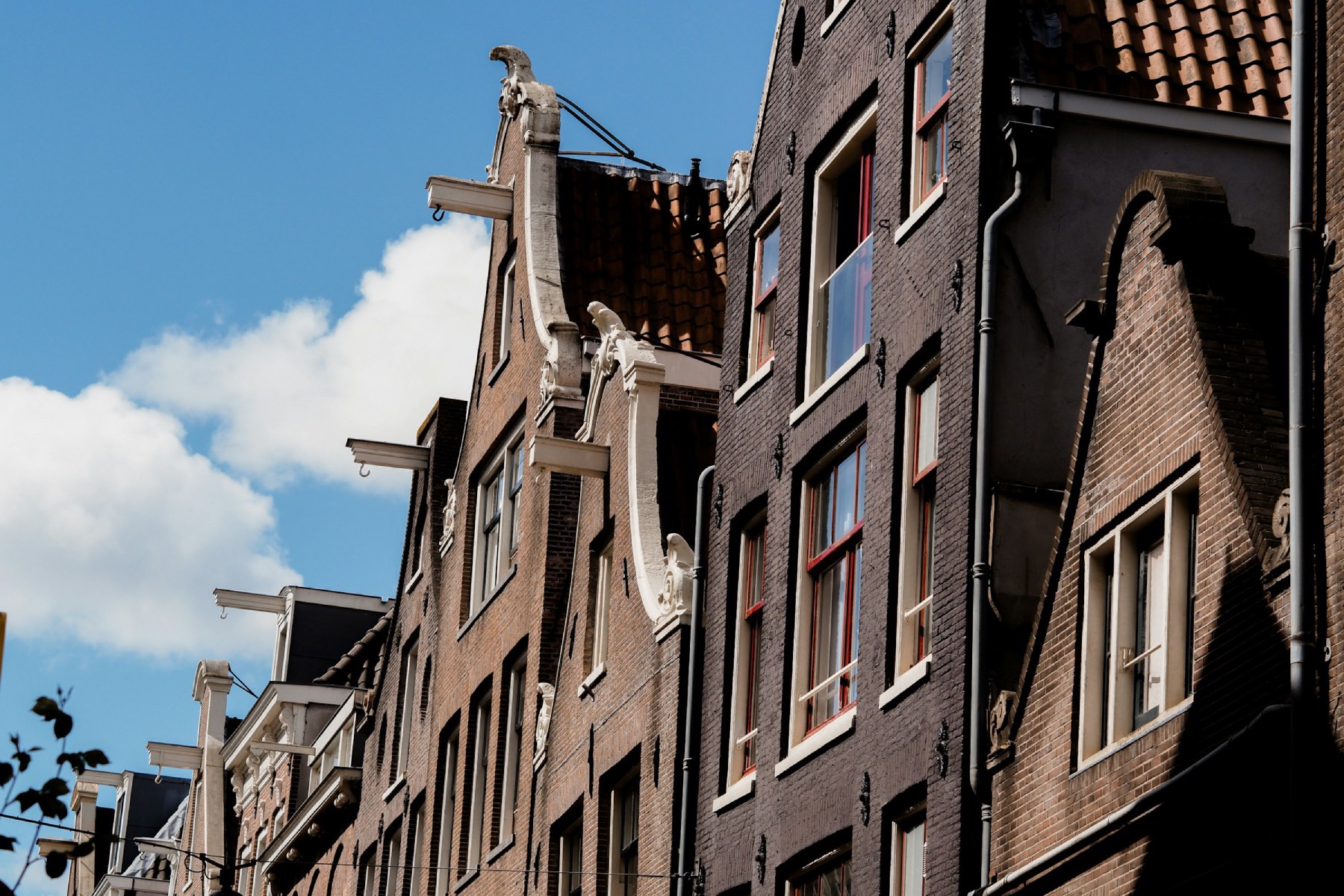
However, it’s harder than it looks. The iron hooks are supposed to be maintained and checked annually to make sure the beam can support the weight, but they’re often neglected or in a state of disrepair. What’s more, none of the moving companies in Amsterdam have insurance for moving your belongings this way, which makes it a risky business. Therefore, you need a company that can work well with the hook, rope, and pulley.
If you don’t feel confident in this method (for good reason), you can hire a moving elevator (verhuislift). This is more expensive than using a pulley but much more secure. Don’t forget to apply for a street permit if you go for this option.
After your move: settling in and registering with the municipality
If you’ve followed the packing tips above, your boxes will be beautifully marked for the room where they belong, and unpacking will be a breeze.
Your next step will be notifying the municipality of your new address. You can do this up to 30 days before your moving date (which is the day you physically move into the new premises and your address changes) or a maximum of five days afterward.
You can do so in person or online, and will need to provide:
- A tenancy agreement or purchase contract for your new residence
- A valid ID (like a passport or residence permit)
If you’re moving within the same municipality in the Netherlands, you will only need to inform the Department of Civil Affairs (Afdeling Burgerzaken) in your area. In most cases, you can do this online on your district’s website.
Make sure to inform the authorities of your new address before the deadline. Otherwise, you will be faced with a fine of over €300.
Find more information about this on the Dutch government’s website.
Related Articles


Editor's picks
 Secondary schools in the NetherlandsWe explain the complex secondary school system in the Netherlands, including the three public streams and various international options.
 Higher education in the Netherlands: a guide to Dutch universitiesThe Netherlands is home to some of the world's top universities. Learn all about the different subjects available at Dutch institutions.
 Human and civil rights in the NetherlandsFrom the right to protest to protection from discrimination, here's what you need to know about human rights in the Netherlands.
Did you find this guide helpful?