'%20id='ico-down'%20stroke='%23000000'%20stroke-width='1.5'%3e%3cg%20transform='translate(1092.250000,%20254.750000)'%3e%3cpolyline%20id='Path-2-Copy-4'%20transform='translate(5.500000,%202.750000)%20scale(1,%20-1)%20rotate(-180.000000)%20translate(-5.500000,%20-2.750000)%20'%20points='0%200%205.5%205.5%2011%200'%3e%3c/polyline%3e%3c/g%3e%3c/g%3e%3c/g%3e%3c/svg%3e)




'%20fill='%23000000'%3e%3cg%20id='icons'%20transform='translate(56.000000,%20160.000000)'%3e%3cpath%20d='M144,7339%20L140,7339%20L140,7332.001%20C140,7330.081%20139.153,7329.01%20137.634,7329.01%20C135.981,7329.01%20135,7330.126%20135,7332.001%20L135,7339%20L131,7339%20L131,7326%20L135,7326%20L135,7327.462%20C135,7327.462%20136.255,7325.26%20139.083,7325.26%20C141.912,7325.26%20144,7326.986%20144,7330.558%20L144,7339%20L144,7339%20Z%20M126.442,7323.921%20C125.093,7323.921%20124,7322.819%20124,7321.46%20C124,7320.102%20125.093,7319%20126.442,7319%20C127.79,7319%20128.883,7320.102%20128.883,7321.46%20C128.884,7322.819%20127.79,7323.921%20126.442,7323.921%20L126.442,7323.921%20Z%20M124,7339%20L129,7339%20L129,7326%20L124,7326%20L124,7339%20Z'%20id='linkedin-[%23161]'%3e%3c/path%3e%3c/g%3e%3c/g%3e%3c/g%3e%3c/svg%3e)
'%20fill='%23000000'%3e%3cg%20id='icons'%20transform='translate(56.000000,%20160.000000)'%3e%3cpath%20d='M335.821282,7259%20L335.821282,7250%20L338.553693,7250%20L339,7246%20L335.821282,7246%20L335.821282,7244.052%20C335.821282,7243.022%20335.847593,7242%20337.286884,7242%20L338.744689,7242%20L338.744689,7239.14%20C338.744689,7239.097%20337.492497,7239%20336.225687,7239%20C333.580004,7239%20331.923407,7240.657%20331.923407,7243.7%20L331.923407,7246%20L329,7246%20L329,7250%20L331.923407,7250%20L331.923407,7259%20L335.821282,7259%20Z'%20id='facebook-[%23176]'%3e%3c/path%3e%3c/g%3e%3c/g%3e%3c/g%3e%3c/svg%3e)

The costs of living globally have been rising in the past few years, and concerns about inflation, housing and energy costs have dominated the political discourse in the Netherlands. Although inflation in 2025 has levelled out at around 3% it’s still important for many households to find ways to save money to keep up with the bills. If you’re an expat in the Netherlands, costs of living rises coupled with the expense of living internationally can be tough.
This guide walks through ideas for expats in the Netherlands to save money, from government support, to smart shopping, and ways to manage your international finances for less, with providers like Wise.
Cut the costs of managing your money in the Netherlands and internationally, with Wise
Wise offers low cost international accounts, which you can use to hold 40+ currencies, receive payments in 8+ currencies with local account details, and spend with your linked Wise card. Whenever currency conversion is needed, Wise uses the mid-market rate with no surprise or hidden fees to worry about.

Understanding the cost of living in the Netherlands
The cost of living in the Netherlands does vary depending on factors like where in the Netherlands you’re based, and your lifestyle. Here are a few things to consider when you’re planning your Dutch finances:
Housing
Housing costs in the Netherlands have been rising at 10% or more in the past couple of years, with the average home now costing over 470,000 EUR to buy. Housing affordability was one of the hot topics of the 2025 Dutch elections, with divergent views from the different parties on how to best tackle this problem. If you qualify for social housing, this can significantly reduce the rent you’ll need to pay.
Healthcare
The Dutch healthcare system operates on principles of solidarity, which means all residents must buy standard health insurance to cover the costs of basic care. You’ll usually have to pay out of pocket, or get top up insurance for dental care, eye care, and physiotherapy. Some migrants opt to pay for private health care to cover all eventualities.
Taxes
As an expat you may be able to benefit from a 30% tax free allowance for up to 5 years. This depends on your income and is intended to cover the costs of working in the Netherlands. If you’re eligible, your employer will need to make arrangements to facilitate this tax break.

Childcare and schooling
The Dutch government offers childcare benefits to help cover the costs of care, including after school care. While this does not cover the full costs of care in most cases, it can help with family finances significantly if you’re eligible. Schooling is free, but there are still costs such as uniforms to consider.
Food
The Netherlands has a very broad range of grocery retail chains which allows you to choose between services based on price and preference. Most stores offer basic ranges which are quite economical, through to luxury items.
Transportation
Public transport in the Netherlands is considered to be very good, and many cities are very walkable. There’s also a cycling culture and strong infrastructure supporting bike use, which can help with costs. Ultimately though, your best means of transport depends on your lifestyle – check if you’ll need a car of your own to make life practical, as this can push up costs a lot.
Entertainment
Entertainment costs in the Netherlands depend entirely on your interests and preferences – there are some free museums, parks and community based activities in many areas, as well as more costly options.
This guide covers some places to look if you’re planning your budget for life in the Netherlands, including practical steps you can take to reduce your day to day bills.
We’ll also touch on another common problem for expats in the Netherlands – the costs of managing your money across different currencies. Using a provider like Wise which uses mid-market exchange rates and allows for flexible ways to hold, send, receive, spend and exchange EUR and other major currencies can help you save both time and money. More on that later.

Saving on housing and accommodation costs

In the Netherlands, your housing and accommodation costs are likely to be the biggest outgoing you have. Here the key is shopping around, including looking at social housing and costs in different locations if you’re able to. Regional cost variations exist, so being flexible with the area you choose to settle in can save a lot of money.
Finding affordable housing
If you’re planning to rent in the Netherlands, you’ll want to take some time to get to know the rental market in the city or town you’re going to be living in. You’ll usually be able to find house-sharing and co-living options in cities, with specific student accommodation options in cities with large universities.
Social housing (sociale huur) offers capped rent for low to middle income families, but the waiting times for properties can be significant. This option is only available to people with income under a set limit – 47,699 EUR for a single person household at the time of writing.
The costs of private rental in the center of a large city can be very high in the Netherlands. However, in most cities, you’ll be able to look at a variety of different suburbs to find an option which balances convenience and cost for your specific needs. Private landlords may be open to negotiating rent and lease terms, depending on the situation.

Reducing utility costs
The Dutch climate means you’ll spend more on heating your home through the winter, with lower summer costs in most cases. If you’re a home owner in the Netherlands you may qualify for local or national level subsidies for energy improvement measures such as insulation, which can help reduce the costs of energy usage in your home.
It’s also well worth checking that you’re not paying more than you have to for the energy you do use. Utilities in the Netherlands are an open market so you can choose the services you prefer. There are many comparison websites for the Netherlands, such as Easy Switch which lets you compare the costs of different utility providers.
When you’re looking at the costs of energy, you can also compare the costs of phone plans and internet which are also often featured on comparison websites like Comparison Portal to let you get the best deal for your needs.

Food and grocery savings
Food costs in the Netherlands may feel quite high, depending on where you’ve lived previously. However, there’s huge competition for customers across grocery retailers which does help drive down the costs of core products.
Smart grocery shopping
Here are a few local tips to help your grocery budget go further in the Netherlands:
- Aldi and Lidl are generally considered to be the best supermarket chains for budget shopping
- Store loyalty programs like the Albert Heijn bonus program can be an excellent way to get discounts and earn rewards with your preferred stores
- Apps like Too Good to Go offer discounted short dated food which can be a great bargain if you’re lucky
- Local markets (outside of tourist towns) can be a great place for low cost seasonal produce
- Bulk buying pantry goods can help save money – and using meal planning strategies goes a long way to avoid food waste
Eating out and entertainment on a budget
Your entertainment budget in the Netherlands will depend a lot on what you like to do for fun. Here are some ideas to help stretch your cash a little further:
- If you like to eat and drink out, look for happy hour deals and lunch specials in pubs and restaurants
- Look out for free entry to museums and other attractions during local festivals and European Heritage Days
- The Netherlands has some excellent parks which can be used for walking, jogging, picnics and other leisure activities with no fee
- Camping is super popular in the Netherlands and is a cheap way to take a break – wild camping, however, is illegal, so stick to proper sites
- For low cost shopping, look out for charity shops and second-hand markets for some excellent deals – King’s Day (Koningsdag) second-hand markets in particular can offer rich pickings
Transportation costs

Public transport in the Netherlands is very good and the country is compact making it relatively simple to get around. You can tap in and out of transport options using OVpay, which allows you to use your normal debit card to make payment.
You can also buy season tickets for railways and other transport networks – handy if you commute for example. NS season tickets offer deep discounts on train fares.
Car ownership in the Netherlands is another option, although again it can be costly. Average car prices are over 50,000 EUR if you buy new – plus you’ll need to consider the costs of parking, fuel and maintenance.
Alternative options include walking and cycling. Here the practicality depends on the type of travel you need to do. Some Dutch cities are extremely walkable, and cycling is common.
Banking and financial costs
As an expat in the Netherlands banking costs could be a concern. Accounts for day to day use often have a monthly fee, and there are other costs to consider when you transact. You may also want to get Dutch accounts to save and invest. Here are some things to think about:
- Bear in mind that even where the monthly fee is low, transaction fees apply – check out the service fees before you sign up though
- Dutch banks offer good child and student account products which often have low headline costs
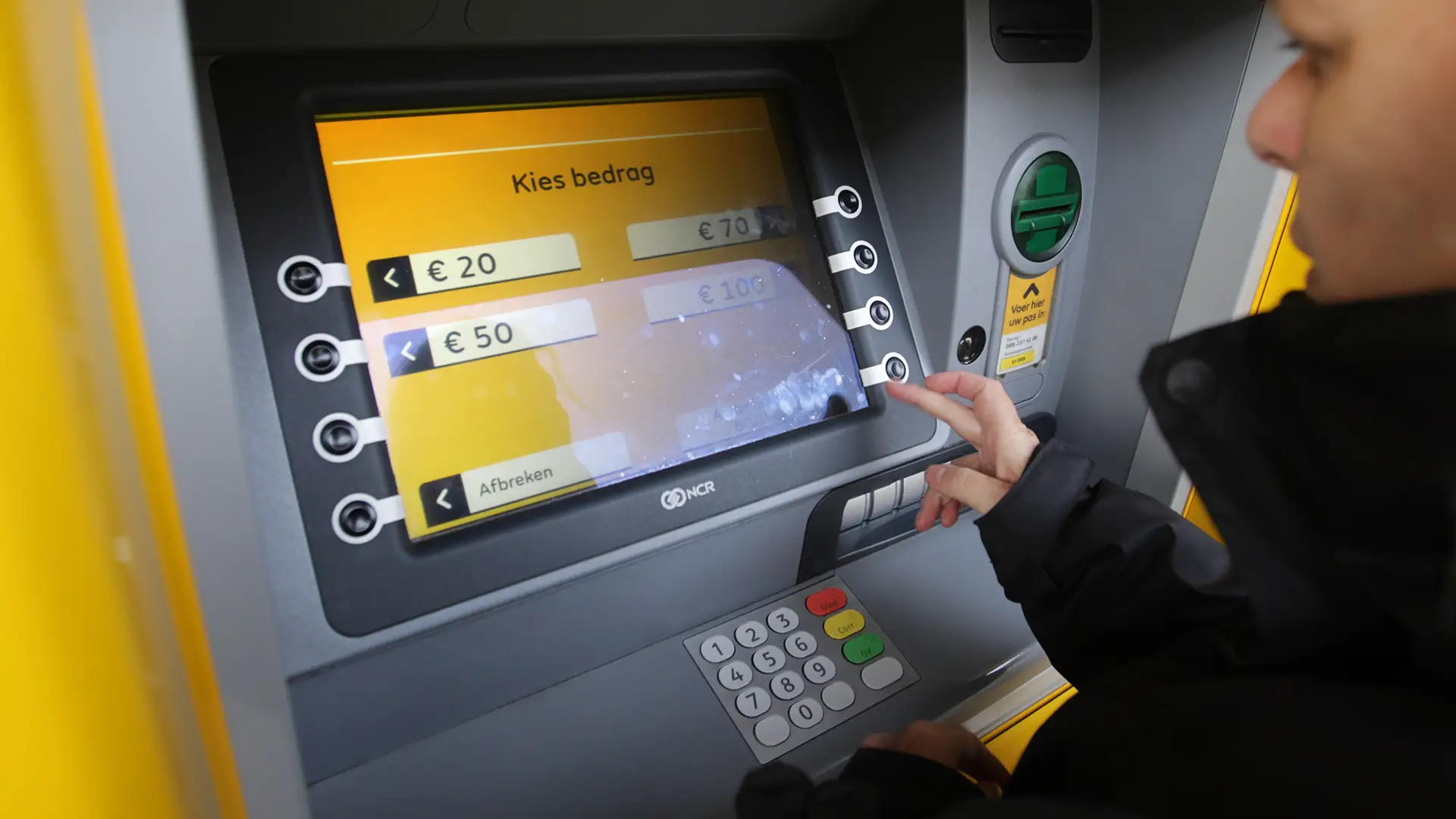
- Taking cash from an ATM may not incur a fee from your own bank, but ATM operator costs may apply
- Some banks impose a limit on the amount of cash you can withdraw before fees begin
- Check your bank and account are covered by the Dutch Deposit Guarantee, which offers protection in the event the bank gets into financial difficulty
For managing your money flexibly across currencies, the Wise Account and linked debit card are especially handy for spending at home and abroad, with no monthly fees, and the mid-market rate. You can receive EUR and other currencies to your Wise Account, making it easy to keep on top of your finances day to day.
Choosing the right account
Dutch bank accounts are generally split into accounts for day to day use, and savings accounts for interest earning opportunities. Having a local EUR account is pretty essential in the Netherlands, to pay rent and access services like a mobile phone contract.
- Compare a few different accounts to choose the right one – some banks have packages which get you several different account and card types for one single fee
- If you’ll need to deposit cash or prefer to bank in person, look at banks with branches close to your home – banking hours are 9 – 4 or 5 in the Netherlands, and so getting to a branch during the working week can be a challenge if it’s not close
- Look for a bank which has no ATM fee and which is in a global network to allow you to withdraw for free overseas
- Some everyday accounts offer an overdraft – this service can come with fees, so make sure you know what your account conditions are
- Multi-currency accounts like Wise can be beneficial to keep costs low for international people when receiving and sending overseas payments
Credit cards
The Dutch market offers a very good choice of credit cards, including ways to earn rewards, cash back and airmiles as you spend.
Credit cards are offered based on your rating from the Bureau Krediet Registratie (BKR). This is either positive or negative, and based on your repayment of loans, credit and other debts on time. As an expat you may need to spend some time building your credit history from scratch when you arrive – secured credit cards are offered to help with this.
Credit cards have extremely varied credit limits and interest costs, so shopping around is essential to make sure you don’t end up spending more than you need to on fees.
Managing your finances internationally
Managing your finances internationally can mean dealing with a few specific challenges, such as the costs of currency conversion and foreign transaction fees. Here are a few tips:
- Look carefully at currency conversion fees when you send or receive payments from abroad – your bank may add its fee into the exchange rate used, making this hard to spot
- If you transact internationally, look for a provider which has the mid-market exchange rate, and avoid hidden fees and markups
- Some providers let you set automatic conversion instructions and rate alerts which can be helpful for timing international transfers to get the best available rate
For day to day money management and international payments, check out Wise’s multi-currency account. You get mid-market exchange rates, with ways to receive 8+ currencies with local account details, and send to 140+ countries. There are even automatic fee discounts for large transfers over 20k GBP equivalent.
Saving on healthcare and insurance costs

If you live or work in the Netherlands you are required to take out standard health insurance. This provides both emergency and preventive treatment, but it’s not intended for some costs such as eye and dental care.
Standard health insurance is offered by 30+ providers in the Netherlands, and has a fixed cost regardless of your health or personal situation. A provider can not refuse to insure you for this basic level of cover. If you’re on a low income you may be able to apply for healthcare benefits to help manage the costs of your insurance.
Many Dutch residents and expats also have private health insurance to cover them in part or in full depending on their policy, in the case of urgent medical needs and care that goes beyond the coverage in the standard insurance. If you’re from the UK or EEA you may also choose to get a European Health Insurance Card (EHIC) or Global Health Insurance Card (GHIC) which can offer some cover if you’re usually resident elsewhere.
Building an emergency fund as an expat
Having an emergency fund as an expat gives peace of mind and can be essential if your situation changes when you’re away from your usual support network. If possible, you’re usually advised to set aside 3-6 months expenses which you can draw on if you lose your job, or run into other sudden financial problems.
If you’re building an emergency fund, make the most of your money by looking for high-yield savings account options – often some of the best deals are from online only accounts.
Remember also to keep your emergency funds accessible across borders in case of emergencies in the Netherlands or your home country. Here Wise can help with 40+ supported currencies and easy ways to withdraw your funds, or send fast payments to 140+ countries if you ever need to.

Long-term financial planning
If you’re planning on being in the Netherlands for a significant period of time, you may be thinking longer term about managing your financial planning there. In this case you’ll probably want to consider your pension options, including employer and private pension availability, as well as investment and saving opportunities.
There’s no single best approach to planning your long term finances – it’ll come down to your goals and your personal preferences. For example, some expats may choose to invest in a Dutch property as a home to live in, and an asset to sell at a later stage. However, this is not without risk – and so as with any financial decision, getting professional advice is a good idea.
While you’re thinking longer term you may also want support with repatriation financial planning, depending on where and when you expect to leave the Netherlands. Moving your finances to a different country can be complex and have tax implications – so knowing what to expect early on is a benefit.
Conclusion
Saving money in the Netherlands as an expat is possible, but the exact steps to take will depend a lot on your personal situation. Here are a few final thoughts:
- If you have flexibility about where you live, choosing lower cost accommodation outside of the city center can help reduce your major costs significantly
- Shop around and compare providers for utilities, phone, wifi and other essential services – there are lots of Dutch comparison resources to help you snag a good deal here
- When planning your grocery budget look for the best balance of cost and convenience – some major stores like Lidl are cheap to use, but may not be in the most convenient location for you
- Be creative when planning your leisure time – there are lots of free things to do in the Netherlands, particularly if you like the outdoors, or are into history and culture
Building financial stability as an expat living in the Netherlands can seem challenging but can be achieved with small, sensible steps. This guide gives some ideas – and as someone living an international lifestyle it’s also well worth cutting out unnecessary money management costs with a provider like Wise. Use Wise to hold and exchange 40+ currencies with no ongoing fees and the mid-market rate.