
'%20id='ico-down'%20stroke='%23000000'%20stroke-width='1.5'%3e%3cg%20transform='translate(1092.250000,%20254.750000)'%3e%3cpolyline%20id='Path-2-Copy-4'%20transform='translate(5.500000,%202.750000)%20scale(1,%20-1)%20rotate(-180.000000)%20translate(-5.500000,%20-2.750000)%20'%20points='0%200%205.5%205.5%2011%200'%3e%3c/polyline%3e%3c/g%3e%3c/g%3e%3c/g%3e%3c/svg%3e)


Finance
Taxes
How to file your income taxes in Luxembourg in 2026
Discover how to file your income tax return in Luxembourg, including the latest tax rates, deadlines, and which expenses are deductible.


As an expat working in Luxembourg, you’ll need to pay income tax on your earnings. The system can be complicated, however, with three tax classes and 23 distinct income tax brackets. Highly skilled workers from abroad are eligible for a tax exemption on their income which is an exciting prospect for many expats working in Luxembourg.
For expats and cross-border workers navigating Luxembourg’s tax system, managing finances across multiple countries can be complex. Wise Account allows you to hold and convert money in different currencies at the mid-market exchange rate. More on that later.
Read on for advice on the following topics:
taxx.lu
Need to file your income taxes as an expat or cross-border commuter working in Luxembourg? Get it done quickly and easily with taxx.lu. Their app guides you through the entire process, complete with customer service assistance, for only €59. Save yourself time, money, and stress with taxx.lu.

Income tax in Luxembourg: overview and latest developments
The Luxembourg Inland Revenue (Administration des contributions directes – ACD) oversees Luxembourg’s tax system. The country’s tax year runs from 1 January to 31 December.
Expats must pay income tax on their earnings, whether they work for a company or are self-employed. Tax rates range from 0% to 42%. Workers are given a tax class based on their marital and residency status. This class, along with their earnings, determines how much income tax they pay. Since 2018, married couples have been able to choose between separate and joint taxation.

The tax classes are as follows:
- 1: married taxpayers who’ve opted for separate taxation, single people, and some married non-resident taxpayers
- 1a: people aged 65 or over, single parents or widows with a dependent child
- 2: married taxpayers, widowed taxpayers (for the first three years after the death of the spouse), divorced or separated people (for the first three years), civil partners, and some married non-resident taxpayers
The classification system means residents and non-residents can face different income tax bills, as non-residents are not entitled to the same deductions as resident taxpayers.
Earnings subject to income tax in Luxembourg
Income tax in Luxembourg may be payable on the following:
- Employment income: such as your salary. Employee benefits such as healthcare schemes and salary sacrifice schemes are generally taxable. Benefits in kind are usually assessed at their market value, but some are given a lump-sum valuation.
- Commercial or business profits: freelancers, partners, and sole traders pay income tax on their profits. Limited companies pay corporate tax.
- Investments: investment income may be subject to income tax or withholding tax.
- Property income: if you let out a property, rental income is subject to personal income tax. The taxable sum is the income received minus allowable expenses, such as property taxes, mortgage interest, and insurance.
- Capital gains: if you sell a buy-to-let or second property, you may need to pay income tax on your gains. These are considered part of your income and are taxed at the normal rates.
Regular taxpayers in Luxembourg usually have their tax contributions taken automatically from their salaries, though they must still file an income tax return to ensure they are paying the correct amount.
Latest news about income taxes in Luxembourg in 2026
Luxembourg hasn’t increased its tax brackets for the 2026 tax year. This means that they remain as they were for the 2025 tax year.

The maximum deduction limit for personal expenses, such as insurance premiums and interest on loans, increased from €672 to €900.

There is now a tax allowance of up to €9,000 per year for eligible individuals who defer early retirement and stay in employment until the statutory retirement age.
What are the tax rates in Luxembourg in 2026?
Luxembourg has 23 tax brackets, with rates ranging from 0% to 42%. Workers must also pay between 7% and 9% as an additional contribution to the employment fund.
In 2026, the first €13,230 of income is tax-free, with the lowest rate of 8% kicking in thereafter. The top rate of 42% is charged on earnings above €234,871.
2026 tax rates
| Income tax bracket | Rate |
| €0–13,230 | 0% |
| €13,231–15,435 | 8% |
| €15,436–17,640 | 9% |
| €17,641–19,845 | 10% |
| €19,846–22,050 | 11% |
| €22,051–24,255 | 12% |
| €24,256–26,550 | 14% |
| €26,551–28,845 | 16% |
| €28,846–31,140 | 18% |
| €31,141–33,435 | 20% |
| €33,436–35,730 | 22% |
| €35,731–38,025 | 24% |
| €38,026–40,320 | 26% |
| €40,321–42,615 | 28% |
| €42,616–44,910 | 30% |
| €44,911–47,205 | 32% |
| €47,206–49,500 | 34% |
| €49,501–51,795 | 36% |
| €51,796–54,090 | 38% |
| €54,091–117,450 | 39% |
| €117,451–176,160 | 40% |
| €176,161–234,870 | 41% |
| €234,871 and above | 42% |
Tax calculator for Luxembourg
You can get an indication of how much tax you’ll pay on your salary and other income with the tax calculator from Calculatrice.
Wise Account
Are you an expat or thinking of moving to Luxembourg? Managing your money across borders shouldn’t be complicated. With a Wise account, you can hold over 40 currencies and pay with a Wise debit card in more than 150 countries. Whether you’re using spending abroad, receiving or sending money home, Wise can help make international money management simpler.
Who pays income tax in Luxembourg?
Who needs to file a tax return in Luxembourg?
Your tax situation largely depends on your residency status in Luxembourg. Tax residents must declare their worldwide income, but non-residents are only taxable on income earned in Luxembourg.
To be classified as a resident taxpayer, you must have been living in Luxembourg for longer than six consecutive months. If you lived in Luxembourg for less than six months, you’ll be considered a non-resident taxpayer.
Income tax for foreigners in Luxembourg
Many of the people who work in Luxembourg actually commute into the country everyday but don’t live there. They’re known as cross-border workers and typically come from neighboring countries like France, Germany, and Belgium.
Non-residents who earn more than 90% of their worldwide income in Luxembourg, or earn less than €13,000 outside of Luxembourg can opt to be treated as residents. Belgian citizens, however, only need to earn 50% of their professional income in Luxembourg to qualify.

Managing finances across multiple countries can be challenging for expats and cross-border workers. A Wise multi-currency account can simplify this by allowing you to hold and manage money in multiple currencies without the high conversion fees typically charged by other providers.
With a Wise account, you can receive your Luxembourg salary in euros while maintaining balances in other currencies, making it easier to manage your finances across borders. The linked Wise debit card also allows for spending in multiple currencies at the mid-market exchange rate, which is particularly useful for cross-border workers who live and spend in one country but earn in another.
Luxembourg impatriate tax scheme
Highly skilled workers recruited from abroad may qualify for Luxembourg’s impatriate scheme.
The rules of the scheme have been simplified in an attempt to attract more foreign talent to Luxembourg. From 2025, workers who qualify for the regime will be able to get a 50% tax exemption on their income, capped at €400,000. This benefit is available to qualifying workers for up to eight years.
The worker must be a Luxembourg resident, earn at least €75,000, and their work must be based on skills that are not replacing another local employee.
Double taxation treaties
Luxembourg has tax treaties with all EU countries and many non-EU states to prevent double taxation. These agreements are crucial for expats and cross-border workers who might otherwise face tax obligations in multiple countries.
For expats managing finances across different tax jurisdictions, having the right banking setup can be essential.
Wise multi-currency account can simplify managing international finances by allowing you to hold, convert, and transfer money in multiple currencies. This makes it easier to pay taxes in different countries while avoiding excessive currency conversion fees that banks typically charge. With local account details in multiple currencies, including Euros, you can receive income in different currencies and pay your tax obligations efficiently, whether in Luxembourg or your home country.

Who is exempt from Luxembourg income tax?
In 2026, the first €13,230 of earnings is exempt from income tax, meaning the country’s lowest earners don’t need to pay tax on their income.
How do you file your tax return in Luxembourg?
How to register for tax in Luxembourg
All residents and workers in Luxembourg receive a 13-digit national identification number when they enroll in social security or health insurance. This number is used for tax and social security purposes.

If you work for an employer, your employer will usually arrange this for you. Otherwise, you must register with the Social Security Common Center (Centre commun de la sécurité sociale).
Which forms do I need to fill out?
Income tax returns for 2025 earnings must be filed by 31 December 2026.
You should receive an invitation in February to download and electronically complete your form on the Inland Revenue website or receive the paper form (form 100). Since February 2022, residents have been able to fill in form 100 online with the help of the tax authority’s electronic assistant.

An alternative to filing directly with the tax authority is to use a specialist tax-filing service like taxx.lu. They offer an app where you pay one price for guidance through the entire process of doing your Luxembourgish income taxes.
If you require an extension, you must apply in writing to your local tax office.
Deductibles and tax relief
All employees are allowed a yearly lump sum deduction of €540 for their professional expenses. The following deductions can also apply:
- Bonuses: Eligible for a 50% individual income tax exemption as long as they do not exceed 30% of the employee’s gross basic annual salary. From 2025, employees aged under 30 earning less than €100,000 can get a 75% tax exemption on their bonus.
- Commuting expenses: how much you’ll be able to deduct depends on how far you live from your workplace, but the maximum is €2,574.
- Company car: tax benefits for company cars are based on the mileage multiplied by the kilometer cost of the car. A mileage logbook determines the numbers; otherwise, a lump-sum method is an option.
- Employer-provided accommodation: a 25% reduction can be applied, or 17.5% if the accommodation is furnished.
- Gifts: any gifts from seniority can be tax-exempt up to a maximum of €4,500.
- Overtime and severance pay: overtime pay, working night shifts, Sundays, or public holidays have tax benefits. Depending on the conditions, severance pay is also exempt from tax.
- Occupational pensions: employer contributions to workplace pension schemes are subject to a flat tax rate of 20%. Benefits are tax-exempt.
- Loan interest: if you have a loan granted at an interest rate lower than 1.5%, there are tax breaks up to €3,000 for mortgage loans toward the main residence and up to €500 for personal loans.
- Single parent deduction: Single parents are entitled to a tax credit of between €750 and €3,504, depending on their income. The maximum income ceiling is €60,000.
For expats managing finances across borders, it’s also worth noting that unnecessary banking fees on international transfers can add up. Using services like Wise for international money transfers can help you save on hidden fees and avoid unfavorable exchange rates.

How do I pay my income tax in Luxembourg?
If you have tax to pay, you’ll receive an income tax assessment from the Inland Revenue.
The Inland Revenue will provide its bank details on your assessment letter. You must then pay the outstanding bill by bank transfer within one month, using your tax number as a reference.
For expats paying taxes from foreign accounts, currency conversion fees can add significant costs to your tax payments. Using Wise for international transfers can help you save on these fees, as they offer the mid-market exchange rate and transparent, low-cost fees. This is particularly beneficial for cross-border workers who may be earning in one currency but need to pay taxes in euros to the Luxembourg authorities.
Income tax refunds in Luxembourg
If your tax return shows you’ve been overcharged income tax during the year, you can request reimbursement of what you’re owed.
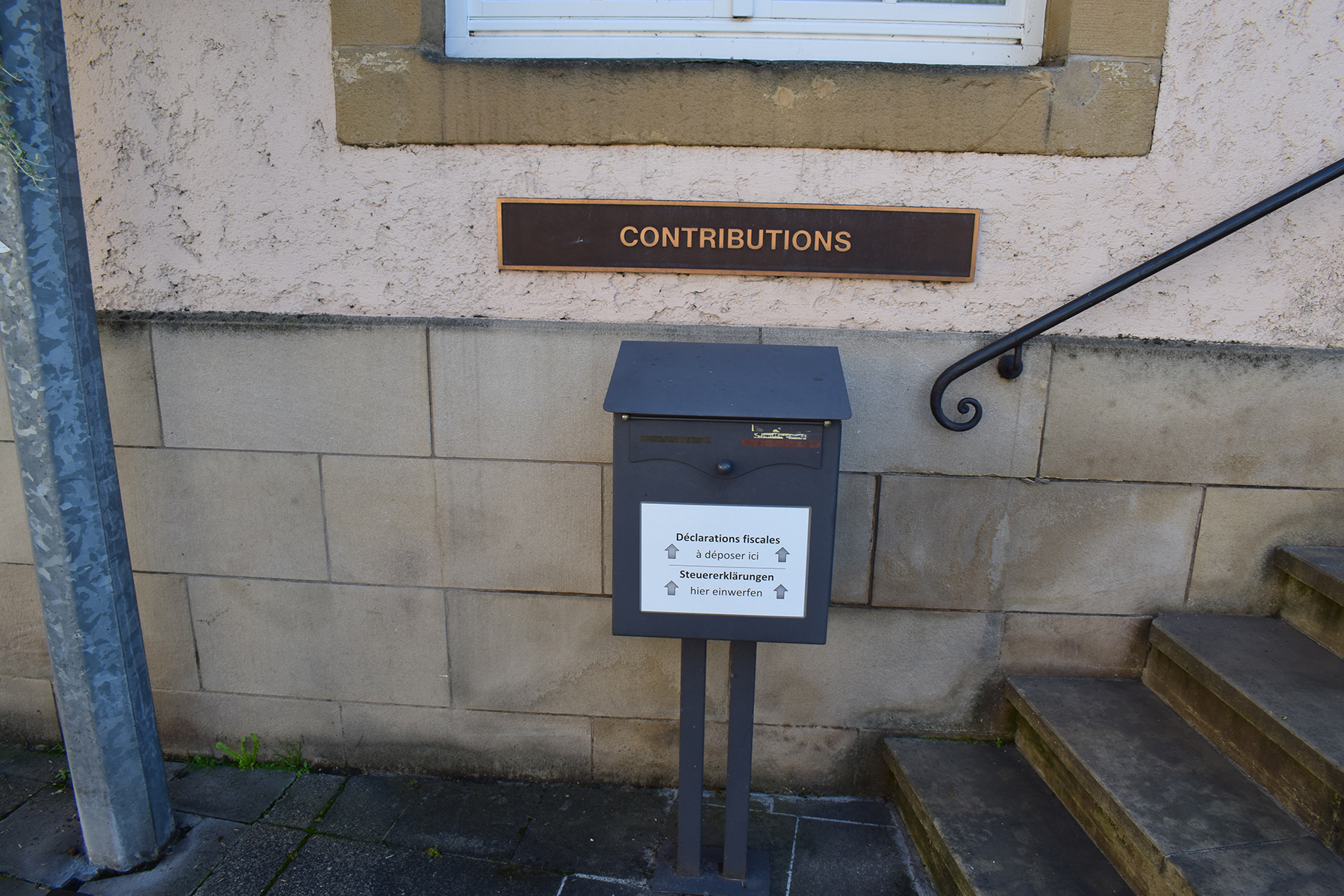
This will either be done automatically if you’ve submitted your return online or through form 100. If this isn’t processed automatically, you can request an annual adjustment using form 163R.
What happens if I don’t pay my income tax on time?
Income tax fines are set at 0.6% of the outstanding payment (in French) per month, starting the day following the payment’s due date.
Payment extensions or instalment plans may be granted upon request, but interest generally continues to accrue unless exceptionally waived.

In principle, the tax office can deny the request for an extension if it believes you can easily pay the debt based on your current earnings.
Income tax advice in Luxembourg
Luxembourg’s government provides a series of guides on how tax matters work in the country. However, if you need specific advice on your circumstances, it’s recommended that you speak to an accountant.
Useful resources
- Luxembourg Inland Revenue (in French) – detailed information on taxes in Luxembourg
- Calculatrice – income tax calculator
- PwC – tax summary for Luxembourg



Did you find this guide helpful?