'%20id='ico-down'%20stroke='%23000000'%20stroke-width='1.5'%3e%3cg%20transform='translate(1092.250000,%20254.750000)'%3e%3cpolyline%20id='Path-2-Copy-4'%20transform='translate(5.500000,%202.750000)%20scale(1,%20-1)%20rotate(-180.000000)%20translate(-5.500000,%20-2.750000)%20'%20points='0%200%205.5%205.5%2011%200'%3e%3c/polyline%3e%3c/g%3e%3c/g%3e%3c/g%3e%3c/svg%3e)



This guide is for expats who want to sell a house in Japan as a foreigner, work out what will actually be left after deductions, and then move the money overseas with fewer surprises, whether they still live in Japan or have already left.
Key takeaways
| Topic | What matters most |
|---|---|
| Sale process | Plan from listing to completion, then allow extra time for tax follow-up and transfer checks. |
| Net proceeds | Agent fees, stamp duty, scrivener costs, mortgage discharge costs, and capital gains tax can all reduce what you can send. |
| Documents | Keep ID, sale contract, settlement statement, proof of ownership, bank records, and destination account details together. |
| Timing | Completion day is not always transfer day, especially for large payments or non-resident cases. |
| Advice | A judicial scrivener, tax agent, or tax adviser may be worth using if you live abroad or your case is complex. |
| Transfer route | Major local banks may suit domestic receipt, while Wise may suit readers who want clearer pricing and multi-currency management. |
How the sale usually works from offer to completion

If you need a broader overview before you sell, see Expatica’s guide to Japanese real estate: buying a house in Japan, because the same contract and registration system shapes the exit process too. In practice, the seller’s journey usually starts with a valuation, choosing an estate agent, agreeing the listing strategy, and gathering title and property records early.
Once an offer is accepted, the deal normally moves to contract signing, buyer due diligence, and then completion, when ownership changes and funds are released. Delays here can come from the buyer’s financing, missing paperwork from the seller, address mismatches, mortgage discharge steps, and registry issues that need a judicial scrivener, which is a licensed legal professional who handles registration paperwork.
Usually, the seller receives the proceeds after completion and after any agreed deductions are taken, but a smooth overseas transfer often depends on documents you prepare before settlement day, not after it.
- Get a valuation and appoint the selling agent.
- Review title, mortgage, tax, and identity paperwork.
- Accept an offer and sign the sale contract.
- Complete settlement, receive the net proceeds in Japan, and keep the final statements.
- Prepare transfer evidence, compare routes, and move the money abroad.

Writer
Jason
Insider tip
If you’ve already left Japan, line up your tax agent, judicial scrivener, and notarised signature documents before accepting an offer, because replacing missing paperwork from overseas can delay completion.
What changes if you’re no longer living in Japan?
If you’re dealing with a non-resident property sale in Japan, the practical burden often shifts from viewings and contract meetings to representation and document control. The key risk is not usually the sale itself, but whether your signatures, address history, and tax handling still line up cleanly with the registry and transfer paperwork.
You may need a representative in Japan, and in some cases notarised signature evidence or affidavits are used instead of the documents a resident seller would provide locally. If you’re unsure how your tax filing will work after departure, ask the NTA or a qualified adviser before completion.
- Confirm who can represent you in Japan, if anyone.
- Check whether notarised signatures or affidavits will be needed.
- Ask whether a tax agent is appropriate for your filing position.
- Make sure your passport, address history, and bank records match the sale documents.
What taxes, fees, and deductions should you plan for?
The number that matters is not the agreed sale price, but the net amount left after costs. Before deciding how to send the money overseas, work backwards from the completion statement and your likely tax position. Expatica’s guides to the tax system in Japan and property taxes in Japan are useful starting points, but you should still check current rules for your own case.
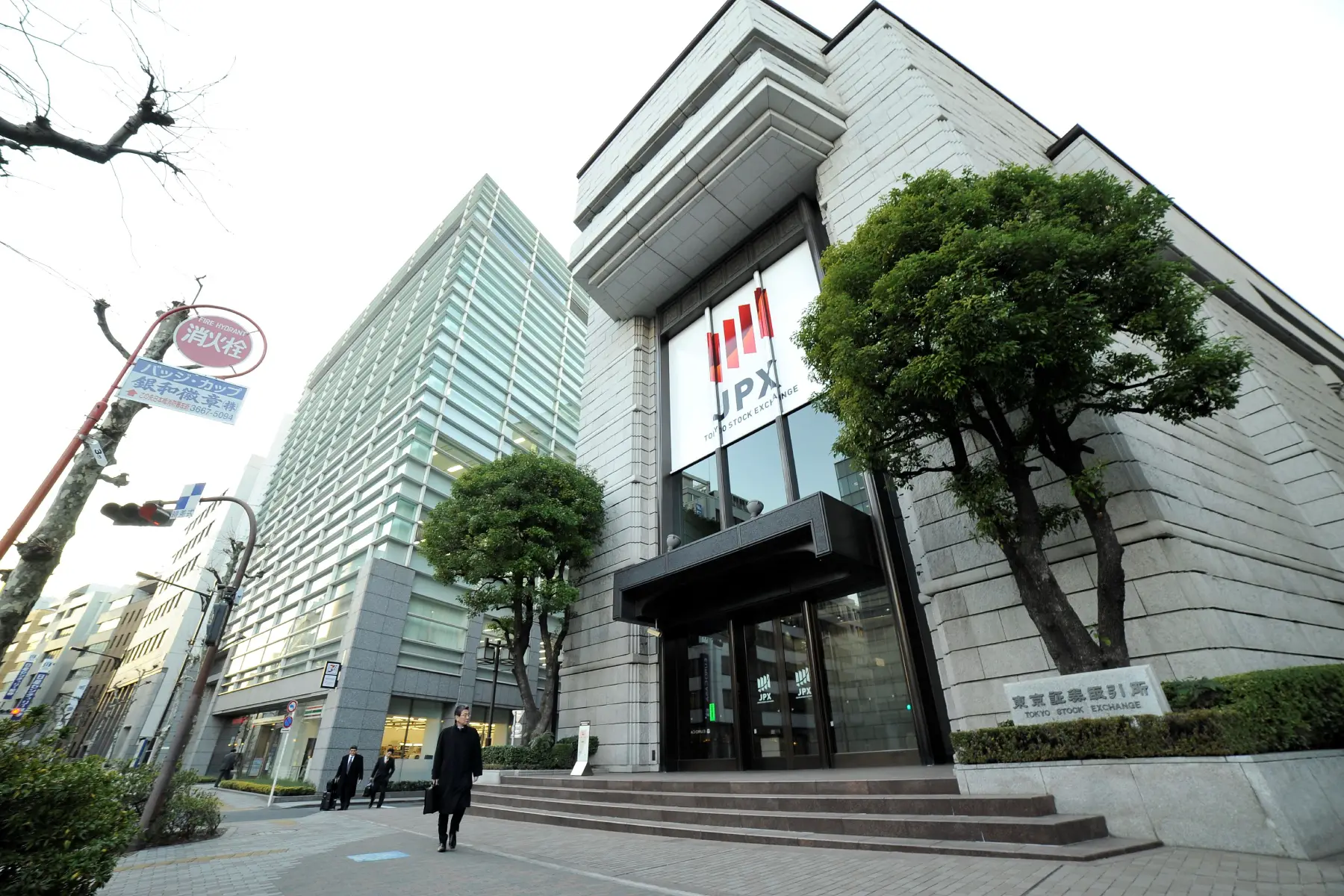

One thing worth knowing is that seller-side deductions don’t all happen at the same moment. Some are deducted around completion, while capital gains tax may only become clear after you calculate acquisition cost, selling expenses, holding period, and any reliefs.
Japan distinguishes between short-term and long-term ownership when calculating capital gains tax, so the applicable rate depends largely on how long the property was owned before sale.
| Cost or tax item | When it applies | Who usually pays | Effect on proceeds | How to confirm |
|---|---|---|---|---|
| Estate agent commission | On sale | Seller | Directly reduces proceeds | Agency agreement and settlement statement |
| Stamp duty on contract | At contract stage | Depends on document role | Small but immediate cost | Contract and current NTA guidance |
| Judicial scrivener fees | Registry or discharge work | Seller where relevant | Reduces net cash | Scrivener quote and completion paperwork |
| Mortgage discharge costs | If a loan is being repaid | Seller | Deducted before free cash is known | Lender and scrivener |
| Capital gains tax | After gain is calculated | Seller | Can materially reduce the transferable amount | NTA guide, tax return workings, adviser |
For current tax guidance, check the NTA guide for individual income tax and keep all sale documents, invoices, and proof of purchase costs. If another country may also tax the gain, review the Ministry of Finance tax treaty list and speak to an adviser before assuming you can offset tax automatically.
How non-resident withholding and final tax filing may affect your proceeds
Withholding and final tax aren’t the same thing. Some non-resident sellers may face withholding mechanics that affect cash flow first, then a later filing position that depends on the full facts of the transaction.
That means the amount you receive on or just after completion is not always the amount you ultimately keep. Verify the current treatment with the NTA’s non-resident guidance and, if your facts are unclear, use Expatica’s directory of accountants and tax advisors in Japan.

What documents should you prepare before moving money abroad?
Selling the property and justifying a large outbound transfer are related, but they’re not the same paperwork exercise. The sale needs contract and registry documents, while the transfer usually needs identity, source-of-funds, and destination-account evidence. If you will receive the money into a Japanese bank first, you might need to open a bank account in Japan.
If names, addresses, or account details don’t match cleanly across your documents, checks may take longer. That is why you shouldn’t discard paperwork once completion is done. Identity checks can involve your Japanese tax ID.
- Photo ID: Passport or other current government ID.
- Residence details: Proof of address, where relevant, especially if you’ve moved.
- Sale contract: The signed agreement showing the property, parties, and price.
- Settlement statement: The clearest proof of what was paid out and what was deducted.
- Proof of ownership: Registry extract, title record, or earlier purchase paperwork.
- Tax paperwork: Any filing records, withholding evidence, or adviser calculations that explain the net amount.
- Destination account details: The overseas account must be in the right name and country pair for the route you choose.
Writer
Jason
Insider tip
Keep the final settlement statement and any translated supporting documents in one file, because banks and transfer providers often ask for the same proof of funds more than once.
How to prepare source-of-funds evidence for your bank or transfer provider
Source-of-funds checks are simply a way for a bank or provider to understand where the money came from, how it reached you, and why it’s now being sent overseas. For a large one-off transfer, that is normal, not a sign that something has gone wrong.
A clean document set might be a sale contract, a settlement statement, matching ID, and bank account details that show the proceeds landing in your name. Some international payments can trigger reporting requirements under Japan’s Foreign Exchange and Foreign Trade Act (FEFTA). This will depend on factors such as the transaction type, amount, residency status, and purpose. Banks usually advise customers if additional reporting is required.
How to transfer property sale proceeds from Japan to another country
Once you know the net amount, the next question is how to move property sale proceeds from Japan with the least friction for your situation. Major local banks such as MUFG Bank, SMBC, and Mizuho Bank may feel familiar, especially if the proceeds first arrive in your domestic account. A specialist provider can be easier to compare on total cost if you care about exchange-rate treatment and fee visibility.
This is different from assuming one route is always best. If you want branch support and a single relationship for receipt and onward transfer, a bank-first route may suit you. If you’re moving money out of Japan after selling property and want clearer pricing before you commit, a specialist route may be worth comparing.
| Route | Fee visibility | Exchange-rate approach | Setup and checks | May suit you if |
|---|---|---|---|---|
| MUFG Bank, SMBC, Mizuho Bank | Charges can be split across transfer fees and FX margin | Customer rate may include a margin | Familiar, but paperwork and branch steps can be heavier | You want domestic receipt and bank-led handling |
| Wise | Fee shown before transfer | Uses the mid-market exchange rate, with the fee shown separately | Online setup, verification, and source-of-funds checks still apply | You want transparent pricing and multi-currency management |
Before you send, ask yourself:
- Do I know the total cost after fees and exchange rate, not just the transfer fee?
- Will I receive the proceeds in Japan first, or try to move them on quickly?
- Are my source-of-funds documents ready in English or easy to explain?
- Do I want to convert immediately, or hold funds briefly while I organise the transfer?
When to use a major local bank vs a specialist transfer service
A major local bank may make sense when the sale proceeds arrive there first and you want everything handled through the same institution. That can feel simpler, especially if you already bank with MUFG Bank, SMBC, or Mizuho Bank and want in-branch support for a large one-off payment.
A specialist transfer service may fit better if your main concern is visibility on fees and exchange rates before you send. The key question is not which brand sounds bigger, but which route gives you the clearest cost picture and the least avoidable friction.
- Choose a bank-first route if branch support matters more than price visibility.
- Compare a specialist if exchange-rate treatment could materially change your outcome.
- Check setup friction, some routes need more branch paperwork than others.
- Confirm document handling early, especially for a large one-off transfer.
How to manage exchange-rate timing and transfer limits
Exchange rates can move enough to change the final amount you receive abroad, especially on a property-sized transfer. That doesn’t mean you should speculate, but it does mean you should compare the cost of sending today against the risk of waiting.
Check route-specific limits, cut-off times, and whether the provider lets you prepare funds for conversion or time your conversion. If you’re unsure whether to convert at once, start by confirming what happens to the money if verification takes longer than expected, because the operational timing can matter as much as the market rate.
How Wise can help move your sale proceeds abroad
Wise can be useful at the stage where the money is already yours and you want to send it internationally with a clearer view of fees and exchange rates.
Many readers looking into a Wise multi-currency account for Japan are really trying to solve a practical post-sale problem. That is how to move, convert, and manage money across currencies for exchange purposes without relying only on a bank wire quote.
Wise is a financial institution, not a bank, and it doesn’t remove any Japanese tax or reporting obligations.
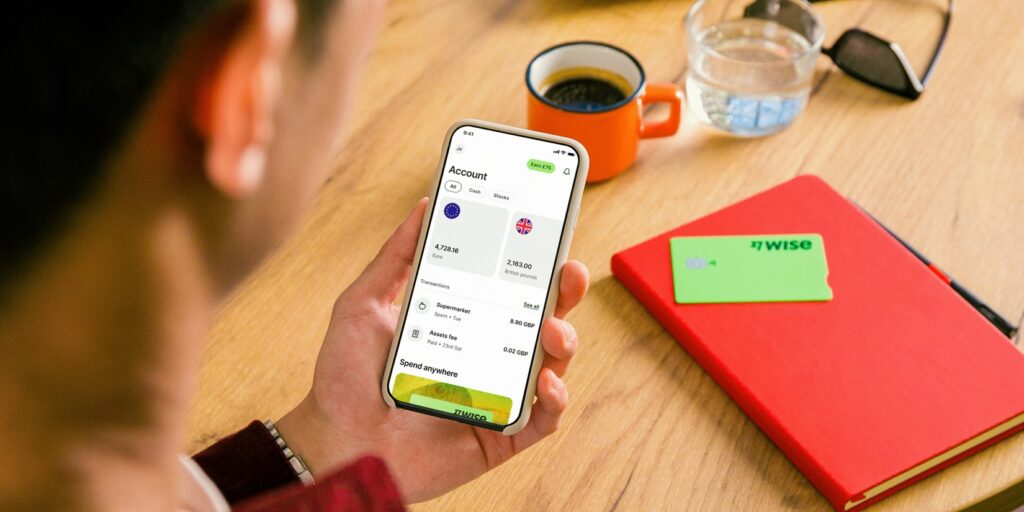
If your sale proceeds first land in a Japanese bank account, Wise may then help with the outbound transfer and multi-currency management, subject to current availability, route rules, limits, and verification outcomes in Japan. The Wise account is free to open, and it can help you convert and manage supported currencies in one place for exchange transactions.
- Compare the total fee and exchange-rate treatment before you send.
- Prepare ID, sale documents, settlement records, and destination account details.
- Confirm current route availability and large-transfer requirements for your country pair.
- Check whether you want to convert immediately or time your conversion for exchange purposes.
If you’re close to completion, compare the total cost and required documents for your bank and Wise before choosing a route.

Wise Payments Japan is licensed as a Type 1 & 2 Fund Transfer Service Provider and registered with the Kanto Local Finance Bureau. Note that transfers involving your Wise Balance are subject to a 1 million JPY limit per transaction under Japan regulations. Direct Send Money transfers may have different limits.
FAQ
Frequently asked questions
Can I transfer property sale proceeds out of Japan straight away? 
Usually, yes, once the sale has completed, the proceeds have been received, and the bank or provider is satisfied with the required checks. In practice, completion day and transfer day aren’t always the same, because document review, bank cut-off times, and route-specific checks can add time. Treat the overseas transfer as the next stage of the process, not as an automatic part of completion.
What taxes might reduce the amount I can send abroad?
The amount available to send is often reduced by estate agent fees, stamp duty, judicial scrivener costs, mortgage-related charges where relevant, and capital gains tax. If you’re a non-resident, withholding mechanics may also affect the cash you receive before your final tax position is settled. Check current rules at the time of sale rather than relying on an old headline figure.
What documents do banks or transfer providers usually ask for?
Expect to show ID, proof of address where relevant, the sale contract, the settlement statement, and the destination account details. For larger transfers, you may also be asked for proof of ownership, tax paperwork, or bank statements showing the sale proceeds reaching your account. Extra checks are more likely if names, addresses, or country pairs don’t match neatly.
Can I use Wise to send large sale proceeds from Japan?
Wise can be a practical route for an international transfer and for managing money across currencies, but you should confirm current route availability, document requirements, limits, and verification steps for your exact amount and destination.
The useful comparison isn’t only headline fees, but the full cost after the exchange rate is applied. That matters most on large one-off transfers.
Useful resources
This guide is informational only and is not personal tax or legal advice. For a live transaction, verify current rules and thresholds with the NTA, Ministry of Finance guidance where relevant, your bank or transfer provider, and a qualified adviser.
Last checked: 7 July 2026. Check current rates and rules before acting.