
'%20id='ico-down'%20stroke='%23000000'%20stroke-width='1.5'%3e%3cg%20transform='translate(1092.250000,%20254.750000)'%3e%3cpolyline%20id='Path-2-Copy-4'%20transform='translate(5.500000,%202.750000)%20scale(1,%20-1)%20rotate(-180.000000)%20translate(-5.500000,%20-2.750000)%20'%20points='0%200%205.5%205.5%2011%200'%3e%3c/polyline%3e%3c/g%3e%3c/g%3e%3c/g%3e%3c/svg%3e)


'%20fill='%23000000'%3e%3cg%20id='icons'%20transform='translate(56.000000,%20160.000000)'%3e%3cpath%20d='M144,7339%20L140,7339%20L140,7332.001%20C140,7330.081%20139.153,7329.01%20137.634,7329.01%20C135.981,7329.01%20135,7330.126%20135,7332.001%20L135,7339%20L131,7339%20L131,7326%20L135,7326%20L135,7327.462%20C135,7327.462%20136.255,7325.26%20139.083,7325.26%20C141.912,7325.26%20144,7326.986%20144,7330.558%20L144,7339%20L144,7339%20Z%20M126.442,7323.921%20C125.093,7323.921%20124,7322.819%20124,7321.46%20C124,7320.102%20125.093,7319%20126.442,7319%20C127.79,7319%20128.883,7320.102%20128.883,7321.46%20C128.884,7322.819%20127.79,7323.921%20126.442,7323.921%20L126.442,7323.921%20Z%20M124,7339%20L129,7339%20L129,7326%20L124,7326%20L124,7339%20Z'%20id='linkedin-[%23161]'%3e%3c/path%3e%3c/g%3e%3c/g%3e%3c/g%3e%3c/svg%3e)
'%20fill='%23000000'%3e%3cg%20id='icons'%20transform='translate(56.000000,%20160.000000)'%3e%3cpath%20d='M335.821282,7259%20L335.821282,7250%20L338.553693,7250%20L339,7246%20L335.821282,7246%20L335.821282,7244.052%20C335.821282,7243.022%20335.847593,7242%20337.286884,7242%20L338.744689,7242%20L338.744689,7239.14%20C338.744689,7239.097%20337.492497,7239%20336.225687,7239%20C333.580004,7239%20331.923407,7240.657%20331.923407,7243.7%20L331.923407,7246%20L329,7246%20L329,7250%20L331.923407,7250%20L331.923407,7259%20L335.821282,7259%20Z'%20id='facebook-[%23176]'%3e%3c/path%3e%3c/g%3e%3c/g%3e%3c/g%3e%3c/svg%3e)

When I moved abroad, I expected to miss a lot of things – my language, my regular haunts, the ease of knowing exactly where everything was. What I didn’t expect to miss was fishing.
Back home, it had been my quiet ritual: early mornings at the shoreline, a flask of coffee, nowhere to be.
Once I relocated, I assumed that part of my life was simply on pause. But it turns out adapting to a new country doesn’t mean giving up the things you love – it just means finding new ways to do them.
Finding my footing, and a new fishing spot
My first few months abroad were spent doing what most expats do: figuring out public transport, mispronouncing street names, and slowly building a life out of unfamiliar pieces. Somewhere between grocery runs and paperwork, I found a stretch of coastline about 20 minutes from my new apartment. It reminded me enough of home that I started going most weekends, mostly just to sit and think, although fishing was definitely on my mind.
The trouble was, the best spots were frustratingly out of casting range – sandbars and drop-offs sitting just beyond where a line thrown from the beach could reach. Over time I got to know some local anglers who mentioned a piece of equipment I hadn’t tried before: a fishing drone.
Relearning my hobby like a local
I’ll admit, I was skeptical at first. Fishing, to me, had always been a low-tech, patience-driven activity – the opposite of anything involving a remote control. But curiosity got the better of me, and a fellow expat friend who’d been living here longer offered to show me his setup one Saturday morning.
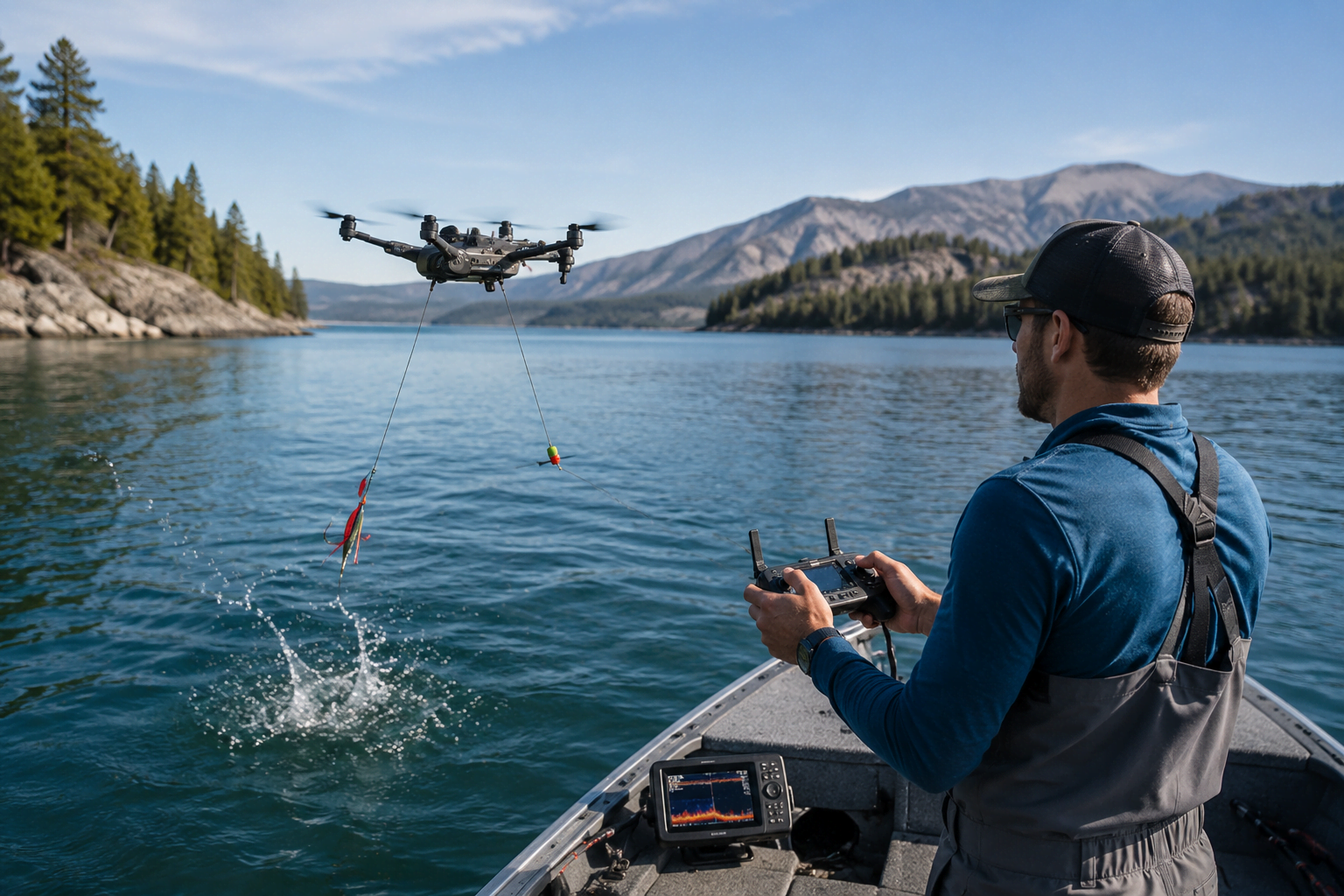
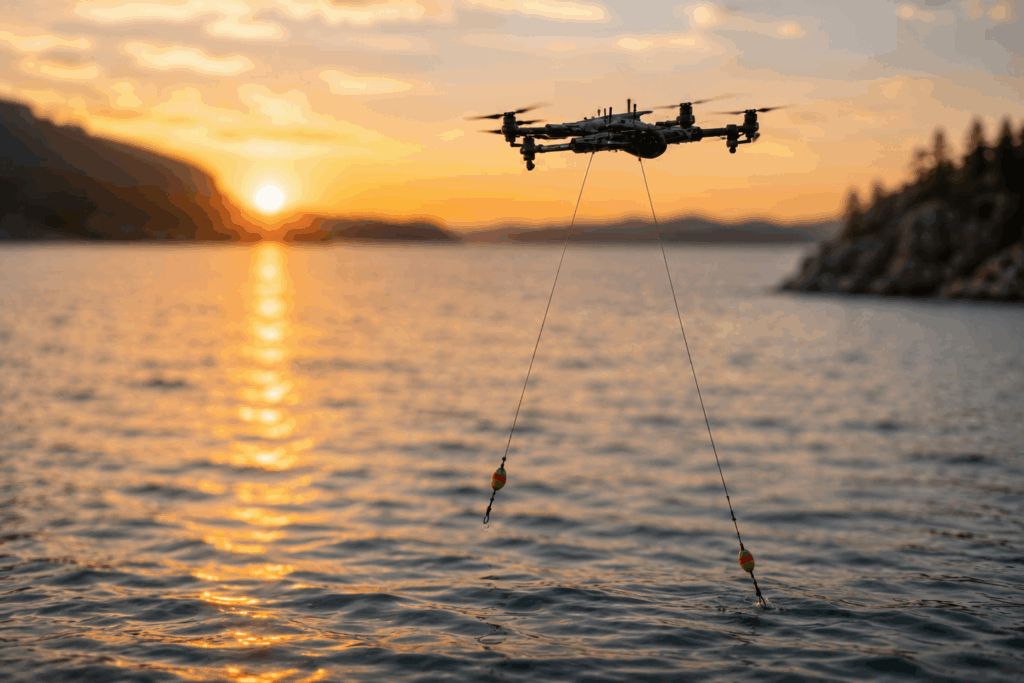
The idea is simple once you see it in action: instead of casting from the shore, the drone carries your bait and line out over the water – well past the breakers, to the sandbars and channels where the fish actually are – then releases it on command. A live camera feed lets you scout the water first, so instead of guessing where to cast, you can actually watch the surface for signs of fish before you ever drop a line.
It changed the entire rhythm of my fishing trips. Where I used to spend an hour walking the shoreline hoping to get lucky, I could now cover far more water in a fraction of the time, spot promising areas from above, and place bait with a level of precision that casting by hand could never match.
Building community from a shared curiosity
What struck me most wasn’t the technology itself, but how it reshaped my relationship with a hobby I thought I understood completely. I started paying closer attention to wind, tide, and water movement – not because I had to, but because the aerial view made those patterns visible in a way they never had been from the ground.
It also became something social. Other expats and locals alike would wander over, curious about the drone hovering offshore, and strike up a conversation. In a strange way, this niche hobby became one of the more effective ways I built community in my new home – shared curiosity is a great icebreaker when you don’t yet share a language.
I won’t pretend a drone replaced the quiet, analog version of fishing I grew up with. Some Saturdays, I still leave it at home and just cast from the shore, coffee in hand, exactly like before. But having the option to reach further, see more, and fish smarter has added something I didn’t expect to find abroad: a new way to feel at home.
Moving to a new country asks you to rebuild almost everything from scratch – your routines, your friendships, your sense of place. I didn’t think a drone would be part of that rebuilding, but it turns out that sometimes the smallest hobbies are what make an unfamiliar coastline start to feel like yours.
Ready for your next chapter? Find all the guides you need at Expatica.com.