Your certificate may be checked when your application is submitted, making the coverage amount, dates, territory, and repatriation wording important. This guide explains the main insurance requirements, how to compare policies, what your certificate should show, and how to submit proof with your visa application.
Key takeaways
- You only need Schengen visa insurance if you need a short-stay Schengen visa for Switzerland.
- The policy should provide at least EUR 30,000 in medical coverage.
- It should cover emergency medical assistance, emergency hospital treatment, and repatriation, including in the event of death.
- It should be valid across the full Schengen Area and for your full planned stay or transit.
- You usually submit an insurance certificate with your visa file, so the details should match your passport and travel dates.
Save on fees with Wise in Switzerland
Managing your money abroad does not need to be expensive. Wise lets you hold and convert Swiss francs at the mid-market rate with low, transparent fees. Use your Wise card to pay seamlessly across Switzerland during your trip.

What Schengen visa insurance means for Switzerland
Schengen visa insurance is short-stay travel medical insurance for a category C visa application. It is not the same as Swiss health insurance, which is resident cover for people living in Switzerland.
Switzerland is in the Schengen Area but not the EU. A Swiss short-stay visa still follows Schengen insurance rules, so your policy must work across the Schengen zone, not only in Switzerland.
To keep your application compliant, keep these core features in mind:
- Visits of up to 90 days in a 180-day period
- Emergency medical and repatriation costs
- A visa document rather than long-term resident health cover
Schengen visa insurance vs regular travel insurance
A common question is whether any standard travel insurance policy will pass a Swiss Schengen visa application. A broader travel policy is not automatically suitable if it does not clearly meet the Schengen rules on medical coverage, territory, trip dates, and repatriation.
| Type | Main purpose | Required medical rule | Often includes |
|---|---|---|---|
| Schengen visa insurance | Supports a short-stay visa file | At least EUR 30,000, emergency care, hospital treatment, and repatriation | Usually the cover needed for visa compliance |
| Broader travel insurance | Protects a trip more widely | Not automatically Schengen compliant | Baggage, trip cancellation, delays, and personal liability |
Who needs Schengen visa insurance for Switzerland?
Travelers who need a short-stay Schengen visa for Switzerland must usually show compliant travel medical insurance. If you are unsure about your visa status, start with Expatica’s Switzerland visa and immigration guide and confirm it with official Swiss or EU tools.
Insurance only becomes a visa-document requirement once you know you need the relevant visa. Check your nationality, any residence permit or visa exemption, and your main Schengen destination before buying a policy.
Ask the following questions first:
- Is your passport nationality visa-required for short stays?
- Does a residence permit or another exemption apply?
- If you visit several Schengen countries, which is the main destination?
- Which Swiss representation handles applications where you live?
Travelers who need a Schengen visa
If your nationality requires a category C Schengen visa for Switzerland, insurance is normally part of the file. Apply through the Swiss representation responsible for your place of residence, or through the Schengen state that is responsible for your itinerary if Switzerland is not the main destination.
- Tourist or family visits of up to 90 days
- Business or event trips requiring a category C visa
- Trips where Switzerland is the main destination, subject to the Schengen application rules for multi-country itineraries
Travelers who may not need it, but may still want cover
Visa-free travelers usually do not need Schengen visa insurance as a visa document. However, travel medical cover can still be useful because your normal health coverage may not meet all costs abroad, and activities such as winter sports can require additional protection.
- Home health coverage may not pay all costs abroad
- Winter sports may need additional cover
- Being visa-free does not remove the financial risk of unexpected medical treatment
What insurance requirements must your policy meet?
For a Switzerland visa application, the policy should cover emergency medical assistance, emergency hospital treatment, repatriation for medical reasons, and death-related repatriation costs. The formal minimum cover is EUR 30,000.
Before you submit anything, match the insured name, trip dates, and territory to your passport and itinerary. Buying a policy does not guarantee visa approval, so focus on compliance rather than price alone.
- EUR 30,000 minimum medical cover
- Emergency medical assistance
- Emergency hospital treatment
- Medical repatriation
- Death-related repatriation
- Name, dates, and Schengen territory that match your application
Coverage, territory, and length of stay
The policy must be valid across the Schengen Area, not just Switzerland, and it should cover the full stay or transit. Multiple-entry applications may involve additional proof or declarations for later trips, so follow the instructions issued for your application.
- Coverage starts by your travel start date
- Coverage ends no earlier than your departure or final transit
- The territory clearly states Schengen-wide validity
- Multiple trips are handled according to the relevant application instructions
What your certificate should show
Many applicants read the policy wording but forget the certificate, which may be one of the documents checked when the application is submitted. If the wording is incomplete or unclear, ask the insurer whether it can provide a certificate that explicitly shows the required information.
Your certificate should show:
- Traveler’s full name
- Policy or certificate number
- Start and end dates
- At least EUR 30,000 in medical coverage
- Schengen-wide territory
- Emergency medical and repatriation wording
How to compare policies that meet Switzerland’s rules
If you are comparing visa travel insurance options for Switzerland, do not stop at the premium. Check whether the policy fits your trip, health needs, age, and travel style as well as the visa requirements.
Compare the medical limit, deductible or excess, exclusions, winter sports cover, refund terms after visa refusal, and how quickly the insurer issues a usable certificate. A fast certificate only helps if its wording is complete and the policy covers what you need.
| Checkpoint | Why it matters | Good sign | Watch out for |
|---|---|---|---|
| Coverage limit | Meets visa rule | EUR 30,000+ | Lower limit |
| Deductible or excess | Affects your cost | Clear amount | Hard-to-find excess |
| Alpine activities | Relevant to some Swiss trips | Included or add-on available | Skiing or similar activities excluded |
| Refund after refusal | May matter if plans change | Written conditions | Unclear fees or exclusions |
| Certificate timing | Needed before filing if required in your checklist | Clear delivery timeframe | Slow or uncertain delivery |
Check exclusions, deductibles, and adventure sports
Schengen compliance does not mean every risk is covered. Review the deductible, pre-existing-condition wording, and emergency definitions so you know what costs could still fall on you.
This matters even more if skiing, snowboarding, mountaineering, or other Alpine activities are on your itinerary. These activities are not themselves part of the Schengen visa insurance requirement and may be excluded or require additional cover.
Verify the insurer and documents before you apply
If there is any doubt, verify the insurer and certificate before you pay or file. Use the consulate, embassy, or official Swiss visa information for the authority handling your application because instructions can vary by place of application.
- Check the website or checklist for the authority handling your case.
- Look for any recognised-insurer guidance or certificate wording.
- Contact the representation if the published guidance is unclear.
- If the policy only says “Europe” and does not clearly establish Schengen-area validity, ask the insurer to clarify the certificate before submitting it.
How to apply and submit proof with your visa file
The safest order is to confirm that you need a visa, identify the responsible Swiss or Schengen authority, choose a compliant policy, obtain the certificate, and add it to your application. Application mechanics can vary by embassy, consulate, or visa service provider, so follow the checklist issued for your case.
Confirm that Switzerland is the right country to file through. This matters most on multi-country trips.
Check whether you need a visa. Use the SEM nationality list and confirm that you are applying from the country where you legally live.
Choose the right short-stay purpose. Tourism, visiting family or friends, and business travel can use different supporting documents.
Start the form. Use swiss-visa.ch or the SEM visa application form, depending on the route shown for your residence country.
Gather the local checklist. The Swiss embassy, consulate, or visa center handling your area usually publishes the exact supporting documents and photo rules.
Book your appointment. Submission may happen at a Swiss representation, a visa application center, or a delegated Schengen representation.
Attend, pay, and wait for follow-up. If required, you will give fingerprints, pay the fee, and answer any later requests through the official channel named by that office.
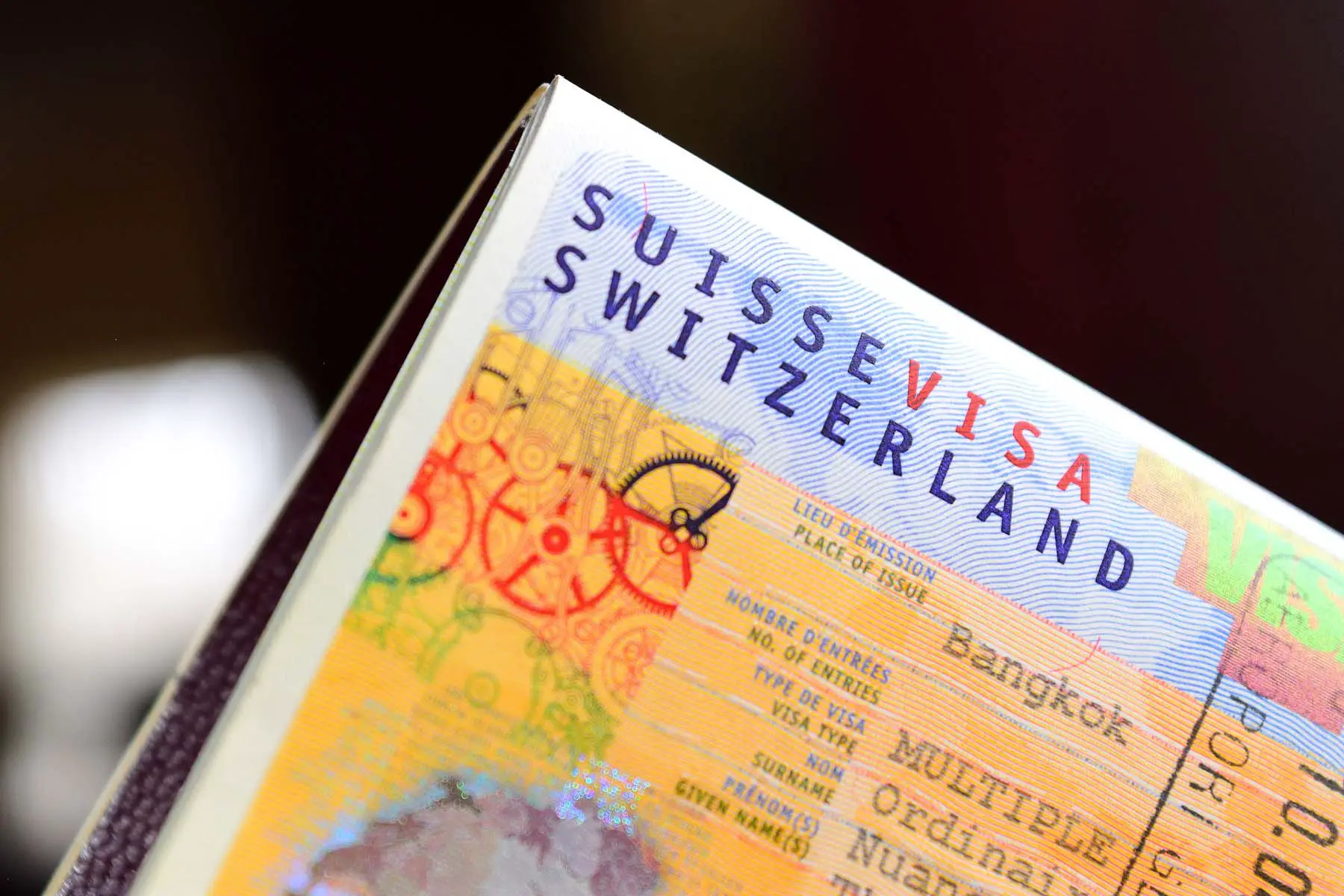
Documents you will usually need
Common requirements include the following, but the Swiss office handling your application can ask for more or fewer items depending on your nationality, legal residence, and trip purpose:
- A passport or travel document that meets Swiss validity rules
- A completed visa application form
- A recent passport photo
- Travel plans or a flight reservation
- Proof of accommodation, such as hotel bookings or host details
- Proof of sufficient funds for the stay
- Travel medical insurance
- Extra documents linked to your purpose of travel
Purpose-specific documents for tourism, visits, and business
| Travel purpose | Common supporting documents | What to verify locally |
| Tourism | Hotel bookings, travel itinerary, round-trip reservation | Whether prepaid bookings, internal transport, or day-by-day plans are requested |
| Visiting family or friends | Host details, invitation letter, proof of address, and sometimes sponsor evidence | Whether the host should also prepare a declaration of sponsorship |
| Short business travel | Invitation from the Swiss company or event, employer letter, trip schedule | Whether trade fair, conference, or client visit evidence is needed |
Insurance and financial evidence
Schengen visa applicants generally need travel medical insurance covering at least EUR 30,000 for emergency medical treatment, hospital care, repatriation for medical reasons, and related expenses for the full duration of the trip. However, acceptable insurers vary by Swiss representation and visa partner, so you should always verify local requirements before purchasing a policy. Note that this travel insurance is distinct from resident insurance in Switzerland, which applies to people living in the country.
For financial proof, applicants must demonstrate sufficient funds using bank statements, sponsor support, pay slips, or an official declaration of sponsorship. The State Secretariat for Migration (SEM) sets a general guideline of at least CHF 100 per day for self-funded visitors and CHF 30 per day for students. Rather than relying on a single large deposit, your financial documentation should show consistent and logical balances across all submitted records.
When evaluating expat-friendly policies, travelers frequently review options such as Cigna Global, April International, and Feather Insurance. Always confirm coverage limits, dates, and local acceptability prior to buying. While travel debit cards or money transfer services can assist with day-to-day spending in Swiss francs, they do not replace formal proof of funds or traditional banking in Switzerland.
Fees, processing times, and after-submission checks
| Cost Item | Standard guidance |
|---|---|
| Adult fee | EUR 90 |
| Child fee | EUR 45 for ages 6 to 12 |
| Visa center costs | A separate service fee may apply |
| Fee status | Fees are generally non-refundable once the application is submitted |
| Timing | Complete category C applications are generally decided within around 15 days, but some cases take longer |
Short-stay applications can usually be filed up to six months before travel, so there is rarely a reason to wait until the last minute.
If your fingerprints have not been recorded for a recent Schengen visa, you will usually need to appear in person. Children under 12 do not normally give fingerprints, but the representation can still ask for an appearance or interview after reviewing the file.
Treat the 15-day figure as a guide, not a guarantee, and avoid booking non-refundable travel around it. Peak periods, extra document checks, and consultation with other Schengen states can all slow things down.
What a Swiss Schengen visa does and does not allow
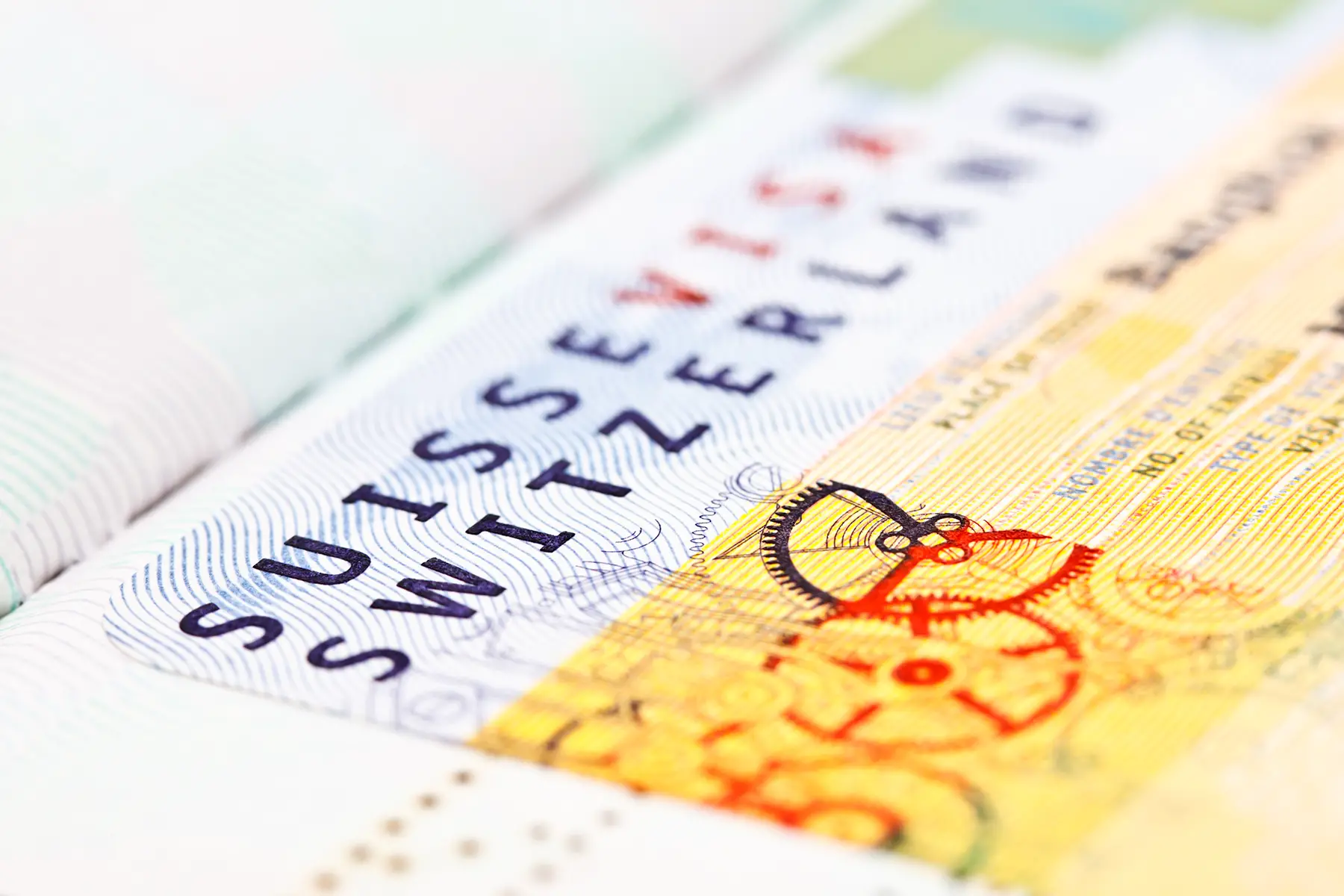
A Swiss Schengen visa generally lets you make short visits in Switzerland and, unless the visa says otherwise, the wider Schengen Area. The exact permission still depends on the dates, number of entries, and stay length printed on the visa.
It does not turn into residence status, a long study right, or permission to take up normal employment in Switzerland. Border officers can still check your passport, trip purpose, funds, and insurance when you arrive.
- Even with a multiple-entry visa, the overall limit usually remains 90 days in any 180-day period.
- Extensions are exceptional. If your situation changes after arrival, the cantonal migration authority handles longer-stay or extension questions.

FAQ
Frequently asked questions about Schengen visa insurance for Switzerland
Is Schengen visa insurance mandatory for Switzerland? 
Travel medical insurance is normally required when you need a short-stay Schengen visa for Switzerland. Visa-free travelers generally do not need to provide this visa document for entry.
How much coverage do I need for a Switzerland Schengen visa?
The formal minimum is EUR 30,000. The policy should also meet the applicable requirements for emergency medical treatment and repatriation, and the certificate should show the relevant coverage clearly.
Can I use any travel insurance policy for a Swiss visa application?
No. A general travel policy is suitable only if it meets the applicable Schengen rules on the coverage amount, territory, trip dates, and covered medical and repatriation risks.
Can someone in Switzerland buy visa insurance for me?
In some circumstances, another person in Switzerland may arrange insurance in the applicant’s name. The certificate still needs to identify the traveler correctly and meet the requirements for the trip and application.
Do visa-free travelers need travel insurance for Switzerland?
Not normally as a Schengen visa requirement. Travel medical insurance can still be useful if your existing coverage is limited abroad or your plans include activities that require additional protection.
Sources
Expatica’s experts are all about providing the most up to date and accurate information. All guides are fact checked, and whenever we use external sources (like government websites or research papers) we’ll make a note of them here so you can check them out too.
- Swiss entry requirements, visa insurance rules, financial means, and related short-stay guidance, State Secretariat for Migration — FAQ: Entry
- Official guidance on visas for foreign nationals entering Switzerland, Swiss Authorities Online — Visas for foreign nationals
- Official entry-document information for travel to Switzerland, Swiss Authorities Online — Travel documents for entering Switzerland
- Official online route for Swiss visa applications and application information, Swiss visa portal
- Directory for finding the Swiss representation responsible for an applicant’s place of residence, Federal Department of Foreign Affairs — Swiss representations abroad
- EU-level information on where, when, and how to apply for a short-stay Schengen visa, European Commission — Applying for a Schengen visa
- Legal framework for Schengen visa applications, including travel medical insurance provisions, EUR-Lex — Regulation (EC) No 810/2009
- Visa requirements and identity-document provisions organised by nationality, State Secretariat for Migration — ID and visa provisions by nationality
- Official tool for calculating permitted short stays under the Schengen 90/180-day rule, State Secretariat for Migration — Short-stay calculator