
'%20id='ico-down'%20stroke='%23000000'%20stroke-width='1.5'%3e%3cg%20transform='translate(1092.250000,%20254.750000)'%3e%3cpolyline%20id='Path-2-Copy-4'%20transform='translate(5.500000,%202.750000)%20scale(1,%20-1)%20rotate(-180.000000)%20translate(-5.500000,%20-2.750000)%20'%20points='0%200%205.5%205.5%2011%200'%3e%3c/polyline%3e%3c/g%3e%3c/g%3e%3c/g%3e%3c/svg%3e)


Moving
Visas & Immigration
Schengen visa travel insurance for Switzerland
Switzerland is part of the Schengen Area, so travellers who require a Schengen visa must include compliant travel medical insurance with their application.



Before buying a policy, verify your nationality and visa category. Insurance is mandatory specifically for short-stay visa applicants rather than an automatic obligation for every foreign visitor. Because consulates inspect your insurance certificate at the initial document check, ensuring your policy meets exact Swiss and Schengen standards avoids application delays or outright refusals.
This guide walks you through everything you need to know, including minimum coverage rules, costs, and how to verify your certificate before applying.
Key takeaways
- You only need Schengen visa insurance if you need a short-stay Schengen visa for Switzerland.
- The policy should provide at least EUR 30,000 in medical coverage.
- It should cover emergency medical assistance, emergency hospital treatment, and repatriation, including in the event of death.
- It should be valid across the full Schengen Area and for your full planned stay or transit.
- You usually submit an insurance certificate with your visa file, so the details should match your passport and travel dates.
What Schengen visa insurance means for Switzerland
Schengen visa insurance is short-stay travel medical insurance for a category C visa application. It is not the same as Swiss health insurance, which is resident cover for people living in Switzerland.
Switzerland is in the Schengen Area but not the EU. A Swiss short-stay visa still follows Schengen insurance rules, so your policy must work across the Schengen zone, not only in Switzerland.
To keep your application compliant, keep these core features in mind:
- Visits up to 90 days in a 180-day period
- Emergency medical and repatriation costs
- A visa document, not long-term resident cover
Schengen visa insurance vs regular travel insurance
A common question is whether any standard travel insurance policy will pass a Swiss Schengen visa application. In reality, off-the-shelf policies frequently get rejected if they lack explicit wording regarding minimum medical limits, Schengen-wide territory coverage, or repatriation guarantees.
| Type | Main purpose | Required medical rule | Often includes |
|---|---|---|---|
| Schengen visa insurance | Supports a short-stay visa file | At least EUR 30,000, emergency care, hospital treatment, repatriation | Usually only the cover needed for visa compliance |
| Broader travel insurance | Protects a trip more widely | Not automatically Schengen compliant | Baggage, trip cancellation, delays, personal liability |
Who needs Schengen visa insurance for Switzerland?
Travellers who need a short-stay Schengen visa for Switzerland must usually show compliant travel medical insurance. If you are unsure about your visa status, start with Expatica’s Switzerland visa and immigration guide and confirm it with official Swiss or EU tools.
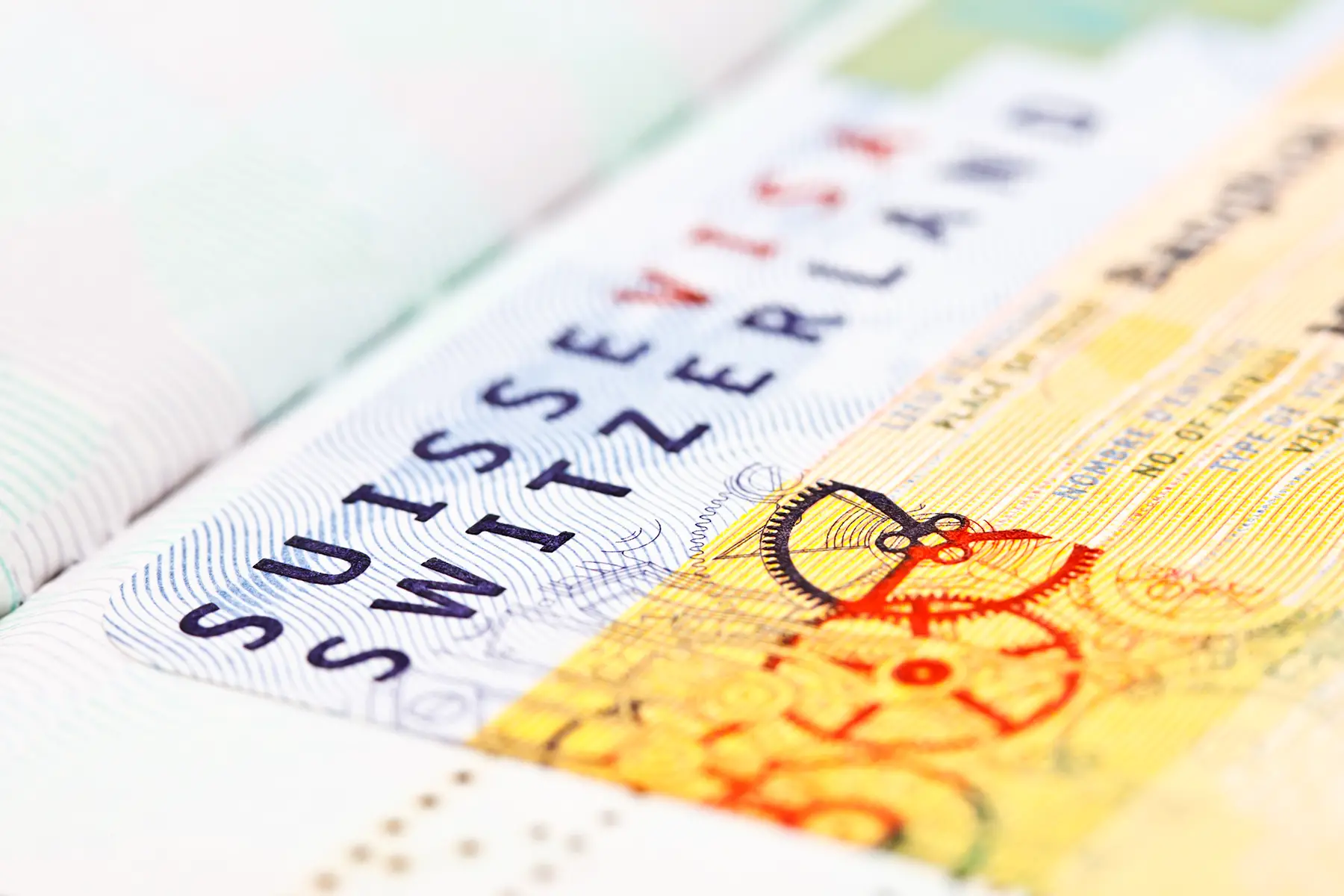
Insurance only matters once you know you need a visa. Check your nationality, any residence permit or visa exemption, and your main Schengen destination before you buy a policy.
Ask the following questions first:
- Is your passport nationality visa-required for short stays?
- Does a residence permit or other exemption apply?
- If you visit several Schengen countries, which is the main destination?
- Which Swiss representation handles applications where you live?
Travellers who need a Schengen visa
If your nationality requires a category C Schengen visa for Switzerland, insurance is normally part of the file. Apply through the Swiss representation responsible for your place of residence, or through the Schengen state that is your main destination if Switzerland is not the main stop.
- Tourist or family visits up to 90 days
- Business or event trips needing a category C visa
- Trips where Switzerland is the main destination or first entry on equal stays
Travellers who may not need it, but may still want cover
Visa-free travellers usually do not need Schengen visa insurance for entry, but that does not make cover optional in practice. Healthcare in Switzerland can be costly, and winter sports or a sudden illness can create large out-of-pocket bills.
- Home health coverage may not pay abroad
- Winter sports may need extra cover
- No visa does not mean no medical risk

What insurance requirements must your policy meet?
For a Switzerland visa application, the policy should cover emergency medical assistance, emergency hospital treatment, repatriation for medical reasons, and death-related repatriation costs. The formal minimum cover is EUR 30,000.
Before you submit anything, match the insured name, trip dates, and territory to your passport and itinerary. Buying a policy does not guarantee visa approval, so focus on compliance, not just price.
- EUR 30,000 minimum medical cover
- Emergency medical assistance
- Emergency hospital treatment
- Medical repatriation
- Death-related repatriation
- Name, dates, and Schengen territory match
Coverage, territory, and length of stay
The policy must be valid across the Schengen Area, not just Switzerland, and it should cover the full stay or transit. For multiple-entry applications, Swiss guidance says you may need proof for the first stay and a signed acknowledgment for later visits.
- Coverage starts by your travel start date
- Coverage ends no earlier than departure or final transit
- Territory clearly states Schengen-wide validity
- Multiple trips are handled as required
What your certificate should show
Many applicants read the policy wording but forget the certificate, which is often the first document a Swiss representation reviews.
Your certificate should show:
- Traveller’s full name
- Policy or certificate number
- Start and end dates
- At least EUR 30,000
- Schengen-wide territory
- Emergency medical or repatriation wording
How to compare policies that meet Switzerland’s rules
If you are comparing visa travel insurance options in Switzerland, do not stop at the premium. Check whether the policy fits your trip, health needs, age, and travel style first.
Compare the medical limit, deductible or excess, exclusions, winter sports cover, refund terms after visa refusal, and how quickly the insurer issues a usable certificate. A fast certificate only helps if the wording is complete and covers what you actually need.
| Checkpoint | Why it matters | Good sign | Watch out for |
|---|---|---|---|
| Coverage limit | Meets visa rule | EUR 30,000+ | Lower limit |
| Deductible or excess | Affects your cost | Clear amount | Hard-to-find excess |
| Alpine activities | Common on Swiss trips | Included or add-on | Skiing excluded |
| Refund after refusal | Helps if plans change | Written rule | Fees unclear |
| Certificate timing | Needed before filing | Same-day or next-day | Slow delivery |
Check exclusions, deductibles, and adventure sports
Schengen compliance does not mean every risk is covered. Review the deductible, pre-existing condition wording, and emergency definitions so you know what costs could still fall on you.
This matters even more in Switzerland, where skiing, snowboarding, mountaineering, and other Alpine activities are common but not part of the visa rule itself. If they are on your itinerary, check whether they are excluded or need an add-on.
Verify the insurer and documents before you apply
If there is any doubt, verify the insurer and the certificate before you pay or file. Use the consulate, embassy, or official Swiss visa portal handling your application, since guidance can vary by country.
Check the website handling your case.
Look for recognised insurer notes or certificate wording.
Contact the representation if the website is unclear.
If a policy says “Europe” but the certificate does not clearly show Schengen-area validity, ask the insurer to reissue it.

Travel insurance vs international health insurance
Travel insurance is generally intended for temporary journeys. Its medical benefits focus on unexpected illness or injury, emergency hospital treatment, and repatriation. It may also cover cancellation, baggage, delays, or personal liability.
International health insurance is designed to provide broader healthcare cover for people living, working, or studying abroad, although short-term international health plans are also available. Depending on the plan, it may cover routine treatment, specialist care, ongoing conditions, maternity care, or access to a broader provider network.
| Feature | Travel insurance | International health insurance |
|---|---|---|
| Typical use | Visits and temporary trips | Relocation, study, work, and longer stays |
| Main medical purpose | Unexpected and emergency treatment | Broader or ongoing healthcare |
| Repatriation | Often included, subject to the policy | Varies by plan |
| Routine care | Usually limited or excluded | May be included |
| Visa suitability | May work when Schengen requirements are met | Depends on the visa route and documentation |
A broader or more expensive international policy is not automatically acceptable for a Schengen visa. The specific benefits, territory, dates, and certificate must still match the applicable requirements.
Providers to research further:

How to apply and submit proof with your visa file
The safest order is simple: confirm that you need a visa, identify the right Swiss or Schengen representation, choose a compliant policy, get the certificate, and add it to your file. Make sure you also don’t leave the application to the last minute.
Swiss application mechanics can vary by embassy, consulate, or outsourced visa center, and instructions may appear in English or in one of Switzerland’s official languages. Follow the checklist used by the authority handling your case.
Check whether you need a Swiss or Schengen visa.
Identify the correct Swiss representation or main-destination consulate.
Buy a policy that meets the Schengen insurance rules.
Download the certificate and cross-check the details.
Submit the certificate with your visa form, passport, itinerary, and other supporting documents.
When to buy the policy and where to submit it
Buy the policy once you know a visa is required and you have a realistic travel window, but before you submit if the certificate is part of the file. Usually, you send it to the Swiss embassy, consulate, or visa service provider handling your application.
- Confirm the visa route.
- Buy the policy before filing.
- Upload or submit the certificate exactly as instructed.
If a host in Switzerland is helping with costs or sponsorship
A host in Switzerland may sometimes arrange the policy in the traveller’s name, and Swiss guidance also allows a third person in Switzerland to take out the insurance in the applicant’s name. What matters is that the insured details match the applicant and any separate host or sponsorship papers are handled correctly.
If a friend, family member, or company in Switzerland is backing your visit, make sure your paperwork checks these boxes:
- Applicant named as the insured person
- Passport name and trip dates match
- Invitation or sponsorship papers follow official Swiss guidance
- If funds are questioned, expect at least CHF 100 per day
Common mistakes that can delay a Swiss visa application
The most common problems are simple and avoidable, like a policy valid only for Switzerland, dates that do not match the trip, coverage below EUR 30,000, or a certificate that does not clearly mention Schengen-wide validity. Another common mistake is assuming visa-free travellers need the same document.
Schengen insurance and resident Swiss health insurance serve different purposes. If you bought the wrong policy, ask the insurer for a corrected certificate or replace it before you submit. Watch out for these frequent mistakes:
- Policy limited to Switzerland only
- Dates shorter than the planned trip
- Coverage amount not clearly shown
- Repatriation wording missing or vague
- Wrong insured name or passport mismatch
- Resident health cover used as visa insurance
Final checklist before you buy and apply
Before you pay and apply, do one last review. This quick check can catch the errors that most often delay a Swiss visa application.
- Confirm that you actually need a Schengen visa for Switzerland.
- Check that the policy shows at least EUR 30,000 in medical cover.
- Make sure the policy is valid across the full Schengen Area.
- Check that the dates cover your whole stay or transit.
- Download the certificate and review the insured details line by line.
- Cross-check the latest instructions from the Swiss embassy, consulate, or official visa portal.
FAQ
Frequently asked questions about Schengen visa insurance for Switzerland
Is Schengen visa insurance mandatory for Switzerland? 
Yes, travel insurance for a Schengen visa to Switzerland is usually mandatory if you need a short-stay Schengen visa for Switzerland. Visa-free travelers usually do not need this document for entry.
How much coverage do I need for a Switzerland Schengen visa?
The minimum is EUR 30,000. Your policy should cover emergency medical care, emergency hospital treatment, and repatriation, and the certificate should show that clearly.
Can I use any travel insurance policy for a Swiss visa application?
No. A general travel policy only works for a Swiss visa application if it meets Schengen rules on coverage amount, territory, trip length, and covered medical risks.
Can someone in Switzerland buy visa insurance for me?
Sometimes, yes. A third person in Switzerland may arrange the policy in the applicant’s name, but the certificate still has to match the traveler and trip exactly. Follow official Swiss guidance for any related invitation or sponsorship papers.
Do visa-free travellers need travel insurance for Switzerland?
No, not as a visa requirement. Still, travel medical cover can be a sensible precaution if your home coverage is limited or you plan winter sports.
Useful resources
- State Secretariat for Migration FAQ entry
- Swiss Authorities Online visas for foreign nationals
- Swiss Authorities Online travel documents for entering Switzerland
- Swiss visa portal
- Swiss representations abroad
- EU Home Affairs applying for a Schengen visa
- EUR-Lex Visa Code Article 15
- SEM overview of ID and visa provisions by nationality
- SEM short-stay calculator

Did you find this guide helpful?