
'%20id='ico-down'%20stroke='%23000000'%20stroke-width='1.5'%3e%3cg%20transform='translate(1092.250000,%20254.750000)'%3e%3cpolyline%20id='Path-2-Copy-4'%20transform='translate(5.500000,%202.750000)%20scale(1,%20-1)%20rotate(-180.000000)%20translate(-5.500000,%20-2.750000)%20'%20points='0%200%205.5%205.5%2011%200'%3e%3c/polyline%3e%3c/g%3e%3c/g%3e%3c/g%3e%3c/svg%3e)


Living
House & Home
Austrian Post: sending and receiving mail in Austria
From sending your belongings overseas to finding your nearest post box, we explain everything you need to know about the Austrian postal service.

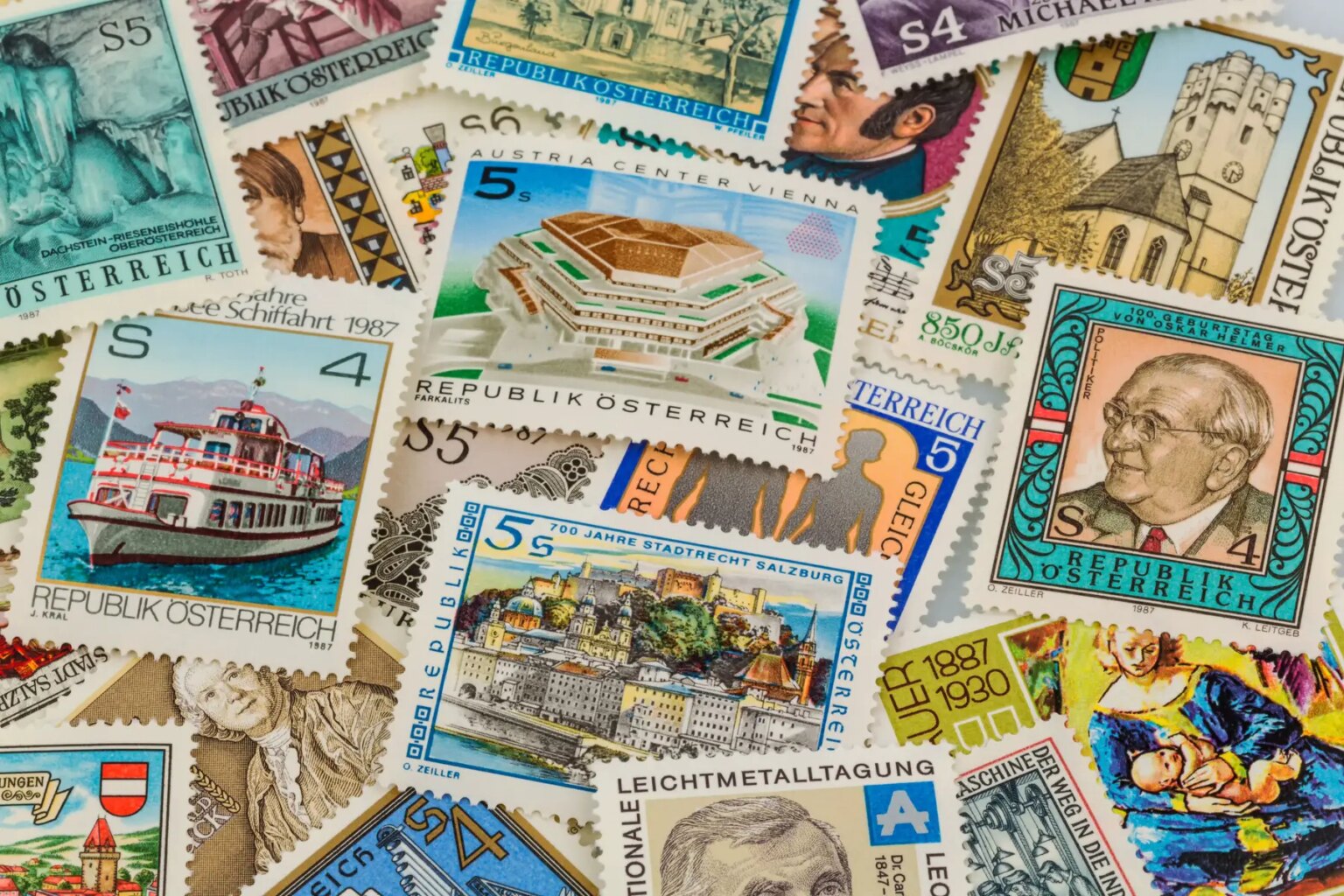
Despite the fact that so much of our life admin is done online these days, postal services still have an important role to play. Whether you are receiving a letter from a friend back home, sending important documents, or paying your utility bills, you will need to understand how the mail system works.
Luckily, this guide is here to walk you through everything you need to know about the Austrian postal service, including the following information:
An overview of the Austrian postal service
The Austrian postal service is one of the oldest in the world. And, for much of its history, it has been a public entity. In fact, Emperor Charles VI turned it into a government monopoly in 1722. Then later, in the 20th century, the mail service became part of the federal administration; it was called the Postal and Telegraph Administration (PTV).
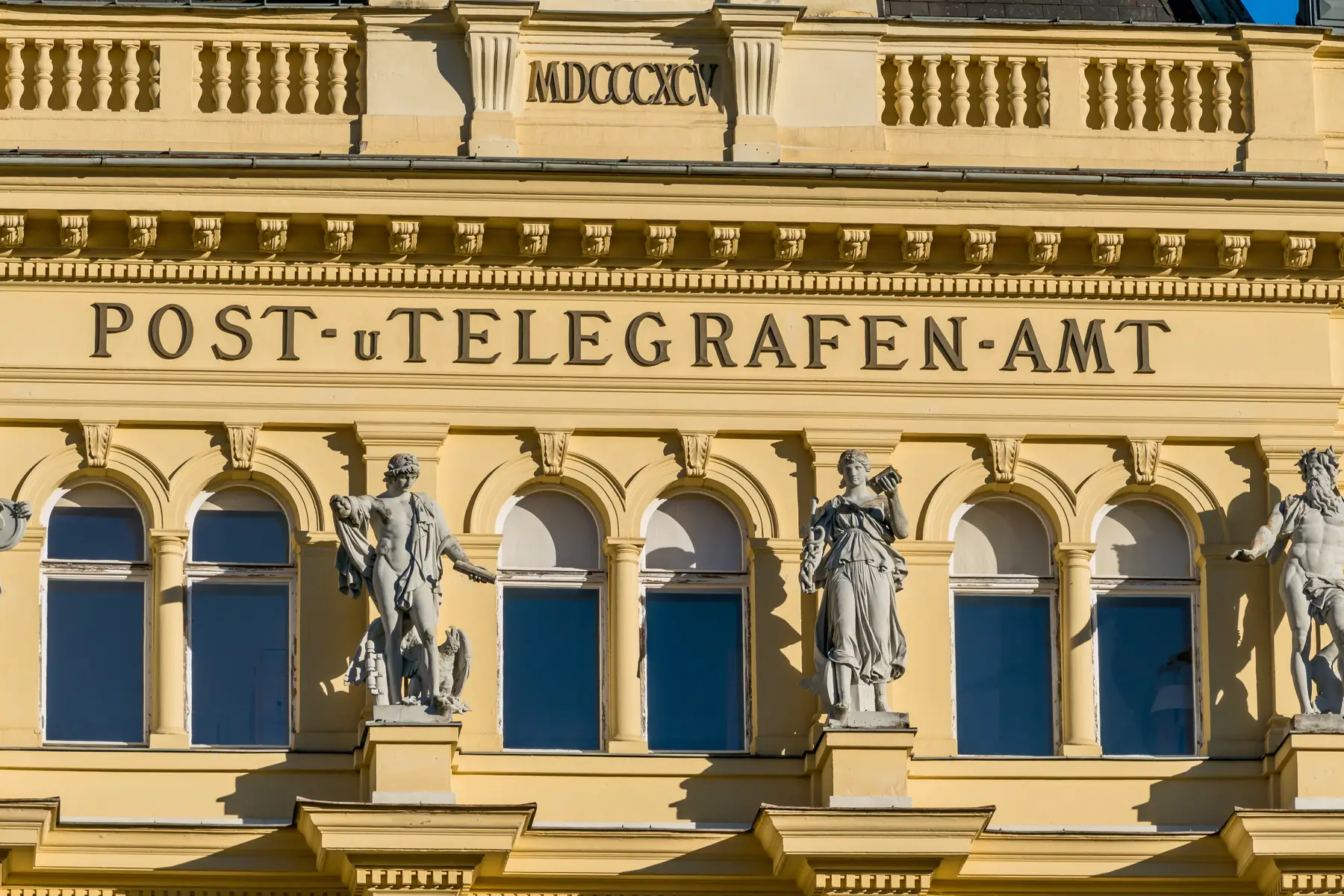
However, on 1 May 1996, the organization became a public limited company, Post und Telekom (PTA), and just three years later, was split into two companies. The telecom side became Telekom Austria, which was fully privatized in 2000 and listed on the Vienna Stock Exchange. The postal side, however, became Österreichisches Post AG and remains a government entity. That said, services are becoming increasingly liberalized.

The first standardized mail route was created in 1490 and ran between Innsbruck in Austria and Mechelen in Belgium. In the 1500s, the network of mail routes expanded to connect Austria with major cities in France, Italy, Spain, and Portugal. And by the 1800s, the system had grown to include letterboxes and money orders. In 1918, with the increasing use of planes, international airmail was introduced. The first route ran between Vienna, Krakow, and Lviv.
Postal services in Austria
Now, Austrian Post – or its official name, Österreichische Post AG – is a multifaceted organization. Because of this, the company has several segments and subsidiaries, including the following:
- Austrian Post – the official mail division which offers philately, sorting and mail delivery, and some newspaper and regional media distribution
- Parcel & Logistics – this division deals with the mailing and delivery of parcels and express mail, as well as specialized logistics for freight, pharmaceutical, and temperature-controlled logistics
- Corporate – this section deals with commercial properties owned by Austrian Post, IT support, and administrative activities for the company
- Bank99 – this is a credit institution run by Austrian Post offering online services and 1,800 service points throughout the country. It offers a range of financial services – especially in rural areas – including bank accounts, international money transfers, and credit cards.
- Austrian Postal Savings Bank (or Österreichisches Postsparkasse) – this is the company’s retail banking division
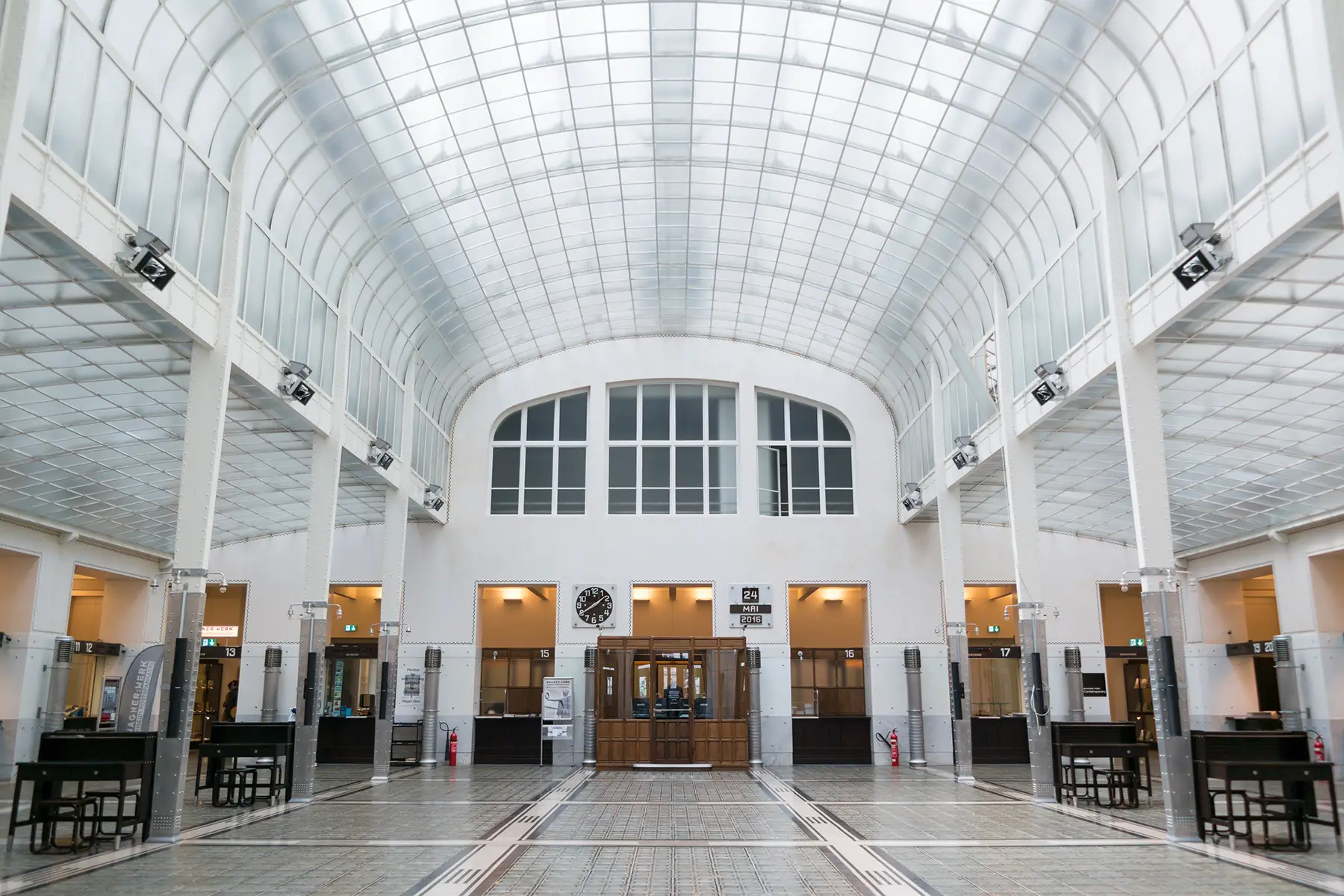
The postal services can be divided into several categories. The state-run Austrian Post has a total monopoly on local mail weighing up to 50 grams and is required to provide universal services nationwide; this includes the delivery of letters, newspapers, and parcels up to 20kgs. However, due to the increasing liberalization of the sector, private companies can offer a multitude of other postal services; as well as parcel delivery and mail to foreign destinations. As such, there are many courier services operating in Austria, including GLS, UPS, TNT, DPD, DHL, and FedEx.
Post offices in Austria
If you need a post office in Austria, just look out for their easily identifiable yellow and blue symbols. These offices are all over the country, including the rural areas. However, the biggest ones are usually in city-center locations and railway stations. As well as standalone post offices, you can also access services at post office retail outlets; this includes Trafik, a local newsagent and tobacconist.
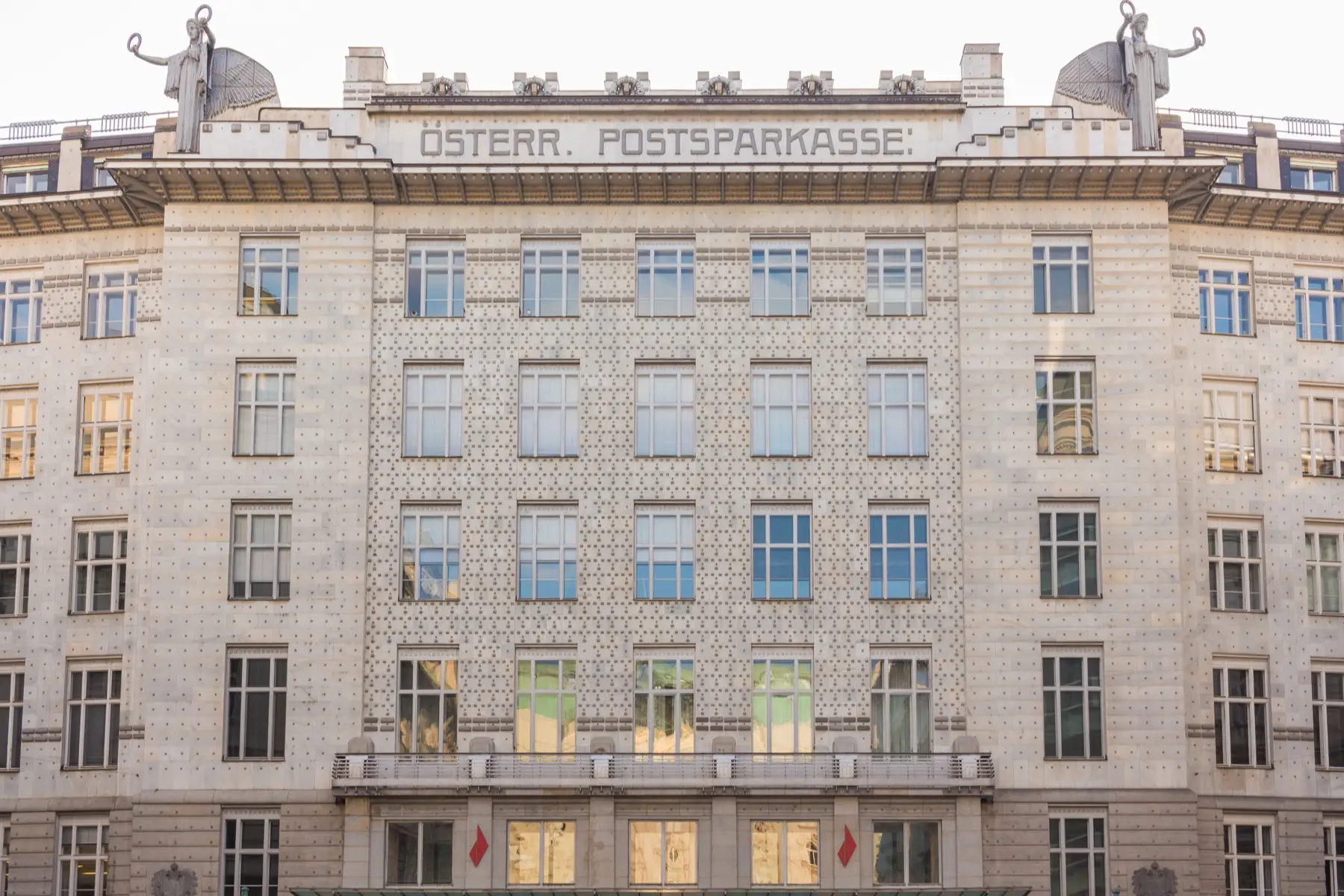
Most post offices in Austria are open from 08:00 to 18:00 on weekdays. However, larger locations may have longer hours and operate on Saturdays, too. If you need to go to one, try to avoid going at lunchtime, as this is when stores are usually busy.

As well as offering all the usual postal services, some Austrian Post offices also offer many other services. These include retail banking (including accounts, loans, and insurance) as well as currency exchange and money transfers.
Sending mail and parcels in Austria
Fortunately, the Austrian postal service makes it easy to send mail, and the process is much the same as it is everywhere else. Of course, you will probably first need to visit a post office to buy stamps or mailing supplies. For sending postcards or regular letters, you will need to buy a €1 stamp (EU) or €1.80 (Rest of World). However, these rates only apply if your mail weighs less than 20g and measures less than 235mm x 162mm x 5mm. For larger or heavier mail, you will have to choose between priority or economy tariffs.

Notably, although there isn’t a huge price difference, priority mail is much faster. For international mail, you can also choose priority or economy rates. In addition, there are three price zones: EU, Rest of Europe, and Rest of World. You can also opt for additional services such as Track and Trace, next-day delivery, or signature on delivery.
Where to buy stamps in Austria
Austrian Post offers many places to buy stamps throughout the country. Of course, you can buy them at post offices and online on the Austrian Post website. That said, most locals buy stamps at partner retail outlets such as their neighborhood newsagents.
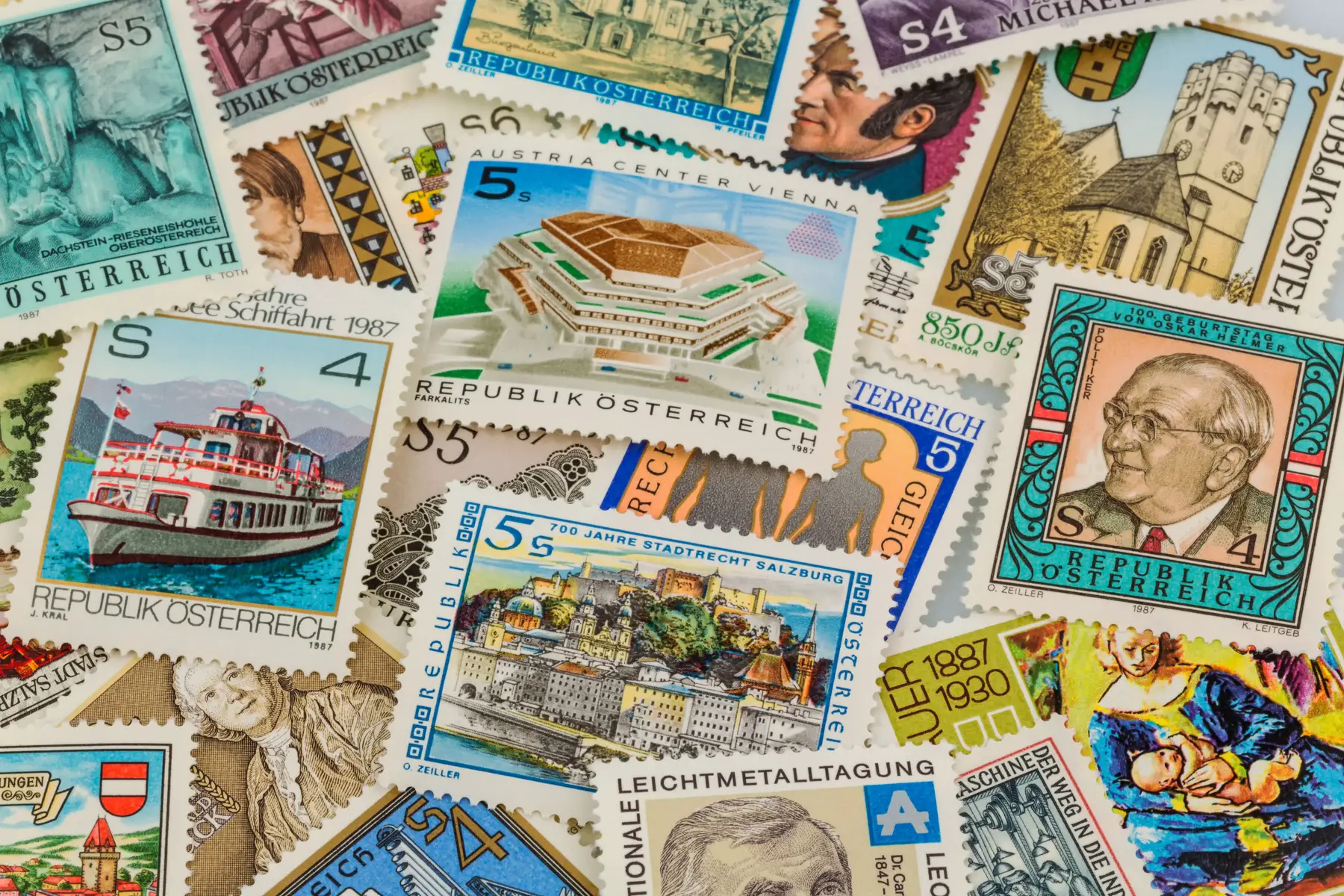
As well as offering regular stamps, Austrian Post also issues an expansive range of commemorative stamps and booklets to mark special occasions, notable personalities, and more. Furthermore, you can create bespoke stamps for special moments, such as weddings and baptisms, using the Meine Marke Personalized Stamps service.
Postal codes in Austria
Postal codes were introduced for the Austrian postal service in 1966. Therefore, before sending mail in Austria, you will need to understand the local postal codes. Austrian postal codes are fairly simple and have just four numbers.

The first digit indicates an Austrian state, for example, 5xxx indicates a Salzburg and East Upper Austria location. The following three numbers offer increasingly specific location indicators, therefore, it is important to get these right. The second number shows a particular region in an Austrian state, while the third number is the routing allocation, and the last digit is the local post office.
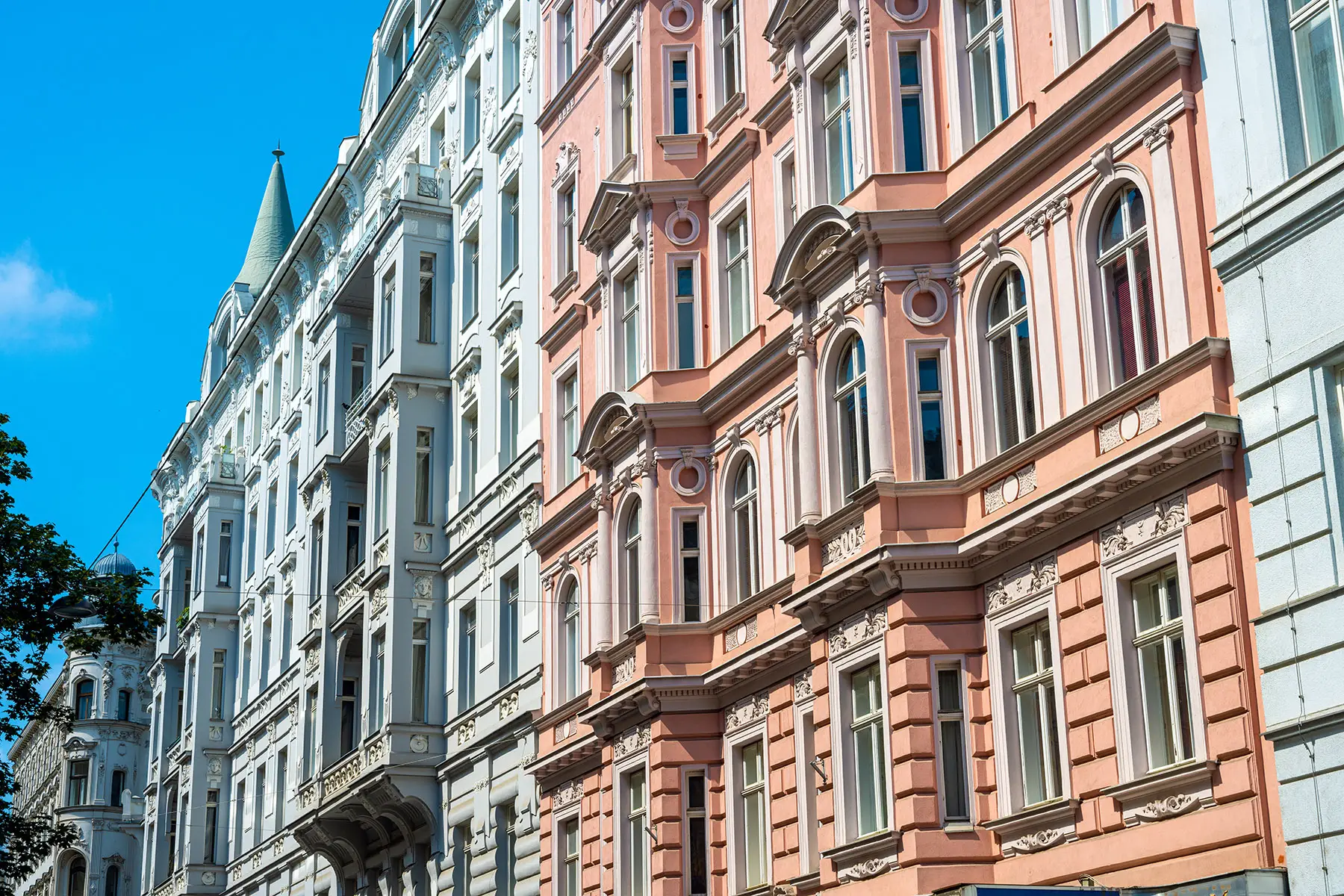
It is worth noting that Vienna has slightly unique postal codes. For instance, all Viennese postal codes begin with the number 1. The second and third numbers, however, indicate a Viennese district, and there are 23 of these. As such, a Viennese postal code might be something like 1047, which indicates the district of Wieden. There are also other special postal codes for important places and institutions. For example, the airport is 1300, the UN is 1400, and the Austrian National Broadcasting Service (ORF) is 1136.
Postboxes in Austria
Although you can send mail directly at a post office in Austria, it can often be easier to find a post box in your neighborhood. As such, if you keep stamps on hand, you can quickly and easily send mail. Most postboxes in Austria are small, bright yellow boxes and are usually attached to the walls of buildings.
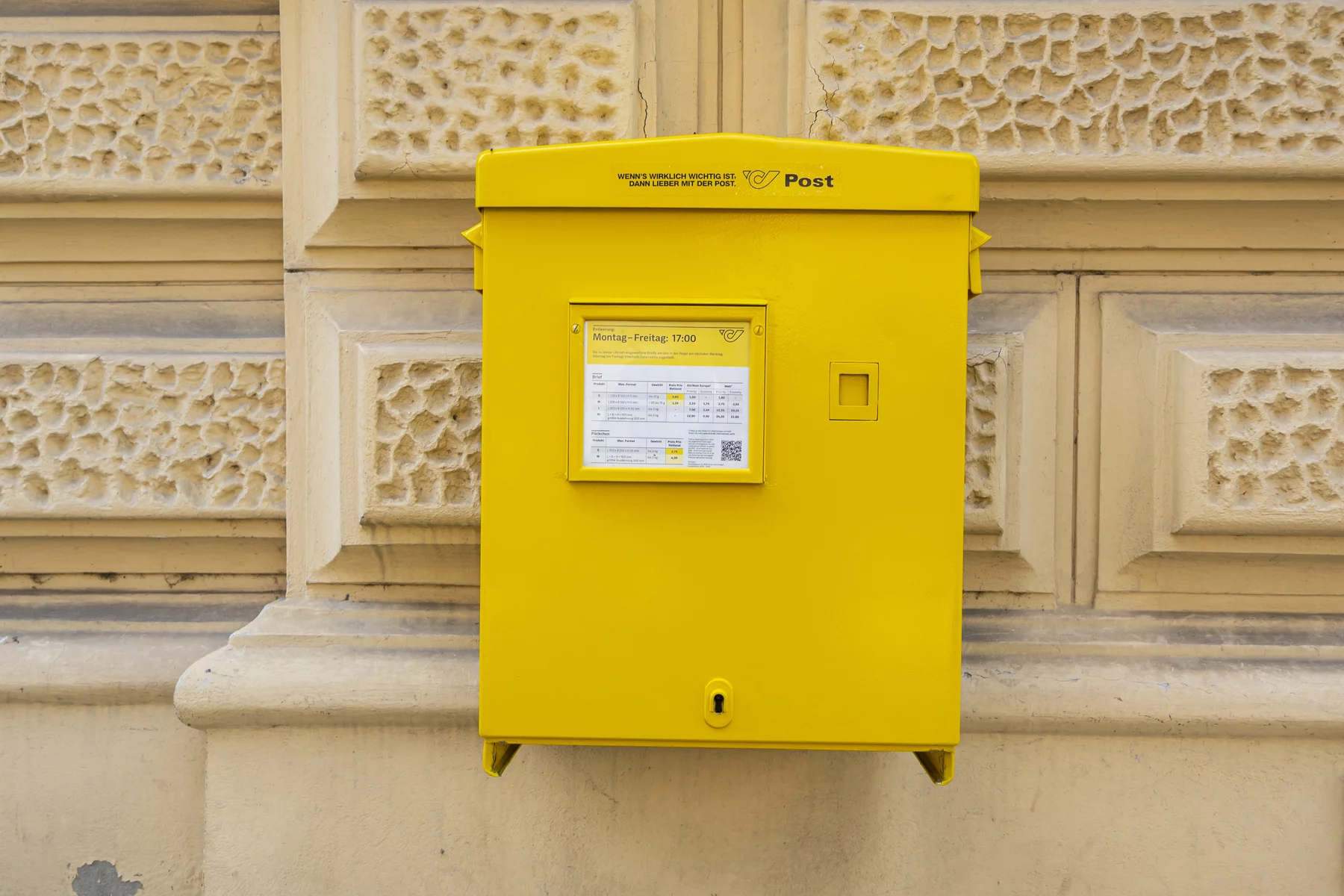
Mail is usually collected from these boxes at 16:00 every weekday, but not on weekends or public holidays. Busier locations may have morning collections, too, and you will be able to check the collection times on the postbox itself.
Sending mail internationally
Austrian Post offers plenty of options for international mail. The company offers three categories of tariffs: the European Union, Rest of Europe, and Rest of World. In addition, you can opt for Priority or Economy services, and although there is only a small price difference, Priority Mail is much faster. That said, your mail must be machine-processable and addresses must be machine-readable.
Of course, there are many other international mail services available in Austria. If you are sending something important, for example, you can choose signature-on-delivery or tracking services. There are also special parcel services available for wine and military mail.
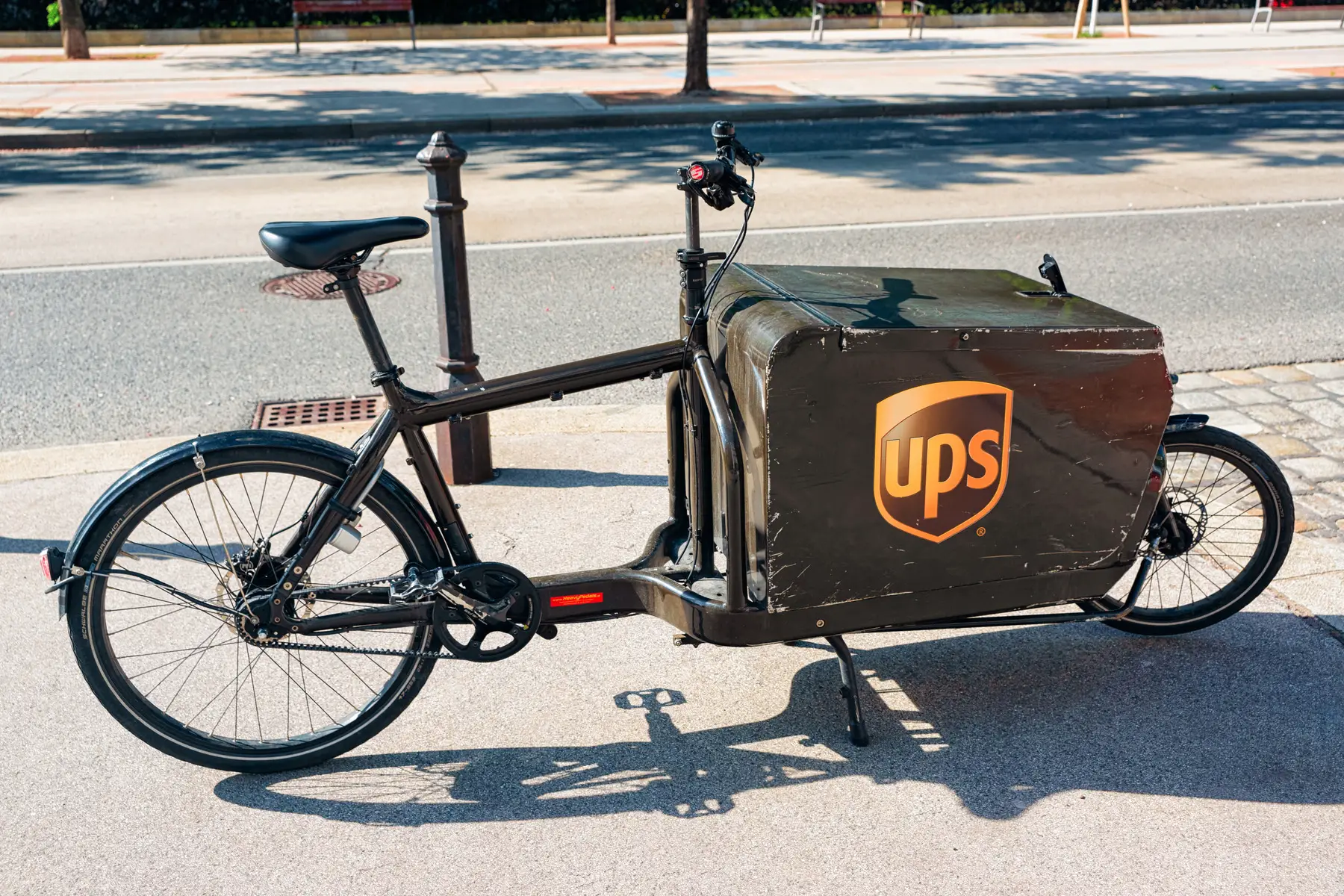
Many international courier companies also operate in Austria. Although these are often far more expensive than Austrian Post, they usually offer more secure and much faster delivery services. These companies include:
- DHL
- DPD
- FedEx
- GLS
Receiving postal deliveries in Austria
As with many other local mail services, Austrian Post delivers mail on all weekdays. In major cities, you can expect to receive your daily mail delivery by about 15:00; in rural areas, though, this could be as late as 17:00. Parcels and other special mail services may also operate on Saturdays.
Receiving parcels from overseas
Parcels sent through Austrian Post are usually delivered straight to your door. However, if you are not at home, you may receive a notice to collect your parcel from your nearest post office. The same applies to parcels sent by courier services such as DHL, but instead of a post office, you might be directed to a designated pick-up point.
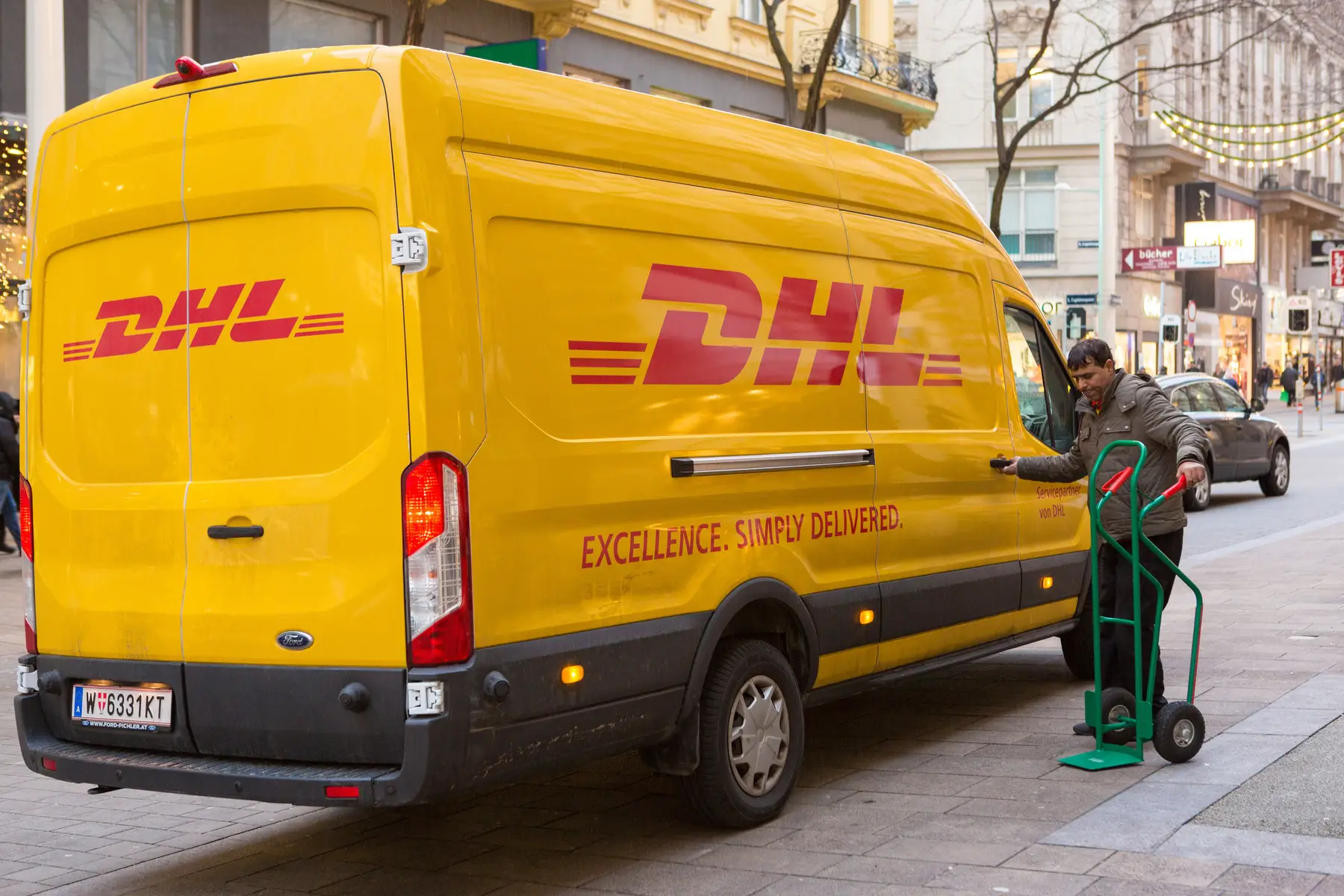
It is important to remember that parcels are subject to customs, so you may have to pay taxes and duties on certain goods. If this applies to you, you may have to pay a customs fee before you can receive your parcel.
Mail redirection services
As with all national mail services, Austrian Post offers mail redirection which is very useful if you are moving to a new neighborhood or a new city in Austria. This allows you to have any mail sent to your old address forwarded to your new home. You should be able to choose a certain period of time for mail redirection, which is usually from three to 12 months.
Business mail for companies
Businesses often need to use mail services, so if you own or help run a company, you may need to become familiar with the business mail services that Austrian Post offers. These are often quite similar to regular international mail, including Priority and Economy services, but you will be able to access cheaper prices, bulk discounts, and more.
PO boxes in Austria
If you don’t want to use your home address to receive mail in Austria, you might want to get a PO Box. These are generic addresses at local post offices and are very useful for businesses. There is only one size of PO Box in Austria, but they are available in four options:
- PO Box Only Mail – with this, only mail with the PO Box address is delivered
- All-mail PO Box – this service delivers all mail addressed to the PO Box or customer’s personal address to the PO Box
- PO Box Only Mail for Business – only mail with the business’s PO Box address will be delivered
- All-mail PO Box for Business – all mail addressed to the business’s PO Box or registered address will be delivered
There are also some private companies that offer independent PO boxes in Austria.
Useful resources
- Austrian Post – the main website for the company
- Telecom & Postal Service – a government website with information about national postal services
- Visiting Vienna – provides information on stamps and post offices in Austria
- The Local – offers helpful tips on sending post in Austria before Christmas



Did you find this guide helpful?