
'%20id='ico-down'%20stroke='%23000000'%20stroke-width='1.5'%3e%3cg%20transform='translate(1092.250000,%20254.750000)'%3e%3cpolyline%20id='Path-2-Copy-4'%20transform='translate(5.500000,%202.750000)%20scale(1,%20-1)%20rotate(-180.000000)%20translate(-5.500000,%20-2.750000)%20'%20points='0%200%205.5%205.5%2011%200'%3e%3c/polyline%3e%3c/g%3e%3c/g%3e%3c/g%3e%3c/svg%3e)


Education
Higher Education
Guide to higher education: universities in Austria
We explain the ins and outs of higher education in Austria, and where to find the best universities for whatever you’re looking to study.


Fortunately for students, there are many universities in Austria, some of which are even among the best in Europe. For this reason, Austria is an attractive choice for higher education. While most international students looking at universities in Austria focus on Vienna, the country boasts great schools around the country. In fact, some of the best specialist schools for arts and business are in other cities.
If you are thinking about studying in Austria, this helpful guide explains the ins and outs of higher education in Austria, including the following:
Sirelo
It's no secret that moving abroad can be stressful. Sirelo's team of removal advisers is here to help. They provide five free quotes from international shipping companies so you can find the best options at the best prices. Take the stress out of your relocation to Austria with Sirelo.

Studying in Austria
Austria has a great reputation for high-quality education. As such, the country offers a wealth of top-tier public schools, private international schools, and universities. Fortunately, despite offering great education, many schools and universities in Austria are very affordable.

That said, many institutions in the country require a working knowledge of German, so you would do well to learn the language. Nevertheless, Austrian schools are some of the best in Europe and attract students from all over the world. You can read more about this in our guide to studying in Austria.
Universities in Austria
There are over 600 universities in Austria. As such, the country is a top-tier destination for higher education. In addition, there are many different types of schools, therefore, students looking for different experiences will find an institution that suits them. For example, Austria has low-cost federal universities (Universitäten), and affordable private universities (Privatuniversitäten). The country also has many schools that specialize in particular subjects, such as business, arts, or science.
The types of universities differ most notably on the type of funding they receive and their legal status, but also on their relative sizes and structures. Nevertheless, each one offers a great education, and AQ Austria (Agentur für Qualitätssicherung und Akkreditierung Austria) oversees the universities’ accreditation to ensure a high standard.

Because of their high standards, universities in Austria often top international rankings. In addition, EU students can study at public universities for free. International students, on the other hand, usually pay a discounted rate of €1,500. Of course, private universities are far more expensive as they can set their own tuition fees.
Austrian universities follow similar degree programs to those at other institutions across Europe. Therefore, bachelor programs are usually three years long. Additionally, a master’s degree generally takes one to two years, while a Ph.D. program can take up to four years as a full-time student.
The best universities in Austria
Universities in Austria are among the best in Europe – and in some cases, the world. While the country has many higher education institutions, these are the ones that constantly rank as the best.
University of Vienna (Universität Wien)
Of all the universities in Vienna, the University of Vienna is perhaps the most prestigious. As well as being the country’s oldest – it is over 650 years old – and largest school, it sits at 154th place in the QS World University Rankings. Instead of having one single campus, the university has buildings at more than 60 locations throughout Vienna. However, the historical main building is on the famous Ringstraße. Over 94,000 students attend this university due to the wide range of subjects it offers. Importantly, it offers courses in both German and English and is, therefore, a top pick for foreign students. In addition, it has produced 15 Nobel Prize winners, including Elfriede Jelinek, the winner of the 2004 Noble Prize for Literature. The university also has strong international ties. There are students from over 130 countries, and there are partnerships with over 300 universities.
Vienna University of Technology (TU Wien)
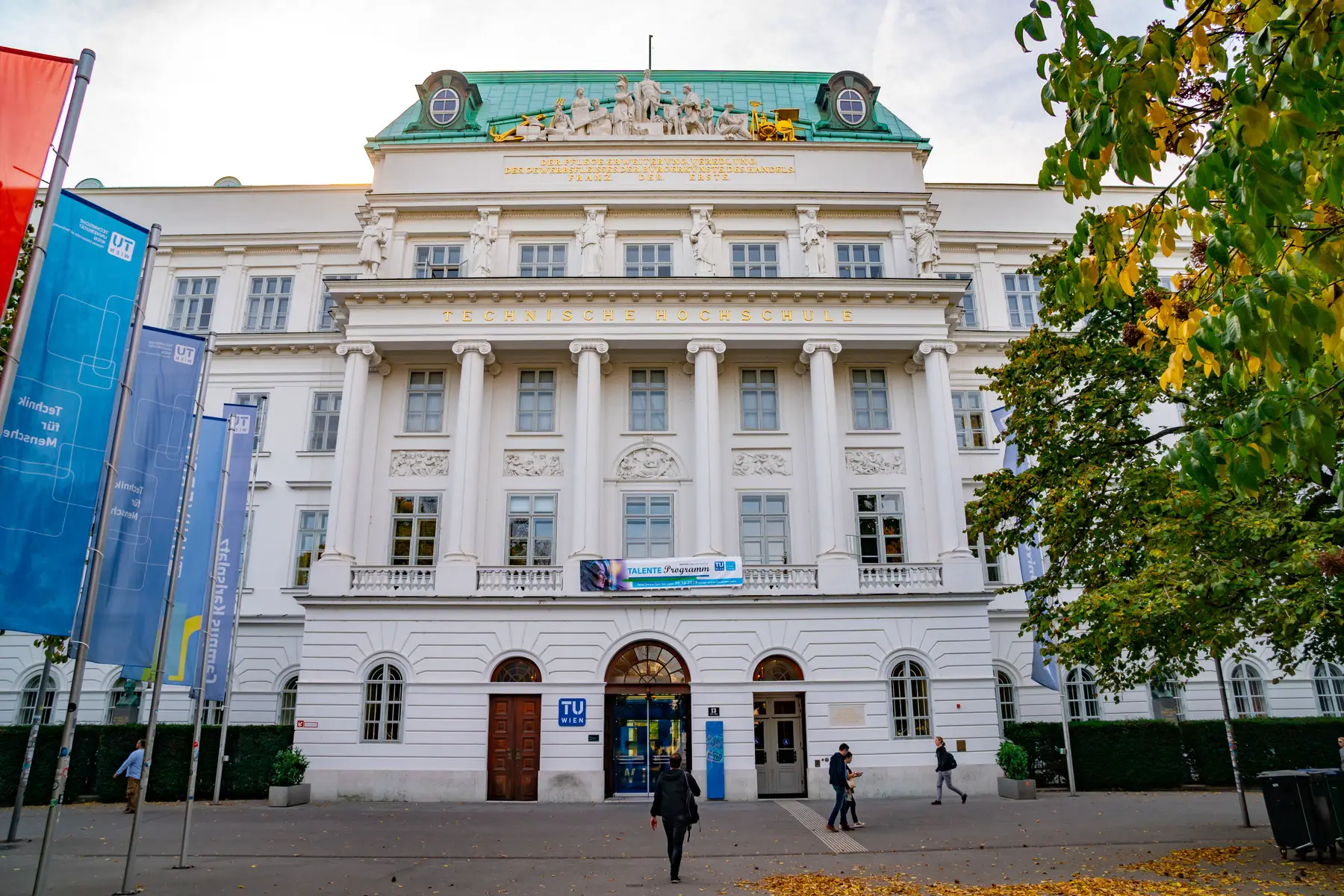
Another one of the popular public universities in Austria, TU Wien holds the 182nd spot on the QS World University Ranking list. Although it was established in 1815, it is now one of the best technical schools in Europe. As such, it specializes in engineering, natural sciences, mathematics, and IT. In addition, it is well-respected for its fundamental and applied research and works with many innovative enterprises. There are nearly 30,000 students at the university, a high percentage of which are international students. As the name suggests, TU Wien is in Vienna and as such, has buildings across the city. Because German is the language of instruction here, admission requires C1-level knowledge of German. However, if you can meet this requirement, it is a very affordable place to attend. In fact, TU Wien charges just €363.36 per semester or €726.72 for non-EU nationals.
University of Innsbruck (Universität Innsbruck)
Tucked away in the country’s west, Innsbruck is famous as a winter holiday destination. However, the city is also home to one of the top universities in Austria. The QS World University Rankings places the University of Innsbruck as 286th in the world overall. However, it ranks within the top 35 in the world for its huge community of international students. As such, foreign students make up 40% of the school’s 28,000 student population.

As with many other city universities, this one has its facilities spread across Innsbruck. Nevertheless, thanks to its location in the mountains, the school is famous for its mountain research. It was founded in 1669, and now hosts 16 faculties, including architecture, biology, economics, Catholic theology, mathematics, and law.
Karl-Franzens-Universität Graz (Universität Graz)
Established in 1585, Graz is home to the second-oldest university in Austria. Karl-Franzens-Universität Graz ranks within the world’s top 500 universities thanks to the high quality of its six faculties. As such, the school offers programs in arts and humanities, natural sciences, law, business and social science, and Catholic theology. In addition, it offers joint programs with the Graz University of Technology. Because of its location near the Slovenian border, many students from the country attend the university, as well as the Department for Slovene Language and Literature.

Furthermore, there are over 4,000 international students at the university, many of whom attend through a global network with 500 other schools in other countries. However, because the university only offers courses in German, you must be able to demonstrate German language skills at C1 level in order to attend. Otherwise, you may need to take supplementary exams and wait for admission.
Johannes Kepler University (JKU)
Another one of the public universities in Austria, JKU is a small school of just over 5,000 students and 800 staff. Although it has only been around since 1966, it has already gained a reputation for excellence in teaching and research. In addition, the bucolic campus boasts park-like grounds and offers a true sense of community. JKU focuses on science, economics and business, law, medicine, and engineering. Its courses are so future-oriented and of such high international standards that they are very much in demand.
Specialist universities in Austria
As well as having a wealth of general universities, Austria boasts numerous schools that offer programs in specific disciplines. In fact, if you are thinking of going into medicine, the arts, or business, you might want to consider applying to these schools.
Medical schools in Austria
- Medical University of Vienna – Located in Vienna, this is the largest institution in Austria and a major research center with a 650-year history. It also has Europe’s largest university hospital – Vienna General – which treats more than 100,000 in-patients a year. Additionally, it offers five main research disciplines, including cancer, medical imaging, and cardiovascular medicine.
- Medical University of Graz – Founded in Graz in 2004, this medical school offers a range of disciplines including medicine, dentistry, and nursing. Additionally, it focuses on innovative research in four medical fields and has partnerships with many institutions such as BioTechMed-Graz.
- Medical University of Innsbruck – Recently separated from Universität Innsbruck, this school in the Tyrol region is nonetheless the oldest center of academic medicine in Austria. It offers a great location and top-quality teaching and research in medical disciplines.
Business schools in Austria
- Lauder Business School – This English-language business school in Vienna was founded in 2003 by Ronald S. Lauder. Now, it offers one undergraduate and two graduate programs to over 350 students.
- Modul University Vienna (MU Vienna) – Since 2007, this private university has offered courses in social and economic development. In particular, the school focuses on tourism, new media, IT, sustainability, business management, and public governance.
- Vienna Business School – Run by the Viennese Merchants Guild, this private institution in Vienna focuses on business and economics and offers five-year degrees with practical elements.
- Management Center Innsbruck (MCI) – Located in idyllic Innsbruck, this private business school offers bachelor and master degrees, as well as MBAs and executive certificate programs. Students can also participate in custom programs and research.
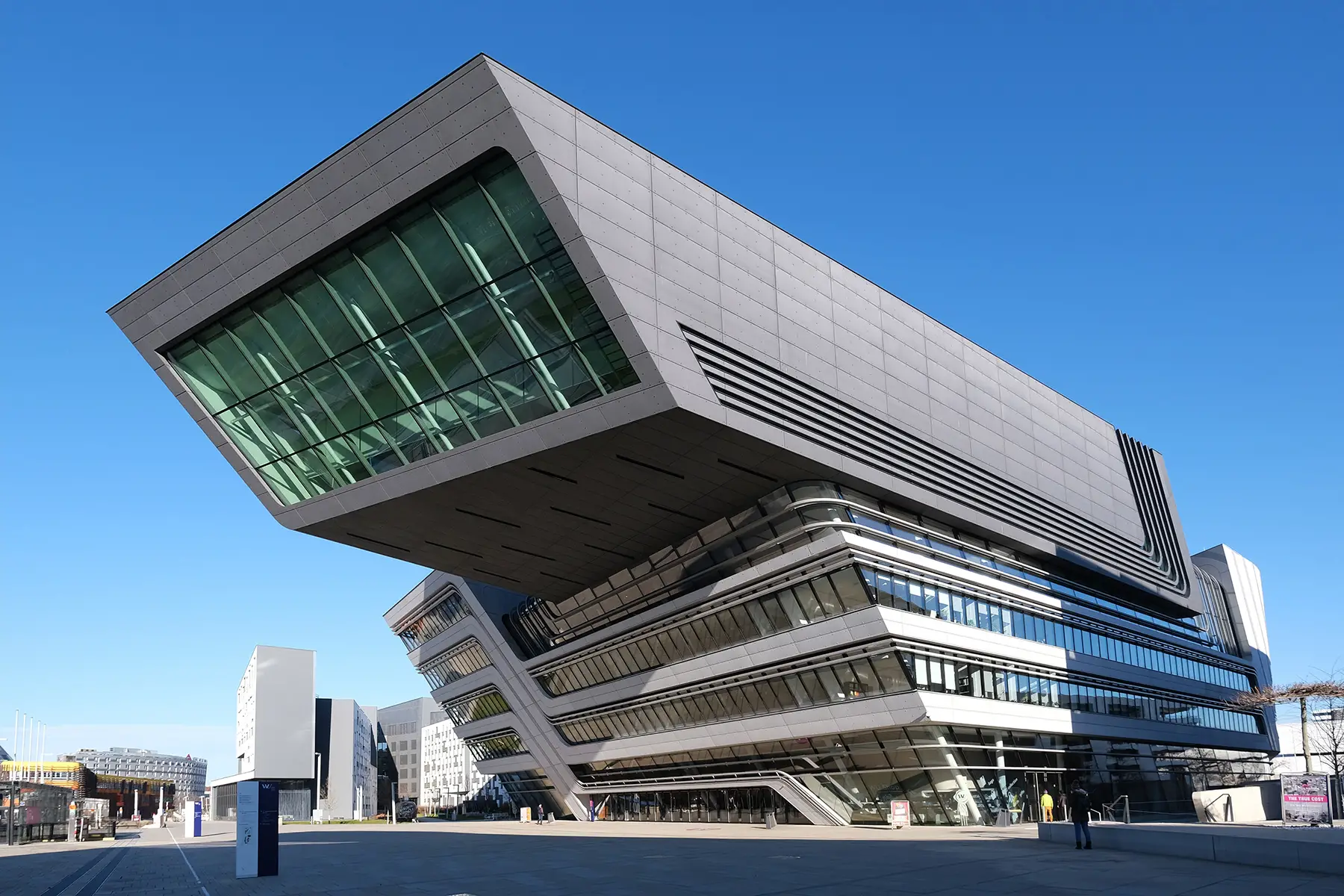
- Vienna University of Economics and Business (WU) – This is not only Europe’s largest business school, but it is also considered one of the continent’s best. As the name suggests, the specialties at the institute are economics and business disciplines.
Art schools in Austria
- Academy of Fine Arts Vienna – This public university offers 260 academic and research programs in fine arts, including stage design, conservation, and art history. Established in the 17th century, it now encourages academic pursuits and houses two internationally renowned art collections.
- Mozarteum University Salzburg – Although this school in picturesque Salzburg specializes in music studies, it also offers programs in theater and fine arts. However, all courses are in German and you have to pass an entrance exam in order to gain admission.
- University of Applied Arts Vienna – Located in the Austrian capital, this school prides itself as a place for free academic and artistic expression. It also has many foreign students. In addition, the school offers a range of programs in artistic disciplines, including architecture, fine arts, stage and film, conservation, and language arts.
- University of Art and Design Linz (Kunstuniversität Linz) – Located in Linz, this institution only became a full university in 1998. Nevertheless, it offers a range of programs that combine arts, science, and applied design to over 1,200 students. As such, students can study everything from fashion and industrial design to architecture and photography.
- University of Music and Performing Arts (KUG) – Located in Graz, KUG combines 17 institutes and two doctoral schools which offer high-quality training and research in the arts. As such, students can study a range of artistic disciplines, from instrumental specializations to opera, ethnomusicology, and history.
- University of Music and Performing Arts Vienna (MDW) – Also located in Vienna, this university is one of the best for the performing arts. In fact, it is one of the top institutions in Europe for music, theater, and film. As such, students can choose from over 115 programs, including music composition, conduction, chamber music, film and television, and more.
Law schools in Austria
- Johannes Kepler University – Faculty of Law, Linz
- Karl-Franzens-University – Faculty of Law, Graz
- University of Innsbruck – Faculty of Law, Innsbruck
- University of Vienna – Faculty of Law, Vienna
- Universität Salzburg – Faculty of Law, Salzburg
Universities in the main cities of Austria
Fortunately for students, there are several top universities to choose from in Austria’s major cities, as follows:
Universities in Vienna
- Academy of Fine Arts Vienna
- Medical University of Vienna
- Sigmund Freud PrivatUniversität Wien
- TU Wien
- University of Applied Arts Vienna
- University of Applied Sciences
- University of Music and Performing Arts Vienna
- University of Natural Resources and Applied Life Sciences, Vienna
- University of Veterinary Medicine (Vienna)
- University of Vienna
- Vienna Conservatoire Private University
- Webster Vienna Private University
- WU – Vienna University of Economics and Business
Universities in Salzburg
- Fachhochscule Salzburg
- Paracelsus Medizinische Privatuniversität
- Pädagogische Hochschule Salzburg
- Privatuniversität Schloss Seeburg
- Universität Mozarteum Salzburg
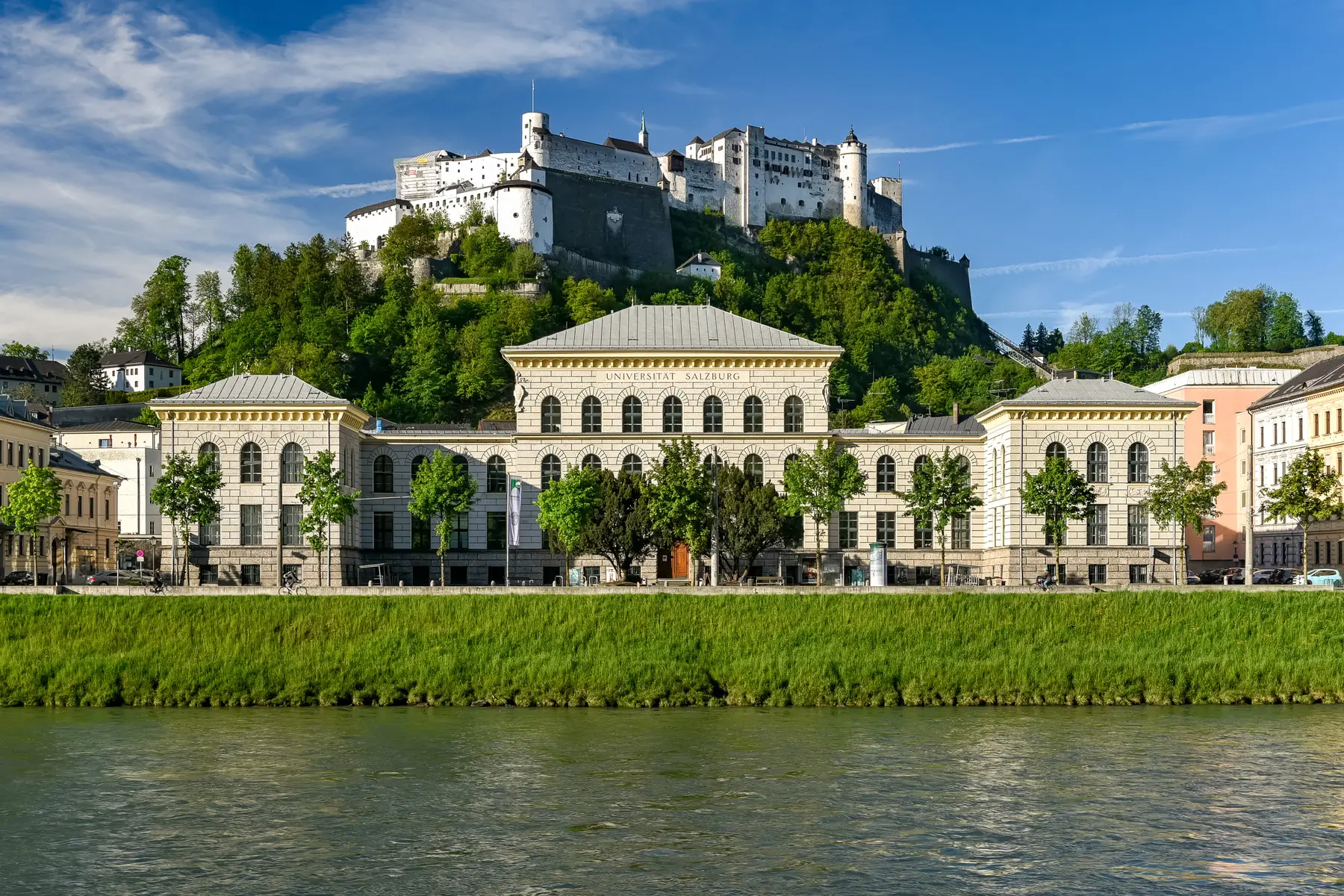
- Universität Salzburg
Universities in Graz
- Graz University of Technology
- Medical University of Graz
- Pädagogische Hochschule Steiermark
- University of Applied Sciences of Joanneum
- University of Graz
- University of Music and Performing Arts Graz
Universities in Linz
- Anton Bruckner University
- Catholic Theological Private University Linz
- Johannes Kepler University Linz
- Katholisch Theologische Privatuniversität Linz
- Pädagogische Hochschule der Diözese Linz
- University of Applied Sciences for Health Professions – Upper Austria
- University of Art and Industrial Design Linz
Universities in Innsbruck
- Management Center Innsbruck
- Medical University of Innsbruck
- Pädagogische Hochschule Tirol
- Private Pädagogische Hochschule Hochschulstiftung Diözese Innsbruck
- University of Applied Sciences for Health – Tyrol
- University of Innsbruck
Useful resources
- Study EU – a page listing the best universities in Austria
- Study in Austria – a page about universities in Austria
- QS Top Universities Austria – QS rankings of the top universities in Austria



Did you find this guide helpful?