
'%20id='ico-down'%20stroke='%23000000'%20stroke-width='1.5'%3e%3cg%20transform='translate(1092.250000,%20254.750000)'%3e%3cpolyline%20id='Path-2-Copy-4'%20transform='translate(5.500000,%202.750000)%20scale(1,%20-1)%20rotate(-180.000000)%20translate(-5.500000,%20-2.750000)%20'%20points='0%200%205.5%205.5%2011%200'%3e%3c/polyline%3e%3c/g%3e%3c/g%3e%3c/g%3e%3c/svg%3e)


Finance
Money Management
Best ways to send money to Thailand for expats (2026)
Sending money to Thailand works best when maximum value lands in your account for rent, deposits, and everyday living costs.


Hidden markup in the exchange rate or quiet transfer fees can quickly drain your budget when covering Bangkok condo deposits or living expenses in Chiang Mai. Choosing a reliable payment corridor also eliminates stressful delays when landlords, property sellers, or local banks demand funds on a tight schedule.
Because transfer speeds, costs, and recipient bank rules depend heavily on where your money originates, checking a live calculation before sending is essential. This guide breaks down effective transfer routes, local limits, and practical steps to move your Thai Baht cleanly without overpaying.
Key takeaways
- Use online transfer apps for day-to-day spending: Platforms like Wise can be a good option for paying rent or utility bills because you can see the exact exchange rate and fee before you click send.
- Stick to traditional bank wires for major legal purchases: If you are buying property or paying a large deposit, a SWIFT transfer from a local bank gives you the official paper trail and proof of foreign origin that Thai authorities demand.
- Double-check how much your Thai bank accepts at once: Inbound limits vary depending on where you hold an account, with major banks like Bangkok Bank or KBank generally handling much larger individual transfers than smaller local branches.
- Have your recipient’s full details ready before starting: To avoid payments getting stuck in compliance checks, make sure you have the receiver’s full legal name, physical address, account number, and clear reason for the transfer.
- Look at the final cash delivered, not just the upfront fee: A “fee-free” transfer often hides a markup in the exchange rate, so always judge a service by how many Baht actually hit the destination account.
International money transfer with Wise
Wise makes it easy to send money to Thailand — with transparent fees and the mid-market exchange rate.
Send EUR, USD, or GBP and Wise will convert it to THB for delivery to a Thai bank account. You’ll see the exchange rate and total fee upfront, with no markups on the exchange rate.
Set up your transfer in a few steps and track it end-to-end in the Wise app — built for international payments.

What makes a transfer method best for Thailand?
The right transfer method balances total cost, delivery speed, document requirements, and overall reliability. Focusing purely on a low headline fee often backfires if a hidden markup in the exchange rate quietly eats into your payout.
A low transfer fee can easily mask a bad deal. For instance, paying a £2 upfront fee alongside an unfavorable conversion rate leaves you with fewer Baht than paying a £5 fee paired with a mid-market rate. When transferring larger sums for a property deposit, tuition, or living expenses, those exchange rate differences quickly add up to significant money lost.
| Factor | Why it matters in Thailand | What to verify |
| Total cost | Thai banks and providers may charge in different ways | Fee, rate, and any receiving charge |
| Speed | Rent, deposits, and bills are often time-sensitive | Live delivery estimate and cut-off times |
| Paper trail | Some property or admin cases need proof from abroad | Whether the method creates the document you need |
| Bank delivery | Not every Thai bank handles the same limits or process | Recipient bank rules, name match, and cap |
Online transfer options for regular expats
For routine transfers into Thailand, online money specialists usually offer clear advantages over major local banks in both overall convenience and pricing transparency. This setup works exceptionally well for topping up living funds, paying rent, supporting family members, or covering recurring household bills.
Unlike bank wires, digital specialists allow you to execute, fund, and track transactions entirely online through a web browser or mobile app. They also provide a seamless fit when funds need to land directly in your local Thai bank account or a landlord’s account, making them a practical choice for meeting monthly pension or income requirements.

Checklist for the best default option:
- You want to send money to Thailand regularly, not just once.
- You care about the full landed amount in THB, not just the visible fee.
- You want direct bank delivery rather than cash pickup.
- You do not need a bank-issued Swift document for this specific payment.

Where Wise fits for routine transfers and THB spending
For everyday expenses, Wise offers a convenient setup thanks to its upfront pricing and mid-market exchange rates. While it provides multi-currency account management, it operates as a money transfer specialist rather than a bank, so the user experience feels different from holding a local Thai bank account.
It works especially well for sending money into Thailand regularly, funding your account directly from foreign or local accounts, and spending in Thai Baht as day-to-day expenses arise.

Writer
Tarah
Insider Tip
Wise accounts registered to a Thai address feature multi-currency balances alongside PromptPay QR scanning for local payments.
To keep transactions running smoothly, keep in mind that third-party foreign payments convert to THB automatically upon arrival. Outbound transfers must be remitted from your THB balance, and Wise debit cards cannot be used for cash withdrawals at local Thai ATMs.
When a major local bank may suit you better
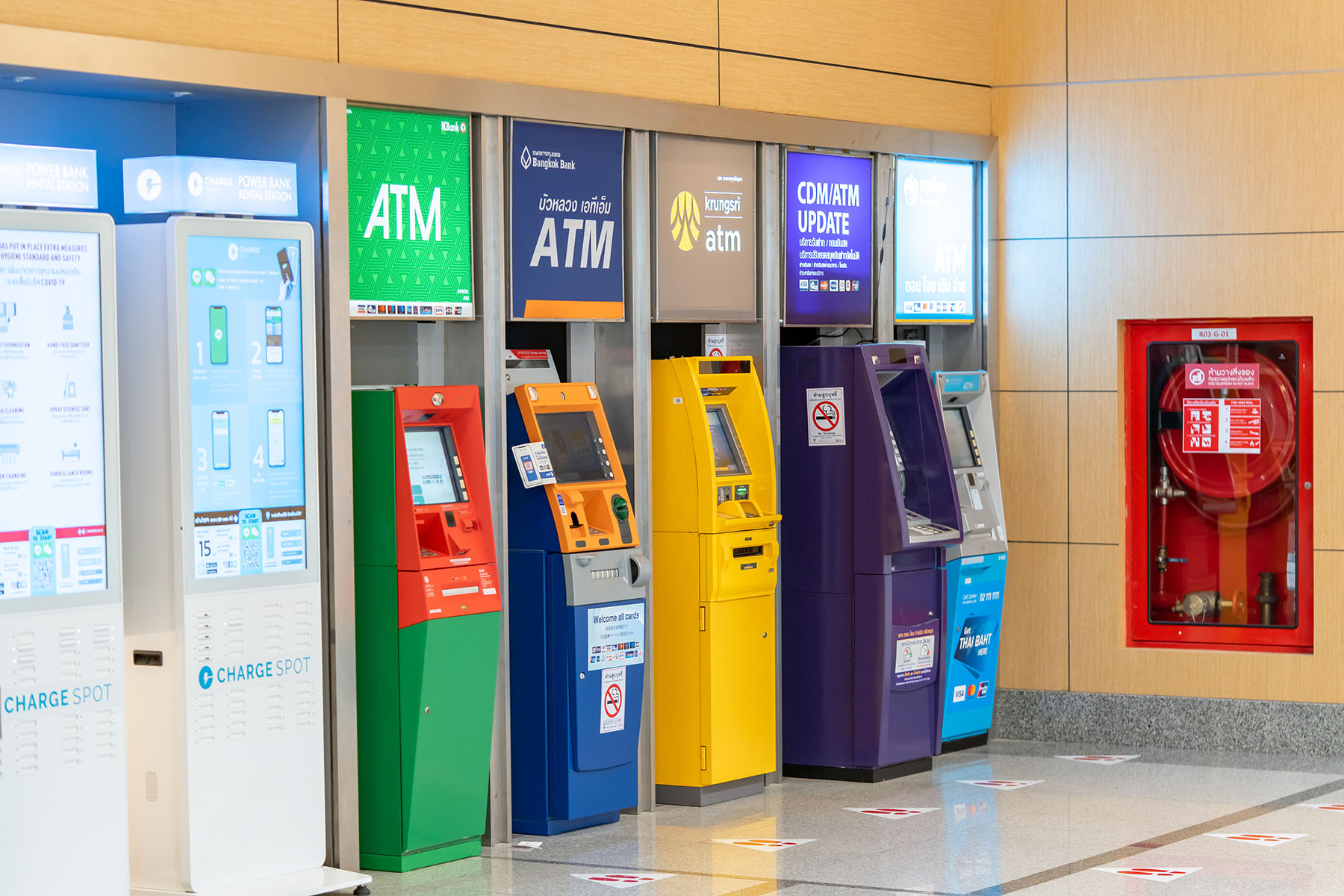
A major local bank such as Bangkok Bank, Kasikorn Bank, Siam Commercial Bank, Krung Thai Bank, or Bank of Ayudhya may suit you better when the payment is large, unusual, or tied to a formal Thai admin process. This is where the broader background in Banking in Thailand: the best Thai banks for expats in 2026 can help.
Banks can be slower and cost more overall, but the trade-off may be worth it if you need branch support or a clearer overseas paper trail. This is different from routine living-cost transfers, where convenience and visibility usually matter more than in-person handling.
A bank may be the better choice if:
- You need a Swift transfer that clearly arrived from abroad.
- Your bank or authority has asked for bank-issued proof.
- You are making a high-value property or business payment.
- You want a branch to help if the transfer is held for review.
How to send money to Thailand step by step
Compare the real total cost, not just the fee. Check how much THB the recipient gets after the fee and after any exchange rate margin.
Check the live Thai baht exchange rate and fees again just before you send. Rates and charges can move during the day, and urgent payments are the ones most likely to catch you out.
Choose your pay-in method carefully. Bank transfer is often cheaper than card funding, while card funding can be faster but more expensive in total.
Collect the right Thai recipient details. For many services, you will need the recipient’s full name, address, bank name, account number, and the reason for transfer.
Confirm the delivery estimate before you press send. If the account is new or the payment is important, send a test transfer first, then send the full amount once everything lands as expected.
Thai bank limits, recipient details, and proof rules to check
- Recipient details: To send money to a Thai bank account, you will usually need the recipient’s full name, address, bank name, a 5 to 16 digit account number, and sometimes a reason for the transfer. If you use a bank transfer, you may also need the SWIFT code, which is the bank’s international routing code.
- Bank limits: Foreign currencies or baht can be transferred into Thailand without a general cap, but providers and recipient banks can still set their own operational limits. As of 24th Sepetember 2026, Wise’s guide to THB transfers showed caps of up to ฿2,000,000 to Bangkok Bank and Kasikorn Bank, up to ฿1,499,999 to Siam Commercial Bank, and up to ฿500,000 to many other supported banks, so recheck live figures on the day you send.
- Supporting documents: For foreign exchange transactions equivalent to USD 200,000 or more, Thai authorised banks can ask for supporting documents and then issue evidence of the transaction. This is one reason larger or more formal payments may need more planning than a routine rent top-up.
- Confirmation letter of international fund transfer: This is proof issued by the recipient bank to show that money came from abroad, and some property or admin situations may ask for it. The process differs by bank, so use the Bangkok Bank transfer guidance or the recipient bank’s own instructions, and confirm the latest documents, timing, and any admin fee before you send.
- How to verify: If you know the transfer may need proof later, ask the recipient bank before you send, not after the money arrives. That is the easiest way to confirm whether a local payout method is acceptable or whether you need a bank-issued overseas trail instead.
Using Wise multi-currency account after you arrive
A Wise multi-currency account helps smooth over your first month when pay dates, deposit deadlines, and settling-in costs do not line up neatly. You can top up funds directly from your home bank account and convert into Thai Baht as expenses come up, making early budgeting far easier while you adjust to daily costs.
If your Wise account uses a Thai registered address, third-party payments sent to you in foreign currency auto-convert into Thai Baht upon arrival. You can still hold foreign currencies you add yourself, but spending or sending money locally flows through your THB balance via PromptPay QR scans or debit card payments.
Most expats pair Wise with a local Thai bank account rather than relying on it exclusively. Running both together makes it much easier to manage local bills, set up domestic banking services, and handle daily cash needs without running into transaction limits.
Writer
Tarah
Insider Tip
In Thailand, many daily expenses are handled via card or digital transfer, but certain initial arrival costs are best paid directly from a local bank. PromptPay serves as Thailand’s primary domestic payment network for instant, low-cost bank transfers and QR code payments.
Checklist for using a multi-currency account well:
- Hold part of your budget in your home currency until you need THB.
- Convert in stages if your rent, deposit, and bills land on different dates.
- Keep a Thai bank account ready for salary, rent, and branch-based tasks.
- Recheck live fees, exchange rates, and recipient-bank caps for each transfer.
Compare live Wise fees, exchange rates, and recipient bank limits before sending: Wise send money to Thailand.
How to avoid poor exchange rates, hidden fees, and delays
Most transfer mistakes happen because people compare the visible fee and stop there. The real question is how much THB arrives after the rate, the funding method, and any receiving charge have all taken their share.
The other big risk is urgency. If you need money for rent tomorrow, a method that is normally fine can feel very expensive once a delay forces you into a second transfer or an ATM withdrawal.
Checklist to avoid problems:
- Compare the total THB received, not just the transfer fee.
- Check whether the recipient bank may deduct a receiving charge.
- Avoid card funding unless the faster timing is worth the extra cost.
- Do not send a transfer late in the day if the payment is needed urgently.
- Verify any sudden change of bank details by a second channel before sending, especially if a landlord, agent, or seller emails new account details unexpectedly.
FAQ
Frequently asked questions about sending money to Thailand
What details do I need to send money to a Thai bank account? 
To send money to a Thai bank account, you will usually need the recipient’s full name, address, bank name, and account number. Some providers also ask for an email address and the reason for transfer, so check both your provider and the recipient bank before you send.
How much money can I send to Thailand at once?
Limits depend on the provider, your pay-in method, and the recipient bank in Thailand. In practice, some Thai banks allow much larger per-transfer amounts than others, so check both the provider limit and the recipient-bank cap before sending a large payment.
How long does it take to transfer money to Thailand?
The answer is usually a range, not a fixed promise. Timing can change with the pay-in method, compliance checks, recipient bank, and local banking hours, so use the live estimate you see before you confirm the transfer.
Do I need a Thai bank account before moving money to Thailand?
Not always, but many transfers into Thailand are easiest when the recipient already has a Thai bank account. If you are still moving, that may mean paying a landlord or topping up your own new account later, and it is worth opening a local account early if you expect salary, rent, or regular local payments.
Do I need a confirmation letter of international fund transfer in Thailand?
Sometimes, yes, especially for certain property or admin situations, but not every transfer route creates the same paper trail. Ask the recipient bank to confirm the latest requirement, process, timing, and fee before you send because that decision is much harder to fix afterward.
Useful resources


Did you find this guide helpful?