
'%20id='ico-down'%20stroke='%23000000'%20stroke-width='1.5'%3e%3cg%20transform='translate(1092.250000,%20254.750000)'%3e%3cpolyline%20id='Path-2-Copy-4'%20transform='translate(5.500000,%202.750000)%20scale(1,%20-1)%20rotate(-180.000000)%20translate(-5.500000,%20-2.750000)%20'%20points='0%200%205.5%205.5%2011%200'%3e%3c/polyline%3e%3c/g%3e%3c/g%3e%3c/g%3e%3c/svg%3e)


Finance
Money Management
Kasikornbank FCD in Thailand: how to send foreign currency
Opening a Kasikornbank Foreign Currency Deposit account can be useful if you need to receive USD, EUR, or GBP in Thailand without converting your funds into Baht immediately.

For expats navigating Thai banking, combining a KBank FCD with Wise offers a way to manage cross-border transfers. However, because Kasikornbank treats resident and non-resident accounts differently, handling foreign currency transfers requires getting a few specific details right.
This guide walks through how these accounts function, where Wise fits into the workflow, and what to confirm with your branch before initiating a transfer.
Key takeaways
- Understand the FCD balance rules: A Kasikornbank FCD lets you hold foreign currencies like USD, EUR, or GBP directly in Thailand rather than auto-converting your money into Baht on arrival.
- Confirm your residency classification: KBank enforces different deposit rules for residents and non-residents, and local branch staff may classify your account status differently from how you define yourself.
- Verify Wise route availability: Wise can handle major currency transfers directly to local FCDs, but support depends on your specific sender country, currency pair, and recipient setup.
- Match all transfer details beforehand: Double-check the exact account name, receiving currency, account number, home branch code, and SWIFT details with KBank before initiating your transfer.
- Factor in total costs and processing times: Wise displays its transfer fee upfront, but KBank inward receiving fees and standard SWIFT intermediary bank processing times can still affect your final landed total.
International money transfers with Wise
For convenient cross border transactions with transparent fees, check out Wise.
Expats can use Wise to hold and exchange Thai Baht (THB) and 40+ other currencies with transparent fees at the mid-market exchange rate. The Wise card allows you to spend in 150+ countries, while the account lets you send money to 160+ countries and receive payments in multiple currencies including THB and USD.

What is a Kasikornbank FCD account?
A Kasikornbank Foreign Currency Deposit (FCD) account lets you keep money in USD, EUR, GBP, or other major currencies in Thailand without converting it to Baht on arrival. This gives you control over when you exchange your money, making it useful for retirees, remote workers, or anyone receiving income from abroad.
Kasikornbank sets up FCD accounts under resident and non-resident. How the branch classifies your status determines the paperwork you need to present, your deposit limits, and the conditions for transferring money out.
| Setup | High-level fit | Key account points | Watch-outs |
| Resident FCD | Thai nationals, Thai entities, and foreigners KBank treats as resident | Current, savings, and fixed deposit formats are available | Ask the branch which resident documents it wants |
| Non-resident FCD | Foreigners or entities KBank treats as non-resident | Current, savings, and fixed deposit formats are available, but KBank lists minimum deposits and maintenance conditions on some account types | Classification and paperwork need checking before you visit |
Who can open a Kasikornbank FCD in Thailand?
- KBank lists Thai nationals, Thai entities, and foreigners with permanent residency in Thailand under resident FCD qualifications.
- KBank also lists temporary foreign residents, foreigners working in Thailand temporarily, diplomats, and offshore entities under non-resident FCD qualifications.
- Because paperwork may depend on your status under Thailand’s visa system, it makes sense to confirm both the account type and the supporting documents before you book a branch visit.

Writer
Tarah
Insider Tip
Ask whether you fit the resident or non-resident FCD criteria, not just whether a foreigner can open an account. Otherwise the branch may default to THB account rules.
Which currencies, account types, and branch rules matter?
KBank lists USD, EUR, GBP, JPY, SGD, AUD, CAD, HKD, CHF, CNY, and MYR for resident FCD use. For non-resident FCDs, the same broad list appears, but KBank notes MYR is only for juristic persons registered in Thailand, and some services still depend on the exact branch.
- Account formats include current, savings, and fixed deposit
- Only designated FCD service branches handle these accounts
- Current FCD transactions must be made at the account-holding branch
- MYR deposit accounts are handled only at Phahon Yothin Main Branch
- Even if you use mobile banking apps in Thailand for daily banking, some FCD checks and changes can still need in-branch handling
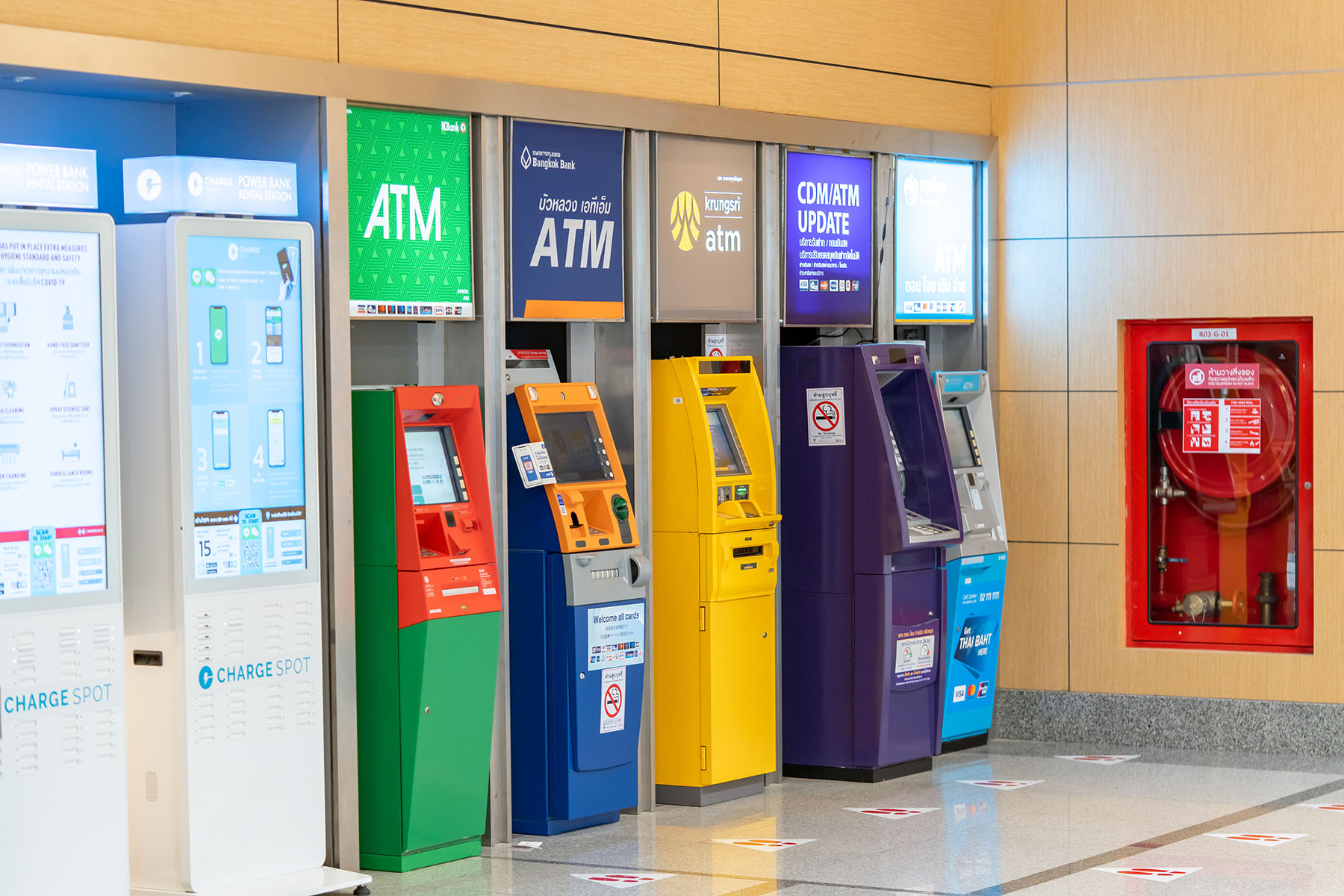
Can Wise send money to a Kasikornbank FCD?
Possibly, but not in every case. Wise may help fund a Kasikornbank FCD in some major currencies when the currency, recipient details, and payout path are supported at setup.
The real question is whether Wise supports your exact foreign-currency route into that KBank recipient setup. Wise says some foreign-currency transfers are paid out through Swift rather than a local route, which can change the details you need and the time the transfer takes.
- Check whether Wise asks for a local recipient or a Swift-style recipient
- Check that the payout currency matches the FCD currency
- Check the live fee and delivery estimate before you fund the transfer
- Check again if the transfer is for property, visa evidence, or another formal purpose
Which Wise routes may work for foreign-currency transfers?
Wise explains that it uses Swift for some cross-border foreign-currency payouts. That can apply when you send USD outside the US, GBP outside the UK, EUR outside SEPA, or more than 1 million JPY.
- USD to Thailand may need a Swift route
- EUR outside SEPA and GBP outside the UK can also shift to Swift
- Larger JPY payments may move through Swift
- Intermediary banks can affect delivery time and final costs
- Support still depends on your sender region, recipient bank details, and the live Wise route
What recipient details should you confirm first?
- Recipient name exactly as registered with KBank
- Exact FCD currency, for example USD rather than THB
- Account number and the correct account type
- Branch name, if KBank says the route needs it
- Any Swift/BIC or other foreign-currency receiving details the branch asks you to use
Confirm every field with KBank before you build the transfer in Wise. If the app flags the details, ask the branch for written receiving instructions or proof of account before retrying.
How to send major currencies to a Kasikornbank FCD with Wise
Step 1: confirm the FCD currency and account details
Start with the receiving side. Do not assume a THB account and an FCD use the same instructions. Common mistakes are the wrong account type, no branch check, or assuming KBank will auto-place the money into the right currency ledger.
Step 2: check the route, fees, and delivery estimate in Wise
Before funding, review the live quote and route details in Wise. Check which currency leaves your side, what the recipient should get, and whether the route uses Swift. Wise pricing is dynamic, so recheck the live quote each time.
- Review the send currency and payout currency
- Check the fee and estimated arrival before funding
- Recheck whether the route needs Swift details or a local bank setup
Step 3: send a small test transfer first
A small test payment is sensible when the route is unfamiliar, the recipient details are newly added, or the branch gave you manual instructions. If the test lands correctly, you reduce the chance of sending a large amount into the wrong setup or the wrong currency.
- Send a small amount first
- Confirm it arrives in the correct FCD currency
- Save the receipt and confirmation in case you need proof later
Fees, exchange rates, and timing to check
If you compare this setup with other international money transfers in Thailand, the main issue is not only the sender’s fee. You also need to understand what happens when the money reaches the FCD and what rate applies if you convert or withdraw later.
What fees and FX rates apply at Kasikornbank?
Kasikornbank applies its conversion rates at two different points. The bank uses its T/T buying rate when turning your foreign currency into Baht, and its T/T selling rate when switching Baht back into foreign money.
Because the bank builds a profit margin into both rates, converting at the wrong time lowers the final amount that lands in your account. You will also want to watch out for KBank handling fees, incoming SWIFT charges, and commission fees that kick in if you move foreign currency out without converting it first.
- Check KBank’s latest fee schedule before sending
- Check the live T/T buying and selling rates on the day you act
- Non-resident current and savings FCDs can carry a USD 10 monthly maintenance fee if the balance stays below USD 5,000
- Some branch services and account actions still need in-person verification
- Treat all rates, fees, and conditions as check-current-terms items
What costs and timing should you expect with Wise?
Wise shows the fee upfront and gives you an estimated delivery time before you confirm the transfer. But if the route uses Swift, intermediary banks may deduct their own handling fees and the payment can take 1 to 6 working days, sometimes longer, depending on time zones and the banks involved.
That means a route that looks cheap or quick for one currency pair may not behave the same way for another. Check the live Wise pricing and quote each time instead of relying on a static example.
Common mistakes and when an FCD may not fit
The biggest mistakes are setup errors. People use THB details instead of FCD details, assume any foreigner qualifies for any FCD type, or forget that branch service can vary.
An FCD is not automatically the best way to receive money from abroad. If your real goal is rent, bills, or day-to-day THB spending, a THB account may be simpler than adding a foreign-currency step.
- Do not send to a THB setup and expect KBank to park the money in FCD automatically
- Do not assume branch rules are identical across Thailand
- Do not ignore intermediary-bank or receiving-bank conditions
- Do not skip document checks on large transfers or formal-purpose transfers
- Use official KBank and BOT guidance for property, investment, or visa proof-of-funds cases
When is an FCD better than a Thai baht account?
| FCD may suit you if… | A THB account may be simpler if… |
| You want to hold USD, EUR, GBP, or another major currency for later use | You need THB for rent, bills, salary spending, or daily payments |
| You want overseas funds to arrive without immediate conversion to baht | The sender will convert to THB anyway |
| You need to match a foreign-currency obligation later | You want the simplest local banking setup |
| You are comparing FCD options across KBank, Bangkok Bank, SCB, or Krungsri | You mainly need a standard Thai account, not a currency-management tool |
Use Wise to send major currencies to your Kasikornbank FCD
Wise is most useful here as a live route checker, quote tool, and transfer option for supported major-currency corridors. If you already use the Wise account in a supported region, it can help you hold and convert major currencies before sending, but confirm feature availability for your profile first.
- Check whether your currency and recipient setup are supported right now
- Compare the live fee and delivery estimate before you fund
- Confirm the KBank recipient details again, especially the currency and branch instruction
If the route is live and the details match, compare the transfer in Wise before you send.
FAQ
Frequently asked questions about Kasikornbank FCD and Wise in Thailand
Can Wise send USD to a Kasikornbank FCD account? 
Sometimes. But USD support depends on the live Wise route, the recipient’s FCD currency, and the KBank details you use. Confirm all three before you send.
Can foreigners open a Kasikornbank FCD account in Thailand?
Possibly. Eligibility depends on whether KBank treats you as resident or non-resident and what documents the branch wants. Check the official criteria before visiting.
What details do I need to receive a foreign-currency transfer into Kasikornbank?
You usually need the exact account name, account number, account currency, and any Swift or bank identifiers KBank confirms. Verify every field with the branch before the transfer is created.
Are there fees to receive money into a Kasikornbank FCD account?
There can be. Costs may come from KBank conditions, later conversion, or intermediary banks on Swift-style routes. Check the latest KBank fee schedule and the live Wise quote before you send.
Can I convert funds from a Kasikornbank FCD into Thai baht later?
Yes, in principle. But the result depends on KBank’s applicable T/T buying or selling rate and any conditions in force that day.
Do I need documents for a large foreign-currency transfer to Thailand?
You may. BOT says banks generally request supporting documents for foreign-exchange transactions equivalent to USD 200,000 or more, and KBank lists source-of-funds checks for some non-resident cases. Confirm the latest requirements for your exact use case.
Useful sources
Information checked September 2026
- Kasikornbank Foreign Currency Deposit Accounts for FCD rules, currencies, and branch caveats.
- Kasikornbank foreign exchange rates for live T/T buying and selling checks.
- Bank of Thailand exchange control regulation summary for document thresholds and FCD rules.
- Wise Help: Sending with Swift for route logic and intermediary-bank caveats.
- Wise Fees & Pricing for live fee checks.


Did you find this guide helpful?