
'%20id='ico-down'%20stroke='%23000000'%20stroke-width='1.5'%3e%3cg%20transform='translate(1092.250000,%20254.750000)'%3e%3cpolyline%20id='Path-2-Copy-4'%20transform='translate(5.500000,%202.750000)%20scale(1,%20-1)%20rotate(-180.000000)%20translate(-5.500000,%20-2.750000)%20'%20points='0%200%205.5%205.5%2011%200'%3e%3c/polyline%3e%3c/g%3e%3c/g%3e%3c/g%3e%3c/svg%3e)


About Thailand
Transportation
Driving in Thailand
Ready to explore Thailand by road? Check out this rundown of the country’s rules on driving, what to do in an emergency and other tips.

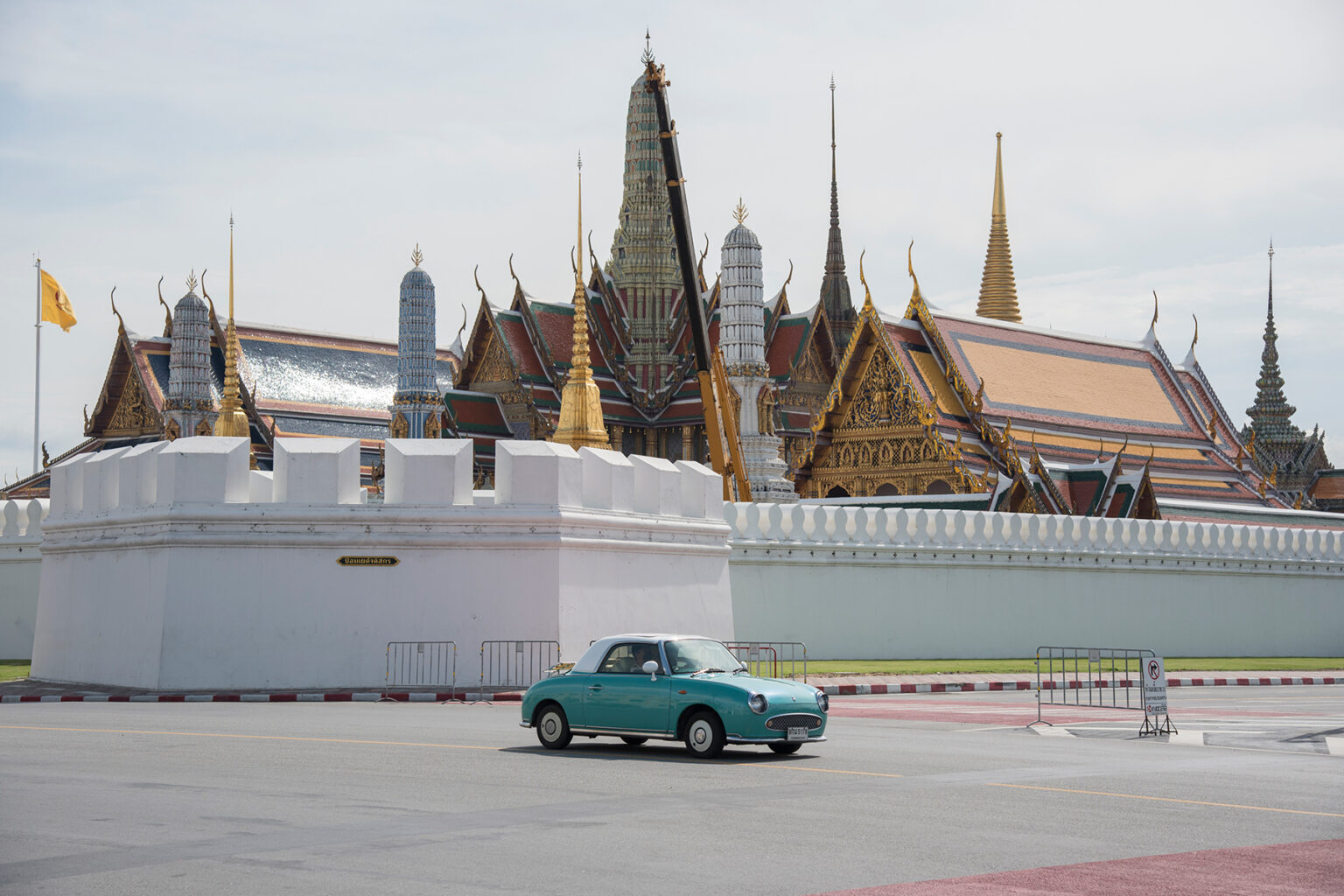
Driving is a great way to explore Thailand’s varied and beautiful landscape. Before you sit in the driver’s seat, you should familiarize yourself with local rules and regulations and how people’s driving habits might differ from your home country. In this article, you’ll discover everything you need to know about getting around Thailand by car, including speed limits, which side of the road to drive on, and other important considerations.
Whether you’re commuting by car or prepping a road trip, you’ll find answers to all your driving queries in Thailand with the following topics:
Driving in Thailand: facts and figures
According to CEIC data, there are 20,417,443 registered vehicles in Thailand (December 2023). A large percentage of car owners are located in Bangkok, home to some 7.5 million registered vehicles. This number is only set to grow and, what’s more, it does not include unlicensed means of transport.
This growth in vehicle ownership has led to an increase in vehicle emissions and pollution. However, the country is committed to imposing Euro 5 emissions standards on new vehicles. This and a package of electric vehicle (EV) incentives show a recent drive for greener policies.

Thailand’s roads are managed by the Department of Highways (DOH) (กรมทางหลวง) and Department of Rural Roads (DORR) (กรมทางหลวงชนบท). Both work as departments of the Ministry of Transport (MOT) (กระทรวงคมนาคม), the branch of government responsible for driving legislature. In particular, the Department of Land Transport (DLT – กรมการขนส่งทางบก) is responsible for road transport and the issuing of driving licenses.
Be aware that there are many road dangers in Thailand. The country records some of the most dangerous roads in the world, where roughly 50 people die every day in accidents. Therefore, you should exert extreme caution when driving. In particular, look out for poor-quality, low-lit roads in rural regions, and always drive defensively.
Who can drive in Thailand?
You can drive in Thailand if you’re over 18 and hold a valid driver’s license (ใบขับขี่). Most foreign drivers require an international driving permit (IDP) before arriving in the country. However, citizens of the Association of Southeast Asian Nations (ASEAN) can use their current licenses thanks to a mutual agreement (PDF).
Thai driving licenses
If you have a foreign driver’s license from outside the ASEAN, your IDP will allow you to drive for up to one year. However, once you meet the one-year threshold or become a permanent resident in Thailand, you’ll need to convert your foreign license to a local one. If your foreign driving license is not in English, you must also carry a translation in English or Thai.


Writer
Benjamin Tree
Insider tip
As a Thai driving license for expats contains your passport number as its ID number, it is a valuable form of identification in the country. For example, you can sometimes use your license instead of a passport when checking into a hotel.
How to get a Thai driver’s license
In brief, the process for obtaining a driving license is as follows:
- Make sure your visa is valid for long-term stays in Thailand.
- Obtain a medical certificate from a local physician that confirms you are physically and mentally fit.
- Attend a driving school (โรงเรียนสอนขับรถ).
- Pass your theory and practical tests.
- Apply for a license.
To explore the procedure in depth, read more about getting a driver’s license in Thailand.
Exchanging a foreign driving license
If you already hold a valid driving license from your home country, exchanging it is fairly straightforward. You’ll need to apply at a local DLT office with the following documents:
- A passport containing a valid visa
- Certificate of residency or a Thai work permit
- Medical certificate
- Original driving license plus a photocopy
- Translation of your driving license into English
- Two recent passport-sized photographs
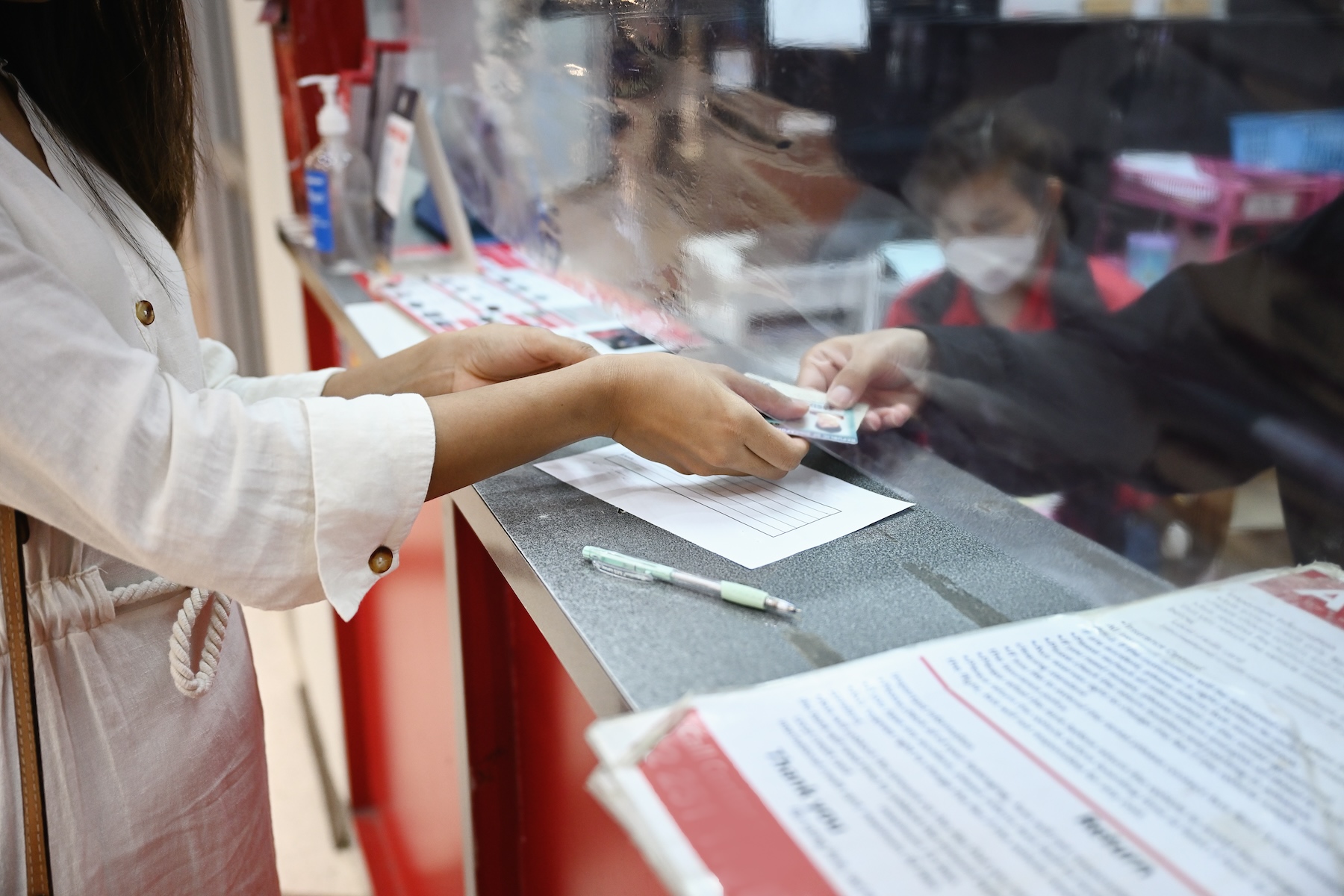
You must pass additional tests with a DLT staff member to receive a temporary license, which you can then renew for a longer term.
Car registration and maintenance in Thailand
All car owners in Thailand must legally register their vehicles. You must hold a valid visa, work permit, and embassy letter confirming your Thai address. Owners generally register cars at their local DLT office. However, when purchasing a new car, the dealership will charge a fee for registration on your behalf.
Once you have registered your car, you’ll receive a blue registration book (เล่มทะเบียนรถ). You should never buy a used car without this logbook.
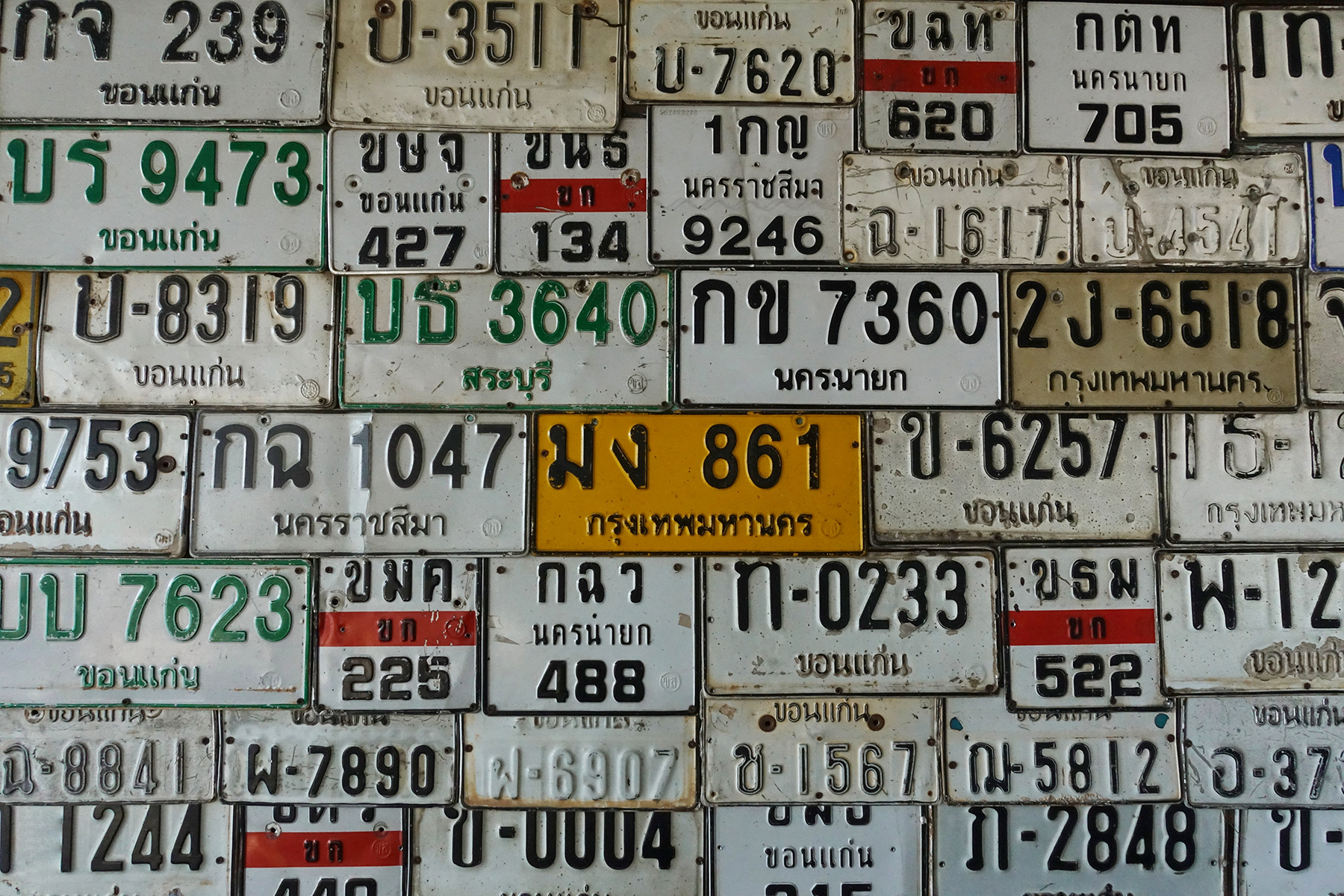
You must renew your vehicle registration and pay tax annually at a local DLT office or online for ฿1,200 to ฿8,000, depending on your vehicle type and size. Each vehicle must display this tax certificate on its front windscreen.
Inspections are mandatory in Thailand for vehicles over seven years old. They test roadworthiness, engine, and emissions every year. On passing, you’ll receive a Dtor Ror Or certificate (ตรอ., Dtor Ror Or.), mandatory for annual tax. To find an appropriate test center, look for a “ตรอ.” sign on a yellow cog with a blue background. This indicates a garage performs tests and issues Dtor Ror Or certificates.
Driving costs in Thailand
When you drive in Thailand, it’s worth considering how much to budget. The costs of driving include:
- Vehicle maintenance costs
- Road and vehicle taxes
- Auto insurance including compulsory coverage (ประกันภาคบังคับ) and additional voluntary policies (ประกันภัยภาคสมัครใจ)
- Fuel costs

When out on the road, you should also be aware that some Thai expressways and urban routes are subject to tolls (ค่าผ่านทาง). These include barriers and automated M-Flow systems that issue online invoices.
For an overview of the costs of owning a vehicle, read more about buying a car in Thailand.

Local expert
Jane Evans
Insider tip
Tolls are usually based on vehicle size or number of wheels. Be careful not to enter the M-Flow channel on expressways or motorways if you are paying the toll manually with cash, otherwise you may need to reverse out. Some tollways are free during public holidays to ease congestion – this is usually announced in the local news.
Driving rules and penalties in Thailand
General road rules in Thailand
In Thailand, drivers drive on the left side of the road. This result of lasting British influence puts the country at odds with its neighbors that drive on the right, except Malaysia. Therefore, you should familiarize yourself with any differences in driving rules this may bring.
Thailand’s road rules are outlined in the Road Traffic Act (พระราชบัญญัติจราจรทางถนน). However, be prepared. The country has very poor road safety, heightened by drivers frequently bending or breaking the rules. This is made worse by bribery scandals. With that said, these are the legal essentials you need to follow:
- Drive on the left side of the road and overtake on the right.
- The driver must always have a valid driving license at hand.
- Wearing a seatbelt is mandatory.
- Children under six must use car seats with proper harnesses.
Writer
Benjamin Tree
Insider tip
Many traffic lights allow a left turn on a red signal, but only when the sign indicates (ซ้ายผ่านตลอด). Traffic lights are often turned off around 23:00, leaving motorists to look out for themselves.
Speed limit
In Thailand, speed limits are expressed in km/h. What’s more, signposted limits are a maximum and must be followed. In general, the limits are:
- 80 km/h in built-up areas
- 90–120 km/h outside built-up areas
- 120 km/h on highways
- 110–120 km/h on expressways
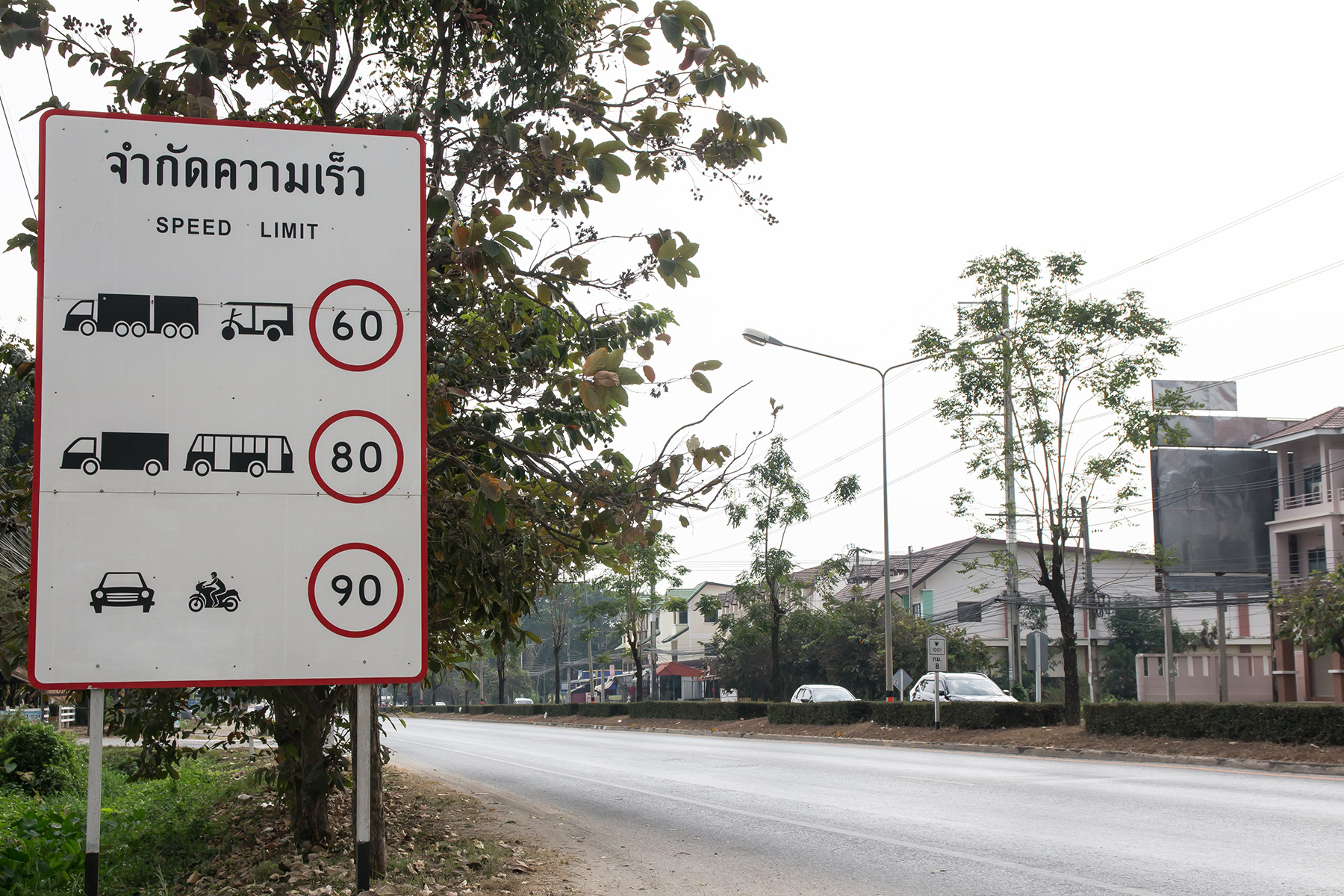
Penalties for first-time speeding offenders include fines of up to ฿4,000.
Driving under the influence
Thailand’s legal blood alcohol limit is 0.05% or 0.5 grams per liter of blood. It is a severe driving offense in Thailand punishable with a year in prison and/or a fine of ฿5,000 to ฿20,000, plus community service.
Distracted driving laws
As per the Land Traffic Act, drivers are prohibited from using mobile phones when driving unless through a hands-free device. Drivers caught breaking these rules can face fines of ฿400 to ฿1,000.
Driving without a license
Driving without a valid license is punishable by a fine of up to ฿50,000. You could also face a jail sentence of up to three months.
Road signs in Thailand
Thailand signed the Vienna Convention on Road Signs and Signals but has yet to ratify this treaty. As a result, its road signs generally adhere to international norms with informative, prohibitive, warning, and mandatory signs.
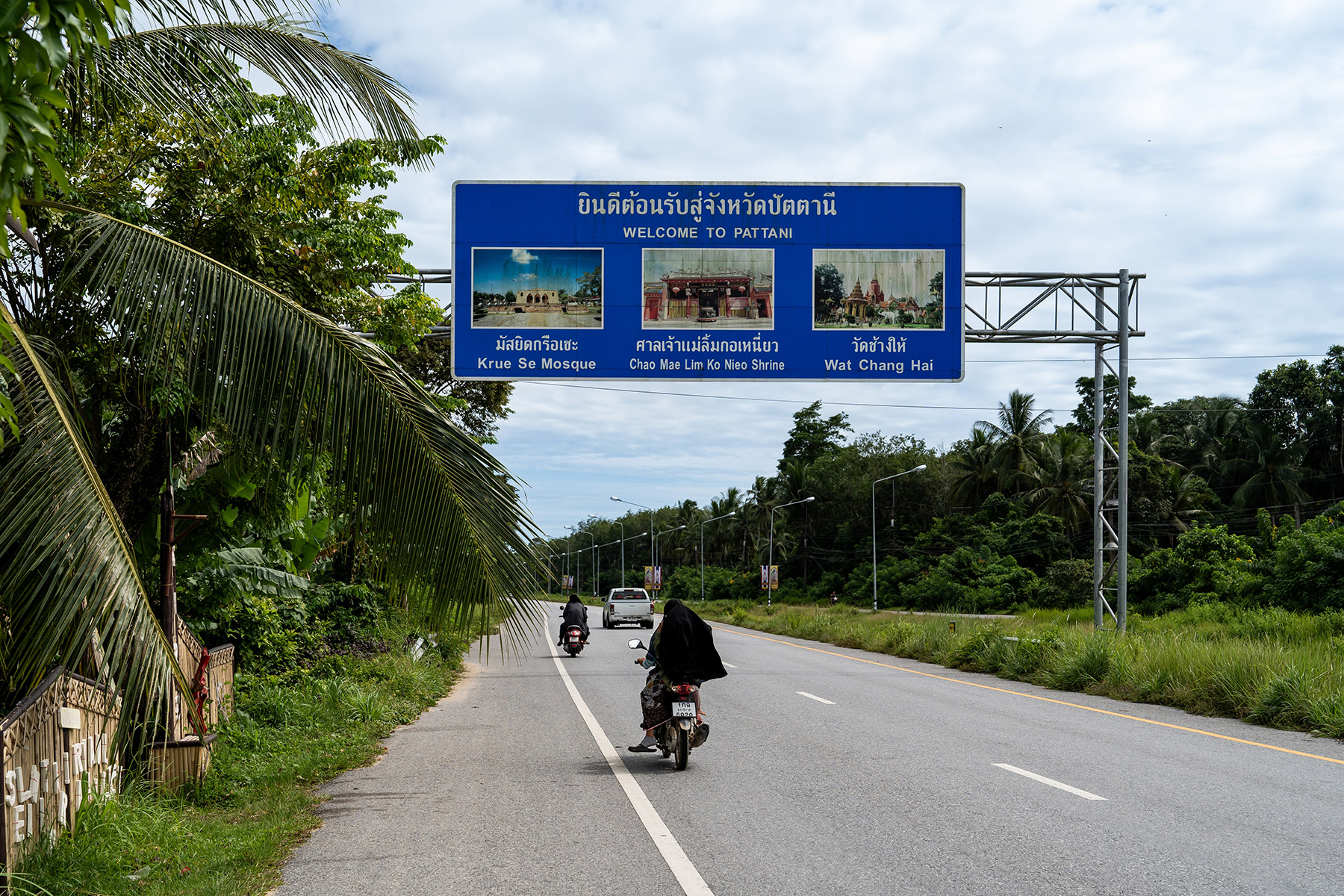
It’s a good idea to familiarize yourself with these signs and road markings. In particular, pay attention to stop (หยุด, yùt) and slow (ขับช้าๆ) road markings that may not appear in English.
Traffic information in Thailand
Thailand can experience very heavy traffic, especially in urban areas like Bangkok. Here, you can expect congestion throughout the day, particularly during rush hours from 07:30 to 09:30 and 17:00 to 19:30.
Many Thai people use the Highway Traffic app to follow live traffic updates and plan routes. You can also use global services like TomTom.
Drivers with disabilities in Thailand
There is little legislation relating to disabled drivers in Thailand. As long as you pass the physical and mental health checks to obtain or renew your driver’s license, you may drive.
Regarding accessibility, you may come across designated accessible parking spaces in Thailand. However, no standardized system exists, and such spaces are much more prevalent in built-up areas. Local laws differ, but you can generally get a disabled sticker for your car from your local transport office or purchase one online.
Parking in Thailand
Thailand has free and paid parking spots (จุดจอดรถ). Regulations are usually posted on nearby signs or roadside markings. You may even come across English translations in tourist destinations. In general, parking rules follow these color codes:
- White rectangles – a designated parking spot. Time limits usually appear on a nearby sign.
- Diagonal white lines – a designated parking spot for motorcycles and two-wheelers. Cars are prohibited here.
- Red and white lines – no parking, or you may face fines or clamping.
- Yellow and white lines – a short-term parking spot. A sign should indicate a time limit, usually around five minutes. This marking is also used for bus stops in parts of Thailand.
While some car parks designate spots for disabled and pregnant drivers, there is no national, standardized system. What’s more, residential permits are also uncommon in Thailand.
In the event of a fine, you’ll typically receive a small ticket beneath your windshield. You can pay these at the issuing police station or online via the QR code on the ticket itself.
Road accidents and breakdowns in Thailand
Road accidents
Thailand has one of the world’s worst road mortality rates. In particular, 2022 saw an increase in road accidents from previous years. Many of these accidents involve motorcycles and other two-wheel vehicles. Therefore, you should be extra cautious and defensive when driving in Thailand, showing extreme care when maneuvering or changing lanes.
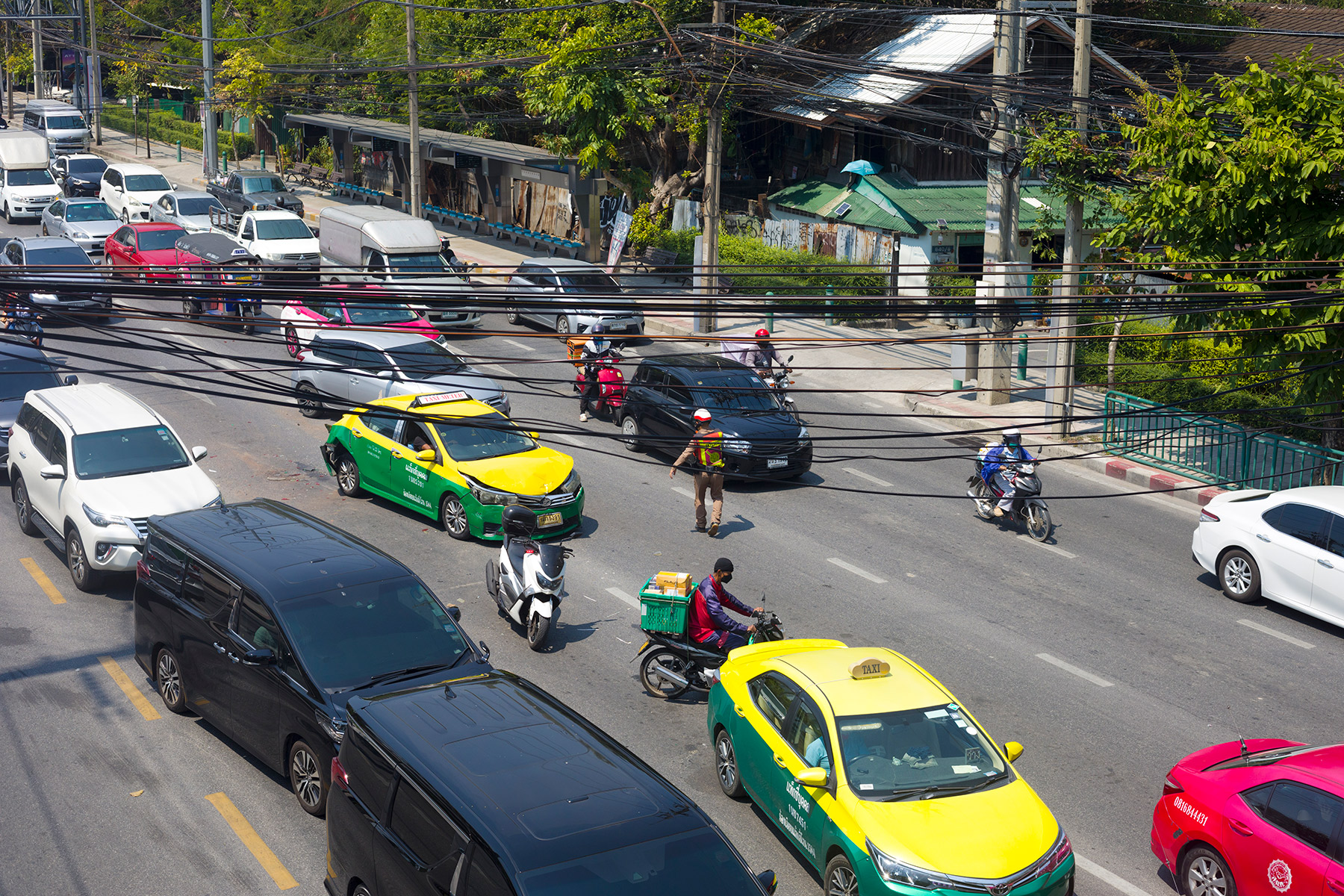
Follow the usual safe driving tips like creating space between vehicles and only traveling in good conditions with sufficient visibility. If you do get into an accident, follow these steps:
- Stop and park your car somewhere safe, if possible
- Call the police and any other emergency services as needed
- Make an accurate record of any damage and take photographs
- Gather witness statements where possible
- Exchange contact and insurance information with those involved
- Talk with the local police on arrival
- Report the incident to your insurance provider
You should keep your contact with those involved brief. Unfortunately, just like elsewhere, a simple “sorry” can be used against you if you make a claim. Instead, only tell the police, your insurance provider, and medical professionals the details of the accident. The amount you’ll pay depends on your insurance coverage and liability.
If you have a road accident in Thailand and nobody is harmed, you can call your insurance provider. However, if someone is injured, the police will turn up, expect you to report to the police station (if you’re not the injured party), and likely impound the vehicles involved. You will be expected to pay a fee to release your vehicle, even when the accident is not your fault.

If a doctor clears the injured party, you can then resolve the incident with the police. However, if the injured party is hospitalized, visiting them is recommended to show that you are concerned. This can positively influence cases in which the accident results in court proceedings.
Writer
Benjamin Tree
Insider tip
Thailand sees an alarming number of road accidents. Road rage is a real issue and can escalate into violence very quickly, so it is important to keep your cool and not engage.
Vehicle breakdowns
If your vehicle breaks down, pull your car over to a safe place and turn on your hazard lights. You can then contact one of Thailand’s emergency assistance providers. If your insurance covers you, call them for their recommended recovery service. Their emergency number should be listed online. If not, you can use any of the following for a fee:
- The Department of Disaster Prevention and Mitigation (DDPM, กรมป้องกันและบรรเทาสาธารณภัย): The government organization in charge of emergency services has a 24/7 hotline reachable at 1784.
- Thai General Insurance Association (TGIA, สมาคมประกันวินาศภัยไทย): Your Thai insurance provider will likely provide emergency coverage through the TGIA. You can reach them at 1787.
- Local Towing Company: You can also use a local towing company if required.
Cars in Thailand
If you want to drive in Thailand, you’ll need a vehicle. You have several options – buying, importing, or renting one.
Buying a car in Thailand
When buying a car in Thailand, you’ll generally need to provide:
- Your passport
- Non-immigrant visa valid for at least a year or a work permit
- Valid Thai driver’s license
- Proof of insurance
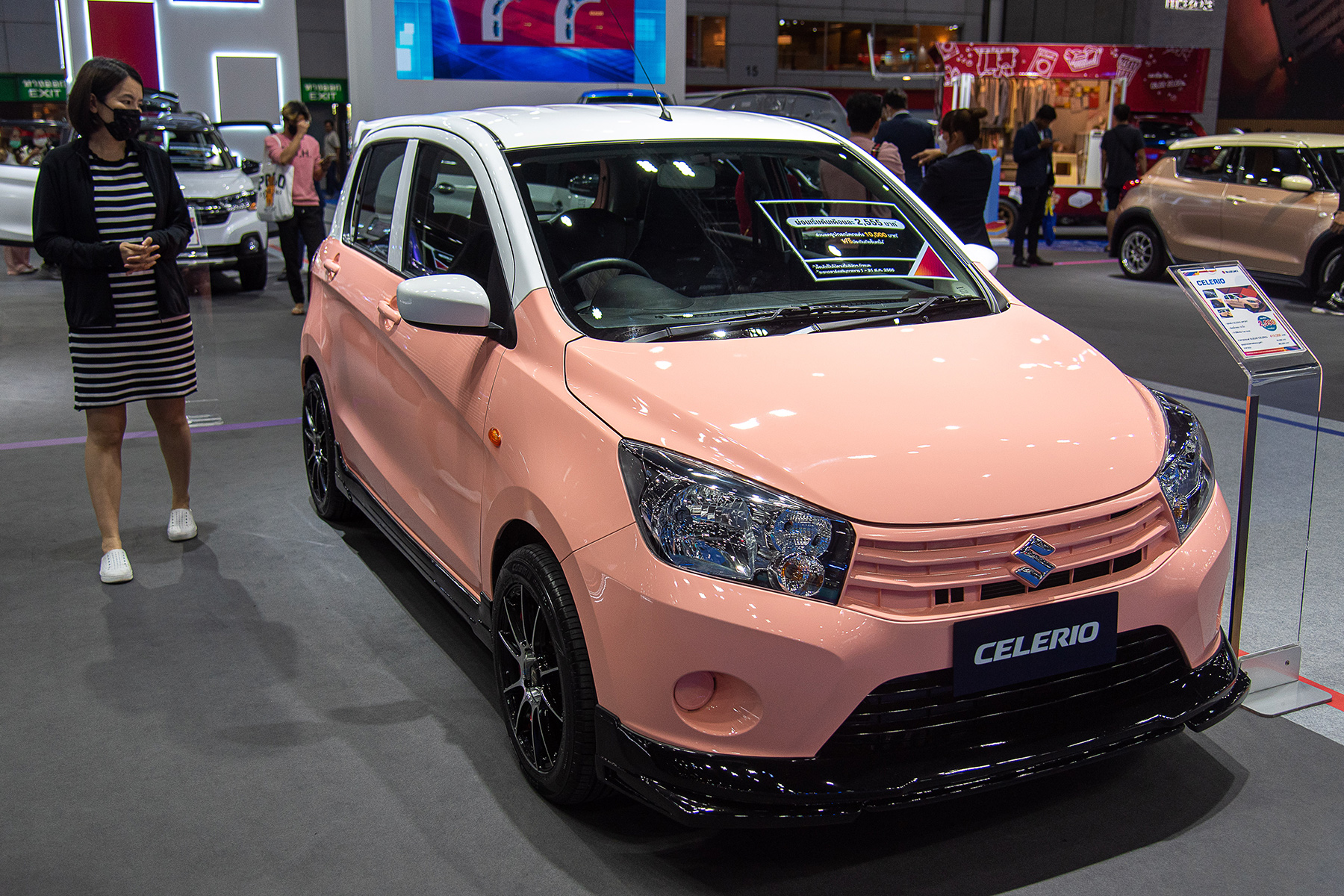
When buying a used car, make sure it comes with its logbook. This is essential to transfer the sale and ensure the purchase is legal. For more information on the process, read about buying, importing, and selling cars in Thailand.
Importing a car in Thailand
It is possible to import a car to Thailand. However, permanently importing a car will incur heavy fees of up to 200% of the vehicle’s value. You’ll also need to get an import permit before it arrives. This involves a lot of paperwork you must file through the Ministry of Commerce (MOC, กระทรวงพาณิชย์).
You’ll need to provide the following documents in total:
- Passport
- Work permit with at least one year remaining
- Valid non-immigrant visa
- Bill of lading
- Original sale documents
- Import declaration form
- Foreign transaction form
- Proof of insurance
It is recommended that you use a Thai-speaking agent familiar with the procedure to help you with these documents and the import process.
Renting a car in Thailand
Renting a car (เช่ารถ) in Thailand is much the same as any other country. You must be over 18 and hold a valid driving license. This license can be Thai or a foreign one with an IDP. You may also need to provide a copy of your passport or proof of residency when booking.
Some international rental agencies may have stricter minimum age policies, for example, Hertz at 21 years and Avis at 23. Some companies may also charge a fee for drivers under 21 or over 65.
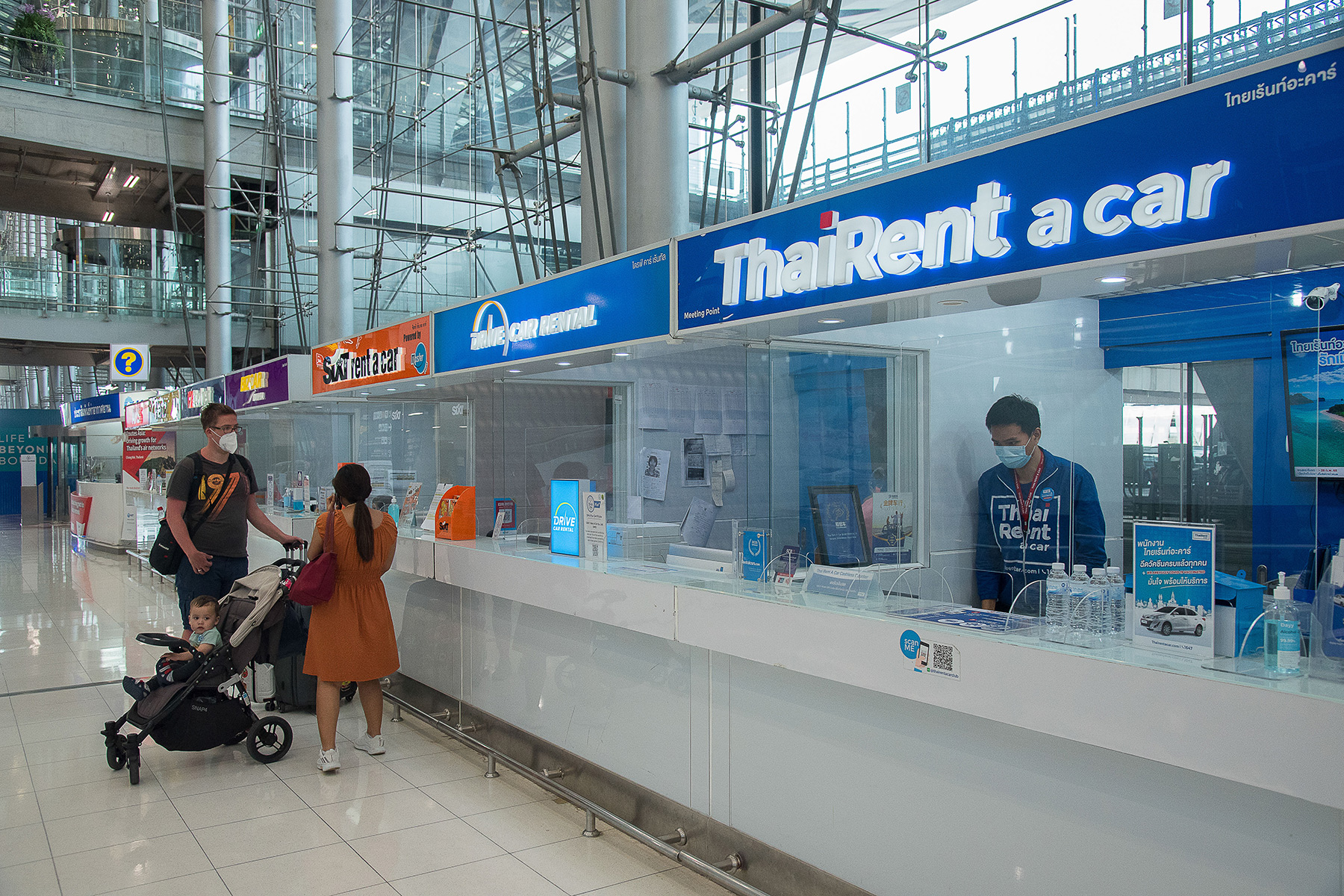
You’ll find short and long-term rentals across Thailand in major cities, tourist areas, and airports. Some agencies will provide drop-off and pick-up services when booked in advance. You can compare prices at rental agencies with tourist-focused comparison websites like Holiday Autos and Travel Supermarket.
Generally, you can hire a comfortable five-door economy car for about ฿1,200 per day. However, this can vary depending on the season and location.
Selling a car in Thailand
There are several ways to sell your car in Thailand. You can take care of the sale privately or sell to a dealer (ตัวแทนจำหน่ายรถยนต์). If you choose a dealer, you’ll get a hassle-free sale minus fees.
Selling privately often returns the most profit, but it involves more paperwork. If you’re not selling your car to someone you know, it’s worth trying an online marketplace like Facebook, which is very popular in Thailand.
In terms of documents, you’ll need to provide the following when selling:
- Vehicle log book (blue book)
- Photocopies of your visa, passport, and proof of address
- Notice of transfer of ownership
The last document should be submitted online or at a local DLT office within seven days of the sale.
Carpooling/car sharing in Thailand
If you want to save money on driving, carpooling is also an option. The rise in global fuel costs has led to several carpooling schemes where passengers can all contribute to save money. This may include sharing a ride with friends or co-workers on a daily commute. As a result, it’s fairly low-key and more prevalent in cities like Bangkok.
More specific services have emerged where you can find or share rides online. The market is still young in Thailand, but services like GrabHitch have emerged in Bangkok. Passengers pay a fixed rate of ฿50 for a specific route.
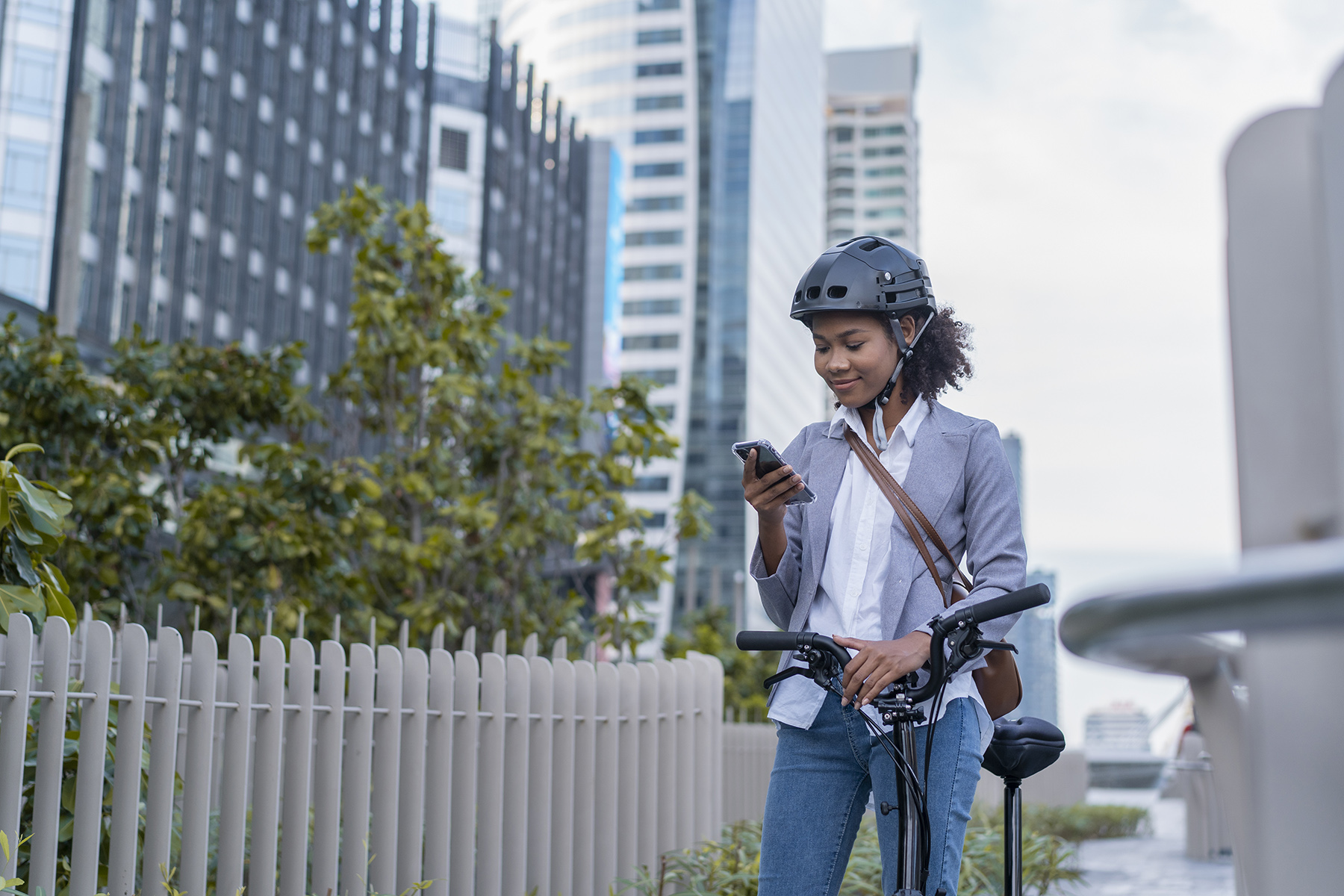
You can also check out Carpool World, a global platform with users in Thailand. These services differ from general ride-hail apps as you are not technically a passenger paying for a taxi service.
Other similar peer-to-peer schemes have emerged for car rentals. These include the rent-a-car club that allows you to hire a car or rent out yours for a fee.
Car repair in Thailand
If your car needs servicing, bodywork, or general maintenance, there are plenty of auto repair garages (อู่รถ) in Thailand. The dealership where you bought your vehicle and your insurance provider will both have a list of recommended centers.
If you don’t have access to these, it’s best to use a directory to discover local shops in your area or ask around for recommendations. You can also use recognized brands for general maintenance and tire changes, including MyCar.Repair or B-Quick. Alternatively, you can check the store finder page on tire providers like Goodyear or Michelin.
Tips on driving in Thailand
You must be mindful when driving in Thailand and respond to local challenges. In particular, pay attention to the following:
- Be cautious of local drivers who may ignore traffic rules.
- Don’t assume a driver will stop at an intersection.
- Be prepared for sudden stops.
- Make slow but decisive lane changes.
- Be particularly cautious of motorcycles. They may pass you on both sides, even on small roads.
- Beware of U-turn lanes. You’ll need to change lanes when using them.
- Tailgating is common, particularly with large vehicles. It’s safest to pull into the slower lane and let them pass.
- Generally avoid driving at night, except in Bangkok, due to low lighting conditions, unlit vehicles, and truck traffic. Furthermore, try not to drive too close to the right, as you may encounter vehicles without lights, driving on the wrong side of the road, or both.
- Watch out for trucks parked on the hard shoulder at night – some have no lights or reflectors
- Steer clear of trucks, buses, and minibuses, which are often driven carelessly.
- Look out for animals. You may come across water buffalos, stray dogs, and even elephants on rural roads.
Writer
Benjamin Tree
Insider tip
Flashing headlights at oncoming drivers means “Get out of my way, now!” rather than “Please proceed”. Furthermore, never assume that the left lane is yours, and always be ready to avoid oncoming vehicles from all directions.
Useful resources
- Department of Land Transport (DLT) – the department in charge of road transport. This is also where you must register vehicle ownership, renew licenses, and pay tax.
- Easy Pass – a card used for electronic tolls on expressways
- Thai Intelligent Traffic Information Center (iTIC) – provider of real-time traffic reports


Did you find this guide helpful?