'%20id='ico-down'%20stroke='%23000000'%20stroke-width='1.5'%3e%3cg%20transform='translate(1092.250000,%20254.750000)'%3e%3cpolyline%20id='Path-2-Copy-4'%20transform='translate(5.500000,%202.750000)%20scale(1,%20-1)%20rotate(-180.000000)%20translate(-5.500000,%20-2.750000)%20'%20points='0%200%205.5%205.5%2011%200'%3e%3c/polyline%3e%3c/g%3e%3c/g%3e%3c/g%3e%3c/svg%3e)



'%20fill='%23000000'%3e%3cg%20id='icons'%20transform='translate(56.000000,%20160.000000)'%3e%3cpath%20d='M144,7339%20L140,7339%20L140,7332.001%20C140,7330.081%20139.153,7329.01%20137.634,7329.01%20C135.981,7329.01%20135,7330.126%20135,7332.001%20L135,7339%20L131,7339%20L131,7326%20L135,7326%20L135,7327.462%20C135,7327.462%20136.255,7325.26%20139.083,7325.26%20C141.912,7325.26%20144,7326.986%20144,7330.558%20L144,7339%20L144,7339%20Z%20M126.442,7323.921%20C125.093,7323.921%20124,7322.819%20124,7321.46%20C124,7320.102%20125.093,7319%20126.442,7319%20C127.79,7319%20128.883,7320.102%20128.883,7321.46%20C128.884,7322.819%20127.79,7323.921%20126.442,7323.921%20L126.442,7323.921%20Z%20M124,7339%20L129,7339%20L129,7326%20L124,7326%20L124,7339%20Z'%20id='linkedin-[%23161]'%3e%3c/path%3e%3c/g%3e%3c/g%3e%3c/g%3e%3c/svg%3e)
'%20fill='%23000000'%3e%3cg%20id='icons'%20transform='translate(56.000000,%20160.000000)'%3e%3cpath%20d='M335.821282,7259%20L335.821282,7250%20L338.553693,7250%20L339,7246%20L335.821282,7246%20L335.821282,7244.052%20C335.821282,7243.022%20335.847593,7242%20337.286884,7242%20L338.744689,7242%20L338.744689,7239.14%20C338.744689,7239.097%20337.492497,7239%20336.225687,7239%20C333.580004,7239%20331.923407,7240.657%20331.923407,7243.7%20L331.923407,7246%20L329,7246%20L329,7250%20L331.923407,7250%20L331.923407,7259%20L335.821282,7259%20Z'%20id='facebook-[%23176]'%3e%3c/path%3e%3c/g%3e%3c/g%3e%3c/g%3e%3c/svg%3e)

Because the options in Singapore — including costs, outlook and tax rules — can differ from your home country, learn how investing in Singapore works first. Then commit money once you understand the risks.
This guide looks at various Singaporean investment options from property to stocks, pensions, and alternative assets, covering product availability and tax implications.
Important: Information in this guide is educational only. This information is general in nature and does not take into account your personal circumstances. You should seek independent financial advice before making any investment decisions.
Table of contents
- Key takeaways: Investing in Singapore
- Investment in Singapore
- What to know before investing in Singapore
- How to start investing in Singapore as an expat
- Savings account investments in Singapore
- Pension investments in Singapore
- Property investments in Singapore
- Investment funds in Singapore
- Investing in stocks and shares in Singapore
- Ethical and sustainable investing in Singapore
- Other types of investment in Singapore
- Tax on investments in Singapore
- Conclusion
- FAQs
- Useful resources
Wise Account
If you’re planning to invest in Singapore and need to make a high-value transfer to buy assets, add to a pension, or deposit into a savings account, Wise can help. You can convert your home currency using the mid-market rate with transparent fees and access automatic discounts if you transfer 30,000 SGD or more over the course of a month.
Plus, Wise offers a powerful international account which can help you manage your money, to receive, send, spend and exchange a broad selection of foreign currencies – a great option if you’re living an international lifestyle. Wise is licensed by the Monetary Authority of Singapore (MAS) as a payment service provider.

Key takeaways: Investing in Singapore
- Singapore has a developed economy and many investment opportunities – getting professional advice is key to successfully investing in Singapore or elsewhere
- Singapore has routes to permanent residency for very high investors (10 million SGD and more) – but you can’t get citizenship by investment
- Expats can invest in Singapore in a pension or buying shares – many different options are available depending on individual needs
- There are strict rules on foreigners buying Singaporean real estate and high taxes – 60% tax applies on purchases, and foreigners cannot buy landed homes in most cases
Investment in Singapore
The Singapore Economic Development Board (EDB) is the government body which leads on attracting investment into the country. The EDB promotes Singapore as a leading hub for business investments from around the world.
Singapore has very business friendly policies including government support for foreign direct investment and a low corporate tax rate. Industries which are flourishing include global R&D and innovation, green tech, finance, engineering, global manufacturing and aerospace.
Investors in assets such as stocks and bonds will be glad to know that there’s no capital gains tax on gains from most asset types, even if you’re a foreign Singapore tax resident. The main time when this rule does not apply is if you’re buying and selling properties (flipping) for a profit – in this case your gains may be treated as income.
If you’re thinking of buying investment property in Singapore as a foreigner it’s important to know that there are restrictions on property ownership which may impact your decisions. As of February 2026, Foreigners can generally only own non-landed property, and there’s a 60% Additional Buyer’s Stamp Duty (ABSD) as well as other taxes to pay when you buy.
How much is needed to invest in Singapore to get citizenship?
Singapore does not offer citizenship directly through investment. There are ways you can get a visa to enter Singapore as an entrepreneur or investor, but entry is offered on a temporary basis – or as a permanent resident (PR) in some cases. This is a step on the road to citizenship, but it’s not a guarantee by any means.
To give an example, the Global Investor Programme offers permanent resident status to eligible investors. However it is intended for high wealth individuals who have extensive experience in managing a business. You would need to invest 10 million SGD or more in a company, and meet requirements on residency and employment of local Singapore citizens for at least 5 years to retain your PR status.
If you qualify to become a permanent resident you can then apply for Singaporean citizenship. However, this is a relatively long process, and requires you to continue to qualify for a relevant visa for 5 years or more. Only around 20,000 applications for citizenship are successful annually, with numbers of new arrivals carefully controlled by authorities.
What to know before investing in Singapore
Seeking professional advice is crucial before making investments, especially for newcomers unfamiliar with local rules and regulations in Singapore. Most banks and financial institutions have investment advisors available by appointment, including some which offer multi-lingual support services that may be handy for expats.
Bear in mind that you don’t have to use the advisors on hand at your bank. Look for financial advisors familiar with the needs of expats who may be able to give an unbiased assessment of your options.
As an expat investor it’s also important to remember that currency fluctuations can impact returns – get hit by a bad rate when repatriating your savings and you could end up with less than you expect in your home currency.
Wise can help investors move money efficiently between countries with mid-market exchange rates and transparent fees on international transfers. Wise also offers automatic fee discounts on larger transfers, and has a dedicated support team for large international transfers.

Important: Wise provides international money transfer services only. Wise does not offer investment products, investment advice, or wealth management services. Information in this guide is educational only.
How to start investing in Singapore as an expat
Before you start investing in Singapore you’ll need to make sure you have a good understanding of the local market, as well as general principles for investing as effectively as possible. Here are a few universal investment principles to consider:
- Start with low-risk investments for beginners, to give you a chance to learn more about the investment journey
- Diversify investments to avoid concentration risk, looking at different asset types or geographies for example
- Understand time horizon and risk profile – investing is usually a long term concern, so if you’re looking at quicker returns you will need to choose your products carefully
- Never invest more than you can afford to lose and don’t borrow to invest
- Research thoroughly and avoid “too good to be true” offers – including when you compare the fees of different platforms or brokers
- Consider professional advice for complex investments and as you learn
This is general information only and does not constitute financial advice. Different types of investment are suitable for different individual needs. Please seek professional advice for your specific circumstances.
Savings account investments in Singapore
You’ll find an excellent range of savings accounts available from national, regional and global banks in Singapore. Savings options include:
- SGD savings accounts from banks and specialist providers
- Foreign currency and multi-currency savings accounts
- Fixed term deposits
- Regular saver accounts offering bonus interest when you deposit on an agreed schedule
- Digital only savings accounts
Savings accounts made with credit institutions in Singapore are protected by the Singapore Deposit Insurance Corporation (SDIC) up to 100,000 SGD per depositor.
Major banks like DBS offer a full range of deposit accounts which can suit pretty much any eligible client. There are also digital first banks and providers in Singapore which have interest bearing accounts, such as Trust.
Third‑party providers mentioned are for informational purposes only. Wise has no commercial relationship with these providers and does not endorse or recommend any specific third‑party services.
Pension investments in Singapore
If you’re planning on staying in Singapore for the rest of your life, you’ll need to make provisions for retirement. Pensions in Singapore don’t work in the same way as in many other countries – your options will depend on your residency in many cases.
Central Provident Fund (CPF)
The Central Provident Fund (CPF) is the central savings mechanism for Singapore citizens and PRs, which can provide a pension income in later life. This requires both the employer and employee to pay a fixed percentage into a fund which can then be used for key costs including annuity and retirement income.
Supplementary Retirement Scheme (SRS)
Foreigners are not usually eligible for the CPF – but foreigners may choose instead to use the Supplementary Retirement Scheme (SRS) which is a tax deductible voluntary savings option. Limits apply on the amount you can pay into your fund annually.
Other employer pensions
Employer pensions are common in many countries globally. They’re arranged by your employer, and usually require both the employer and employee to make contributions. Occupational pensions of this type are not commonly used by Singaporeans, as the CPF is the core vehicle for retirement savings. However, these may be used – for example – by global companies employing foreigners in Singapore on a short term basis, and as a replacement for the CPF and SRS.
Where they exist they are usually defined contribution schemes in which you save a fixed amount of your salary which is invested until the time you retire. Upon retirement you can use the funds accumulated to buy an annuity.
Property investments in Singapore
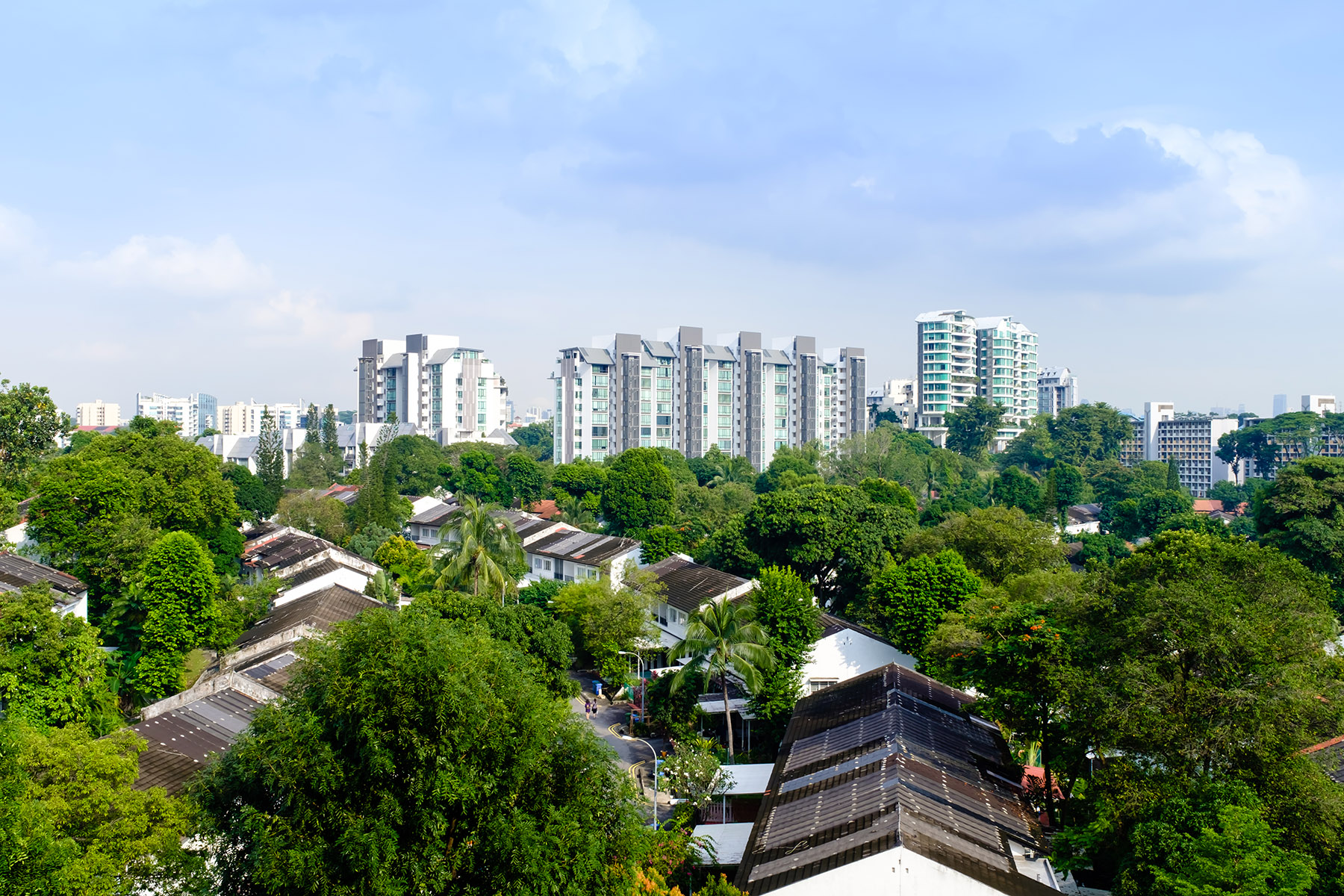
Singapore has strict rules about foreign ownership of property, and high taxes on purchases made by foreign citizens. This can include foreigners who hold Singaporean PR status.
Foreign ownership restrictions and eligibility
The Residential Property Act sets out the limits on the types of properties foreigners can buy in Singapore. Generally this means that you can not buy landed property in Singapore, but you are able to buy some flats and condominiums. Foreigners can also normally buy landed property on Sentosa Cove.
Buying a property in Singapore as a foreigner means paying Additional Buyer’s Stamp Duty (ABSD) with a tax of 60% applied on every purchase. This is lowered to 5% on a first property if you are a permanent resident.
Foreigners looking to buy property in Singapore may need to get legal advice to understand their options and navigate the taxes and fees involved.
Market conditions and pricing
Singapore’s real estate market was considered to be very expensive, which was causing housing problems for local citizens. As a result the increase on tax for foreign purchases was brought in to cool the market and make it more affordable for locals to buy.
In 2025-6 property prices have been showing moderate growth and stability, coming down from the 2023 peak which saw price rises of nearly 7%.
Property prices do change a lot, and variations based on the age and type of home involved can be quite stark. For that reason you’ll need to take some time to learn more about the property market in the area of Singapore you’re considering investing in, so you can spot good deals when they arise.
Buying property in Singapore? If you need to move a large payment overseas, Wise could help, with high transfer limits (usually around 1m GBP or equivalent), transfer fees which get lower when you send over 30,000 SGD, the mid-market exchange rate and a dedicated customer support team for large transfers.
Mortgage options and costs
If you need to pay for your Singaporean property with a mortgage you can apply directly to Singaporean banks, or you might prefer to work with a broker to secure the best possible mortgage as an expat in Singapore.
Variable down payments may be required to secure a mortgage as an expat, with interest rates dependent on the mortgage type, value and duration. Your prospects for being approved for a home loan depend on affordability, and your legal status in the country, as well as other factors such as the property location and value.
Insurance and protection requirements
If you’re taking out a mortgage in Singapore you may want to look into life insurance cover, to ensure the loan can be serviced even in the case of death. This isn’t usually mandatory, but can offer peace of mind.
If you’re getting a loan and need mortgage protection for Singapore, here are some life insurance companies in Singapore you may want to look into:
Investment funds in Singapore
A popular option for many people in Singapore is to use investment funds which are often overseen by fund managers who take over the job of picking assets and managing the portfolio for clients. If you invest in a fund your money is used to buy assets like shares, and you can profit from the growth of that asset, or from dividends paid while you own it.
Singapore’s stock exchange is regulated by the Monetary Authority of Singapore (MAS) to keep customers as safe as possible.
Types of investment funds
Common types of investment funds you may see include:
- Exchange-traded funds (ETF) – low-cost, easy to trade funds indexed to stock exchanges
- Equity/stock funds – investing in stocks and shares for long-term growth
- Bond/debt funds – investing in bonds with periodic dividends
- Mixed funds – combination of shares and bonds
- Hedge funds – private funds with higher returns but more expensive and risky
Before you choose the right funds for your needs, take some time comparing fund performance against fees, and seeking professional advice to ensure you buy into the right options for your investment goals.
Investing in stocks and shares in Singapore
The main Singapore stock exchange is home to international assets and a range of equity, fixed income, currency and commodity markets.
There are many helpful tools online on the exchange websites which allow you to view trends, search for assets and generally get a feel for the market. If you’re looking for a specific index to follow which may help you understand how the market is trading in Singapore, you may find want to look out for any of the following:
- Straits Times Index (STI) which follows the top 30 companies listed on SGX.
- MSCI Singapore Index which follows the large and mid cap segments of the Singapore market
You can invest in stocks through investment funds managed by individuals, or pick stocks yourself by buying individual assets. This is easily done with online and in-app stock trading platforms. Bear in mind that there are risks in stock trading which you should not underestimate. Costs can also creep in when trading, which can undermine any profits you make.
When selecting a platform to start trading in Singapore look carefully at costs including transaction fees, account fees, and taxes.
Ethical and sustainable investing in Singapore
As with most countries, there’s growing popularity of ethical investing and ESG (Environmental, Social, Governance) focused investment in Singapore.
If you’re particularly interested in investing in ethical finance opportunities it’s worth talking your views and options through with an investment advisor who can help you target the right assets in Singapore based on your investment needs. There are specific advisory services which specialise in ethical investments which may be able to meet your needs.
Other types of investment in Singapore
Traditional investments in stocks and shares are very popular in Singapore but there are also other options.
Bonds and government securities
Generally Singapore government bonds, and reputable corporate bonds, are viewed as low-risk investments with moderate return rates. Bonds are often used as part of a diversification strategy to ensure your portfolio has a mix of risk within it.
You can get advice from professionals if you’re interested in adding bonds and securities into your portfolio.
Alternative investments
To diversify even further investors may also look at other markets like gold, precious metals, art, wine, and cryptocurrency. Some of these markets are fairly new, which can mean they’re more volatile and not as well regulated as other markets. If you’re considering alternative investments, be wary of scams and do your research carefully before handing over any money.
Life insurance and specialized products
If you choose to look into using life insurance to invest, get professional advice, You should also bear in mind that taxes may still apply in your home country if you’re an expat in Singapore, on any payouts or gains. Get advice before you invest.

Tax on investments in Singapore
Before you invest in Singapore it’s important to understand the tax implications both in Singapore and in your home country if relevant.
Capital gains and investment income taxation
There is usually no Capital gains tax (CGT) on investments in Singapore. This applies to most property sales, sales of stocks and similar assets and insurance pay outs. You will be liable for tax on property sales if you are making an income flipping homes.
Tax rules are complex and individual circumstances vary. This information is general only. Please consult a qualified tax advisor for advice specific to your situation. Get advice on taxes when you sell any assets so you know how the rules apply in your own case.
Property and wealth taxes
There’s no specific wealth tax in Singapore at the time of writing. Property taxes in Singapore are progressive and depend on the value of the home and whether or not you live in the property yourself.
As of February 2026, Owner occupier property tax runs from 0% to 32% with higher rates on properties which are let out. Property tax is paid annually in advance.

Conclusion
If you’re an expat in Singapore or if you’ve moved there to retire or to live long term, you may be thinking of investing to protect your future financial well being.
Singapore has a large range of investment opportunities from saving in high return accounts, investing in shares and other popular assets, or starting a local pension. Get professional advice before you invest in Singapore to make sure your plans match your risk profile and needs.
FAQs
How to invest in stocks in Singapore?
Invest in stocks in Singapore through major banks which have investment products and advisory services, or through popular app based investment platforms. Get advice before you invest to make sure your investment portfolio matches your long term needs.
Where to invest in Singapore?
Singapore has a full range of investment options from buying property, investing in shares and other popular assets, or starting a local pension.
What is the best way to invest money in Singapore?
There’s no single best investment in Singapore – the right options for you depend on your needs and preferences. As an expat your requirements can be quite different to a long term Singaporean resident, so getting specific advice from an investment expert can help you structure your portfolio.
Is there a reason to invest in Singapore?
You may want to invest in Singapore if you’re planning on living there or if you want to diversify your portfolio to take in additional geographies. Singapore is a vibrant and stable economy so there are plenty of opportunities for investing.
Is it easy to start investing in Singapore for foreigners?
Singapore has an accessible investment landscape with few barriers to entry for most people. Get some advice to make sure you’re using your money wisely, and look at all possible investment options before you commit.
Useful resources
(Information last checked on 4th February 2026)
- Monetary Authority of Singapore – government body overseeing financial services
- Singapore Economic Development Board (EDB) – government body which leads on attracting investment into the country
- Global Investor Programme – visa which offers permanent resident status to eligible investors
- Singapore Deposit Insurance Corporation (SDIC) – protects bank deposits up to 100,000 SGD per depositor
- DBS – major Singapore bank with a broad range of savings accounts
- Trust – newer digital bank with excellent savings products
- Additional Buyer’s Stamp Duty (ABSD) – details of the tax of 60% added on foreign property purchases
- Singapore stock exchange – national SGX exchange landing page with helpful tools and reference information
- IRAS – Capital gains tax (CGT) on investments in Singapore
- Property taxes in Singapore – government explainer including tax rates