
'%20id='ico-down'%20stroke='%23000000'%20stroke-width='1.5'%3e%3cg%20transform='translate(1092.250000,%20254.750000)'%3e%3cpolyline%20id='Path-2-Copy-4'%20transform='translate(5.500000,%202.750000)%20scale(1,%20-1)%20rotate(-180.000000)%20translate(-5.500000,%20-2.750000)%20'%20points='0%200%205.5%205.5%2011%200'%3e%3c/polyline%3e%3c/g%3e%3c/g%3e%3c/g%3e%3c/svg%3e)


Finance
Banking
International money transfers in Singapore
Learn all about making international money transfers in Singapore, including online services, traditional banking, wire transfers, and more.


Foreign citizens in Singapore may need to make international money transfers more often than other residents. Maybe you’ve got a mortgage or other bills to pay back home or need to send funds to family members. Additionally, if you plan to leave Singapore, you’ll want to know how to transfer your money to an account abroad before closing your local one.
Fortunately, Singapore has one of the most advanced, well-run banking systems in the world. There are plenty of ways to transfer your money, and many just need a few clicks on a website or app. Read on to learn all about Singapore’s remittance services, wire transfers, and more.
Wise
Do your finances go beyond borders? Then you need a fast and secure way to move money internationally. Wise is a global leader in online international money transfers, letting you move money at an exchange rate several times cheaper than your bank. Whatever your personal or business needs, Wise can make your money go further.

An overview of international banking in Singapore
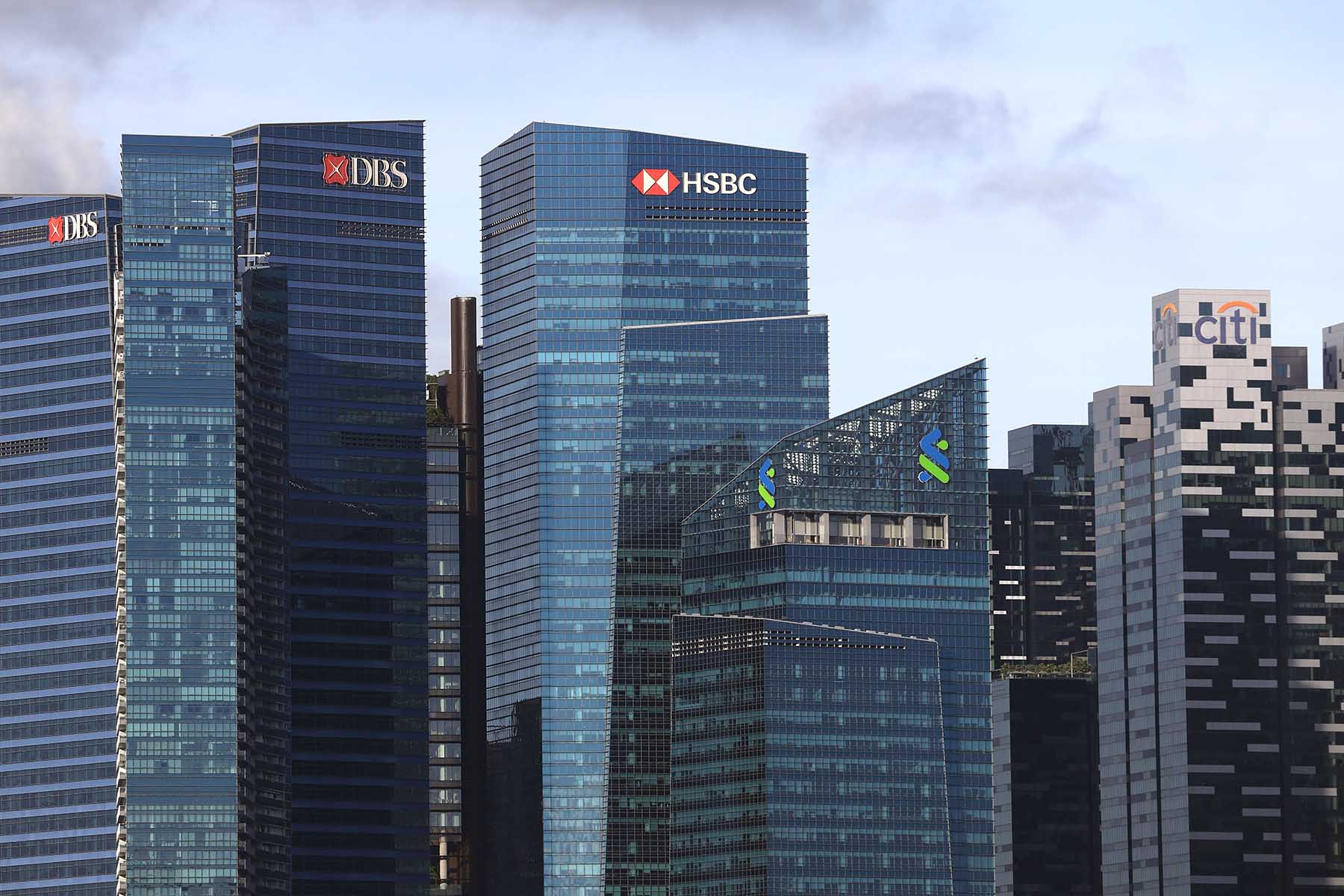
Singapore is a major banking hub with total assets of almost US$2 trillion. It’s also a highly desirable location for expats – although the number of foreign workers dropped during the COVID-19 pandemic, numbers have recovered, and there are now around 1.5 million in Singapore. That’s a significant chunk of the island’s overall population of 5.5 million.
As you might imagine, this makes international money transfers a common part of everyday life in Singapore. In fact, the country is the third-largest foreign exchange center in the world.

Every bank in Singapore offers international transfers, and there are also a number of alternative online remittance services with competitive fees and exchange rates. While many Southeast Asian countries have labyrinthine banking systems in which these transfers involve lengthy processes, Singapore makes it quick and easy.
Online international money transfer services in Singapore
Online transfer services have emerged in recent years as major competitors to traditional banks. They offer quick transfers, often with low fees and favorable exchange rates. Many also allow you to hold your money in multiple currencies in a digital wallet, so they are a popular choice for internationals. Digital wallets are extremely widespread in Singapore and are expected to overtake credit cards as a payment method by 2026.
Digital international money transfers are usually very fast; they often take just a few seconds to complete, although in some cases, they may take up to two working days. This depends on the currency and country you’re transferring to, as some are faster than others. These transfers generally have low fees, which adds to their appeal. However, there are some limits on them.
In recent years, Singapore has seen a number of high-profile money laundering scams. As a result, there are now some strict limits on online money transfer services. Although these services are international, to operate in Singapore, they must follow the Monetary Authority of Singapore (MAS) regulations, particularly the Payment Services Act. This leads to limits on the amount of money you can transfer.

Writer and local expert
Kiera Healy
Insider tip
If you use the popular service Wise, you can’t transfer more than S$30,000 in a fiscal year (April 1 to March 31). However, you can withdraw as much money as you like to your own bank account. You can also convert any funds you have in your Wise account to Wise’s Interest or Stocks, and transfer that without any limits.
International money transfers in Singapore by traditional bank
Domestic transfers in Singapore use the country’s cutting-edge FAST technology for secure, almost instant payments. However, this is not currently available for international transfers. Instead, most banks use SWIFT payments.
Banks set their own transfer limits, which are usually quite generous. For example, Singapore’s most popular bank, DBS, allows customers to move S$200,000 a day. That being said, the MAS monitors any international transfer over US$1,500 as part of its anti-money laundering activities. If you send more than this amount abroad, you’ll need to provide personal information such as:
- ID
- Proof of residential address
- Business address (if you’re making a business transfer)
- Date of business incorporation or registration, if relevant
Costs of international bank transfers in Singapore
Costs can vary quite significantly when you’re transferring money from Singapore, so it helps to do your research, particularly if you tend to send funds abroad regularly.

You may have to pay several charges to transfer your money. For example:
- Cable charges: Generally add a flat S$20 fee, but the handling commission depends on how much you transfer.
- Bank fees: Some banks offer standardized payments, like S$5 for transfers under S$5,000. Others, however, charge a percentage of the sum being sent abroad. You might also have to pay an agent bank fee. This is a charge from the receiving bank, and it can differ from country to country.
- Foreign exchange (FX) margin: The MAS does not impose any exchange rate rules, so banks can set their own for international payments. You can usually expect to lose about 0.7% to 1.5% of the money transferred in FX margin fees.
There are a couple of ways to save money on foreign transfers. For example, banks often set a lower margin for larger payments. That means sending more money less often can make sense rather than making small, regular payments.
In addition, you can often save money by using online tools – for example, the DBS Remit service allows you to make same-day transfers without any fees. It’s available for transfers to several countries, including Australia, India, Malaysia, and the US.
How long do international bank transfers in Singapore take?
How long a transfer takes depends on which country you are sending to. Singaporean banks usually offer same-day transfers to other ASEAN countries, several locations in the Asia-Pacific region, the European Union (EU), the UK, the USA, and Canada. For other countries, you must wait two to four days as standard.
You’ll need to transfer before a set time, which varies from country to country. If you’re sending money to New Zealand, for example, you’ll have to transfer it before 10:00 in Singapore. On the other hand, customers sending funds to the UK, USA, or the Eurozone have until 17:00.

However, even a same-day transfer won’t necessarily arrive on the day you send it. That all depends on the receiving bank. For instance, your bank in Singapore may operate on a Saturday, but its overseas counterpart could be closed.
How do you make an international money transfer in Singapore by bank?
You’ll need the following information to send money overseas:
- Bank name and SWIFT code
- Account number
- Recipient’s full name as it appears in their bank’s records
- Recipient’s address
Whether you’re using a banking app or website or going to your local branch, you must also enter the reason for your transfer. Remember, if you transfer more than US$1,500, you must show ID and proof of address.
Always check with your recipient before making an international transfer. Banks from Singapore usually only ask for the above details, but the receiving country may have different requirements. For example, some countries may demand a particular reference code to ensure your funds end up in the right place.
You must also specify who will pay the agent fees in the recipient’s country. If you want the payee to receive an exact sum, you must cover the charges. Otherwise, they will be deducted from the total amount.
How do you receive an international money transfer in Singapore by bank?
Generally, you’ll need to provide the following information to receive money in Singapore:
- Your full name as it appears on your bank account
- Your SWIFT code
- Your bank account number

In addition, you might need to provide more details, such as your address, depending on the country from which the money is coming. If the sender has nominated you to pay the agent fees, you don’t need to do anything. They’ll be automatically deducted.
International money transfers via online and mobile banking in Singapore
If you’re sending money from Singapore online, you have two choices. You can use your regular Singaporean bank’s mobile banking app or a fully digital bank. The former is usually more convenient if your salary goes straight to your Singaporean bank account. However, many expats find the latter more affordable in the long term.
The rise of international remit services in Singapore means that app-based transfers are highly competitive. DBS and OCBC offer same-day transfers with no cable or handling fees, although the recipient’s home bank may still charge agent fees.
You can also use a purely online transfer service in Singapore, such as:
These are often particularly attractive for internationals, as some offer multi-currency accounts and are easy to use if you frequently travel. You can usually set up security features involving biometrics and two-step authentication to keep your account safe. Never use an account without this kind of security, as you are putting yourself at risk of financial fraud.

Unfortunately, mobile banking in Singapore has been hit by a wave of scandals in the form of various phishing scams and seven-figure money laundering cases. When using a Singaporean banking app, be vigilant and use biometric safety measures. Some banks are planning to introduce a ringfencing feature that will allow users to set aside sums of money in their banking apps that cannot be digitally transferred out.
Wire transfers in Singapore
Services like MoneyGram and Western Union offer international wire transfers from Singapore. You can send money by going to one of their branches or using their website or app.
The advantage of sending a wire transfer is its flexibility. You’ll be able to send money to someone’s bank account, but you can also make a transfer that allows your recipient to collect cash over the counter. In this case, the provider will give you a unique code your recipient must show to collect the funds. In many instances, your recipient can pick up the money within 30 minutes, but this depends on their country.

These services often charge low fees, and some have loyalty programs that allow regular customers to enjoy zero-fee transfers. Another advantage is that they show you their exchange rate beforehand.
Like all financial institutions, wire transfer companies fall under the remit of the MAS and must follow Singaporean regulations about money laundering. As such, you might need to provide ID and proof of address if you’re sending more than S$1,500.
Foreign exchange brokers in Singapore
An FX broker like WorldFirst buys and sells currencies on behalf of customers. They act as a middleman, charging a commission in exchange for taking care of international trades. Using a professional broker can result in much faster international payments and better exchange rates.
That being said, using an FX broker involves a certain amount of risk. You should do plenty of research first to check that your broker is registered with the MAS to ensure they are reliable. If you’ve never used one before and need to exchange money quickly, it’s better to stick with other methods. Take the time to learn more about how brokers operate before you start using them.
FX brokers in Singapore often focus on business clients. They tend to work with large sums of money, so they may not be suitable if you are only transferring a small amount.
Related Articles


Editor's picks

Did you find this guide helpful?