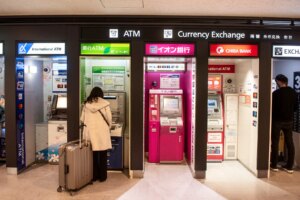
If you have a business in Japan, it’s good practice to have a dedicated business account as soon as you need to receive or spend money on behalf of your company.
Opening a business bank account in Japan can be difficult, especially for foreign founders. Even a properly registered company may face additional checks because banks look closely at its structure, supporting documents, and operations in Japan.
This guide explains how to open an account, what documents you’ll need, and how major Japanese banks compare with alternative providers like Wise Business.
This guide is for general information only and is not financial, legal, or tax advice.
Key takeaways
- Use a business account once company money starts moving – when you invoice clients, pay suppliers, or receive regular business income.
- Registration doesn’t guarantee approval, since banks run their own checks and can turn down even a legally registered company.
- Documents decide a lot of applications, and the strongest ones are clear, consistent, and backed by proof of office, ownership, and business activity.
- Wise Business can be an option for cross-border payments, making it useful for multicurrency transfers and foreign suppliers, subject to eligibility.
- Speed depends on how complete your application is, so matching details across every document can help reduce delays.
Wise Account for managing international business payments
- Manage eligible business payments in multiple currencies.
- Use the mid-market exchange rate for currency conversions, with applicable fees shown upfront.
- Check business eligibility and verification requirements before applying.

When do you need a business bank account in Japan?
You need a business account in Japan as soon as your company starts handling business money. A dedicated account keeps your business and personal account separate, which makes bookkeeping, tax reporting, and day-to-day cash flow easier to manage.
If you’re dealing with repeat invoices, domestic transfers, or payments from Japanese clients, a business account is usually the better choice. It also gives your business a more professional setup from the start.
If you’re starting a business in Japan, the banking step is often one of the first practical hurdles.
Which banks are worth considering for a corporate bank account in Japan?
The best business bank account depends on your business type and how you plan to use it. Some providers are better suited to domestic banking, while others are stronger for digital access or foreign-currency payments.
The following table compares 7 providers by monthly fees, international transfer costs, exchange rates, and currency support.
| Provider | Monthly fee | Overseas transfer fee (Japan to abroad) | Exchange rate | Currency support |
|---|---|---|---|---|
| Wise Business | Free to open, no monthly fees | Transparent fees from 0.27% of the amount | Mid-market rate, no markup | 40+ currencies, including EUR, USD, and JPY |
| Rakuten Bank | 0 JPY | 1,000 JPY per transfer (+2,500 JPY if sent in yen) | Bank rate with margin | Remittances in 60+ currencies to 200+ countries |
| Mizuho | Free for online banking (UPSIDER BANK plan) | 4,000 JPY online, 7,500 JPY at the counter | Bank rate with margin (approximately 1 JPY per USD) | 48 currencies for online corporate transfers |
| SMBC | Free (Trunk account) | 3,000–3,500 JPY online, 7,500 JPY at the counter | Bank rate with margin | Major currencies, including USD, EUR, GBP, CHF, and CAD |
| MUFG | From 1,760 JPY (BizSTATION) | 3,500 JPY online (foreign-exchange service from 2,750 JPY/month), 7,000 JPY at the counter | Bank rate with margin | Major currencies, including USD, EUR, GBP, and AUD |
| GMO Aozora Net Bank | Free | Varies by amount | Mid-market rate, no markup | 9 currencies |
Details researched on 20 October 2026. Fees, service availability, and eligibility can change.
Wise Business: for multicurrency payments
Wise Business is an option if your business works across borders. It helps eligible companies send, spend, and hold money in multiple currencies. For Japan-based businesses, that makes it especially useful if you invoice foreign clients, pay suppliers abroad, or want clearer control over foreign-exchange costs.
One of Wise’s strengths is transparency. You see fees upfront, starting from 0.27%, and currency conversions use the mid-market exchange rate without an exchange-rate markup. You can also manage payments online. Wise Business is designed for companies that want a digital-first workflow, although opening an account is subject to business eligibility and verification.
Business debit cards are available for you and your team, so you can spend internationally in 150+ countries without foreign transaction fees.
Great for: Businesses that need a low-cost, multi-currency account for cross-border payments, foreign clients, and international suppliers.
Rakuten Bank: for startups
Rakuten Bank is a practical choice for startups that mainly need a Japanese business account for everyday domestic use. It is often attractive to newer companies because it is online-led, relatively easy to manage, and more suitable for businesses that don’t want to rely heavily on branch visits.
For businesses that are mostly operating in Japan and want straightforward transfers, online banking, and a simple account structure, Rakuten Bank can be a good fit. It is especially useful if your business is still small and you want a clean, low-overhead setup.
Great for: Startups and smaller businesses that want a digital-first Japanese business account with simple domestic banking.
Mizuho
Mizuho is a strong option for companies that want a recognized local bank and a more established business banking relationship. It is often better suited to businesses that already have a visible footprint in Japan and want access to a large domestic banking network.
The main strength of Mizuho is its established presence. If your business needs a major Japanese bank for supplier payments, payroll, local business relationships, or broader corporate banking services, it can be a solid fit. It also makes sense for businesses that want a more conventional setup rather than a digital-only product.
The trade-off is that Mizuho can be more demanding in terms of screening and paperwork. Foreign founders should expect closer checks on office proof, company structure, and business activity.
Great for: Established businesses that want a major Japanese bank with a strong domestic profile.
SMBC
SMBC is often a good fit for businesses that need more than a basic current account. It is particularly useful if you want to manage domestic payments, payroll, and supplier transfers through a corporate online banking setup with more structured controls.
This makes SMBC attractive for businesses that value day-to-day payment management, user permissions, and a more corporate-style banking workflow. It can suit companies that are already operating in Japan and want a bank that feels built for regular business administration rather than just account holding.
Great for: Businesses that need broad domestic banking support and a strong local corporate banking network.
MUFG
MUFG is often a good fit for businesses that want the scale, reputation, and wider corporate reach of one of Japan’s biggest banks. It can suit companies that expect to grow and may need more than basic domestic banking over time.
Compared with a smaller or more digital bank, MUFG is often more appealing if you want a long-term relationship with a major Japanese financial group. That can matter if your business needs a bank with broad corporate coverage, a strong domestic footprint, and the ability to support more complex banking needs later on.
Great for: Businesses that want a major local bank with scale, reputation, and broad corporate banking capability.
GMO Aozora Net Bank
GMO Aozora Net Bank is a practical option for businesses that want a digital-first banking experience and don’t need much branch interaction. It suits companies that prefer to manage most things online and want a simpler everyday workflow.
For smaller businesses or startups that mainly need domestic banking in Japan, it can be easier to manage than a major bank. It is also a good fit if your company is comfortable operating in an online banking environment.
Great for: Digital-first businesses that want an online business account with fewer branch-based requirements.
What documents do you need to open a business bank account?
Banks in Japan usually ask for documents that prove both who you are and what your business does.
The exact list varies by bank, but the following are commonly requested:
- Certificate of Registration
- Articles of Incorporation
- Company seal certificate, if required
- Representative’s passport and/or residence card
- Proof of office or business address
- Business summary or business plan
- Shareholder or ultimate beneficial owner (UBO) details, where relevant
- Any additional bank-specific forms or declarations
If your company is newly formed, the bank may also want supporting documents that show the business is real and active. That could include a website, invoices, a lease, contracts, or a short explanation of expected transactions.
If you’re still preparing your company setup, registering a company in Japan can help you understand which documents are typically needed before you apply for a bank account.
Legal registration and bank approval are not the same thing. Even if your company is properly incorporated, the bank can still reject the application if it wants more proof.
Do you need money to open a business bank account in Japan?
Usually, you don’t need a large amount of money just to apply. But the bank may still want to see that the business is real and financially credible.
So the question isn’t only how much money you have. It’s also whether your business looks active, structured, and easy to verify. In other words, money matters, but it isn’t the only factor. A clear application with strong documents is often more important.
How to apply, step by step
Once you’ve compared the available providers and gathered your supporting documents, you can start the application process.
Choose the right provider
Decide whether you need a major local bank, an online bank, or a multicurrency provider like Wise Business. If you need both local and international banking, you may need more than 1 account. Check whether your business type is eligible.
Make sure the account is designed for your structure
Don’t assume that an English-language page automatically means the product is right for business use.
Prepare your documents carefully
Your company documents, office details, and representative information should match. Even small inconsistencies can delay the review.
Explain your business clearly
Be ready to say what the business does, who it serves, where payments come from, and what transactions you expect.
Submit the application and respond quickly
If the bank asks for more information, reply promptly. Delays often happen when applicants don’t follow up.
Set up and test the account once approved
Check online banking access, payment settings, and beneficiary details before you need the account for payroll or supplier payments.

Why applications get delayed or rejected
Japanese banks are careful, especially with new businesses and foreign founders. They need to understand the business before they approve the account.
Common reasons applications get delayed or rejected include:
- Mismatched names, addresses, or company details
- Weak proof of office or operating address
- Unclear ownership structure
- Vague business purpose
- Incomplete documents
- No clear Japan-based contact
- Applying through the wrong account route
- Outdated or inconsistent paperwork
A rejection doesn’t always mean your business is a bad fit. Sometimes, it means the bank didn’t have enough confidence in the application. Providing additional documents may help clarify the issues, although approval remains at the bank’s discretion.
How to improve your chances
Keep your application simple and consistent. Use the same company details across your documents, website, and application forms.
A short business summary can help a lot. Explain what the business does, how it earns money, and why it needs an account in Japan.
If your company setup is still evolving, understanding business taxes in Japan can also help you think through the wider structure before you apply.
Next steps
Choosing a business account in Japan comes down to matching your company’s needs with the right provider and preparing documents that clearly explain your business. Compare domestic banking services, international payment costs, and eligibility requirements before applying. If your company also makes cross-border payments, Wise Business may complement a Japanese business bank account, subject to availability and verification.
FAQ
Frequently asked questions about business bank accounts in Japan
Can a foreigner open a business bank account in Japan? 
Yes, in some cases. Approval isn’t automatic. Banks usually look at your business structure, Japan address, supporting documents, and evidence of business activity. Newly formed or foreign-owned companies may face additional checks.
Do you need a resident director to open a Japanese business bank account?
Not always, but many banks prefer a Japan-based representative or director. Having someone in Japan can make the screening process easier because the bank can contact the business locally. Requirements depend on the bank, account type, and company structure.
Sources
Expatica’s experts are all about providing the most up to date and accurate information. All guides are fact checked, and whenever we use external sources (like government websites or research papers) we’ll make a note of them here so you can check them out too.
- Business account fees and pricing, Wise Business – Japan
- Business account overview, Wise Japan
- Business account fees and interest rates, Rakuten Bank
- Overseas remittance fees for businesses, Rakuten Bank
- Getting started with overseas remittance for businesses, Rakuten Bank
- Foreign-currency deposit details for businesses, Rakuten Bank
- Business accounts and UPSIDER BANK plan, Mizuho Bank
- Foreign-exchange fees for corporate customers, Mizuho Bank
- Outward remittance product summary, Mizuho Bank
- e-Business Site outward remittance manual, Mizuho Bank
- Trunk business account, SMBC
- Web21 Business fees and services, SMBC
- Overseas remittance fees and currencies for businesses, SMBC
- BizSTATION pricing, MUFG
- BizSTATION foreign-exchange service, MUFG
- Foreign-exchange fees, MUFG
- Business account maintenance fees, GMO Aozora Net Bank
- Overseas remittance for businesses, GMO Aozora Net Bank
- Overseas remittance product summary, GMO Aozora Net Bank
- Overseas remittance service for businesses, GMO Aozora Net Bank
- Procedures for establishment of stock companies, Ministry of Justice, Japan
- Procedures for establishment of limited liability companies, Ministry of Justice, Japan
- Useful tools and leaflets for foreign customers, Japanese Bankers Association
- List of members, Japanese Bankers Association
- Corporate Number Publication Site, National Tax Agency
- Corporate Numbers and corporation establishment notifications, National Tax Agency
- Corporate banking information, Mizuho Bank
- Corporate account support for non-Japanese customers, SMBC
- English account opening information, Rakuten Bank
- English account opening information, PayPay Bank
- Reference cases on suspicious transactions, Financial Services Agency