
'%20id='ico-down'%20stroke='%23000000'%20stroke-width='1.5'%3e%3cg%20transform='translate(1092.250000,%20254.750000)'%3e%3cpolyline%20id='Path-2-Copy-4'%20transform='translate(5.500000,%202.750000)%20scale(1,%20-1)%20rotate(-180.000000)%20translate(-5.500000,%20-2.750000)%20'%20points='0%200%205.5%205.5%2011%200'%3e%3c/polyline%3e%3c/g%3e%3c/g%3e%3c/g%3e%3c/svg%3e)


Finance
Taxes
Guide to French taxes in 2026
Here’s a brief overview of taxes in France, including how they work, which types you’ll come across, what’s new in 2026, and where to get advice.

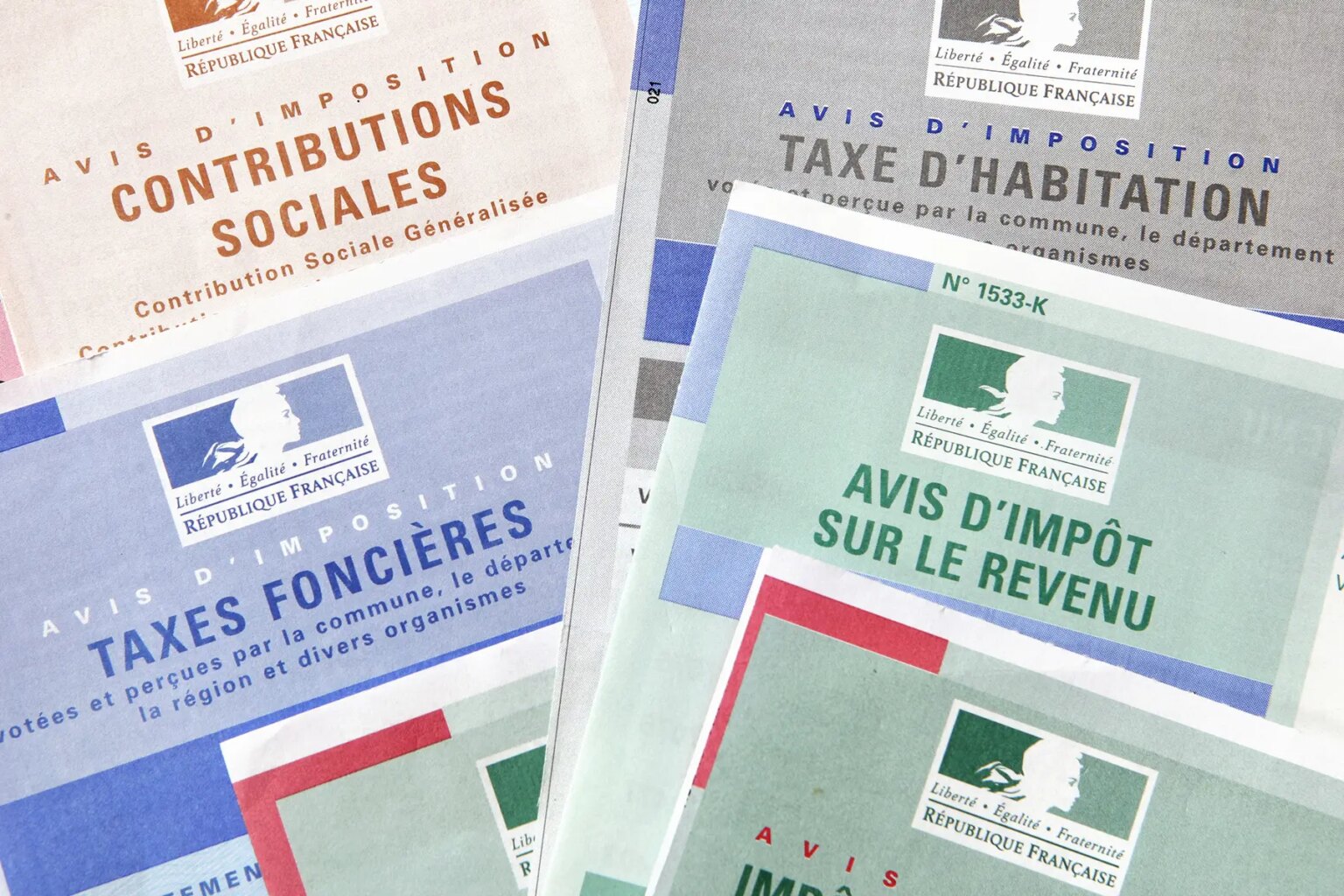
When you move to a new country, it’s important to have an idea of what taxes you’ll owe while living there. France’s tax system is quite complicated, with progressive income tax, varying VAT rates, and rules that depend on your residency status. However, with the right information and resources, you’ll be a capable French taxpayer in no time. Wise helps internationals manage their money across borders with international money transfers at mid-market rate, and multi-currency accounts that support 40+ currencies.
Read on for more about the following:
Elitax
Thinking of moving to France, but not sure how to manage your tax when you get there? Struggling to understand your tax after your circumstances have changed? Elitax can help you understand and manage your taxes in France before and after you arrive in the country.

The French tax system
The Ministry of Economy, Finance, and Industrial and Digital Sovereignty oversees France’s tax system. The country’s tax year runs in line with the calendar year, from 1 January to 31 December. As a taxpayer in France, you may be liable for a range of federal taxes. These include income tax, as well as tax on investments, inheritance, property, and wealth.
Companies operating in France must pay corporate tax on their income and VAT (TVA).
France has recently adopted a pay-as-you-earn (PAYE) tax system. The country introduced the system in 2019, meaning most employees pay income tax at source as part of their monthly pay rather than needing to file an annual tax return. France’s highest income tax bracket is 45%, but this only applies to earnings over €180,294.
What is new about French taxes in 2026?
Income tax
The French government has yet to agree on a 2026 budget. This means that income tax bands are currently frozen at 2025 rates instead of being adjusted in line with inflation.
There are also proposals to extend the new tax on the highest-earning households (the contribution différentielle sur les plus hauts revenus), which was initially intended to apply for one year only. This measure ensures that individuals earning more than €250,000 (€500,000 for a couple) pay a minimum effective income tax rate of 20%, or around 37.2% once social security contributions are included.
Excise tax
Excise taxes on alcohol increased from 1 January 2026 to match consumer index price growth.
Corporate tax
The surtax on companies with revenues of more than €1 billion has been maintained. There were initially plans to halve it for 2026.
Living in France as an expat means dealing with finances in multiple countries. Wise helps you avoid hidden fees and poor exchange rates when transferring money internationally to pay your taxes. With Wise Account, you can hold and manage over 40 currencies, get local account details in 8+ currencies including EUR, GBP and USD, and convert money at the mid-market exchange rate. For self-employed expats, Wise Business account simplifies receiving payments from international clients while minimizing currency conversion costs.
Who pays tax in France?
Tax liability in France depends on your residency status. French tax residents pay income tax in France on their worldwide income. The government considers you a resident for tax purposes if you meet any one of the following four conditions:
- Your permanent home is in France
- You spend most of your time in France (at least 183 days during a calendar year, or even less if you spend more time in France than in any other country)
- You have a job or are professionally active in France
- The center of your economic or financial interest is in France
Non-residents are only taxed on income earned from French sources. So, if you’re not living in France permanently but work for a French company, you’ll be taxed on that income.
How do French taxes work for expats?
France has a comprehensive network of tax treaties with countries worldwide, allowing its residents to avoid double taxation. These treaties, each with its own set of rules, can be complex to navigate. It’s therefore advisable to seek expert advice to understand how the agreement with your home country operates and ensure you’re not overpaying taxes.
France is signed on to the Automatic Exchange of Information (AEOI). This seeks to fight tax evasion by requiring financial intermediaries to be transparent about their clients’ tax residence in signatory countries.
When dealing with tax obligations across borders, currency conversion costs can significantly impact your finances.

Wise offers international money transfers at the mid-market exchange rate with low transparent fees, helping expats save money when transferring funds to pay their French taxes or when receiving income from abroad that needs to be declared in France. This can be very valuable when navigating the complexities of double taxation agreements.
Types of tax in France
Income tax
Income tax in France is payable on earnings from employment and self-employment. Residents are taxed progressively at rates ranging from 11% to 45%. The exact amount you’ll pay will depend on whether you’re single or married and if you have children. You can also offset certain deductions and credits against your bill.

France’s lowest rate of 11% only kicks in on earnings over €11,497, so anyone earning below this doesn’t pay income tax. The top rate of 45% is payable on earnings over €180,294.
Non-residents pay tax on French-sourced income at a flat rate of 20% for income up to €29,315 and 30% for income above this threshold. Savings, investments, and bank interest are also subject to income tax at a flat rate of 30%.
Income tax returns are due in May or June each year, depending on where you live in France. If you need to complete a tax return and have previously submitted one, you should be automatically sent a completed form to check, amend, and return, if necessary.
You are responsible for completing and submitting your French tax return, even if you think you will fall below the income threshold to pay tax.
Income tax for self-employed workers
Self-employed workers (such as sole traders and freelancers) pay income tax at the same rates as employees. Some self-employed workers can benefit from specific tax regimes that may reduce and simplify their overall bill. These include the micro-entrepreneur scheme for sole traders.
Corporate tax
Companies in France must pay corporate tax (Impôts sur les Societiés, IS). Corporate tax rates in France have been gradually falling, with most companies now paying 25%, regardless of their profits. Small companies can benefit from a reduced rate of 15% on their first €42,500 of profits. Corporate tax is payable quarterly in March, June, September, and December.

Companies that spend money on research and development (for example, training staff in scientific, medical, or engineering professions) can benefit from a credit of up to 30% on eligible expenses.
VAT in France
In France, VAT is known as taxe sur la valeur ajoutée (TVA), and is a tax on certain goods and services. The standard TVA rate in France is 20%. However, reduced rates are available for some goods.
| Rate | Percent TVA/VAT | Qualifying purchases |
| Intermediate | 10% | Some food, construction, farming, forestry, and passenger transport |
| Reduced | 5.5% | Some food, non-alcoholic beverages, books, cinema, theater, and concert tickets |
| Special | 2.1% | TV licenses and newspapers, plus some medicine |
Can you get a refund on VAT?
If you are not an EU resident, you may be eligible for a VAT refund on goods purchased in France.
To qualify, your purchases must total at least €100 including VAT, from the same store on the same day. You must request a détaxe form at the time of purchase.
Before leaving the EU, you must validate the détaxe at customs (electronically or at a customs desk). If your goods are in checked luggage, validation must be done before baggage check-in; if they are in carry-on, it can be done after security.
Refunds are typically processed at the airport by refund operators or later via card or bank transfer.

Once your VAT refund is approved, you’ll need a way to receive the funds efficiently. A Wise multi-currency account allows you to receive euros easily and convert them to other currencies at mid-market exchange rates, avoiding the poor exchange rates often offered by refund services.
VAT for businesses
The threshold to register for TVA is €37,500 for service-based businesses and €85,000 for commercial activities, bars, restaurants, and accommodations. You will be allocated a French TVA number (numéro de TVA intracommunautaire) upon registering for VAT.
Municipal property tax
There are two property taxes in France. First, local residence tax (taxe d’habitation) is an annual communal tax. It no longer applies to primary residences, only on additional properties such as second homes and some vacant properties. Bills are sent out to the person occupying the property in November, and payments are due in December.
A second property tax, taxe foncière, is levied on all residences annually. How much you’ll pay is based on your property’s estimated annual rental value, set against a multiplier determined by your local commune. Taxe foncière statements are usually sent out to to the property owners in September, and payments are due in October.
Both taxes are subject to changes each year in line with inflation.
Municipal waste tax
The Taxe d’Enlèvement des Ordures Ménagères (TEOM) is usually charged alongside taxe foncière. This is how a locality charges for waste collection services. Some localities decide to fund this service through their general budget, but many choose to tax residents instead.

Inheritance tax
The inheritance tax in France is notoriously complex. All worldwide assets are subject to French inheritance tax for deceased residents of France, and all French-based estates are subject to tax even if the beneficiary isn’t a resident of France.

For non-residents, many bilateral tax treaties with France provide exemptions for paying French tax on worldwide assets. Inheritance tax rates in France vary from 5% to 45% for close relatives, though various deductions and allowances are available.
Capital gains tax
Capital gains tax (impôt sur les plus values) is payable in France on the sale of buildings, land, and shares.
A flat tax rate of 30% applies to savings and investment income. This rate comprises income tax at 12.8% and social charges at 17.2%.
Capital gains tax on property comprises 19% income tax plus 17.2% social charges, for a total of 36.2%. Main residences are exempt.
Property wealth tax
In 2018, France abolished wealth tax on financial assets and replaced it with IFI (Impôt sur la Fortune Immobilière), which applies only to real estate assets with a total value exceeding €1.3 million.
If you exceed the €1.3 million threshold, you owe tax calculated on the total value of the assets above €800,000. The following are the tiers of wealth tax in France:
- €800,000–1.3 million: 0.50%
- €1.3–2.57 million: 0.70%
- €2.57–5 million: 1%
- €5–10 million: 1.25%
- €10 million and above: 1.5%
As a reminder, non-residents are only taxed on French assets, while residents are taxed on their assets worldwide. A wealth tax cap applies for French residents, meaning the total taxes shouldn’t exceed 75% of income.
Charity donations
In France, you can claim charitable donations as a tax reduction of up to 66% of the amount donated. Donations made to organizations providing food to people in need qualify for a credit of 75% (up to a maximum contribution of €1,000)
Tax avoidance and evasion in France
According to the Tax Justice Network, France loses around $33 billion (approx. €28.4 billion) in tax abuse each year. This includes both tax avoidance and tax evasion — but there’s an important difference between the two.
- Tax avoidance uses legal methods to reduce the amount of tax owed. For example, a person or business might use tax deductions, credits, or move profits to lower-tax jurisdictions within the bounds of the law.
- Tax evasion involves illegal actions to avoid paying taxes, such as failing to report income, hiding money offshore, or not paying taxes owed.
While tax avoidance stays within the law (though sometimes controversial), tax evasion is a crime. Penalties for tax evasion can include fines, interest on unpaid taxes, and in serious cases, imprisonment.
Tax fines and penalties
You’ll be fined if you fail to pay or underpay your taxes in France. This amounts an interest charge of 0.2% per month. For late corporate tax payments, there is an additional 10% penalty.

For late tax returns, you could be liable for a penalty of 10% to 40% of the underpaid tax, plus the late payment interest. The maximum penalty increases to 80% in cases of serious fraud or misdemeanor. For the most serious cases, the government can seize assets and begin criminal proceedings.
Tax advice in France
If you are facing your first tax cycle in France or have to navigate multiple tax laws – say, if you’re self-employed or you’ve inherited some money – it’s wise to get an accountant. They can advise you on your financial options and help you avoid errors and fines. Check out Expatica’s directory of accountants in France.

Beyond tax advice, expats should also consider efficient financial tools for managing money across borders.
Wise offers solutions for international transfers, holding 40+ currencies in Wise Account, and spending abroad without foreign transaction fees with Wise card – all valuable services when managing your financial obligations as an expat in France, especially during tax season when you may need to move money between countries quickly and cost-effectively.
Useful resources
- Service-Public – website of the French civil service, with detailed information on all aspects of personal and business taxation and social charges
- impouts.gouv.fr – the authority that collects income tax
- French tax treaties – a list of countries whose residents are not double taxed in France



Did you find this guide helpful?