If you are used to booking an online doctor in your home country, Thailand seems similar at first glance. Your level of access depends on whether you use the public system, employer-linked cover, or private healthcare in Thailand, and English-speaking telemedicine is usually easiest to find through large private hospitals and expat-facing services.
This guide is for general information only, not medical advice. It explains how telehealth in Thailand works, who can use it, published private prices, prescriptions and medication delivery, and when you should call 1669 or get urgent in-person care instead.
Pay for Thai telemedicine in baht with Wise
Paying a Thai hospital from a foreign account can add exchange rate costs on top of the consultation fee. A Wise Account can help you pay in baht and keep track of what you spent.
- Hold and convert 40+ currencies, including GBP, EUR and USD
- Pay in Thai baht at the mid-market exchange rate, with fees shown upfront
- Keep a clear transaction record for insurer claims after paying in full
- Useful when providers ask for full payment before you claim reimbursement

Wise is a payments product, not health insurance.
Key takeaways
| Question | Short answer | What to check | Best next step |
|---|---|---|---|
| Is telemedicine right for my problem? | Often for minor illnesses, follow-up care, stable long-term conditions, mental health, and second opinions | Whether you need a physical exam, scan, or urgent treatment | If you have red flag symptoms, skip telemedicine and go in person. |
| Can foreigners use telemedicine? | Yes, but most expats use private services unless they qualify for a public scheme | Your visa, work status, insurer rules, and provider terms | Ask whether the service accepts foreign patients and what ID is needed. |
| What will I pay? | Public telemedicine may be covered if you are eligible. Private prices vary | Consultation fee, delivery fee, lab fee, and refund rules | Get the full price in writing before you confirm. |
| Can I get medicine after an online visit? | Sometimes, if the doctor decides remote prescribing is appropriate | Whether the medicine can legally be issued and delivered | Ask what can be prescribed and how delivery works. |
| When should I use emergency care instead? | If you have chest pain, stroke signs, severe breathing trouble, major injury, or sudden neurological symptoms | How quickly symptoms started and whether they are getting worse | Call 1669 or go to the nearest hospital emergency department. |
How telemedicine works in Thailand
In Thailand, telemedicine usually means a consultation by video, phone, or secure chat through a hospital or clinic’s platform. Common uses include routine follow-up, minor acute illness, lab result review, mental health support, second opinions, and medication refill or delivery where the provider allows it.
Telemedicine can be on-demand care for simple problems, booked appointments with a named doctor or specialist, or follow-ups linked to an earlier in-person visit.
| Service model | How it usually works | Best for | Main limit |
|---|---|---|---|
| On-demand | You join a queue and speak to the next available doctor | Minor illness and simple advice | Continuity can be limited |
| Appointment-based | You book a set time, often with a specialist or hospital team | Chronic care, second opinions, planned follow-up | Wait times and higher fees may apply |
| Follow-up telemedicine | An existing provider reviews symptoms, progress, tests, or medicines remotely | Stable long-term conditions and post-treatment review | New symptoms may still require a physical exam |
| Add-on services | The provider arranges documents, prescriptions, tests, or medication delivery | Convenience after a consultation | Coverage, location, and medicine rules vary |
Cigna Global
Enjoy peace of mind while living in Thailand with Cigna Global’s long-term international health insurance plans (12+ months). Get tailored coverage, direct billing with many providers, complex case management, and global care on demand, with access to a network of 1.5+ million doctors, specialists, and therapists.
What types of care are usually suitable online?
Telemedicine works best when the doctor can make a safe decision based on your medical history and visible symptoms. That still covers plenty of everyday issues, including:
- Minor illnesses such as colds, sore throats, mild stomach upsets, headaches, or simple skin complaints
- Follow-up for stable long-term conditions, if your provider already knows your case
- Review of test results and next-step advice
- Mental health support, including counseling or follow-up, where a physical exam is not the main need. If this is your concern, read more about mental health services in Thailand
- Second opinions and pre-treatment discussions
When is in-person care safer than telemedicine?
Warning: Telemedicine is not right for chest pain, stroke signs, severe breathing problems, major injury, severe allergic reactions, heavy bleeding, seizures, or sudden confusion and weakness. For urgent symptoms, call 1699 or one of Thailand’s other emergency numbers or go straight to the nearest hospital.
Make an in-person appointment if you have:
- Symptoms that may need listening to your chest, checking your abdomen, or doing a neurological exam
- Problems that may need imaging, stitches, urgent blood tests, or a procedure
- A worsening infection, dehydration, or uncontrolled pain
- Any sudden symptom where delay could make treatment harder or less effective

Writer
Jen
Insider Tip
Hospitals in Thailand make their pricing publicly available, so shop around and compare prices. If you need in-person treatment, ask for the total cost of a procedure and get it in writing. You can visit multiple providers and assess what you think of the hospital before committing.
Who can use telemedicine in Thailand and where to find it
Foreigners can use telemedicine in Thailand, but what kind depends on whether you qualify for a public scheme or mainly use private care. For many expats, especially retirees, remote workers, and families without Thai public entitlement, private services are more common.
Public and private pathways work differently in the healthcare system in Thailand. Large private hospitals and expat-facing platforms offer accessible online care, while public access depends much more on scheme eligibility and local service setup.
| Healthcare type | Likely user | Language support | Billing | Typical use case |
|---|---|---|---|---|
| Public scheme pathway | People eligible through the Universal Coverage Scheme, Social Security Scheme, or other public entitlement | Usually more limited in English | Often covered or partly covered within scheme rules | Stable chronic follow-up and selected outpatient cases |
| Employer-linked coverage | Foreign employees enrolled in Thai schemes or backed by corporate insurance | Varies by provider and city | Scheme billing, insurer billing, or reimbursement | Routine follow-up and referral-led care |
| Private hospitals | Expats, self-paying patients, and people with private insurance | Often strongest in Bangkok and large expat hubs | Upfront payment, direct billing, or reimbursement | Faster access, specialist review, English-friendly care |
| Expat-facing apps and clinics | Patients who want quick access outside large hospitals | Often designed for English-speaking users | Usually self-pay first | Minor illness, convenient care |
Public coverage, NHSO pilots, and what it means for foreigners
Thailand’s public telemedicine expansion has focused mainly on stable chronic disease follow-up and selected outpatient use cases under public coverage.
Research using National Health Security Office, or NHSO, reimbursement data found that almost 70% of public telemedicine users between December 2020 and August 2022 were over 40, and the most common uses were mental health problems, hypertension, and diabetes.
- If you are not enrolled in a Thai public scheme, you will probably rely on private telemedicine instead.
- If you work in Thailand, check whether your employer-linked cover or Social Security options affect where you can book.
- If a provider mentions NHSO or public entitlement, ask whether that applies to your status, not just to Thai residents in general.
Private hospitals, apps, and English-friendly options
For most expats, private providers are the most accessible telemedicine options in Thailand. Larger hospital groups offer on-demand care, scheduled specialist calls, medication delivery, and follow-up services, and they are more likely to have an English-speaking doctor in Thailand available.
- Bangkok usually has the largest array of private telemedicine options and the fastest delivery available
- Chiang Mai and Phuket also have private hospital and expat-facing care, but the range can be narrower than Bangkok
- Providers often ask for a passport, patient number, or account setup before the consultation starts
- The service provider may require full upfront payment before seeking insurer reimbursement, even in an English-language environment
- If you expect a language barrier during follow-up tests or in-person care, medical translation services in Bangkok can help bridge the gap
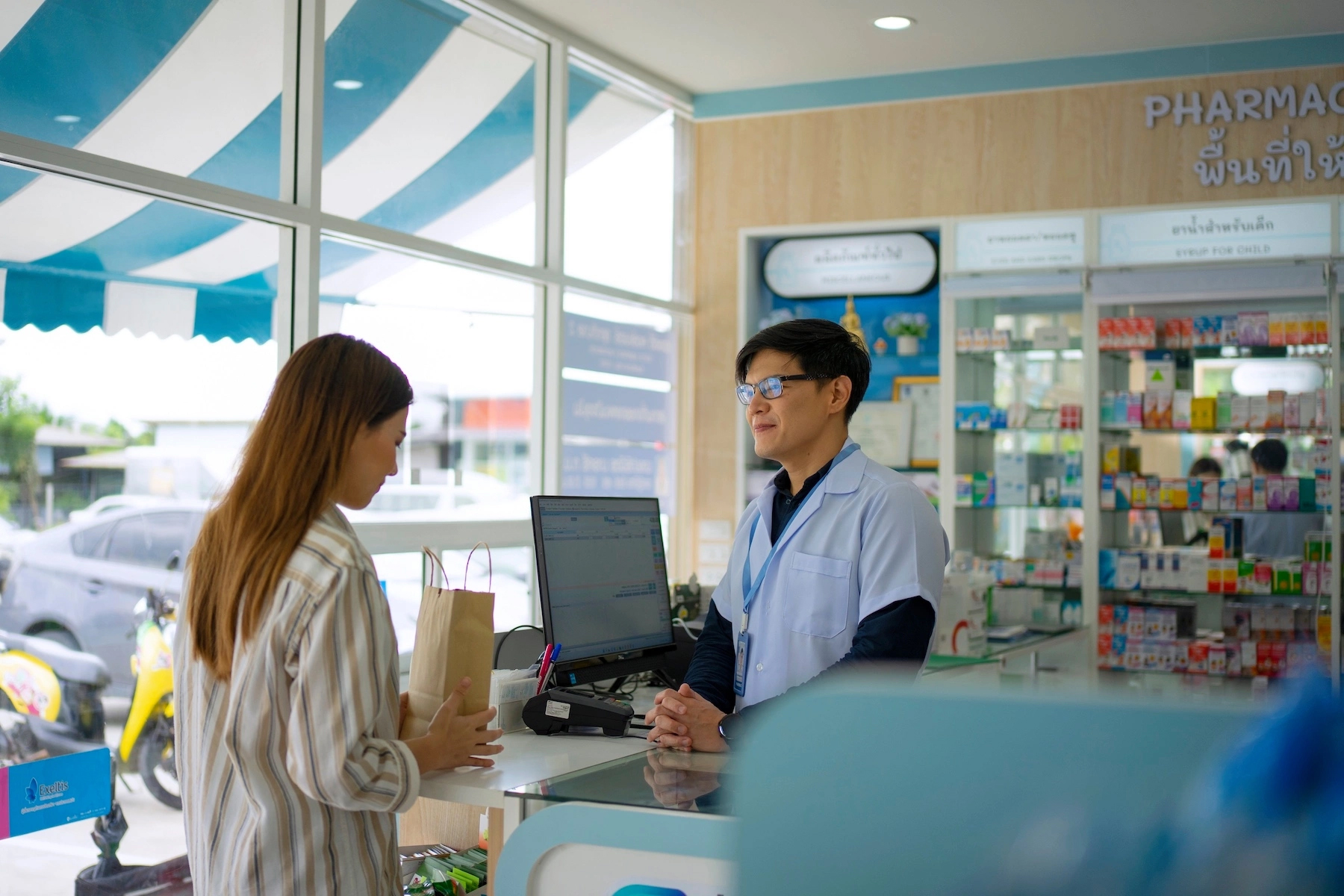
What telemedicine costs in Thailand and the role of insurance
The cost of telemedicine varies by hospital, specialty, timing, and what happens after the consultation. In addition to the doctor’s fee, you may also pay for platform use, documents, delivery, tests, or a second in-person visit.
Some 2026 examples: Samitivej listed a 24/7 online health consultation from 500 Thai baht for the first 15 minutes, with some specialist online clinics from 800 Thai baht. Bumrungrad listed telemedicine from 2,055 Thai baht and separate medication delivery fees. Get a full quote before confirming your appointment.
| Care type | What you may pay | What affects the cost | What to ask |
| Public scheme telemedicine | Sometimes covered if you are eligible | Scheme rules, referral path, and location | Am I entitled to use this service under my scheme? |
| Private general consultation | Often a set starting fee | Time, doctor type, and service hours | What is the starting fee and how long does it cover? |
| Private specialist appointment | Usually higher than general care | Specialty, hospital tier, and complexity | Is this a specialist fee, and does it include follow-up notes? |
| Medicine delivery after telemedicine | Often charged separately | Distance, urgency, and temperature control | What is the delivery fee, area limit, and arrival time? |
Common billing and insurance scenarios
- Some private providers take full payment first, then give you documents to claim back from your insurer
- Some insurers cover telemedicine only within certain networks or only for certain plans. Expatica’s guide to health insurance in Thailand explains the insurance picture
- Pre-authorization may be needed for specialist care, mental health, or higher-cost follow-up appointments
- Delivery fees, lab work, and medicine may be charged in addition to the consultation fee
- When reviewing health insurance quotes in Thailand, check whether online consultations, mental health, and medication delivery are treated separately
How to verify: Confirm the fee structure, reimbursement rules, and any pre-authorization requirement directly with both the provider and your insurer before the appointment.
Paying for telemedicine in Thailand with Wise
Paying a Thai hospital in baht from a foreign account can add hidden exchange rate markups and card fees. With a Wise Account, you can pay in Thai baht at the mid-market exchange rate with no markup, and see the fees upfront. If you pay in full and claim back from your insurer, your transaction history also gives you a clear record of what you paid.
Writer
Jen
Insider Tip
Private hospitals can charge up to six times the retail rate for common medicines, including antibiotics. For non-urgent refills, getting the same prescription at a retail pharmacy keeps everyday costs down.
How to book a safe telemedicine appointment in Thailand
1. Start with the right type of provider. If you need English support, chronic care follow-up, or specialist review, consider a hospital-linked service instead of a generic app.
2. Check that the service runs through a licensed clinic or hospital in Thailand. Thai telemedicine should be linked to a licensed medical facility.
3. Verify who you will speak to. Ask for the doctor’s name, specialty if relevant, and whether your case may still need an in-person review.
4. Confirm the full price before you book. Ask about consultation fees, delivery charges, lab costs, refund rules, and how insurance works.
5. Ask how records, prescriptions, and follow-up are handled. That tells you whether the service is built for continuity.
Before you book telemedicine in Thailand, gather information on the following:
- Licensed facility or hospital name
- Doctor identity and specialty
- English-language support, if needed
- Accepted payment method and billing rules
- Delivery area, timing, and prescription limits
What to prepare before the consultation
- Passport or other accepted ID
- Current medicines, doses, and allergy details
- A short symptom timeline, including fever readings or photos if relevant
- Insurance policy details or claim instructions
- Questions about pharmacy, delivery, or medical certificates
- A quiet room with good signal, headphones if helpful, and a charger nearby
How prescriptions, certificates, and medicine delivery work
After a telemedicine appointment, you may receive a prescription, a medical certificate, follow-up advice, or a medication delivery option.
Online prescriptions in Thailand vary by medication type and provider. Some medicines, some symptoms, and some cross-border requests still require an in-person visit, and a prescription issued abroad or during a foreign online consultation may not be accepted automatically in Thailand.

What rules, privacy protections, and limits apply
Thailand treats telemedicine as a regulated medical service. Care should be run through licensed medical facilities and be delivered by licensed practitioners, with patient consent and identity checks built into the process.
Your health information is sensitive personal data. Under Thailand’s Personal Data Protection Act, a provider should explain how your information is collected, stored, and shared, and why your identity needs to be verified before treatment starts.
You should also check the following:
- Licensed facility: Make sure the service belongs to a hospital or clinic operating in Thailand
- Licensed practitioner: You should know the name of the doctor or clinician involved, not just the platform brand
- Consent and identity: Expect a request for passport or ID verification and clear consent before treatment starts
- Marketing limits: Be cautious of broad claims that make telemedicine sound suitable for every illness, every medicine, or every insurance plan
How your data should be protected
- You should be told what data is collected and why
- Video, chat, and payments should happen through an approved hospital or clinic system
- Good providers verify both patient and clinician identity before sharing records or issuing medicine
- Consultation notes and prescriptions should be stored in the provider’s medical record system
- Use approved channels for sensitive medical information instead of unsecured personal messaging
Common mistakes expats make with telemedicine in Thailand
- Assuming public telemedicine is open to all foreigners, when eligibility often depends on scheme status
- Booking the fastest option without checking whether the provider is hospital-linked and licensed
- Expecting automatic insurer reimbursement for online care
- Using telemedicine for symptoms that really need examination, imaging, or urgent treatment
- Forgetting to check whether medication delivery is available at your address, especially outside major cities
- Assuming an online consultation includes every document you may need for work, school, or insurance
Some providers can arrange fast follow-up and delivery inside Bangkok, but speed and area coverage are often limited outside major urban zones.
Older adults may also be less comfortable with telemedicine apps, so older relatives may need extra support with booking and identity checks.
Before you book, verify the provider’s licensing, confirm your insurance cover, and use emergency services rather than telemedicine for urgent warning signs.
FAQ
Frequently asked questions about telemedicine in Thailand
Is telemedicine legal in Thailand? 
Yes. Telemedicine is legal in Thailand when it is provided through the proper medical-facility framework and by licensed practitioners.
Can foreigners use telemedicine in Thailand?
Foreigners can use telemedicine in Thailand, but the easiest route is often private care. Public access depends on whether you qualify under a Thai scheme or employer-linked arrangement.
Does insurance cover telemedicine in Thailand?
Not always. Cover depends on your insurer, your plan, the provider, and whether pre-authorization or reimbursement rules apply.
How much does an online doctor consultation cost in Thailand?
Fees vary by provider, specialty, appointment type, and what happens after the call. Some published hospital examples on starting fees range from 500 Thai baht for some short online consultations to 2,055 Thai baht at another provider.
Can online doctors in Thailand prescribe medicine?
They sometimes can, where the provider and doctor consider remote prescribing appropriate. Not every medicine or condition can be handled remotely, so check the limits before you book.
Resources
- National Health Security Office (NHSO) – Useful for understanding public healthcare coverage, telehealth policy, and scheme-based access in Thailand.
- Ministry of Public Health (MOPH) – Useful for national healthcare policy, public-health updates, and official health system context.
- Department of Health Service Support – Useful for medical-facility standards and the broader licensing environment for clinics and hospitals.
- Medical Council of Thailand – Useful for checking the professional and ethical framework around medical practice and telemedicine guidance.
- Personal Data Protection Committee (PDPC) – Useful for patient privacy, consent, and personal-data rights under Thailand’s PDPA.
- Expatica: The healthcare system in Thailand – Useful supporting context for how public and private care work in Thailand.
- Expatica: Emergency numbers in Thailand – Useful for emergency planning and urgent-care contact details, especially 1669 and 1155.