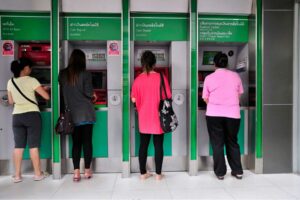
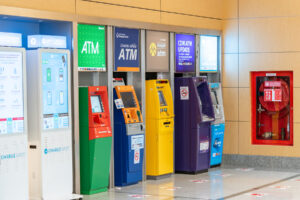
This guide compares five Thai banks and highlights what each is best for. It also explains where Wise may fit as a separate non-bank alternative before or alongside a Thai bank account.
Manage multiple currencies while you settle in
Opening a Thai bank account can take time, and approval depends on your visa, address and documents. Wise can help eligible customers hold and convert supported currencies in the meantime.
- Hold and convert supported currencies in one account
- Send EUR, USD or GBP, converted to THB for a Thai bank account
- Rate and total fee shown upfront, no markup; track transfers in the Wise app
- Spend with the Wise card where it's available to you

Best bank accounts for non-residents in Thailand at a glance
| Bank | Best for | Likely status fit | Local-payment fit | Main drawback |
|---|---|---|---|---|
| Bangkok Bank | Major local banking relationship and foreign-currency options | Foreign residents; some non-residents depending on account type | Strong for local banking where eligible | Branch rules can vary |
| Kasikornbank | Everyday banking and app-led use | Foreign residents with certain visa classes | Often useful for day-to-day banking | Eligibility is not guaranteed |
| SCB | Established Thai bank with broad recognition | Foreign residents; some non-residents depending on account type | Suitable where account opening succeeds | Document checks can be strict |
| Krungsri | Mainstream bank option with wider branch reach | Foreign residents; some non-residents depending on account type | Practical for local banking | Policies may differ by branch |
| UOB Thailand | Regional-bank option for foreigners | Foreign residents and some non-residents – depends on account type | Can work for local banking needs | Not always the easiest route. Foreigners can’t get the TMRW account |
How we chose these options
We compared official provider information on foreign-customer eligibility, required documents, account types, foreign-currency support, usefulness for local payments, digital access, and branch availability. Each “best for” label reflects the use case where the option’s published features appear strongest; it does not mean every non-resident will qualify. Wise is included as a non-bank alternative and is not ranked as equivalent to a Thai bank account. Information was checked on 2 November 2026, but provider and branch-level requirements can change, so confirm the latest terms before applying.
Wise as a specialist alternative before or alongside Thai banking
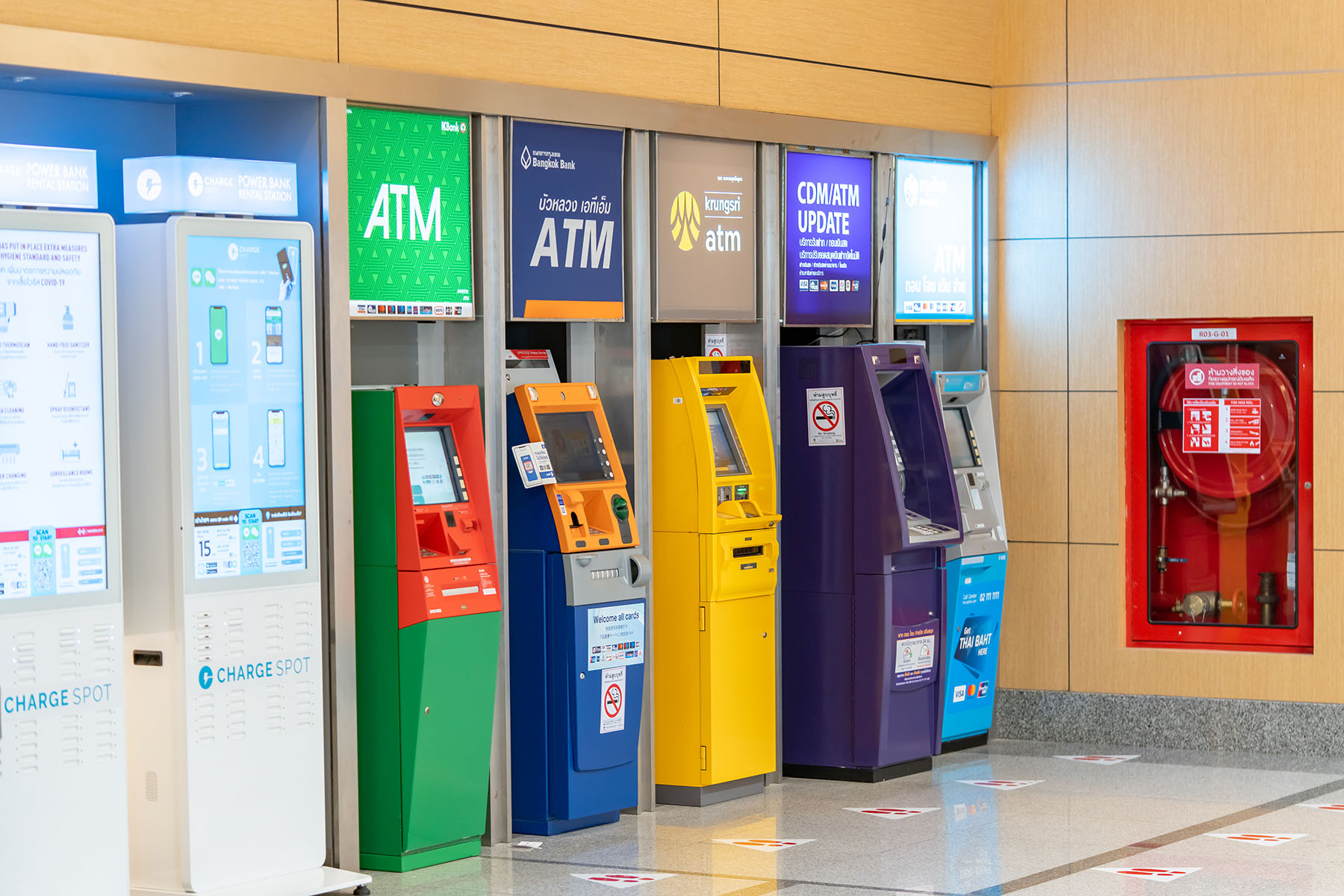
Wise is included in the decision table as a non-bank alternative, not as one of the five Thai bank accounts. It is a separate cross-border money-management option that may help eligible newcomers hold, convert and spend supported currencies while they arrange local banking.
For an eligible newcomer, Wise may help in a few practical ways:
- hold and convert 40+ currencies
- spend with the Wise card where cards are accepted
- manage money while waiting for a Thai bank account to be approved
- separate travel spending from longer-term relocation funds
- move money across borders before or after arriving in Thailand
The exact Wise features available to you depend on factors such as your registered address and current product availability. Thailand residents, people planning a move and short-term visitors should therefore not assume they will have access to the same features, as local Wise account types are tailored to the needs of specific countries in many cases.
*A Wise account is not a Thai bank account and isn’t a replacement for PromptPay access, local direct debits, payroll set-up or other domestic banking services.
When Wise may fit
Wise may be useful if you are moving to Thailand and need a temporary way to manage supported currencies while waiting for local banking access. For example, someone planning a move may use Wise to hold or convert supported currencies before arrival, subject to eligibility.
A foreign resident registered at a Thai address may face different verification requirements and product availability from someone whose account is registered elsewhere. Wise can be a useful bridge or complement to local banking, but what you can use will depend on your circumstances.
What Wise does not replace
Keep these points in mind:
- Wise is not a bank or a Thai bank account
- features vary by registered address and customer eligibility
- verification requirements are not the same for every customer
- product availability can change
- a Wise account does not guarantee PromptPay access
- Wise does not replace Thai domestic banking rails or services
If you want a flexible way to manage money across currencies while arranging Thai banking, Wise may form part of the solution. It is not the same as opening a local bank account.
Explore Wise for managing money when moving to Thailand.

1. Bangkok Bank options for foreigners
Bangkok Bank is one of the most recognisable names for foreigners looking for a Thai banking relationship. It is often shortlisted by expats because it is a major local bank with a long-standing presence and published information for foreign customers.
That said, whether or not it’s the right route for you depends on what you need. A regular baht account and a foreign currency deposit (FCD) account work differently, and not every applicant will qualify for the same option.
Before you visit a branch, check:
- which account type you actually need
- whether your visa or status fits the bank’s rules
- what identity and address documents are required
- whether the branch handles foreign customers regularly
- whether you need local banking or foreign-currency holding

Writer
Claire
Insider tip
A branch that is used to foreign customers may handle passport and address checks more smoothly than one that rarely opens accounts for expats, so call the exact branch first.
Savings account vs non-resident FCD account
A savings account in Thai baht is usually aimed at day-to-day banking. An FCD account is designed for holding foreign currency, which makes it different from a normal everyday spending account.
That distinction is important. An FCD route may help with foreign-currency management, but it is not the same as seamless local banking for everyday life in Thailand.
2. Kasikornbank accounts for foreigners
Kasikornbank is often appealing to foreigners because of its well-known digital banking experience. For many readers, that makes it a strong contender if they want an account they can use day to day.
But app strength only really matters if you qualify for account approval. The real question is whether your legal right to reside in Thailand, address status and supporting documents fit the branch’s current requirements, which may include specific visa types, permits and tax ID documents.
Before trying Kasikornbank, make sure you understand:
- which visa or residence status the branch accepts
- whether you need a Thai address or supporting local documents
- what you can use the account for once opened
- whether the branch is used to handling foreign applicants
A strong app is helpful, but only after onboarding is complete. For many newcomers, branch approval is the real hurdle.

3. SCB accounts for foreigners
SCB is a major Thai bank and a familiar name for many expats. It may suit readers who want an established local bank and are willing to go through the document checks that can come with foreigner onboarding.
This is not always the easiest route, though. Some branches may ask for stronger proof of status or supporting documents, and the experience can vary depending on where you apply.
Use SCB if you want:
- a mainstream Thai bank relationship
- a recognised local brand
- access to local banking where you qualify
- a route that may work better for residents than short-stay visitors
If you are a non-resident planning a move, SCB may be worth checking. If you are only in Thailand briefly, opening an account may be more difficult.
4. Krungsri accounts for foreigners
Krungsri can be a practical option for foreigners who want a mainstream Thai bank with wider branch reach. That may matter if you do not live in central Bangkok and want a branch you can actually visit.
As with the other banks, the main issue is not just the brand. It is whether your visa, address status and documents fit the branch’s requirements.
Krungsri may be worth considering if you want:
- local banking access
- a branch network that may be useful outside the capital
- an account with Thai banking features rather than just currency holding
- a bank that may be more practical for settled residents than short-term visitors
For readers who need both local banking and foreign-currency convenience, Krungsri may be worth comparing alongside Bangkok Bank and Kasikornbank.
5. UOB Thailand accounts for foreigners
UOB Thailand is a regional-bank option that may suit readers who already know the brand from other Asian markets. It can be a useful comparison point if you want another mainstream route into Thai banking.
The branch process still matters. Like the other banks in this guide, UOB may require specific documents, and resident versus non-resident status can affect what is available to you. For example, the TMRW application route may not be available to foreigners who cannot complete the required National Digital ID authentication. Check UOB’s current eligibility rules before relying on this option.
UOB may be a sensible choice if you want:
- a regional bank with Thai operations
- a local banking option rather than a cross-border tool
- a branch-led account-opening process
- a bank to compare against the bigger Thai names
If you already have a relationship with UOB elsewhere, that may help with familiarity, but it does not guarantee the same account-opening outcome in Thailand.
FAQ
Frequently asked questions about bank accounts for non-residents in Thailand
Can non-residents open a bank account in Thailand? 
Sometimes, but not always. “Non-resident” covers very different situations, so eligibility depends on your visa, address status, branch policy and whether you need a regular baht account or a foreign-currency option.
Can tourists open a Thai bank account?
Often, no. Tourist or short-stay visitors should check live bank policy first, because many banks will expect more than a passport and may not open a standard account for short visits.
Do you need a work permit to open a bank account in Thailand?
Not always, but requirements vary. Some banks may accept other long-stay documents, while others may ask for more evidence, so always confirm the latest branch checklist before you go.
Which Thai bank is easiest for foreigners to use?
There is no single easiest bank for everyone. “Easiest” could mean easiest to open, easiest app, best foreign-currency support or widest branch reach, and those are not always the same thing.
Is Wise a bank account in Thailand?
No. Wise is not a bank, and a Wise account is not a Thai bank account. Wise may help some eligible users hold, convert and spend supported currencies, but it does not replace a local account or Thai domestic banking services.
Can foreigners use PromptPay without a Thai bank account?
A cross-border account may not provide the same PromptPay access as a Thai bank account. Access depends on the available route and your status, so treat local-payment access and cross-border money-management tools as separate things.
General information note
Banking rules in Thailand can change, and branch-level policies may differ. This article is for general information only and is not financial, legal, tax or immigration advice. Check current eligibility, documentation and product availability directly with the relevant provider before applying.
Sources
- Bank of Thailand — Exchange Control Regulation
- Bank of Thailand — PromptPay
- Bangkok Bank — FAQs for foreign customers
- Bangkok Bank — FCD account for non-residents
- Kasikornbank — Open a bank account as a foreign customer
- SCB — General savings account
- Krungsri — Foreign currency deposit account
- UOB Thailand — Deposit accounts and foreign-customer information
- UOB Thailand — Account-opening documentation checklist
- Wise Help Centre — Getting verified in Thailand
- Wise Help Centre — Upcoming changes to Wise accounts in Thailand
- Wise Help Centre — Wise card availability by country