The Bangkok MRT network can look more complicated than it feels in real life because the MRT, BTS Skytrain, and Airport Rail Link meet each other but do not use exactly the same rules. In practice, English signs, line colours, and simple gate routines make the MRT manageable for most newcomers.
This guide explains the lines, fare basics, tokens, contactless cards, transfers, etiquette, and first-ride tips so you can make your journey without getting stuck at the gate or lost in an interchange.
Pay for your Bangkok MRT commute with Wise
If you plan to tap in on the MRT with a contactless card, an eligible Wise card could be one option to carry.
- Use a Wise card at supported MRT gates, if it meets BEM's EMV rules.
- Tap in and out with the same physical card to match your journey.
- Spend in Thai baht while keeping your money in other currencies.

Eligibility depends on your card and the current MRT rules.
Key takeaways
- The MRT is usually the best choice when you want to avoid Bangkok traffic and reach Blue Line stops such as Sukhumvit, Silom, Sanam Chai, and Chatuchak Park.
- Most first-time riders choose between a single-journey token and an eligible EMV contactless card.
- A token is the safest fallback if you are not sure whether your card will work at the gate.
- Contactless is faster if your card type and issuer fit with the current MRT payment eligibility rules.
- For easier transfers, decide your line, direction, and exit number before you go through the fare gate.
- Check current fares, operating hours, and accepted cards on the official BEM site before an important trip.
What the Bangkok MRT is and when to use it
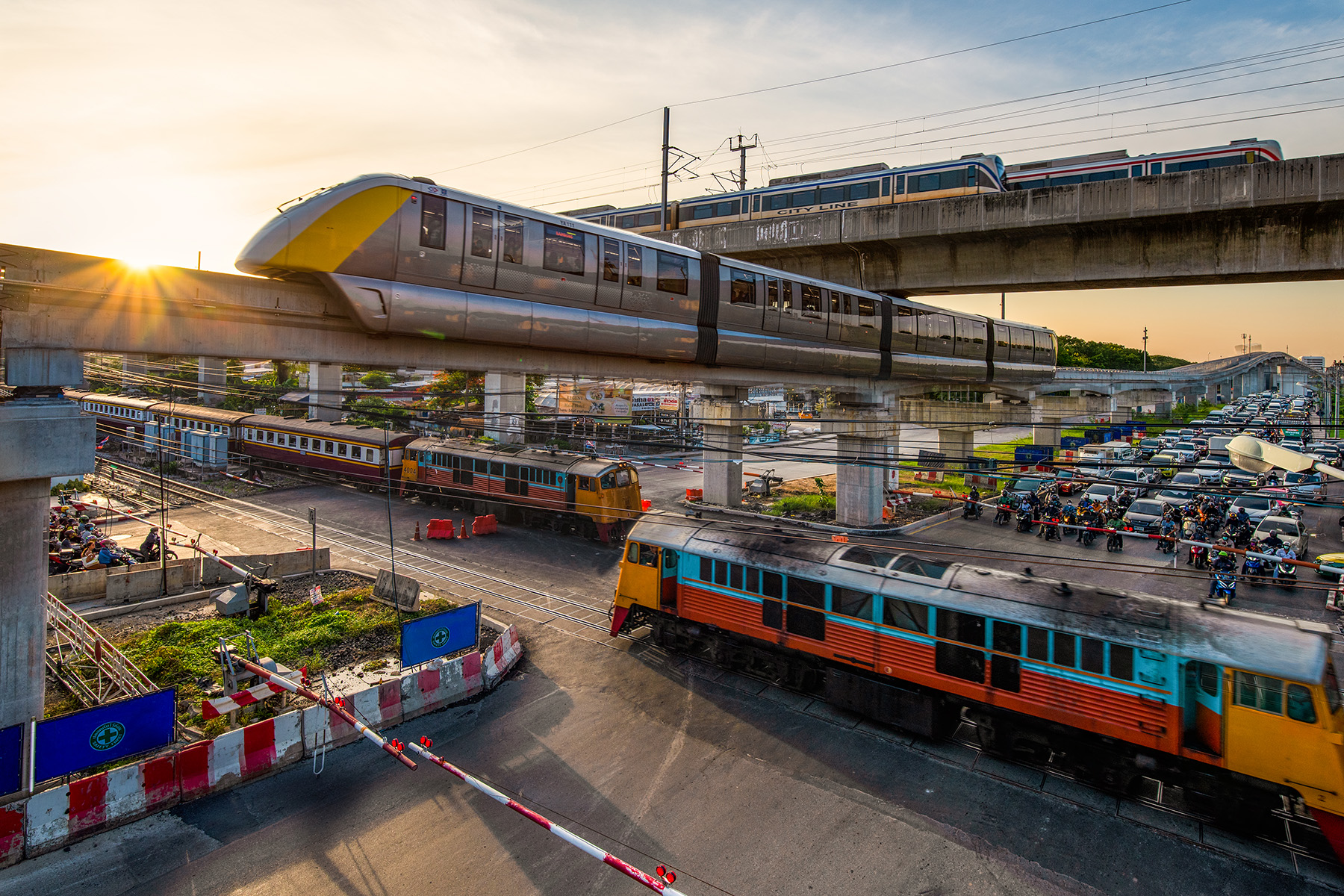
The Bangkok MRT usually refers to the metro lines operated by BEM, especially the Blue Line. That’s the line most newcomers use for Sukhumvit, Silom, Hua Lamphong, Chinatown, Sanam Chai, and Chatuchak links. It is also one of the simplest ways to avoid road traffic when you are travelling between central districts.
The MRT is different from the BTS Skytrain, which runs mainly above ground, and the Airport Rail Link, which mainly handles airport journeys.
Which lines and stations matter most for expats and visitors?
For most expats and visitors, the Blue Line matters far more than the Purple Line because it reaches more everyday districts and more of the interchanges people actually use. The Purple Line still matters once you go beyond Tao Poon, but many newcomers only need to recognise a few key stations before the map starts to feel practical rather than overwhelming.
| Station | Why it matters | What it connects to |
|---|---|---|
| Sukhumvit | Asok area, offices, malls, nightlife | BTS Asok |
| Silom | Silom and Sathorn access | BTS Sala Daeng |
| Phetchaburi | Useful Blue Line stop for airport-side transfers | Walk to Airport Rail Link Makkasan |
| Chatuchak Park | Weekend market and park access | BTS Mo Chit |
| Sanam Chai | Old Town and riverside sightseeing | Blue Line only |
| Tao Poon | Main Blue Line and Purple Line interchange | MRT Purple Line |
MRT vs BTS vs Airport Rail Link: which one should you take?
Pick the system that gets you closest with the fewest changes.
- MRT: best when the Blue Line already serves your destination, or when you need easy access to places such as Silom, Chinatown, Hua Lamphong, or Tao Poon.
- BTS: often easier for Siam, Phrom Phong, Ari, and other destinations that sit directly on the Skytrain.
- Airport Rail Link: mainly for airport trips, or for the Makkasan and Phaya Thai connections.
One thing worth knowing is that these systems do not all share the same ticketing rules. Even where the transfer is simple, payment may still be separate.
How to plan your journey before you leave
Route mistakes usually start before you board. The simplest habit is to check the line, the train direction, and the exit number before you enter the station.
Best maps, apps and signs to check
Start with the official Bangkok MRT map and BEM MRT app, then use Google Maps as a second check rather than the final authority. Google Maps is helpful for street-level walking, but the official BEM tools are better for line planning, station details, and first or last train checks.
On signs, focus on three things: the line colour, the end-of-line destination, and the interchange symbols. If you are still sorting mobile basics, our guides – Top must-have apps in Thailand and Mobile phones and SIM cards in Thailand – can make live route checks much easier while travelling.
Choosing the right exit and transfer before you board
Exit planning matters just as much as line choice. Some MRT stations have many exits, and a correct train can still leave you at the wrong side of a large road, mall, or office complex if you do not check ahead.
Before you board, check:
- the exit number for your street, office, or mall
- the nearest landmark or road name
- whether your transfer is inside the station or on foot

Writer
Claire
Insider tip
At busy interchanges such as Sukhumvit and Asok, choosing your exit before you leave the platform can save several minutes of backtracking through the concourse. The same applies at Phetchaburi and Makkasan, where the Airport Rail Link connection is easier if you already know which signs you need to follow.
How to buy tickets and pay on the Bangkok MRT
Payment causes the most confusion because Bangkok’s rail systems do not all use the same rules. For the MRT, most first-time riders choose between a single-journey token and an eligible EMV contactless card.
Using a single-journey token
A single-journey token is the simplest ticket option if you want a clear fallback. Buy it from the machine or station counter, tap it at the entry gate, then drop it into the exit slot when you leave. If the machine queue looks slow, you need help with cash, or you are buying a child or concession fare, the counter is often easier.
Keep small notes or coins if you plan to use a machine. It’s not always essential, but it can save time at busy stations.
Using an EMV contactless debit or credit card
The Blue Line and Purple Line accept eligible EMV contactless cards at the gate. In practice, you tap one card once at entry, keep that same physical card ready, and tap the same card again at exit so the system can match your journey. One card covers one passenger and one trip only.
A common question is whether any foreign card or phone wallet will work. BEM’s current guidance is narrower than that. Contactless credit cards have the broadest support, while debit-card eligibility is more limited, and smart devices such as phones and watches were still listed as under development when checked. If you use Mastercard or UnionPay, some issuers may also show a temporary ฿1 authorisation on first use before the full fare appears later.
Watch for issuer fraud blocks or foreign transaction fees from your card provider. Card acceptance and debit-card eligibility can change, so check the current BEM EMV page before you rely on this option.
When an eligible Wise card can be an easy option
If you already hold an eligible contactless Wise card from a supported country, it could save you a token purchase on a supported line. That is most useful when you are travelling light and already know your card meets the current MRT rules.
Check current MRT eligibility, your card’s contactless status, any issuer fees, and Wise availability for your market before you travel.

If you are settling in for longer, our guide on Banking in Thailand explains the local banking landscape, and Open a bank account in Thailand covers the setup basics.
How to ride the Bangkok MRT step by step
Here is what a first ride usually looks like from street level to the exit gate.
Getting through security, gates and platforms
Enter the station and follow signs to the concourse, where you will usually find the ticket machines, ticket office, fare gates, and platform signs.
At some stations you may also see bag screening before the ticket area, so keep your card or cash easy to reach rather than buried in a backpack.
Buy a token or get your contactless card ready before you reach the gate, so you do not block the line.
Go through the correct fare gate, then follow the signs showing the end-of-line destination for your platform.
Writer
Claire
Insider tip
If the gate does not open, step aside first and check whether you used the same token or card you plan to use at the exit. Repeating the same wrong tap several times usually slows you down more than it helps.
Boarding, changing lines and exiting the station
Check the platform signs before the train arrives and make sure the end-of-line name matches your direction. When the doors open, let passengers off first, then board and move away from the doorway if there is space. Onboard maps and announcements in English make it easy to track your stop.
If you realise you are travelling the wrong way, get off at the next station, cross to the correct platform, and start again.
For transferring from the MRT to the BTS, Sukhumvit to Asok is one of the simplest examples, though the concourse can feel busier than the map suggests. For airport-side travel, Phetchaburi to Makkasan is practical, but it is not an in-train transfer and may feel longer if you have luggage. If the platform is packed and you are carrying large bags, taking the next train is often easier than forcing your way onto the first one.
To leave the system, tap out with the same contactless card you used to enter, or drop your token into the exit gate slot.
Etiquette, safety and accessibility on the MRT
The MRT is easy enough to use at midday, but weekday peaks mean crowded platforms and slower interchanges. Most etiquette is simple: queue neatly, keep doorways clear, and give other passengers room.
What to know at peak times, with luggage or with children
- Peak times: weekday mornings and early evenings are usually the busiest, so allow more time for gates, platforms, and interchanges.
- Platforms: wait behind the marked lines and leave the centre area clear for people getting off.
- Luggage: keep large bags close to you and away from doors, escalators, and narrow platform spaces.
- Children: hold hands on platforms and escalators, and keep prams or tired children out of the main boarding line where possible.
- Transfers: commuter-heavy interchanges can feel slower than they look on the map, so leave extra time if you need to change lines.
Accessibility and when to ask staff for help
Accessibility won’t work in the same way in every station. Many MRT stations have lifts, escalators, and staff support, but routes, exits, and working facilities can vary by station.
If step-free access is critical, check the station details on the BEM app or official site before you travel. The ticket office is also the better option if you need extra help, have a card problem, or are carrying awkward luggage and want the simplest route through the station.
Common mistakes first-time riders make
These are the errors most worth avoiding on a first trip:
- Mixing up MRT and BTS: they connect often, but they are not the same system.
- Ignoring the exit number: the right station can still leave you on the wrong side of a large junction or shopping complex.
- Assuming every foreign card will work: contactless rules are narrower than you might expect.
- Tapping with one card and trying to exit with another: the system may treat that as an incomplete journey.
- Using incorrect fare information: MRT fares are distance-based, so check the official calculator before you ride.
- Expecting every transfer to be platform-to-platform: some changes involve a concourse walk or a separate station entrance.
- Reaching the gate unprepared: have your token or card in hand before you join the queue.
Before your first ride, save the BEM route map, check the line end-point, and decide at home whether you will use a token or an eligible contactless card. If you are still settling into Bangkok life, 10 things to do in your first week in Thailand covers other practical basics that make everyday travel easier.
FAQ
Frequently asked questions about using the Bangkok MRT
Can tourists use contactless cards on the Bangkok MRT? 
Yes, if the card is currently eligible under BEM’s EMV rules. Tourists should still check the card network, issuer, and card type before relying on contactless for both entry and exit.
How much does the Bangkok MRT cost?
MRT fares are distance-based and paid in Thai baht, so the total depends on how far you travel. The safest option is to check the official BEM fare calculator on the day of travel to know what to expect.
What time does the Bangkok MRT open and close?
Operating hours differ by line and day. When checked against BEM information, the Blue Line generally ran from 06:00 to midnight, while the Purple Line started earlier on weekdays, so confirm first and last train times before a late journey.
Can you transfer from the MRT to the BTS easily?
Usually, yes, especially at Sukhumvit to Asok and Silom to Sala Daeng. The transfer itself is usually straightforward if you follow signs, but the systems still have separate payment rules.
Is the Bangkok MRT easy to use if you do not speak Thai?
Yes, mostly. English station names, line colours, onboard announcements, and the official app make the system manageable, though unusual disruptions are always easier to handle if you leave yourself a bit of extra time.