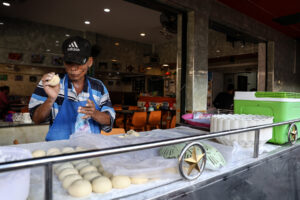
In bigger malls, supermarkets, chain cafés, hotels, and many restaurants, foreign cards work well, but everyday life still includes moments when you need Thai baht (THB, ฿), especially for street food, local transport, smaller islands, and independent shops.
This guide explains how using a Wise card in Thailand works for payments, ATM withdrawals, fees, and local payment habits.
Wise availability, pricing, and rules can vary depending on your country of residence. This guide is for general information only, not financial, legal, or tax advice.
Wise for life in Thailand
Whether you already live in Thailand or still earn and save abroad, a Wise account can help you hold and convert money before you spend it in baht. Wise isn’t a bank or a Thai e-wallet, so for salary, rent and personal QR payments, pair it with a Thai bank account and PromptPay.
- Hold and convert 40+ currencies, including GBP, EUR and USD
- Convert to Thai baht at the mid-market exchange rate with clear fees shown upfront
- Spend by Wise Card in Thailand's malls, supermarkets and online
- With a Thai registered address, pay by PromptPay QR and Thai QR

Using a Wise card in Thailand: Key takeaways
- Where it works best: Larger merchants that take international cards, such as malls, supermarkets, chain cafés, hotels, and restaurants.
- Where cash still matters: Street food, markets, some taxis or tuk-tuks, small shops, and more rural or island locations.
- ATM reality: Thai ATMs commonly show a local operator fee and a machine limit before you confirm.
- Currency choice: If a terminal or ATM offers GBP, EUR, USD, or another home currency, decline it and continue in THB.
- Thailand caveat: Wise features, limits, and local ATM access can differ for accounts registered to a Thai address.
- Best setup: Carry cash and a second payment method, ideally a local card or another active card.
How useful is a Wise card for daily life in Thailand?
The Wise debit card is most useful in Thailand when you spend in places that already accept foreign card payments. It can work well for supermarkets, hotels, chain cafés, and online bookings because you can track spending in the app and spend from supported balances.
That said, the Wise card isn’t a full replacement for cash, PromptPay, or a local Thai payment setup. In Thailand the merchant’s payment habits still matter more than the name on your card. It’s good to know that you can also use Wise to make PromptPay QR payments from the Wise app if you find yourself somewhere which won’t take a card but can accept local QR payment methods.
- City living in Bangkok, Chiang Mai, or Phuket: useful as a regular spending card
- Regular supermarket spending: usually straightforward
- Online bookings: often convenient if the merchant accepts international cards
- Weekend trips outside the main hubs: bring cash and a backup card
- Emergency cash access: possible for some cardholders, but Thailand-based customers should check current local Wise rules first as ATM access in Thailand may not be possible

Writer
Claire
Insider tip
Even in Bangkok, small food stalls and market sellers often prefer low-value cash or QR payments, so keeping ฿20, ฿50, and ฿100 notes on hand makes everyday life smoother.
Where can you pay with a Wise card in Thailand?
You can use a Wise card in Thailand in many card-friendly settings, but not everywhere. Thailand still mixes cards, cash, and QR payments, so one foreign card is rarely a complete local setup.
| Situation | Typical reality | Best approach |
| Supermarkets | Usually card-friendly | Card is often a smooth option |
| Chain cafés | Usually card-friendly | Card or contactless can work well |
| Independent restaurants | Mixed | Ask before ordering |
| Street markets | Usually cash-first | Carry cash |
| Transport | Mixed to cash-first | Keep cash or app-based backup |
| Hotels | Usually card-friendly | Card is usually fine |
Places where card payments are usually straightforward
Larger supermarkets, shopping centres, chain cafés, international hotels, many co-working spaces, and bigger restaurants in Bangkok, Chiang Mai, and Phuket are the easiest places to use a Wise card. These are the parts of Thailand where international card terminals are already normal.
This is also where Wise can feel most useful. If you pay in THB, the app shows the conversion clearly instead of leaving you to decode the total later.
Places where cash is still often the safer option
Street food stalls, local markets, some taxis or tuk-tuks, small family-run shops, beachside vendors, and more rural areas still lean heavily toward cash. One thing worth knowing is that a QR code on the counter does not mean foreign cards are accepted.
In practice, do not rely on one foreign card alone. If you plan to eat locally, move around casually, or spend time outside the main commercial centres, carry baht for small purchases and transport.
Cash is often expected for:
- Street food and market snacks
- Small cafés and family restaurants
- Taxi, tuk-tuk, or informal local transport
- Small islands and rural stops
- Low-value day-to-day purchases
Writer
Claire
Insider tip
Night markets often look card-friendly because stalls display QR signs, but those are usually PromptPay or Thai QR for local accounts, not a sign that foreign cards are accepted.
Using your Wise card at Thai ATMs
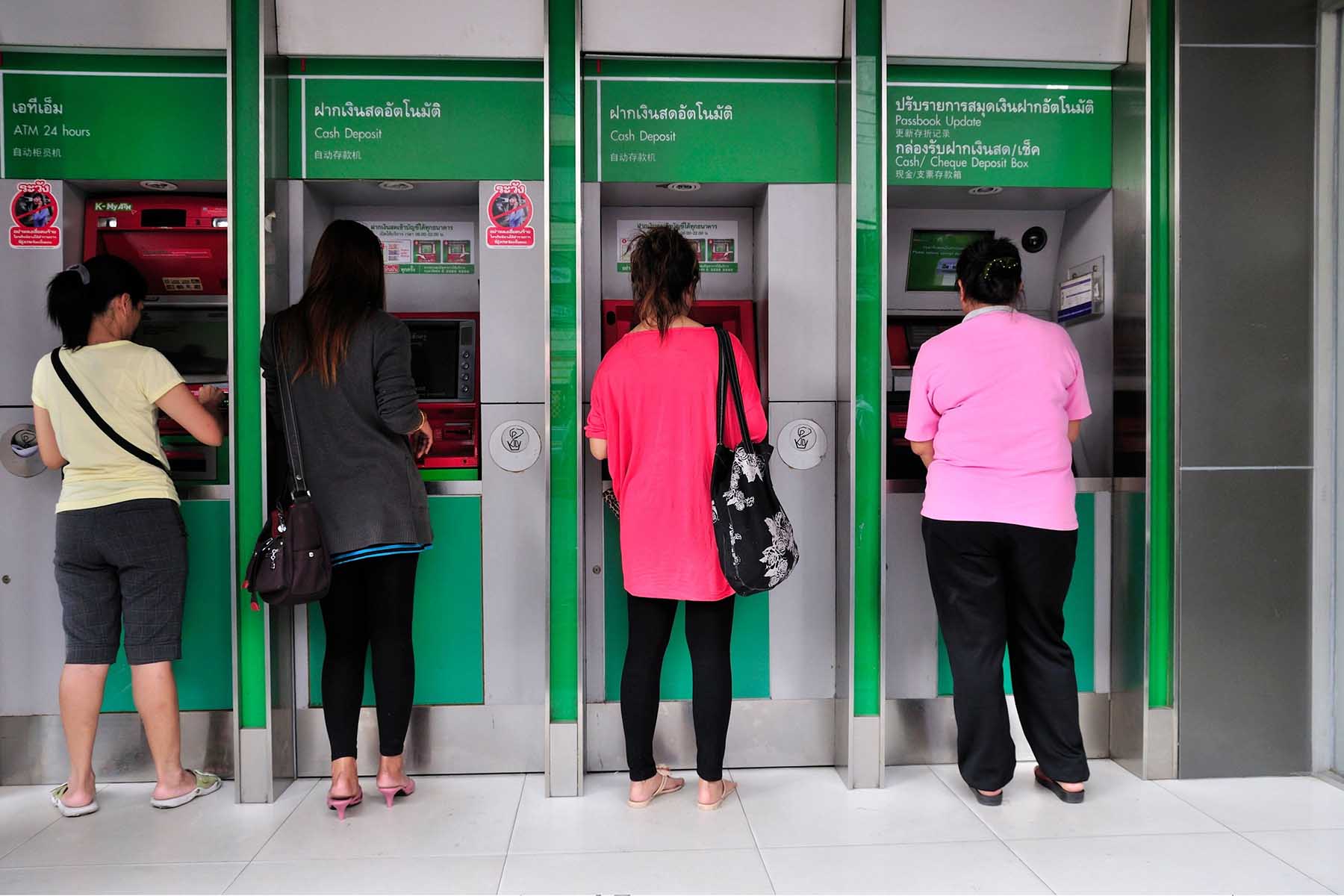
For many expats, the right card to use can be decided by cash access and ATM costs. Thailand has plenty of ATMs from Bangkok Bank, Kasikornbank, Krungthai Bank, Siam Commercial Bank, Krungsri, and AEON, but the real question is the fee on screen, the machine limit, and whether your Wise setup still allows local ATM use.
What fees and withdrawal limits should readers expect?
Thai ATMs commonly show a local operator fee for foreign cards, and that fee is separate from any Wise charge. The amount you pay with Wise depends on your pricing region and your monthly usage, so the cost is a mix of local ATM rules and your own card terms.
Limits also vary by bank and machine. If you plan to take out cash, one or two larger withdrawals can be more practical than several small ones, but check the screen first and verify exact figures that day.
Common sense checks to verify the costs of using an ATM in Thailand:
- Read the fee prompt before you confirm
- Check the withdrawal amount offered by the machine
- Compare nearby bank ATMs if you need more cash
- If you want exact figures, verify them on the bank’s own page or on the ATM screen that day
How to avoid dynamic currency conversion and other extra charges
Dynamic currency conversion means the ATM or card terminal offers to charge you in your home currency, such as GBP, EUR, or USD, instead of Thai baht. That sounds convenient, but it usually means the machine operator is choosing the exchange rate for you.
A simple example is a cash withdrawal where the ATM asks whether you want the amount billed in pounds instead of THB. If you accept, the ATM may apply its own marked-up conversion. If you continue in THB, your own card handles the conversion instead, which can often offer a better rate and lower overall cost.
- Insert the card and choose the withdrawal or payment amount.
- If the screen offers your home currency, decline it and continue in THB.
- Review the final fee and amount, then confirm only if it still makes sense.
Use official bank ATMs in well-lit areas, shield your PIN, and check the transaction in the app as soon as it clears.
What Thailand-based readers must check before relying on the Wise card
Your Wise experience in Thailand can depend on where your account is registered, where your card was issued, and whether Wise has already rolled local features or restrictions onto your Thai address.
Does product availability depend on your home country or Thai address?
Your Wise account should be registered to your country of residence, and the features you get may change based on this detail. That difference can affect eligibility, replacement rules, and which card version or features you keep.
If you’re in Thailand as a tourist but live elsewhere you might have different account features and fees compared to a Thai resident.
This often matters in your first week in Thailand, when you are deciding whether to rely on an overseas setup or build a local one. Do not assume every expat in Thailand can order the same Wise card or keep the same settings after relocation.
What local rules or account changes could affect cash withdrawals?
Wise Thailand personal customers with a registered Thai address are moving onto new local features and restrictions during 2026. Its Thailand Help Centre says cards linked to Wise accounts registered to a Thai address will not be able to withdraw cash at ATMs in Thailand once the relevant local changes apply.
Changes are being rolled out gradually, and there’s a summary of the features and limits which will apply post-roll out on the Wise Help pages.
If you expect steady cash needs, opening a bank account in Thailand can give you a more dependable local backup.
- Confirm the address on your Wise profile
- Read the latest Thailand Help Centre update in the app
- Check your current pricing and card-limit page before relying on ATM cash access
Writer
Claire
Insider tip
If your Wise setup changed after moving to Thailand, check the app before you assume your old cash withdrawal habits still work.
When a Wise card is a good fit and when you need a backup
If you are paid from abroad, travel often, or manage money across currencies, Wise can be a strong spending tool in Thailand. It is especially useful where card payments are already normal and where you want clear conversion rather than a fuzzy total that only makes sense later.
If you plan to stay, the practical mix is often Wise for cross-currency spending, a local account for routine bills, and cash for smaller offline moments. That is why many long-stay residents combine Wise with banking in Thailand and keep international money transfers in Thailand in mind for cross-border funding.
| Option | FX visibility | Local payment reach | Best for |
| Wise card | Clear in-app view of spending and conversion | Good where international cards are accepted, weaker where cash dominates | Expats spending across currencies |
| Local Thai bank debit card | Familiar local pricing and app tools | Strong for PromptPay, Thai QR, and routine local payments | Long-stay residents paid or billed locally |
| Home-country credit card | Terms vary by issuer | Useful at many larger merchants, but charges can build up | Backup spending or emergencies |
Can you rely on contactless wallets or PromptPay instead?
Contactless payments can work in modern terminals, especially in bigger retail chains, but coverage is still uneven. Treat Apple Pay, Google Pay, or tap-to-pay as a convenience, not a guarantee, and make sure your own Wise card version supports the wallet you want to use.
PromptPay and Thai QR matter more to daily life than many newcomers expect. The Bank of Thailand describes Thai QR Payment as part of the country’s move toward a less-cash society, and PromptPay usually sits inside a local bank app or another supported local setup. This can mean that accessing PromptPay as an expat or new arrival is tricky.
Wise Thai-address customers are also receiving local QR features as part of the ongoing changes to account features. This may mean you can use your Wise account to pay through a QR code – open the Wise app to see this feature where available.

FAQ
Frequently Asked Questions about using a Wise card in Thailand
Can I use my Wise card at ATMs in Thailand? 
Yes, many Thai ATMs can accept a Wise card. However, local ATM operator fees and machine limits still apply, and Thailand-based Wise customers may lose domestic ATM cash access once new features have rolled out.
Does Thailand prefer cash or card?
Thailand uses both, but cash still plays a major role in daily life. Cards work well in many bigger businesses, while street food, markets, smaller shops, and some transport still lean heavily toward cash or local QR.
What fees should I expect when using a Wise card in Thailand?
There can be three layers to watch: Wise conversion or card-pricing rules, local ATM operator fees, and optional dynamic currency conversion markups if you accept a home-currency offer on screen. Check current Wise pricing before you spend.
Can I use a Wise card for contactless payments in Thailand?
Yes, contactless can work in many modern terminals. But coverage is uneven, so treat it as a handy extra rather than something you can count on everywhere.
Is using a Wise card in Thailand different for tourists and residents?
Yes, it can be. Your experience may differ based on where your Wise account is registered, and whether you also need local tools like PromptPay or Thai QR. Before relying on it daily, check current Wise availability, pricing, and Thailand-specific Help Centre guidance.