Quick verdict
Wise can be useful in Thailand if you need international transfers, a multi-currency account, and a card that helps you manage more than one currency in one place. But Thailand-specific rules, resident rollout changes, and local bank practices still matter, so for expats, Wise can often work best as a practical tool alongside a Thai banking setup.
This Wise review for Thailand covers how Wise transfers, the multi-currency account, and the card work in Thailand, where the main limits sit, and what to verify before you rely on them for rent, salary, savings, or spending.
This guide is general information only, not legal, tax, or financial advice, and fees, limits, eligibility, and local availability should be checked live before you act.
Wise for life in Thailand
Whether you already live in Thailand or still earn and save abroad, a Wise account can help you hold and convert money before you spend it in baht.
- Hold and convert 40+ currencies, including GBP, EUR and USD
- Convert to Thai baht at the mid-market exchange rate with clear fees shown upfront
- Spend by Wise Card in Thailand's malls, supermarkets and online
- With a Thai registered address, pay by PromptPay QR and Thai QR

Wise review Thailand: Key takeaways
- Who it suits: Expats paid in one currency and spending in another, people sending money home, and frequent travellers who want one cross-border tool.
- Main strengths: Upfront fees, flexible currency holding, and an easier way to compare total transfer cost against major local banks.
- Main watchouts: Wise is not a bank, and some Thailand features depend on your address, verification status, and exact currency route.
- Does it work well for Thailand-based expats? Often yes for cross-border use, but many expats still want a Thai bank account for salary, cash, and local bills.
- Thailand-specific checks: Confirm card eligibility, ATM rules, transfer classification, and whether your receiving bank will treat the payment as you need.
What Wise Thailand is and who it suits
Wise is a financial institution that offers international transfers, a multi-currency account, and a debit card. In Thailand, it is most useful for expats who move money across borders regularly, not people who mainly need a local branch and a simple Thai cash account.
It tends to suit people paid in GBP, EUR, USD or another foreign currency who spend in Thai baht (THB, ฿), people sending money home, and people who want to hold several currencies without opening separate accounts abroad. A simple example is an expat teacher paid from overseas who converts only part of their salary into THB for rent and living costs.
When it may not fit is just as important. If most of your life runs in cash, PromptPay, or branch-based banking with Bangkok Bank, Kasikornbank, Siam Commercial Bank, Krungthai Bank, or Bank of Ayudhya, Wise works better as a companion account than a full replacement.
How to send money to and from Thailand with Wise
Wise transfers may work differently depending on the details of country and currency, because the funding method, sender address, currency pair, and recipient bank can change the result.
Sending money into Thailand
For many expats, the main use case is sending money into a Thai bank account for rent, savings, or monthly spending. Wise THB transfers usually need the recipient’s full name, address, bank name, email, account number, and a payment purpose.
This is where local reality matters. If you only care that the money arrives, Wise can be straightforward. If you need the payment to count as an international inward remittance for a condo purchase, visa paperwork, or another formal process, ask the receiving bank first if a reference is needed for the payment. Wise cannot guarantee the reference you add to your transfer will show up on the payment, as this is down to the receiving bank policy, which may mean it’s not the best tool for transfers where the reference is key.
Wise’s THB per-transfer limits vary by receiving bank. On the day of writing (1st September 2026), Wise listed higher THB limits for Bangkok Bank and Kasikornbank than for many other banks, so compare the exact recipient bank before you send.
Sending money out of Thailand
Outbound transfers need even more checking. Wise says you can only send from THB if your Wise profile address is set to Thailand, and THB payments must come from a local Thai bank account using a QR code or Wise biller payment. Wise also says outward THB transfers are capped at 800,000 THB per day in the current Thailand setup.
One thing worth knowing is that some Thai-address customers are moving onto a more local Wise model in 2026. In practice, that can mean route-specific limits and, on some non-THB account transfers, two conversions instead of one. If you are paying overseas bills, supporting family, or repatriating savings, test the exact route first instead of assuming it will behave like a non-Thailand Wise account.
If you are comparing routes, start with international money transfers in Thailand and then check the live Wise quote against your bank’s own transfer pages before you send.

How the multi-currency account works for expats
The Wise multi-currency account is most useful when you need to hold, convert, and organise money across currencies without opening separate local accounts everywhere. For an expat in Thailand, that can mean keeping part of your money in GBP or EUR, converting into THB when needed, and separating travel spending from longer-term savings.
It can also complement a Thai bank account well. You may still want a local account for salary deposits, cash handling, or everyday Thai bill payments, while using Wise for the cross-border layer. That split is often more realistic than trying to make one provider do everything.
Following the Thailand-specific rollout changes which apply progressively through 2026 Wise Thai-address personal customers can add money from a local Thai bank account without conversion. However some non-THB incoming payments to foreign currency receiving details will be automatically converted into THB. So if you hoped to receive and keep another currency untouched, you need to check that feature live before relying on it.
What to verify before relying on the account
- Whether your Thai address makes you eligible for the account features you want.
- Whether local THB top-ups, foreign currency balances, and receiving details all work the way you expect.
- Whether your route hits live daily limits for transfers, conversions, or THB payments.
- Whether you still need a Thai bank account for salary, cash, or local bill flows.
- Whether incoming non-THB payments will stay in that currency or auto-convert to THB.
Using the Wise card in Thailand
Wise’s Thai-address personal customers are being progressively given access to digital and physical cards during 2026, so resident eligibility should be checked in your own account.
In Thailand, you can use your Wise card at most supermarkets, hotels, and chain stores. If a stall only shows a QR sign, you may be able to pay by scanning a PromptPay QR code instead, as PromptPay QR payments are common across Thailand.
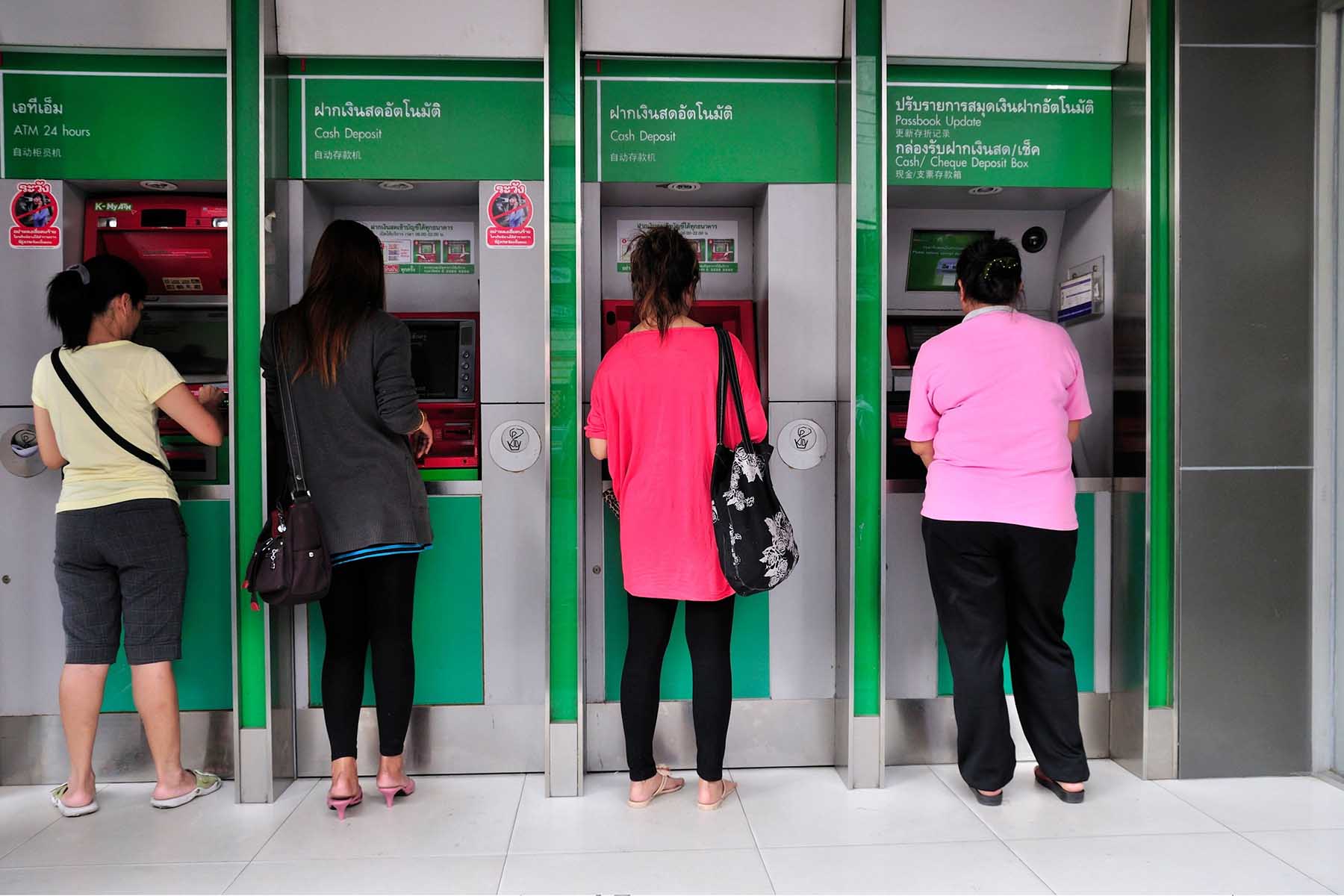
The biggest Thailand-specific watchout is ATM use. Wise customers with a Thai-address account will not be able to use their Wise card for ATM cash withdrawals in Thailand once the new local setup applies, even though overseas ATM withdrawals still work. That means a backup Thai card or cash option is sensible.
Paying, withdrawing cash, and avoiding extra fees
- Pay in THB when a terminal offers a currency choice, or you may pay more through dynamic currency conversion.
- Additional ATM charges may apply from independent ATM networks.
- Carry a backup payment method because some Thai merchants still prefer it
- If your Wise account uses a Thai address, check the latest Thai ATM rule in-app before relying on the card.
- Wise customers in Thailand may be able to use Wise QR payments as a smart alternative to cash.
Fees, exchange rates, and how to compare Wise with major local banks
When you compare Wise with banks, the key question is not just the visible transfer fee. It is the total cost after the exchange-rate margin, any receiving charge, and any admin fee needed for documents such as inward-remittance confirmation. This means you can’t just look at one headline fee and assume the cheapest option is obvious.
For a fair comparison, use the same amount, same funding method, same recipient bank, and same moment in time. Then compare Wise with major local banks such as Bangkok Bank, Kasikornbank, and Siam Commercial Bank.
| Provider | Rate page to inspect | Fees to inspect | Practical note |
|---|---|---|---|
| Wise | Live quote built around the mid-market rate | Sending, conversion, and route-based fees | Check whether your Thailand route adds local limits or a second conversion. |
| Bangkok Bank | TT buying and selling rates | Outward, inward, and admin charges | Important if you may need inward remittance evidence later. |
| Kasikornbank | FX rates by transaction type | Remittance and service fees | Ask where confirmation letters are issued before you send. |
| Siam Commercial Bank | FX and channel-specific rates | Transfer fees and receiving treatment | Check whether branch, phone, and app routes differ for your case. |
*Fees and rates can vary – check the details live before you make a payment
Pros and cons for expats in Thailand
Pros
- Clearer upfront pricing than many bank remittance journeys.
- Useful if you earn, save, or travel across more than one currency.
- Good fit as a second layer beside a Thai bank account.
- App controls for transfers, balances, and card management.
Cons
- Wise is not a bank and does not replace every local Thai banking need.
- Thailand resident features are changing, so availability can look different from older guides.
- Card use in Thailand is not the same as card eligibility for Thailand residents.
- Cash access and inward-remittance paperwork can still push you back toward a Thai bank.
Thai rules, verification, and common mistakes
Identity checks: Expect verification before you do more with the account. Thai-address users may be asked for extra documents as Wise’s local rollout continues.
Source of funds and purpose: Large or unusual transfers can trigger extra questions. If money is for property, immigration, or the tax system in Thailand, confirm the exact paperwork with your Thai bank and the relevant authority first.
Bank timing: Weekends, Thai public holidays, and bank cut-off times can delay money arriving.
Single-point failure: Do not rely on one payment method only. Keep a Thai bank option, backup card, or cash reserve.
Insider Tip: If you need a transfer to show as foreign funds, ask your receiving Thai bank how it classifies incoming payments before you send, because the same route may not be treated the same way by every bank.
How to open and set up Wise from Thailand
Set up Wise in a deliberate order. Create the account, complete identity checks, open the currencies you actually need, link or prepare the funding method you plan to use, and test the system with a small transfer before you move rent money or larger savings.
If you want a card, a THB balance, or a local Thai bank connection, setup order matters because some features appear only after verification and address checks. Many expats will still want to open a bank account in Thailand and learn how the main banks in Thailand handle salary, cash, and local payments, using Wise beside them rather than instead of them.
Ready to act? Check live eligibility, route limits, and pricing in Wise, then start with a small test transfer before you use it for spending or larger sums.
FAQ
Frequently asked questions about Wise review Thailand
Is Wise available to residents of Thailand? 
Availability is conditional. Wise’s Thailand help pages show active rollout changes for personal customers with a Thai registered address during 2026, but features can still differ by address, account type, verification stage, and timing. Check the Help Centre and your in-app eligibility before you rely on a feature.
Can expats use the Wise card in Thailand?
Often yes for spending, but that does not mean every Thailand resident can get or keep the card on the same terms. Wise says Thailand-address customers are being rolled onto a local setup in 2026, so check live card access, Thai ATM rules, and wallet support in your own account.
Is Wise cheaper than major local banks for international transfers?
Sometimes. Wise can be strong on fee transparency, while a major local bank may still suit you better for local account services or certain inward-remittance needs. Compare the full cost, not just the transfer fee.
Can I send money from Thailand with Wise?
Yes, but only on supported routes. Wise says sending from THB requires a Thailand profile address and payment from a local Thai bank account. The route, currency pair, and daily limits also matter. Check the live route before you plan regular outward remittances or a large one-off transfer.