'%20id='ico-down'%20stroke='%23000000'%20stroke-width='1.5'%3e%3cg%20transform='translate(1092.250000,%20254.750000)'%3e%3cpolyline%20id='Path-2-Copy-4'%20transform='translate(5.500000,%202.750000)%20scale(1,%20-1)%20rotate(-180.000000)%20translate(-5.500000,%20-2.750000)%20'%20points='0%200%205.5%205.5%2011%200'%3e%3c/polyline%3e%3c/g%3e%3c/g%3e%3c/g%3e%3c/svg%3e)




When you’re new to the Singaporean job market (because you graduated or you just moved there), you’ll want to know how your salary compares to others. In the absence of a legal minimum wage, understanding the average income becomes especially crucial before signing any dotted line.
For international workers, there’s an additional layer to consider: managing your earnings across borders, whether you’re sending money home to support family or maintaining financial commitments in multiple currencies.
To help you understand what to expect in this free‑market city where employers can set wages freely, this article covers the following:
International money transfers with Wise
For convenient cross‑border transfers with fees shown upfront, check out Wise.
Open a Wise account to hold and exchange USD and 40+ other currencies, and order your Wise card to spend and withdraw in 160+ countries. Accounts offer ways to send money to 140+ countries and receive payments globally in USD, EUR, GBP and more with local or SWIFT account details.
See Wise international transfer options!

Does Singapore have a minimum wage?
Singapore does not have an official annual minimum wage. While some bodies, such as the National Wages Council (NWC), offer suggestions about fair salaries, their advice is not legally binding.
Instead of a national minimum salary, the country’s labor market operates on a Progressive Wage Model (PWM). This model sets out a basic minimum wage for Singapore citizens and permanent residents in selected low-paying sectors.
It comprises wage ladders for broad employment categories, which account for the most common jobs in that sector. Workers must be paid at least the stipulated PWM wages depending on their skills and employment level.

Singapore’s opposition parties have, at times, called for the introduction of a minimum wage. However, the government defends the PWM system, arguing that it is better for low-paid workers.
At present, the following sectors must pay at least these Progressive Wage Model
(PWMs), depending on seniority:
| Sector | PWM wage requirement 2025–2026 | PWM wage requirement 2026-27 | Changes in |
| Administration | S$1,980–3,160 | S$2,170–3,340 | July |
| Cleaning | S$1,910–2,830 | S$2,080–3,040 | July |
| Driving/chauffeuring | S$2,190–2,320 | S$2,370–2,485 | July |
| Food services | S$2,080–2,730 | Not yet published | March |
| Landscaping | S$1,950–2,900 | S$2,095–3,060 | July |
| Elevator (lift) and escalator (L&E) | S$2,525–3,590 | S$2,750–3,720 | July |
| Retail | S$2,305–2,790 | S$2,439–2,950 | September |
| Security | S$2,475–3,990 | S$2,635–4,210 | January |
| Waste management | S$2,530–3,330 | S$2,740–3,540 | July |
Additionally, the Singaporean government regularly reviews measures to support lower-wage workers. While there is no official national living wage, research and tripartite discussions often reference the 20th percentile wage level (around S$3,164) as a key benchmark.
Because of this, Singaporean citizens over the age of 30 who earn less than S$3,000 per month qualify for the Workfare Income Supplement (WIS) scheme. This provides them with an income supplement in the form of cash payments and additional contributions to the Central Provident Fund (CPF), Singapore’s social security system.

What to do if you’re not paid the PWM wage
Separate agencies regulate the PWM schemes for each sector. For example, the National Environment Agency (NEA) is responsible for regulating the PWM for the cleaning and waste management industry.

Citizen and permanent resident employees who are being underpaid are advised against going to the agency in question. Instead, they should contact the Ministry of Manpower (MOM), along with their union, if applicable.
Companies that fail to follow the PWM model are subject to fines. In fact, at least 57 licensed cleaning firms have been issued fines since the model was implemented in 2014.
The government’s Local Qualifying Salary (LQS) program is designed to prevent employers from undercutting Singaporean workers by hiring cheap foreign staff. Under this legislation, companies must fill a quota of citizens and permanent residents being paid a certain amount before they can hire migrants.
The average salary in Singapore (2026)
Singapore’s monthly gross median income from employment is currently S$5,775 (2025). Residents earn the highest salaries in ASEAN. Incomes are around 10× higher than in nearby countries like Vietnam or Indonesia. Moreover, that number has been steadily growing. Median income grew ~25% from 2014–2024.

The average salary by sector
Unsurprisingly, the highest salaries in Singapore tend to be in the financial sector. Below are some examples of average monthly salaries in different sectors in Singapore (2025):
- Administrative and support services: S$3,397
- Real estate services: S$5,000
- Health and social services: S$5,500
- Manufacturing: S$6,131
- Professional services: S$7,254
- Public Administration & Education: S$7,605
- Information and communications: S$8,190
- Financial and insurance services: S$9,258
The average salary by job level
Salaries in Singapore can vary drastically by job level. And if you stay in the Lion City long enough to see your career progress, you can expect to see large jumps in your pay. You can find thorough data on multiple sectors and pay grades online.

There are plenty of online tools that you can use to see how your salary measures up. For example, Glassdoor shows you average salaries across your sector and experience level.
Is there a gender pay gap in Singapore?
Like elsewhere in the world, the gender pay gap remains a thorny issue. Unfortunately, Singapore has no legislation mandating that men and women are paid equally. As a result, men tend to earn about 9.9% more than women (2025). This is down from 16.3% in 2018.

Analysts have suggested a few tenuous reasons for this gap. For instance, there are more women in careers like nursing and teaching and more men in higher-paying jobs like finance and insurance. Women are also more likely to take on the role of caregiver within the home.
Interestingly, statistics show that women in Singapore actually earn more than men until the age of 29. This may be because men need to complete their national military service when they are young, and therefore don’t have the same work experience as their female counterparts.

The balance then shifts when workers hit the age of 30 when men start earning more.
Organizations such as the Association of Women for Action and Research (AWARE) continue to campaign about the country’s gender pay gap, running awareness-raising events and lobbying the government for change.
Salaries and wages for international workers
There are over 1.66 million foreign employees in Singapore, a huge amount for a country with a population of around 6 million.
There are essentially two categories of expats. The first comprises international workers who typically hold blue-collar jobs such as construction and housekeeping. The second are those with so-called skilled jobs, often in the financial and technology sectors.
According to Singapore’s 2020 census, around half of citizens and permanent resident expats had a monthly income of S$4,000–4,999. Interestingly, roughly 60% of Malays earned less than S$3,999, compared to around 40% of Indians, 40% of Chinese, and 36% of nationalities grouped as “others” (i.e., non-Chinese, Malay, or Indian).
On the opposite end of the scale, less than 5% of Malays had a monthly salary of S$15,000 or more. Comparatively, this income level was available to less than 10% of Chinese, 10% of Indians, and just over 15% of “others.”
Again, it should be stressed the census does not take the non-citizen, non-permanent resident population into account.
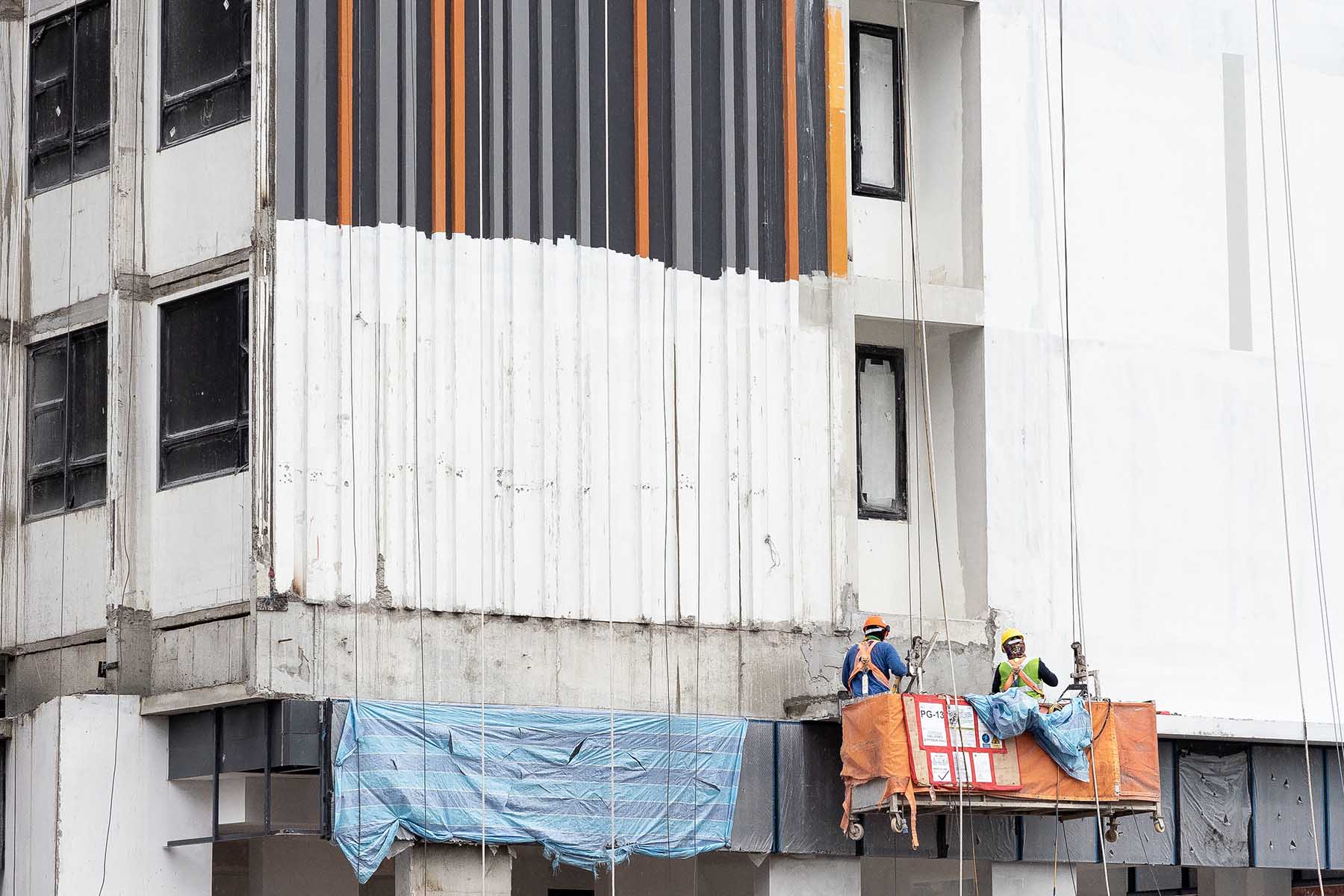
Alarmingly, Singapore has few laws covering the rights or wages of foreign workers. In stark contrast to their actual contribution to the economy, Singapore’s public perceptions of the first category of expats are negative (International Labour Organization, 2020). This often leads to discrimination, exploitation, and even violence.
According to Human Rights Watch (2025), foreign women employed as domestic workers are particularly vulnerable to abuse.
Managing your salary as an international worker
If you’re earning in Singapore dollars but need to support family abroad or maintain financial commitments in your home country, understanding how to manage currency conversion becomes an essential part of your financial planning.
Many international workers send a portion of their salary home each month. According to the World Bank, remittances from Singapore totaled billions of dollars annually, reflecting the large number of expats managing finances across borders. However, the way you transfer money can significantly impact how much actually reaches your destination.
Understanding exchange rates and fees
When you transfer money internationally, two main costs affect how much your recipient receives: the exchange rate and transfer fees.
The mid-market exchange rate is the midpoint between the buy and sell prices of two currencies on global markets. You can find this rate on Google or financial news sites. However, many providers may add a markup to this rate, which acts as an extra cost on top of any upfront fees.
For example, if you’re sending S$5,000 to the Philippines, a 3% markup could cost you an extra S$150 compared to using the mid-market exchange rate. Over a year of monthly transfers, these hidden costs can add up to thousands of dollars.
Exploring your transfer options
Several options exist for sending money from Singapore:
Banks: Providers may charge both an upfront fee and an exchange‑rate spread. Delivery times vary by provider, route, and compliance checks, and can take several business days.
Money transfer services: Both physical locations (like Western Union) and online services provide international transfer options with varying fee structures.
Online financial institutions: Services like Wise use the mid-market exchange rate with transparent fees, which can be more cost-effective than banks in Singapore. Wise is licensed by the Monetary Authority of Singapore (MAS) to provide payment services in Singapore. You can hold multiple currencies in one account.
When comparing options, always check both the fees and the exchange rate being offered. A provider advertising “zero fees” might still cost you more if they use a poor exchange rate.
Managing multiple currencies
If you frequently move money between Singapore and your home country, consider opening a multi-currency account. These accounts allow you to hold different currencies simultaneously, giving you the flexibility to exchange money when rates are favorable rather than being forced to convert immediately.
This can be particularly useful if you receive income in different currencies or if you’re planning to move to another country in the future. Having your money already held in various currencies saves you from last-minute conversions at potentially unfavorable rates.

What to do if your salary is too low
Sadly, there is not much you can do if you feel your company is not paying you enough. Singapore’s labor laws only tend to defend the rights of citizens and, to a lesser extent, permanent residents. Moreover, migrant workers are not affected by PWM, and there are no laws to help safeguard your rights.
If an employer is acting unlawfully, however, you can report it to the MOM. This may be the case if they are not respecting the PWM (if there are any) or they are illegally hiring expats without meeting the relevant quota of locals.
For advice on low salaries or discriminatory wage policies, you can also contact your union, if you have one. They may be able to help you, but given Singapore’s labor laws, you shouldn’t be surprised if they are ultimately unable to do much.
That said, there is a glimmer of hope for employees who are treated unfairly at work. Set to pass in the second half of 2024, the Workplace Fairness Legislation (WFL) aims to tackle common forms of workplace discrimination, including against age, disability, ethnicity, family status, gender, and nationality.
If you find that you are being underpaid due to discrimination, you may – in theory – report your employer to the MOM. However, the practical applications of the WFL are not yet entirely clear.
FAQ
Frequently asked questions about salaries in Singapore
How can I manage my salary if I'm earning in SGD but need to support family abroad? 
The key is to plan ahead and understand your total financial obligations in both Singapore and your home country. Start by calculating exactly how much you need in each location monthly. This helps you avoid emergency transfers at poor exchange rates.
Consider timing your transfers strategically. Exchange rates fluctuate daily, so monitoring rates over a few weeks can help you identify favorable times to convert larger amounts. However, if you need to send money regularly, consistency may be more important than trying to time the market perfectly.
Set up a dedicated system for tracking transfers and exchange rates. This helps you understand the true cost of your remittances and budget accordingly. Remember to factor in both visible fees and any exchange rate markups when calculating the actual cost of your transfers.
What should I know about exchange rates when transferring money from Singapore?
The exchange rate determines how much your Singapore dollars are worth in another currency. The mid-market exchange rate is the fairest rate – it’s the midpoint between buying and selling prices on global currency markets.
However, most banks and money transfer providers don’t use this rate. Instead, they add a markup, which means you get fewer units of foreign currency for your Singapore dollars. This markup is often hidden in the exchange rate they offer you, making it hard to identify without comparison.
Always compare the exchange rate offered by your provider with the mid-market rate (available on Google or xe.com). The difference between these rates, multiplied by the amount you’re sending, shows you the hidden markup cost. Some providers are transparent about this; others are not.
What's the most cost-effective way to send money from Singapore to my home country?
The most cost-effective method depends on how much you’re sending, where you’re sending it, and how quickly it needs to arrive. However, there are some general principles:
Compare total costs: Don’t just look at transfer fees. Calculate the total cost including any exchange rate markup. A provider with zero fees but a poor exchange rate could cost you more than one with upfront fees but a better rate.
Use online services: Online money transfer services typically offer better rates than physical locations because they have lower operating costs. Services like Wise use the mid‑market exchange rate and show fees upfront.
Send larger amounts less frequently: If possible, sending larger amounts monthly rather than smaller amounts weekly usually results in lower total fees proportionally. However, only do this if you’re confident in the security of the service.
Check reviews and regulation: Use providers that are regulated by the Monetary Authority of Singapore (MAS) for consumer protection. For example, Wise is licensed by the Monetary Authority of Singapore (MAS) to provide payment services in Singapore. Check reviews from other expats in Singapore to understand their experiences.
Can I hold multiple currencies while working in Singapore?
Yes, several options allow you to hold multiple currencies simultaneously. Multi-currency accounts are designed for people who need to manage money in different currencies without converting immediately.
These accounts can be useful if you:
- Receive income in multiple currencies
- Regularly transfer money between countries
- Want to wait for favorable exchange rates before converting
- Travel frequently and need various currencies
- Are planning to move to another country
Wise offers a multi-currency account option that allows you to hold SGD alongside over 40 other currencies. You receive local bank details for several currencies (including USD, EUR, GBP, and AUD), making it easier to receive money from abroad. The account comes with a debit card that converts currency at the mid-market exchange rate when you spend.
Most major banks in Singapore also offer multi-currency accounts, though features, fees, and available currencies vary between providers. Compare options based on which currencies you need, the fees charged, and how you plan to use the account.
Useful resources
- Glassdoor Singapore – provides an overview of salary by sector and experience level
- Ministry of Manpower (MOM) – outlines the rights of workers along with information on work permits, employment practices, health and safety, and more
- National Trades Unions Congress (NTUC) – a national confederation of trade unions that provides information on how to improve working conditions and enhance the status of workers
- Wise – provides multi-currency account and international money transfer services for expats; regulated by the Monetary Authority of Singapore (MAS)