
'%20id='ico-down'%20stroke='%23000000'%20stroke-width='1.5'%3e%3cg%20transform='translate(1092.250000,%20254.750000)'%3e%3cpolyline%20id='Path-2-Copy-4'%20transform='translate(5.500000,%202.750000)%20scale(1,%20-1)%20rotate(-180.000000)%20translate(-5.500000,%20-2.750000)%20'%20points='0%200%205.5%205.5%2011%200'%3e%3c/polyline%3e%3c/g%3e%3c/g%3e%3c/g%3e%3c/svg%3e)


Working
Labor Law
Sick leave in France: rules and pay
Understand sick leave in France, from the first doctor’s note to your return to work. This guide is for expats who need clear steps while ill or under time pressure. It explains the 48-hour paperwork rule, how CPAM sick pay works and what to check with your employer.


Key takeaways
| Topic | What expats need to know | Where to verify |
|---|---|---|
| First contact | Tell your employer without delay, even before you send the official form. | Employer or HR |
| Paperwork | Send the arrêt de travail within 48 hours, or make sure the doctor has teletransmitted the medical parts. | CPAM or ameli |
| Waiting period | Standard indemnités journalières usually start after a 3-day waiting period for ordinary sickness. | ameli or Service-Public |
| Top-ups | Your employer may add to CPAM payments, but the rules depend on seniority and your convention collective. | HR or payroll |
| Special cases | Long leave, ALD, work accidents, and late submissions can change what happens next. | CPAM and employer |
What sick leave means in France
In France, sick leave is usually called an arrêt de travail, which is a doctor-issued work stoppage. This guide focuses on private-sector employees, because public-sector staff and some other statuses can follow different rules.
Who can take sick leave?
This article applies to employees in France who are medically unfit to work and have a valid work stoppage from a doctor or another authorised health professional. A common question is whether all workers are covered in the same way, and the answer is no.
You can be signed off work without automatically qualifying for indemnités journalières, the daily cash benefits paid by Assurance Maladie. How to verify: check ameli, your recent payslips, and your employment history if you are unsure about your contribution record.
Sick leave vs work accident and occupational disease
Ordinary sickness leave covers illness or injury that is not classed as work-related. A work accident or an occupational disease is handled differently because the cause matters for compensation, reporting, and employer duties.
This guide focuses on ordinary sickness leave, but work-related cases can start compensation earlier and follow separate procedures. If your absence may be linked to work, check the official work accident rules quickly rather than assuming the normal sickness route applies.
- Ordinary sickness usually has a 3-day CPAM waiting period.
- Work accidents can trigger payment from the day after the accident.
- Occupational disease claims can lead to different rates and recognition steps.
How to report sick leave and send your documents
This is the most important action section in the guide. First get the doctor’s note, then notify your employer and CPAM, and then repeat the process if the leave is extended.
What to send to your employer and CPAM
- See a doctor and get an arrêt de travail.
- If the doctor sends the medical parts electronically, still send the employer copy yourself unless they also handle that step for you.
- If the form is on paper, send parts 1 and 2 to CPAM and part 3 to your employer within 48 hours.
- Notify your employer without delay by phone, email, or message, even if the paperwork follows later.
If you have more than one employer, send the relevant employer copy to each one. Do not assume one HR team can update the others for you.
What happens if your leave is extended or sent late?
An extension is usually handled by the doctor who signed the first leave, your médecin traitant, or a properly connected replacement or specialist. Extension rules matter because teleconsultation limits and follow-up paperwork can affect whether payments continue.
If you send documents late, CPAM can warn you and may reduce part of your daily allowances after a repeat late submission. Keep copies and proof of posting, because admin problems are easier to fix when you can show what you sent and when.
- Resend the employer copy and any CPAM parts required for the extension.
- Check whether the teleconsultation meets the conditions for paid leave.
- Save every message, receipt, and certificate.
How sick pay works in France
This is where many expats get confused, because sick pay in France has three layers: CPAM daily allowances, employer top-ups, and anything extra from a convention collective or workplace policy. The key question is not only how much you get, but who pays which part and when.
| Payer | What it covers | What to check |
|---|---|---|
| CPAM | Basic income replacement through indemnités journalières | Are you eligible and when does payment start? |
| Employer | Possible salary top-up or direct salary maintenance | Is there seniority, subrogation, or a waiting period? |
| Collective agreement or policy | More favourable rules than the legal minimum | What does HR or payroll say? |
This table summarises the main payment layers described in the article. Exact eligibility, waiting periods, and top-ups should be checked with CPAM, your employer, and your collective agreement.
Wise account for managing money in France
Sick leave can affect when and how money arrives, especially if you are dealing with CPAM payments, employer top-ups, or expenses in more than one country. With Wise, expats in France can hold and convert currencies, receive payments, and keep everyday spending organised while they handle the paperwork.

Who qualifies for indemnités journalières?
At a high level, CPAM daily allowances depend on recent work or contribution history, not just on being ill. For shorter leave and longer leave, the thresholds differ, so check the official rules for the date your leave starts.
Seasonal or discontinuous workers can still qualify, but the test is different because France looks at a longer work or salary period. How to verify: compare your situation with the current ameli or Service-Public thresholds and keep your payslips ready.
- Up to 6 months and over 6 months do not use the same conditions.
- Paper forms now need the secure official Cerfa version.
- Past paid sick leave can count toward some work-hour tests.
- If you are unsure, ask CPAM before assuming you will be paid.
How payment is calculated
For ordinary illness, indemnités journalières usually start on day 4 because the first 3 days are a waiting period. The payment is not full salary replacement, it is normally 50% of a capped daily salary calculation.
If you earn above the cap, the extra salary does not increase the CPAM amount beyond the maximum allowed. Last checked on 26 June 2026: official French guidance still states a 3-day waiting period for standard sickness leave, but figures can change, so confirm the current amount on ameli and on your statements.
Example
An expat employee earns EUR 2,200 gross a month and is signed off for 10 calendar days. CPAM would first apply the 3 waiting days, then calculate a daily amount from capped recent gross pay rather than paying the full monthly salary, and any employer top-up would depend on the company rules.
How to verify: check your ameli account or statements, then compare them with the salary certificate sent by your employer.
When employers top up your pay
Some employees can receive extra pay from their employer on top of CPAM, but this is not automatic for everyone. The result can depend on seniority, whether you qualify under the labour rules, and whether your convention collective is more generous.
Subrogation means your employer keeps paying your salary, in full or in part, and receives the CPAM payment directly instead of you receiving it first. This is different from getting extra money on top of CPAM, so it is worth asking payroll how your company handles the flow.
- Do I qualify for an employer supplement under the basic rules?
- Does my convention collective improve the waiting period or amount?
- Is subrogation used, and if so who receives CPAM first?
- Which documents does payroll need from me if the leave is extended?

What expats should check during longer leave or special situations
This is where official guidance often feels fragmented. Once your leave becomes longer or your work pattern is unusual, the safest approach is to verify each step with CPAM, your employer, and your convention collective instead of assuming the standard path still fits.
Can you leave home, travel, or work while on leave?
- 🏠 Stay home if your certificate says no outings. If outings are allowed, you may still need to be at home from 9 to 11 and from 14 to 16, including weekends and holidays.
- ✈️ Travel carefully. If you stay somewhere else, that address needs to be on the sick-leave record, and travel abroad can affect whether daily allowances continue.
- 💼 Do not do unauthorised work or side jobs. Controls can happen without warning, and payments can be suspended if you ignore the rules or fail a check.
If you are not sure whether an activity is allowed, ask CPAM before doing it.
What changes for unemployment, multiple employers, seasonal work, or ALD?
The broad topic is the same, but the paperwork and payment logic can change fast. Someone between jobs may deal with CPAM differently from someone with two employers, and a worker with an ALD, a long-term condition recognised by the system, may face different waiting-day rules.
People with more than one employer need to keep every employer informed, because each one may need its own copy and salary information. Seasonal or discontinuous workers should check the longer reference periods used for eligibility rather than assuming recent months are enough.
- If you are unemployed, ask which documents CPAM needs from your last employment or benefit record.
- If you have several employers, send each one the employer copy.
- If you are seasonal, check the 12-month tests instead of only the last 3 months.
- If your leave relates to an ALD, ask whether the waiting day rule changes for linked leave.
What healthcare cover helps while you are off work
Healthcare cover is about paying for treatment and getting access to care, not about replacing statutory sick pay. That distinction matters, because expats often confuse reimbursement for medical costs with income protection.
What the French system covers
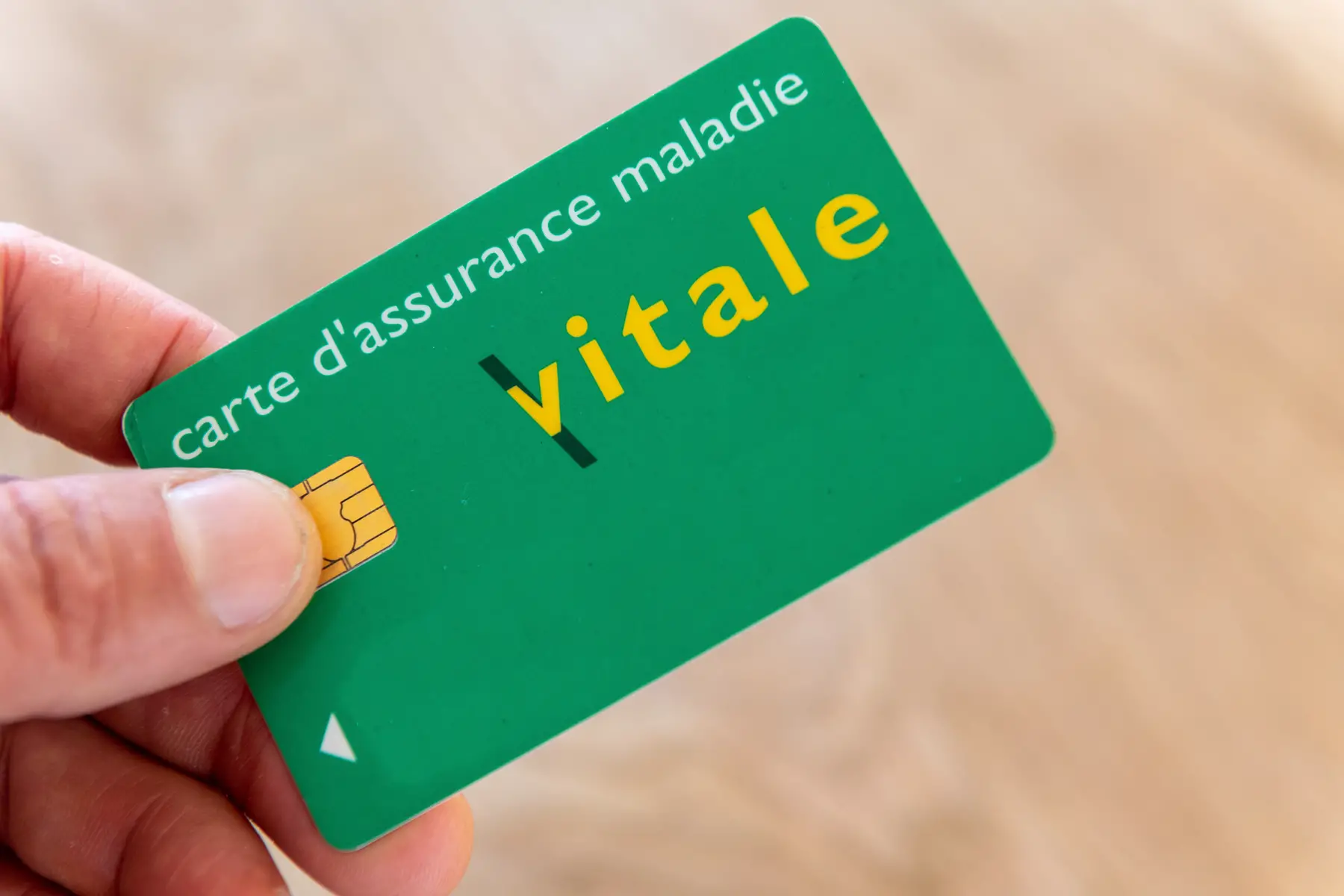
CPAM, the local health insurance fund that administers Assurance Maladie, handles medical reimbursement and also pays daily sickness allowances if you qualify. Your Carte Vitale helps with the care side, but it does not decide whether you get sick pay.
A mutuelle or employer top-up plan may reduce what you pay for consultations, medicines, or follow-up care, depending on the arrangement. It does not replace French social security sick-pay rules, which follow CPAM eligibility and employment rules instead.
Where private international health insurance may help
Private international health insurance may help with quicker access preferences, private treatment options, cross-border care, or extra reimbursable costs, depending on the plan. It is best seen as a complement to French public healthcare, not as a replacement for CPAM, employer sick pay, or mandatory social protection.
If you want to compare expat-focused medical cover, Cigna is one provider to review after you have checked what French social security and your employer already provide. Features and exclusions can vary, so read the plan documents carefully before relying on any benefit.
- Check whether the plan helps with private care, hospital extras, or care outside France.
- Check how claims work, especially if you expect treatment in more than one country.
- Check what public cover and employer benefits already pay before buying anything extra.
Cigna
Private international health insurance can help with cross-border care, private treatment preferences, or extra reimbursable costs, depending on the policy. Compare providers such as Cigna and check exclusions, waiting periods, and how the cover works alongside French public healthcare before choosing a plan.
Returning to work after sick leave
Do not assume the process ends on the last date of the certificate. After longer leave, the return can involve occupational health, payroll checks, or changes to your role.
When a medical check or workplace adjustment may apply
For ordinary non-work-related sickness leave, a compulsory return visit does not apply in every case. But longer absences, work accidents, occupational disease cases, or maternity-related returns can trigger occupational-health steps, and a pre-return discussion may help before that.
If your job is no longer a good fit for your health, ask what adjustments are possible and whether a therapeutic part-time return is an option. The goal is to make the restart workable, not to rush back and create a second absence.
- Confirm the fit-to-return or occupational-health process with HR.
- Check your first payslip after you return.
- Keep all CPAM statements and employer records together.
Conclusion
Sick leave in France can feel complicated at first, but the key steps are simple: get the right medical certificate, notify your employer quickly, send the correct paperwork on time, and check how CPAM and any employer top-up apply to your situation.
Because sick pay, extensions, travel rules, and return-to-work checks can vary depending on your status, collective agreement, and health circumstances, it is worth keeping records and confirming each step with CPAM, ameli, HR, or payroll before making decisions.
These quick answers cover a few related questions that expats often ask when they are comparing leave rules, pay, and admin.
FAQ
Frequently asked questions about sick leave in France
Can self-employed workers get sick leave in France? 
Self-employed workers may qualify for illness-related support, but the rules depend on their status and scheme. Check the rules for your activity before assuming employee-style CPAM payments apply.
Do you need a médecin traitant to get sick leave in France?
Not always. However, your médecin traitant often handles extensions and follow-up certificates, so make sure the sick-leave form is issued correctly and sent on time.
What should you do if CPAM delays your payment?
Check that CPAM received your paperwork and that your employer sent the salary certificate. Then log in to ameli or contact CPAM to see whether anything is missing.
This article is for general information only and does not constitute legal, employment, healthcare, tax, or financial advice. Sick-leave rules, eligibility conditions, payment amounts, and employer obligations can change and may depend on your personal situation, employment status, collective agreement, and health cover. Always check the latest official guidance from CPAM, ameli, Service-Public, and your employer or payroll team before making decisions.
Sources
- Service-Public.fr: Arrêt maladie : démarches à effectuer par le salarié
- Service-Public.fr: Arrêt maladie : indemnités journalières versées au salarié
- ameli.fr: Arrêt de travail pour maladie : les indemnités journalières du salarié
- Service-Public.fr: Maladie ou accident du travail dans le secteur privé
- Service-Public.fr: Accident du travail : indemnités journalières pendant l’arrêt de travail
- Service-Public.fr: Arrêt maladie : reprise du travail du salarié
- Service-Public.fr: Un salarié doit-il passer une visite médicale après un arrêt de travail ?


Did you find this guide helpful?