'%20id='ico-down'%20stroke='%23000000'%20stroke-width='1.5'%3e%3cg%20transform='translate(1092.250000,%20254.750000)'%3e%3cpolyline%20id='Path-2-Copy-4'%20transform='translate(5.500000,%202.750000)%20scale(1,%20-1)%20rotate(-180.000000)%20translate(-5.500000,%20-2.750000)%20'%20points='0%200%205.5%205.5%2011%200'%3e%3c/polyline%3e%3c/g%3e%3c/g%3e%3c/g%3e%3c/svg%3e)




'%20fill='%23000000'%3e%3cg%20id='icons'%20transform='translate(56.000000,%20160.000000)'%3e%3cpath%20d='M144,7339%20L140,7339%20L140,7332.001%20C140,7330.081%20139.153,7329.01%20137.634,7329.01%20C135.981,7329.01%20135,7330.126%20135,7332.001%20L135,7339%20L131,7339%20L131,7326%20L135,7326%20L135,7327.462%20C135,7327.462%20136.255,7325.26%20139.083,7325.26%20C141.912,7325.26%20144,7326.986%20144,7330.558%20L144,7339%20L144,7339%20Z%20M126.442,7323.921%20C125.093,7323.921%20124,7322.819%20124,7321.46%20C124,7320.102%20125.093,7319%20126.442,7319%20C127.79,7319%20128.883,7320.102%20128.883,7321.46%20C128.884,7322.819%20127.79,7323.921%20126.442,7323.921%20L126.442,7323.921%20Z%20M124,7339%20L129,7339%20L129,7326%20L124,7326%20L124,7339%20Z'%20id='linkedin-[%23161]'%3e%3c/path%3e%3c/g%3e%3c/g%3e%3c/g%3e%3c/svg%3e)
'%20fill='%23000000'%3e%3cg%20id='icons'%20transform='translate(56.000000,%20160.000000)'%3e%3cpath%20d='M335.821282,7259%20L335.821282,7250%20L338.553693,7250%20L339,7246%20L335.821282,7246%20L335.821282,7244.052%20C335.821282,7243.022%20335.847593,7242%20337.286884,7242%20L338.744689,7242%20L338.744689,7239.14%20C338.744689,7239.097%20337.492497,7239%20336.225687,7239%20C333.580004,7239%20331.923407,7240.657%20331.923407,7243.7%20L331.923407,7246%20L329,7246%20L329,7250%20L331.923407,7250%20L331.923407,7259%20L335.821282,7259%20Z'%20id='facebook-[%23176]'%3e%3c/path%3e%3c/g%3e%3c/g%3e%3c/g%3e%3c/svg%3e)

Find out which corporate tax rates in France apply depending on your business structure and turnover, as well as the conditions for paying corporate tax in France. Below, you can read advice on the following:
- The corporate tax system in France
- Who pays corporate tax in France?
- Corporate tax rates in France
- Corporate tax exemptions and credits in France
- Value-added tax in France
- Corporate tax year in France
- How to file your corporate tax return in France
- Other types of business tax in France
- Corporate tax fines in France
- Corporate tax advice in France
- Useful resources
The corporate tax system in France
Whether your business needs to pay corporate tax in France depends on its turnover and structure.
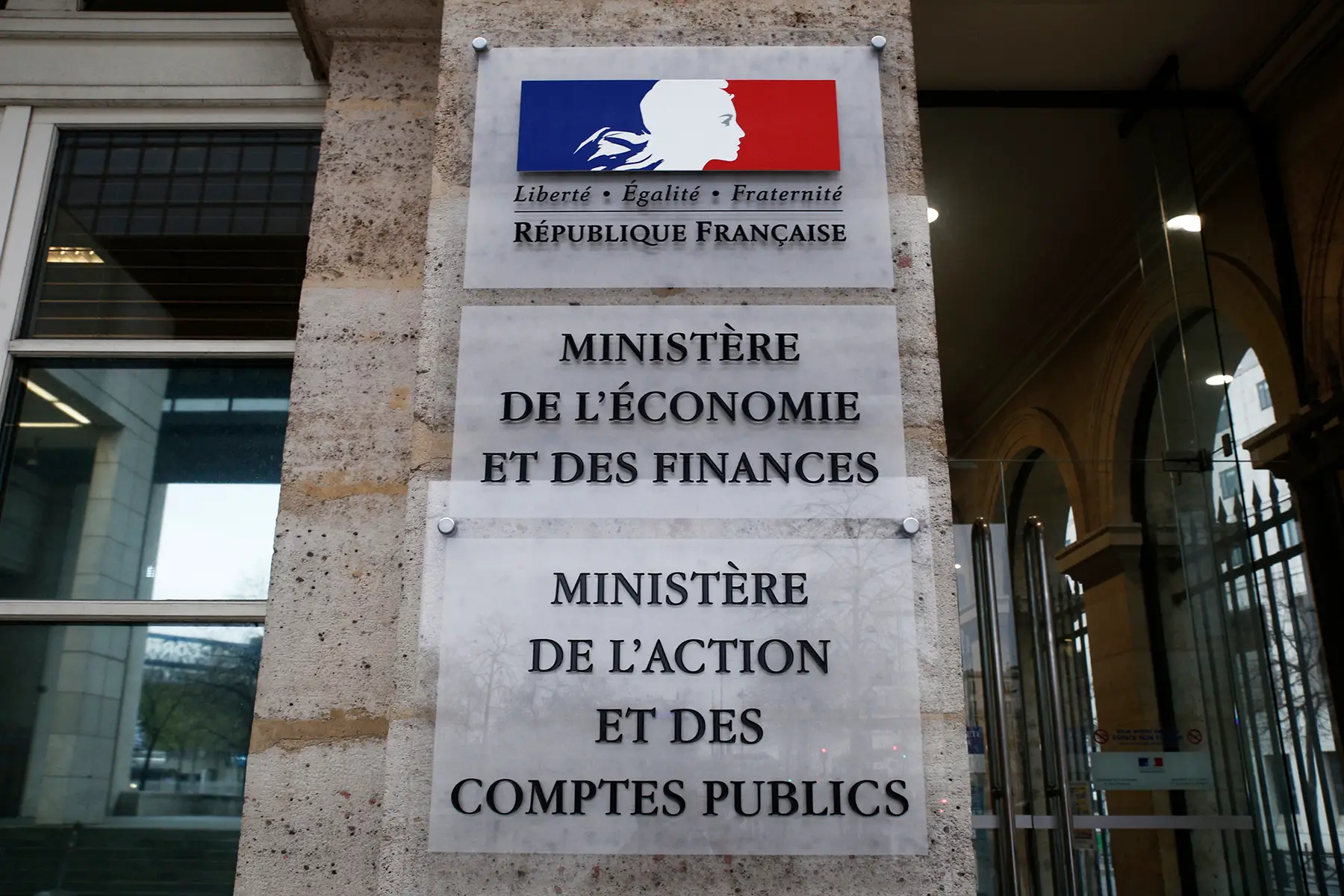
Corporate tax rates have been falling in France in recent years, making starting a business in France more appealing from a tax perspective. The standard rate, which stood at 33% for companies with the highest turnovers just a few years ago, has now fallen to just 25%. Some smaller companies that meet certain criteria pay a reduced rate of 15% on the first €42,500 of profits.
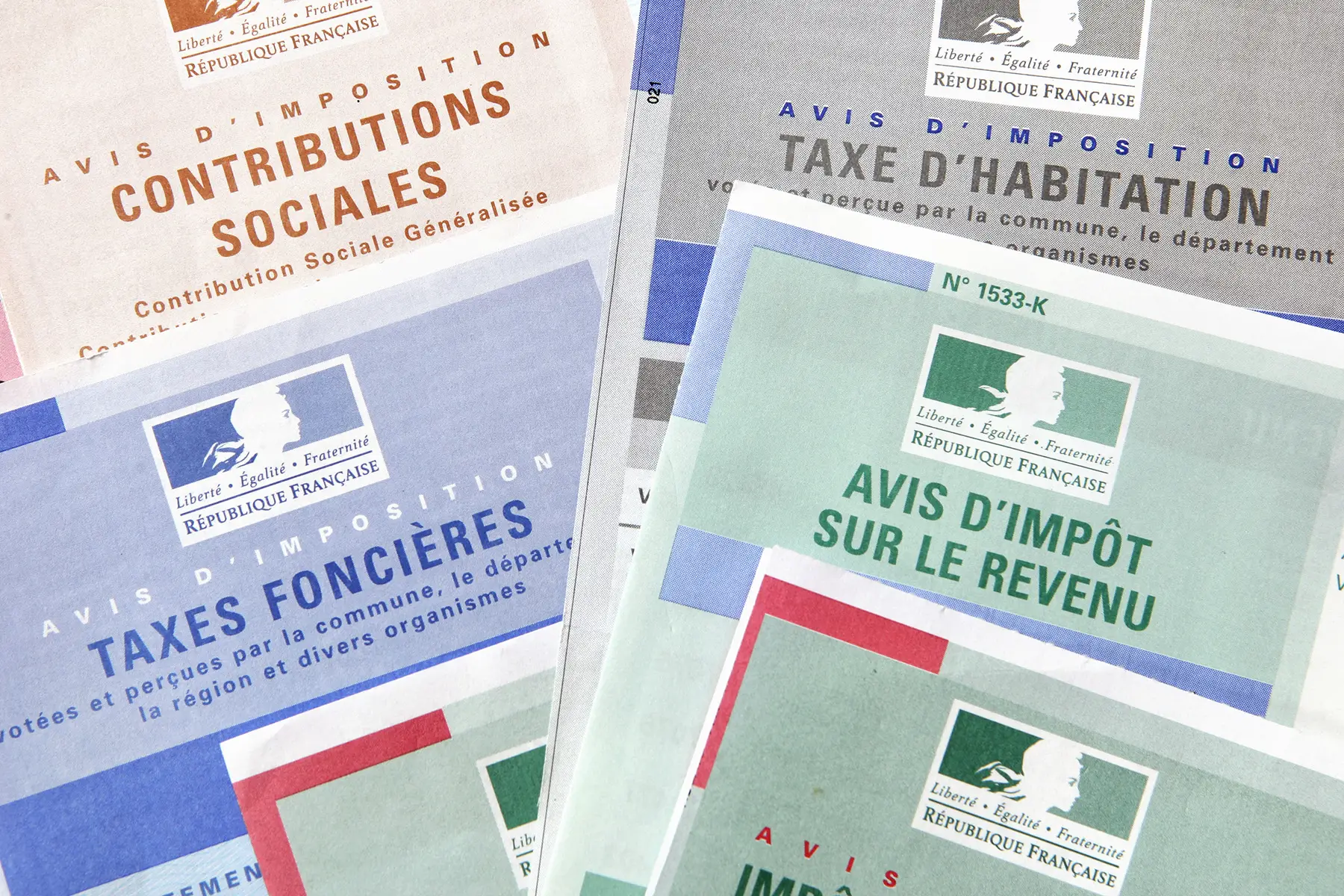
Who pays corporate tax in France?
Corporate tax for sole traders
As a sole trader in France (entrepreneur individuel), your personal and professional assets are legally separated. By default, business profits are taxed through your personal income tax return under the relevant category rather than corporate tax: industrial and commercial profits (BIC) for traders and artisans, or non-commercial profits (BNC) for independent professionals. Subject to certain conditions, you may also opt for taxation under French corporate income tax instead.

Corporate tax for limited companies
Limited companies in France pay French Corporate Tax on their business profits. The standard private limited company in France is known as a SARL (Société à responsabilité limitée). Other forms of limited company include:
- SA (Société Anonyme) – public limited company
- SAS (Société par Actions Simplifiée) – joint-stock company
- EURL – single-member SARL
Corporate tax for partnerships
If your partnership is a SARL, it is normally subject to French corporate income tax. However, a SARL may opt to be taxed under the personal income tax system in certain cases.
Newly created small companies that meet specific legal criteria may choose income tax treatment for up to five years. In addition, a family-owned SARL (SARL de famille) may elect to be taxed under the personal income tax system without a time limit. In all other cases, the company is taxed under the French corporate tax regime.
Business tax for micro-enterprises in France
Businesses with smaller turnovers can be taxed under a simpler micro enterprise regime (régime micro-entreprise), where you state your turnover and are allocated a fixed allowance and taxed on fixed profit.

This system typically applies to micro-entrepreneurs (or auto-entrepreneurs) and is split into Micro-BIC and Micro-BNC. In 2026, the thresholds are as follows:
- Commercial (micro-BIC): If your business is classed as commercial sales, your turnover must be less than €188,700 to qualify for the tax regime. A credit of 71% is available, meaning your taxable base will be 29% of your overall turnover.
- Trade/service-based (micro-BIC): The maximum turnover allowed is €77,700. The cost allowance is 50%, so your taxable base will be 50%.
- Professional (micro-BNC): For professional/liberal activities (such as accountants), the maximum turnover allowed is €77,700. Your tax credit is 34%, so you’ll pay tax on 66% of your income.
You have to file a return by May/June each year and typically pay by September/October.
Corporate tax rates in France
Corporate tax rates in France have been gradually reducing. In 2021, the standard rate was 26.5%, with companies with profits of more than €500,000 paying a higher rate of 27.5%.
Since 2022, however, companies have paid a standard corporate tax rate of 25% regardless of their profits. Small companies can still benefit from a reduced rate of 15% on their first €42,500 of profits.
Manage your international business finances with Wise
Wise Business allows you to hold and manage money in 40+ currencies, send international payments at the mid-market exchange rate with low fees, and receive payments with account details. You can pay international suppliers, easily receive payments from clients abroad or manage expenses across different currencies.


Corporate tax exemptions and credits in France
Corporate tax exemptions in France
There are a number of ways you can lower the cost of corporate taxes in France, including through appropriate deductions. Depending on your company, you may be able to deduct some start-up expenses or research and development and software expenses.

Charitable donations are also deductible, as are some interest expenses and some payments to foreign-related parties. For more information specific to your business, seek professional advice.
Corporate tax credits in France
France offers various tax credits or exemptions to businesses that pay corporate taxes in France. These credits are often available to offset corporate taxes paid. A qualified tax professional in your accounting department can advise you about your business’s specific situation. Generally, here are just a few of the tax credits available:
- A research tax credit (Crédit d’Impôt Recherche) for specific investment in research and development.
- Regional tax exemption regimes that provide temporary relief for companies established in certain designated areas.
- A videogame tax credit (Crédit d’Impôt Jeu Vidéo), for companies involved in creating videogames.
Value-added tax in France
The standard rate of value-added tax in France is 20%. Lower rates of 10%, 5.5%, and 2.1% are also possible for some goods and services. The French name for VAT is Taxe sur la valeur ajoutée, or TVA for short.
The threshold to register for TVA is €36,800 for serviced-based businesses and €91,900 for commercial activities, bars, restaurants, and accommodation.
If your turnover is less and you don’t have to charge French TVA, then your invoices must state that TVA is not applicable – ‘TVA non-applicable, art 293B due CGI’.
Charging and paying TVA
If TVA is applicable, you will be allocated a French TVA number (numéro de TVA intracommunautaire) made up of 13 characters: FR (for France), a two-digit data processing code, and your SIREN number. You must write your French TVA number on all your invoices.
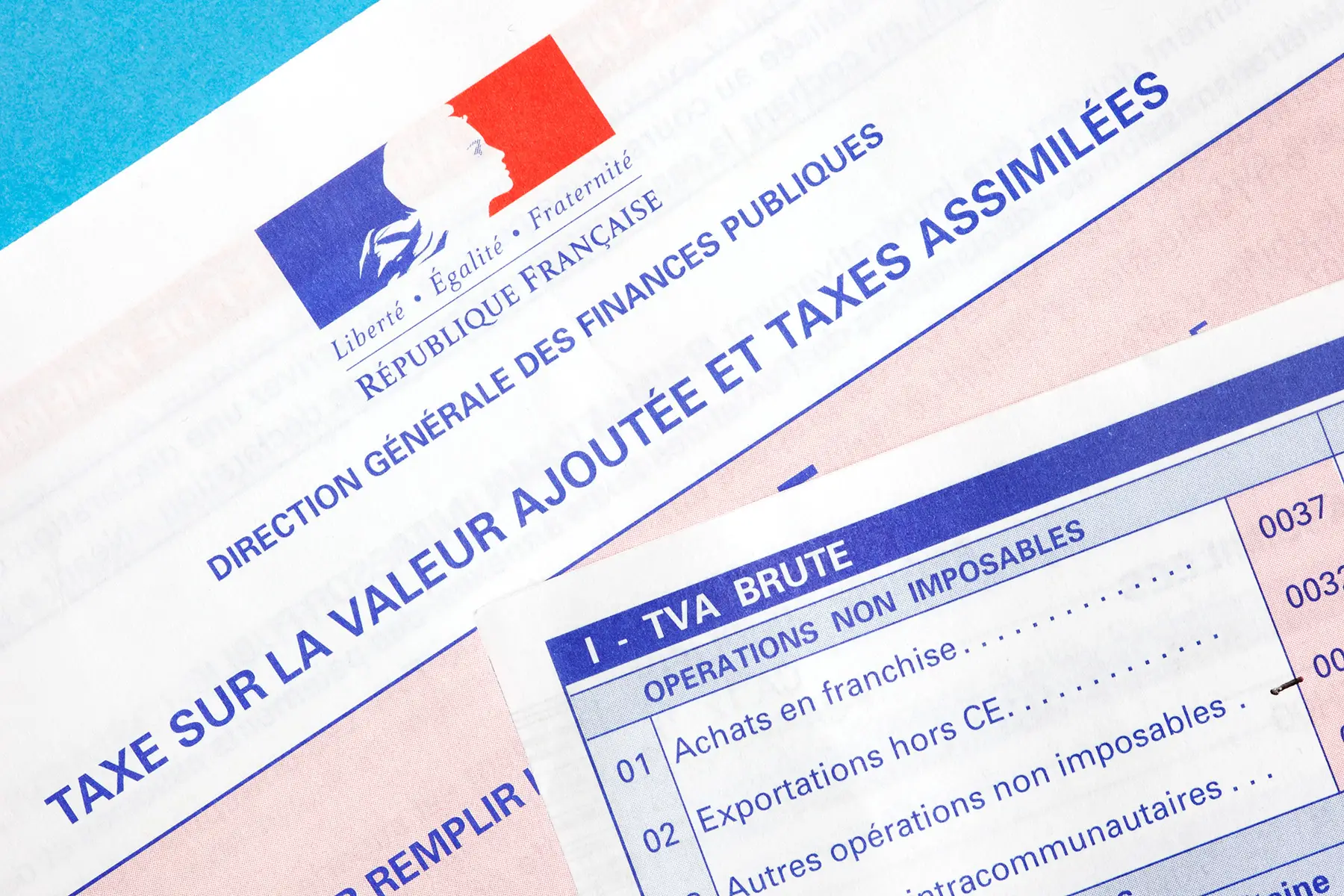
The TVA declaration must be submitted and paid online. For businesses established in France and filing monthly returns, the deadline falls on a specific date set by the tax authorities, typically between the 15th and 24th of the month following the reporting period.
For foreign businesses not established in France, the VAT declaration and payment are generally due by the 19th of the following month.
Cross-border VAT in France
If you are thinking of buying or selling goods or providing services to customers in other countries – in and outside of the European Union – there are special rules regarding cross-border VAT. For example, you don’t charge French VAT when you’re selling goods or providing services to customers outside the EU, although you can deduct the VAT you have paid on related expenses.
TVA for selling goods
When you’re selling goods to businesses in other EU countries, you also do not charge VAT. However, when you’re selling goods to consumers in another country within the EU, you must register with the relevant VAT authorities in that country and charge VAT at their rate, except in cases when the total value of annual sales falls below the limit set by the country.
TVA for providing services
If you’re providing services to businesses within the EU, you don’t normally charge VAT. However, for services to consumers within the EU, you charge the French TVA rate. Exemptions apply to telecommunications, broadcasting, and electronic services, which are always taxed in the customer’s country.
For detailed information, see the European Commission’s cross-border VAT rules.
Corporate tax year in France
The corporate tax year generally matches the calendar year, though do keep in mind that certain elements (for example, VAT) may be filed for each fiscal quarter.
Deadlines
Companies have to file a French tax return within three months of the close of accounts or by 30 April. French corporate tax is payable quarterly on 15 March, 15 June, 15 September, and 15 December. Exemptions from instalments apply if you’re a new company or paid less than €3,000 in the previous year; in this case, you can pay French corporate tax on a yearly basis.
Be sure to discuss with your accountant the deadlines your company is liable for so you avoid late tax filings.
How to file your corporate tax return in France
Corporate tax filing is almost completely online, either through an Electronic Data Interchange (EDI) partner or from its’ subscriber area.
Other types of business tax in France
CET French corporate tax rates
The Contribution Economique Territoriale (CET) is a French corporate tax that helps to pay for the Chambers of Commerce and other services. It is based on the rental value of the business premises or, where no premises are used, a minimum contribution set by the local municipality.

New businesses are automatically exempt from CET in their first year of activity. It is normally payable by 15 December each year, or in two instalments (June and December) if the amount due exceeds the statutory threshold.
Corporate tax fines in France
If you file your French corporate tax return late, late-payment interest accrues at 0.20% per month, and a late-filing penalty of 10% generally applies (increasing to 20% if the return is filed after a formal demand).
If tax is paid late, a 5% surcharge applies, in addition to interest at 0.20% per month.
Penalties increase to 40% in cases of bad faith and 80% in cases of fraud or abuse, in addition to interest.
Corporate tax advice in France
An accountant (expert-comptable) can advise on a wide range of topics, such as French corporate taxation, social security charges, tax law, and any available French tax refunds.
You can find an accountant through the French accountants’ professional body, l’Ordre des Expert-Comptables, or the local Chamber of Commerce, or consider using an affiliated accounting center.
The information given here provides a general overview only; it is always best to get professional advice from a French accountant or financial expert when starting a business in France.
Useful resources
- French tax authority
- APCE or Accueil Professionnels et Entreprises: the national organization for start-ups in France.
- Centre de Formalités des Entreprises or CFE: the organization responsible for handling business registration throughout France. There are different offices for each type of business.