
'%20id='ico-down'%20stroke='%23000000'%20stroke-width='1.5'%3e%3cg%20transform='translate(1092.250000,%20254.750000)'%3e%3cpolyline%20id='Path-2-Copy-4'%20transform='translate(5.500000,%202.750000)%20scale(1,%20-1)%20rotate(-180.000000)%20translate(-5.500000,%20-2.750000)%20'%20points='0%200%205.5%205.5%2011%200'%3e%3c/polyline%3e%3c/g%3e%3c/g%3e%3c/g%3e%3c/svg%3e)


Living
Transportation
Driving in Switzerland
Looking to go from A(arau) to B(asil) by car? Discover what you need to know about driving in Switzerland, including traffic rules and tips on road safety.

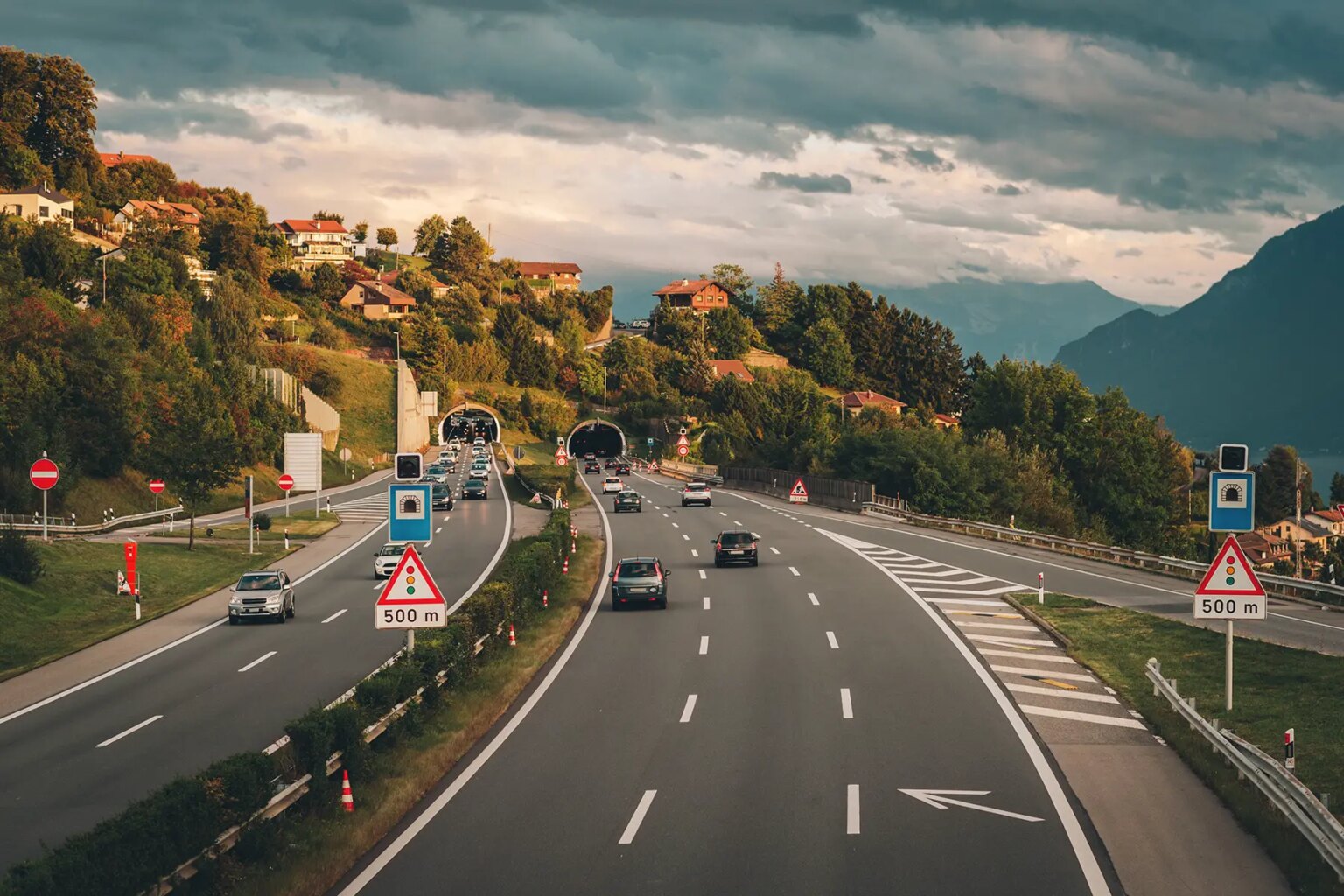
Whether you’re a new driver or one of the country’s many cross-border workers, Switzerland’s geographic diversity can sometimes be a bit of a challenge. There are many rules and regulations you need to know, including new motorway laws in 2021.
Get up to speed on the following topics:
Driving in Switzerland
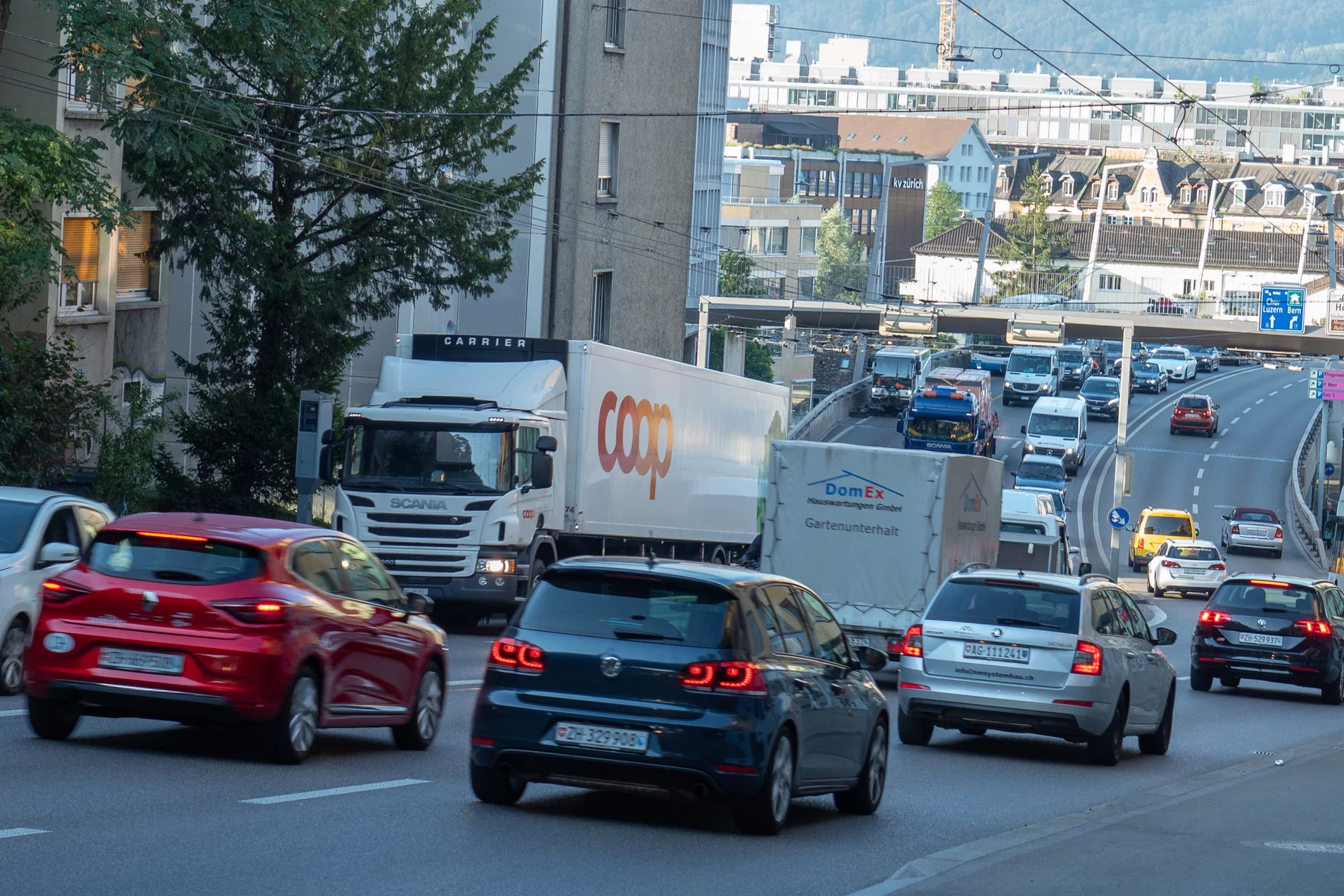
Switzerland is among the most densely populated countries in Europe so it’s not surprising that its many roads are often busy with vehicles. However, the Swiss are known for their good road safety. The most recent data shows that Switzerland has the third safest roads out of European Union and European Free Trade Association (EU/EFTA) countries, with 22 deaths per million inhabitants. This puts them behind only Iceland and Norway, and well below the EU average of 51.
Switzerland has around 540 cars per 1,000 inhabitants, which is roughly the same as the EU average. 78% of Swiss households own a car and 82% of Swiss residents aged 18 and over have a driving license.
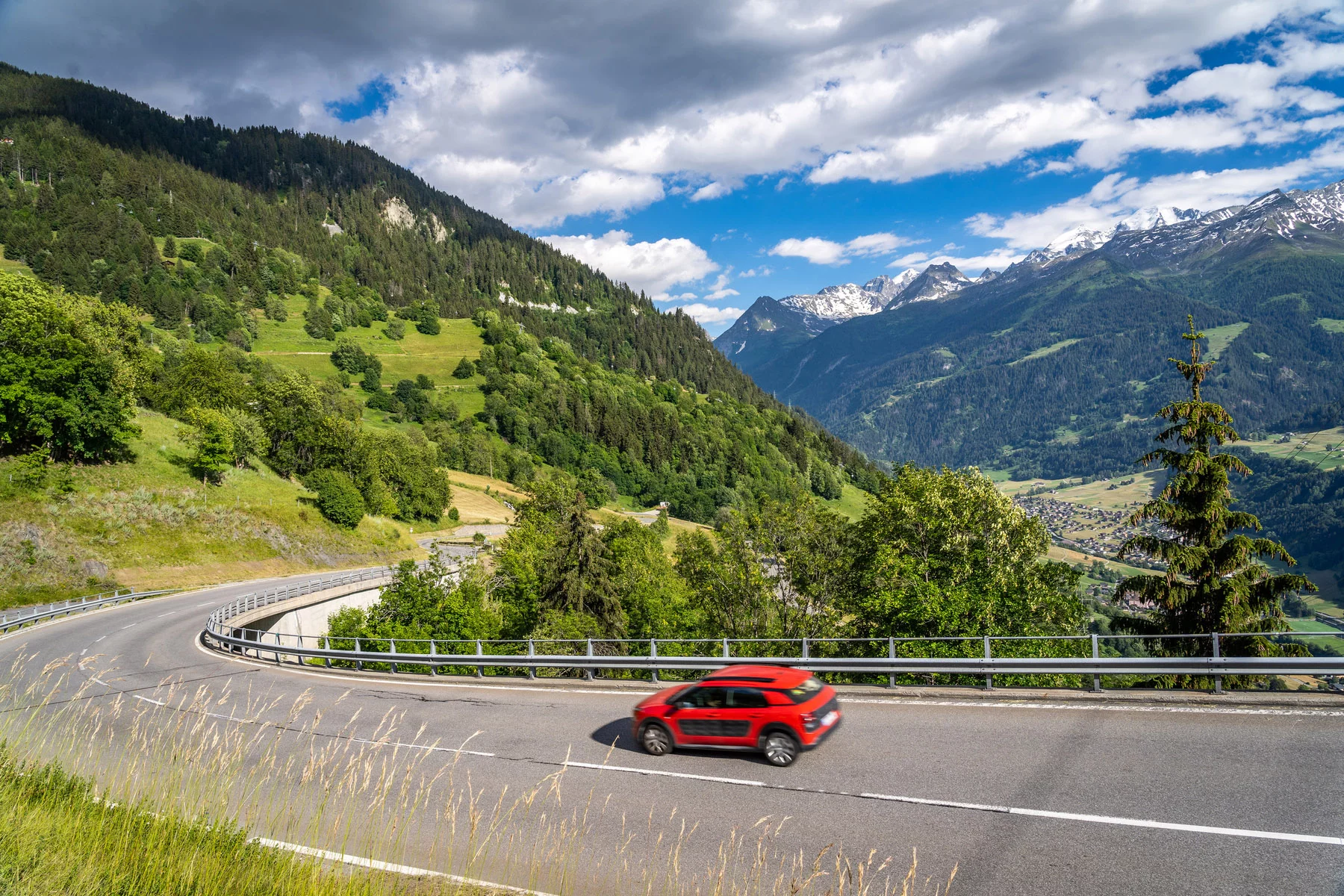
The Federal Office of Roads (ASTRA), which is part of the Federal Department of the Environment, Transport, Energy and Communications (DETEC), is the authority for road infrastructure and traffic in Switzerland. DETEC introduced restrictions on CO2 emissions from vehicles in 2012. However, rules on importing the most polluting cars were controversially relaxed in 2020.
Road users in Switzerland drive on the right-hand side of the road, similar to most other European countries.
Who can drive in Switzerland?
You can drive in Switzerland using your foreign driving license for up to 12 months. However, if your driver’s license is not in English, German, French, or Italian, you also need an International Driving License. This isn’t actually a license but a translation of your foreign one.
The minimum age for driving in Switzerland is 18 for cars and two-wheel vehicles of 50cc or more. You can start learning to drive in a car at 17 in preparation for taking a test at 18. Mopeds under 50cc may be driven from the age of 14 at a maximum speed of 30km/h. Motorcycles (under 50cc with a maximum speed of 45km/h) may be driven from the age of 16.
Swiss driving licenses
There are different categories of driving license in Switzerland. These are:
- A – motorcycles
- B – cars and other vehicles with a maximum weight of 3,500kg
- C – vehicles weighing over 3,500kg, for example trucks and lorries
- D – vehicles used for passenger transport with more than 8 seats
- F – vehicles, excluding motorcycles, with a maximum speed of 45km/h
- G – agricultural and forestry vehicles, for example tractors
- M – mopeds
You can find more information about these categories on the Swiss government website.
ASTRA issues Swiss driving licenses through local cantonal road traffic offices (in German). The standard license is in credit card style and includes:
- License holder name
- Date and place of birth plus place of citizenship of the license holder
- License issue date and expiry date
- Driving license number
- Photo of license holder
- Signature of license holder
- Vehicle categories the license holder is permitted to drive
- Additional administrative information
Getting a driving license in Switzerland
The first step towards getting a Swiss driving license is to apply for a provisional license, which you can do from the age of 16 years and 11 months. To get your provisional license, you will need to:
- Attend a first-aid course
- Complete an application form (available from your canton’s road traffic office)
- Pass a theory test
Provisional licenses are valid for two years in Switzerland, although category A licenses are only valid for four months.
Once you have passed both your theory and practical driving test in Switzerland, you will receive a probationary driving license. The probationary period for Swiss drivers is three years. At the end of your probation, you can exchange this for a permanent driving license if you have completed a compulsory one-day course.
Driving license costs in Switzerland are CHF 20–80 for a provisional license and CHF 35–60 for a full license, depending on the canton. When adding in other costs such as tests, courses, and materials, you can expect to spend between CHF 500–900 in total – excluding lessons.
Exchanging a foreign driving license in Switzerland
You can drive in Switzerland on a foreign driving license for up to 12 months, before which you must convert your license to a Swiss driving license.
If you are from an EU/EFTA country, you can exchange your driving license without having to take any tests. Those from outside the EU/EFTA usually have to take a practical test to exchange their license. You may also have to sit a theory test, depending on which country you are from.
The fee for exchanging a foreign driving license in Switzerland is typically CHF 80-140, depending on the canton.
Drivers with disabilities in Switzerland
Switzerland has a parking card scheme for drivers with disabilities that operates the same as the one used across the EU. The parking card – also known as the Blue Badge – allows drivers with disabilities to park in special places and zones. In some cases, it also permits limited parking in ‘no parking’ areas and free parking in fee-paying zones.
You can use your Swiss parking card in other EU countries. Similarly, EU blue badges can be used in Switzerland. You can find information on the blue badge, along with a link to an application form, on the ASA website (in German, French, Italian).
Some dealerships sell or hire wheelchair-accessible vehicles (WAV). The German WAV provider Paravan and the Austrian company Kirchhoff Mobility (in German) both have outlets in Switzerland providing WAV products and vehicle conversion services.
Car registration and maintenance
If you are driving in Switzerland and own a car, whether bought within the country or imported from abroad, you must register it with your canton’s road traffic office (in German).
Each Swiss canton’s road traffic office is responsible for vehicle registrations and regular vehicle inspections. If you move home within a canton, you must inform your canton’s road traffic office of your new address within 14 days.
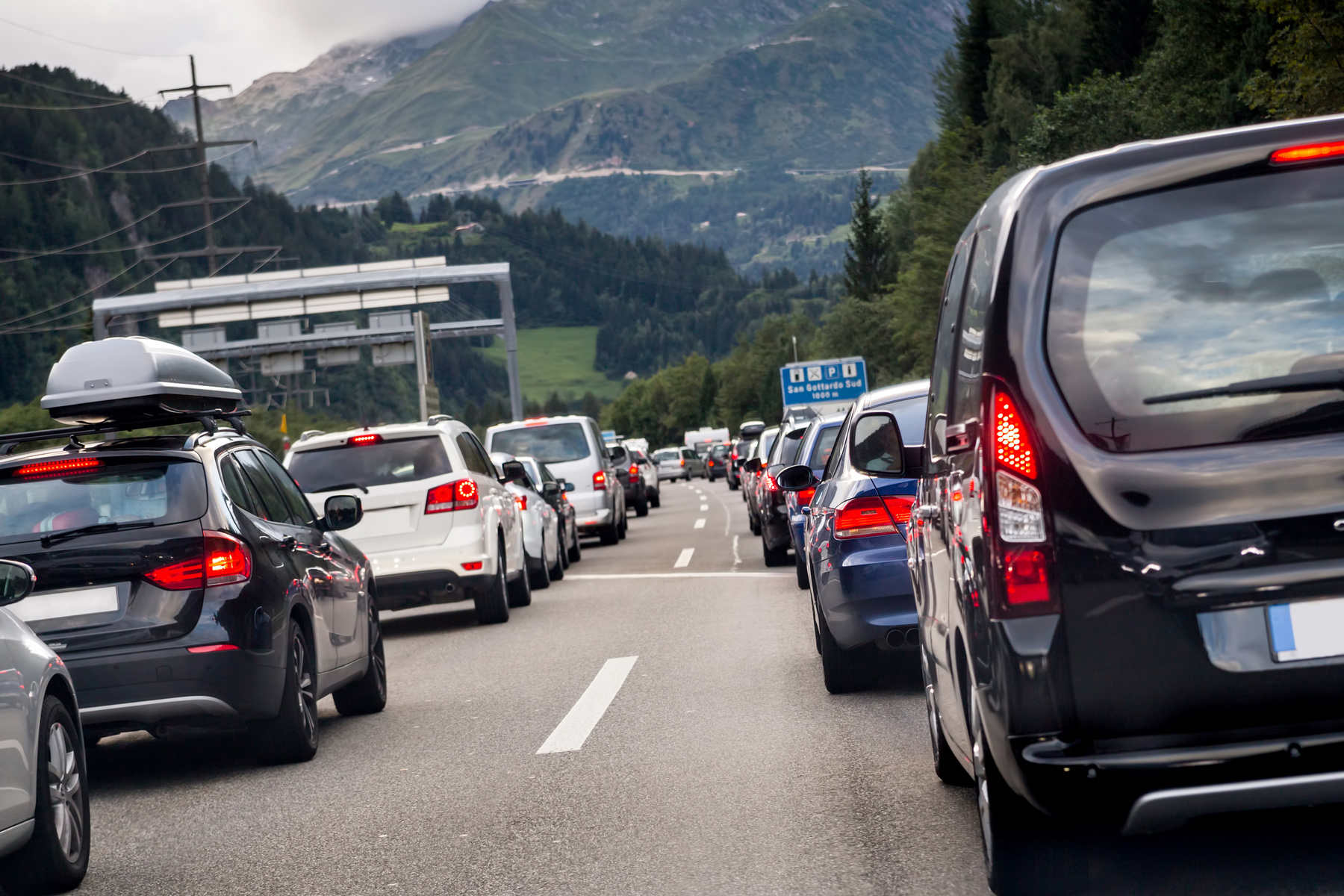
When moving to another canton, you must register with your new road traffic office within 14 days. You will receive a new license number plate for your car. This is because Swiss number plates are linked to the name and address of the car owner.
If you are driving a car not registered in your name, you should have a letter from the registered owner authorizing you to do so.
You will need to cancel your registration if you sell, exchange or scrap your car.
Motor inspection tests
Most vehicles in Switzerland require regular inspections by having the Motorfahrzeugkontrollen/contrôle technique vehicle inspection test. How often depends on the age of the car. New cars must undergo a test after four years on the road, then after a further three years, and then every two years. Your cantonal road traffic office will contact you when an inspection is due.
Vehicle inspections are done through the Association des Services des Automobiles (ASA – in German) which is the main service provider for the cantonal road traffic offices. Each canton has its own company that carries out inspection and testing.
Every two years cars with catalytic converters or diesel engines also have to have an anti-pollution test; other cars have annual tests.
Fees for vehicle testing vary across cantons. Contact your local road traffic office for information.
Driving costs in Switzerland
Aside from the cost of driving lessons, tests, and your license, other costs you usually have to pay when driving in Switzerland are:
- Vehicle tax – this varies between cantons and also by vehicle but can be anywhere from CHF 100–800 a year.
- Motorway toll – you have to buy a special license.(Autobahnvignette/vignette autoroutière) to use Swiss motorways. This costs CHF 40 a year.
- Vehicle insurance – can vary from around CHF 300–400 a year for third party to CHF 1,000–2,000 for some fully comprehensive policies.
- Fuel costs – currently around CHF 1.52 per liter.
- Registration – varies across cantons but the average cost is around CHF 100–150.
On top of this are general maintenance costs, parking costs, and the cost of things such as automobile memberships. Average overall costs for owning and driving a car in Switzerland are approximately CHF 700–750 a month, but this can be much cheaper or more expensive depending on your vehicle and location.
Swiss driving rules and penalties
Make sure you are familiar with the rules of the road in Switzerland, as Swiss traffic police are very strict about enforcing even minor violations and can give hefty on-the-spot fines.
General road rules
Here is a summary of the main general road rules when driving in Switzerland:
- Always carry your driving license, motor insurance certificate, and a red warning triangle (which you must place behind the car in an accident).
- Overtaking in Switzerland is on the left. You should indicate when returning to the right-hand lane after overtaking. New rules came into place in January 2021 regarding the switching of lanes on motorways.
- Priority roads are indicated with a yellow-on-white diamond. Where there is no sign, always give way to the right unless otherwise indicated.
- On roundabouts, vehicles inside the circle have the right of way.
- When two vehicles meet on a narrow mountain road, the ascending vehicle has the right of way.
- Give way to public transport, emergency vehicles, and pedestrians.
- Outside peak hours, traffic lights flashing amber indicates to proceed with caution.
- You must drive with headlights on at all times (and dimmed in daylight) unless the car was registered before 1970.
- In winter months on mountain roads, you must use snow chains. If you don’t, you may not be covered by insurance. It’s also advisable to switch to winter tires.
- Wear a seatbelt; children under 12 years old under 150cm tall must sit in the appropriate child seat or with a seat belt if over 150cm tall. You face a fine of CHF 60 for not doing so.
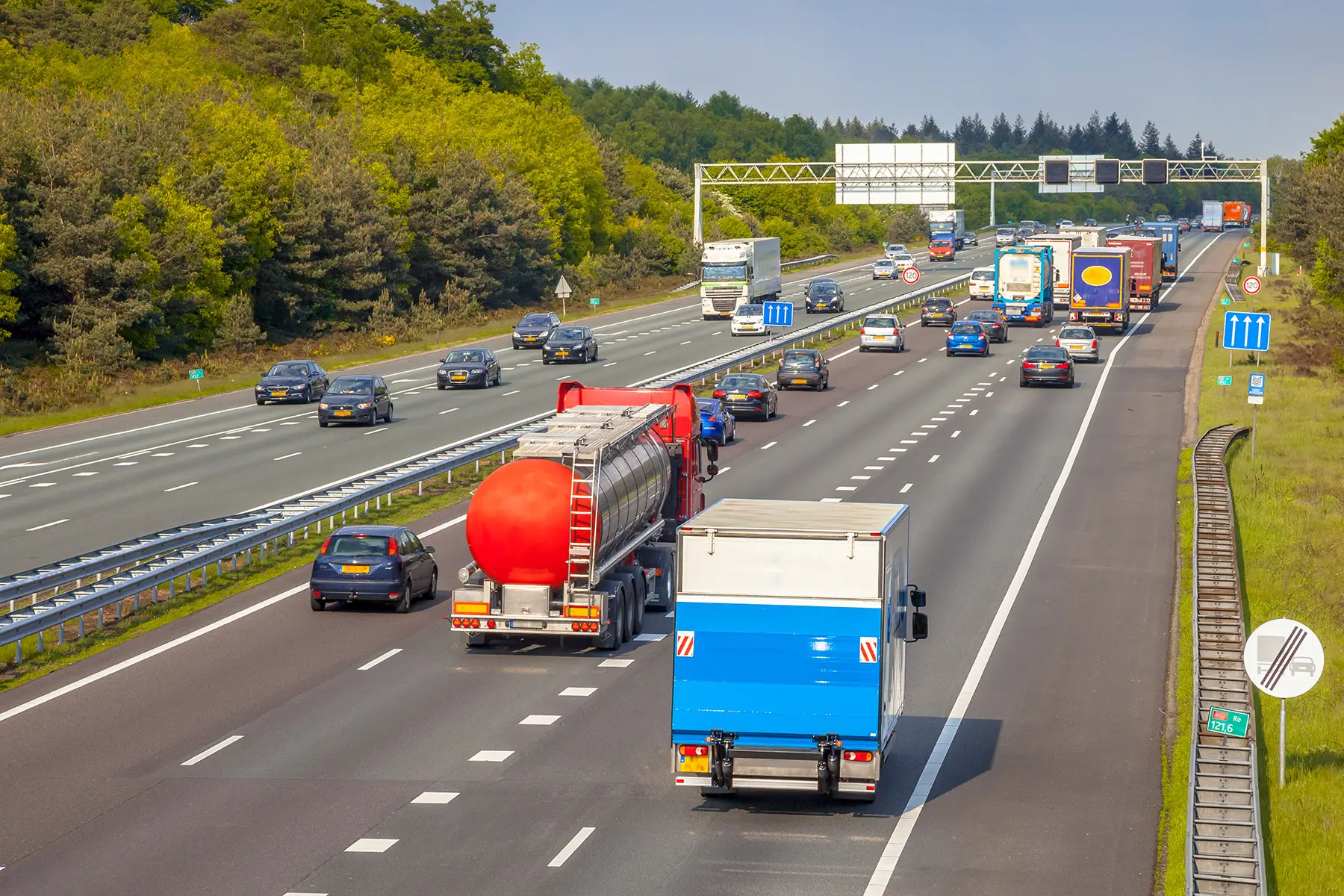
The fine for minor traffic violations can be anything up to CHF 300. You can also find in-depth information on Swiss road and traffic regulations on the ASTRA website (in German, French, Italian).
Speed limits in Switzerland
Keep to the speed limits:
- Built-up areas: 50km/h (30km/h in some residential areas)
- Country roads: 80km/h
- Dual carriageways/expressways: 100km/h
- Motorways: 120 km/h
There are speed cameras in police cars and fixed cameras on the roads. Fines are graded according to how much over the limit you are and which kind of road you are driving on. They range from CHF 20 for driving 1-5km/h over the limit on a motorway to CHF 260 for driving 21-25km/h over the limit on a motorway.
If you are caught excessively speeding, for example, more than 15km/h over the limit in a built-up area or over 25km/h the limit on a motorway, you could face disqualification for up to three months. Repeat offenses can result in longer disqualifications and even a permanent ban. See the government website for a full list.
It’s illegal to use radar detection equipment to identify speed cameras and you must deactivate this function on a navigation system.
Driving under the influence
The alcohol limit while driving is 0.05% of blood alcohol or 0.25mg/l of breath alcohol. This is lower than in some other European countries. For new drivers and certain categories of professional drivers, for example driving instructors, this is much lower (0.01%/0.05mg/l).
If you are caught driving under the influence of alcohol or drugs in Switzerland, you can face a range of punishments including fines, a driving ban, and even imprisonment.
Distracted driving laws
It is illegal to use a mobile phone, except for hands-free units, while driving. GPS systems on phones need to be programmed before you start driving and you need to dial numbers using voice recognition when making a call.
If you are caught on the phone while driving in Switzerland, you are likely to face a fine of around CHF 100. Fines for texting while driving are more severe. You also risk losing your license and can even be jailed if your behavior causes an incident.
Driving without a license
Switzerland imposes hefty fines for drivers caught driving without a valid license. These are often in excess of CHF 1,000. This includes driving with a foreign license that is not recognized in Switzerland, for example, one that has exceeded its 12-month validity period. In one case from 2016, an Austrian driver was fined €34,000 for driving with an invalid license in Zurich.
You can also face a jail sentence in extreme cases or if you fail to pay a Swiss fine.
Road signs in Switzerland
There are four languages in Switzerland. Road signs, place names, and information all change as you travel across the country. The main categories of Swiss road signs include:
- Red triangular signs with white background – warning signs
- Blue rectangular or square signs – directional signs
- Blue circular signs – instructional signs
- Red circular signs with white background – prohibitive signs
Motorway signs in Switzerland have a green background (unlike France, Austria, and Germany).
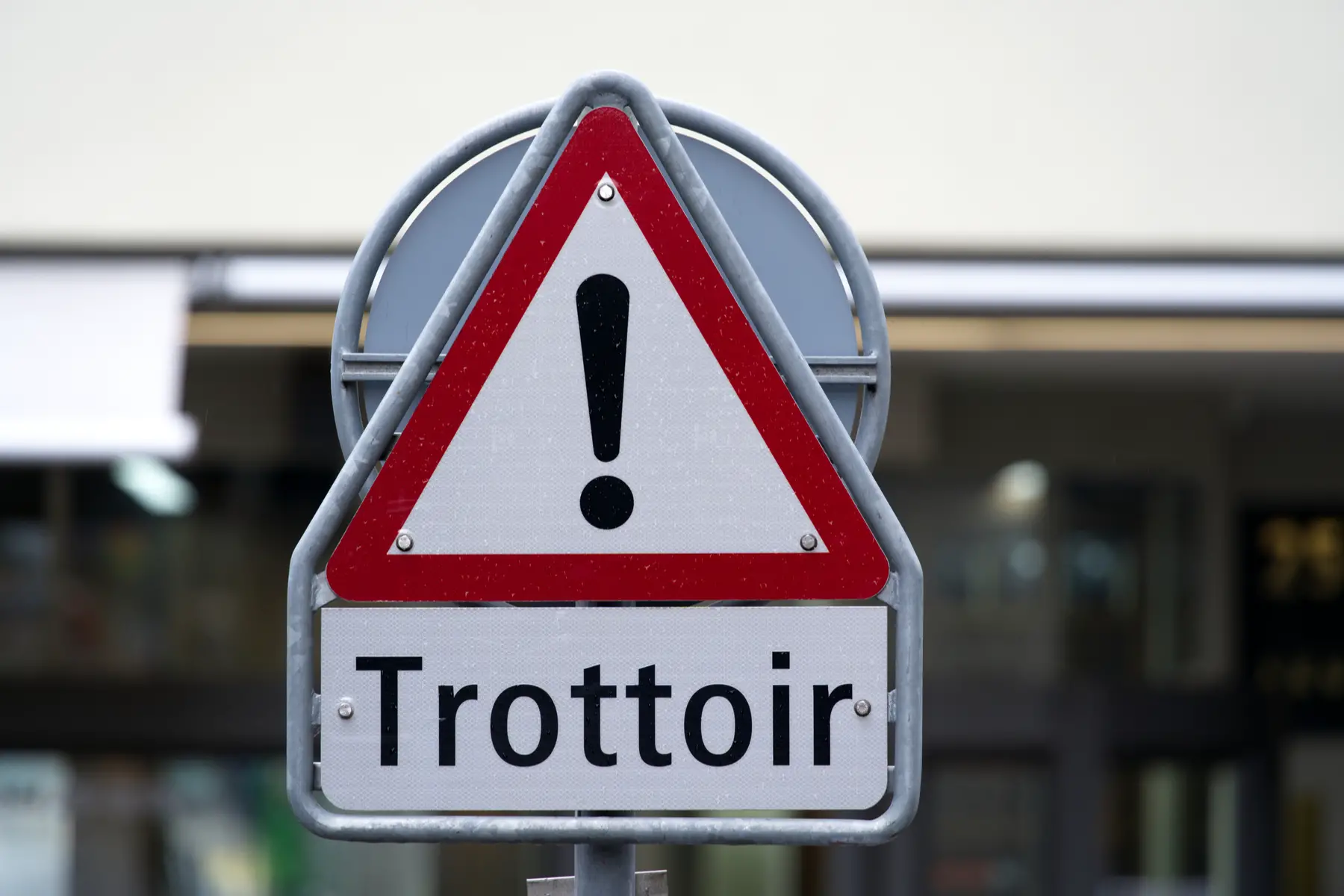
A highway code manual is available for around CHF 20 at customs offices and each canton’s automobile service. The books are available in English, French, German, Italian, and Spanish.
You can see all the Swiss road signals on the ASTRA website (in German, French, Italian).
Traffic information in Switzerland
Switzerland ranks 77th out of 85 countries on the World Traffic Index (with 1st being the most congested). It’s 16th in terms of journey time, with the average car journey taking just under 29 minutes. Switzerland scores well on the CO2 emission index, ranking 7th out of 85.
The most congested Swiss cities are Geneva (65) and Lugano (69) according to the Global Traffic Index. These are the only two cities in the current top 100.
The Touring Club of Switzerland (in German) has up-to-date traffic reports and road snow reports. You can also find information on Autostau and SRF Radio (in German). For information on road conditions, see search.ch.
Parking in Switzerland
Infringement of parking laws may mean a fine or even being towed away. Always check signs before parking but as a rule, where you see:
- White zones (white lines on the ground) – you can park free of charge for as long as you wish.
- White zones ‘pay and display’ – enter your car license number plate to buy a ticket at a street machine and display it on the dashboard to park for a limited time.
- Blue zones – get a blue parking disk from police stations, tourist offices, and banks and set the dial on the disk to park for up to 90 minutes.
- Red zones – free parking for up to 15 hours if you have a red parking disk, available from police stations, tourist offices, and banks.
- Yellow zones – parking is illegal.
You’ll also find street parking meters, car parks, and parking garages. Sometimes parking is free at night and at lunchtime. Otherwise, get a ticket and display it in your car. Tickets typically last for anywhere between 15 minutes and two hours.
Parking can be expensive in Switzerland, as much as CHF 5 per hour in busy cities. However, fines for parking in a charged area without a valid ticket are around CHF 40.
Similar to many European countries, Switzerland has disabled parking areas and bays. These are denoted by signs showing a wheelchair. The ASA website (in German, French, Italian) has information and application forms on disability parking.
Road accidents and breakdowns
Road accidents
Switzerland has a low number of road accidents compared to the rest of Europe, with around 22 accidents per million people. According to 2019 statistics, there were 17,800 transport accidents that year and 187 people were killed in road accidents.
If you are involved in a road accident in Switzerland, you should:
- Stop immediately. Failure to do so is an offense that can lead to prosecution.
- Secure the accident area using a red warning triangle at least 50-100m away.
- Give first aid to any injured people if needed.
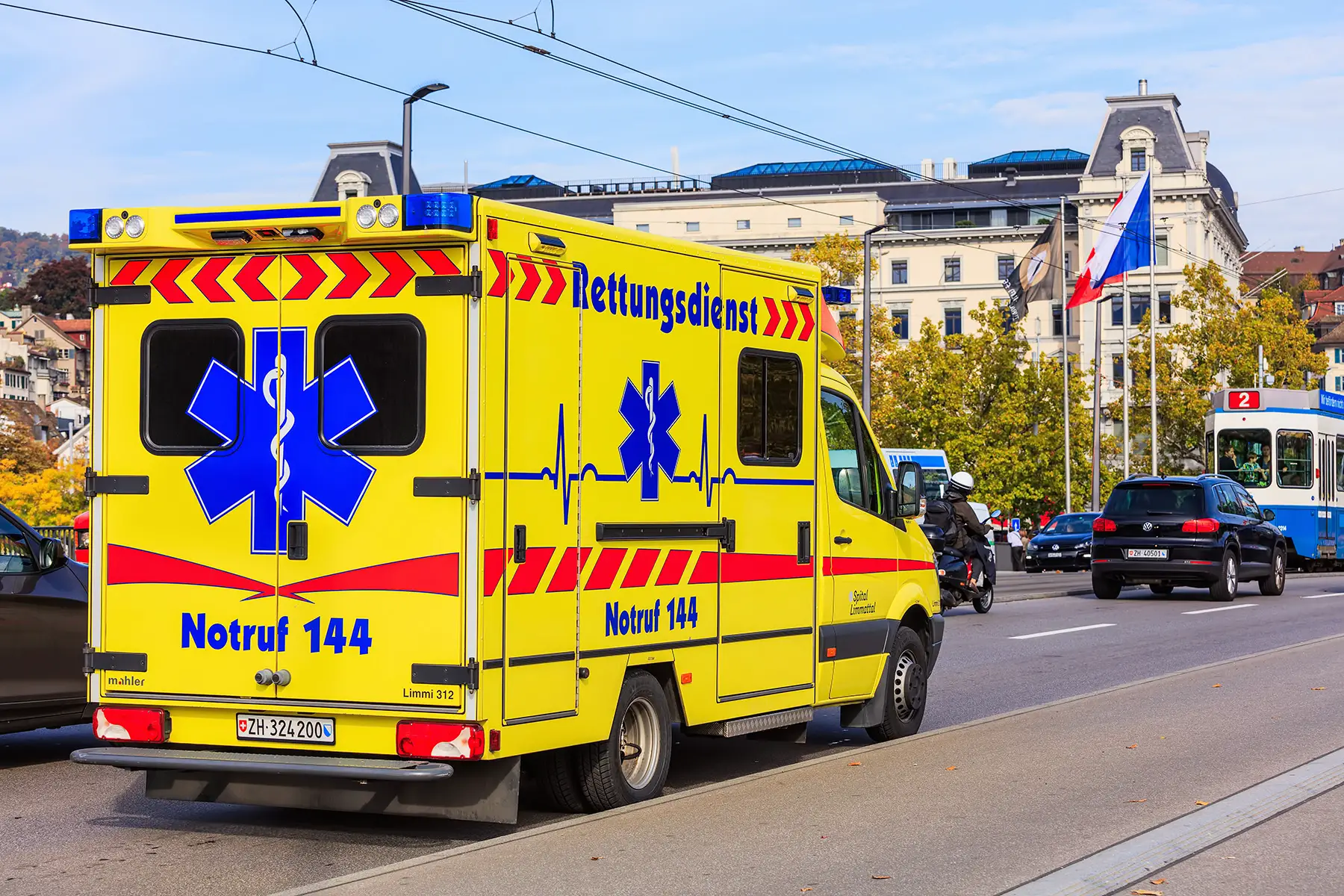
- Contact the police (117) if the accident is serious and the ambulance service (144) if anyone is seriously injured.
- Exchange details (contact details, registration, and insurance numbers) with any other drivers who are involved.
- Take photographs of the damage.
- Fill in your European accident report form (usually provided by your insurer).
- File your insurance claim if necessary.
Read full details on the Swiss government website.
Vehicle breakdowns
If your car breaks down in Switzerland, you should try to find a safe place to pull over as soon as possible. You should call your breakdown assistance provider to make arrangements. This may be your car insurance company or an auto membership organization.
The Swiss Touring Club (TCS) (in German) is one of the most popular membership breakdown and recovery services. You can call 800 140 140 in an emergency. Another service that provides coverage in Switzerland and across Europe is the Automobile Club of Switzerland (ACS – in German).
You may also need to call the police (117), ambulance service (144), or other emergency services if your situation is serious.
Cars in Switzerland
The most popular selling cars in Switzerland in 2020 were:
- Skoda Octavia
- VW Tiguan
- Volkswagen Golf
- VW T6
- Mercedes Benz A Class
- Skoda Karoq
Number plates in Switzerland are linked to the car owner’s canton, which is why you must register your car with your local authority if you move canton. Plates consist of two letters denoting the canton (e.g., GE for Geneva) followed by six digits. The plates also have a Swiss flag on the left and the shield for the canton on the right.
Importing a car to Switzerland
If you are a tourist, business traveler, temporary employee, or a student in Switzerland, you can import your car without declaring it to customs for a maximum period of one year.
If you are moving to Switzerland long-term, you can bring your car duty-free if it has been used for at least six months outside Switzerland. You must register your vehicle with the road traffic office (in German) in your canton. You will need to complete a clearance request form and your vehicle will need to pass an inspection within a year. After this, you will be liable for Swiss vehicle tax.
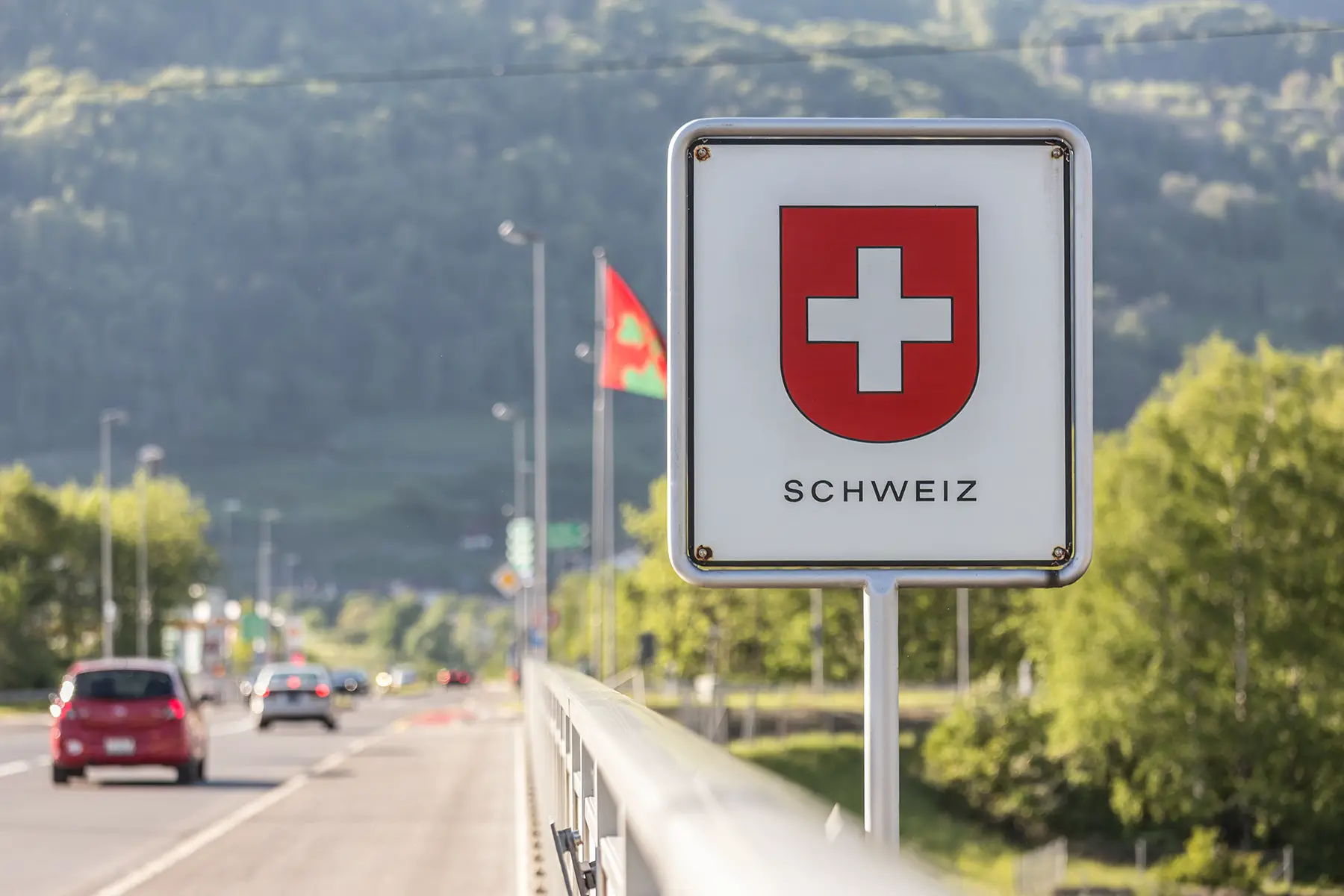
Vehicles owned for less than six months are charged an import tax. It is necessary to provide official documentation to confirm the value of the car and its country of origin. The import duties include customs duties, 7.6% VAT, 4% vehicle tax and a fee for a report required for vehicle registration.
You can find a list of customs offices in Switzerland from the Swiss Customs Administration.
Buying a car in Switzerland
You can buy a car in Switzerland from a Swiss dealership, a car importing company (Direktimport/Importation directe), or privately. Dealerships will organize car registration. You can build up a relationship with the garage and resell more easily but prices tend to be high.
Import companies deal in cars from outside Switzerland and will handle the import process for you. If you prefer to buy privately, Comparis.ch and the Swiss Touring Club (TCS – in French) both have car finder searches. Don’t forget that you will have to register the car yourself if you do this.
Renting a car in Switzerland
You can find a range of car rental companies in Switzerland. Major chains operate in all main towns and cities.
In order to rent a car, the driver must be more than 20 years old and must have already had a driving license for at least one year. However, policies differ and it is best to check individual cantonal regulations.
Costs vary according to factors including car model, hire company and location but start at around CHF 20 a day for cheaper models.
You can search for good deals on websites such as:
If you want to hire a car for a longer period in Switzerland, you could look at what car leasing offers are available. Check costs on the Comparis website.
Selling a car in Switzerland
You can sell a car in Switzerland through car dealerships, garages or privately. You will need to provide vehicle registration details. If you choose to sell privately, you can advertise through websites such as:
- Auto Online
- Auto Scout 24 (in German, French, Italian)
- TCS (in German)
Don’t forget to deregister your vehicle once you’ve sold it.
Carpooling/car sharing
An alternative to car rental is car sharing. Through the Mobility scheme, you can book one of over 3,000 vehicles online (via computer or app) and pick up/drop off at over 1,500 locations throughout Switzerland. Mobility runs nationwide across Switzerland and has a membership of more than 120,000.
Hourly rates start at CHF 2 and kilometer rates start at CHF 0.55. You will need to subscribe to the service. The initial trial subscription is CHF 43 for four months.
Electric cars and hybrids
There has been an increase in the purchasing of electric and hybrid vehicles in Switzerland in the past few years. Only around 2% of vehicles on Swiss roads were so-called plug-ins in 2018. However, figures for the start of 2021 show that 15.1% of vehicle sales in Switzerland are electric or hybrid, with 7.7% being fully electric. This puts Switzerland third globally behind Norway and France.
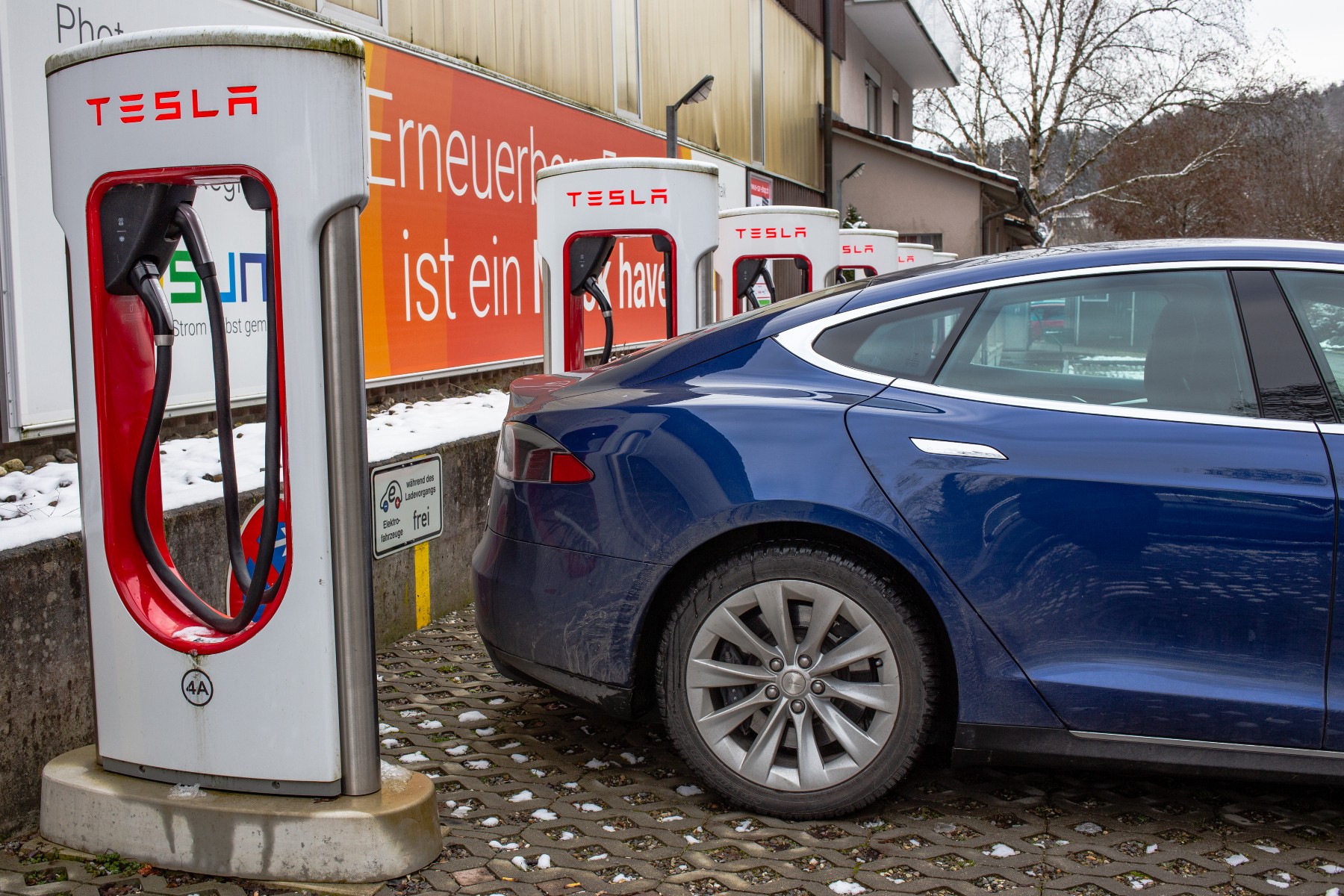
The most popular electric cars in Switzerland are:
- Renault Zoe
- VW ID3
- Tesla 3
- Fiat 500e
- Volvo XC40
Most car dealerships and garages in Switzerland now offer electric and hybrid vehicles. You can search for cars and compare deals on the Comparis website.
Car repair in Switzerland
There will inevitably be times when something goes wrong with your car and you need to get it repaired. Switzerland has plenty of auto repair shops and garages all over the country, as well as auto glass repair specialists. Most offer a drive-in service where you can just turn up. However, you may want to book an advance appointment to avoid any wait.
If you have a new car, your dealership may offer a repair service if things go wrong. You can also access car repair services through auto membership schemes and some extended car insurance policies.
You can search for car repair services across Switzerland here. If you need to replace tires on your car, compare prices here.
Useful resources
- ch.ch – government portal with information on cars and driving in Switzerland.
- Federal Office of Roads (Bundesamt für Strassen – ASTRA) – Swiss authority for roads and traffic.
- ASA: Association of Automobile Services (Vereinigung der Strassenverkehrsämter/ Association des services des automobiles/ Associazione dei Servizi Della Circolazione). This website is offered in German, French, and Italian languages.
Did you find this guide helpful?