
'%20id='ico-down'%20stroke='%23000000'%20stroke-width='1.5'%3e%3cg%20transform='translate(1092.250000,%20254.750000)'%3e%3cpolyline%20id='Path-2-Copy-4'%20transform='translate(5.500000,%202.750000)%20scale(1,%20-1)%20rotate(-180.000000)%20translate(-5.500000,%20-2.750000)%20'%20points='0%200%205.5%205.5%2011%200'%3e%3c/polyline%3e%3c/g%3e%3c/g%3e%3c/g%3e%3c/svg%3e)


Finance
Money Management
Wills and estate planning in Austria
We explain everything you need to know about wills in Austria, including inheritance tax and law, writing and executing a will, and estate planning.


Wherever you live in the world, having your financial affairs in order is always wise. Of course, it is also important to have a good understanding of the tax system and pension system in your country, as well as things like the QROPS scheme if you are a British expat. After all, having solid financial planning all mapped out will allow you to enjoy the present without worrying about the future.
So, if you are looking into making a will and planning your estate in Austria, this helpful guide includes the following information:
Wise
When planning for the future, make sure you keep your money secure and find the best rates for international transfers. Wise allows you to move your money abroad securely at just the touch of a button. Whatever your personal or business needs, find a rate that works for you at Wise.

Wills and estates in Austria
Austrian law dictates that every natural person may make a will. Therefore, wills are quite common to have in Austria. And because of this, it is possible for foreigners to make a local will as well.
There are three methods of making a valid will in Austria, as follows:
- Private will – this is either written and signed by the decedent himself, or written by a third person, and signed by three witnesses, and the decedent
- Judicial will – this is written or oral
- Notarial will – this is also written or oral
Importantly, foreign citizens need to be aware that in Austria, it is not possible to write a will by proxy. Consequently, when making a testamentary disposition for real estate that is in Austria, the testator must use one of the methods listed above.
Inheritance law in Austria
In Austria, inheritance law dictates that in the absence of a will, the entire estate will go to the heirs. The order of precedence for succession is that the children (or grandchildren) will inherit two-thirds of the entire estate, while the spouse inherits one-third.

However, even if you specify in a testamentary disposition who you want your estate to go to, there is a limit due to Pflichtteilsrecht (forced heirship). Essentially, this means that close relatives must receive a compulsory minimum portion, even if they are not in the will. Close relatives include children, grandchildren, and spouses or registered partners of the deceased. However, it no longer includes parents or grandparents.
Inheritance law on pensions in Austria
In Austria, there are three types of benefits that you can receive in the event of the death of a spouse, registered partner, or parent. These include:
- Widow’s or widower’s pension
- Orphan’s pension
- Funeral expenses grant
The widow’s or widower’s pension (Witwenpension or Witwerpension) applies to a surviving spouse who has reached the age of 35 at the time of death or if the couple shares a child together. This also extends to registered partners. This pension is granted upon application only.
The orphan’s pension (Waisenpension) is for children up to the age of 18. If a child is in training or university education, the entitlement runs up to the age of 27. Additionally, there is no age limit for children with disabilities.
In Austria, a funeral expenses grant (Zuschuss zu den Bestattungskosten) is available for those in need. It can cover up to €436.04 of the funeral costs and can be claimed from the sickness insurance fund.

The spouse is only entitled to the pension of the deceased if the person was insured for at least 60 months in the last 120 calendar months. However, if the deceased person had reached the age of 50, this period is increased by one month and the reference period by two months; to a maximum of 180 insurance months within the last 360 calendar months. If the deceased had paid contributions for at least 180 months or completed 300 months of insurance, however, no reference period is required.
Applicable foreign inheritance laws in Austria
In principle, the Austrian inheritance law is only applicable to Austrian citizens. However, this changes if the legal provisions of the country where the person has citizenship refer back to Austrian law. Austrian jurisdiction is always applicable to property located in Austria. However, this doesn’t apply to any moveable property belonging to the estate which will fall under the jurisdiction of the country where the decedent is a citizen.
Under the Hague Convention of 1961 on the Conflicts of Laws Relating to the Form of Testamentary Dispositions, a will is valid if any of the following apply:
- A form of the will complies with the law of the place the will was made
- The testator is a citizen of, or domiciled in, that place
- It complies with the law of the place where the real estate is located
Contesting a will in Austria
Importantly, if there is a substantial error of fact in a will, the inheritor may challenge it. Furthermore, if the testator was not of sound mind when they made the will, the validity may also be subject to challenge.

Inheritance law in Austria if there is no will
In Austria, the intestate succession procedure applies if the testator has not left a will. This also applies if the will does not comprise all of the testator’s assets. Relatives inherit in the following order:
- Children and grandchildren of the earlier deceased children
- Parents and their descendants
- Grandparents and their descendants
Importantly, the spouse or the same-sex registered civil partner is also an intestate heir. However, there is no statutory right of intestate succession to the surviving partner of a non-registered partnership under Austrian law. Non-registered partners are only granted intestate succession if there are no testamentary heirs or legal heirs to inherit.

If there is no will, these principles will come into play:
- A spouse or registered partner inherits together with children; he, she, or they are entitled to one-third of the succession with the remainder equally shared between the children
- If a spouse inherits together with the parents of the deceased person, the spouse is entitled to two-thirds
- If there are no heirs except the spouse, the spouse becomes the sole heir
Gifts before death
In Austria, gifts of cash, shares, and such must be declared to the tax authorities if they exceed €50,000 in the case of relatives; or €15,000 in the case of third parties. The name for this is the gift reporting tax. Transfers of real estate are excluded from gift reporting tax as these transactions are subject to property transfer tax at the general rate of 3.5%
Wills in Austria
Essentially, in Austria, any person who is aged 18 and above, of sound mind, memory, and understanding may draw a last will. In accordance with the Hague Form of Wills Convention, Austria generally recognizes foreign wills as valid in the country. This is on the condition that the will complies with the law of the place where the testator declared it, and that testator has residence or nationality to the country where the will was drawn. However, this convention does not apply to a succession agreement.
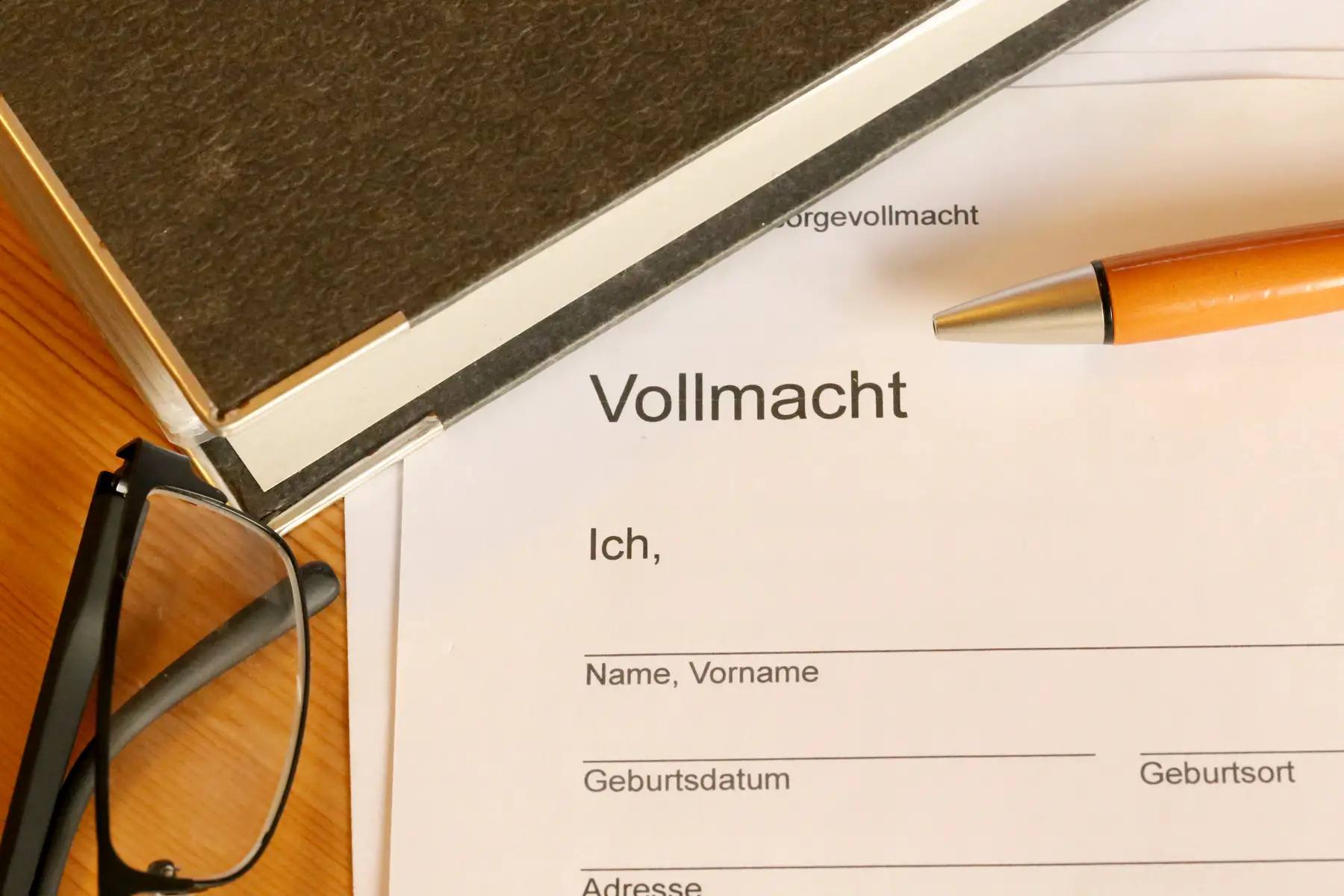
Types of wills in Austria
These are the types of wills that exist under Austrian law:
- Holographic wills – the entire text is written and signed by hand
- Non-holographic wills – executed in the presence of three witnesses and signed by hand
- Public wills – executed by a notary or a court
You may register your will at the Austrian Central Registry of Wills. In case you lose your will at home, it is always a good idea to have yours in the register. Notably, it will not be available to the public.
How to write a will in Austria
In Austria, any relatives, friends, associates, and companies can be heirs. The correct legal term for a will is a “testamentary disposition that contains a list of the appointed heirs”. Remember, though, a certain portion of the estate in Austria will go to close relatives as forced heirship.

Essentially, the will is a one-page testamentary disposition that can be revoked at any time. Importantly, it must be arranged in a certain form or it will be invalid. In this case, intestate succession will apply. A handwritten will must be entirely written by hand by the person writing the will. It must also be signed by him/her/them at the bottom. Additionally, it must include the place and date the will is drawn.

Importantly, if you write your will on a computer or another device, it must also bear your signature as well as the signatures of your three witnesses. Notably, the three witnesses must all be present at the same time for the signing. The will must also state the identity of the witnesses next to their signatures. Additionally, the will must include a handwritten addendum that states that it is the testator’s own last will and has the full names and dates of birth of each of the witnesses.
Using a notary or a solicitor to assist with your will can ensure that it removes the risk of any mistakes or uncertainties within it. A notary or lawyer will also keep the will for you as well as register it on your behalf. It is also important to consider updating your will if your life situation changes at any point.
Assets
Within the will, you will want to consider all your assets. For example, if you own any valuable art or jewelry, property, or family businesses that you are keen to keep in the family, as well as any stocks or shares.

Importantly, real estate is owned separately under Austrian law, unless the parties agree to joint ownership. The surviving spouse may remain in the house as long as he/she/they were living there with the deceased at the time of death. However, this may not apply to foreigners if foreign citizens own the real estate.
Executing a will and grant of probate in Austria
In Austria, after a person dies, the estate does not pass directly to his or her heirs. Instead, the assets, as well as the liabilities of the deceased, transfer by law to the Verlassenschaft (estate) as a legal entity.

During the probate, the heirs must prove their titles. Then they may declare whether they want to accept the inheritance. If the heir(s) make(s) an unconditional declaration of inheritance, they are unlimitedly liable for the deceased’s liabilities. However, if the heirs choose a conditional declaration of inheritance, they limit their liability to the testator. This is restricted to the value of the estate. After an official resolution from the probate court, the assets will transfer to the heirs.

If you are looking for guidance from an inheritance lawyer or law firm in Austria, HG.org provides a handy list.
Inheritance tax in Austria
Fortunately, there is no inheritance tax in Austria. Essentially, the process of inheriting property is the same as any other property transaction. However, there is a transfer tax of 3.5% and 2% for close relatives. You must declare gifts of cash, shares, and such to the tax authorities if they exceed €50,000 in the case of relatives; or €15,000 in the case of third parties.
Tips on planning your estate in Austria
- A notary or a solicitor can steer you in the right direction and assist you with the writing and formalizing of your last will. They can also ensure that you don’t neglect any of the legal elements or forget any details of planning your estate. Even if you are writing your will yourself, hiring a lawyer will help iron out any errors or legal details.
- Consider going through your will with your heirs present. This way there will be no surprises and everyone can prepare for when the time comes.
- Have a think about gifting certain items while you are alive rather than after you pass away.
- Assign power of attorney in the case of poor health or incapacitation.
Useful resources
- European Commission – a site that offers useful information and forms for survivor benefits applications
- Cross-Channel Lawyers – provides information and services from the UK on Anglo-German legal matters



Did you find this guide helpful?