
'%20id='ico-down'%20stroke='%23000000'%20stroke-width='1.5'%3e%3cg%20transform='translate(1092.250000,%20254.750000)'%3e%3cpolyline%20id='Path-2-Copy-4'%20transform='translate(5.500000,%202.750000)%20scale(1,%20-1)%20rotate(-180.000000)%20translate(-5.500000,%20-2.750000)%20'%20points='0%200%205.5%205.5%2011%200'%3e%3c/polyline%3e%3c/g%3e%3c/g%3e%3c/g%3e%3c/svg%3e)


About Thailand
Culture
An overview of Thai food and cuisine
Explore the varied flavors of Thai cuisine, including iconic dishes, popular ingredients, and local diets and eating habits.

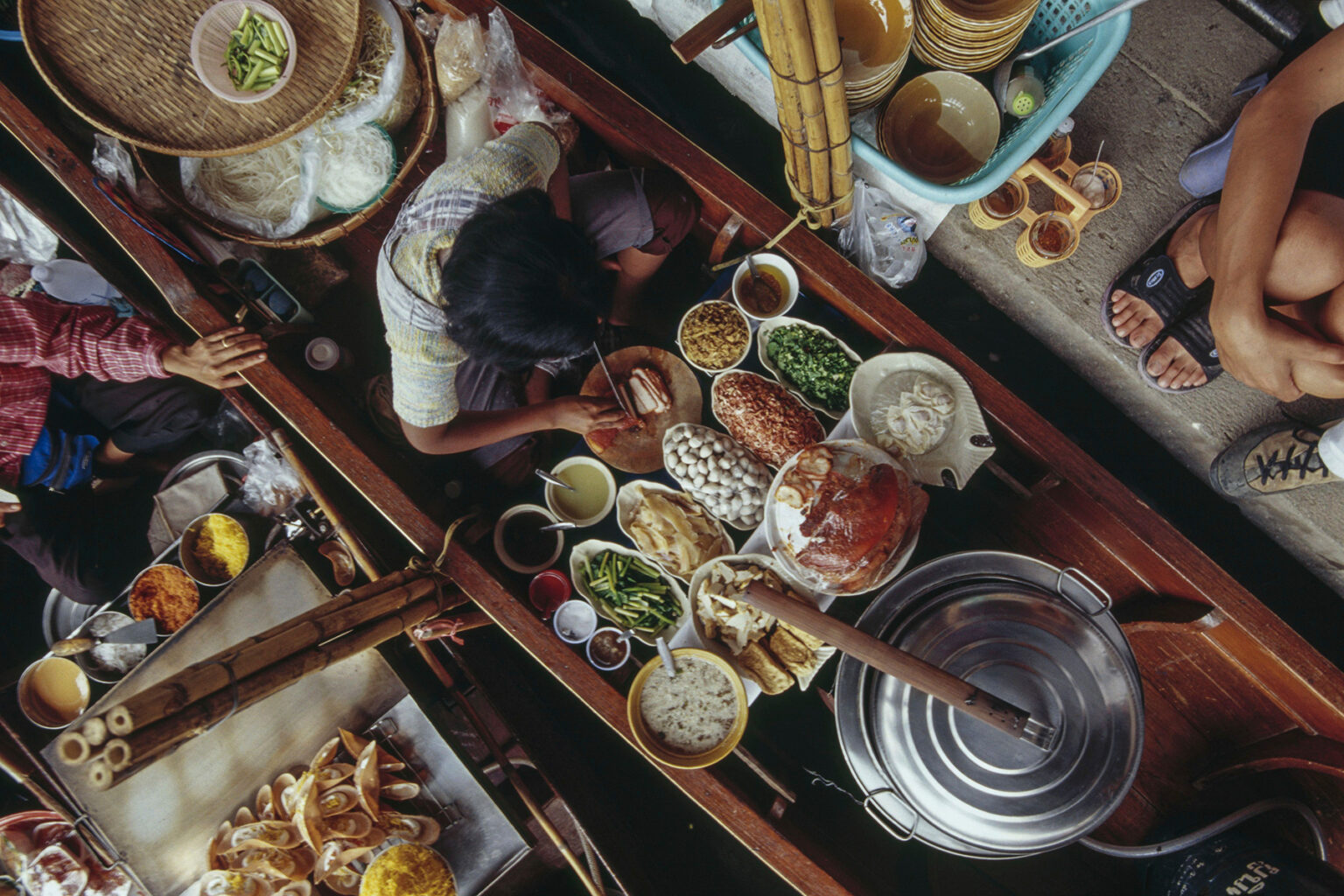
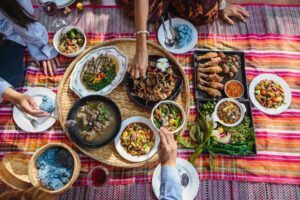
There are many things expats can look forward to about Thailand, including the welcoming culture and exciting places to visit. But one of the most wonderful things new arrivals look forward to discovering is the richness of Thai cuisine.
Although there are regional variances and specialties, the local food is always full of flavor and sure to delight. Learn about what makes Thai cuisine so popular through the following topics:
An overview of Thai cuisine
Because of Thailand’s geographical location as a thoroughfare for many ancient trade routes, its cuisine draws on the gastronomic traditions of countries far and wide. Indeed, Thai food assimilates ingredients, techniques, and even entire dishes from different countries.
For example, Thai cuisine borrows stir-frying, steaming, and various rice and noodle dishes from China. It takes braising techniques from neighboring Myanmar and Cambodia and a tradition of curries from India and Malaysia. Similarly, ingredients and spices come from various parts of the world.
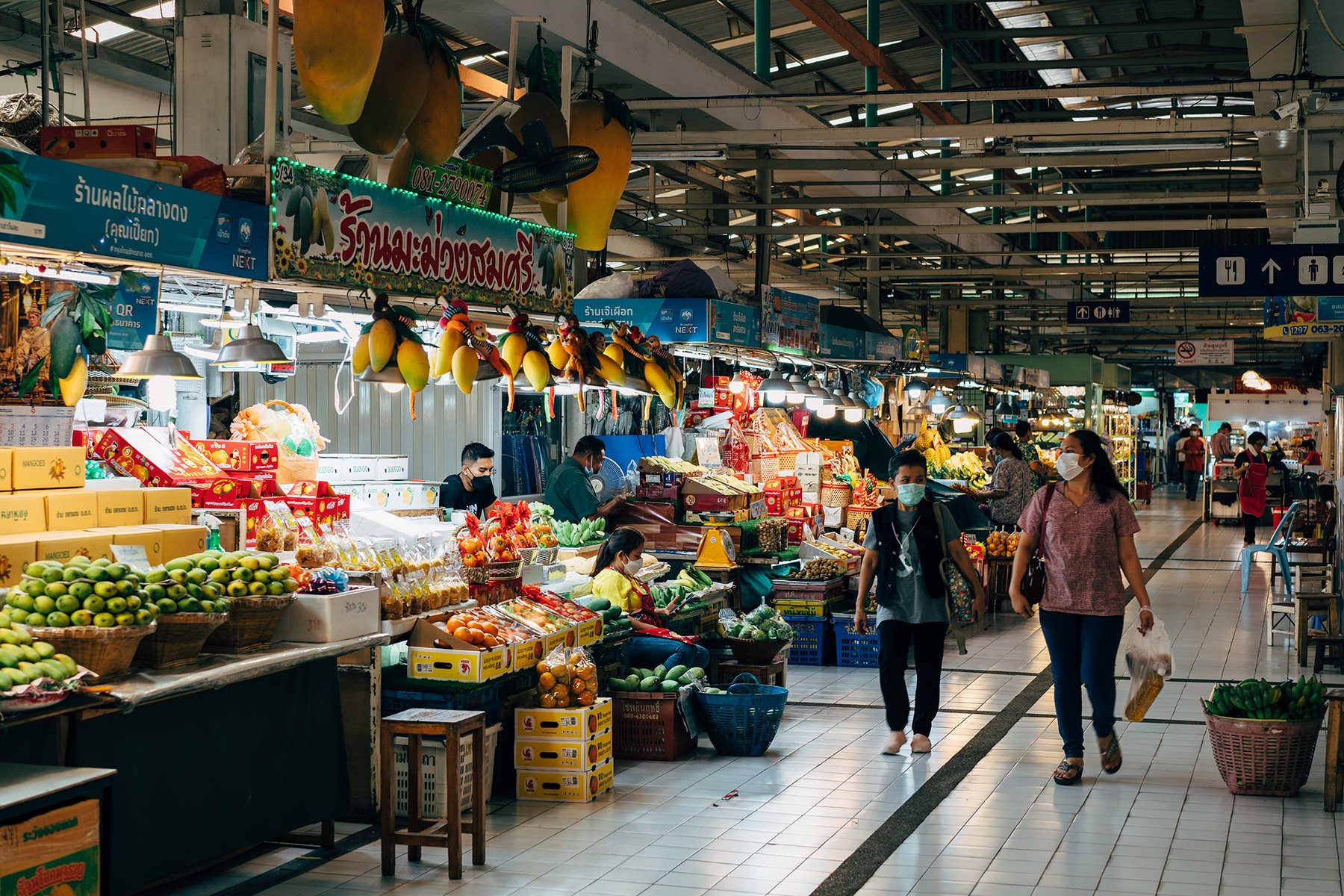
Of course, Thai cuisine adapts all the above to the local situation by substituting local produce where possible and adjusting recipes to suit local tastes.
Seasonality is a core tenet of Thai cuisine. There is a preference for freshness and, therefore, a penchant for ingredients suited to the time of year. Thai people favor lighter fare, such as fruits and vegetables, during the hot summers and more satiating meats, fats, and creamy soups and curries during the milder seasons.
Thai cuisine has a reputation for being very spicy (เผ็ดมาก), but in reality, it is far more nuanced. Although chili and garlic feature heavily, the emphasis is on balance. Authentic Thai dishes usually offer a balanced flavor profile that perfectly blends sweet, salty, spicy, bitter, and sour tones.
Health Benefits
Because of its focus on fresh ingredients and spices, Thai food is surprisingly healthy, especially in comparison to many other national cuisines. Most dishes offer a nutritious balance of macronutrients: filling proteins, healthy fats, and energizing carbohydrates.
Many ingredients common to Thai cuisine are highly nutritious, including tofu, seafood, fibrous vegetables, and spices like galangal, turmeric, and ginger.
Generally, authentic Thai dishes prepared with care contain compounds that can aid digestion, maintain stable blood sugar, and boost energy levels. The main downside is that Thai food often features deep frying and refined carbohydrates, such as white rice and rice noodles, which can be detrimental to health.
The typical Thai diet and meals
Breakfast
Breakfast is known as “morning food (อาหารเช้า). Most Thais eat this meal quite early, before 09:00, prior to leaving the house or on their way to work or school.
Many people make or buy khao tom (ข้าวต้ม), a porridge-like boiled rice that usually includes some kind of meat or seafood and an egg. However, toast or simple pastries are common, too, as are pre-cooked curries on rice.
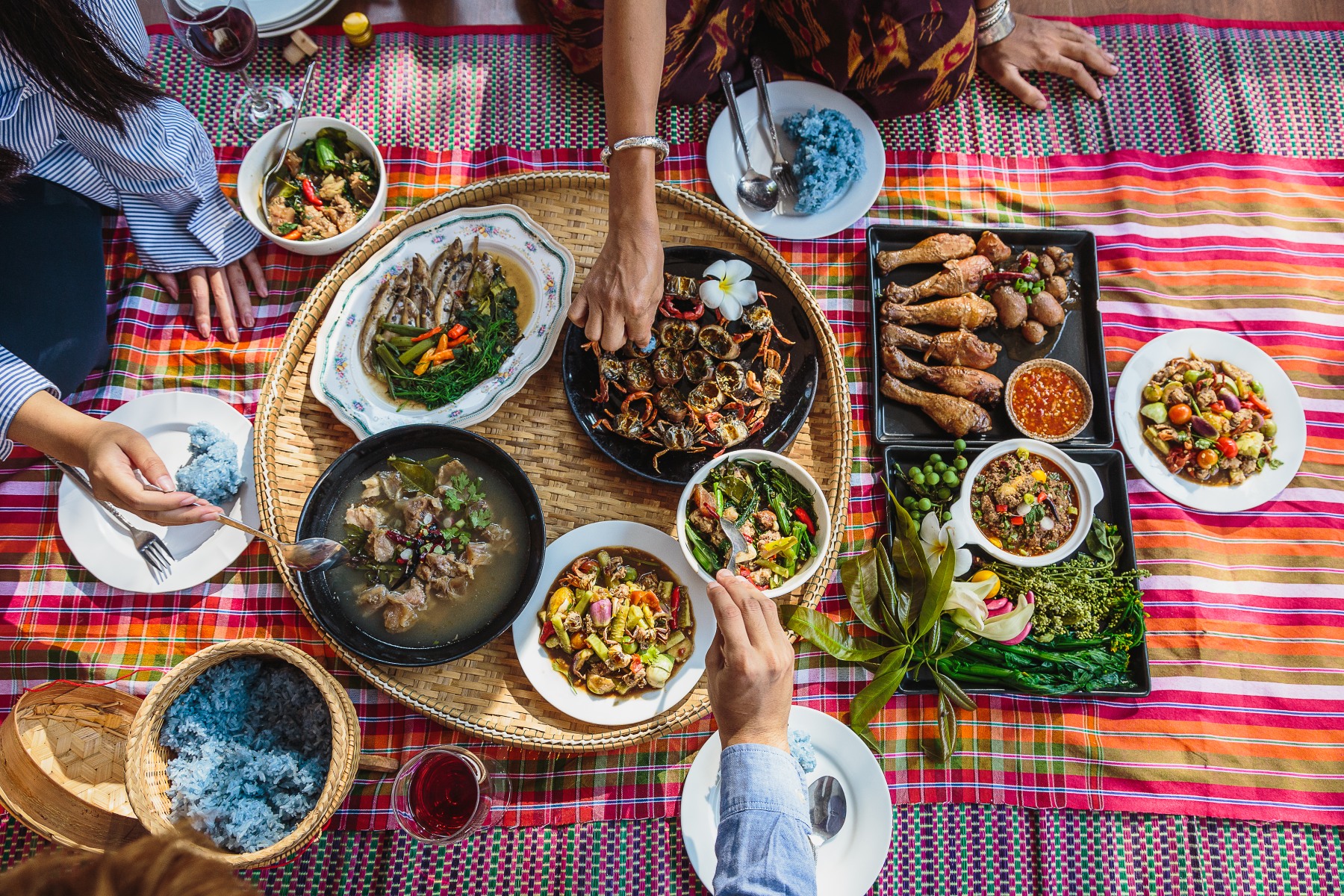
Many street stalls and small local restaurants serve various breakfast dishes typical of Thai cuisine. These might include:
- Gai yang (ไก่ย่าง): Grilled chicken, usually eaten with sticky rice
- Jok (โจ๊ก): A local version of Chinese rice porridge
- Kai jeow (ไข่เจียว): A fluffy omelet often served with rice and crab, chicken, beef, or pork
- Kanom pang (ขนมปัง): A general term referring to different types of bread, pancakes, and waffles
- Kaow neeow moo ping (ข้าวเหนียวหมูปิ้ง): Grilled pork skewers with sticky rice
- Pad see ew (ผัดซีอิ๊ว): Stir-fried noodles with soy sauce
- Pa tong goh (ปาท่องโก๋): A Chinese-Thai-style donut
Lunch
In Thai, lunch is called อาหารกลางวัน, and people usually eat it between 12:00 and 14:00. Most locals enjoy lunch at street stalls, though some grab takeaways or bring leftovers to the office. In Thai cuisine, lunch is built around carbohydrates, usually rice or noodles, and includes protein and vegetables.
Some of the most popular lunch dishes in Thailand are:
- Ba-mee (บา มี): Egg noodles (any noodle dish is popular for lunch)
- Kaow pad (ข้าวผัด): Thai-style fried rice
- Pad ga prao moo (ผัดกะเพราหมู่): Stir-fried holy basil pork with rice
- Pad Thai (ผัดไทย): Stir-fried noodles with shrimp, tofu, egg, and beansprouts
- Som dtam (ส้มตำ): Green papaya salad

Local expert
Jane Evans
Insider tip
When ordering som dtam (green papaya salad), you can ask for the number of chilis you would like by saying, “ใส่พริก *insert number* เม็ด” (“sai prik *insert number* met“).
If you can’t handle the heat, try one or two at first. Otherwise, try five, and enjoy other people’s smiles or looks of approval.
Dinner
Dinner (อาหารเย็น) is the main meal of the day in Thailand and is usually eaten around 19:00 or 20:00. At home, Thai people prepare simple stir-fries, soups, and rice with vegetables and proteins. However, the variety of dishes is wider if eating out.
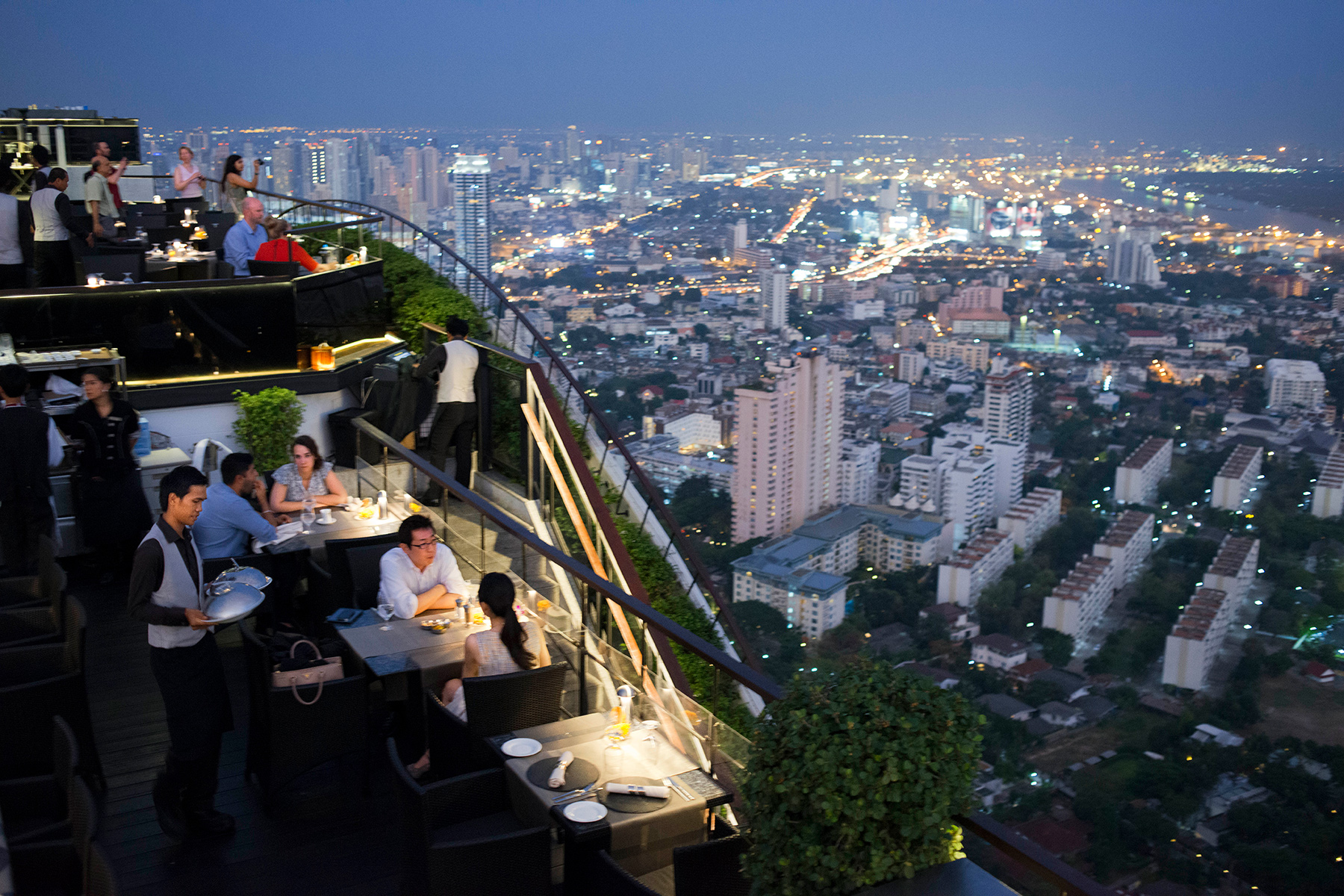
Local restaurants and street stalls serve an array of dishes in Thai cuisine. These are often similar to what people eat for lunch. However, Thailand, Bangkok especially, has a robust dining scene with restaurants serving all kinds of food. For example, when dining out at a sit-down restaurant, some Thai people may eat Italian, Indian, or French food.
Snacks
Snacking is very much part of Thai culture, and the country’s cuisine includes an assortment of snacks. It is common for locals to enjoy a mid-morning treat and another pick-me-up in the afternoon. Some expats wonder how some Thais can stay slim, considering the national obsession with and the availability of delicious food!
At home or in the office, many Thais keep store-bought snacks to have on hand. The most popular include Manora Fried Shrimp Crisps, Mama Instant Noodles, Taro Seafood Snack, Koh Kae Peanuts, and Pretz and Pocky sticks.
In some cases, locals buy freshly made snacks from streetside stores. These are usually available throughout the day, so people can stop by and enjoy them whenever convenient. Some of the most popular fresh snacks in Thai cuisine include:
- Kanom buang (ขนมเบื้อง): Thai-style crepes with sweet or savory fillings
- Kanom krok (ขนมครก): Mini pudding-like spherical pancakes made from rice flour and coconut milk, with corn or scallion toppings
- Kanom tuay (ขนมถ้วย): Usually found in noodle shops, these are little desserts served in ceramic bowls in pairs, composed of a sweet jelly topped with coconut cream.
- Gluai tod (กล้วยทอด): Deep-fried bananas (be careful about the pronunciation if attempting to say this; it is very close to a bad swear word. Be sure to voice the GL sound of gluai clearly!)
- Mamuang nam pbla waan (มะม่วงน้ำปลาหวาน): Green mango with a sweet-savory dipping sauce
- Sai grok Isan (สายโกรกอีสาน): Fermented garlic pork sausage from the northeast (Isan)
- Tod man pla (ทอดมันปลา): Spiced, fried fish cakes
- Tod man goong (ทอดมันกุ้ง): Fried shrimp cakes
Are there any special meals that form part of Thai cuisine?
In many countries, it is common to have special dishes for holidays and other occasions. For example, in the US and UK, turkey is the main dish for Christmas, while Italians prefer the “Feast of the Seven Fishes.”
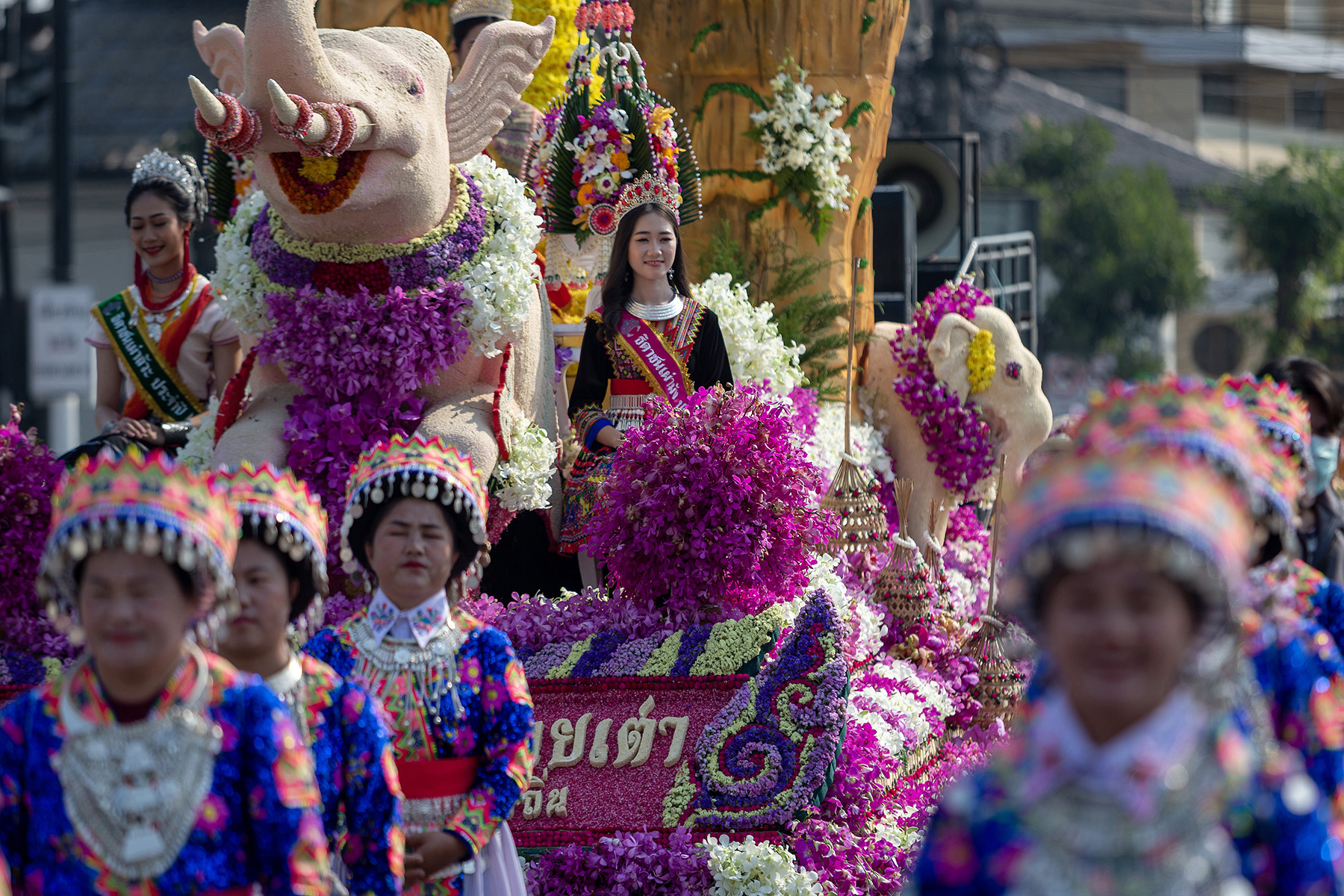
However, as a largely Buddhist country, Thailand does not officially celebrate many of the holidays popular in other parts of the world. Although there are many Thai celebrations and public holidays, such as Songkran and Loy Krathong, these generally do not feature any specific dishes.
Thai people tend to enjoy foods as they come into season, such as fruits like durian, mangosteen, mango, rambutan, lychees, and others. In addition, there is an annual durian and fruit festival in May, which includes durian buffets for Thais and internationals to enjoy.
Local expert
Jane Evans
Insider tip
Durian is the king of fruit and a must-try in Thailand. However, do not consume alcohol with it. Durian causes internal heat and can pose a health risk for drinkers – there have been rare cases of death from mixing the fruit with whisky.
To try durian without the heat, eat it alongside mangosteen (i.e., the queen of fruit), which is said to be cooling.
Royal Thai cuisine
One form of local gastronomy can be considered more refined and special. This is the Royal Thai cuisine.
Royal Cuisine is believed to have originated in the palaces of the Ayutthaya Kingdom and developed into a renowned style of food during the Rattanakosin Era. In general, Royal Thai cuisine is quite similar to the food of Central Thailand, but it must meet far higher standards, especially with regard to presentation.
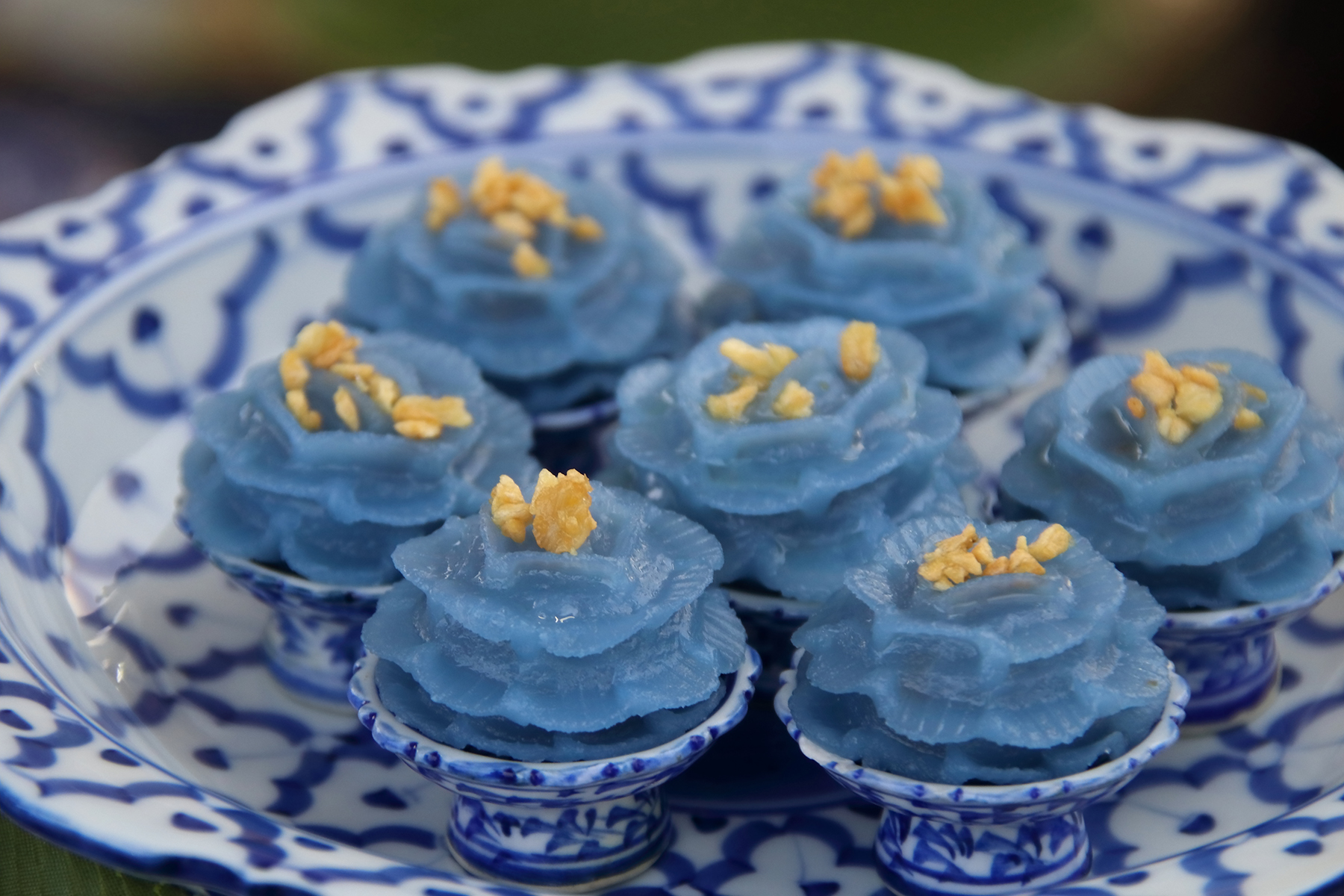
For example, there is a greater emphasis on using the best and freshest seasonal ingredients. Furthermore, all ingredients must have all bones, pits, or stones removed. Finally, the flavor of each dish should be well-balanced, without extreme spice, sourness, or sweetness.
Although some places serve authentic Royal Thai cuisine, such as Bangkok’s Blue Elephant, true representations of the art are generally very difficult to find.
Typical ingredients in Thai cuisine
Tofu
Tofu (เต้าหู้) is a common meat alternative found in Thai cuisine.
Meat
Meat is a common ingredient in Thai cuisine, and you will find different types in many dishes. Pork (หมู) is the most popular meat in Thailand, with an annual consumption of 9.87 kg per capita. Poultry, such as chicken (ไก่), is also popular, with a yearly consumption of just 1.23 kg per capita – beef (เนื้อวัว) is much less so.
This may partly be because beef is more expensive than other meats and, therefore, tends to be an indulgence. In addition, Thai people refrain from eating beef because buffaloes were traditional working animals that were seen as part of the family, as pets, rather than as a source of food.
Some of the most common meat dishes in Thai cuisine are:
- Gaeng keow waan gai (แกงเขียวหวานไก่): Green chicken curry
- Gai yang (ไก่ย่าง): Grilled chicken
- Kaow kaa moo (ข้าวขาหมู): Braised pork leg and rice (ask for ไม่มัน, mai man if you don’t like the skin and fat)
- Kaow pad gai (ข้าวผัดไก่): Chicken fried rice
- Laab (ลาบ): Spicy and sour Northeastern meat salad
- Moo waan (หมูหวาน): Bite-sized pork in sweet sauce
- Pad ga praow moo (ผัดกะเพราหมู่): Stir-fried pork with holy basil
Fish
Seafood (อาหารทะเล) is also very popular in Thai cuisine. In terms of fish, popular local varieties include:
- Amberjack (ปลาสามลี่, bplaa samlee)
- Blue-spotted snapper (ปลาเจ้าสมุทร, bplaa jao samut)
- Catfish (ปลาดุก, bplaa dook)
- Cobia (ปลาช่อนทะเล, bplaa chon talay)
- Grouper (ปลาเก๋า, bplaa gao)
- Pomfret (ปลาจะละเม็ด, bplaa jaramet)
While fish like salmon and sea bass are widely available in grocery stores, these are rare in traditional Thai food. In addition to fish, Thai cuisine includes a range of different seafood like shrimp (กุ้ง), crab (ปู), and squid (ปลาหมึก, which literally means “ink fish”).
You can find seafood in Thai dishes such as:
- Gaeng som (แก่งส้ม): Sour and spicy, water-based Thai curry with fish
- Bplaa meug yang (ปลาหมึกย่าง): Chargrilled squid
- Bplaa neung manao (ปลานึ่งมะนาว): Spicy steamed fish with lime, chili, and garlic
- Bplaa neung see ew (ปลานึ่งซีอิ๊ว): Steamed fish with soy sauce and ginger
- Bplaa tod (ปลาทอด): Crispy, deep-fried fish cooked whole
- Tom yam goong (ต้มยำกุ้ง): Spicy and sour shrimp soup
Vegetables
Despite a preference for meat and seafood, vegetables are common in Thai dishes. They might come as a main ingredient, a substitution for animal products, or as side dishes.
Some vegetables, including mushrooms, carrots, and broccoli, are familiar to most expats. However, Thai cuisine incorporates a lot of local and Asian vegetables too, including:
- Kanaa (คะน้า): collard greens
- Makua puang (มะเขือพวง): Pea eggplant/turkey berry
- Nor mai (หน่อไม้): Bamboo shoots
- Pak boong (ผักบุ้ง): Water spinach
- Tua ngok (ถั่วงอก): Beansprouts
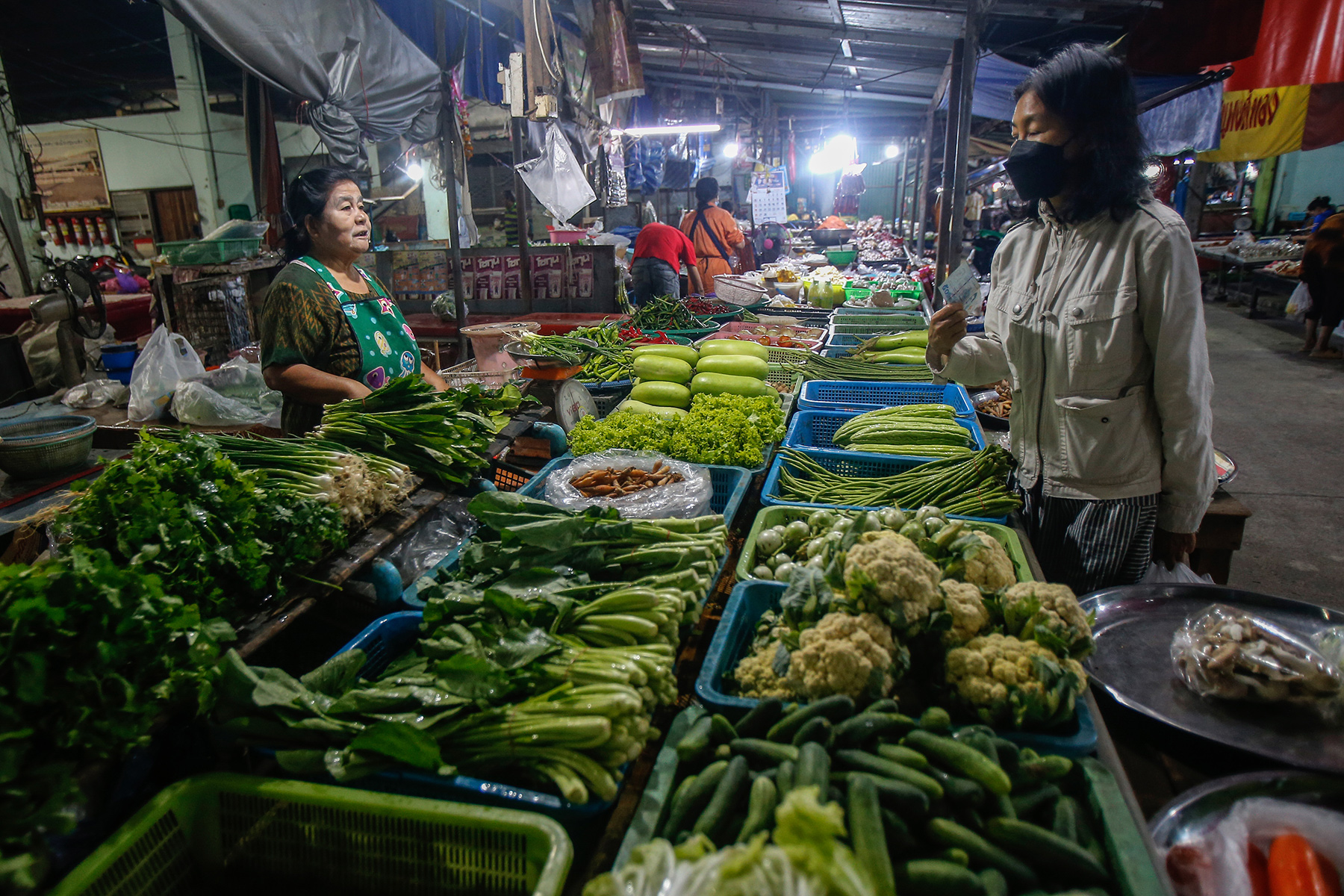
You will find these in Thai dishes such as:
- Gaeng kiao waan jay (แกงเขียวหวานเจ): Vegetarian green curry
- Pad pak (ผักผัด): Stir-fried vegetables
- Pad fak tong (ผัดฟักทอง): Stir-fried pumpkin
- Pad Thai jay (ผัดไทยเจ): Vegetarian pad Thai
Fruit
While fruit is abundant in Thailand, it is not a major part of Thai cuisine. In fact, most people in the country do not consume the recommended amount of fruit. However, the country still produces a host of delicious tropical fruits. These include:
- Coconut (มะพร้าว)
- Durian (ทุเรียน)
- Guava (ฝรั่ง, also meaning “foreigner”)
- Mango (มะม่วง)
- Mangosteen (มังคุด)
- Papaya (มะละกอ)
- Pineapple (สับปะรด)
- Pomelo (ส้มโอ)
- Rambutan (เงาะ)
Carbohydrates
Carbs are integral to Thai cuisine and are the main feature of any local meal. Many Thai dishes incorporate rice (ข้าว) or noodles (ก๋วยเตี๋ยว), staples of the local diet. Rice is also often served as an accompaniment to dishes made with seafood, meat, and vegetables.
Some of the most popular Thai dishes with carbs are:
- Ba mee: Egg noodles, often served in a soup (บะหมี่น้ำ) with pork and vegetables
- Jok: A local version of Chinese rice porridge
- Kanom bpang (ขนมปัง): A general term referring to different types of breads, pancakes, and waffles
- Khao niaow moo ping: Grilled pork skewers with sticky rice
- Khao pad: Fried rice
- Pad ga prao moo: Stir-fried holy basil pork with rice
- Pad see ew: Stir-fried noodles with soy sauce
- Pad Thai: Stir-fried noodles
- Bpa tong goh (ปาท่องโก๋): A Thai-style donut, sometimes served with thick pandan custard
Cheese/dairy products
While Thailand produces a lot of dairy products, locals tend only to use certain types. For example, cheese and European-style yogurts are not popular in Thai cuisine. However, locals consume a lot of milk (นม) – especially in iced coffee and milk tea – and drinkable yogurt.
Herbs and spices
Thai cuisine incorporates a dazzling array of herbs and spices to add a wealth of flavors to local dishes. Most Thai dishes include herbs and spices like:
- shallots
- garlic (กระเทียม)
- chili (พริก)
- cilantro
- galangal (ข่า)
- pepper
- lemongrass
- turmeric (ขมิ้น)
- kaffir lime
- fresh basil (which has sweet and hot/holy varieties)
- ginger (ขิง)
- tamarind
Sauces and condiments
Like herbs and spices, Thai cuisine uses many different sauces to elevate the flavor profile of dishes. Most dishes include at least one or two, such as:
- Sauce hoy nam rom (ซอสหอยนางรม): Oyster sauce, often found in vegetable dishes
- Nam ma kam bpiak (น้ำมะขามเปียก): Tamarind concentrate, used for sourness in pad Thai and som dtam
- Nam jim gai (น้ำจิ้มไก่): A sweet chili dipping sauce, often served with chicken
- Nam bplaa (น้ำปลา): Fish sauce used for saltiness in most Thai cuisine (you will often see this on the dining table with sliced chilis)
- Nam prik pao (น้ำพริกเผา): Chili paste with onion, garlic, palm sugar, and oil used with noodle soups
- Pla raa (ปลาร้า): Fermented fish sauce used in som dtam
- See ew dam (ซีอิ๊วดำ): Dark soy sauce
- See ew kaow (ซีอิ๊วขาว): Light soy sauce
- Sauce Sri Racha (ซอสศรีราชา): Spicy chili ketchup, often served with omelets (named after Sri Racha, its place of origin, in Chonburi Province)
Which famous dishes form part of Thai cuisine?
Thai cuisine offers a rich variety of flavors and textures, but there are a few dishes that are popular around the world. You will find them anywhere that serves Thai food, from the humblest street stalls to the fanciest Michelin-starred Thai restaurants.
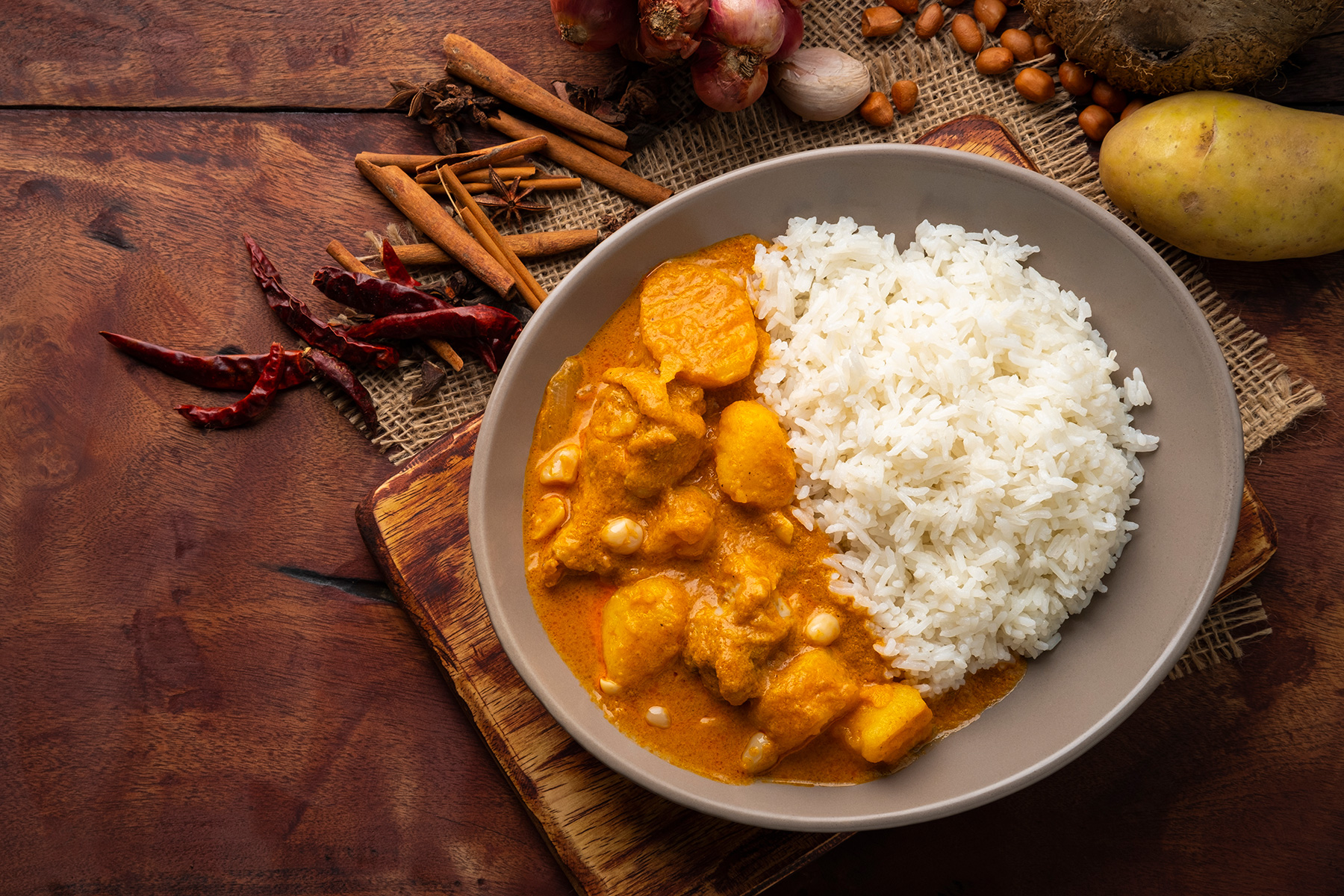
Alongside green curry, pad Thai, and tom yam goong, some of these dishes are:
- Gaeng massaman gai (แกงมัสมั่น): Chicken massaman curry
- Gaeng paneng (แกงพะแนง): a rich curry of pork or beef with sweet basil, kaffir lime, and coconut cream
- Kaow pad sapparot (ข้าวผัดสับปะรด): Pineapple fried rice served in the fruit’s half-shell
- Kaow soi (ข้าวซอย): A rich, creamy curry-type soup of rice noodles from Northern Thailand
- Pad see ew (ผัดซีอิ๊ว): Wok-fried noodles with soy sauce
Does Thai cuisine include any well-known desserts?
Locals love sweet treats, so desserts are important to Thai cuisine. These are very different from typical European desserts like puddings and cakes but are equally delicious.
Some of these mix sweet and savor flavors, such as a sticky rice dessert with a dried shrimp topping and coconut ice cream with red beans and corn on top. Thai desserts may be brightly colored by natural ingredients such as butterfly pea flowers (blue), pandan leaves (green), and hibiscus or beetroot (red/pink).
Many local desserts include fruit for natural sweetness or coconut cream with a dash of saltiness, including:
- Kaow neeyow turien (ข้าวเหนียวทุเรียน): Durian and sticky rice served with coconut cream
- Kaow neeyow mamuang (ข้าวเหนียวมะม่วง): The iconic mango and sticky rice dish doused in coconut cream
- Ruam mit (รวมมิตร literally meaning “mixed”): A popular soup-like dessert with starchy, flavored noodles, tapioca pearls, lotus root, sweet potato, beans, and jackfruit in a soup of coconut milk
- Chao guway (เฉาก๊วย): A cooling glass jelly dessert made from Chinese mesona (a type of mint) and enjoyed with shaved ice and toppings like palm fruit and ginkgo nut
- Lort chong (ลอดช่อง): Small rice flour noodles made with pandan served in a soupy base of coconut milk and palm sugar
- Kanom chan (ขนมชั้น): Steamed layer cake made with rice, tapioca, arrowroot flour, coconut milk, and sugar
- Tab tim grop (ทับทิมกรอบ): Small cubes of crunchy water chestnut in a pink (colored with beetroot) casing, served in sweet coconut cream with ice
Regional differences in Thai cuisine
While Thai cuisine as a whole is rich and flavorsome, there are some differences across the country’s regions.
In the north, Thai cuisine tends to be less spicy than elsewhere. Because of the local climate, coconuts do not grow well here, so dishes usually incorporate water or broth rather than coconut milk. In addition, grilling and braising are popular cooking techniques. However, Thailand’s Northeast produces more cured, fermented, and raw food due to a different approach to farming and deforestation. Soups, grilled, and boiled food are common here, as well as copious amounts of chili.
Proximity to the ocean means that seafood is popular in Southern Thai cuisine. As such, many local dishes incorporate fish, prawns, crabs, squid, or oysters. This part of the country usually produces the spiciest dishes, though this is balanced with sour and salty elements.
Central Thailand, including Bangkok, produces dishes that most expats will already be familiar with. Central Thai cuisine is incredibly diverse thanks to the availability of produce.
Ingredients include meats and seafood – chicken, pork, shrimp, and freshwater fish are especially popular. Greater Chinese influence in this region also means that the local cuisine includes more stir-fried dishes and noodles.
Useful resources
- The History of Thai Food – Taste of Thailand
- A Guide to Thai Food and Culture – The Spruce Eats


Did you find this guide helpful?