
'%20id='ico-down'%20stroke='%23000000'%20stroke-width='1.5'%3e%3cg%20transform='translate(1092.250000,%20254.750000)'%3e%3cpolyline%20id='Path-2-Copy-4'%20transform='translate(5.500000,%202.750000)%20scale(1,%20-1)%20rotate(-180.000000)%20translate(-5.500000,%20-2.750000)%20'%20points='0%200%205.5%205.5%2011%200'%3e%3c/polyline%3e%3c/g%3e%3c/g%3e%3c/g%3e%3c/svg%3e)


Healthcare
Healthcare Services
Emergency dental care in the Netherlands
Learn about emergency dental care in the Netherlands including when to use it, how much it costs, and where to find clinics throughout the country.

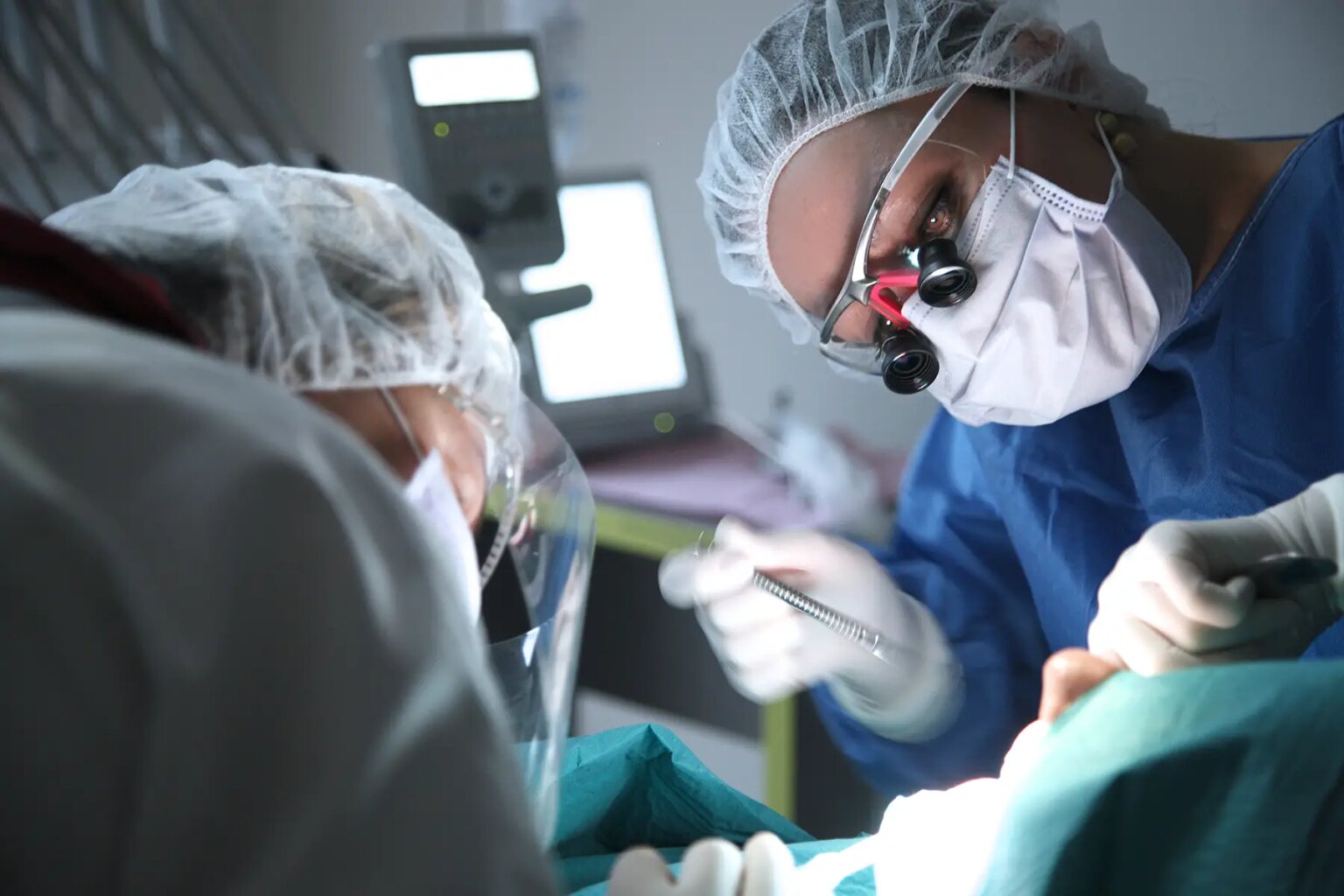
Emergency dental care in the Netherlands is typically high-quality, with multi-lingual practitioners catering to expats, state-of-the-art clinics, and transparent fee structures. As a result, accessing emergency dental care in the Netherlands is usually a pretty painless experience for expats – even if the symptoms are anything but! Being prepared for unexpected costs like emergency dental care is part of managing your finances effectively as an expat in the Netherlands.
Laura Scholten, PR and Marketing Executive at Lassus Tandartsen, a dental practice with three clinics around Amsterdam, shares her knowledge of emergency dental care in the Netherlands, along with tips on what to expect if you have an emergency of this kind.
Lassus Tandartsen
Need an emergency dentist in and around Amsterdam? The professionals at Lassus Tandartsen can help. With three state-of-the-art clinics across the city, their expat-friendly team of dental experts offer emergency, round-the-clock treatment, 365 days a year – whether you’re a registered client or not. For all your oral health needs, contact the team at Lassus Tandartsen today.

What is a dental emergency?
Accidents are a leading reason why people end up in an emergency dental clinic in the Netherlands. That dull ache you ignored for weeks, which escalated to searing pain? Best get urgent professional help for that too.
“Any sort of trauma to the teeth, jaw, or mouth is a dental emergency,” Scholten explains. “You must attend to it immediately, to manage not only the injury but also to prevent any long-term damage.”
When do you go to the emergency dentist?
A stiff upper lip and a dose of courage only get you so far when your pain is excruciating. Being stoic is an admirable trait, but when even the Dutch’s trusty paracetamol has given up the ghost, it’s time to get help.
“Examples of common emergencies are knocked-out or loosened teeth due to an accident; fat cheek with severe, unsustainable toothache; and after-bleeding when pulling molars or teeth,” Scholten explains.
“Emergencies could also include abscess or serious mouth infections which, if left unattended, can have serious health repercussions. Watch out also for the warning signs of an abscess: facial swelling, bumps on the gums, persistent toothache, and high fever.
“Self-diagnosis isn’t easy. We always recommend that the patient calls us for a consultation. If it’s an emergency, we can determine the best course of action.”
Tips: what to do in case of a dental emergency
Sod’s Law dictates that your dental emergency happens when most clinics are closed. That means you’ll need to administer some sort of first aid on the affected area before getting professional help.
“If your tooth is knocked out, gently pick it up at the top. Be careful not to touch the root,” says Scholten. “Carefully rinse it with water. If possible, place it back in the socket. If you do this quickly enough – say within an hour – the dentist might be able to replant it.”
For a cracked or chipped tooth, Scholten recommends applying a cold compress to the face to reduce swelling. She advises against using a painkiller due to the potential damage to gums that may cause. For an abscess, she recommends rinsing the mouth with mild salt water to reduce the pain and draw any pus to the surface.
Emergency dental clinics in the Netherlands
Your first port of call in an emergency is your regular dentist, as long as the clinic is open. Most dental surgeries in the Netherlands are booked up weeks in advance. You might get lucky; if not, they should suggest another clinic or emergency dental clinic.
Outside practice hours, you should call the spoedgevallendienst (emergency services). The answering machine lists the dentists providing urgent care. Dentists in the Netherlands must arrange emergency care outside practice hours. Various regions often collectively arrange these services in order to provide sufficient care.
There’s a growing network of emergency dental clinics in the Netherlands, the majority located in Amsterdam, The Hague, and Rotterdam. Although appointments are technically necessary, some do accept walk-ins.
“For acute emergencies, patients don’t need to be registered with our clinics,” says Scholten. “You just need to bring a valid ID and a health insurance card and we’re ready to help.”
A list of emergency dental clinics in the Netherlands
- Lassus Tandartsen, with three locations in Amsterdam, is open seven days a week – including public holidays – with special evening hours. In case of an emergency, give them a call to make an appointment, even if you’re not a client.
- Dental365 is a network of emergency dental clinics in Amsterdam, The Hague, and Rotterdam. That means urgent care is easily accessible for expats in these cities.
- Mondzorg Poli is open around the clock providing a range of urgent care services in Amsterdam and Utrecht. Call ahead for a slot.
- In Nijmegen, Villa Westhof Dental Surgery offers round-the-clock emergency dental care from its team of professionals.
- At the OLVG Hospital, Tandarts Spoed Praktijk is also open 24/7 where the dentists work closely with a pharmacy, general practitioners, emergency services, and dental surgeons.
- The International Health Centre of The Hague does out-of-hours treatment in The Hague and surrounding areas. They offer emergency services during evenings, weekends, and holidays. Emergency or weekend treatment here must be paid for in cash; a premium on the regular dental rates applies. You’ll also need a valid insurance card.
- Tandartsen Post 010 (managed by the Dental365 network) provides first aid in Rotterdam, as well as treating toothache and hemorrhaging.
Costs of emergency dental care in the Netherlands
The cost of dental care can be a real kick in the teeth. The good news is that the rates for dental care services in the Netherlands are regulated by De Nederlandse Zorgautoriteit (Dutch Health Authority, or NZa). You’ll receive clear information about the charges; by law, dentists must tell you if and when the cost of treatment exceeds €250. NZa also stipulates that emergency clinics charge the same rates, although they can attach separate fees for immediate service. Emergencies attended to outside normal clinic hours may also attract a small surcharge.
“At Lassus, the cost for emergency treatment is the same as for normal treatment,” Scholten points out. “Emergency care is subject to reimbursement by your health care provider in the same way as normal dental treatment if you have coverage,” she adds.
How to pay for emergency dental care in the Netherlands
Most emergency dental clinics in the Netherlands accept debit and credit cards, though some smaller practices may prefer or require cash payment. Many clinics require upfront payment, with patients claiming reimbursement from their insurance provider later. It’s essential to keep all receipts and documentation for insurance claims.
For expats managing finances across currencies, paying in euros means dealing with currency conversion. Banks typically add fees and exchange rate markups when you pay in a foreign currency. Services like Wise offer an alternative by using the mid-market exchange rate with transparent fees. The Wise card, for example, allows you to pay directly in euros at the mid-market exchange rate. You can also hold multiple currencies in a Wise account, making it easier to manage both your home currency and euros without needing to convert everything at once.
Private health insurance is available to cover dental treatment in the Netherlands. Among the international health insurance companies providing expat-friendly coverage are:
Avoiding dental emergencies
Unless your life is spent hiding under the duvet, a dental emergency is an inevitable risk for us all. Trauma injuries aside, however, a little common sense can go a long way to keeping you away from the emergency clinic.
“Practising good oral hygiene and getting your teeth regularly checked at the dentist is the best way to prevent infections, decay, and abscesses,” Scholten concludes.
Managing your health and finances effectively as an expat means being prepared for unexpected costs and knowing how to handle payments across currencies when emergencies arise.
Frequently Asked Questions
Do I need to pay upfront for emergency dental care in the Netherlands?
Payment policies vary between dental clinics in the Netherlands. Many emergency dental clinics require upfront payment at the time of treatment, especially if you’re not a registered patient. You can then claim reimbursement from your insurance provider later if you have coverage. Always ask about payment requirements when booking your appointment, and keep all receipts and treatment documentation for insurance claims.
Will my insurance cover emergency dental treatment in the Netherlands?
Coverage for emergency dental care depends on your insurance policy. Basic Dutch health insurance (basisverzekering) typically does not cover dental care for adults, though it does cover dental care for children up to age 18. Many expats purchase supplementary insurance (aanvullende verzekering) that includes dental coverage. If you have international health insurance, check your policy details as coverage varies significantly between providers. Always confirm with your insurance company what emergency dental treatments are covered and whether you need pre-authorization for treatment.
What should I bring to an emergency dental appointment in the Netherlands?
When attending an emergency dental appointment in the Netherlands, bring the following:
- Valid identification (passport or ID card)
- Health insurance card and policy details
- Payment method (debit card, credit card, or cash)
- List of any medications you’re currently taking
- Information about allergies, especially to medications or anesthetics
- Any relevant dental records if available
Having these items ready will help speed up the registration process and ensure you receive appropriate treatment.
How can I pay for emergency dental care if I don’t have euros readily available?
Expats who maintain bank accounts in their home currency can face challenges when unexpected expenses arise in euros. You have several options: you can use a credit card (though currency conversion fees apply), withdraw cash from an ATM (which typically involves conversion fees and exchange rate markups), or use a multi-currency account.
Services like Wise allow you to hold euros alongside other currencies in one account. This means you can convert money to euros when exchange rates are favorable and keep them ready for unexpected expenses. The Wise debit card lets you spend directly in euros using the mid-market exchange rate with transparent fees.
What if I need to receive money from family abroad to cover dental costs?
If you need emergency financial support from family or friends abroad to cover dental expenses, international money transfers are your quickest option. Bank transfers can take several business days depending on the countries involved and the banks used. Banks also typically add exchange rate markups on top of any transfer fees.
Services like Wise use the mid-market exchange rate—the rate you see on Google or Reuters—with transparent fees. Transfer times vary by route and payment method, but many transfers arrive within 1-2 business days. Make sure to provide your family with your correct bank account details (IBAN and BIC/SWIFT code for transfers to the Netherlands) and verify whether the receiving clinic accepts international payments if the transfer is going directly to them.
Related Articles



Editor's picks
 Child benefits in the NetherlandsYou can claim different types of child benefits in the Netherlands, to help with the costs of child-rearing, schooling, and childcare.
 Primary schools in the NetherlandsConfused by the primary school system in the Netherlands? We explain how it works, from educational approaches to international options.
 Secondary schools in the NetherlandsWe explain the complex secondary school system in the Netherlands, including the three public streams and various international options.
Did you find this guide helpful?