'%20id='ico-down'%20stroke='%23000000'%20stroke-width='1.5'%3e%3cg%20transform='translate(1092.250000,%20254.750000)'%3e%3cpolyline%20id='Path-2-Copy-4'%20transform='translate(5.500000,%202.750000)%20scale(1,%20-1)%20rotate(-180.000000)%20translate(-5.500000,%20-2.750000)%20'%20points='0%200%205.5%205.5%2011%200'%3e%3c/polyline%3e%3c/g%3e%3c/g%3e%3c/g%3e%3c/svg%3e)




'%20fill='%23000000'%3e%3cg%20id='icons'%20transform='translate(56.000000,%20160.000000)'%3e%3cpath%20d='M144,7339%20L140,7339%20L140,7332.001%20C140,7330.081%20139.153,7329.01%20137.634,7329.01%20C135.981,7329.01%20135,7330.126%20135,7332.001%20L135,7339%20L131,7339%20L131,7326%20L135,7326%20L135,7327.462%20C135,7327.462%20136.255,7325.26%20139.083,7325.26%20C141.912,7325.26%20144,7326.986%20144,7330.558%20L144,7339%20L144,7339%20Z%20M126.442,7323.921%20C125.093,7323.921%20124,7322.819%20124,7321.46%20C124,7320.102%20125.093,7319%20126.442,7319%20C127.79,7319%20128.883,7320.102%20128.883,7321.46%20C128.884,7322.819%20127.79,7323.921%20126.442,7323.921%20L126.442,7323.921%20Z%20M124,7339%20L129,7339%20L129,7326%20L124,7326%20L124,7339%20Z'%20id='linkedin-[%23161]'%3e%3c/path%3e%3c/g%3e%3c/g%3e%3c/g%3e%3c/svg%3e)
'%20fill='%23000000'%3e%3cg%20id='icons'%20transform='translate(56.000000,%20160.000000)'%3e%3cpath%20d='M335.821282,7259%20L335.821282,7250%20L338.553693,7250%20L339,7246%20L335.821282,7246%20L335.821282,7244.052%20C335.821282,7243.022%20335.847593,7242%20337.286884,7242%20L338.744689,7242%20L338.744689,7239.14%20C338.744689,7239.097%20337.492497,7239%20336.225687,7239%20C333.580004,7239%20331.923407,7240.657%20331.923407,7243.7%20L331.923407,7246%20L329,7246%20L329,7250%20L331.923407,7250%20L331.923407,7259%20L335.821282,7259%20Z'%20id='facebook-[%23176]'%3e%3c/path%3e%3c/g%3e%3c/g%3e%3c/g%3e%3c/svg%3e)

School breaks are the perfect time to have fun and quality time with your children. For parents, knowing these dates is crucial for planning holidays, family visits, and exciting activities. It’s also important to arrange any childcare in advance if you’ll be working on these days.
Planning ahead also means preparing financially for these holiday periods. Whether you’re organising a family trip abroad, arranging childcare, or enrolling your children in vacation camps, managing your finances efficiently is crucial. For expat families who frequently travel between countries or maintain ties to their home country, services like Wise can help manage multiple currencies and international payments without the hidden fees that banks can often charge.
Here’s what you need to know:
Wise account
Are you an expat or thinking of moving to Japan? Managing your money across borders shouldn’t be complicated. With a Wise account, you can hold over 40 currencies and pay with a Wise debit card in more than 150 countries. Whether you need to spend abroad, receive or send money home, Wise can help make international money management simpler.

An overview of school holidays in Japan
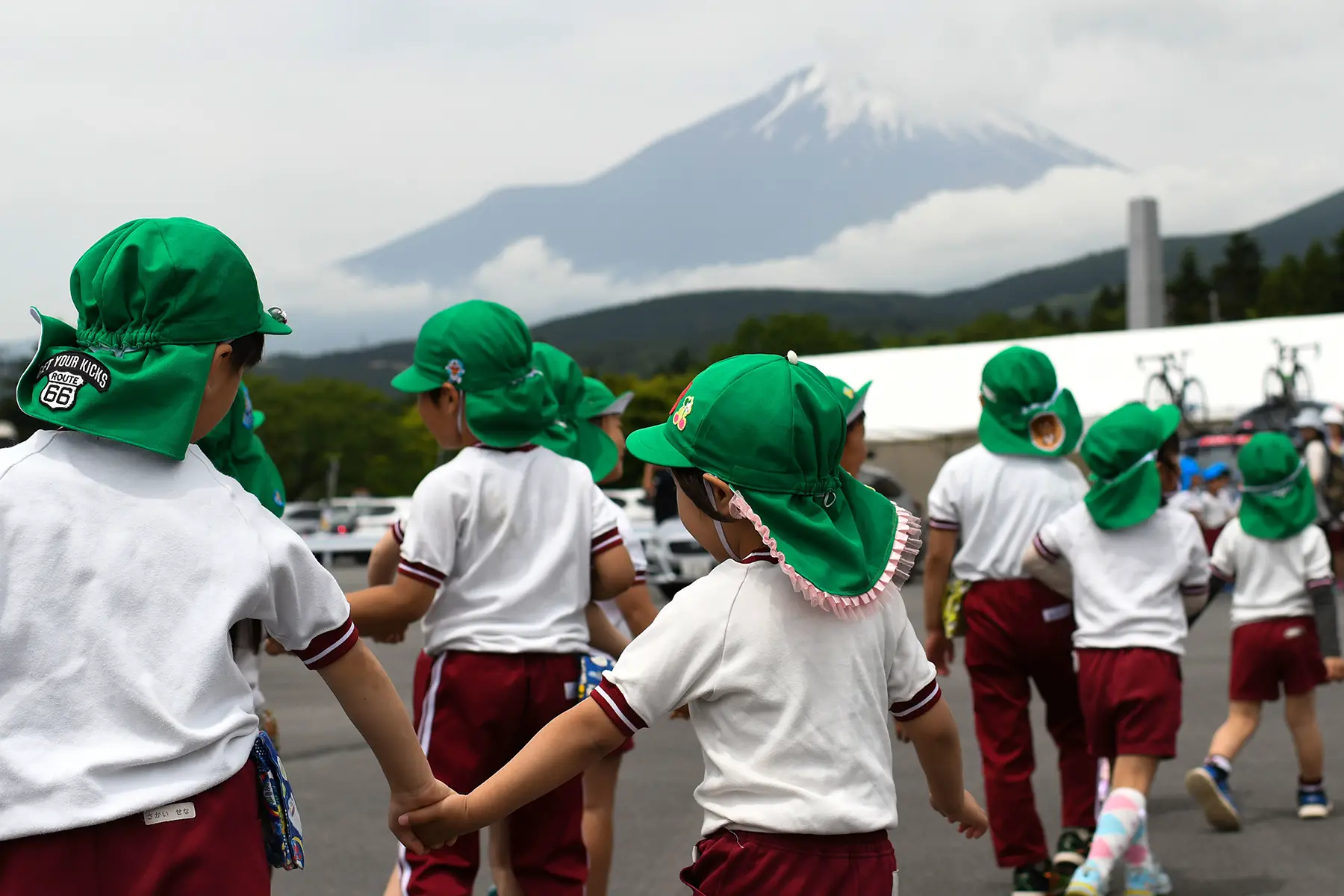
The Ministry of Education, Culture, Sports, Science, and Technology (MEXT – 文部科学省) sets Japan’s school holidays (育児) across the country. The school year begins in April and concludes in March of the following year. Interestingly, the calendar coordinates with the fiscal year, which also runs from April to March and aligns with Japanese business holidays.
Schools typically have three main holidays throughout the year, including during Winter, Spring, and Summer. Students also get additional vacation days; for example, the Golden Week (ゴールデンウィーク) begins with Showa Day on 29 April, followed by:
- Constitution Memorial Day (3 May)
- Greenery Day (4 May)
- Children’s Day (5 May)
Most International schools in Japan follow a completely different calendar. These schools often have two semesters (rather than three), with four holidays, including during Autumn, Winter, Spring, and Summer. Of course, some international schools may also give the children days off on their home country’s festive days; for example, American schools celebrate American Thanksgiving.
Be sure to check with your child’s school for full details.
When are Japan’s school holidays in 2025–2026?
Check with your school in case of variations.
| Holiday | Dates |
| First day of school | 7 April 2025 |
| Summer holiday | 19 July – 24 August 2025 |
| Winter holiday | 24 December 2025 – 6 January 2026 |
| Spring holiday | 24 March – 4 April 2026 |
Other important dates in 2025–2026
The additional holiday dates for the 2025–2026 school year are:
| Holiday | Dates | Weekday |
| Shōwa Day | 29 April 2025 | Tue |
| Greenery Day observance | 6 May 2025 | Mon |
| Children’s Day | 5 May 2025 | Mon |
| Sea Day | 21 July 2025 | Mon |
| Mountain Day | 11 August 2025 | Mon |
| Respect for the Aged Day | 15 September 2025 | Mon |
| Sports Day | 13 October 2025 | Mon |
| Culture Day | 3 November 2025 | Mon |
| Labor Thanksgiving Day observance | 24 November 2025 | Mon |
| Coming of Age Day | 12 January 2026 | Mon |
| National Foundation Day | 11 February 2026 | Wed |
| The Emperor’s Birthday | 23 February 2026 | Mon |
When are the public holidays in Japan?
In addition to the regular school holidays in Japan, children get the day off on national and local holidays. Depending on your area, some schools may be closed for local festivals as well. You can find out more by reading our article on public holidays in Japan.
Busy holiday travel times
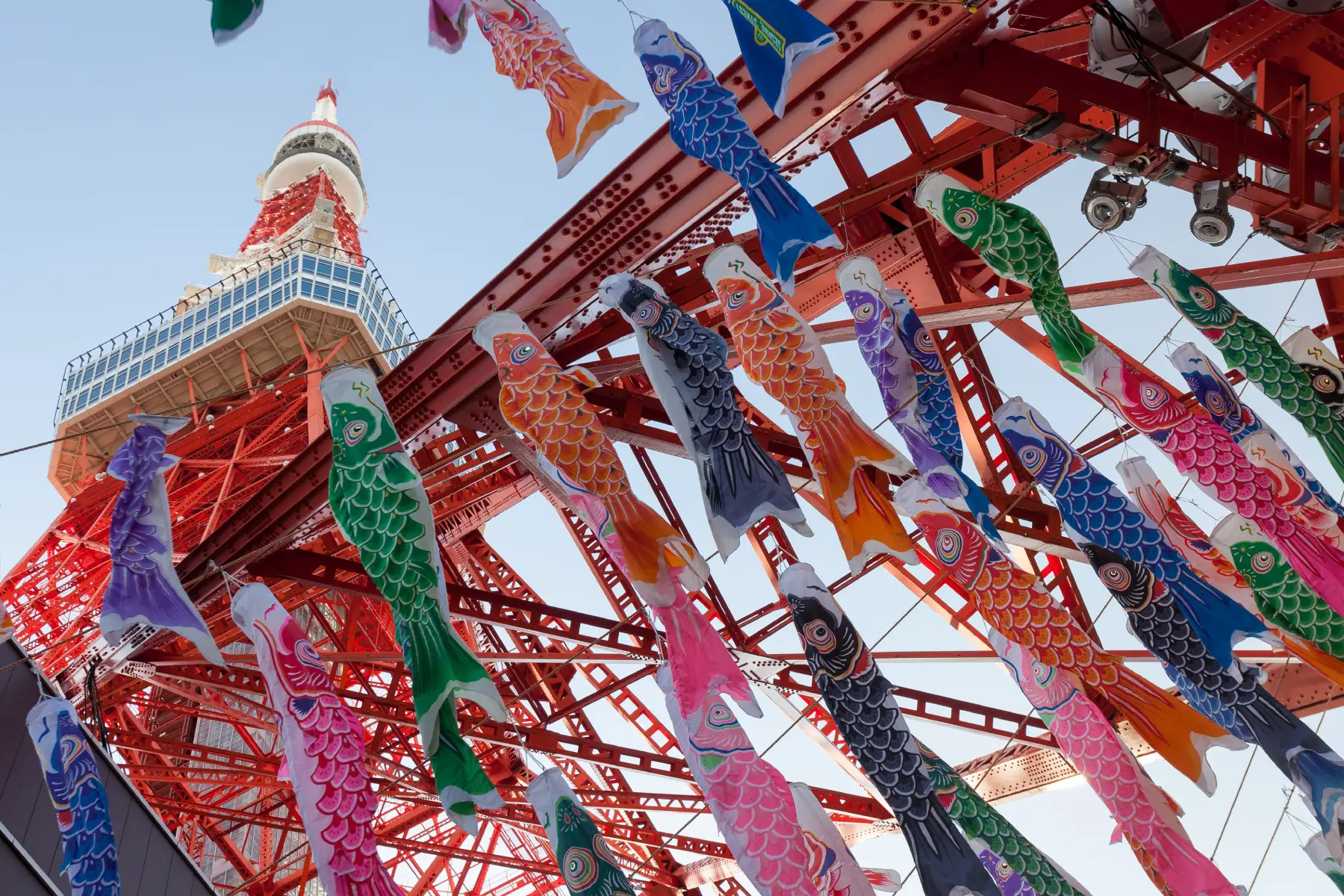
The school holidays are a popular time for Japanese families to travel, especially during Golden Week (29 April – 6 May 2026). Also popular is Obon (お盆), a summer holiday when ancestors’ spirits are thought to return to Japan. In practice, you can expect heavy traffic from 13 to 16 August, as many people visit their ancestral towns and villages. Bear this in mind when you book hotel accommodation or train travel during this holiday period.
Some years, both Respect for the Aged Day and Autumnal Equinox Day also align for a long weekend. This is called Silver Week (シルバーウィーク) and is another popular time to travel.
Another busy holiday period is around New Year’s Day (正月) and at the end of the school year in late March. Accordingly, be sure to plan travel and accommodations well in advance.
Tips for expat parents in Japan
Financial planning for school holidays
School holidays often mean additional expenses for families – from travel and accommodation to childcare and activities. For expat parents who may be traveling internationally or paying for services in different currencies, managing these expenses efficiently becomes even more important.
When planning trips abroad during school breaks:
- Create a holiday budget that accounts for currency fluctuations
- Consider the most cost-effective way to spend money abroad
- Plan ahead for international payments for activities or accommodations
Using the Wise account can help you manage your holiday finances. With Wise, you can hold and convert money in multiple currencies and spend abroad with the Wise card.
Childcare during Japanese school holidays
Your children’s school holidays may clash with your work schedule. Fortunately, you can access a range of childcare options in Japan, including:
- Daycare centers
- Kindergartens
- Au pairs/nannies
- Childminders
- Babysitters
- Parents’ helpers
10 fun summer camps in Japan
For longer school breaks, there are numerous holiday camps available throughout Japan. These provide them with the opportunity to socialize and make new friends while learning some valuable new skills.
Some of the popular holiday camps include: