
'%20id='ico-down'%20stroke='%23000000'%20stroke-width='1.5'%3e%3cg%20transform='translate(1092.250000,%20254.750000)'%3e%3cpolyline%20id='Path-2-Copy-4'%20transform='translate(5.500000,%202.750000)%20scale(1,%20-1)%20rotate(-180.000000)%20translate(-5.500000,%20-2.750000)%20'%20points='0%200%205.5%205.5%2011%200'%3e%3c/polyline%3e%3c/g%3e%3c/g%3e%3c/g%3e%3c/svg%3e)


Working
Labor Law
The minimum wage and average salary in Austria in 2026
Learn how Austria sets its minimum wage, which jobs pay the highest, and what you can expect to earn working there as an expat in 2026.


While Austria has no national minimum wage, workers’ rights to a livable salary are still protected. Over the last few years, a series of collective bargaining agreements have essentially enforced a base rate for salaries which functions a lot like a minimum wage.
In general, Austria’s average salaries are relatively high compared to many European countries, especially in the capital of Vienna and in industries like IT, engineering, and finance.
If you’re looking to live and work in Austria, check out the following information:
The minimum wage in Austria in 2026
Austria does not have a national statutory minimum wage, unlike many other EU countries. Instead, minimum wages are set according to sector through collective bargaining agreements (Kollektivverträge). These cover almost all employees across all industries.

Most of these agreements set minimum monthly salaries, and in many cases, the lowest wage across sectors is around €1,700 gross per month (as of recent agreements). However, this can vary by industry, job role, and experience level.

If you’re moving to Austria for work, it’s best to check the collective agreement for your sector to see the applicable minimum wage. You can find 2026 collective bargaining minimum wage information by industry on the Österreichischer Gewerkschaftsbund (ÖGB) website.
The average salary in Austria?
The median salary in Austria is about €3,713 per month before taxes (2024). Full-time employees working in Austria in 2025 have an median gross salary of €55,678 per year.
Keep in mind that, due to the cost of living, you can expect to earn more in major cities like Vienna or Salzburg than in small towns and rural areas.
Wise allows you to send money abroad at the mid-market exchange rate – with transparent, upfront fees. This means more of your hard-earned salary reaches its destination, whether you’re supporting family, paying off loans, or maintaining financial commitments. You can open a multi-currency account that supports 40+ currencies including EUR, and spend with the linked debit card. All while managing your finances conveniently from the Wise app.

Average salary in Austria by job type
Of course, salaries can vary greatly depending on your job type. To give you an idea of salaries by category in Austria, here are a few examples, starting with the highest paid occupations:
| Occupation category | Gross annual income |
| Managers | €74,495 |
| Professionals | €51,710 |
| Technicians | €44,053 |
| Craft and trade workers | €42,467 |
| Plant and machine operators | €39,442 |
| Clerical support workers | €33,773 |
| Service and sales workers | €21,745 |
| Elementary occupations | €21,370 |
| Skilled agricultural, forestry, and fishery | €20,978 |
What are the highest paying jobs in Austria?
Jobs with the highest salaries in Austria include:
- Chief Executive Officer
- Investment Banker
- Medical Specialist (e.g., surgeon)
- Senior Legal Professional
- Senior Engineer
- IT Director
- Airline Captain
This jobs tend to pay in excess of €90,000.

Salary calculator for Austria
To find out what you can expect to earn, visit Gehaltskompass (Salary Compass), which lists starting salaries for over 1,700 professions in Austria.
When you’re trying to find a job or secure a work visa in Austria, you probably want to know how much you can expect to earn. For many expatriates, managing these earnings efficiently becomes important, particularly when supporting family abroad or maintaining financial connections to their home country.
Many international workers use services like Wise to transfer their earnings in Euro abroad at the mid-market exchange rate with transparent fees. The provider can help them preserve more of their salary when managing finances across borders.
The gender pay gap in Austria
Although Austria works hard to ensure equality throughout the country, there is still a gender pay gap across all industries. Austria’s gender pay gap is one of the largest in the EU with men making an average of 18.3% more than women. Only Latvia is above this. On average, full-time employed men make about €5,000 per year more than full-time employed women working in Austria.

Some of Austria’s gender pay gap may be explained by sectors that are predominantly male being more highly paid. High-paying sectors such as electricity and gas tend to have lower female representation, while sectors like health and social services — where women are a larger share of employees — tend to pay less on average.
Salaries and wages for expats in Austria
If you are moving to Austria for work, you will likely end up in the capital, Vienna. Thanks to its numerous industries, including research, IT, tourism, and service, it’s attractive to expats. However, other parts of Austria have a lot to offer. For example, Innsbruck has a bustling tourism industry, while Salzburg is home to international companies like Red Bull.
Many EU citizens move to Austria because the quality of life is better than in their home country, and jobs are more readily available. However, the most important factor is that they don’t need to get a work permit or visa. However, if you are a foreign national from outside the EU, you will need a resident permit or Red-White-Red Card.

To qualify for this card, third-country nationals generally must have a binding job offer and meet higher minimum salary thresholds set for those permit types. For example, the Red-White-Red Card category for key or other workers requires a gross monthly salary of around €3,465 (2026), while the EU Blue Card threshold is significantly higher — over €50,000 gross annually.
Managing your salary can present challenges if you regularly send money internationally. Some expatriates find that bank fees and exchange rate markups can reduce the value of their international transfers. Services like Wise offer an option for international money transfers at the mid-market exchange rate with transparent fee structures. This transparency can help expatriates better understand the costs involved when sending portions of their salary abroad.

Household incomes in Austria are generally lower for those without Austrian citizenship. And workers from EU/EFTA countries earn more than third-country nationals. However, this difference is less pronounced in major corporations and international companies.
What to do if you’re not being paid the minimum wage in Austria
Austria has stringent labor laws and a rigid and formal business culture. As such, if your salary doesn’t meet the appropriate collective minimum wage agreements in Austria, you might have legal recourse, which you can take up with the courts. Employers that don’t comply with these agreements in Austria face severe fines.
A company of more than three employees, for example, could be fined anything from €2,000 to €20,000 for a first offense or up to €50,000 for a repeat offense. Similarly, there are penalties for not keeping appropriate payment records and discrimination based on age, race, and gender.
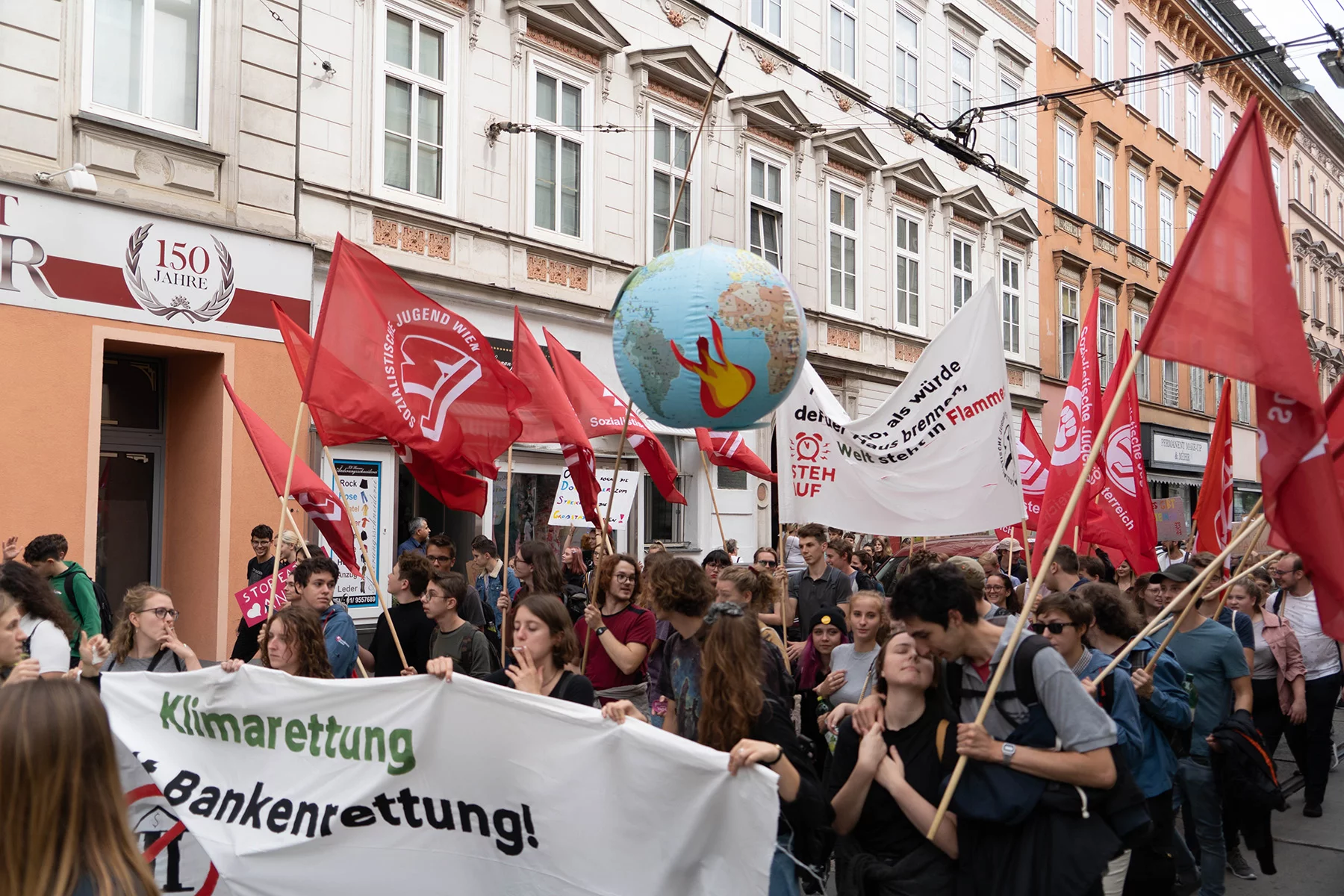
In case of a pay dispute, informal alternative dispute resolutions are common in Austria. This means that certain social partners might intervene on your behalf to settle a conflict out of court. There are different forms of this, including conciliation, mediation, and arbitration. In general, it is preferable to deal with complaints before going to a labor court or tribunal.
However, if you go to court, the competent court will usually be the Land Courts (Landesgerichte) in each province. However, if the conflict escalates, you might end up at the Higher Land Courts (Oberlandesgerichtes) or even the Supreme Court of Justice (Oberster Gerichtshof).
Useful resources
- Minimum wage index, Austria Statistics – a government statistics bureau page about minimum wages
- Business Service Portal – a page about Austria’s Labor Inspectorate
- Personal income, Austria Statistics – a government statistics bureau page about personal income



Did you find this guide helpful?