'%20id='ico-down'%20stroke='%23000000'%20stroke-width='1.5'%3e%3cg%20transform='translate(1092.250000,%20254.750000)'%3e%3cpolyline%20id='Path-2-Copy-4'%20transform='translate(5.500000,%202.750000)%20scale(1,%20-1)%20rotate(-180.000000)%20translate(-5.500000,%20-2.750000)%20'%20points='0%200%205.5%205.5%2011%200'%3e%3c/polyline%3e%3c/g%3e%3c/g%3e%3c/g%3e%3c/svg%3e)



'%20fill='%23000000'%3e%3cg%20id='icons'%20transform='translate(56.000000,%20160.000000)'%3e%3cpath%20d='M144,7339%20L140,7339%20L140,7332.001%20C140,7330.081%20139.153,7329.01%20137.634,7329.01%20C135.981,7329.01%20135,7330.126%20135,7332.001%20L135,7339%20L131,7339%20L131,7326%20L135,7326%20L135,7327.462%20C135,7327.462%20136.255,7325.26%20139.083,7325.26%20C141.912,7325.26%20144,7326.986%20144,7330.558%20L144,7339%20L144,7339%20Z%20M126.442,7323.921%20C125.093,7323.921%20124,7322.819%20124,7321.46%20C124,7320.102%20125.093,7319%20126.442,7319%20C127.79,7319%20128.883,7320.102%20128.883,7321.46%20C128.884,7322.819%20127.79,7323.921%20126.442,7323.921%20L126.442,7323.921%20Z%20M124,7339%20L129,7339%20L129,7326%20L124,7326%20L124,7339%20Z'%20id='linkedin-[%23161]'%3e%3c/path%3e%3c/g%3e%3c/g%3e%3c/g%3e%3c/svg%3e)
'%20fill='%23000000'%3e%3cg%20id='icons'%20transform='translate(56.000000,%20160.000000)'%3e%3cpath%20d='M335.821282,7259%20L335.821282,7250%20L338.553693,7250%20L339,7246%20L335.821282,7246%20L335.821282,7244.052%20C335.821282,7243.022%20335.847593,7242%20337.286884,7242%20L338.744689,7242%20L338.744689,7239.14%20C338.744689,7239.097%20337.492497,7239%20336.225687,7239%20C333.580004,7239%20331.923407,7240.657%20331.923407,7243.7%20L331.923407,7246%20L329,7246%20L329,7250%20L331.923407,7250%20L331.923407,7259%20L335.821282,7259%20Z'%20id='facebook-[%23176]'%3e%3c/path%3e%3c/g%3e%3c/g%3e%3c/g%3e%3c/svg%3e)

The takeaway for buyers is that one-off purchase taxes typically range from 2% to 10% of the property’s value, depending on whether it is your primary residence or a second home.
Once you own the property, you can expect recurring annual taxes of roughly 0.76% to 1.14% of the cadastral value for non-luxury primary homes.
- What are the main property taxes in Italy?
- Taxes on buyers
- Taxes on sellers
- Taxes on homeowners: recurring payments
- Is rental income taxed?
- First vs second home: tax implications
- Wealth taxes in Italy
- How to save money on your property purchase
- How to pay your taxes
- When to speak to a tax professional
- Useful resources
Use Wise to save money on your property purchase
Buying a property abroad is a big step and involves important financial decisions. Wise, an international money transfer company, provides specialist support to help you navigate large international transfers and save on exchange fees. Fill out Wise’s online form today to find out how they can assist you.

What are the main property taxes in Italy?
Owning a property in Italy involves several types of taxes that apply at different stages of ownership. These can be broadly divided into three categories:
- Purchase taxes: One-off payments made at the time of transfer (e.g., registration tax or VAT).
- Recurring ownership taxes: Annual payments for local services and property ownership, primarily IMU and TARI.
- Income-related taxes: Taxes on profit from selling a property or earning rental income.
Who is subject to these taxes?
Anyone who owns property in Italy – whether they are a resident, a non-resident, or a corporation – is liable for property-related taxes. However, the specific rates and exemptions vary significantly based on your residency status.
For instance, residents often enjoy deep discounts on purchase taxes and are typically exempt from the annual IMU tax for their primary residence.
Non-residents generally pay higher purchase rates (9% instead of 2%) and must always pay IMU, as their Italian property is automatically classified as a “second home.”
Taxes on buyers
When you purchase a property, the amount you pay depends largely on whether you are buying from a private seller or a company (like a developer).
- Registration Tax (Imposta di Registro): This applies when buying from a private seller. The rate is 2% for a primary residence (prima casa) or 9% for a second home, calculated on the property’s cadastral value.
- VAT (IVA): If you buy from a company, you pay VAT instead of registration tax. The rate is 4% for primary residences, 10% for second homes, and 22% for luxury properties.
- Mortgage and Cadastral Taxes: These are fixed fees. When buying from a private seller, they are usually €50 each. From a company, they rise to €200 each.
- Stamp Duty: A flat fee of €200 applies to all purchases.
Exemptions
- Primary Residence Benefits: You may be exempt from the 9% registration tax rate if you establish your legal residence in the property within 18 months of purchase.
- Inherited Property: No capital gains tax is due if you sell a property you inherited, though you must still pay the extra 3% in mortgage and cadastral taxes upon transfer.
Taxes on sellers
The primary tax for sellers is the Capital Gains Tax (Plusvalenza). If you sell your property within five years of buying it and make a profit, you must pay tax on that gain.
- Standard Rate: The standard rate is 26% on the profit.
- Calculation: You can subtract certain costs from your profit to lower the bill, such as notary fees, agent commissions, and renovation costs (provided you have invoices).
Exemptions
- Five-Year Rule: No capital gains tax is due if you sell the property more than five years after you purchased it.
- Primary Residence: You are exempt if the property was your main residence for more than half of the time you owned it.
Taxes on homeowners: recurring payments
Once you own a home in Italy, you are responsible for annual local taxes.
- IMU (Imposta Municipale Unica): This is a municipal wealth tax on ownership. Rates vary by municipality but generally range from 0.4% to 1.06%.
- TARI (Tassa sui Rifiuti): This covers waste collection. It is based on the size of the property and the number of regular occupants.
Exemptions
- Primary Residence: Most residents do not pay IMU on their main home.
- Historic Buildings: Homes of historical or artistic interest may receive a 50% reduction in IMU.
- Unusable Property: Buildings declared officially unusable or uninhabitable may qualify for a 50% tax reduction.
Is rental income taxed?
Yes, rental income earned from Italian property is taxable in Italy, regardless of where the owner lives. Landlords can choose between two systems:
- Progressive Income Tax (IRPEF): Income is added to your other earnings and taxed at rates between 23% and 43%.
- Flat Tax (Cedolare Secca): A simplified regime where you pay a fixed 21% on long-term rentals or 10% in areas with high rental demand.
- Note: As of 2025, the 21% flat rate only applies to your first short-term rental property; any additional units are taxed at 26%.
Exemptions
- Income Surcharges: Using the Cedolare Secca regime exempts you from paying registration tax and stamp duty on the lease.
- No Tax Area: Low-income earners (under roughly €8,000 to €8,500) may be exempt from standard income tax.

First vs second home: tax implications
The difference between a prima casa (first home) and a seconda casa (second home) is the single biggest factor in your Italian tax bill.
To qualify for “first home” benefits, you must be a resident of the municipality where the home is located (or move there within 18 months).
- Purchase Savings: First-time buyers pay 2% registration tax, while second-home buyers pay 9%.
- Annual Savings: Primary homes are usually exempt from IMU, while second homes are not.
- Luxury Exception: “Luxury” properties (categories A/1, A/8, and A/9) never qualify for the IMU exemption, even if they are your primary residence.
Wealth taxes in Italy
Italy does not have a general wealth tax on assets located within Italy, but it does tax residents on wealth held abroad:
- IVIE: A tax of 1.06% on the value of foreign real estate owned by Italian residents.
- IVAFE: A tax of 0.2% on foreign financial investments.
How to save money on your property purchase
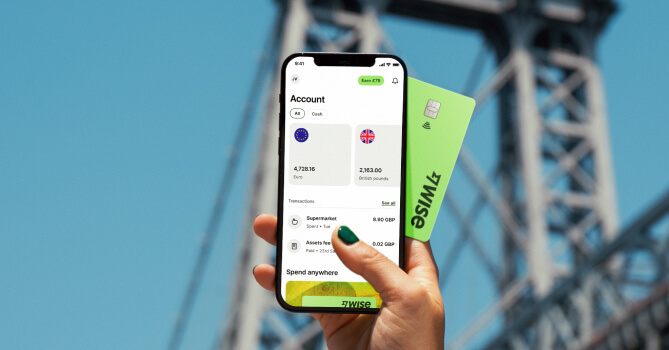
Currency exchange costs can add thousands to the price of a home if you are moving funds from abroad. Using a specialist provider like Wise can help you save by offering the mid-market exchange rate and transparent fees.
You can use Wise to pay the seller directly or to move money from your international account to your new Italian bank account to cover the down payment and taxes.
How to pay your taxes
The national tax authority in Italy is the Agenzia delle Entrate (Italian Revenue Agency).
- When are taxes due?: IMU is typically paid in two installments: the first by June 16 and the second by December 16. TARI deadlines are set by individual municipalities and are usually due in spring and autumn.
- How to pay: Most taxes are paid using the F24 Model form, which can be handled through your Italian bank or the PagoPA digital platform.
When to speak to a tax professional
Italian tax laws are complex and vary by municipality. It is always a good idea to speak to a tax professional (commercialista) or a notary when buying or selling a house.
They can ensure you are calculating cadastral values correctly and applying for all eligible “first home” reliefs.
Useful resources
Agenzia delle Entrate – Official website of the Italian Revenue Agency for tax forms and deadlines.
Ministry of Economy and Finance – Information on national tax policies and regulations.
Wise – For international money transfers when buying property abroad.