'%20id='ico-down'%20stroke='%23000000'%20stroke-width='1.5'%3e%3cg%20transform='translate(1092.250000,%20254.750000)'%3e%3cpolyline%20id='Path-2-Copy-4'%20transform='translate(5.500000,%202.750000)%20scale(1,%20-1)%20rotate(-180.000000)%20translate(-5.500000,%20-2.750000)%20'%20points='0%200%205.5%205.5%2011%200'%3e%3c/polyline%3e%3c/g%3e%3c/g%3e%3c/g%3e%3c/svg%3e)



'%20fill='%23000000'%3e%3cg%20id='icons'%20transform='translate(56.000000,%20160.000000)'%3e%3cpath%20d='M144,7339%20L140,7339%20L140,7332.001%20C140,7330.081%20139.153,7329.01%20137.634,7329.01%20C135.981,7329.01%20135,7330.126%20135,7332.001%20L135,7339%20L131,7339%20L131,7326%20L135,7326%20L135,7327.462%20C135,7327.462%20136.255,7325.26%20139.083,7325.26%20C141.912,7325.26%20144,7326.986%20144,7330.558%20L144,7339%20L144,7339%20Z%20M126.442,7323.921%20C125.093,7323.921%20124,7322.819%20124,7321.46%20C124,7320.102%20125.093,7319%20126.442,7319%20C127.79,7319%20128.883,7320.102%20128.883,7321.46%20C128.884,7322.819%20127.79,7323.921%20126.442,7323.921%20L126.442,7323.921%20Z%20M124,7339%20L129,7339%20L129,7326%20L124,7326%20L124,7339%20Z'%20id='linkedin-[%23161]'%3e%3c/path%3e%3c/g%3e%3c/g%3e%3c/g%3e%3c/svg%3e)
'%20fill='%23000000'%3e%3cg%20id='icons'%20transform='translate(56.000000,%20160.000000)'%3e%3cpath%20d='M335.821282,7259%20L335.821282,7250%20L338.553693,7250%20L339,7246%20L335.821282,7246%20L335.821282,7244.052%20C335.821282,7243.022%20335.847593,7242%20337.286884,7242%20L338.744689,7242%20L338.744689,7239.14%20C338.744689,7239.097%20337.492497,7239%20336.225687,7239%20C333.580004,7239%20331.923407,7240.657%20331.923407,7243.7%20L331.923407,7246%20L329,7246%20L329,7250%20L331.923407,7250%20L331.923407,7259%20L335.821282,7259%20Z'%20id='facebook-[%23176]'%3e%3c/path%3e%3c/g%3e%3c/g%3e%3c/g%3e%3c/svg%3e)

Buying a home in Italy – a vineyard in Tuscany, a flat in Rome, or a retreat in Sicily – is a goal for many Americans.
Is it possible? Yes, US citizens can buy property in Italy. Is it difficult? It can be: let’s dive in.
- Can Americans buy property in Italy?
- What buying property gets you
- What buying property does not get you
- How difficult is the process?
- What are the tax implications?
- Local laws and regional variations
- Renting out your property: is it allowed?
- Buying land in Italy
- Getting a mortgage: should I get one in Italy or the US?
- The verdict: should you buy a house in Italy as an American?
- Useful resources
Use Wise to save money on your property purchase
Buying a property abroad is a big step and involves important financial decisions. Wise, an international money transfer company, provides specialist support to help you navigate large international transfers and save on exchange fees. Fill out Wise’s online form today to find out how they can assist you.

Can Americans buy property in Italy?
Yes, Americans can buy property in Italy freely.
Italy generally allows foreigners to purchase property if there is a reciprocal agreement with their home country.
The United States and Italy have such an agreement, meaning US citizens can buy property in Italy with the same rights as Italian citizens, regardless of whether they live in Italy or not.
You do not need a special permit to buy a house, nor do you need to be a resident.
While you don’t need residency to buy, owning a home doesn’t automatically grant you the right to stay in Italy longer than the standard 90-day Schengen limit.
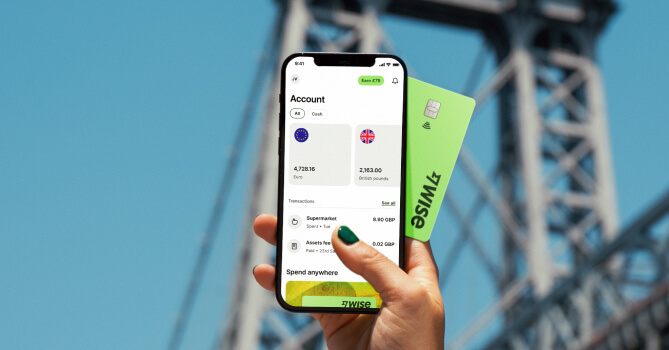
Tip: hunt for the best exchange rates when moving money to Italy
If you are buying a property with foreign currency (like USD), you will need to convert it to Euros for the deposit and final purchase. You can use a Wise Account to convert dollars to euros at the mid-market exchange rate with low, transparent fees, avoiding high bank fees on large international transfers.
What buying property gets you
Aside from a beautiful home in the Mediterranean, owning property in Italy can offer several benefits:
- A potential income stream: If you buy in a popular area, holiday rentals can be lucrative.
- Asset diversification: Owning real estate in the Eurozone can balance an investment portfolio.
- A base for the Elective Residence Visa: If you plan to retire in Italy, you must prove you have a place to live. Owning a home satisfies this requirement (though renting does too).
Can it get you residency or a visa?
Buying property alone does not grant you residency or a visa. Italy does not have a “Golden Visa” program based solely on buying residential real estate (unlike some other EU countries).
However, owning a property is a requirement for the Elective Residence Visa (Visto per Residenza Elettiva), which is popular among retirees. To qualify, you must prove you have a home (bought or rented) and substantial passive income (roughly €31,000+ per year for individuals) to support yourself without working.
There is also an Investor Visa, but this requires investing in Italian government bonds (minimum €2 million), Italian companies (€500,000), or startups (€250,000) – not simply buying a villa for personal use.
What buying property does not get you
It is important to manage expectations. Buying a house in Italy:
- Does not give you Italian citizenship. Citizenship usually requires 10 years of legal residency (and paying taxes in Italy).
- Does not give you the right to work in Italy.
- Does not automatically allow you to stay in Italy year-round. Without a visa, you are still limited to the Schengen rule of 90 days within any 180-day period.
How difficult is the process?
The process is structured but heavy on paperwork. You will need patience. The most critical figure in the transaction is the Notaio (Notary), a public official who ensures the sale is legal and registers the property. However, the Notary is neutral; they do not represent you. Many Americans hire a bilingual lawyer to protect their interests.
What are the forms involved?
You will encounter three main documents during the process:
Proposta d’Acquisto (Purchase Proposal)
This is your formal offer. Once the seller accepts it, it becomes legally binding. You usually pay a small deposit at this stage.
Il Preliminare (The Preliminary Contract)
Also known as the Compromesso. This is a detailed contract outlining the price, closing date, and conditions. At this stage, you typically pay a substantial deposit (often 10–20% of the price). If you back out, you lose this deposit. If the seller backs out, they must usually pay you double the deposit back.
Rogito (The Final Deed)
This is the final deed of sale signed in front of the Notary. You pay the remaining balance, taxes, and fees, and receive the keys.
Typical timelines
The process usually takes 2 to 6 months from your offer being accepted to closing. It can take longer if the property needs amnesty for illegal renovations (a common issue in older Italian homes) or if you are applying for a mortgage.
Transferring money to Italy for the purchase
You will need to transfer a large sum of euros to Italy for the deposit and final payment. Using a traditional bank for this can be expensive due to poor exchange rates and high wire fees.
You can use Wise to move money abroad for the property purchase. Wise uses the mid-market exchange rate – the one you see on Google – without the expensive markups banks often add.
- Pay the seller directly: In some cases, you can send funds directly to the Notary’s escrow account.
- Transfer to your own account: If you have already set up an Italian bank account, you can use Wise to move money from your US account to your Italian one instantly or quickly, often cheaper than a standard bank wire.
What are the tax implications?
Taxes in Italy are high compared to the US property taxes you might be used to, particularly transaction taxes at the time of purchase.
In Italy
- Registration Tax (Imposta di Registro): This is the main one-time tax.
- Primary residence (Prima casa): 2% of the cadastral value (official tax value, usually lower than market price).
- Second home / Non-resident: 9% of the cadastral value.
- Note: If you buy a new build from a developer, you pay VAT (IVA) instead of registration tax. VAT is 4% for a primary home, 10% for a second home, and 22% for luxury homes.
- IMU (Municipal Tax): An annual ownership tax. If the house is your primary residence (and not luxury), you generally do not pay this. As a non-resident American, you will likely pay this.
- TARI (Waste Tax): An annual tax for trash collection.
In the US
The US taxes its citizens on worldwide income.
- Reporting: You likely do not need to report the purchase to the IRS immediately, but if you rent it out, that income is reportable.
- Capital Gains: If you sell the Italian property later, you may owe US capital gains tax, though you can often claim a credit for taxes paid in Italy to avoid double taxation.
- FATCA: If you hold large amounts of money in an Italian bank account to buy the house, you may need to report those accounts (FBAR/Form 8938) to the US Treasury.

Local laws and regional variations
While national law governs the sale, local regulations matter for renovations.
- Historic restrictions: If you buy a property listed as “historic” or in a protected area (like parts of Tuscany or Venice), you may face strict rules on what renovations you can do.
- Border areas: In some border regions (like near Austria or Switzerland), there may be stricter controls on foreign ownership for security reasons, though this rarely affects residential buyers.
Renting out your property: is it allowed?
Yes, foreign nationals can be landlords in Italy. Many Americans buy homes to rent them out when they aren’t using them.
- Short-term rentals: You can rent to tourists (e.g., Airbnb). Local laws vary; some cities like Venice or Florence have specific registration rules.
- Taxation: You must pay tax on rental income in Italy. Non-residents can often use the Cedolare Secca scheme, a flat tax rate (usually 21%) that replaces standard income tax on rentals. This can be simpler and often cheaper than standard progressive rates.
Buying land in Italy
Can Americans buy land? Yes. The same reciprocity rules apply. Whether you want a vineyard or a plot to build on, you can purchase it.
- Agricultural land: Be aware that neighbors who are farmers often have a “right of first refusal” (diritto di prelazione) to buy agricultural land bordering theirs. This can delay or block a sale if not handled correctly by the Notary.
Getting a mortgage: should I get one in Italy or the US?
It is generally difficult to get a mortgage in the US for a foreign property because US banks cannot easily foreclose on a home in Italy.
- Italian Banks: Some Italian banks offer mortgages to non-residents, but they are conservative.
- LTV: Expect a maximum Loan-to-Value (LTV) of 50–60%. You will need a substantial down payment (40–50%).
- Process: It involves significant paperwork (translating US tax returns and bank statements into Italian).
- Recommendation: Many American buyers find it easier to finance the purchase via a Home Equity Line of Credit (HELOC) on their US property or a cash purchase if possible, to avoid the complexity of an Italian mortgage.
The verdict: should you buy a house in Italy as an American?
Pros
- Lifestyle: Unbeatable culture, food, and history.
- Price: Outside major cities (Milan, Rome, Florence), property is often surprisingly affordable compared to the US.
- Income potential: Strong tourism market for rentals.
- No restrictions: Reciprocity makes you legally equal to an Italian buyer.
Cons
- High transaction costs: Taxes and notary fees can add 10–15% to the purchase price.
- Bureaucracy: The process is slow and paper-heavy.
- Maintenance: Older homes require constant upkeep, which can be hard to manage from across the Atlantic.
- Taxes: You must pay annual property taxes (IMU) if it is not your primary residence.
Useful resources
Agenzia delle Entrate – The Italian Revenue Agency (for tax information/Codice Fiscale).
Consiglio Nazionale del Notariato – The National Council of Notaries (explains the purchase process).
Wise – For transparent international money transfers.