'%20id='ico-down'%20stroke='%23000000'%20stroke-width='1.5'%3e%3cg%20transform='translate(1092.250000,%20254.750000)'%3e%3cpolyline%20id='Path-2-Copy-4'%20transform='translate(5.500000,%202.750000)%20scale(1,%20-1)%20rotate(-180.000000)%20translate(-5.500000,%20-2.750000)%20'%20points='0%200%205.5%205.5%2011%200'%3e%3c/polyline%3e%3c/g%3e%3c/g%3e%3c/g%3e%3c/svg%3e)




'%20fill='%23000000'%3e%3cg%20id='icons'%20transform='translate(56.000000,%20160.000000)'%3e%3cpath%20d='M144,7339%20L140,7339%20L140,7332.001%20C140,7330.081%20139.153,7329.01%20137.634,7329.01%20C135.981,7329.01%20135,7330.126%20135,7332.001%20L135,7339%20L131,7339%20L131,7326%20L135,7326%20L135,7327.462%20C135,7327.462%20136.255,7325.26%20139.083,7325.26%20C141.912,7325.26%20144,7326.986%20144,7330.558%20L144,7339%20L144,7339%20Z%20M126.442,7323.921%20C125.093,7323.921%20124,7322.819%20124,7321.46%20C124,7320.102%20125.093,7319%20126.442,7319%20C127.79,7319%20128.883,7320.102%20128.883,7321.46%20C128.884,7322.819%20127.79,7323.921%20126.442,7323.921%20L126.442,7323.921%20Z%20M124,7339%20L129,7339%20L129,7326%20L124,7326%20L124,7339%20Z'%20id='linkedin-[%23161]'%3e%3c/path%3e%3c/g%3e%3c/g%3e%3c/g%3e%3c/svg%3e)
'%20fill='%23000000'%3e%3cg%20id='icons'%20transform='translate(56.000000,%20160.000000)'%3e%3cpath%20d='M335.821282,7259%20L335.821282,7250%20L338.553693,7250%20L339,7246%20L335.821282,7246%20L335.821282,7244.052%20C335.821282,7243.022%20335.847593,7242%20337.286884,7242%20L338.744689,7242%20L338.744689,7239.14%20C338.744689,7239.097%20337.492497,7239%20336.225687,7239%20C333.580004,7239%20331.923407,7240.657%20331.923407,7243.7%20L331.923407,7246%20L329,7246%20L329,7250%20L331.923407,7250%20L331.923407,7259%20L335.821282,7259%20Z'%20id='facebook-[%23176]'%3e%3c/path%3e%3c/g%3e%3c/g%3e%3c/g%3e%3c/svg%3e)

If you’re relocating to Italy, bringing investment or inheritance funds from abroad, or looking to invest in the country, understanding the best way to move your money is the first step. From bank transfers to multicurrency accounts, each method has its pros and cons depending on how often you send money, the amount, and the currencies involved. Being aware of these differences helps you choose the option that works best for your situation.
Table of contents
Wise account
Are you an expat or thinking of moving to Italy? Managing your money across borders shouldn’t be complicated. With a Wise account, you can hold over 40 currencies and pay with a Wise debit card in more than 150 countries. Whether you need to spend abroad, receive or send money home, Wise can help make international money management simpler.

Quick summary: Bringing money from abroad to Italy
- Transfer methods: There are multiple options, including international bank transfers, specialised providers such as Wise, and, less commonly, cash or cheques. Online platforms are often faster and cheaper than banks.
- Declarations and taxes: In some cases, you need to declare the money you are bringing into Italy. If you are transferring your own savings, in principle there are no tax implications. However, you may need to declare or pay tax on funds considered as income or gifts.
- Transfer limits: The amount you can move into Italy depends on the method you choose. Digital platforms and banks may have operational limits per transfer or per day, which can usually be adjusted with additional verification.
- Moving large sums: When transferring large amounts through a bank or operator, you may be asked to explain the origin of the funds, your relationship with the sender or receiver (if different people), and the purpose of the transfer, in line with anti-money laundering rules.
How to bring money from abroad to Italy
Bringing money from abroad to Italy is a common situation for people who move, work, invest, or receive income internationally. There is no single best way to do it: the most suitable option depends on your specific needs, such as the amount of money involved, how often you make transfers, how quickly you need access to the funds, and how important low fees or favourable exchange rates are to you.
In the sections below, we explore three main ways of bringing money into Italy: international money transfers to an Italian bank account, multicurrency accounts, and bringing cash into the country. Each option comes with different costs, limits, and practical considerations, so understanding how they work can help you choose the solution that best fits your situation.
Sending money from abroad to Italy
If you want to make an international money transfer to an Italian bank account, you can do it through a bank or via an international money transfer provider. Banks are familiar and secure, but their international transfers are typically processed through traditional systems such as SWIFT, which can be costly due to fixed fees, intermediary charges, and exchange rate markups.
International money transfer providers offer fast transfers and clear information on fees and exchange rates, though costs still vary depending on the destination and currency. Before making any transfer, it is good practice to check the total cost, including fees and exchange rate markups, as small differences can have a significant impact, particularly for large or recurring transfers.
See below some options available in Italy:
Santander: A globally recognised bank with a presence in multiple countries and currencies. International transfers are usually charged via a combination of fixed fees and exchange rate markups, with costs varying by country and transfer type. Check your local Santander website in your home country, to view the specific costs for your transaction.
Wise: An international specialist digital service that allows for easy cross-border payments. Wise uses the mid-market exchange rate and charges a clearly stated fee upfront, which can be lower than banks. Receive payments to your local bank in Italy. Wise also offers multi-currency accounts, which present a different way to send and receive your funds – more on that in a moment.
Western Union: A well-known international money transfer provider operating worldwide. Fees vary depending on the amount, destination, and payment method. Exchange rates are calculated regularly based on interbank rates in global financial markets, with an added margin that depends on the country and currency.
Bringing money to Italy with a multicurrency account
You don’t necessarily need an Italian bank account to receive, hold, and spend money in EUR. Multicurrency accounts can be a practical solution, especially if you frequently move money internationally or travel regularly. They let you manage money in multiple currencies in one place, meaning you can use your funds in your home country, in Italy, or elsewhere without having to make repeated international transfers each time you move.
You also have control over when to exchange currencies, which can help you benefit from more favourable exchange rates. When receiving money, multicurrency accounts might offer local account details in several currencies, providing greater flexibility than single-currency accounts for an international lifestyle.
Here are some of the options you can use:
Wise: Provides a multicurrency account that lets you hold and spend EUR and 40+ other currencies, with EUR and 8+ other local account details available. Conversions use the mid-market exchange rate, with a clearly stated fee shown upfront.

Revolut: Offers a multi-currency account enabling users to hold and spend 30+ currencies, with local account details in selected currencies. Currency conversions use the Revolut rate within plan limits. On the Standard plan, a 1% fair usage fee applies after the monthly exchange limit; other exchange fees are variable and shown in‑app. Weekend extra fee may be charged.
Monese: Provides a multicurrency account in EUR, GBP, and RON. Outgoing international transfers are converted at the mid-market exchange rate, with fees starting at 2% on the free plan.
Bringing cash into Italy
Bringing cash to Italy is generally not the safest or most practical option.Carrying large amounts increases the risk of loss or theft, and cash provides little traceability or protection if something goes wrong. It can also be inconvenient, as many payments require a card or bank transfer, and exchanging cash may involve unfavourable rates and high fees.
There are also declaration requirements to be aware of. While there is no limit to the amount of cash you can bring into Italy, you must report to the authorities any time you enter or leave the EU with 10 000 EUR or more in cash (or the equivalent in other currencies). Failing to declare large amounts can lead to penalties.
Writer’s tip: Choosing the right method to bring money from abroad
Choosing the right way to bring money from abroad depends on your personal situation and priorities. Factors such as the amount of money you are transferring, how often you need to move funds, how quickly you need access to them, and how sensitive you are to fees and exchange rates all play an important role. For one-off or large transfers, costs and transparency may matter most, while for regular payments, speed and convenience can be more important.
It’s also worth considering practical aspects such as whether you already have a bank account in Italy, if you need to manage multiple currencies, and how comfortable you are with digital services. Comparing banks, international transfer providers, and alternative solutions like multicurrency accounts can help you find the option that best fits your needs and avoids unnecessary costs.
Taxes for bringing money to Italy from abroad
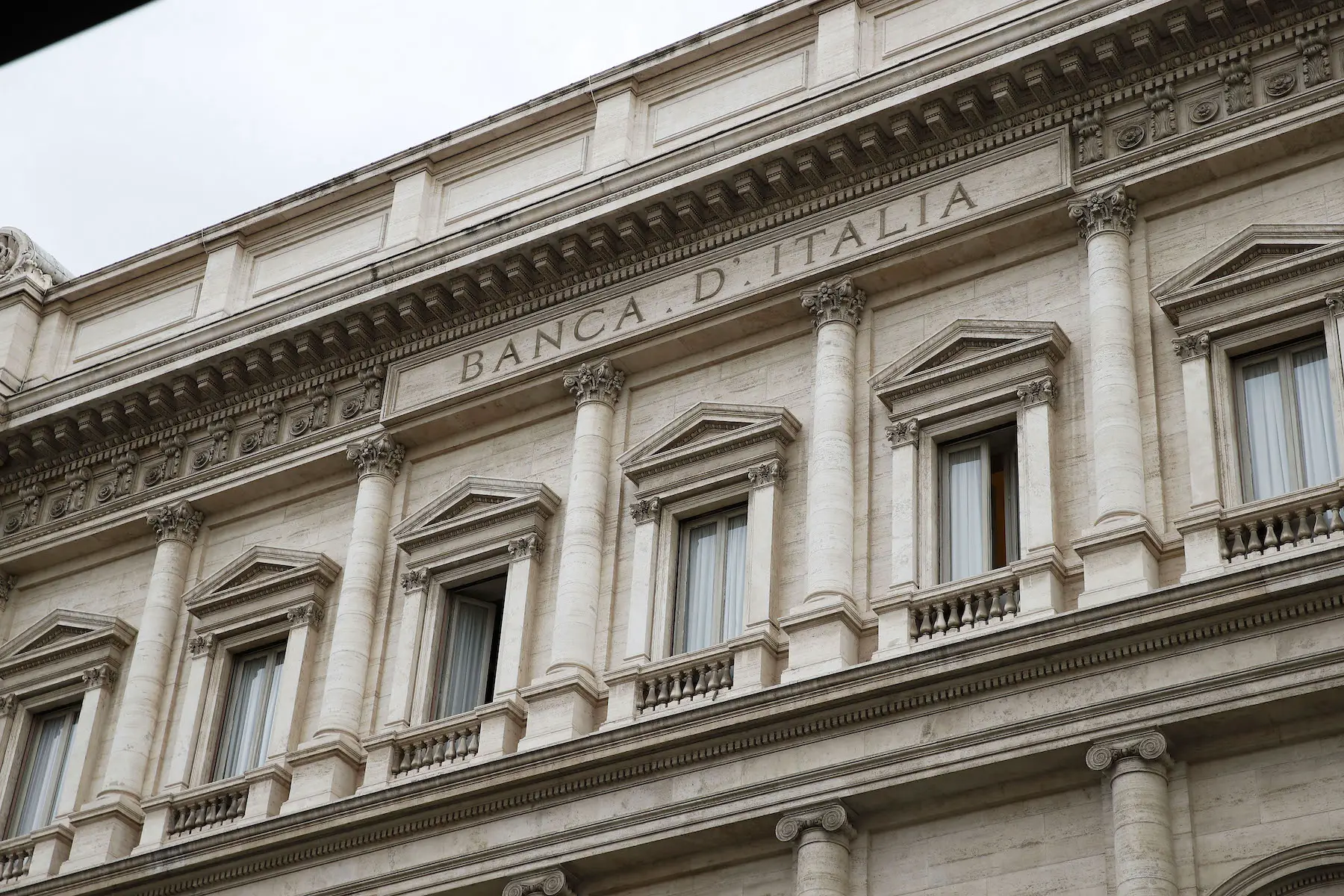
When bringing money into Italy from abroad, it’s important to do so legally and with the right declarations, both for tax compliance and to avoid fines or complications. If you are a tax resident in Italy, you must declare all income earned abroad (such as salary, pension, rental income, dividends, or capital gains) in your annual Italian income tax return. This applies even if the income was already taxed in the country of origin, though a foreign tax credit may help prevent double taxation under applicable treaties.
You must file your tax return in Italy digitally or by mail, using either Form Redditi PF or Form 730 depending on your situation and source of income. You must file Form 730 by 30 September in the year following the tax year you’re reporting, while Form Redditi PF is due by 31 October.
Bear in mind that you may also be liable for IVAFE (Imposta sul valore delle attività finanziarie detenute all’estero) – a wealth tax – if you hold funds abroad in addition to your financial assets in Italy.
As well as income reporting, there are specific rules for bringing cash into Italy. If you enter the EU carrying 10 000 EUR or more in cash (or the equivalent in other currencies), you are legally required to declare it to the authorities when passing through customs. Amounts below 10 000 EUR are generally not subject to mandatory declaration, although authorities may still investigate smaller sums if there are suspicions of illicit activity.
Aside from cash controls, there is no general limit on the amount of money you can bring into Italy. Tax and reporting obligations depend on the origin and nature of the funds (for example, income, gifts, or inheritance), your tax residency status, and the applicable tax rules. For instance, donation taxes may be due on money you receive as a gift from someone. By contrast, if you are transferring your own savings to Italy, there is generally no tax to pay.
Resources such as Your Europe can provide useful, up-to-date information on tax and reporting obligations.

How much money can be brought to Italy from abroad?
The Italian government does not set a general limit on the amount of money you can bring or receive from abroad. You can, in principle, receive any amount, though cash amounts of 10 000 EUR or more must be declared to the authorities upon entry. It’s important to note that the country you are sending money from may impose its own limits or reporting requirements, so it’s always worth checking the rules in the origin country before making a transfer.
While the government does not set a maximum, each bank or provider has its own limits for incoming transfers. For bank accounts, limits can often be increased by contacting the bank and providing additional documentation if needed. Transfer providers also set their own thresholds, usually depending on verification level and payment method. For example:
Santander: Limits for international transfers vary by country. Limits on digital transfers may be lower than in person payments. If you need to transfer a higher amount, you can usually contact the bank and provide additional documentation as required.
Wise: In principle, there are no limits on receiving domestic payments using local account details (non-Swift/ non-wire). Sending limits depend on the currency and payment method. For example, when sending EUR from your Wise account, you can transfer up to 20 million EUR per transaction.
Western Union: Transfer limits depend on the sending country, payment method, and account verification status.
Revolut: In principle, there are no fixed limits on sending or receiving money. However, Revolut’s partners may apply limits for certain currencies or transfer types, which are shown in the app before you confirm the transfer.
Monese: Limits vary depending on the plan and currency. For example, SEPA transfers have a maximum incoming and outgoing limit of 50 000 EUR per transaction and per day across all plans.
Conclusion
Bringing money from abroad to Italy can be straightforward once you understand the options available and the rules that apply. Whether you’re transferring your own savings, receiving income from abroad, or moving larger sums for investment or relocation, the best approach depends on factors such as how quickly you need the money, the amount involved, and how frequently you send payments. Taking the time to compare methods can help you avoid unnecessary fees, delays, or compliance issues.
For many people, Wise is a convenient and cost-effective solution. With transparent fees, mid-market exchange rates, and the ability to hold and manage multiple currencies in one account, Wise is particularly well-suited to an international lifestyle or regular cross-border transfers. Choosing the right tool from the start can make managing your money in Italy simpler, cheaper, and more efficient.
FAQ
Can I receive money transfers from abroad to Italy without a bank account?
Yes. It is possible to receive money without an Italian bank account by using providers such as Wise, Revolut, or Western Union. With Wise and Revolut, you can open an account fully online and receive money using EUR local account details. Western Union also offers the option to collect money in cash from an agent location.
Where do I have to declare my taxes when bringing money from abroad to Italy?
If you are an Italian tax resident, you must declare any income earned abroad in your Italian income tax return. This includes salaries, pensions, investment income, and other forms of foreign income. The tax return is filed in the year following the one in which the income was earned, with due dates in either September or October depending on the income source.
What are the taxes for bringing money from abroad to Italy?
Transferring your own money to Italy is generally not taxed. However, donation tax may apply on gifts, and income tax on money that is received as income from employment or assets. Check your liabilities carefully, taking professional advice if you’re unsure.
When do I have to file a declaration about the money brought to Italy?
You must declare cash amounts of 10 000 EUR or more (or the equivalent in other currencies) when entering Italy from outside the EU, although no tax is due in principle. Income is declared annually through your tax return if you are an Italian tax resident, while funds subject to donation tax should be declared shortly after the money is received.
Useful resources
- Wise – Landing page for Wise Italy (last checked 6th February 2026)
- Santander – Landing page for Santander Italy (last checked 6th February 2026)
- Western Union – Receive money from abroad in Italy (last checked 6th February 2026)
- Revolut – Landing page for Revolut Italy (last checked 6th February 2026)
- European Union – Rules for travelling with cash in the EU (last checked 6th February 2026)
- Agenzia delle dogane e dei Monopoli – Italian Customs Authority (last checked 6th February 2026)
- Your Europe – Practical information on living, working, and travelling in the EU (last checked 6th February 2026)