'%20id='ico-down'%20stroke='%23000000'%20stroke-width='1.5'%3e%3cg%20transform='translate(1092.250000,%20254.750000)'%3e%3cpolyline%20id='Path-2-Copy-4'%20transform='translate(5.500000,%202.750000)%20scale(1,%20-1)%20rotate(-180.000000)%20translate(-5.500000,%20-2.750000)%20'%20points='0%200%205.5%205.5%2011%200'%3e%3c/polyline%3e%3c/g%3e%3c/g%3e%3c/g%3e%3c/svg%3e)



'%20fill='%23000000'%3e%3cg%20id='icons'%20transform='translate(56.000000,%20160.000000)'%3e%3cpath%20d='M144,7339%20L140,7339%20L140,7332.001%20C140,7330.081%20139.153,7329.01%20137.634,7329.01%20C135.981,7329.01%20135,7330.126%20135,7332.001%20L135,7339%20L131,7339%20L131,7326%20L135,7326%20L135,7327.462%20C135,7327.462%20136.255,7325.26%20139.083,7325.26%20C141.912,7325.26%20144,7326.986%20144,7330.558%20L144,7339%20L144,7339%20Z%20M126.442,7323.921%20C125.093,7323.921%20124,7322.819%20124,7321.46%20C124,7320.102%20125.093,7319%20126.442,7319%20C127.79,7319%20128.883,7320.102%20128.883,7321.46%20C128.884,7322.819%20127.79,7323.921%20126.442,7323.921%20L126.442,7323.921%20Z%20M124,7339%20L129,7339%20L129,7326%20L124,7326%20L124,7339%20Z'%20id='linkedin-[%23161]'%3e%3c/path%3e%3c/g%3e%3c/g%3e%3c/g%3e%3c/svg%3e)
'%20fill='%23000000'%3e%3cg%20id='icons'%20transform='translate(56.000000,%20160.000000)'%3e%3cpath%20d='M335.821282,7259%20L335.821282,7250%20L338.553693,7250%20L339,7246%20L335.821282,7246%20L335.821282,7244.052%20C335.821282,7243.022%20335.847593,7242%20337.286884,7242%20L338.744689,7242%20L338.744689,7239.14%20C338.744689,7239.097%20337.492497,7239%20336.225687,7239%20C333.580004,7239%20331.923407,7240.657%20331.923407,7243.7%20L331.923407,7246%20L329,7246%20L329,7250%20L331.923407,7250%20L331.923407,7259%20L335.821282,7259%20Z'%20id='facebook-[%23176]'%3e%3c/path%3e%3c/g%3e%3c/g%3e%3c/g%3e%3c/svg%3e)

Austria’s high quality of life, stable economy, and stunning alpine landscapes make it a tempting prospect for property buyers.
While the overall market cooled in 2024 with a 0.2% decrease in property prices, international interest remains strong, particularly in the luxury sector where foreigners account for roughly 40% of buyers. But for Americans, the path to owning a slice of the Alps or a Vienna apartment is steeper than for their European counterparts.
- Can Americans buy property in Austria?
- What buying property gets you
- What buying property does not get you
- How difficult is the process?
- What are the tax implications?
- Local laws and regional variations
- Renting out your property: is it allowed?
- Buying land in Austria
- Getting a mortgage: should I get one in Austria or the USA?
- The verdict: should you buy a house in Austria as an American?
- Useful resources
Use Wise to save money on your property purchase
Buying a property abroad is a big step and involves important financial decisions. Wise, an international money transfer company, provides specialist support to help you navigate large international transfers and save on exchange fees. Fill out Wise’s online form today to find out how they can assist you.

Can Americans buy property in Austria?
The short answer is yes, Americans can buy property in Austria, but it is not a right – it is a privilege granted by local authorities.
As a US citizen, you are classified as a “third-country national” (non-EU/EEA). While EU citizens can buy Austrian property as freely as locals, Americans almost always require a special permit (Grundverkehrsbehördliche Genehmigung) from the local land transfer authorities (Grundverkehrsbehörde) before a purchase can proceed.
Whether you get this permit depends entirely on where you want to buy and how you intend to use the property.
- Main Residence: If you plan to live in Austria full-time (and have the appropriate residence permit), getting approval to buy a home is generally straightforward. Authorities view this as satisfying a housing need.
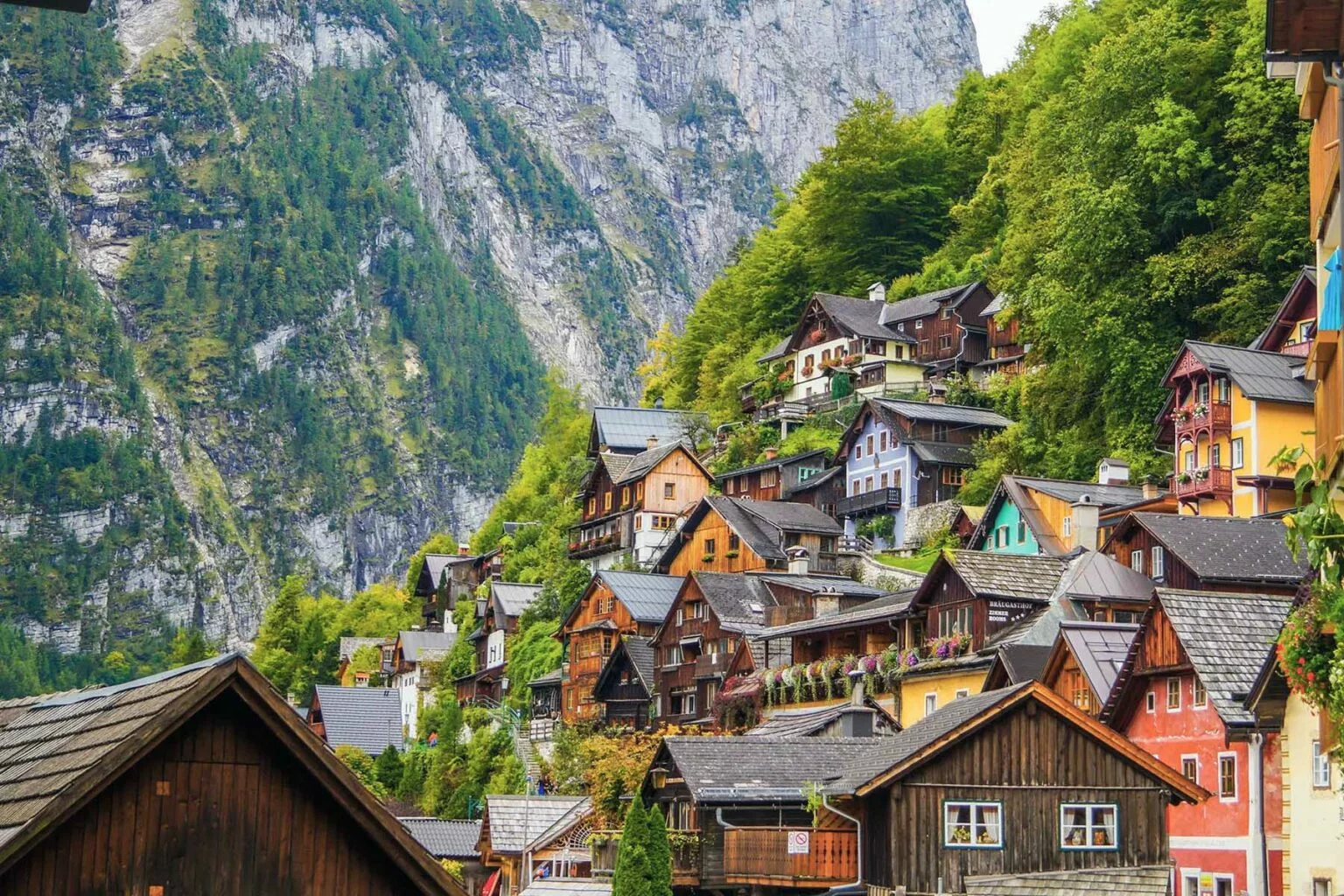
- Holiday Homes: This is where it gets difficult. Western provinces like Tyrol, Vorarlberg, and Salzburg have strict quotas on second homes (Zweitwohnsitz) to prevent ghost towns in off-seasons. In many alpine municipalities, selling holiday homes to non-EU citizens is effectively banned unless you can prove a specific cultural, social, or economic benefit to the region.
If you are looking to move your savings for a deposit or the full purchase price, you can use Wise to send money to Austria. It uses the mid-market exchange rate and avoids the high markups often charged by traditional banks, helping your dollars go further.
What buying property gets you
Owning property in Austria is a secure investment in a stable market, but it’s important to manage expectations regarding what comes with the title deed.
- A stable asset: Austria’s property market has historically been less volatile than other Western markets, though prices did see a correction of -2.6% in 2023 after years of growth.
- Rental income: If you buy an investment property (with the correct permits), rental yields in cities like Graz or Vienna can be steady.
- A base in Europe: You get a high-quality home in one of the safest countries in the world.
What buying property does not get you
Many Americans assume that spending hundreds of thousands of euros on a home will automatically grant them the right to live there. In Austria, this is not the case.
- No “Golden Visa”: Austria does not have a residency-by-investment scheme linked to real estate. Buying a luxury chalet does not give you the right to reside in Austria.
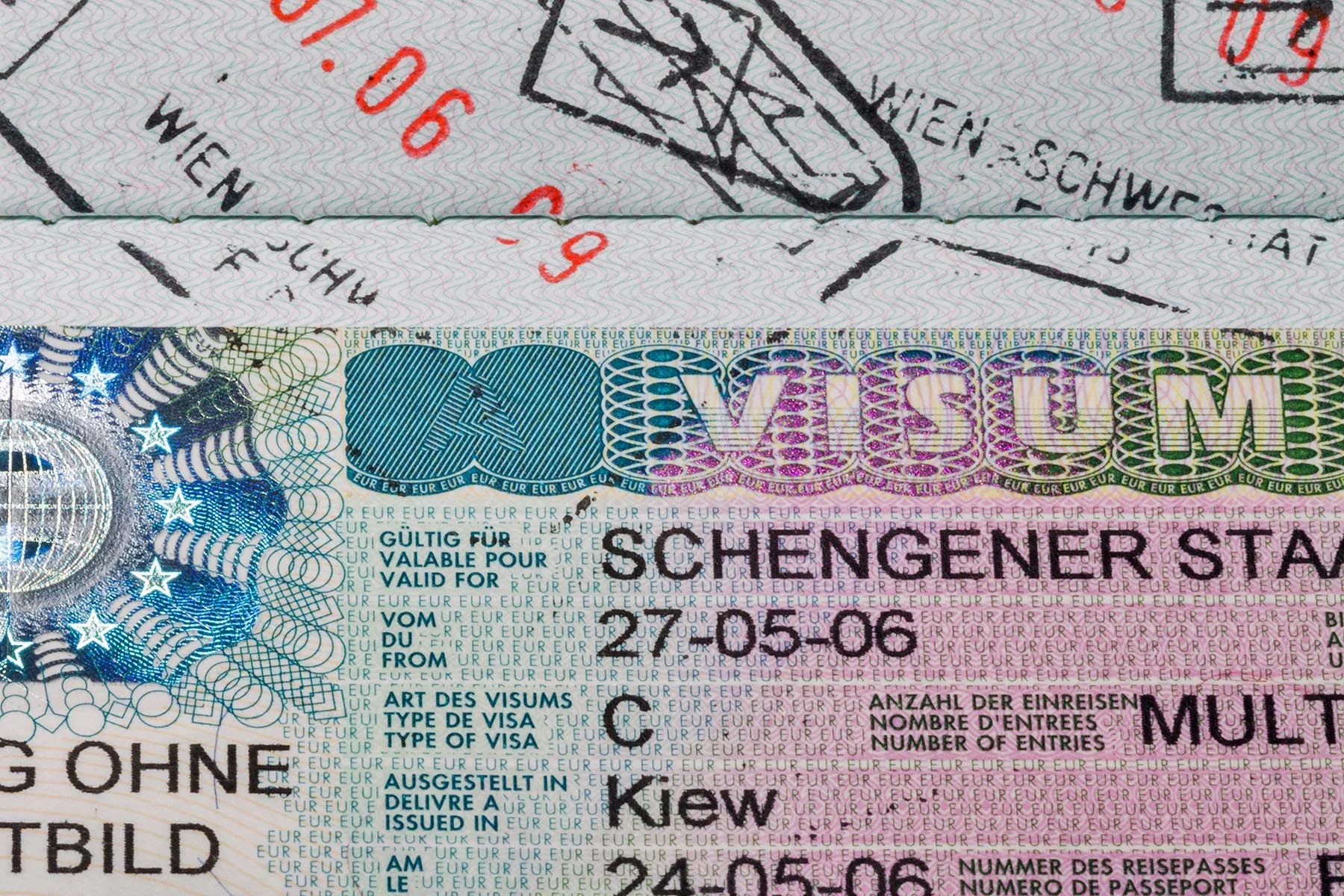
- No automatic residency: You must qualify for a residence permit (such as the Red-White-Red Card for skilled workers or a Settlement Permit for financially independent persons) completely separately from your property purchase. Without a residence permit, you are limited to the standard Schengen tourist allowance of 90 days out of every 180 days.
How difficult is the process?
Buying property in Austria is highly bureaucratic and formalized. It is not necessarily “difficult” if you have the funds, but it is slow. Expect the process to take 3 to 6 months, largely due to the wait for the foreigner’s permit.
The Offer (Kaufanbot)
Once you find a property, you sign a Kaufanbot (offer to purchase). In Austria, this is legally binding. If you back out after signing, you may be liable for fees.
The Contract (Kaufvertrag)
A notary (Notar) or lawyer draws up the sale agreement. In Austria, the notary acts as an impartial intermediary between buyer and seller.
The Permit Application
This is the extra step for Americans. Your lawyer will submit your application to the local land commission (Grundverkehrskommission). If you are buying in restricted zones (like Tyrol), this is where a rejection is most likely.
Typical timelines
- Finding a home: 1–3 months
- Permit approval: 4 weeks to 3 months (varies by province)
- Final closing: 1 month after approval
Transferring money to Austria for the purchase
When you are ready to pay your deposit (usually 10%) or the final purchase price, you will likely need to move a large sum of USD into EUR. Using a traditional bank can be expensive due to unfavorable exchange rates and wire fees.
You can use Wise to move money abroad for the property purchase.
- Pay the seller (or notary escrow) directly: You can send large transfers securely.
- Mid-market rate: Wise uses the mid-market exchange rate (the one you see on Google) with no hidden markup; its fees are transparent.
- Move money between accounts: If you have already set up an Austrian bank account, you can use Wise to move money between your US and Austrian accounts efficiently.
What are the tax implications?
Austria has high upfront transaction costs but relatively low recurring property taxes.
In Austria
When purchasing, you should budget an additional 10% to 12% of the purchase price for fees and taxes:
- Property Transfer Tax (Grunderwerbsteuer): 3.5% of the purchase price.
- Land Registration Fee (Grundbucheintragungsgebühr): 1.1% of the purchase price.
- Realtor Fees: Typically 3% + 20% VAT (paid by both buyer and seller).
- Notary/Legal Fees: 1% to 3% + 20% VAT.
- Annual Property Tax (Grundsteuer): This is surprisingly low compared to the US, often calculated as a fraction (approx. 0.2%) of the assessed tax value, which is usually lower than market value.
In the USA
As a US citizen, you are taxed on your worldwide income.
- Capital Gains: If you sell your Austrian property for a profit, you may owe US capital gains tax, though the US-Austria tax treaty prevents double taxation (you get credit for taxes paid in Austria).
- Reporting: You likely need to report the asset on your FBAR (Foreign Bank and Financial Accounts) or Form 8938 if the value exceeds certain thresholds.
Local laws and regional variations
The difficulty of buying depends heavily on the Bundesland (province).
- Vienna (Wien): Generally open to foreign buyers if they plan to use the property as a main residence.
- Tyrol, Salzburg, Vorarlberg: These are the “hard mode” regions. To protect local housing stock, they have strict quotas on holiday homes. Non-EU buyers are frequently rejected unless the property is a designated “secondary residence” (Zweitwohnsitz) – which are rare and expensive – or if the buyer contributes significantly to the local economy.
- Styria (Graz), Carinthia: Procedures are generally faster and less restrictive than in the western alpine regions.
Renting out your property: is it allowed?
Yes, foreign nationals can be landlords in Austria, but it comes with strict conditions.
- Long-term rentals: Generally allowed and a good way to demonstrate “economic interest” to get your purchase permit. Income is subject to Austrian income tax.
- Short-term (Airbnb/Holiday) rentals: Highly regulated. Many apartment buildings (Wohnungseigentumsobjekte) prohibit short-term rentals in their bylaws. Additionally, cities like Vienna and Salzburg have strict zoning laws limiting short-term tourist rentals to specific zones to protect housing availability. Always check the local zoning plan (Flächenwidmungsplan).
Buying land in Austria
Buying a plot of land (Baugrundstück) generally follows the same strict rules as buying a house. However, be aware that many plots come with a Bauzwang (obligation to build). This requires you to construct a residential building within a certain timeframe (often 2 to 5 years). Failure to do so can result in penalties or the forced sale of the land.
Getting a mortgage: should I get one in Austria or the USA?
It is very rare for US lenders to offer mortgages for properties located in Austria. You will likely need an Austrian bank.
- Austrian Banks: They will lend to Americans, but the scrutiny is higher.
- Down Payment: While locals might put down 20%, Americans should expect to put down 30% to 40% (or more).
- Currency: Banks may require you to have the loan in Euros. If your income is in USD, they might view you as a higher risk due to currency fluctuation.
- Status: Getting a mortgage is significantly easier if you already have residency and income in Austria.

The verdict: should you buy a house in Austria as an American?
Buying in Austria is a lifestyle choice or a long-term hold; it is rarely a “flip” investment due to the high transaction costs.
Pros:
- Stability: A secure market in the heart of Europe.
- Quality: Construction standards in Austria are exceptionally high.
- Lifestyle: Access to world-class skiing, culture, and public safety.
Cons:
- High Fees: Up to 12% in closing costs is “sunk money.”
- Bureaucracy: The permit process for Americans adds uncertainty and delay.
- No Visa: It does not solve your immigration status.
Useful resources
Oesterreich.gv.at – The official Austrian government platform for citizens and residents.
Notar.at – Information from the Austrian Chamber of Civil Law Notaries on the buying process.
Wise – For transparent international money transfers.